

On 22 July 2025, a tropical storm caused heavy rain across the Philippines. Photographer Aaron Favila is no stranger to working in these conditions, but when he heard that a wedding was going ahead despite the knee-deep water, he knew he had to be there to tell the story. He tells Marigold Warner about the resulting project, which highlights the severity of the country’s extreme weather events, as well as the perseverance of the locals who look for some sense of joy and normality regardless.
Since 2016, we’ve partnered with the World Press Photo awards to tell the stories behind the best photojournalism around. Each year, we meet a selection of the winners and hear, in their own words, what went into capturing every monumental shot, from beautiful scenery to watershed historical moments.
On 22 July 2025, the Philippines was hit by a monsoon that triggered waist-deep floods across Manila and surrounding areas. “I did the usual thing,” says Aaron Favila, an AP photographer based in Quezon City, just north of the capital. He pulled on his fishing waders, grabbed his camera and lenses, and headed out to “do the rounds” of the usual flood-prone neighborhoods. Unfortunately, this kind of day happens all too often, because the Philippines is hit by at least 20 typhoons every year—“Shooting in floods is like my habitat,” he says.
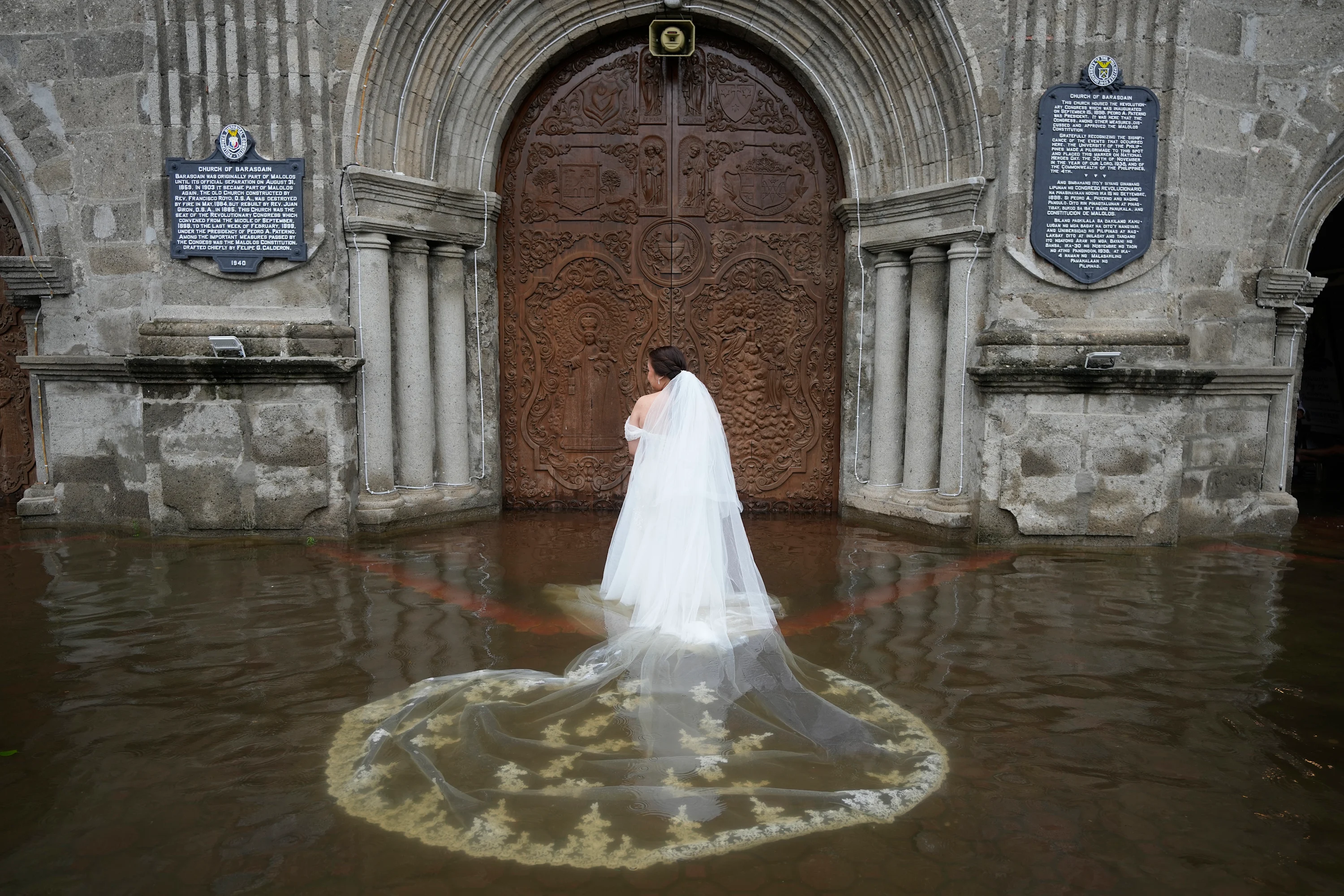
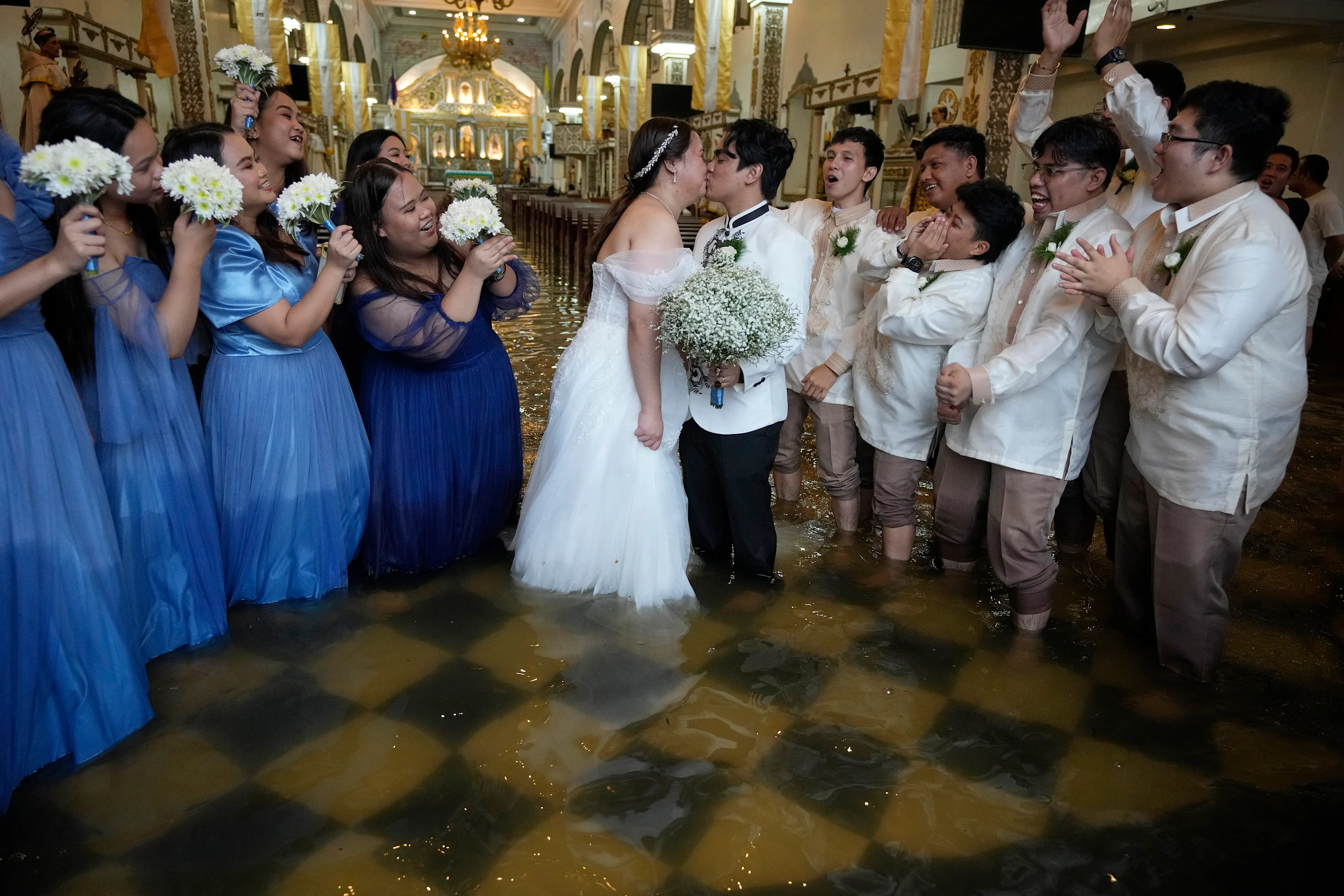
Favila had stopped for lunch at the AP’s Manila office when a photographer friend texted him about a wedding in the Bulacan province, about 40km outside the capital. “As soon as I saw the message, I ran,” he says. He only had an hour-long window to drive through the storm and, due to high water levels, he had to stop driving a kilometer from the church. Luckily, there was a rescue truck passing by. Favila flagged it down and hitched a ride. “When we got close, I saw a woman in a white dress waiting in front of the church doors, so I jumped out and ran through the water, like a hippopotamus, you know, cause I’m a big guy,” he laughs.
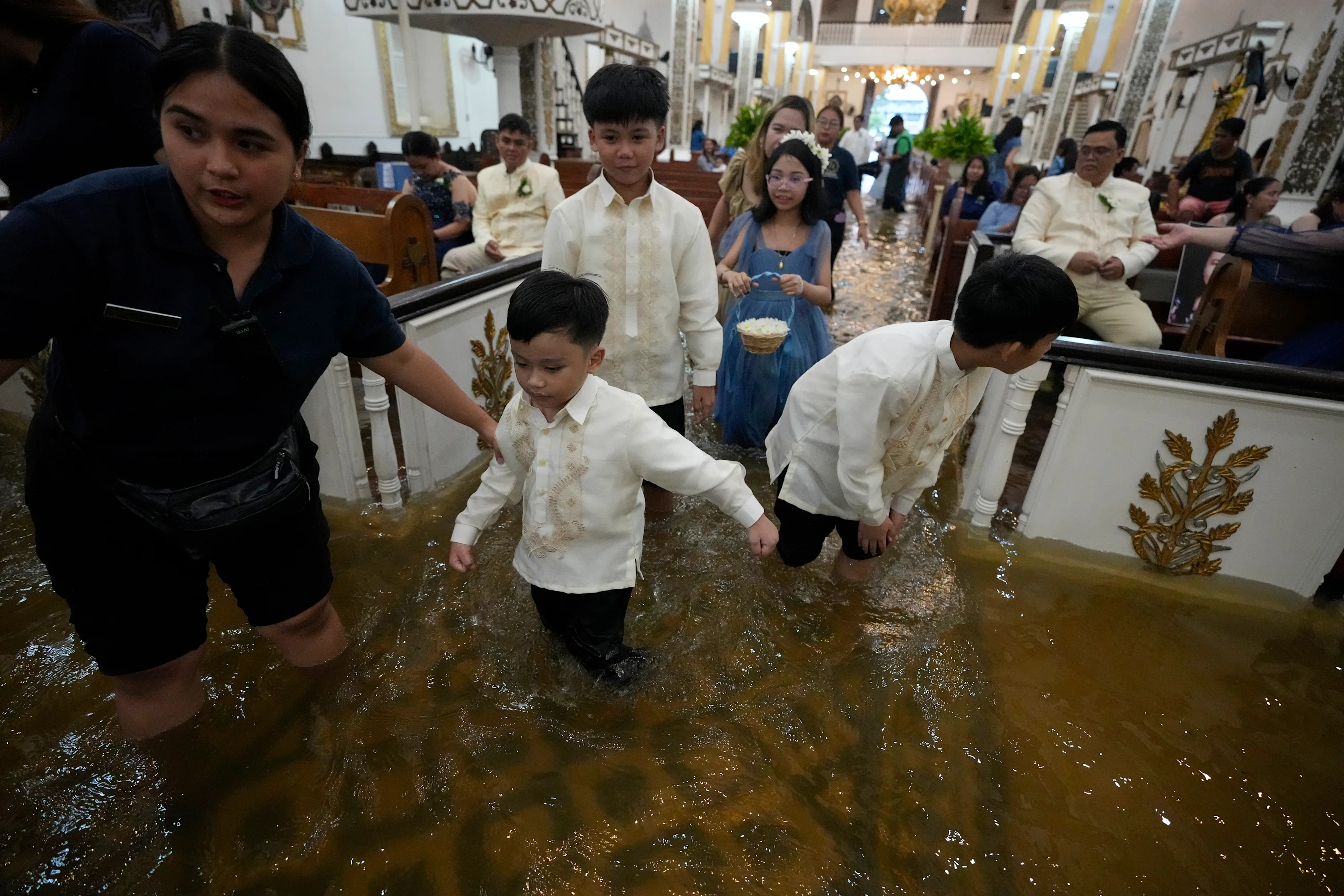
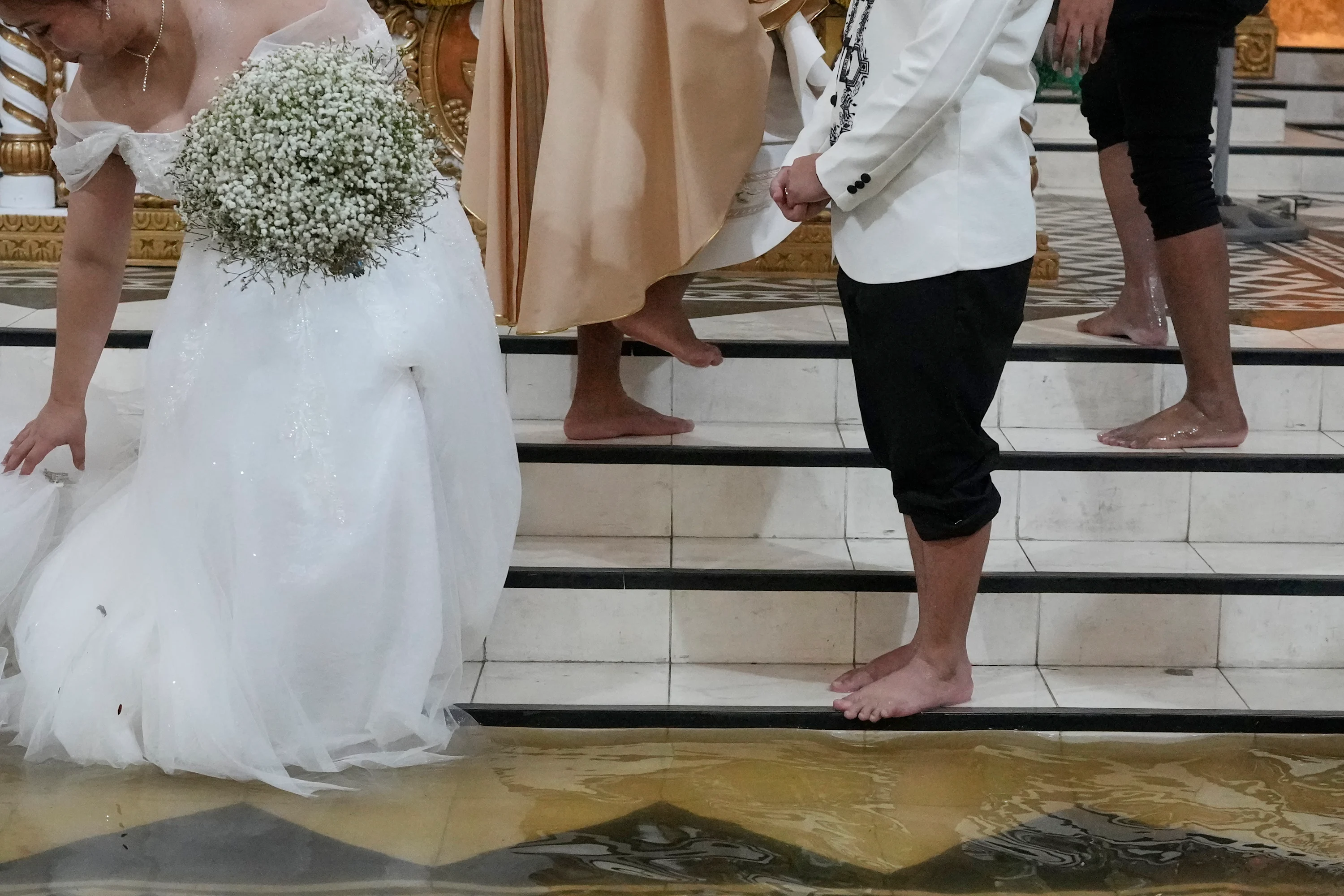
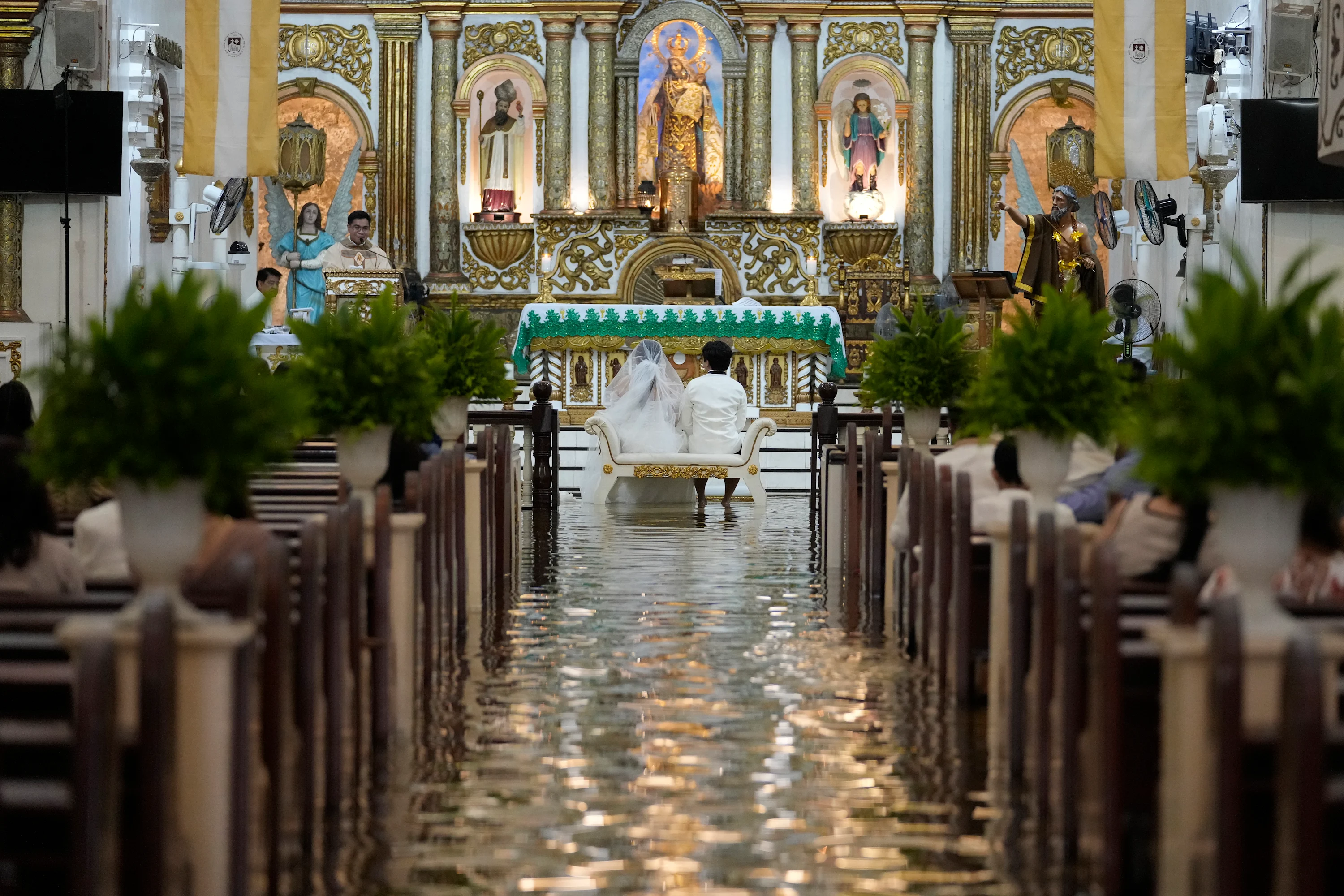
Favila arrived minutes before the doors opened to reveal the bride. He captured her lace veil cascading dramatically behind her as she prepared to stride down the flooded aisle of the Barasoain Church. Inside, her husband and a row of groomsmen wait at the altar, the water lapping the seams of their rolled-up trousers. “I’d been to that church before, because it’s a pretty historic church, but I’d never seen it flooded like that,” says Favila. “In all the weddings and all the floods that I’ve seen, this one was truly unique.”
For a usual assignment, Favila might have caught the first kiss and ditched, but this wedding was different. “It’s not like a news picture where you get the shot and go home,” he says. “My mindset was like a wedding photographer. I stayed for the whole thing.” He wanted to capture the details, the groomsmen’s shoes lined up on a church pew so as not to get wet, or the bride hiking her train out of the murky water so she could make her life-long vow.
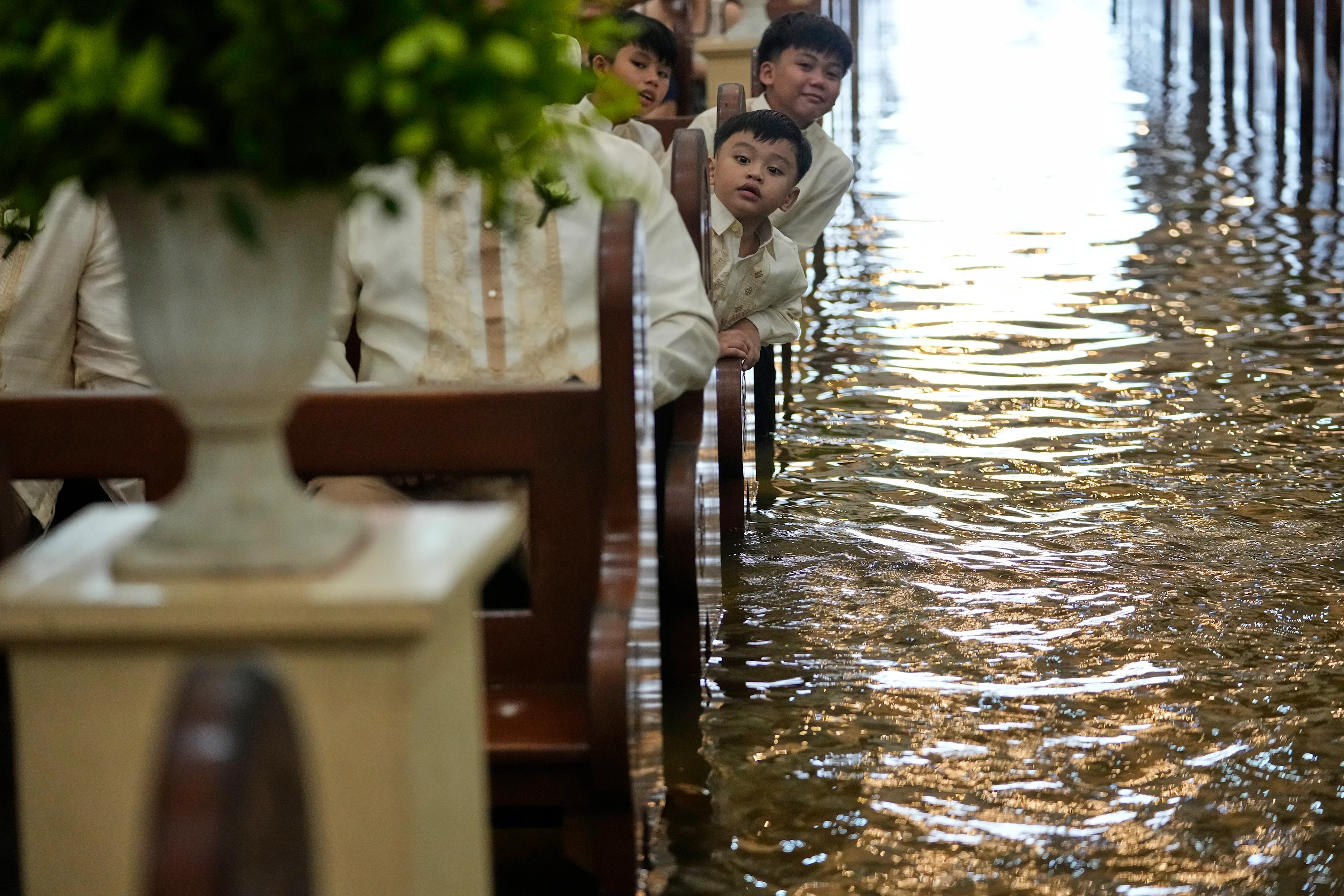
When the images were published, the story went viral. Favila had never experienced this level of visibility in his 30 year career. “The most likes I’d ever had before this was probably just dozens, and half of those were relatives,” he says. He started working for the AP in 1998, and has spent the last 27 years covering natural disasters, politics, sports and daily life. “It’s the best job in the world,” he says. “You’re on the front line of history. Your pictures tell people what you saw—it’s like a window on the world. What you see is what they will see, so it becomes your responsibility to show them what happened.”
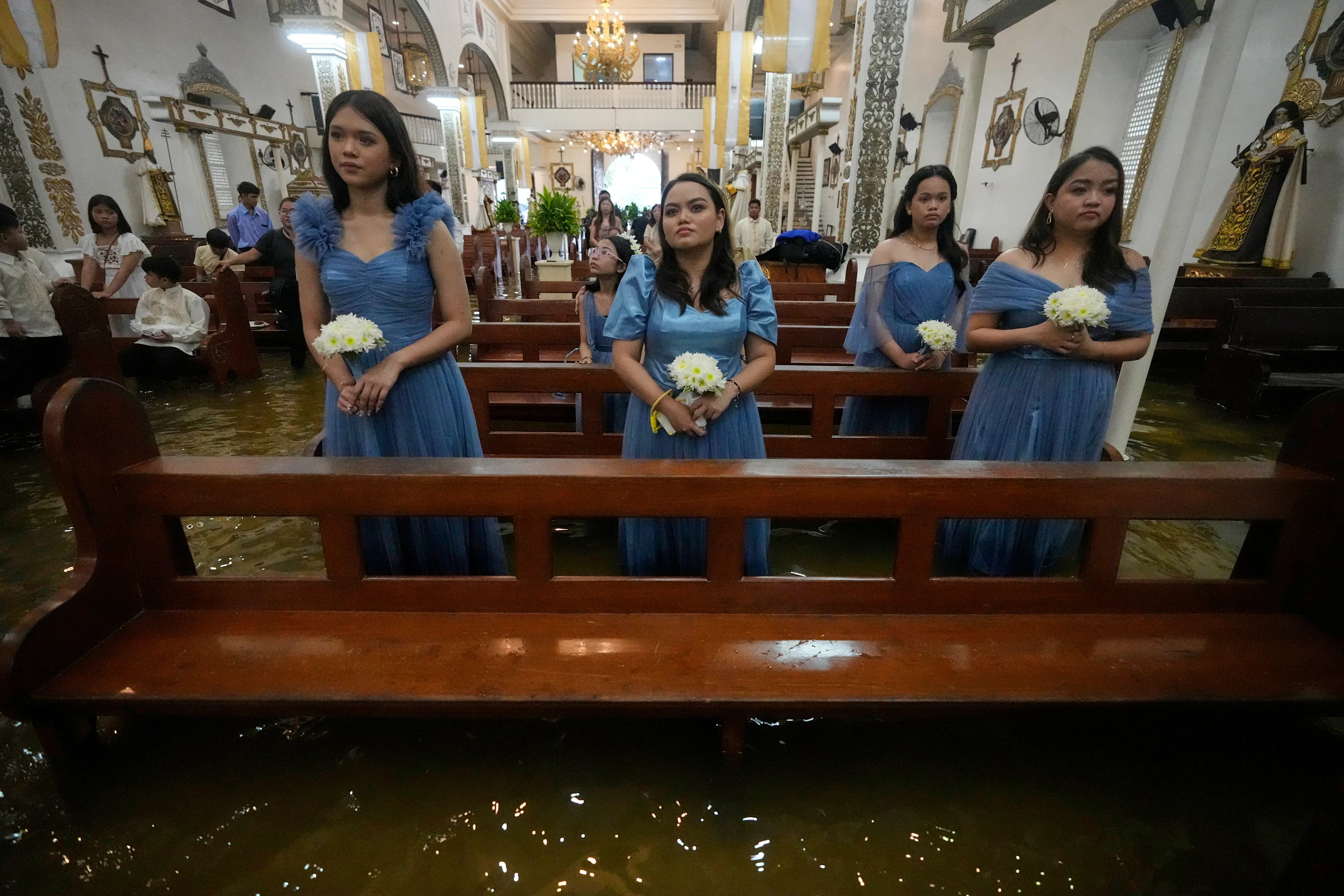
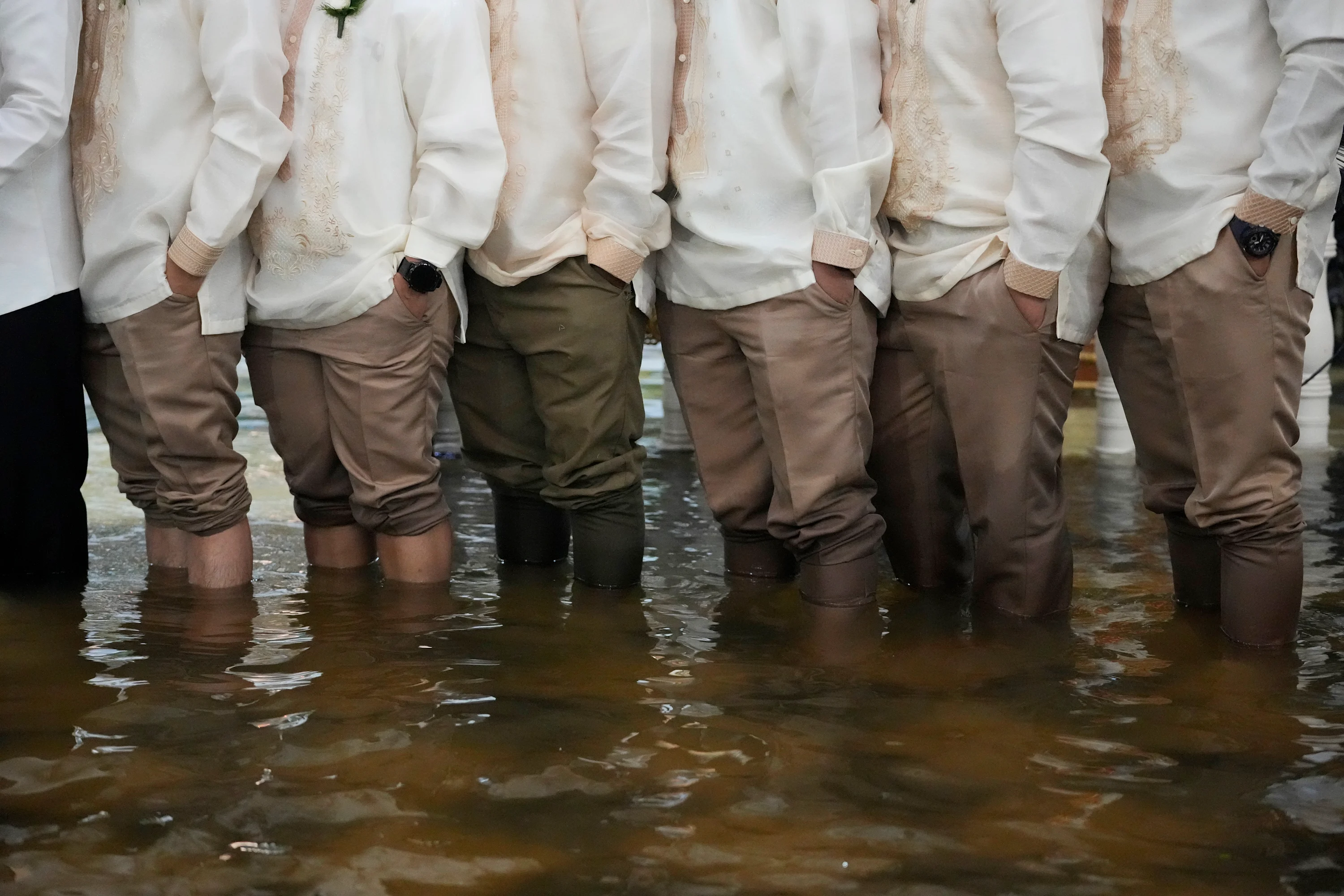
People from all over the world connected with Favila’s story. It’s an uplifting narrative, but beneath that there is a stark reality. Six people were killed in the very same floods, with tens of thousands of residents evacuated across Metro Manila. States of calamity were declared in several cities, and the disaster ultimately affected over 9.5 million people nationwide. These stats are not unusual in the Philippines, which ranks number one in the World Risk Index, a measure of vulnerability to natural extreme events.
“These people are used to the flooding. I didn’t see anyone sad or unsettled… They were prepared for it,” says Favila. “Everything’s in the picture. You see the floods, and then you see that even with all the obstacles in front of them, the couple still pushed through with the wedding. That’s real resilience.”