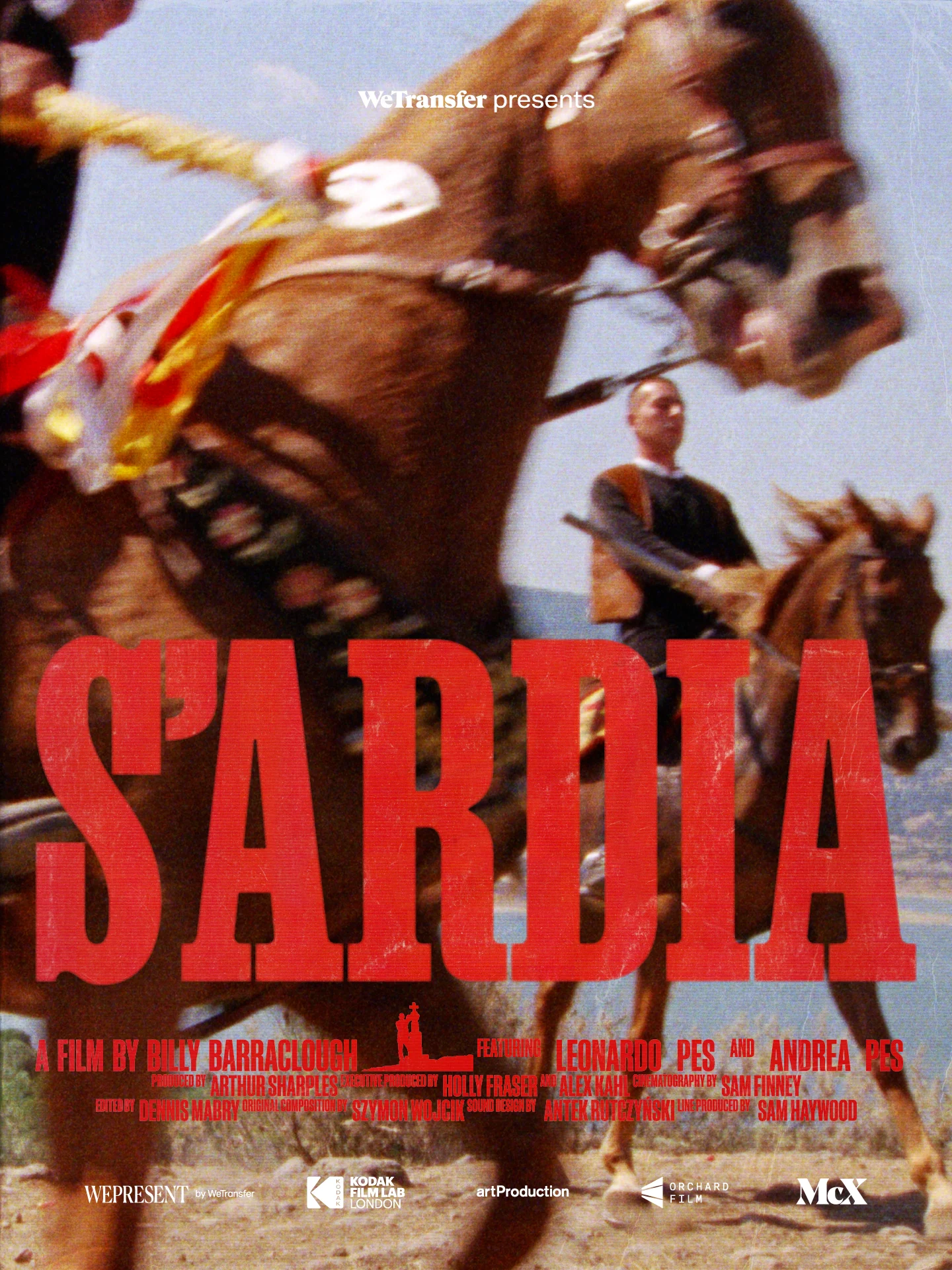
Every year in the small Sardinian town of Sedilo, horses gallop through the streets as part of a sacred ritual in honor of Emperor Constantine the Great, a symbol that Christianity will continue for another year. Billy Barraclough’s film, “S’Ardia,” follows local rider Leandro Pes as he prepares to take on the prestigious role of leading the race with his son, Andrea. Barraclough tells Alex Kahl what it meant to capture such a monumental moment for the town and for this close-knit father and son.
“The bond between the community of Sedilo and horses goes back to the dawn of time,” says Leonardo Pes in the opening of Billy Barraclough’s film, “S’Ardia,” as three shrouded figures ride to the top of a peak on screen. In the film, we meet Leonardo as he prepares to lead the town’s historic annual ritual, a horse race through its streets, a great honor he’s waited for all his life.
Held each year in the small Sardinian town, the race is considered one of the most dangerous in the world, with its high speeds and sharp turns. It commemorates the Battle of Milvian Bridge, fought between the Roman emperors Constantine I and Maxentius in 312 AD, Constantine’s victory symbolizing Christianity triumphing over Paganism. The three race leaders, or “pandelas,” represent Constantine and his army. They set the tempo for the race, and their victory signifies that Christianity is safe for another year.
The lead pandela is selected by the church, and he in turn selects two more riders to join him at the head of the pack. Leonardo selected his son, Andrea, to take on one of those roles. Like most youngsters in the town, Andrea is an accomplished rider. At this young age, his horse has already become almost an extension of himself. “Most of the young boys and girls in Sedilo grow up with horses ever-present in their local culture,” says Barraclough. “S’Ardia is what a lot of their life is leading up to, and it’s the first time ever that someone so young has been third in command. To be there when Leonardo had the responsibility of leading the race, the only time that will happen in his life, and what he’s been preparing for forever, was so special.”
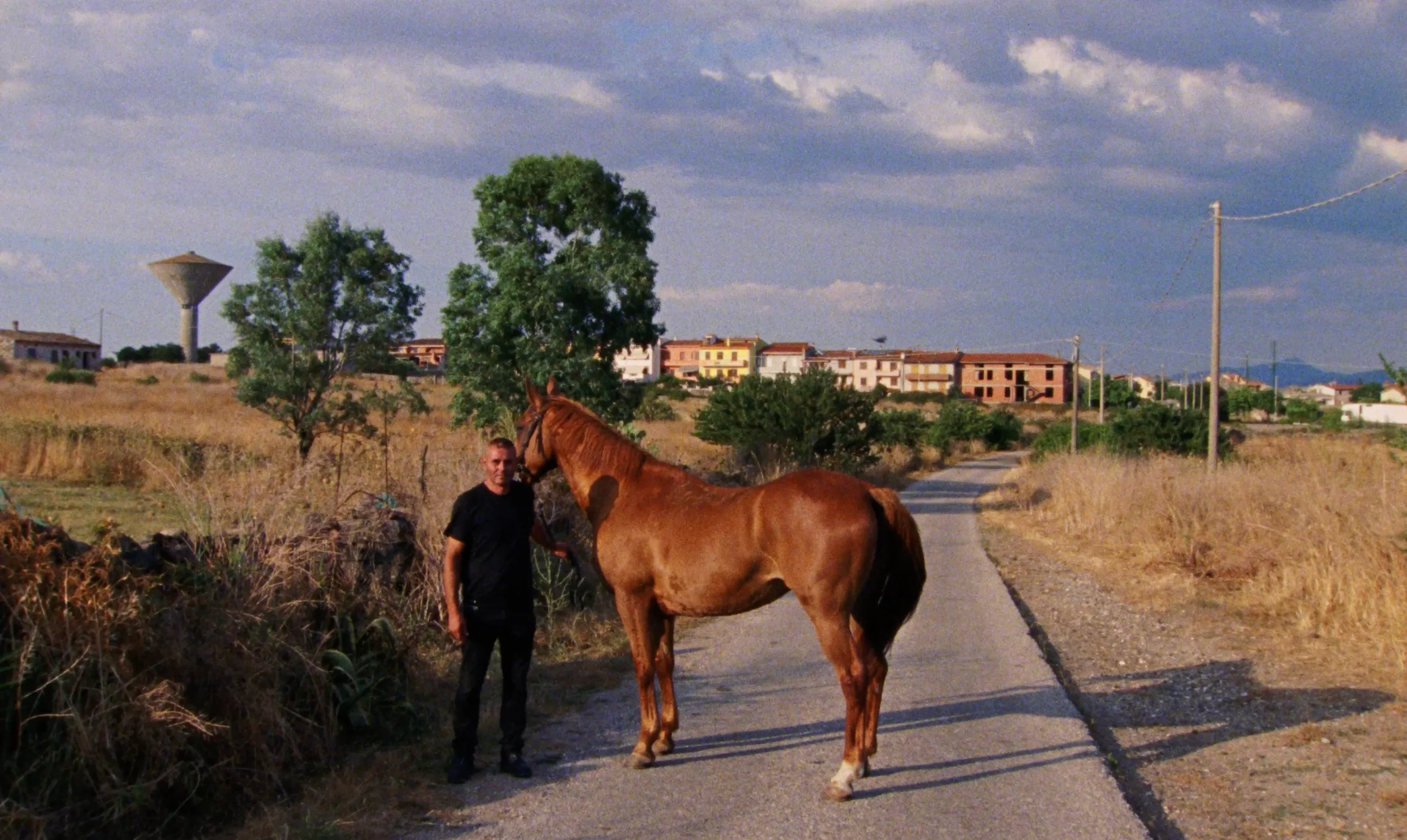
Throughout the film, there is an invisible thread that connects the riders with their horses, the horses with the ground beneath their feet that contains the energy and history of the place and the age-old legend and faith behind the race. Ardia is a generational ritual, the passion and urgency to represent home, faith and family being passed down and down again as the years go by. This has never been better shown than here by Andrea and Leonardo. “It’s the first time ever that a father and son have done it together,” says Barraclough, “so the significance of it is huge.” As Leonardo says in the film, “This is the second greatest gift I will ever give my son, the first being his birth.” The gravity of this moment for both of them is palpable. “In Sedilo they talk about having children, getting married and being the pandela,” Barraclough says.
The film gradually brings us closer to the race’s start, emphasizing the enormous weight building on the shoulders of our two riders, while also showing them continuing to carry out their normal duties. We see Andrea milking a cow as Leonardo tells us his son dropped out of school to tend their farm with him. “There’s something so beautiful about Andrea wanting to follow in his father’s footsteps and work the same land and race alongside him,” says Barraclough. “It’s just this beautiful lineage.”
As well as capturing the bond between Andrea and Leonardo, the film connects with Barraclough’s own family lineage, too. He tells me that on childhood holidays in Yorkshire, his mum would go off horse riding. He never went with her, but she’d tell him stories, and he remembers having visions in his head of her riding at breakneck speed over the Dales. It feels as though, in this film, he’s brought to life those childhood visions of strained sinews and thunderous hooves amongst clouds of dust.
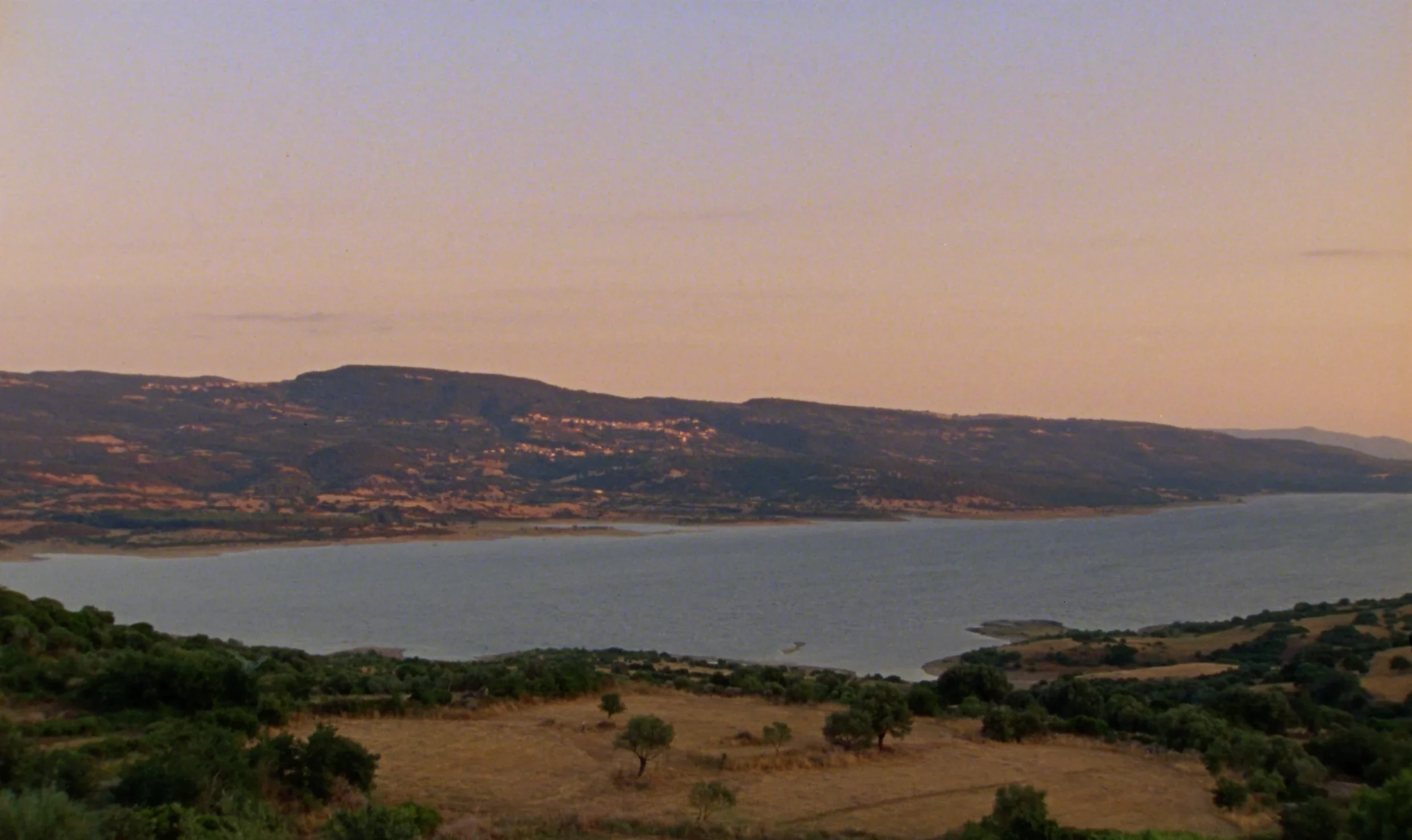
The first time we see that dust begin to fly in the film is during the practice sessions for the race. Horses gallop as Leonardo describes how intense the preparations have been, and Szymon Wójcik’s ethereal score, made up of organ music and spine-tingling vocals from local folk singer Daniele Giallara, rises. “I wanted it to almost feel like as a viewer, you could be sat in a church and it’s an order of service,” says Barraclough. “In the village, there’s quite an old school, traditional form of masculinity, but the way these men would sing, it was just so delicate and sensitive.”
The race begins just outside the town at the sanctuary where the church named after Emperor Constantine lies. “All of the riders first go to the local church in the town to be blessed by the priest,” Barraclough says, “and then all of the people watching the race, all of the pilgrims and locals, make their way to the sanctuary.”
Tens of thousands of people find their spot and wait, as thousands more around Italy watch on television. “You’re waiting in this space for the horses for a good few hours,” Barraclough says. “And the sun is getting higher, so it’s getting hotter. There’s a lot of chatter, the church bell constantly ringing, you hear the crickets.” Gunshots ring out as the riders make their way to the top of the hill. “There’s nerves,” says Barraclough. “The race is dangerous, a lot of the people watching will be family members of the riders, and they want everyone to be okay.” But Leonardo doesn’t carry those nerves. “I have always understood the danger. I’ve always been aware of it,” he says. “But fear? I’ve never felt it.”
The race only begins when Leonardo sets off. “20,000 people are waiting with bated breath, holding themselves physically,” says Barraclough. “And he could wait as long as he wants.” The riders calm their horses, the pandelas’ flags fluttering in the wind. Leonardo takes a moment of reflection: “The inner silence at the moment of departure drowns everything out,” he says. “The silence of solitude.” We hear that silence in all but the clattering of hooves. The ethereal score returns. The gun sounds. The horses take flight.