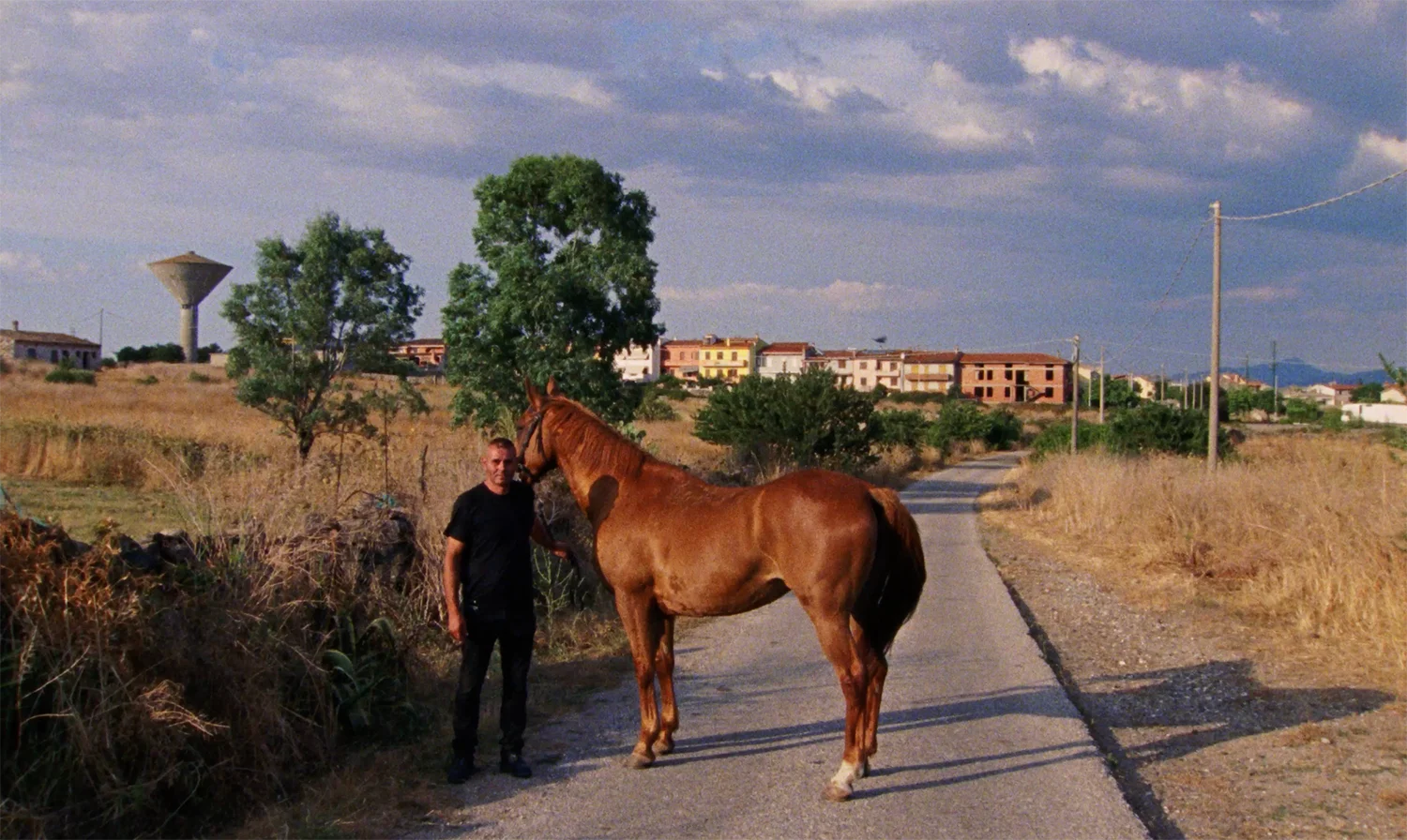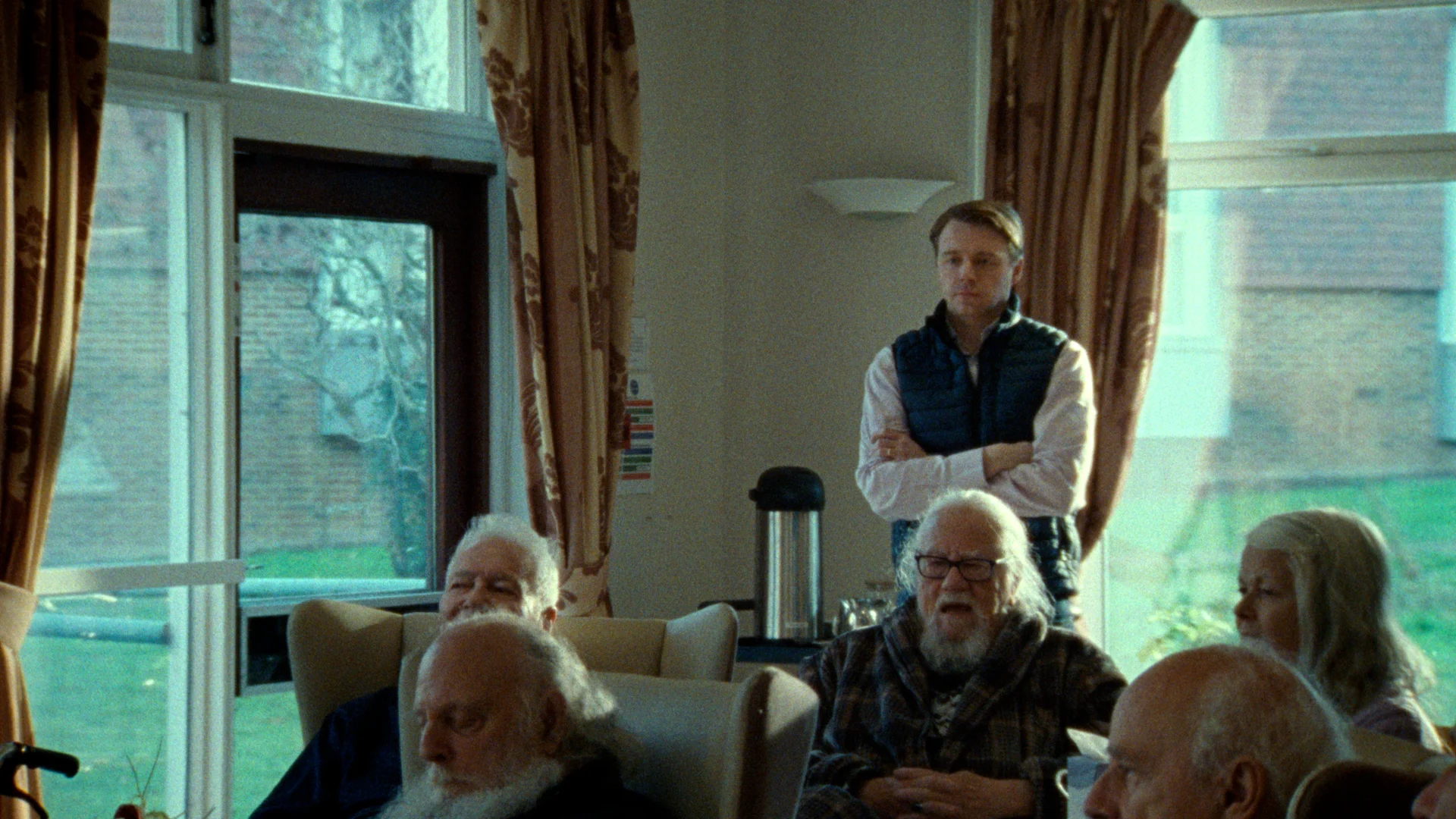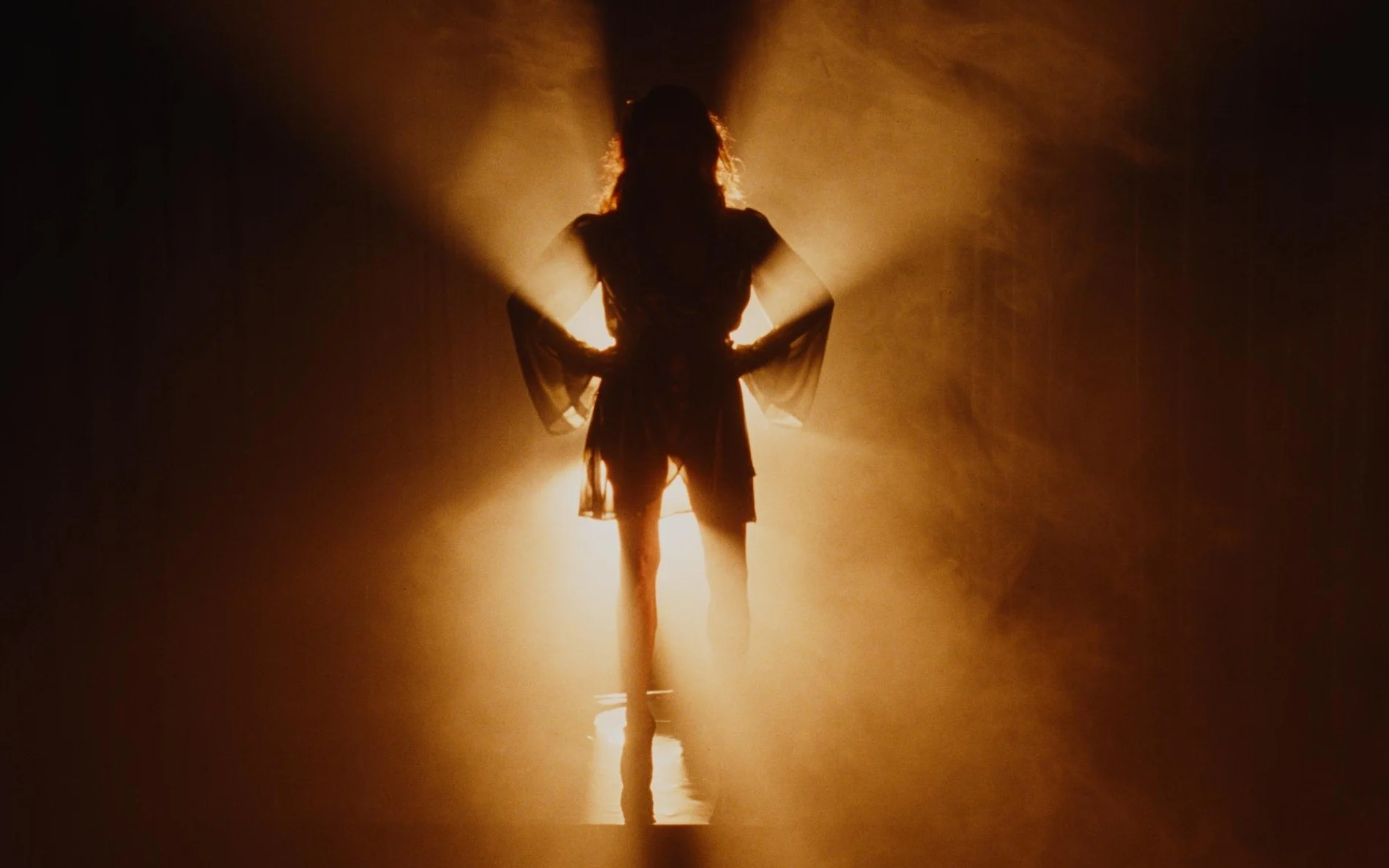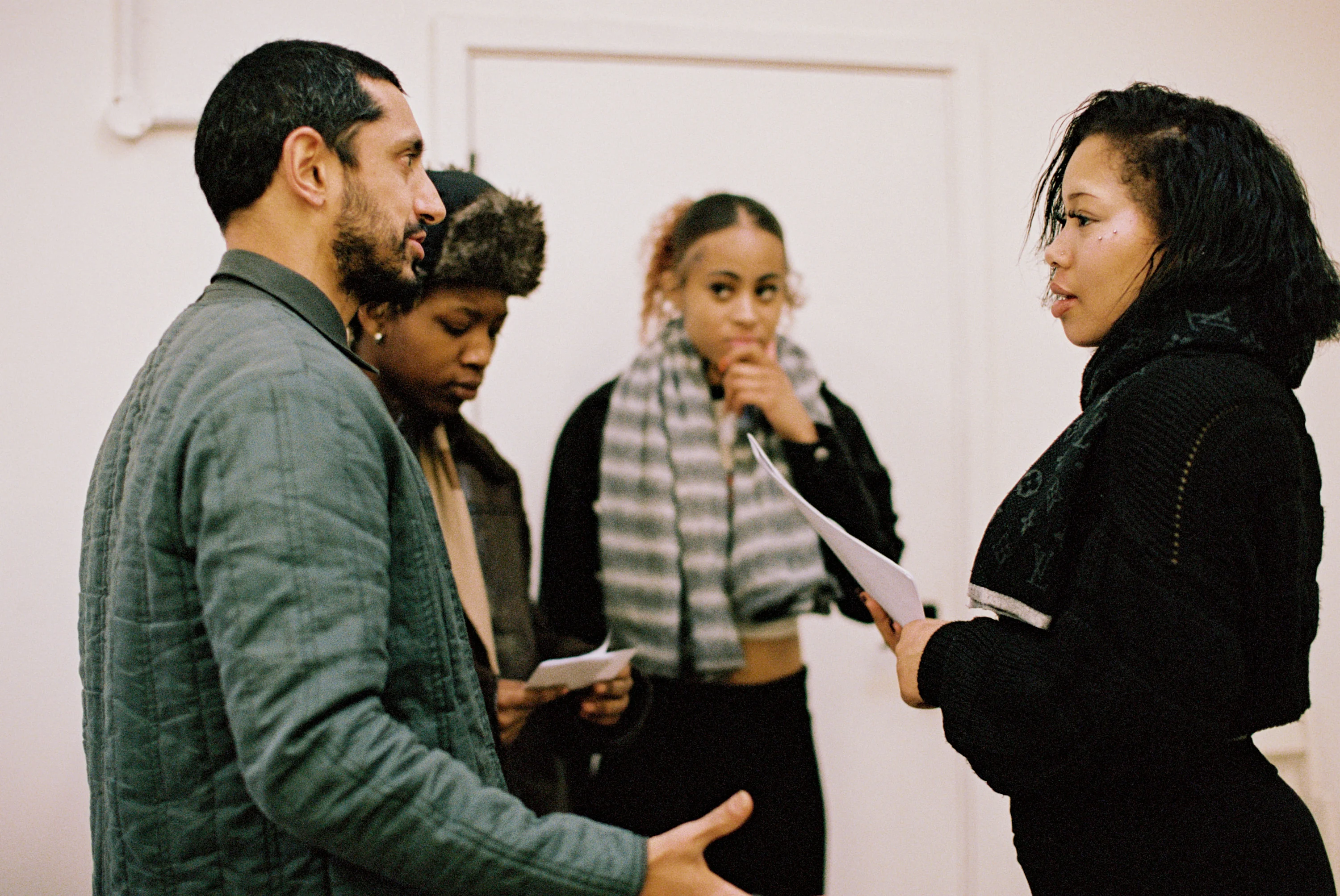
Watch Siôn Marshall-Waters’ short film exploring the inherent horror in British rural traditions
As a country, Britain has its fair share of idiosyncrasies. Some might say eccentric, some might say downright absurd. But there’s no denying that there is a folkloric history, and sometimes even superstition, that is still woven into the fabric of the country’s small rural towns and villages, passed down through centuries and often at odds with the practicalities of modern living. It’s this juxtaposing reality that filmmaker Siôn Marshall-Waters explores in “Pen Mari”, a short folk horror film following a local man as he gets drawn into a desperate search for a horse’s skull for an ancient folk procession. Here, fellow artist and filmmaker Ben Rivers speaks to Siôn about the film’s beginnings, and the nuances of rural British traditions.
Ben Rivers: When I watched “Pen Mari”, it made me think about my own upbringing in the West Country. I grew up in a small village in Somerset and we had a lot of these old traditions, these processions and rituals and funny stuff that would happen around Mayday. I think it did have an effect on me and my future self, and so I wondered what experiences you had like that? Did you grow up in a small place and were these kinds of traditions going on that lead to you making this film?
Siôn Marshall-Waters: Quite similar to you, in a way. I grew up in South Wales, in a small market town on the edge of the Bannau Brycheiniog. These sorts of events weren’t necessarily a big part of my childhood, but I do remember going to a Mari Lwyd with my parents. I vaguely remember traditions like these taking place at primary school, although I wouldn’t say they were central to the community. But I think that’s true of a lot of these traditions, and it’s partly what drew me to the project: this world on the rural fringes of Britain, where a festival can feel like an over-the-top, twee occasion while existing almost entirely under the radar for most of the people who live there. My partner is from Somerset, and I’ve been to a few festivals down there, including the wassailing in Carhampton. The ones that appeal to me most are those that feel almost half-arsed. People turn up because it’s what they’ve always done, rather than out of any particularly deep belief in—
Ben: The magic.
My fascination with rural Britain is about the connection between the banal and the absurd.
Siôn: Yeah, the rituals and the magic. It's more about continuing something that's always been done, and there's a rawness to that which I find interesting. The first time I heard about wassailing, I imagined this huge, raucous affair with hundreds of people. But when I went, there were about 10 people standing around a tree in the rain, nailing wet bread to it, with some guy playing a hurdy-gurdy.
Ben: Brilliant!
Siôn: For me that’s more interesting. My fascination with rural Britain is about that connection between the banal and the absurd. The countryside is so often represented as either incredibly bleak or overly twee, whereas the reality is usually somewhere in between. These traditions capture that intersection: something mystical or magical taking place within the everyday.
Ben: I think it's also about community, about just having a laugh. Like you say, it takes on a different kind of meaning. It’s just one of those things that we do once a year and why not? Maybe there is a little bit of superstition in that if we don't do it, we don't really know what's going to happen, so we might as well. Let's nail some bread to a tree! There was always this talk in my village that once a year this headless horseman would go running through this field and jump over a hedge and then he would fall down the hill, which was where he lost his head. This story was around for a lot of my childhood and once a whole bunch of us, 30 people or so, went up on this hill at midnight to see it because we really believed that this was going to happen. And of course it didn't happen, but it was kind of amazing that there were so many people who believed that it might.
Siôn: It's the anticipation. I'd been loosely aware of these traditions in South Wales and Somerset, but the film itself was inspired by a true story surrounding the organisation of Montol, a festival in Cornwall.
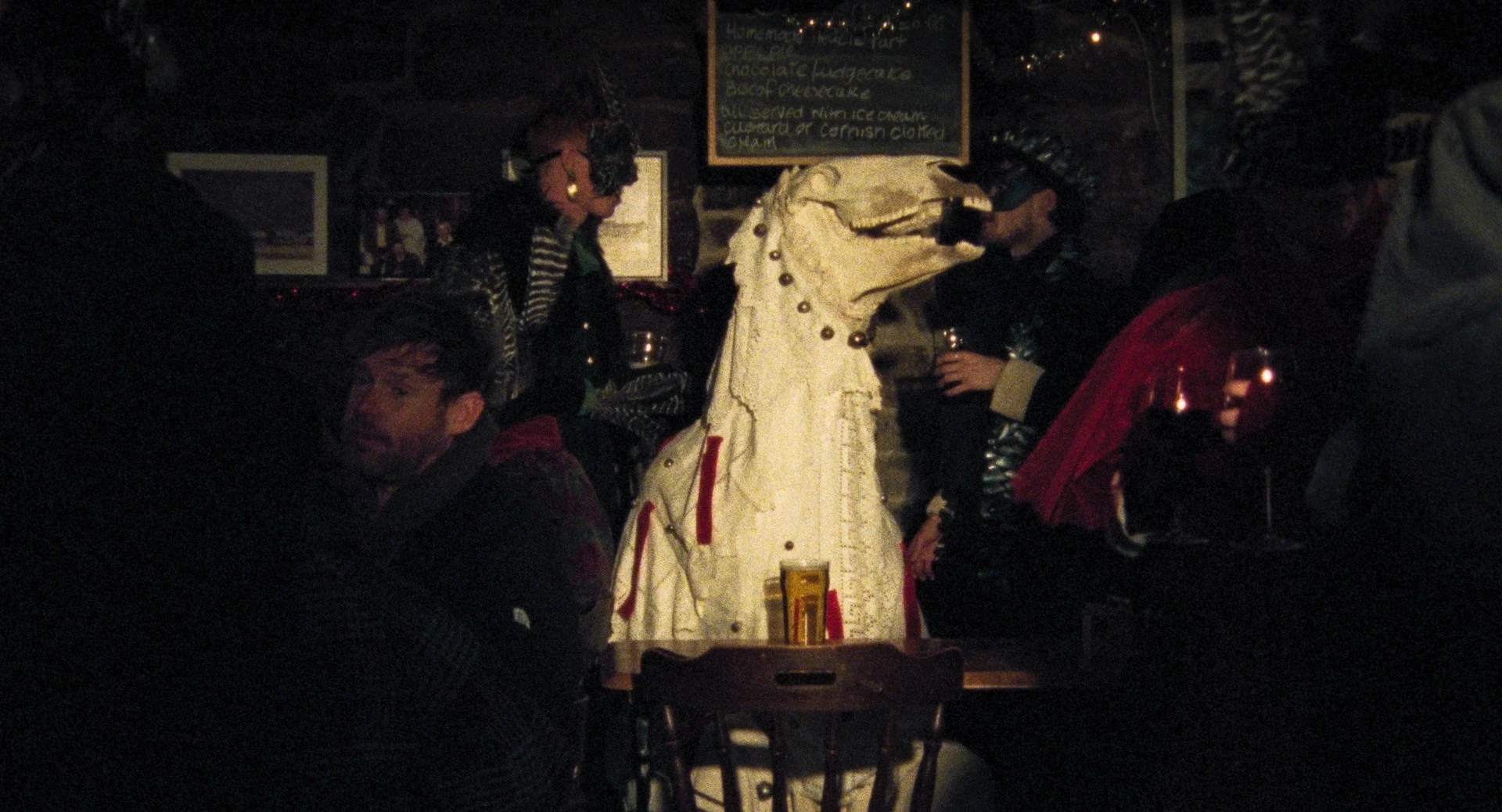
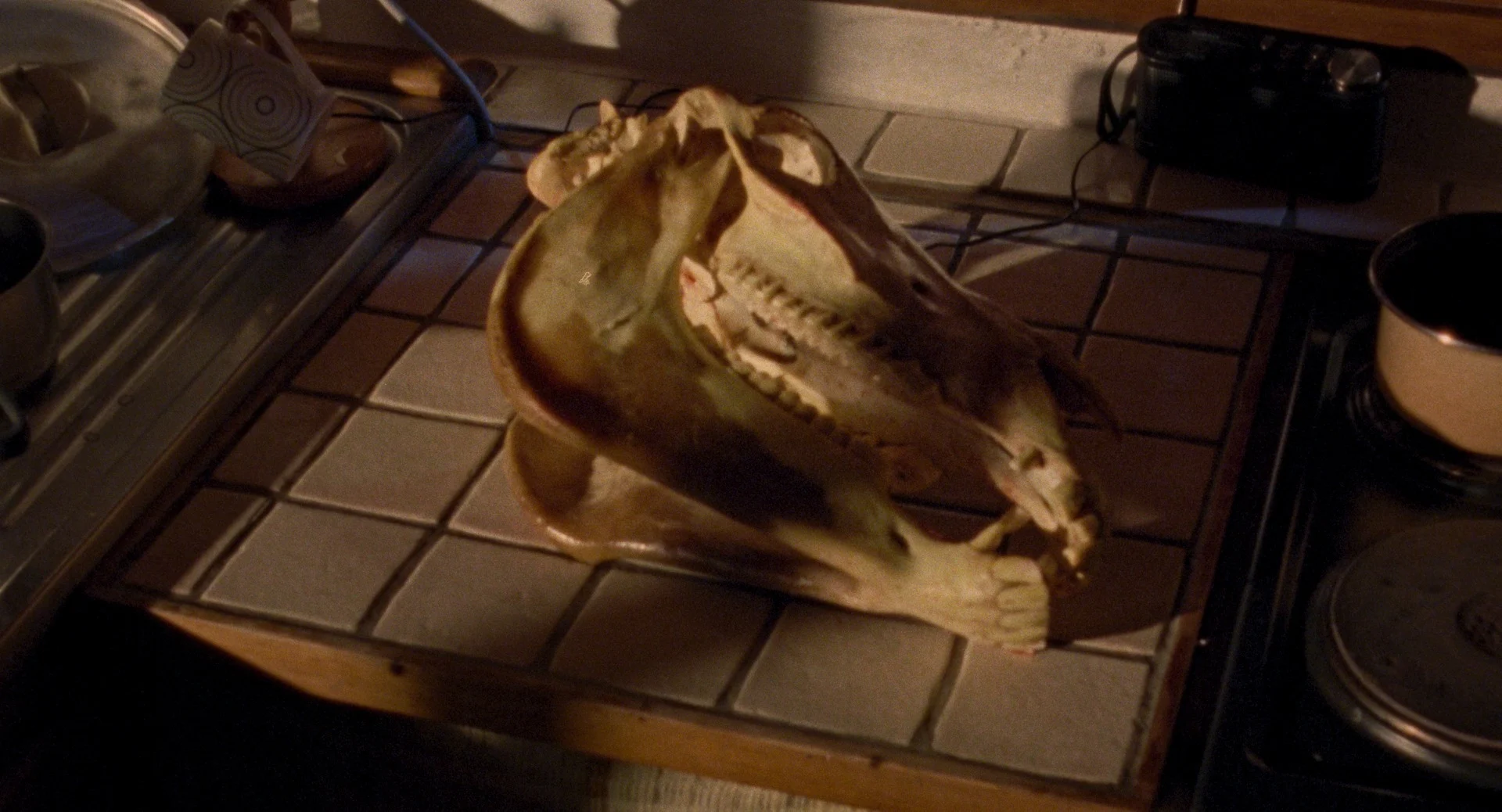
A friend told me about a man involved in organising this revivalist winter solstice festival, which brought together traditions from different parts of Britain, including the Mari Lwyd from South Wales. He needed to find a horse's skull for the costume and ended up in this bizarre situation trying to get hold of one. What interested me was that meeting point between superstition, history and the possibility of magic, alongside this determination to keep something alive through ancient rituals. As I began attending Mari Lwyd events in South Wales for research, I became increasingly fascinated by how these traditions exist within contemporary rural life.
My interest in this story was that meeting point between superstition, history and potential magic, but also this determination to keep something alive through these ancient rituals.
The first one I went to was in Llantrisant. We started at this enormous roadside pub, a bit like a Wetherspoons. I arrived early and was getting my camera ready when a guy in a cloak got out of his car carrying a horse's head, lit a cigarette and stood there waiting for everything to kick off.
Ben: This is what you're looking for! A lot of films about this sort of thing can be more joyous and sometimes horribly romantic, but your film is edging towards a horror movie. It's quite dark and people have a suspiciousness about them in the way that they're interacting with each other. There's an uncertainty to it and you've got the big man who walks around with the horse’s head. And then there’s the man who recites the poem, which is really dark.
Siôn: That was written by Callum Mitchell who wrote the screenplay for the film.
Ben: It's very convincing. It feels like it's something that's been around a long time.
Siôn: The idea was that we'd have this character that told the story and the superstition of the Pen Mari and what would happen if it didn't turn up or, if the community didn't welcome it into their pub or into their festivities. So we created this arc of someone reciting who Pen Mari is, and mythologizing them. The character was partially based on the rambling stories of elderly Welsh farmers that I've encountered in my previous work [“Thieves Again”].
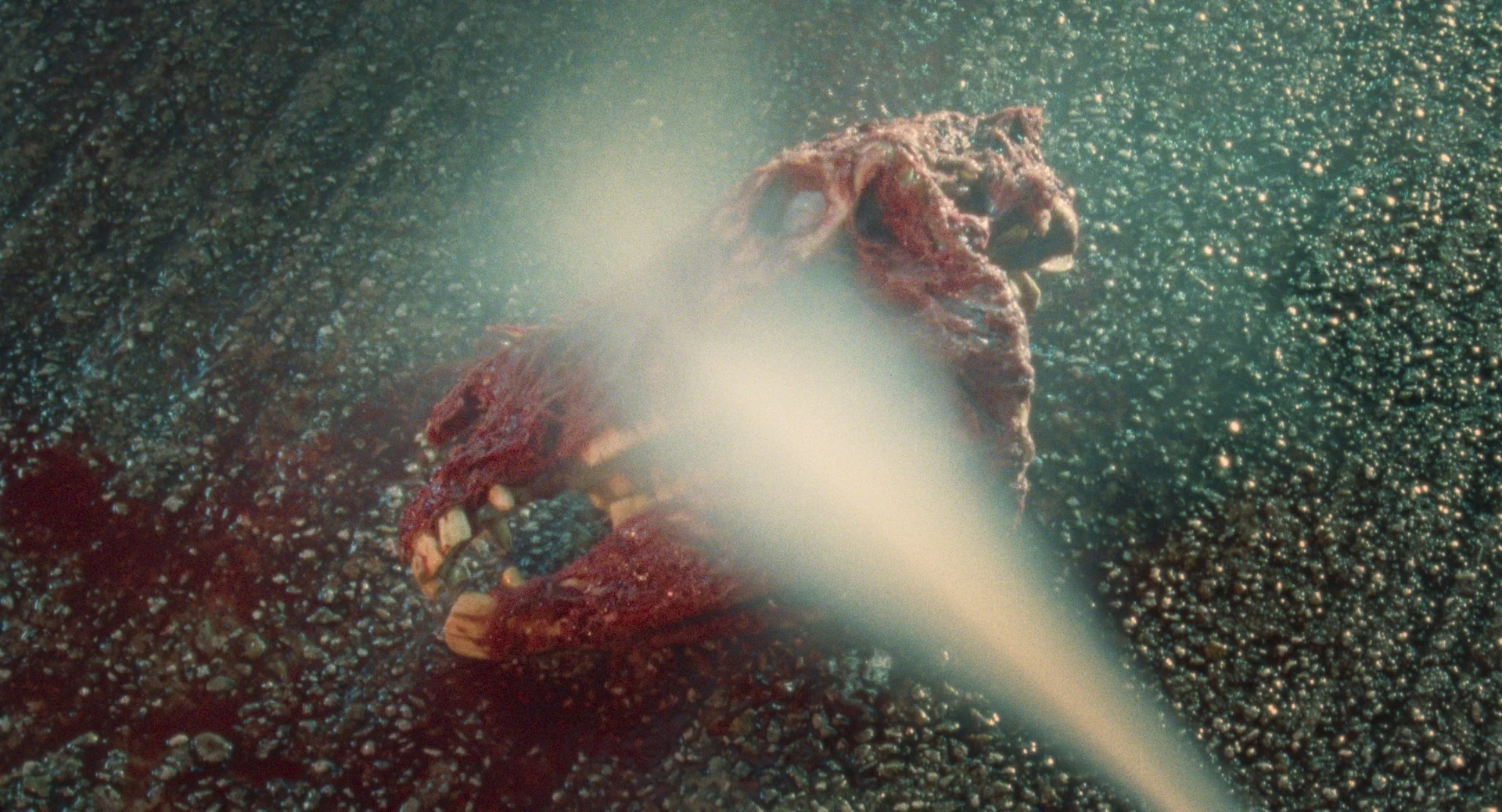
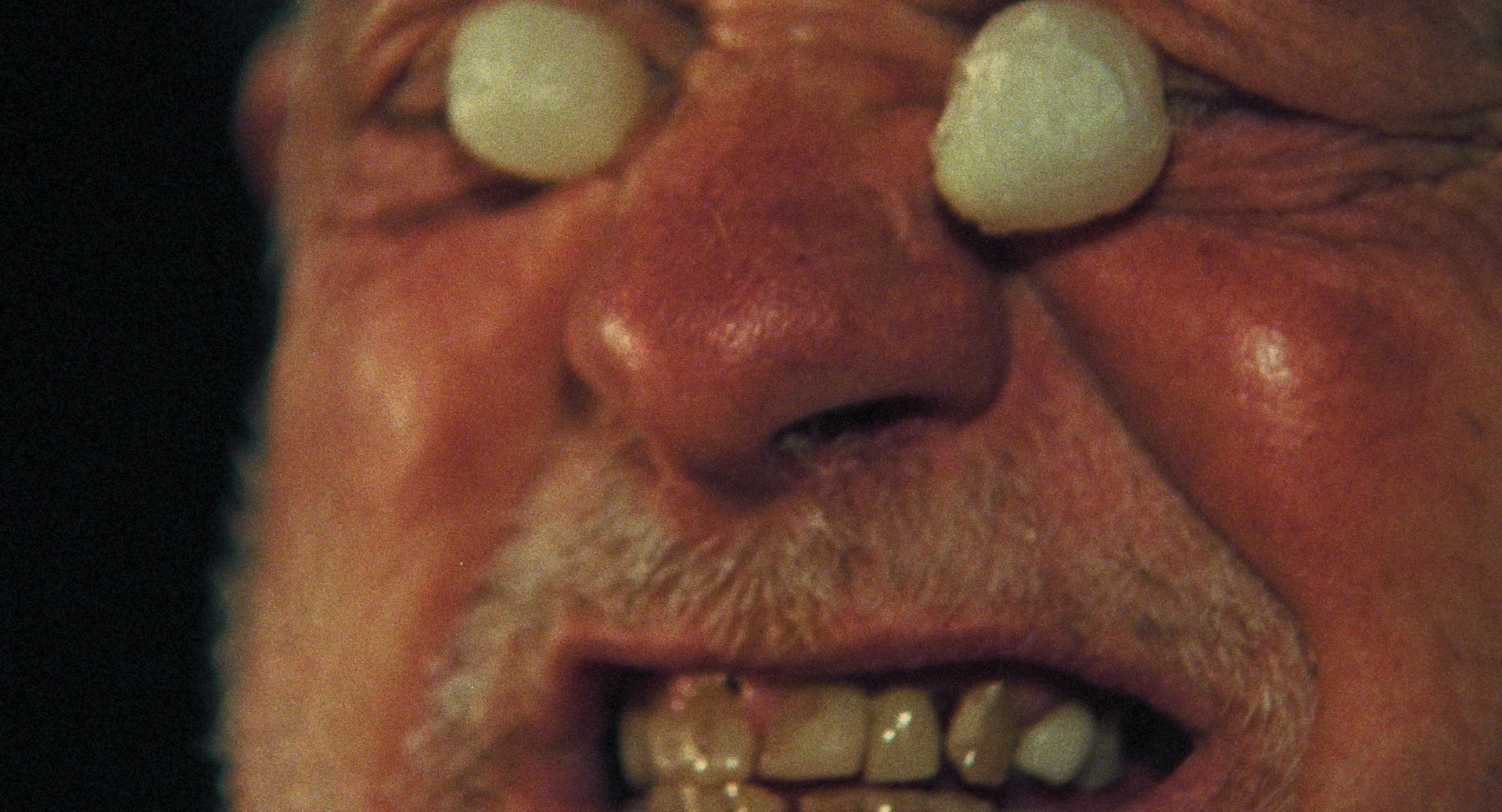
Ben: The opening image is really powerful too, this fleshy, bloody horse's head. You're straight in there. You're not pulling any punches. I would like to know more about why you went in that direction. Shooting at night, the lighting is also a stylistic choice that gives the film this horror element.
Siôn: Having heard the story, it is grotesque and dark, but what interested me was how casually that darkness sits within rural culture. I wanted to confront it quite head on, while making the film feel awkward and slightly uncomfortable. A lot of that comes from the characters' casualness and almost flippancy about everything. As the film continues, I wanted the humour and eccentricity of these traditions to emerge too. There's this belief that if you don't welcome the Mari Lwyd, darkness will continue, summer won't come and the harvest will fail. It's quite a frightening idea, but there's also something absurd about it. I wanted the film to hold both of those things together.
Ben: The film seems to break down even more as it goes along. We move further away from the narrative of the main character and it becomes more fragmented and almost open ended in a way.
Siôn: The man evolves into the horse. And how else can that go, other than in a quite absurd, fragmented way? In the final scene, the intention was to shift the tone quite dramatically, from horror towards joy. It returns to that everyday-ness of the festivals we were talking about earlier. For all their mythology and superstition, sometimes they do become a kind of small town piss-up. There's something almost anticlimactic or bathetic about that.
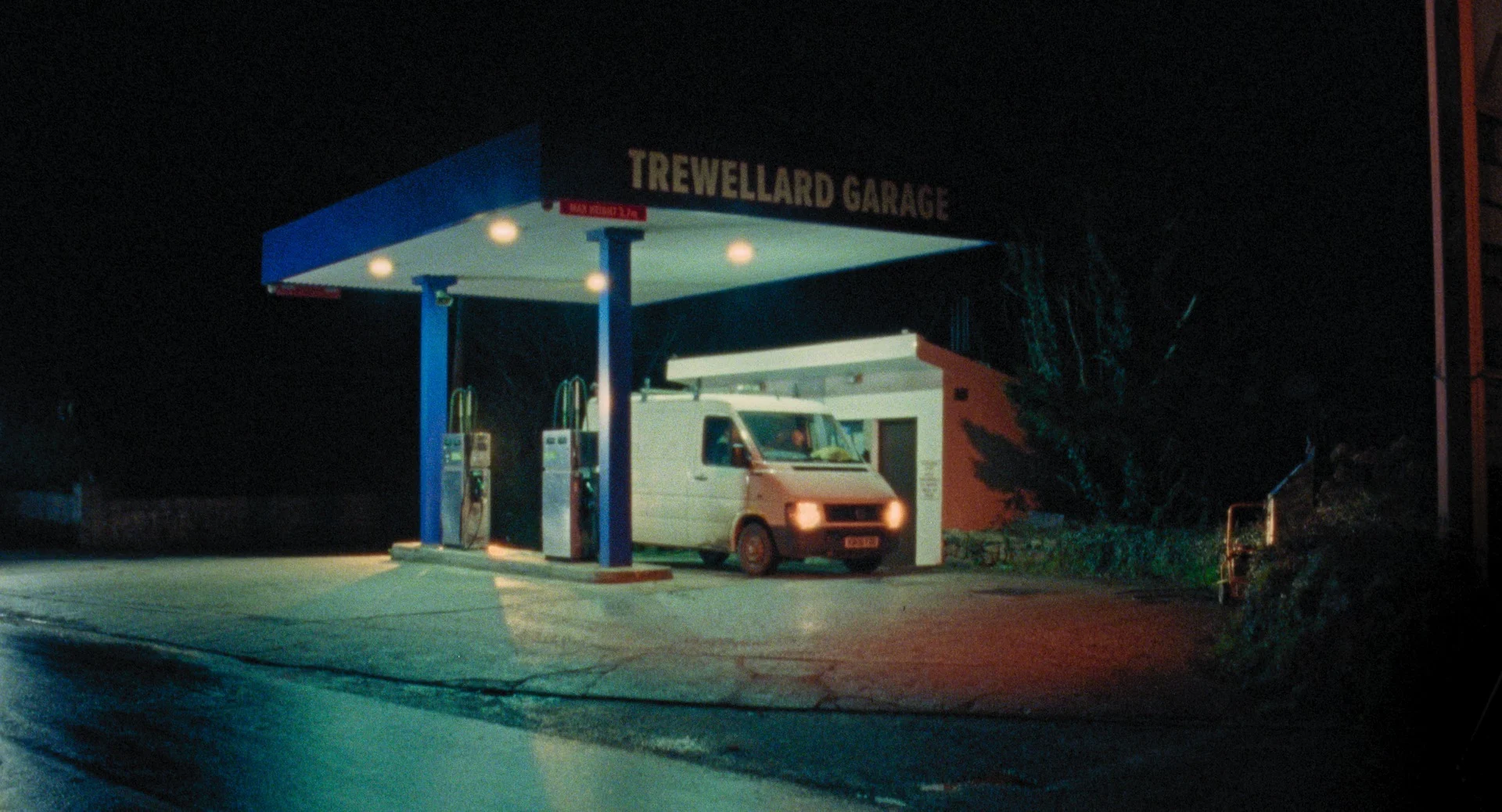
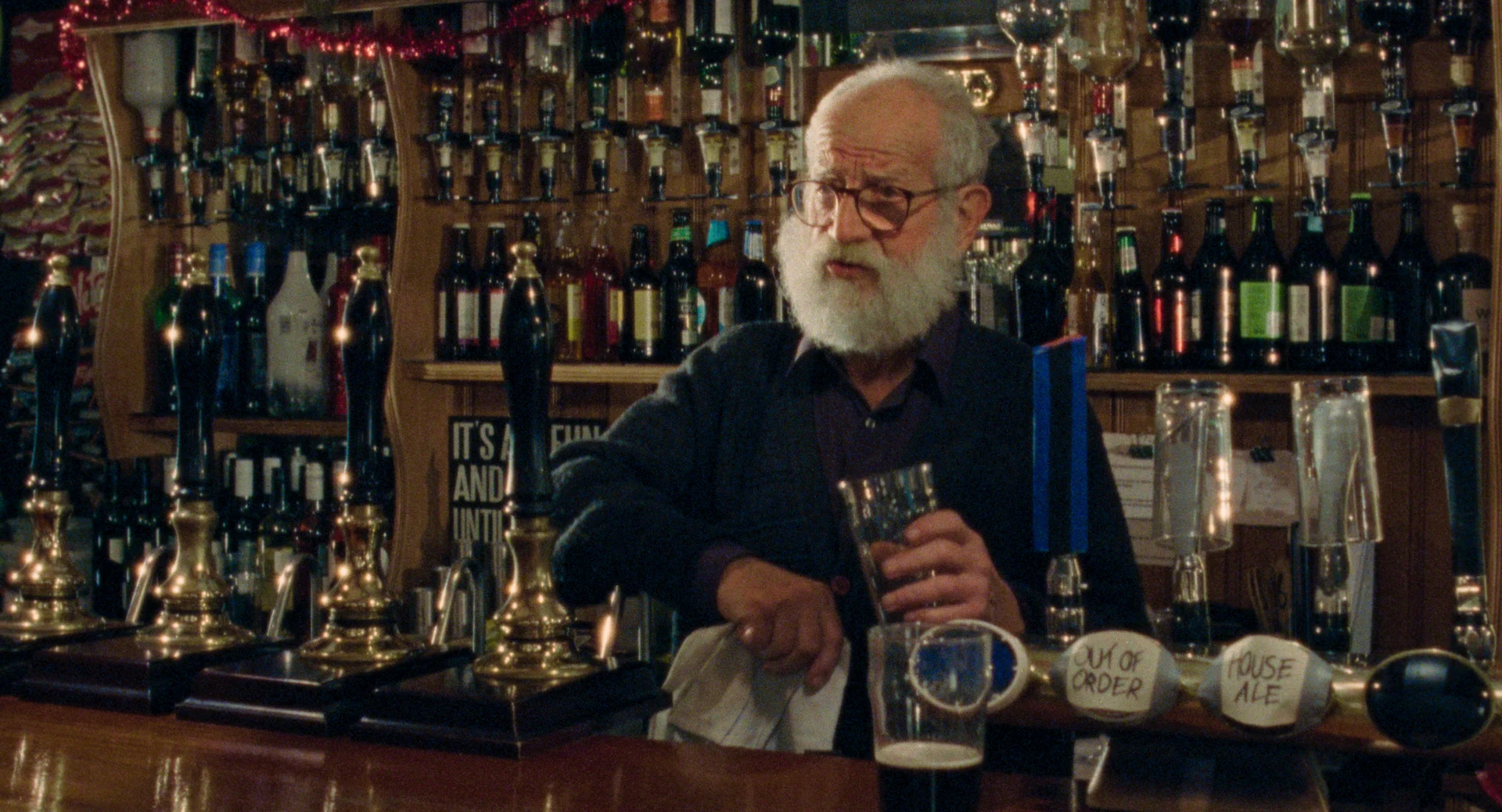
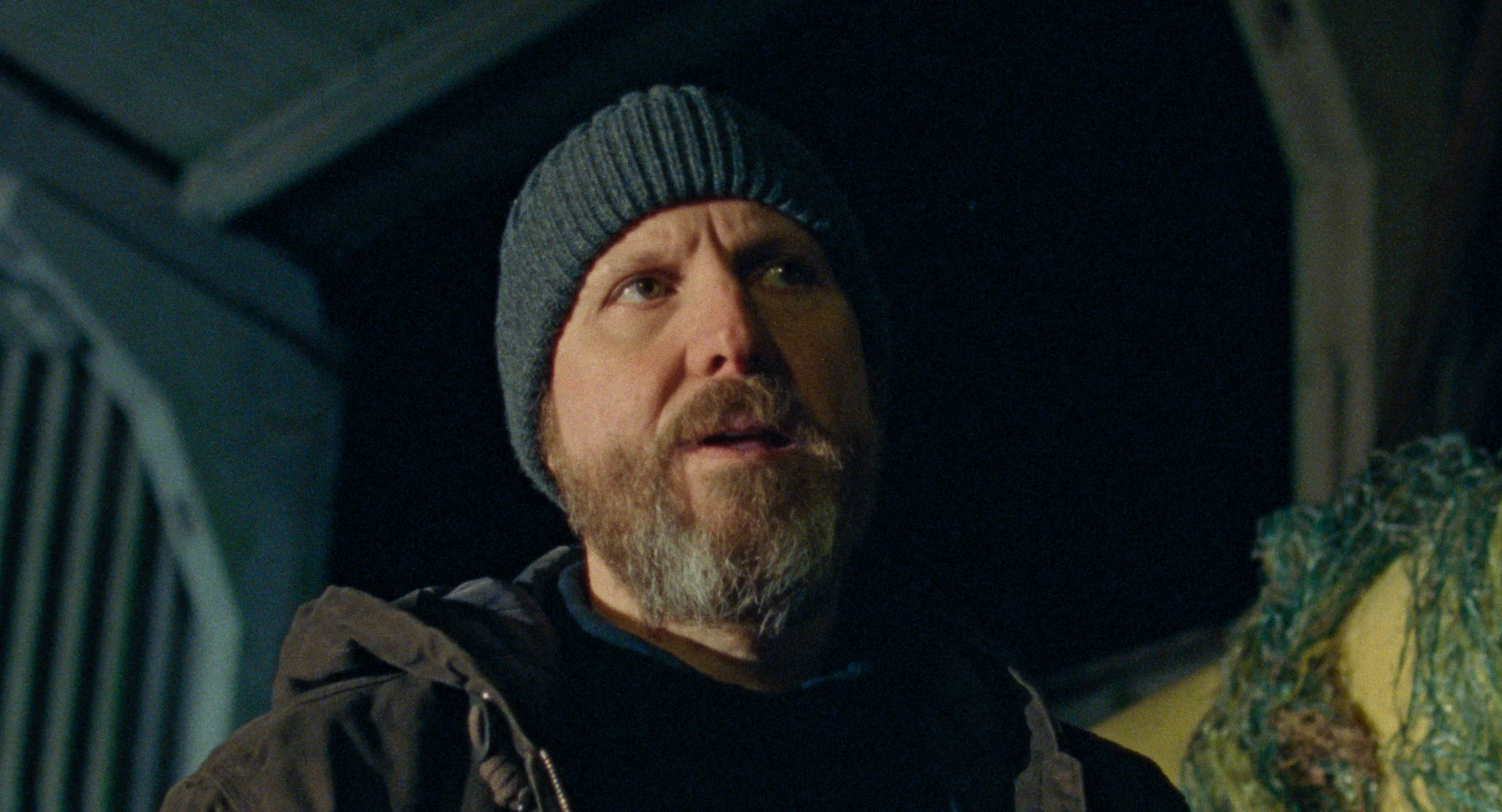
Ben: I guess in some ways it’s an anti-climax, but in other ways it's also kind of nice to me that they are, as you say, just people having a party. It's an excuse to get together, but they’re anchored by this ancient ritual, and maybe that’s enough. But I also want to know about the character who mysteriously shows up, the body parts dealer. He’s a very nonchalant guy and he's the funniest character in the film for me, partly because of his horrible nonchalance, but also because he just arrives in a van in the middle of nowhere at night. He comes along at the exact right moment you think, "Is he Death?" But not dressed in a cloak and with a different kind of language.
Siôn: And with a vape.
Ben: With a vape. Could you tell me a bit more about him?
Siôn: The original idea was for him to be a big, gruff, elderly man. But I liked the idea of him being a bit of a scally kid that maybe intimidates the lead character more than a big bloke would. Now that I'm teaching, I definitely find some smart-arse year nines to be quite intimidating!
I'm drawn to places and people and characters and different worlds. That was my main motivation in making this film.
Ben: And was that a real knacker’s yard as well?
Siôn: Some of the footage was shot in a real knacker's yard which incidentally when we first discussed making the film, that was one of my immediate thoughts. I was like, “I have to go to a real knacker’s yard because the film contains animal body parts and we can't just make those with a tight budget”. This wasn’t easy and in some ways I became the protagonist in the film. A man trying to find a dead horse. We visited a knacker's yard near where I grew up, around Abergavenny, and the young guy working there was just like The Boy. One of his lines, "We've got a donkey here and all," came directly from him. He was excited to show us around, but at the same time he seemed completely indifferent to what we were doing there.
When we were editing the knacker’s yard shots into the film we deliberated for ages about how much of the footage to use, or whether to use it at all. Sometimes it adds to these loose documentary elements and the rawness of the film, but also, it is a bit rough.
Ben: You don't want it to be shocking in a sensational way. I feel like that would take away from what the film is really about. But in the end, I think the balance is right. You see it, but it's in glimpses. And you get the darkness and the horror of it, but you're not dwelling on it too much.
Siôn: My background is in documentary, which is partly why I wanted to go to a real knacker's yard. I'm interested in finding places where these things actually exist. The jet-wash scene at the beginning uses a fabricated prop. Although it looks convincing, I think there's still a degree of separation for the viewer because the image feels more stylised. The glimpses of the real knacker's yard have a different quality, something more immediate and difficult to distance yourself from.
Ben: Speaking of your background in documentary, I really loved “Forest Coal Pit”. And this film balances both fiction and observation and blends these two ways of looking and presenting reality together. For people who don't know your previous work, what draws you to this way of filming? And is this something that you want to develop?
Siôn: I'm not particularly drawn to story for its own sake. I'm more interested in places, people, characters and the worlds they inhabit. That was really the starting point with “Pen Mari”. The narrative gave me a way into this strange, colourful, absurd world, but exploring that world was always the main motivation.
I was also interested in the idea of Pen Mari as a figure that exists somewhere between Welsh and Cornish traditions, drawing on elements of both to create a mythology of its own. There's something fascinating about the way folklore can evolve through these kinds of exchanges, where different traditions overlap and become something new.
I think that reflects my approach to combining documentary and fiction. Documentary begins with the world as it exists, whereas fiction allows you to imagine something beyond it or subvert expectation. Bringing the two together creates a space where reality and myth can inform one another.
Whether you end up making a film that's five minutes long or it becomes a feature film, just shooting things is always a good starting point.
Ben: Do you feel like you're going to carry on this merging of fiction and documentary in your future work? And are you going to stick to places like Wales?
Siôn: Definitely. I think that relationship between documentary and fiction is something I want to keep exploring. Wales feels like a natural place for me to make films, but I'm interested in the idiosyncrasies of rural narratives more generally. I'm drawn to places that have their own particular character, and I like finding ways of exploring them through film, whether that's through observation, fiction or something in between.
Ben: Have you got plans for a next film or a feature?
Siôn: I have a few feature ideas, although things can take a long time. The process for me is to start making sketches with a camera, like an artist would. Whether you end up making a film that's five minutes long or it becomes a feature film, just shooting things is always a good starting point.
Siôn Marshall-Waters is a Welsh filmmaker based in Bristol. Having studied an MA in visual anthropology at the University of Manchester, his work is grounded in experimental and ethnographic documentary. His short film “Forest Coal Pit” screened at film festivals including BFI London Film Festival, Edinburgh International Film Festival, Courtisane and Alchemy Film and Moving Image. The film was nominated for a Grierson Award and received a special mention for the Grand Prix Documentary Short at Cork International Film Festival. His first narrative short “Pen Mari” was commissioned by BFI Network and WePresent, produced by Bosena (“Enys Men”).