


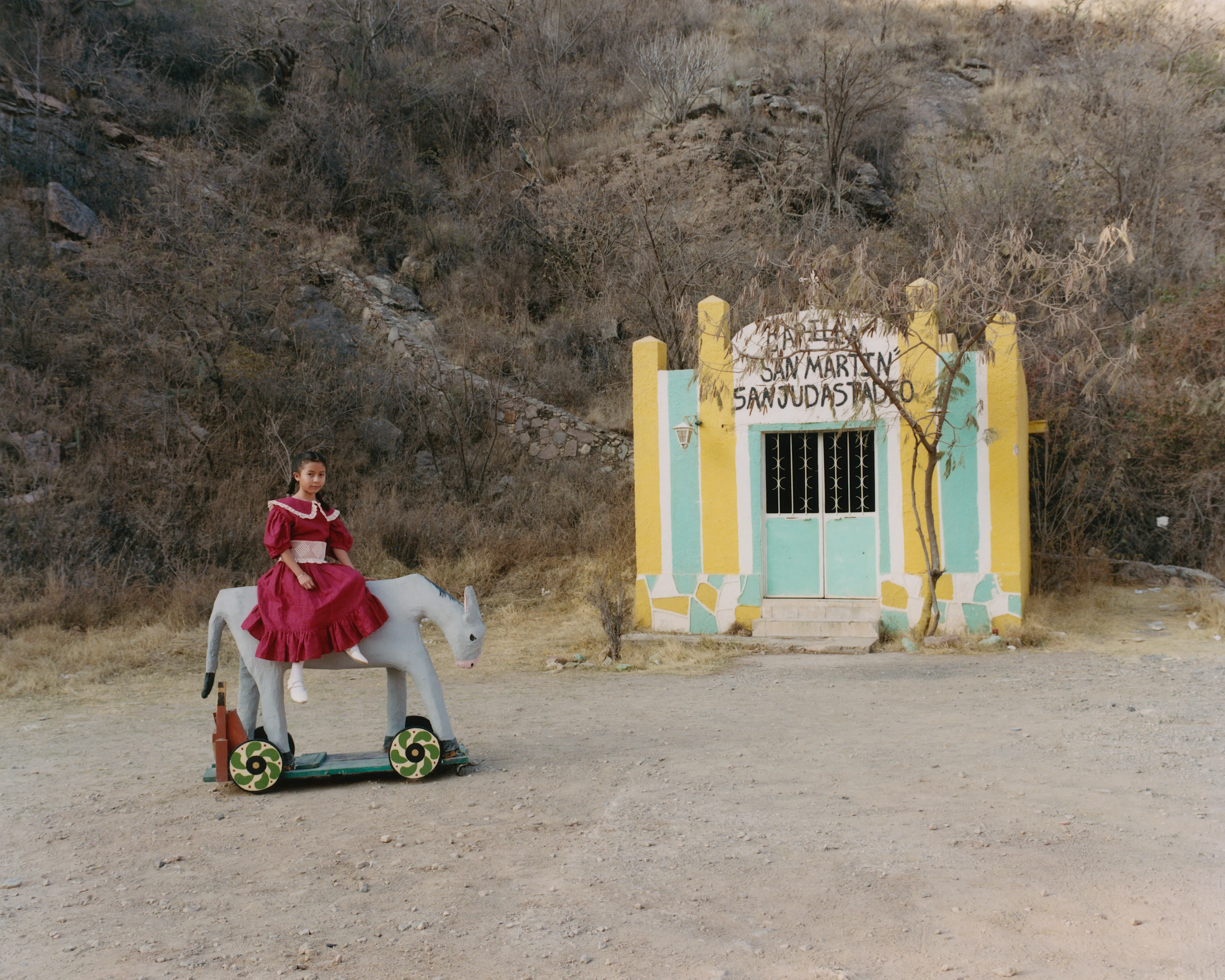
Ever since a chance encounter with an elderly doll-maker in Venezuela, photographer Silvana Trevale and art director and stylist Daniela Benaim have felt pulled to explore the traditions of doll- and figure-making across cultures. The first chapter of their project “Muñecas and Muñequerxs” focuses on Guanajuato, Mexico, and the rich tradition of cartonería, the art of transforming paper and paste into sculptural figures. The duo tell Dalis Robinson about the collaborative, supportive creative community they documented there, and why these cultural living traditions are so important to document.
The human impulse to make a figure in one’s own image, a vessel for worship, desire or fear, is one that transcends cultures. In their long-term project, “Muñecas and Muñequerxs,” Venezuelan duo photographer Silvana Trevale and art director and stylist Daniela Benaim set out to explore the traditions embedded in dolls and the art of figure-making.
Benaim’s first conscious memory of dreaming is of dolls. At barely three or four, she woke up insisting her room had been full of rag dolls, and her unsettled mother took her to an artisans’ market in Caracas to buy her first one. That vivid early dream has shadowed Benaim’s work ever since, and dolls became a recurring motif for her. She was inspired by the work of Venezuelan painter and sculptor Armando Reverón, who kept life-sized dolls as muses and companions at his home, El Castillete, on the coast of La Guaira. El Castillete was destroyed in a catastrophic mudslide in 1999, and for Benaim, this story stands for something larger. “In Venezuela, what’s home to you might not exist tomorrow,” she says, a line that speaks to the objects one salvages when leaving home with no promise of return.
There are things that are gone, that we’ll never even know existed and that are key to our nations, to our culture and identity.
For Trevale, the fascination runs through her grandmother, whose single surviving rag doll she still keeps alongside the hand-sewn dresses her grandmother once made her. She describes it as “the initial language”: one of touch, of lineage, of a domestic femininity passed down through these meaningful objects and a thread through her documentary work.
A chance encounter in Río Chico, a Venezuelan beach town, brought that common fascination into focus. There, Trevale photographed an elderly doll-maker working from her home, surrounded by rag dolls of her own making. Struck by the dolls, their maker and the growing fragility of her craft, Trevale and Benaim decided to turn their lens on both the dolls and the people who make them. That sense of urgency has long driven Trevale’s work. “It makes me anxious to know there are things that are gone,” she says, “that we’ll never even know existed and that are key to our nations, to our culture and identity.”
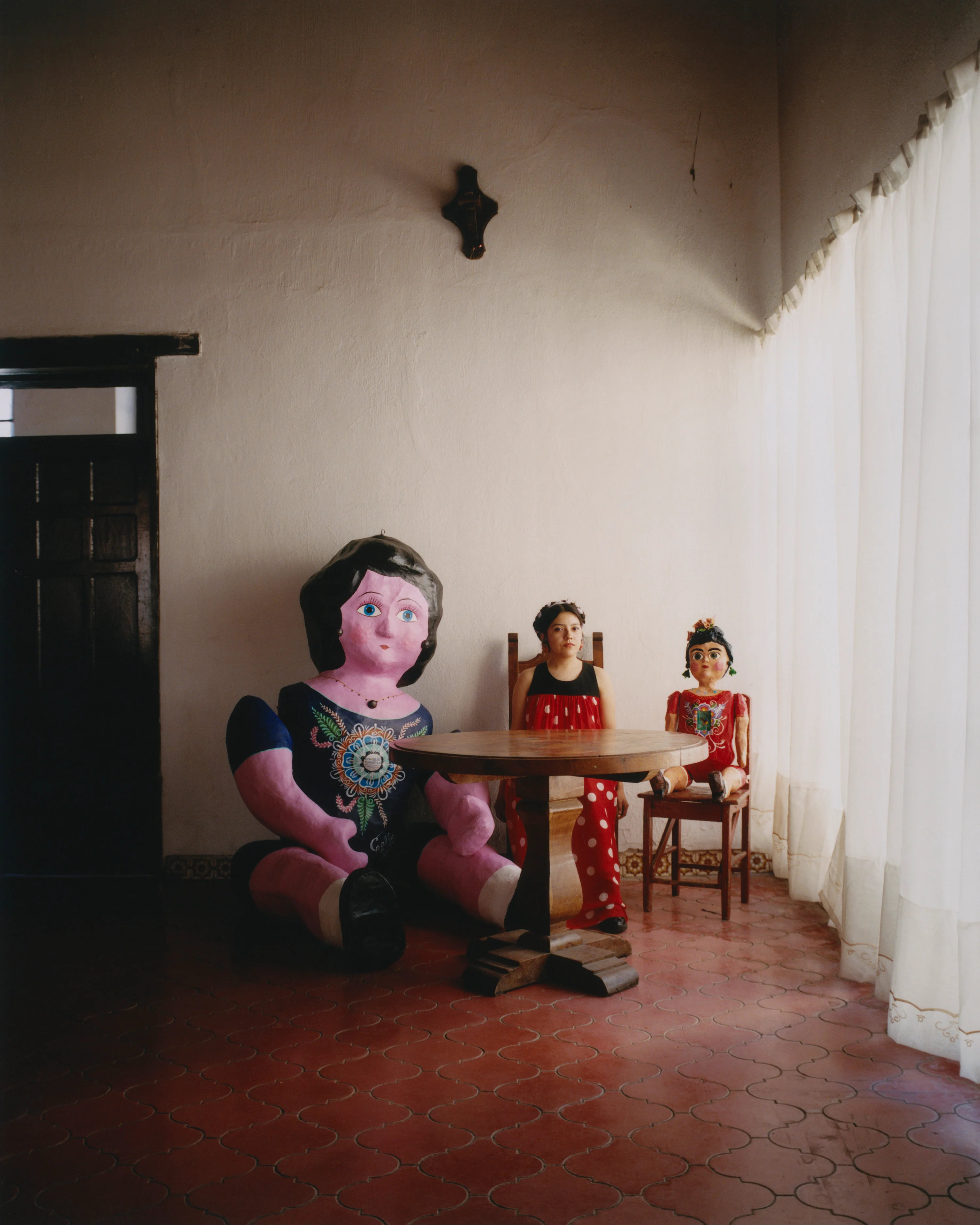
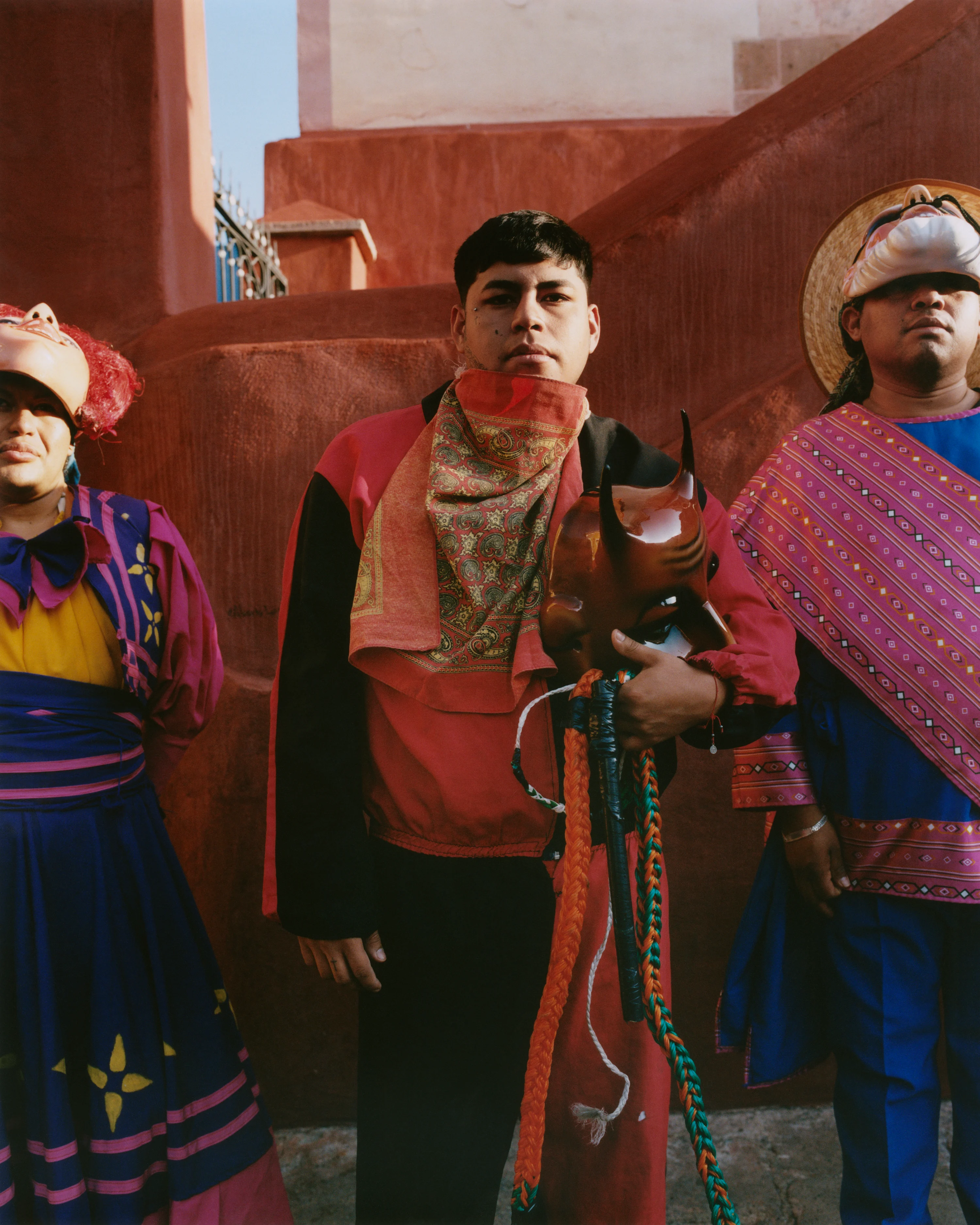
“Muñecas and Muñequerxs” explores dolls as reflections of the self and the other, the familiar and the strange and the bond between creator and creation. The duo’s research kept circling back to Carmen Caballero Sevilla, the figure-maker whose Judas figures found their way into the homes of Diego Rivera and Frida Kahlo. They chose to anchor the first chapter of the series in Guanajuato, Mexico, and its cartonería tradition.
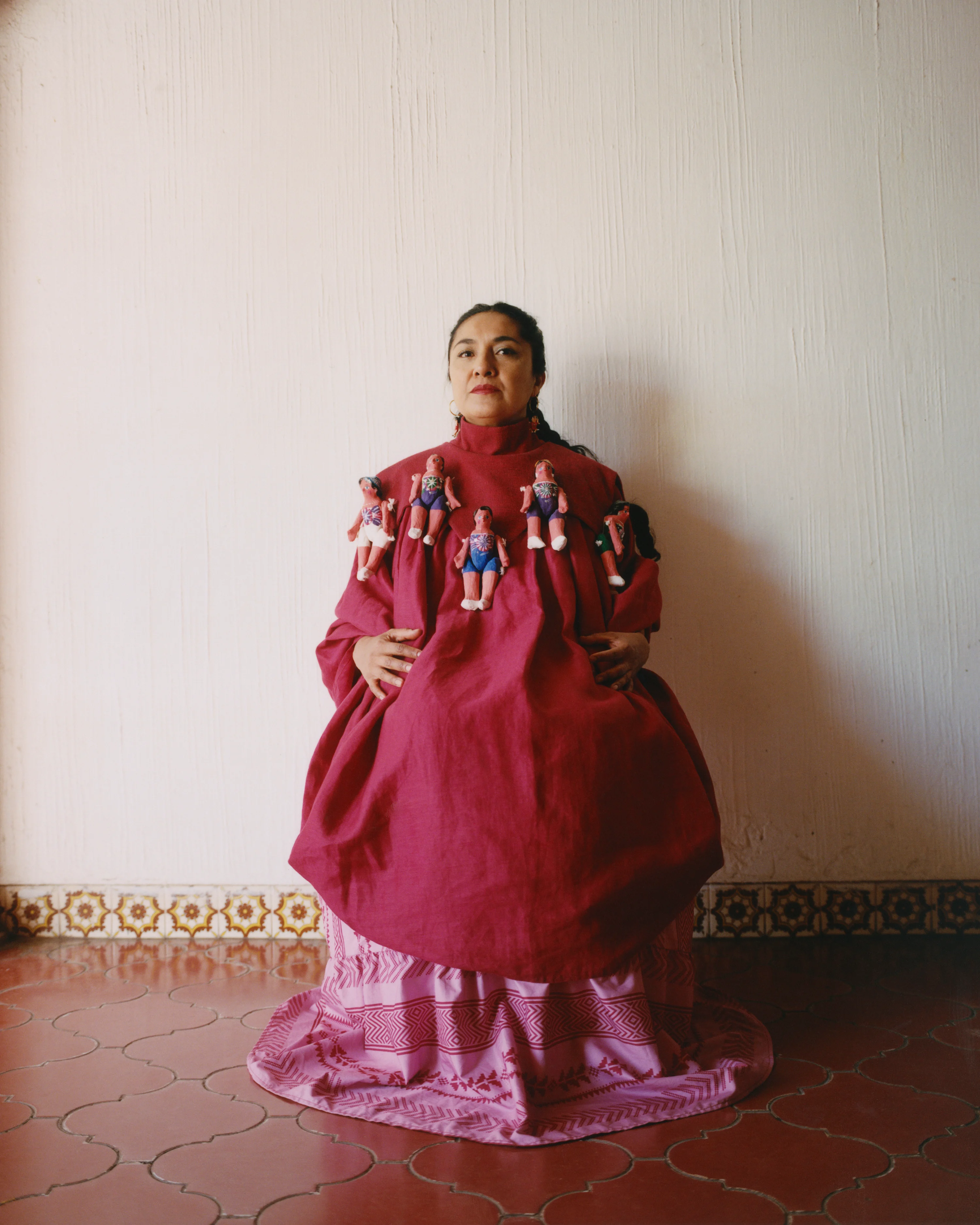
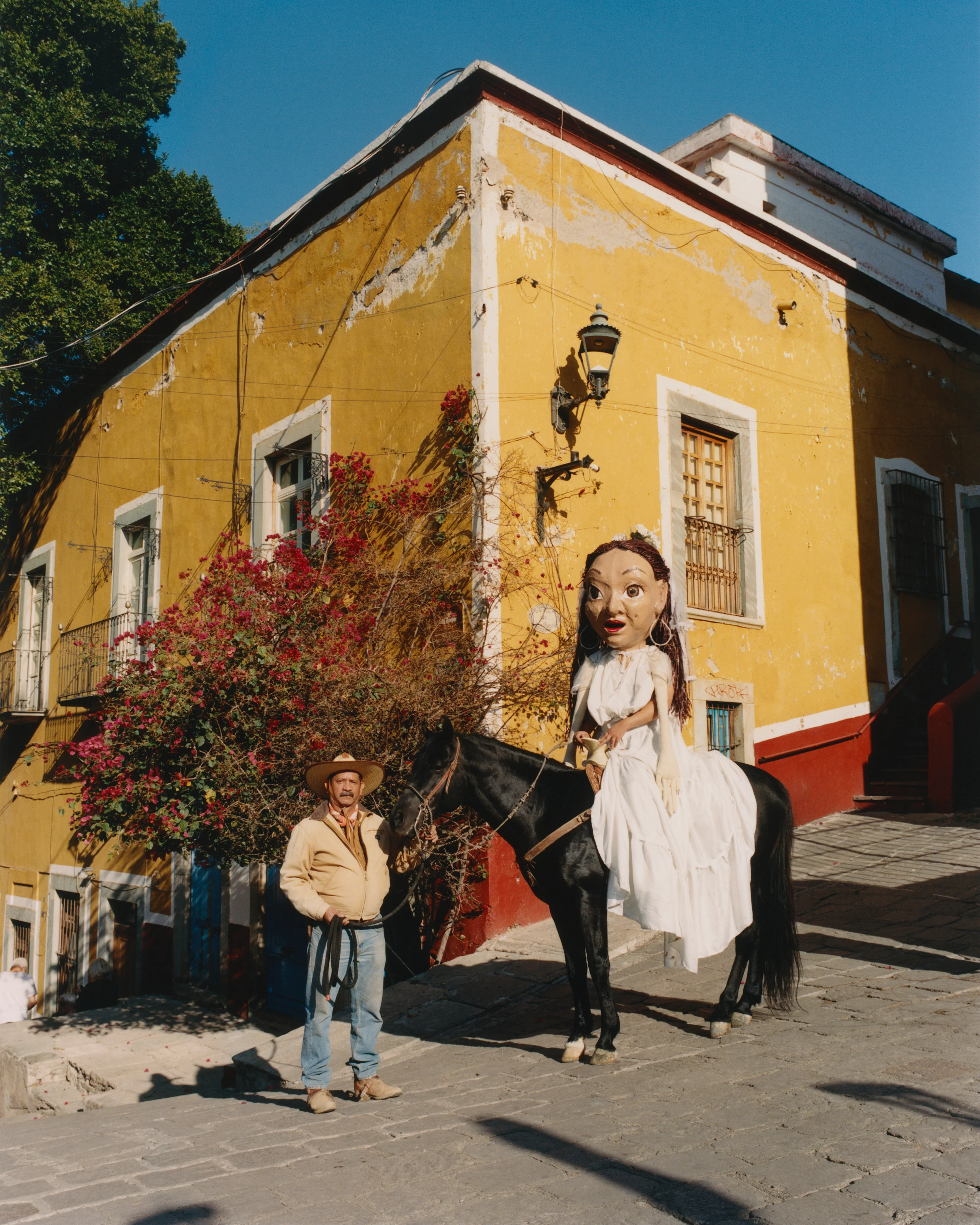
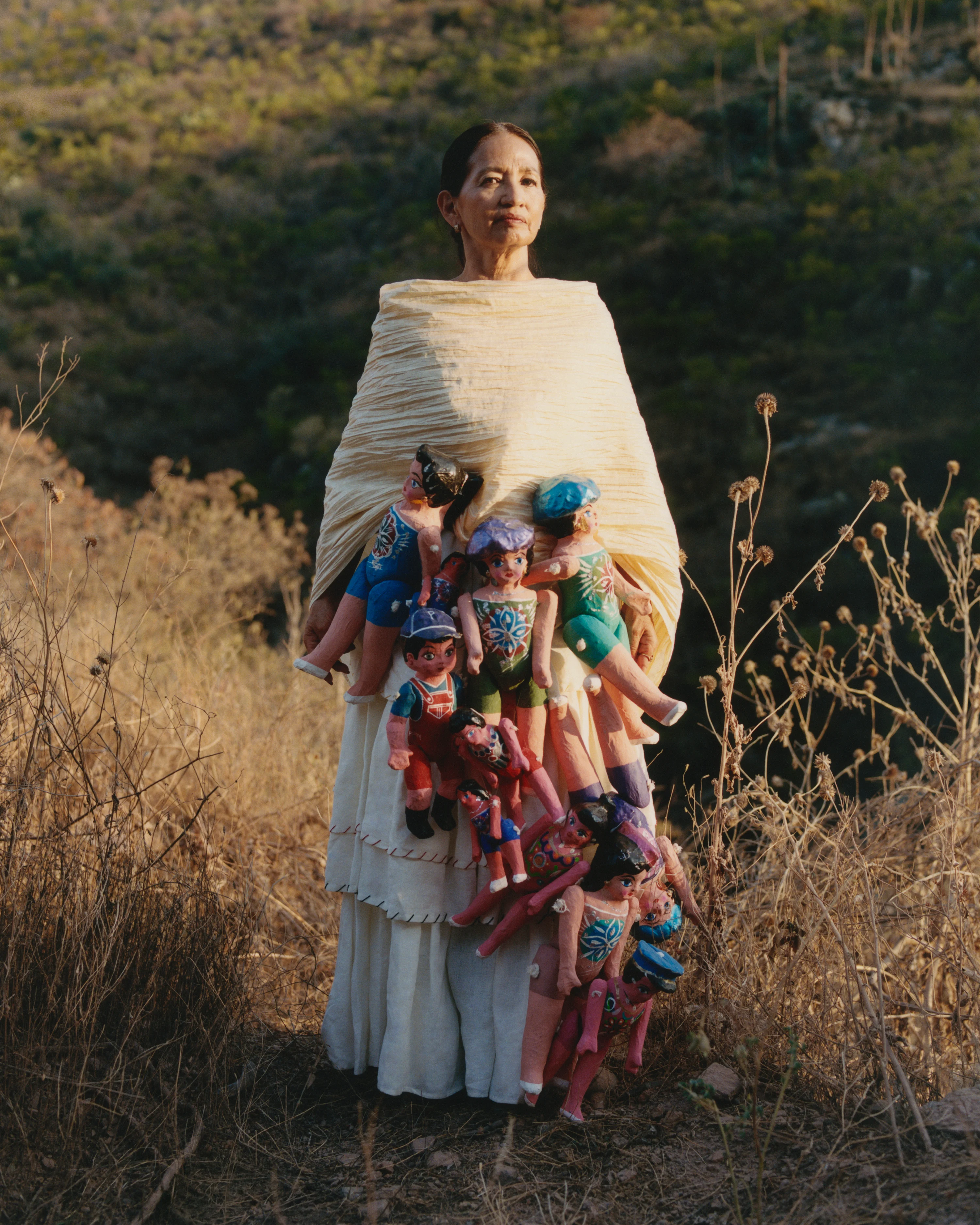
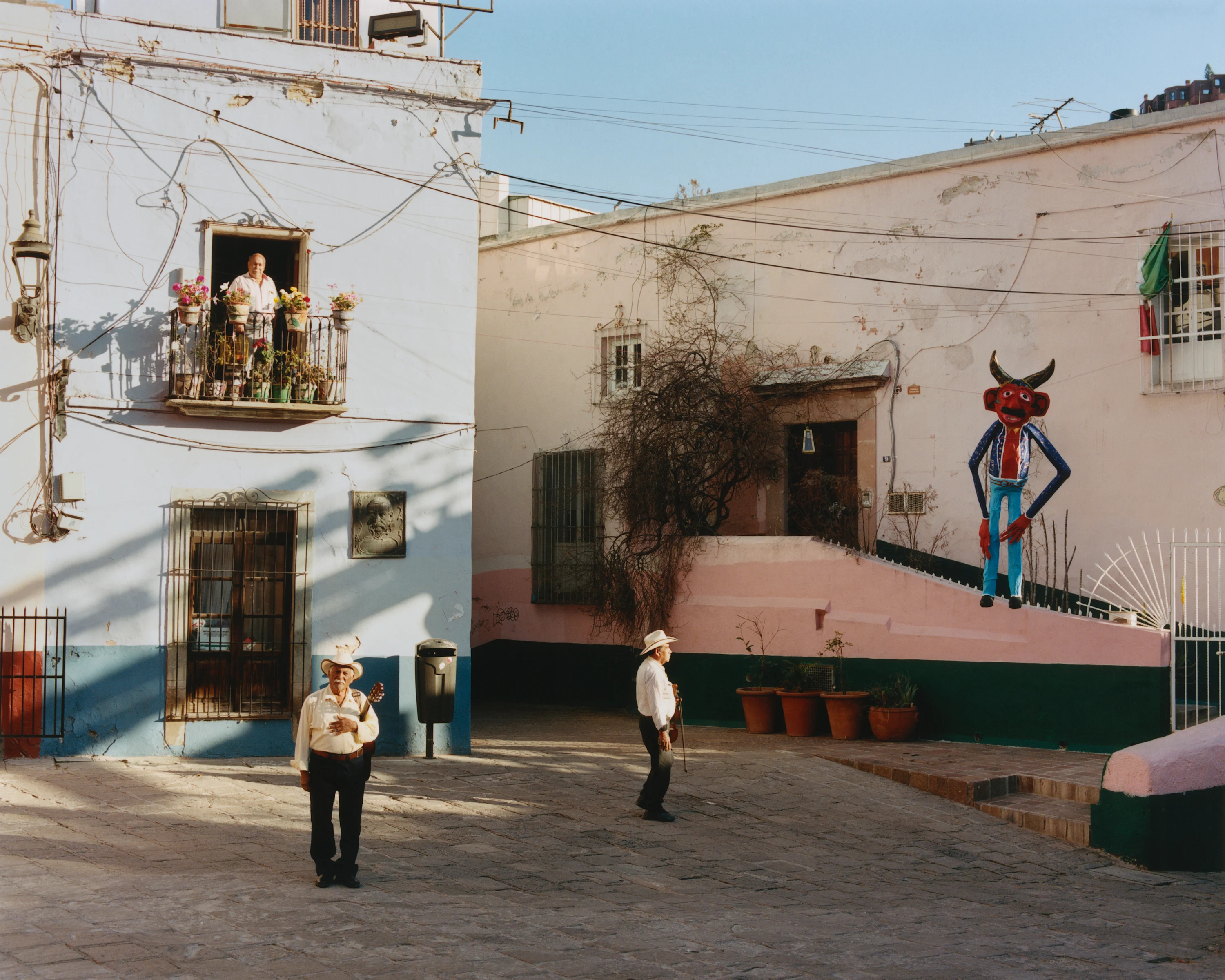
Cartonería is the rich tradition of transforming paper and paste into sculptural figures, turning readily available materials into objects of play, ritual and imagination. The series moves between documentation and fiction, with real makers and stories at its heart while staged photographs reframe their traditions through contemporary questions of identity, gender, memory and representation.
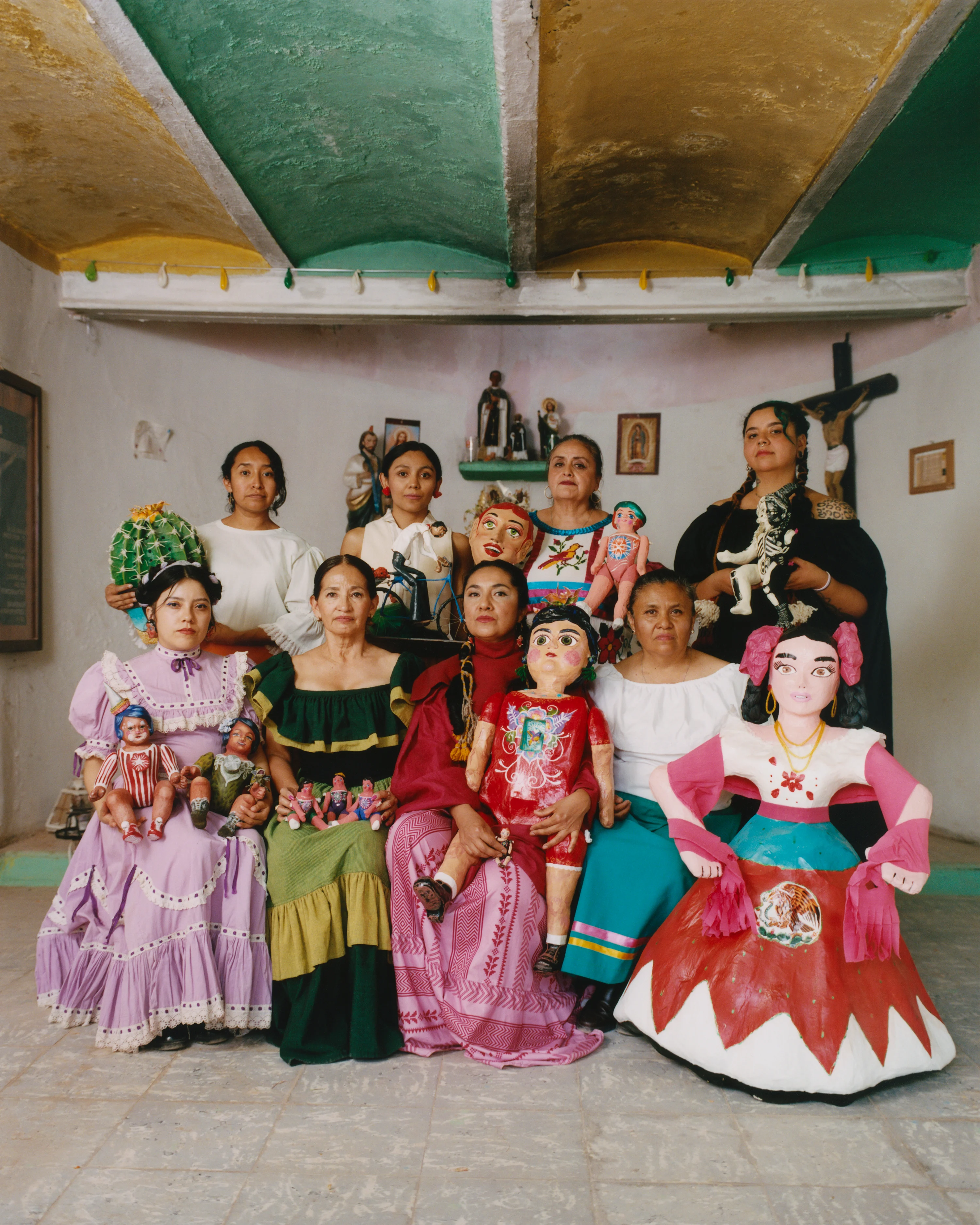
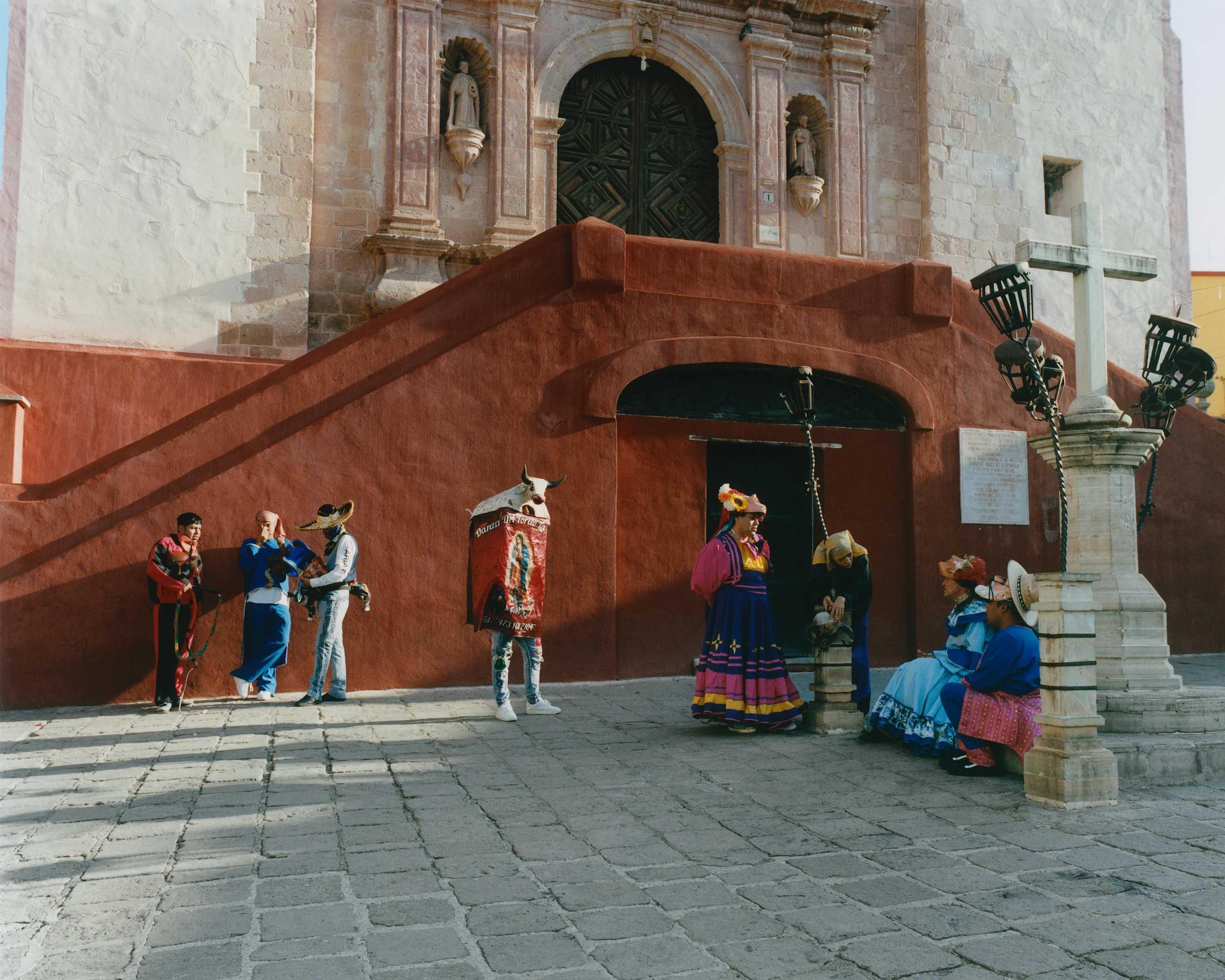
Their lens took in angelitos, diablitos, the Danza del Torito and the Judas figures burned each spring in a ritual that fuses Catholic tradition with pointed political commentary. Once caricatures of Judas Iscariot, the effigies now just as often satirize politicians and public figures as ephemeral artworks and representations of evil meant to go up in flames. “Creating these works, only for them to disappear afterward, is astonishing,” says Benaim. At the center of this practice were Julieta and Leopoldo, an artist couple whose devotion to the Judas tradition Benaim describes as a love story in itself, one made more moving, they say, by how unaccustomed they seemed to having their work witnessed, celebrated or documented at all.
That gratitude ran in both directions. What struck Trevale and Benaim most, working across Guanajuato’s community of doll- and figure-makers, was the absence of competition between them. Muñequerxs who championed each other’s work rather than guarding it, artisans and artists who showed up in twos and threes rather than working in isolation. In Trevale’s words, a kind of extended family, bound by a shared understanding that their craft is at stake. Many of them reject the label of craft altogether. “They don’t call themselves artisans, they call themselves artists,” says Trevale. “That turns the dolls not into crafts, but into art.”
Creating these works, only for them to disappear afterward, is astonishing.
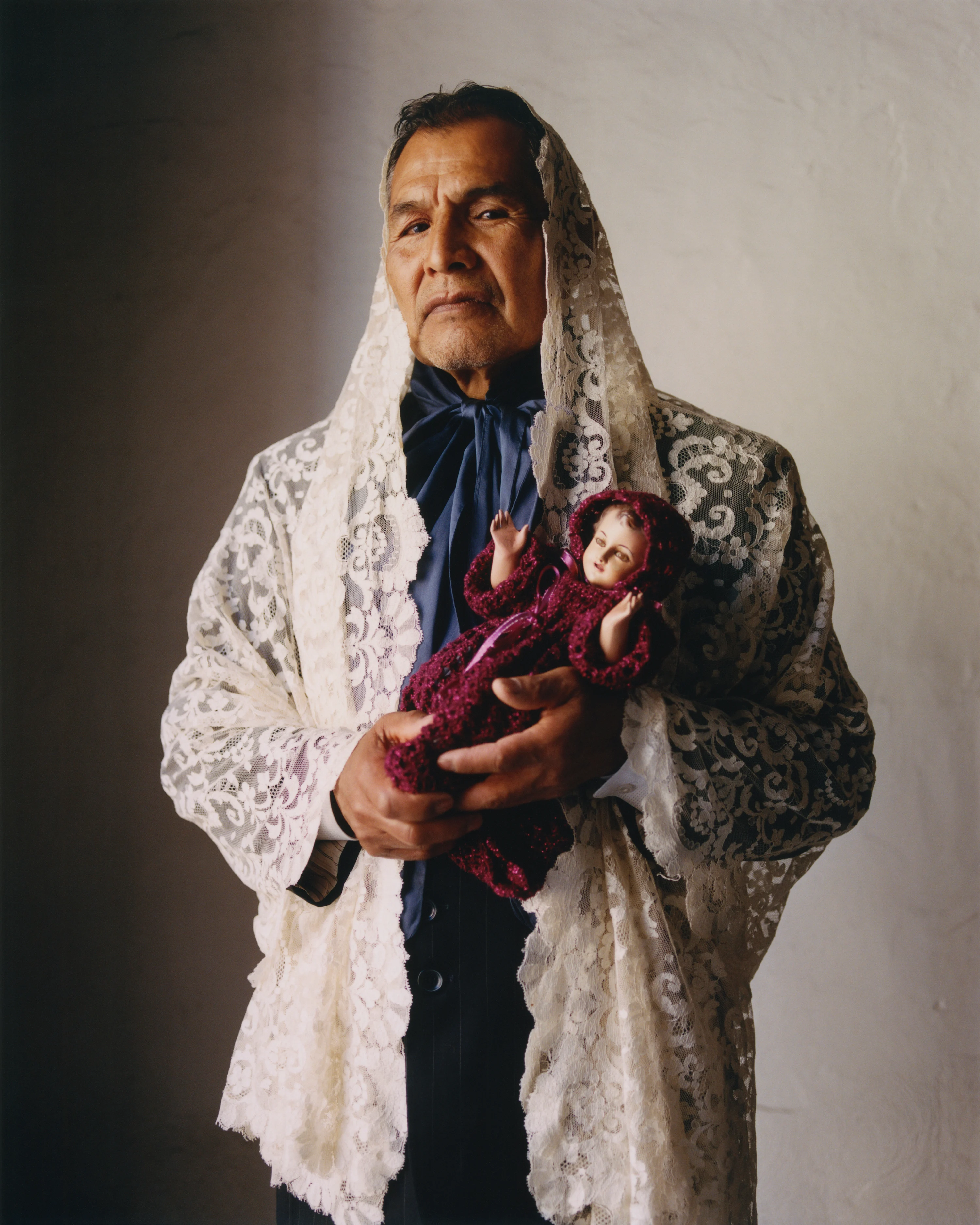
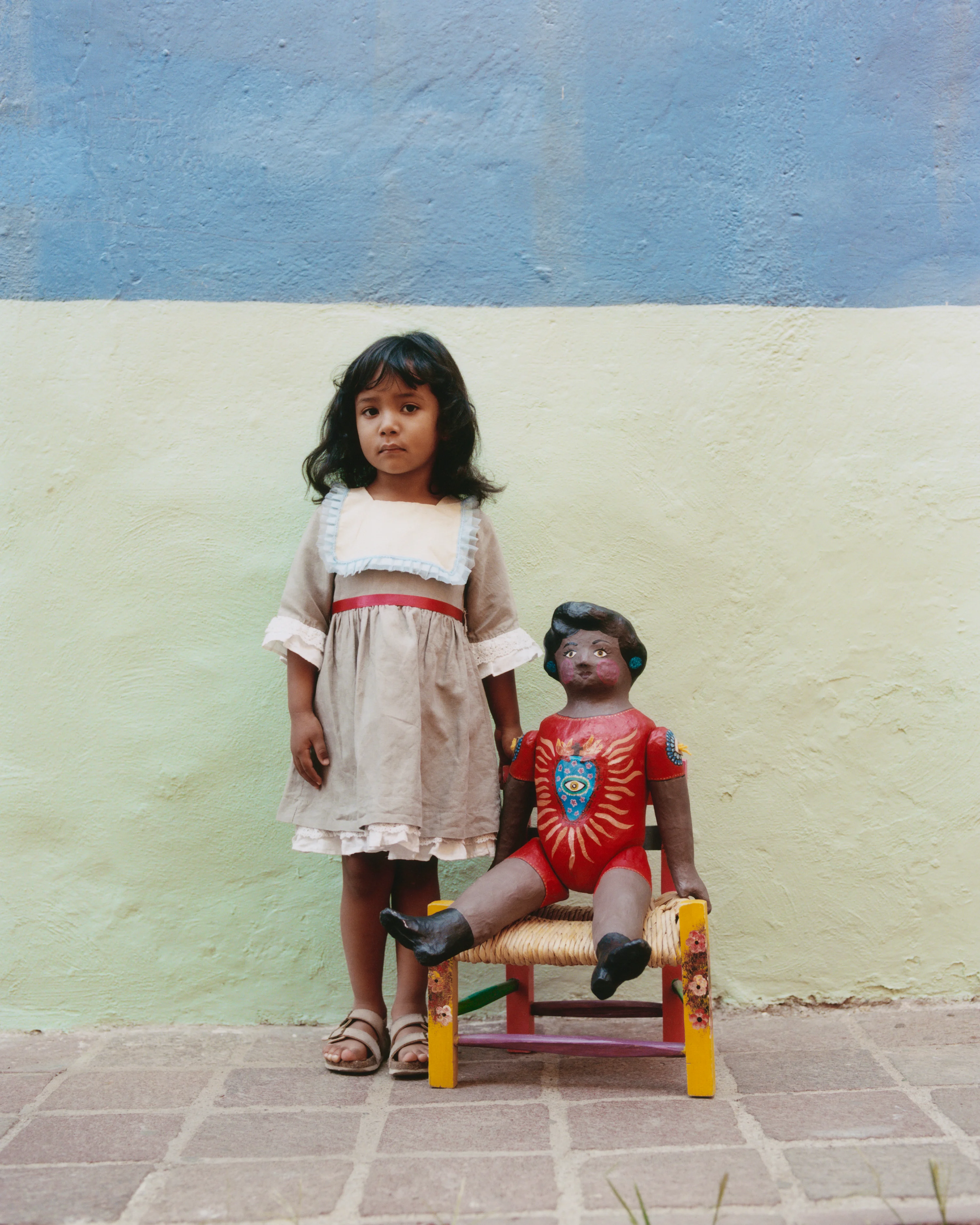
From its origins, cartonería offered an affordable alternative to porcelain dolls, and it became a language of its own as women began making dolls and toys for their children. “Dolls are, in a way, the creatures the artist makes,” says Benaim. Some inherited the craft from their mothers and grandmothers, while others turned it into an artistic or community practice. Though women sit at the heart of the craft, the muñequeros they met are no less devoted. From Leopoldo at work on his Judas figures to a man in a lace veil cradling a baby Jesus figure like a real child.
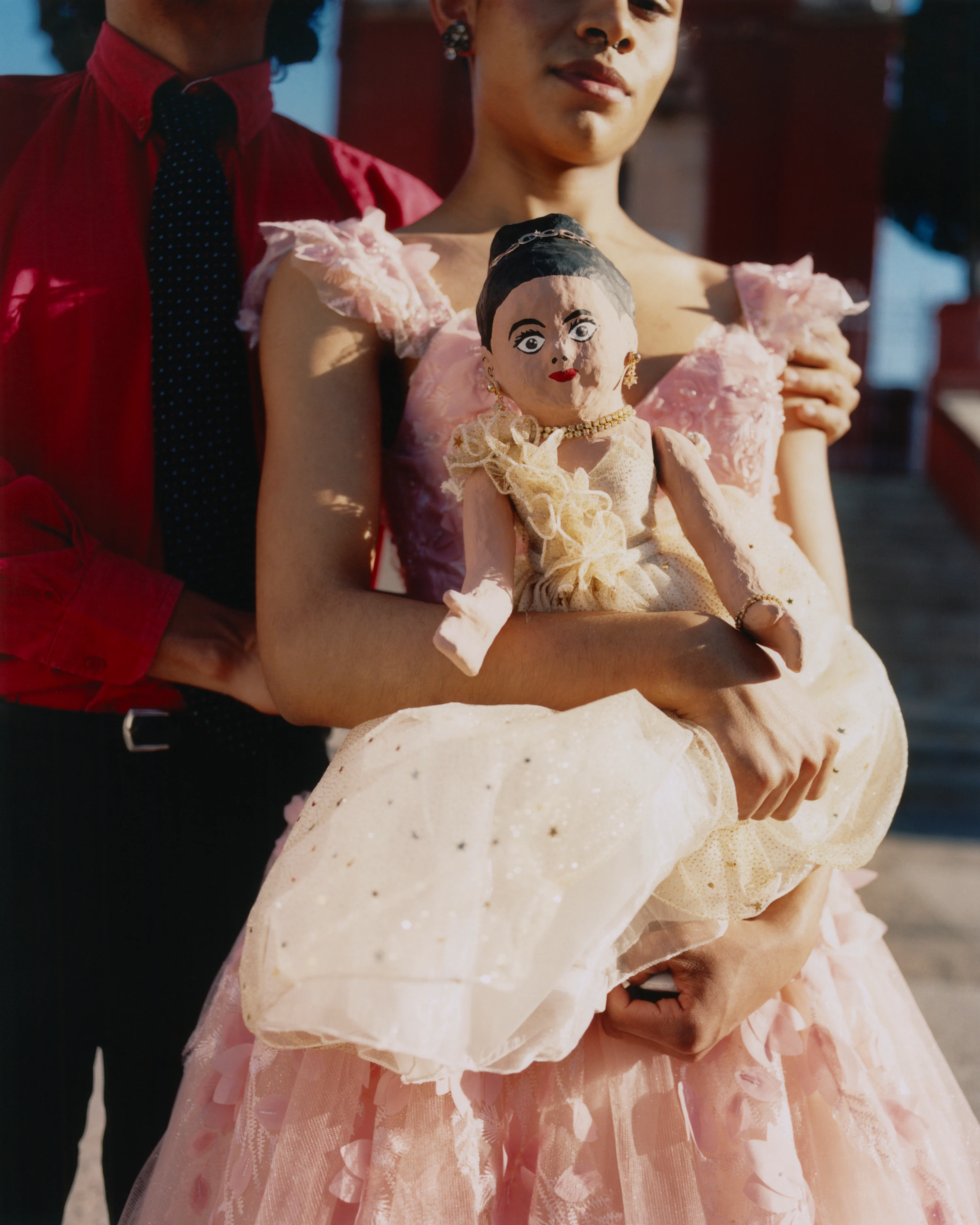
Dolls are among the first objects many children play with, and the imaginary attached to them takes shape just as early. The tradition of la última muñeca, the doll customarily given at a quinceañera, marks the passage from childhood into womanhood. The young woman Trevale photographed, who is trans, turns the ritual into a self-determined act of transformation and becoming. “People always talk about that rite of passage for women,” the duo says, “but what about the rite of passage for other genders?”
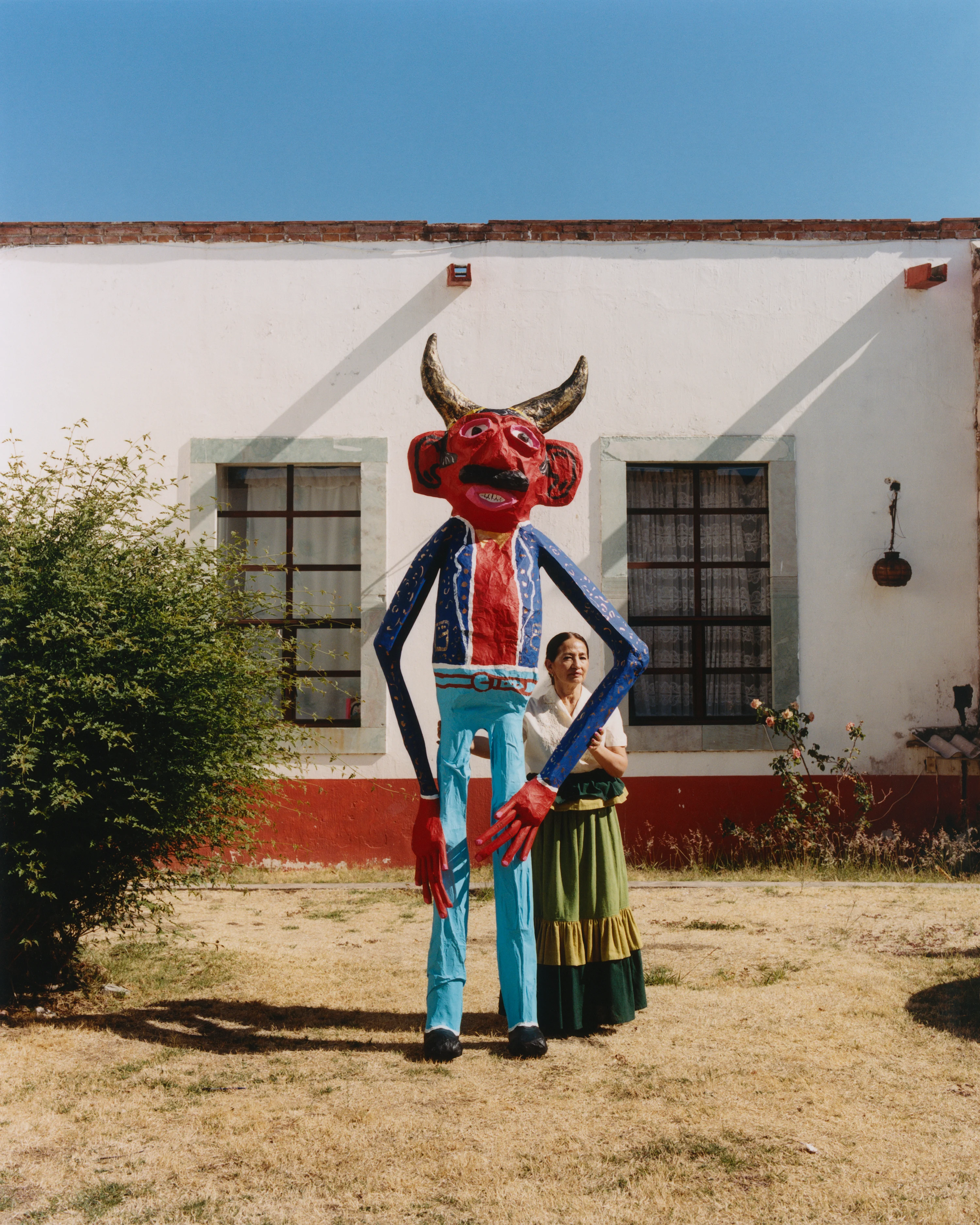
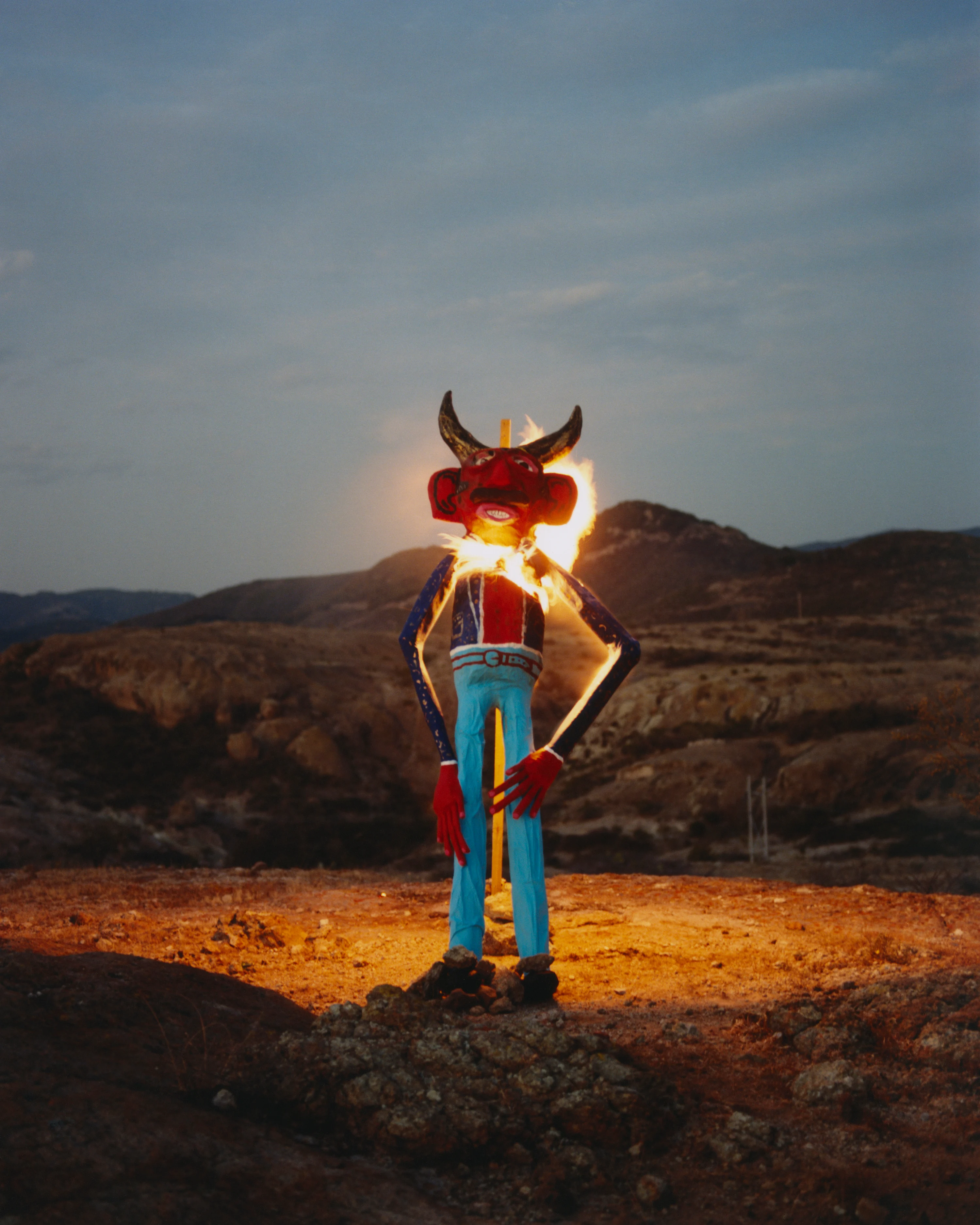
In the Danza del Torito, performed at patron saint festivities, dancers adorn themselves with cartonería masks and costumes. Historically performed by men, the dance includes male performers dressed as female characters, making it a place where gender is played with through performance. In some regions, the torito symbolizes fertility; in others, it’s meant to symbolize the devil chasing sinners to punish them, and the triumph of faith over sin. The bull effigy central to the dance is covered in firecrackers and set alight; its burning symbolizes purification.
Benaim and Trevale hope the next chapters of “Muñecas and Muñequerxs” will take them to Venezuela, across Latin America and beyond, to keep photographing the worlds we build around what we make in our own image. The duo thinks of the project as a testament: a living record of knowledge that could otherwise vanish within a generation.
Project credits
Photography: Silvana Trevale
Creative Direction & Styling: Daniela Benaim
Producer: Gianni Felice / Production Society
Local Production: Pia Siliceo & Katie Clancy / Las Comadres Producciones
Location Scouting: Pia Siliceo & Katie Clancy / Las Comadres Producciones
Casting: Pia Siliceo & Katie Clancy / Las Comadres Producciones
Photography Assistant: Sergio Ortiz
On-set Stylist: Dani Fabrizi
Set Costumer: Amanda Guzmán
Artwork Transportation: Alejandro Palacios & Tere Delgado
Local Production Assistant: Bernarda Trueba Uzeta
Hair: Katie Clancy
Make-up: Xóchitl Citlali Chávez Rangel
Maestros Cartoneros (Master Cartoneros)
Diana Gisel
Fátima Guerra
Delia Romero Martínez
Brittani Walker
Citlali Villanueva
Julieta Bejarano Macías
Gabriela Alvarado
Julia Chávez
Leopoldo Santamaría Favela
Talent
Girl on Donkey: Andrea
Quinceañera & Chambelán: Emma Aurora Ramírez & Carlos Hernández
Men at the Quema de Judas: Luis Felipe, José Manuel & Juan Pablo
Danza del Torito: Miguel Trujillo, Ángel, Román, Miguel Salazar, Katsumi, Edwin, Enrique Rodríguez & Raymundo
Charro: Pedro Jasso
Mojiganguero: Santiago Siliceo Trueba
Man with Niño Jesús: Martín Guevara
Girl with Doll: Saoirse Amalthea
Girl in Lupita Costume: Julieta Bejarano Macías
Special Thanks
Municipio de San José Iturbide
Municipio de Salamanca
Banzo
Costaiia
Korimi
Alpha Vestuario