

Tattooist and artist Mel Perreault’s work is situated in a temporal plane that is at once the past and future. In dialogue with the legendary fetish artist Tom of Finland, their “Tammy of Finland” series, called “The Tammys,” places leather dykes in a lineage of erotic art and queer world-building. Megan Wallace speaks to Perreault about their utopic tableaux and how these images cheekily re-appropriate the visual codes of post-war Americana.
Non-binary artist Mel Perreault spent their childhood growing up in Cantons-de-l’Est in rural Quebec. In the absence of representations of queerness or proximity to the community, they developed a vivid imagination and turned to art to escape.
Despite this innate interest in the arts, they initially struggled to find their specialism before discovering tattoo artistry: a medium where figurative art merges with skin, and the easy divide between subject/viewer is blurred. “I’ve been drawing and painting most of my life, really,” says the Montreal-based artist. “I studied 3D animation in college before dropping out and for a few years I worked in special effects—sculpting, molding and painting for different projects, which was good practice for figurative painting. The style of my present work was really honed when I started tattooing seven years ago.”


By studying the conventions of American tattooing, they uncovered their preference for bold lines. “I’ve always loved American traditional tattooing, the simplicity of the bold lines of tattoos and the way flash sheets were painted,” they say. Now, Perreault’s practice spans tattoo artistry as well as illustration and figurative painting.
Their distinctive style draws on the aesthetic codes of leather dyke culture, and their creations often possess a retro-revisionist bent—in particular, imagining hallmarks of Americana through a queer lens. As a counter-point to pin-up artists like Alberto Vargas and Olivia De Berardinis who dedicated their work to idealized explorations of the female form in the post-war era, Perreault takes the genre’s sexual charge and meticulous exploration of form and applies it to the queer body.
However, while the heyday of pin-up illustration was dominated by the undulating curves of smiling white women, Perreault’s take on the erotic figure is altogether different. In the artist’s work, a pin-up takes the form of a dyke with rippling biceps draped over motorbikes, the musculature of bodies pressing against the confines of denim or leather, and tattooed butches casually lounging in a leather harness.


I started drawing and painting a world where gender is malleable.
Sketching an alternate narrative to hegemonic beauty standards, the artist is interested in capturing their queer community’s sensibilities: embodying the eroticism of fluxed gender and distilling a spirit of resistance. “It’s all about celebrating toughness and depicting strength in queer, non-binary, trans, butch and lesbian+ identities. I’m trying to capture an essence or vibe, for lack of a better word, in visual form,” they say. “It’s sort of unmistakable when someone embodies that, regardless of what they physically look like, and it’s incredibly interesting the way viewers respond to this imagery, seeing themselves or their friends in larger-than-life figures.”
Through references to leather culture and bulging muscles, as well as highly eroticized figures referencing sailors and cowboys, Perreault is in conversation with the legendary fetish artist Tom of Finland. So much so, the artist has their own series of “Tammys” (short for “Tammy of Finland”) which situates their pin-ups in imagined worlds of queer liberation.

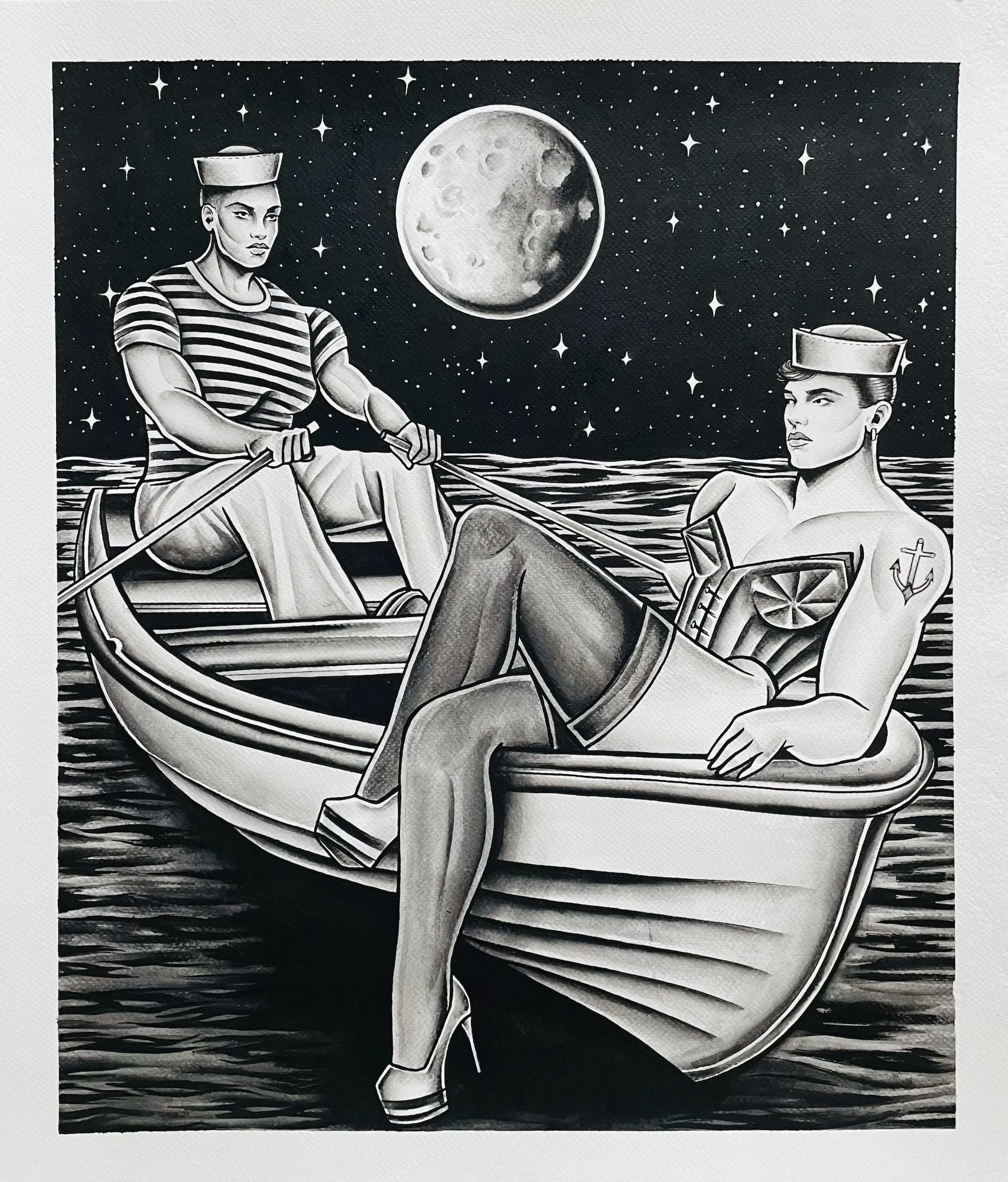
Drawing on the erotic charge of the earlier artist, Perreault changes the focus, bringing members of their own queer, trans, non-binary and lesbian+ culture into the frame. “I’ve always been a fan of Tom of Finland and my Tammys did come from an admiration of his work, but I realized that my reality wasn’t represented in it,” the artist explains. “I felt there was a real need to represent more expansive queerness. So I started drawing and painting a world where gender is malleable.” In these scenes, many of which are shared online via social media and rack up thousands of likes, a plethora of gender-fluid bodies prop up bars, crush into train carriages, and spill out across a natural landscape.
For Perreault, it’s a matter of creating a world they wish existed, one which draws on the unabashedly homoerotic and sexually liberated visual language Finland perfected in the 1950s and 1960s, but also gestures to a utopic future where queerness is the norm. “It’s creating space for my own identity, and the identities I see around me, to exist in a gender-expansive space,” they say. “There’s definitely a sense of nostalgia infused into this queer futurist realm, which is about many things, but probably points to what I wish I’d seen as a kid.”
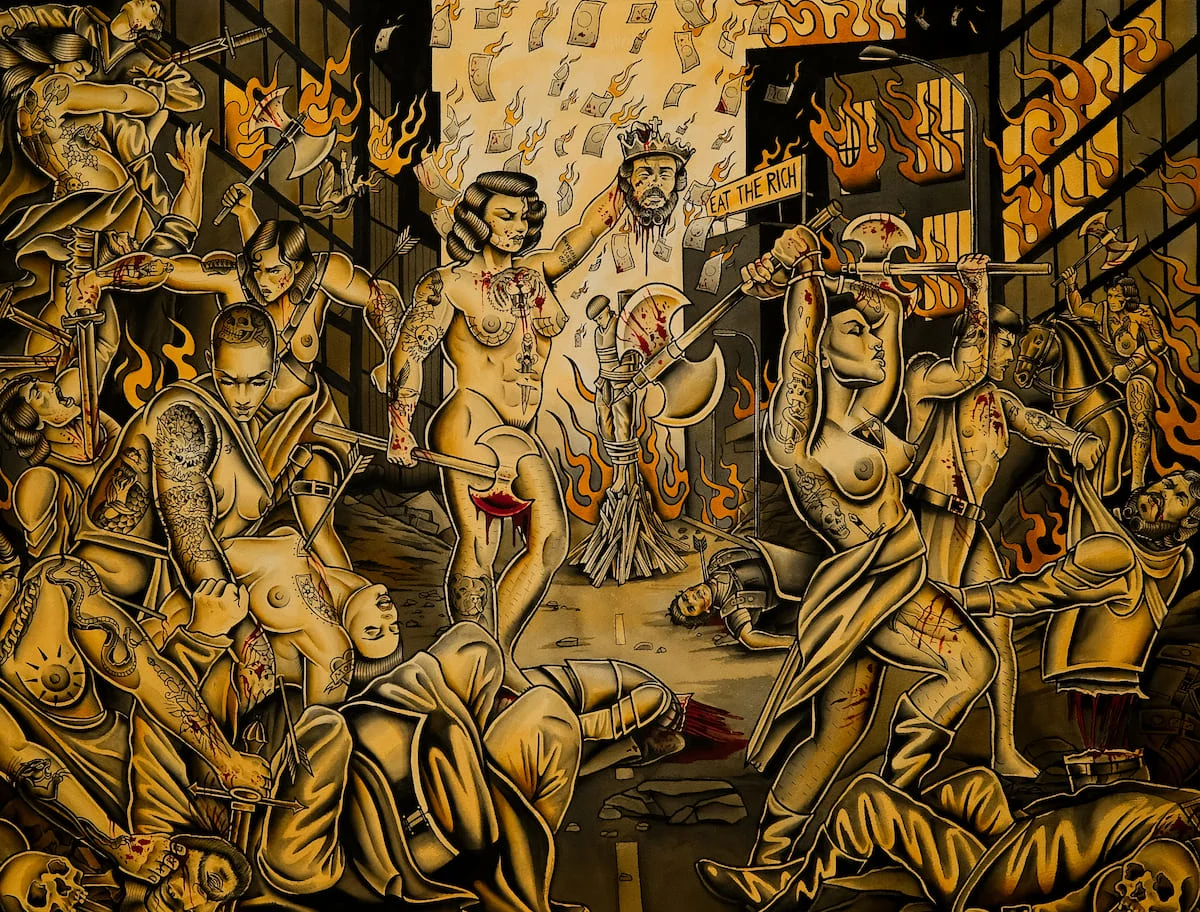
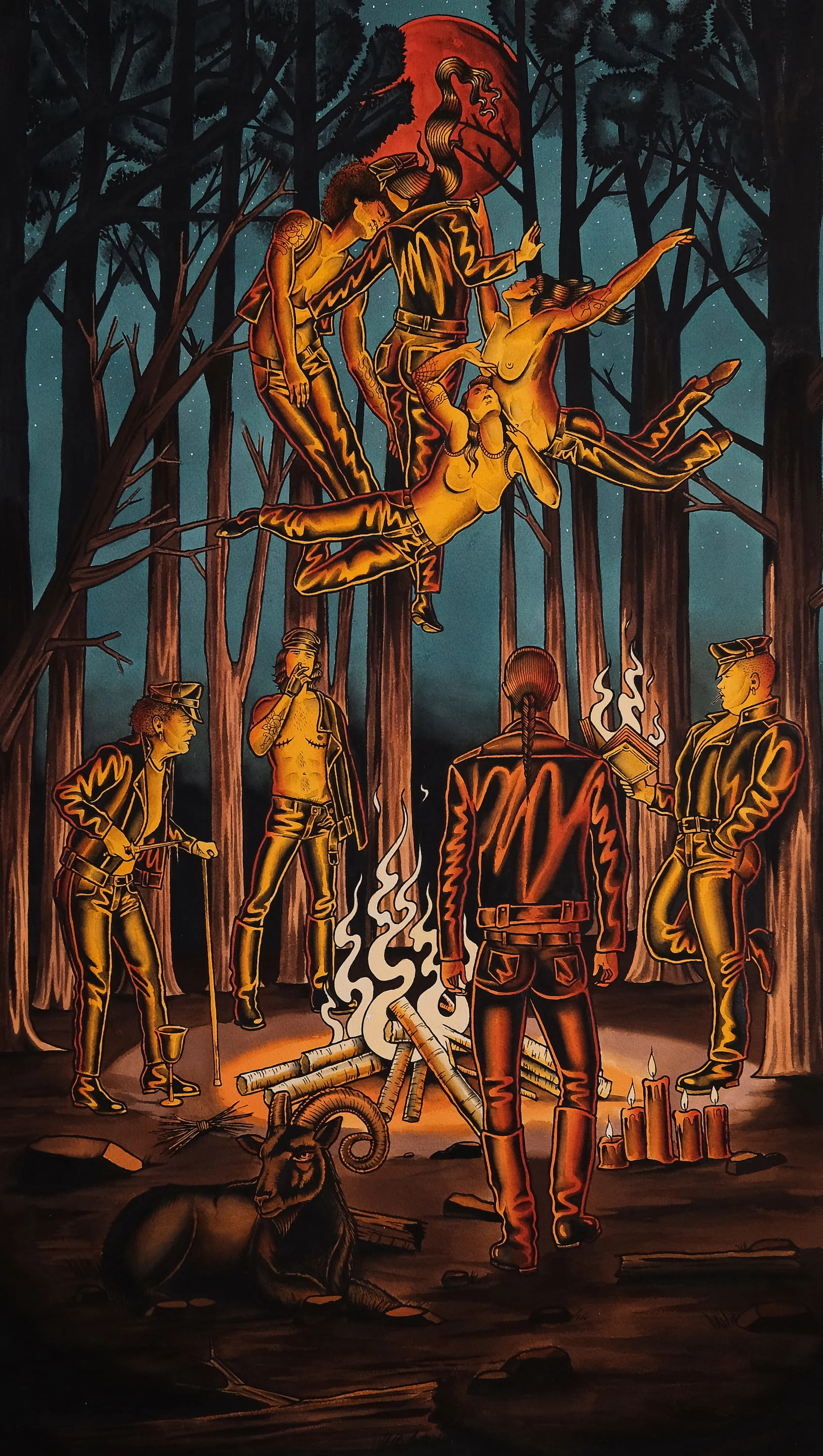
It’s creating space for my own identity, and the identities I see around me, to exist in a gender-expansive space.
While the artist is providing representation for leather dyke cultures which have been historically overlooked and minimized in the queer and erotic pictorial traditions, their artist goals are more far-reaching. Their work is about depicting “bodies that disrupt our ideas of femininity or masculinity, of clothing or presentation, that speak to power and resist the assimilation or sublimation of queerness,” they explain. Ultimately, Perreault’s practice is dedicated to disruptive bodies: the gender dissidents and erotic outlaws who refuse to assimilate and whose existence alerts us to the potential for different, emboldened ways of being and living.