
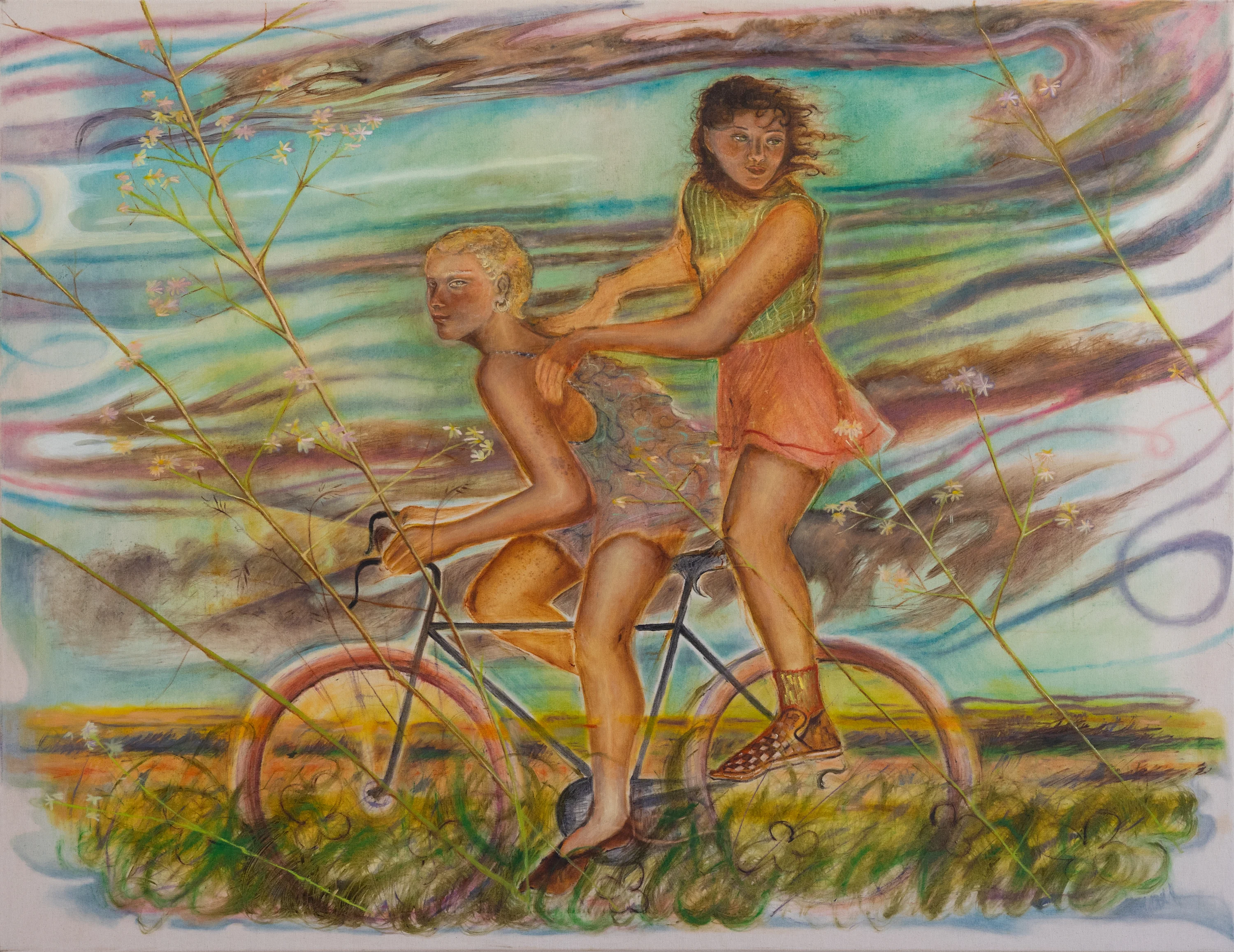
Against the Shore (2026)
Girlhood: a never-ending in-between state. Johanna Seidel’s dreamlike paintings have often captured the listless longing of young women, in all of their many, multifaceted guises. Now, her protagonists are growing up, more mature and more explicit in their desires. She tells Maisie Skidmore how she’s captured girlhood, womanhood and everything in between.
Johanna Seidel’s studio is on one of the uppermost floors of a Baroque building in Dresden, Germany. She is there when we speak, showing me one of her recent paintings over Zoom. “It’s not finished,” she says, glancing over at the screen to ascertain how much I can actually see of the work, which features a glimpse of the artist’s reflection in a full-length mirror, “but maybe you get an idea.”
This moment is particularly delightful because—in addition to the pale early October light, the bare walls and the pleasure of being invited, even digitally, into the artist’s studio—this painting is huge and actually quite unwieldy. I take a screenshot to capture the moment, framing the work within my screen—a reflection, within a painting, within a photograph.
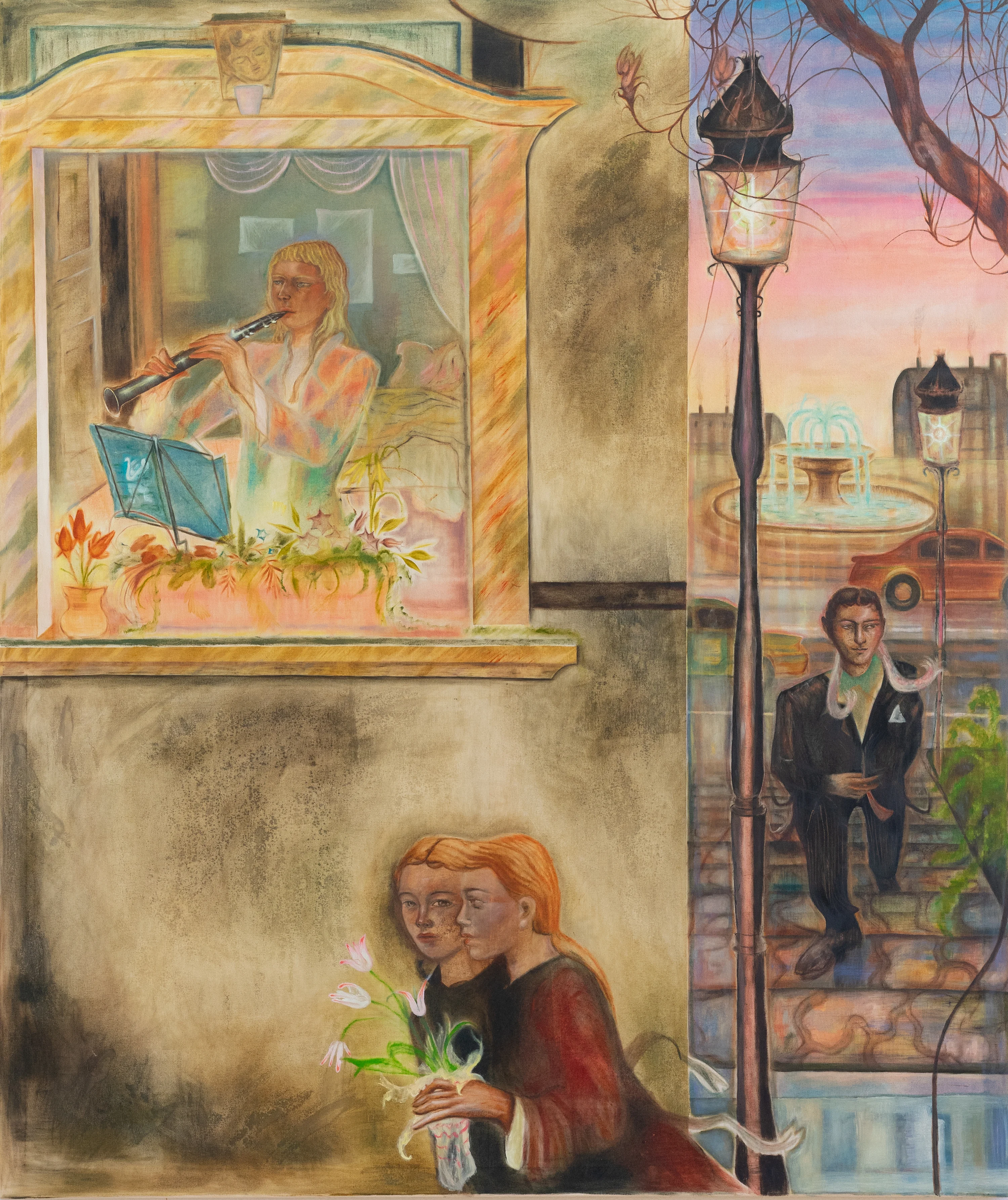
Johanna has been receiving more and more attention in recent years with her dreamlike, atmospheric work, which explores what she describes as “perceived realities.” She draws on her own experiences: “When I see something—at a party, people speaking to one another in a certain way or a certain type of light, or shadows, or atmosphere—I really try to remember it. I feel it could be an image for something more than itself.” Made primarily in limited color palettes that draw heavily on orange, violet, pink and green, the resulting work is cinematic, toeing the line between telling a story and holding it back. She plays with concealing and revealing her themes, leaving something to the imagination—something just out of the shot. Not unrelatedly, her protagonists have almost always been women and girls.
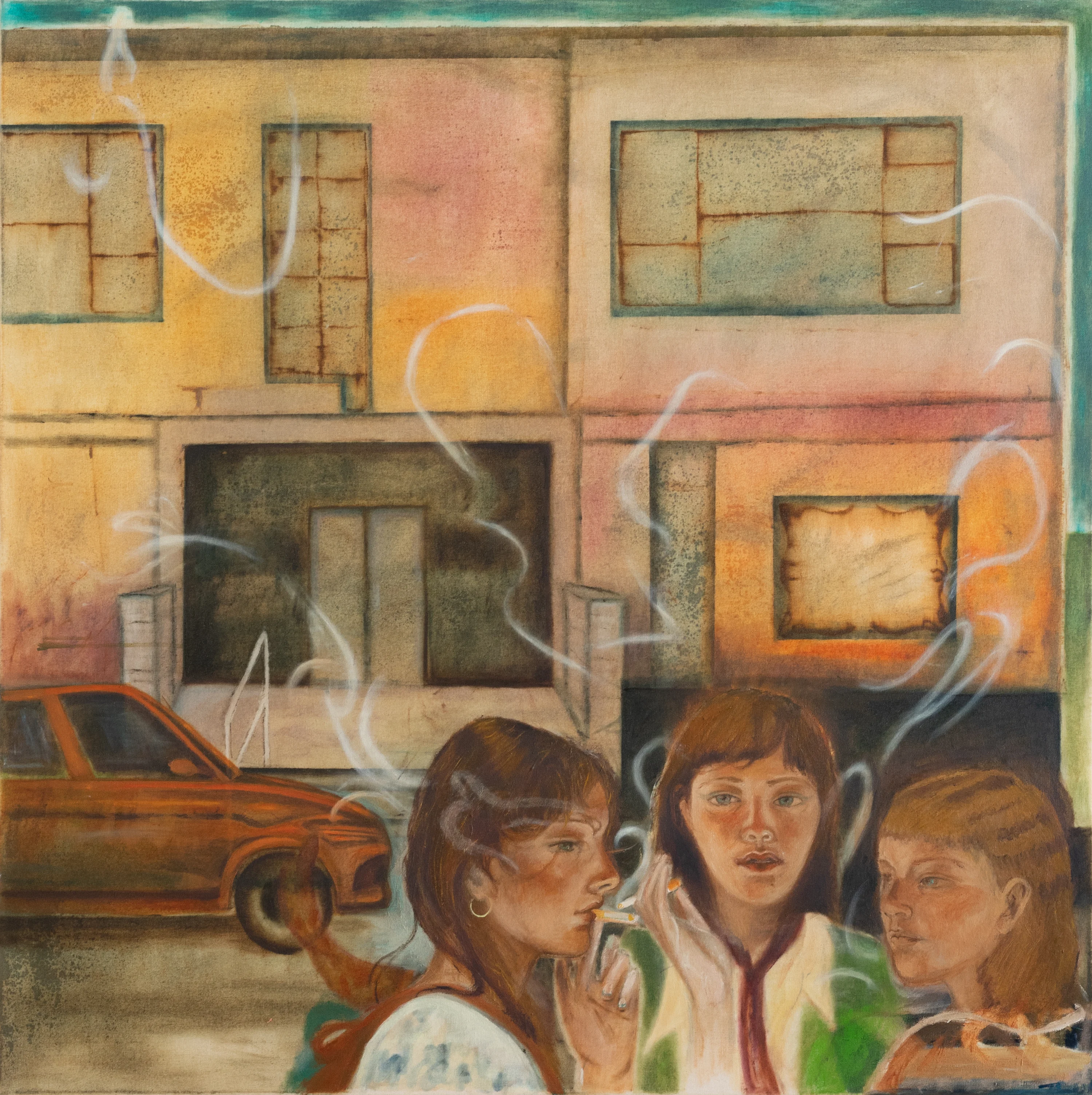
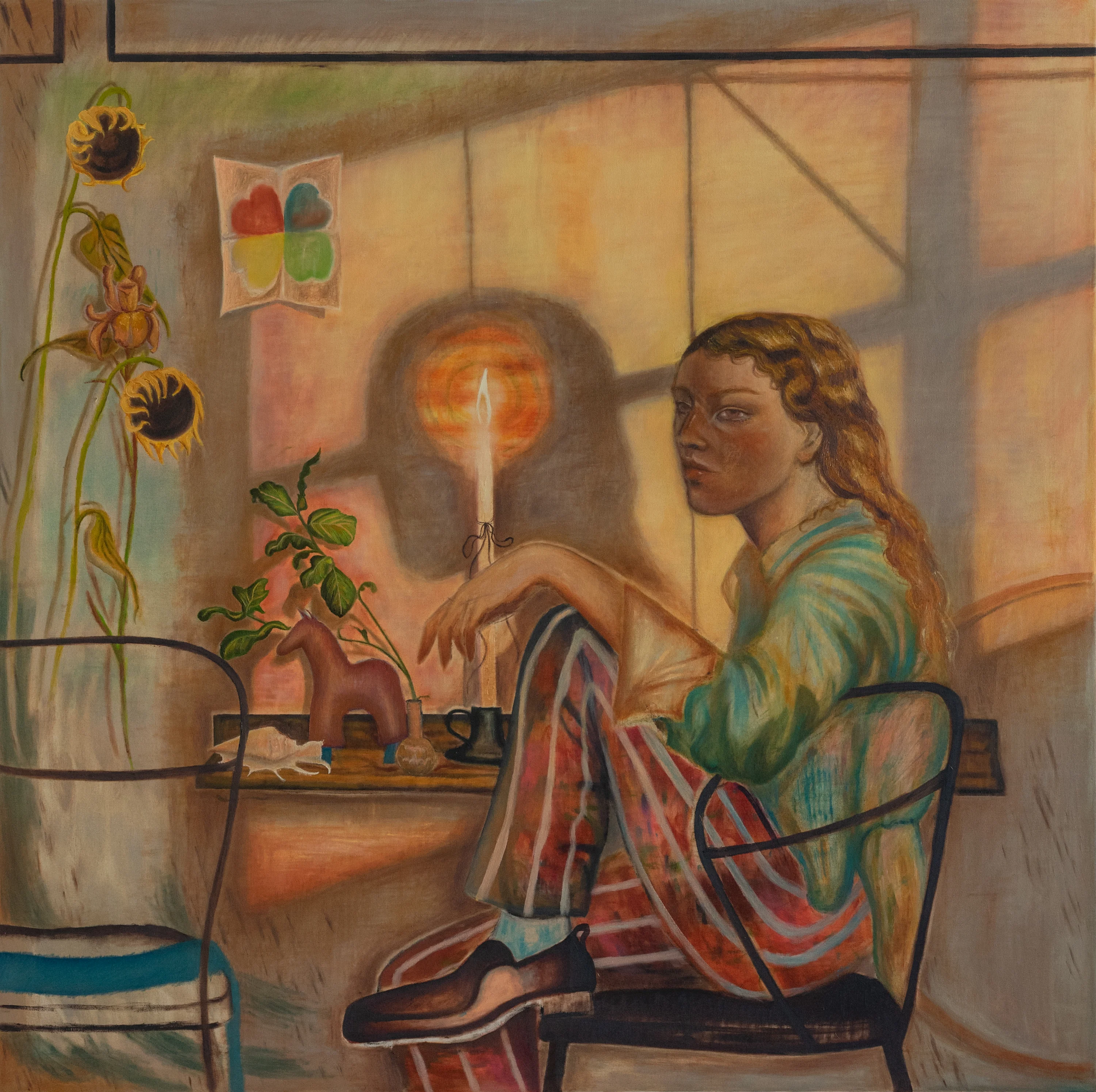
The artist is unapologetic in the way she presents girlhood. It is mysterious but important; tender, intimate and devastating. There’s a particular tension between longing and fear in many of her pieces. “I started studying at a time when feminism was really present in the culture,” she says. “It was a great moment to be encouraged to find my own voice.” Making work from her own perspective became “my MO, somehow,” and even now, many years after the era of Sofia Coppola’s “Virgin Suicides” and Tumblr moodboards, this version of girlhood feels urgent. Sometimes her characters are depicted within the sanctuary of their own spaces, surrounded by familiar knickknacks, sleeping or lounging. Other times they are on secretive adventures alone or together, travelling through the wilderness. A perfect in-between state.
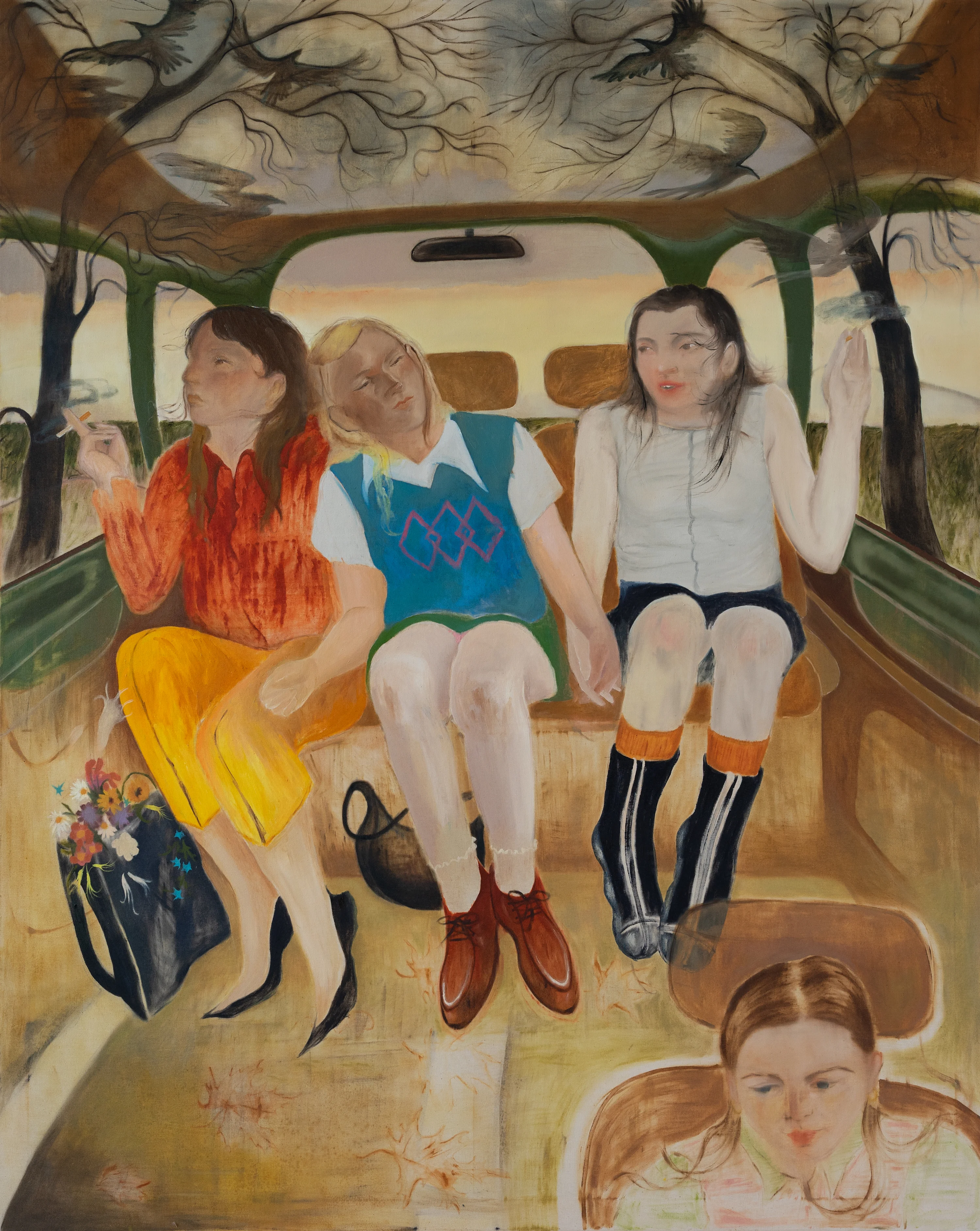
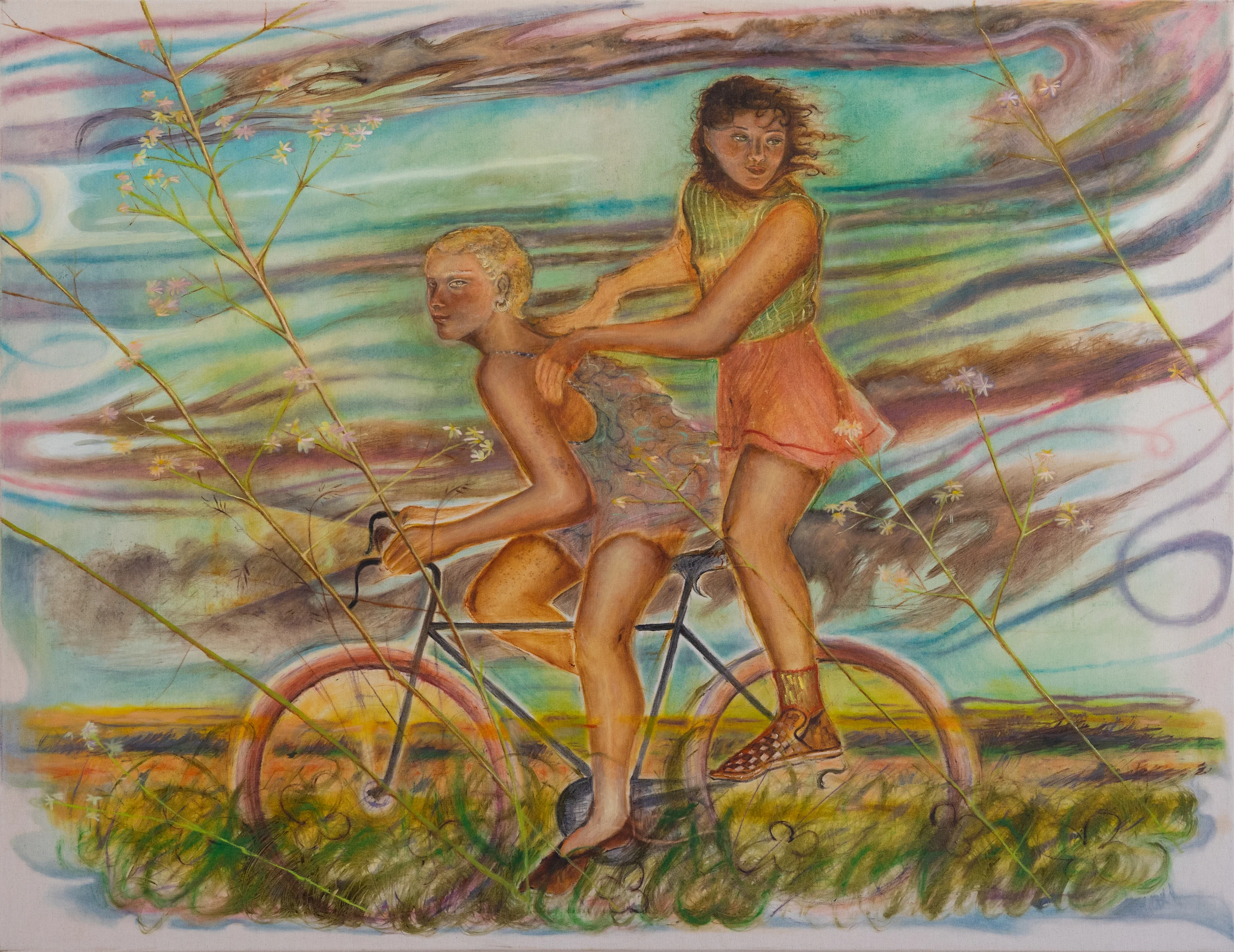
In one recent work, “Against the Shore,” two girls share a bike, riding headlong into a breeze. The painting has a distinctly dynamic feeling to it—a vividly colorful wind blowing against them, their bodies standing perpendicular to the landscape. One looks forward, and the other back. “It’s a recurring topic for me, to have girls on their way somewhere,” she explains. “It’s never really clear if they’re getting away from something, or going towards something. Maybe both at the same time.” Elsewhere, her subjects walk in the woods, staring out at the viewer confidently. They fish on a riverbank; they play music; they stroll down a city street, outfit on, cigarette dangling from their fingers. Hers is an active femininity—one in which the main character is multi-faceted and independent.
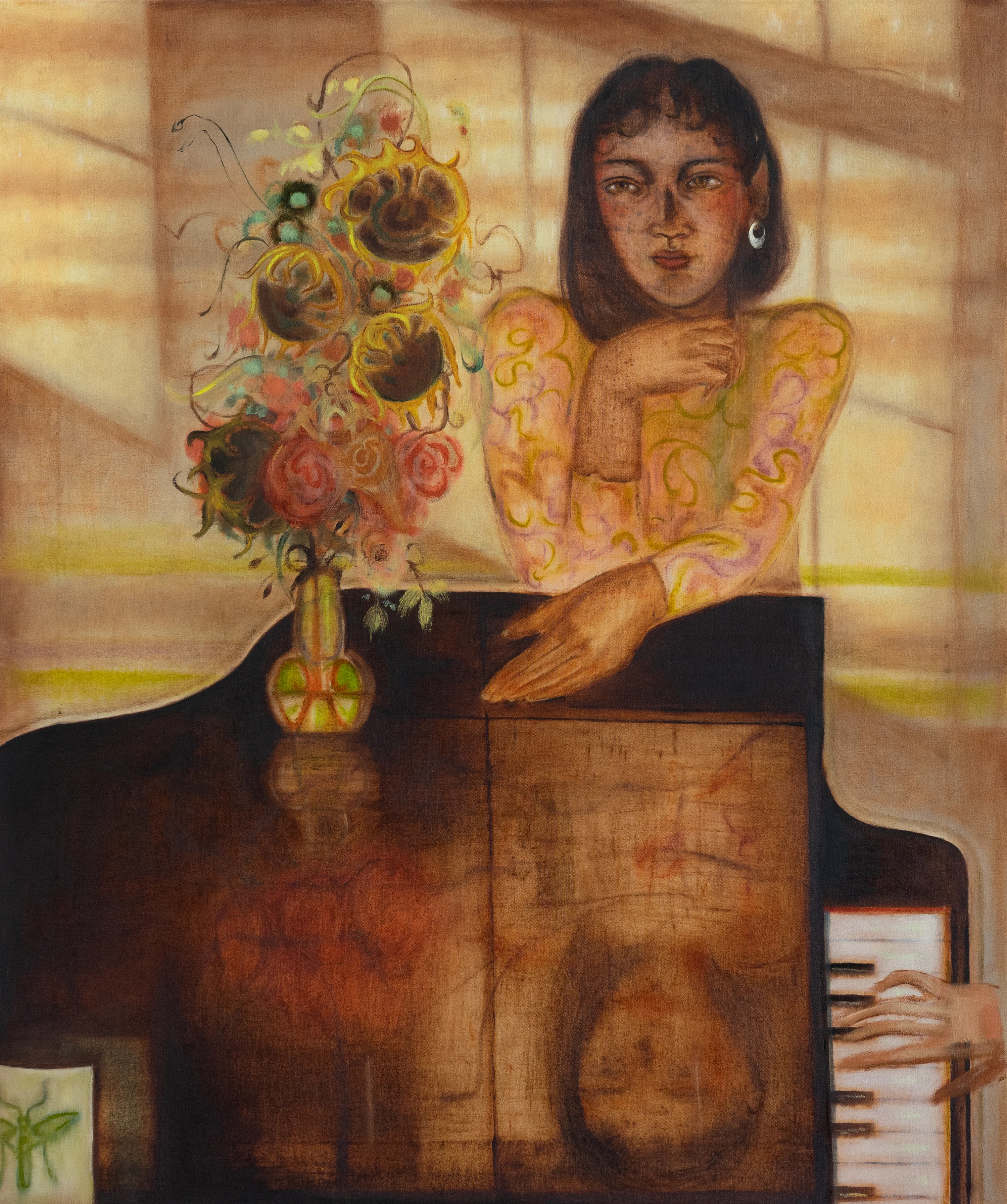
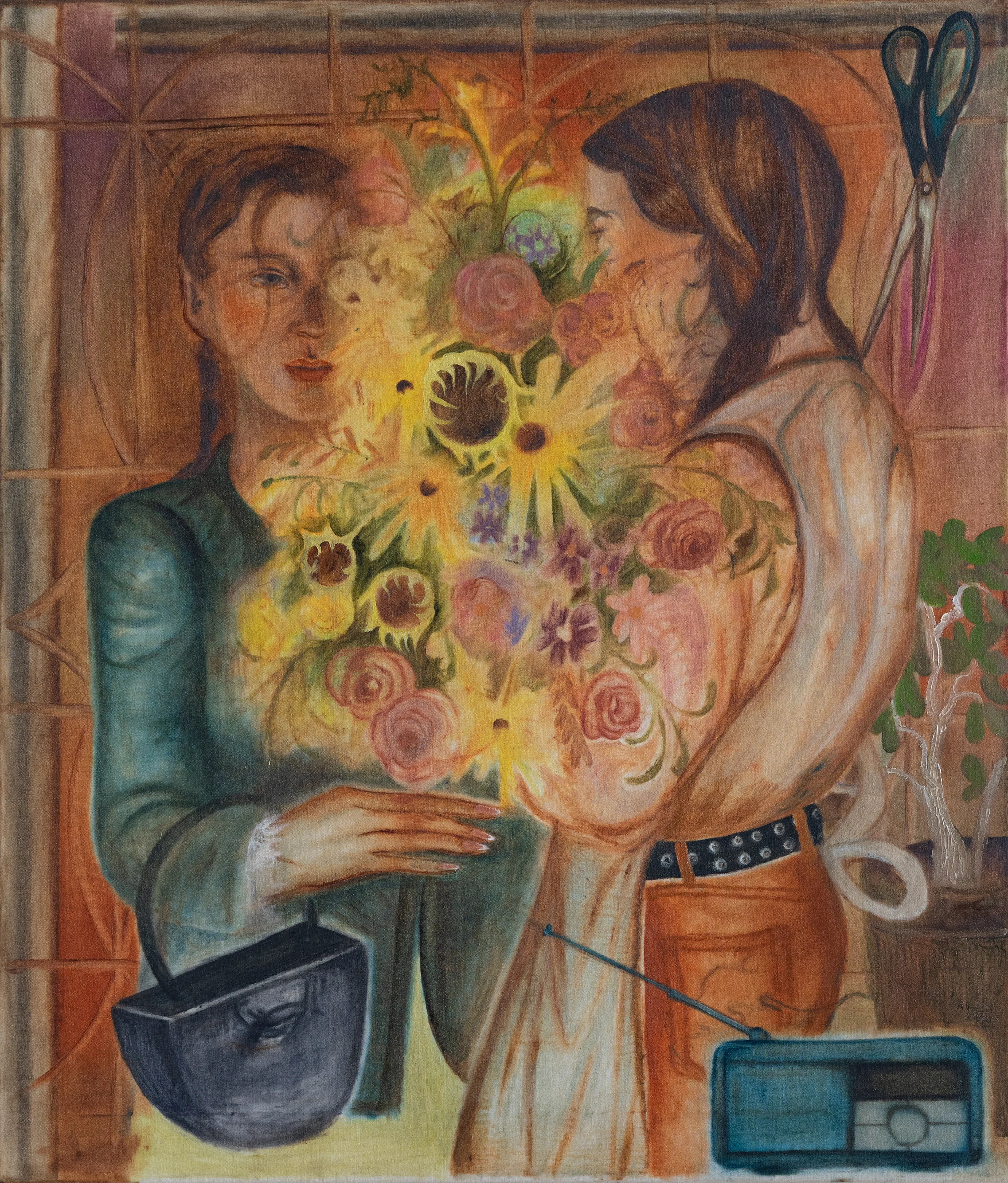
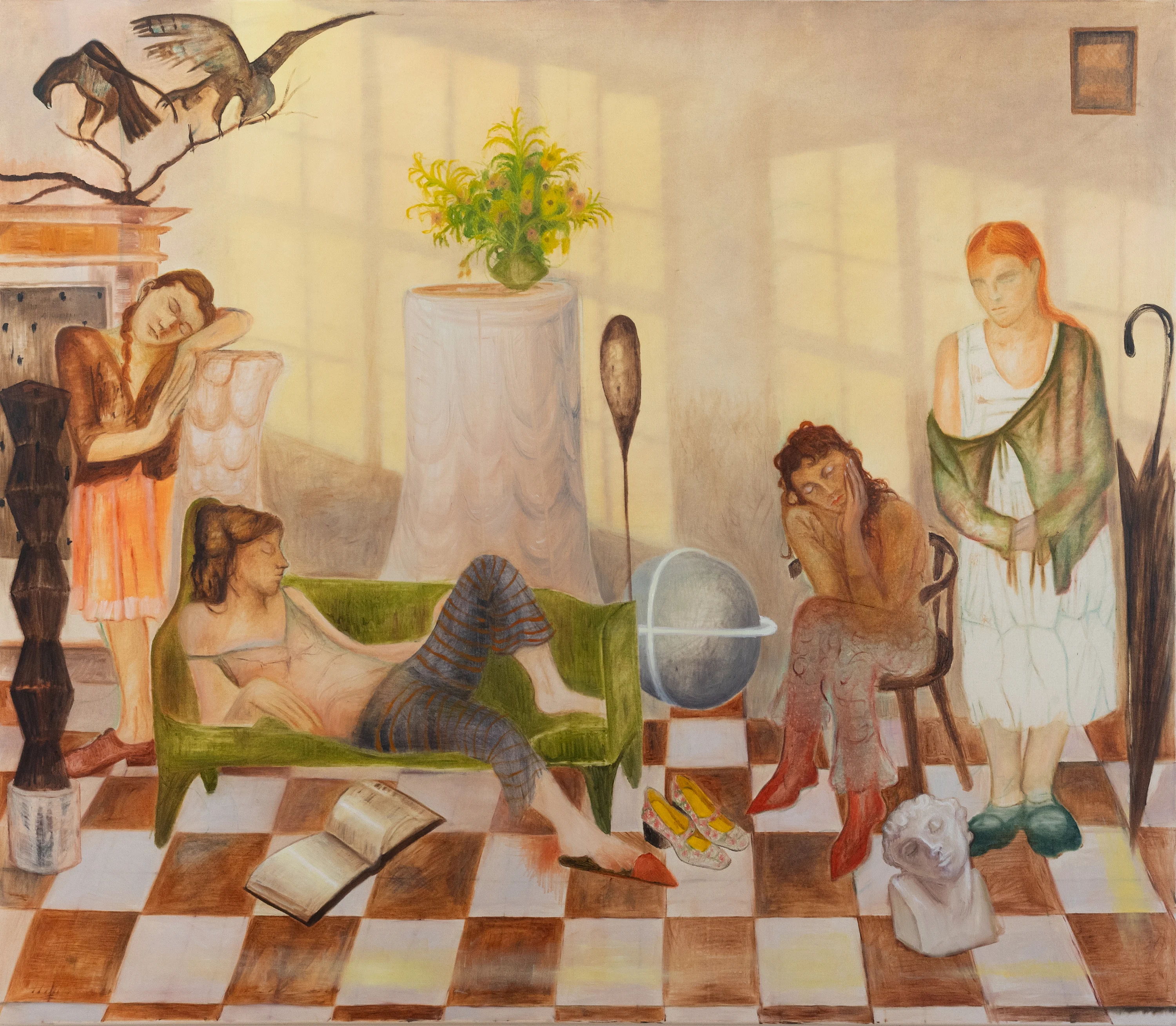
Lately, Johanna has been tipping over out of girlhood and into a more mature femininity. Depicting youth comes with its own set of restrictions: what’s appropriate? What’s voyeuristic? In her new phase, sensuality is not only permitted, but more at home. “Now in my early 30s, I think I’m transitioning towards more… grown-up stories,” she says. It’s evident in “Something from the Attic,” in which four young women lounge in a grand and ornate room. Their clothes are draped over them, like a modern version of Austen’s Bennett sisters, and their poses are infused with a quiet, lustful longing. It’s a subtle shift, but a shift nonetheless.
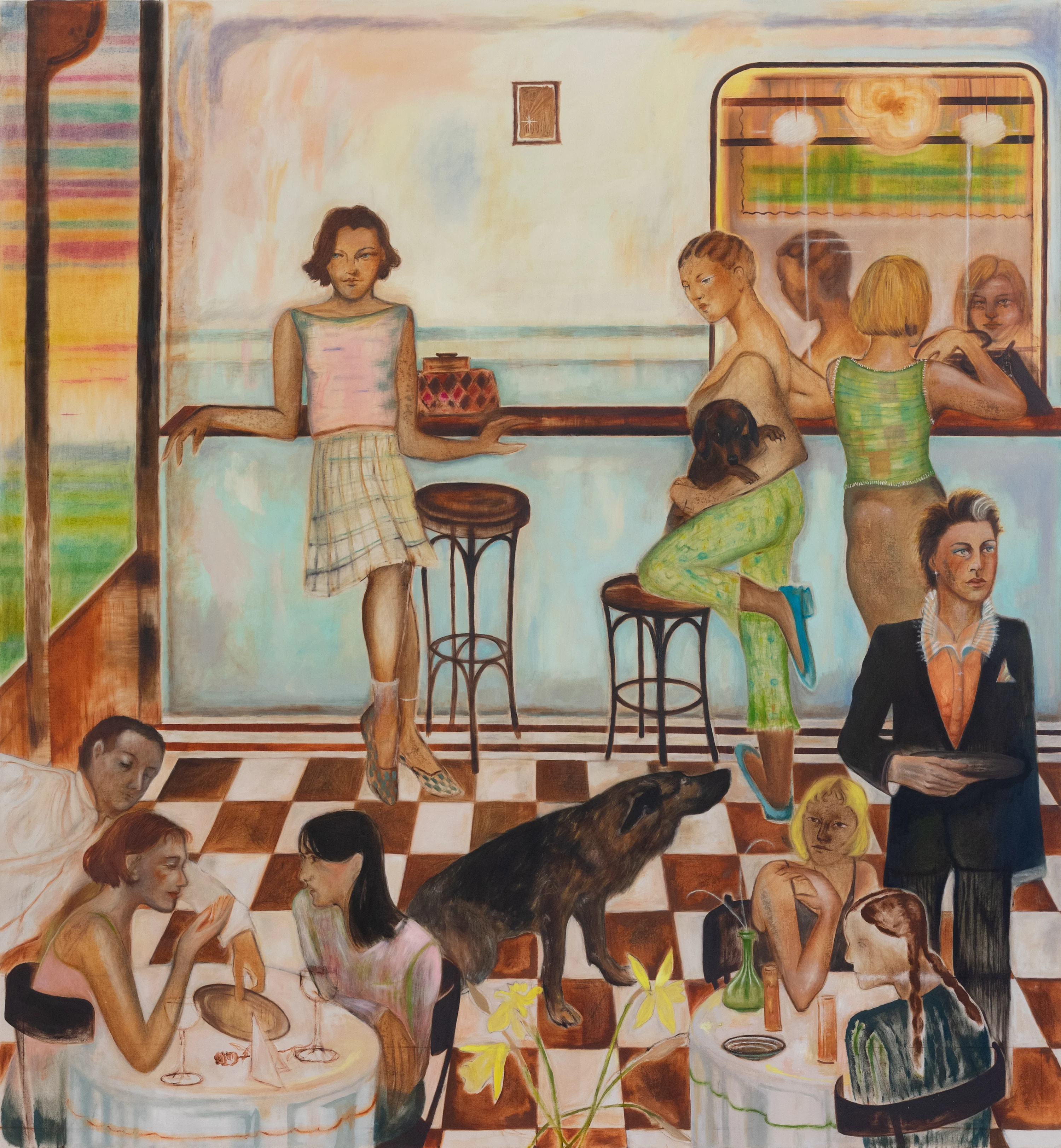
While the faces of her protagonists are beautiful and beguilingly blank, the objects that surround them gesture towards their inner worlds. “I’m interested in symbolism and iconography,” Johanna explains. “Sometimes it comes through plants, or colors, animals or gestures. Sometimes I think it can even point to Renaissance painting, or medieval iconography.” Nonetheless, she aspires to make work that can be read intuitively. “Symbols or metaphors, they don’t have authority—they are made by humans, and they’re made to be also understood through gut feeling,” she says. “It’s not super important that a viewer can decipher everything. If people get small hints, that’s kind of nice.”
Now, as when Johanna first set out as a painter, making work from her own perspective is still her MO. It’s evident in the self-portraits—including the one she shows me, with its fragment of a reflection. It’s evident in her subjects, more mature and more explicit in their desires. Girlhood, her work suggests, is not age-restricted; it’s a feeling, an atmosphere. As the artist grows up, so too are her paintings, and they’re all the more exciting for it.