

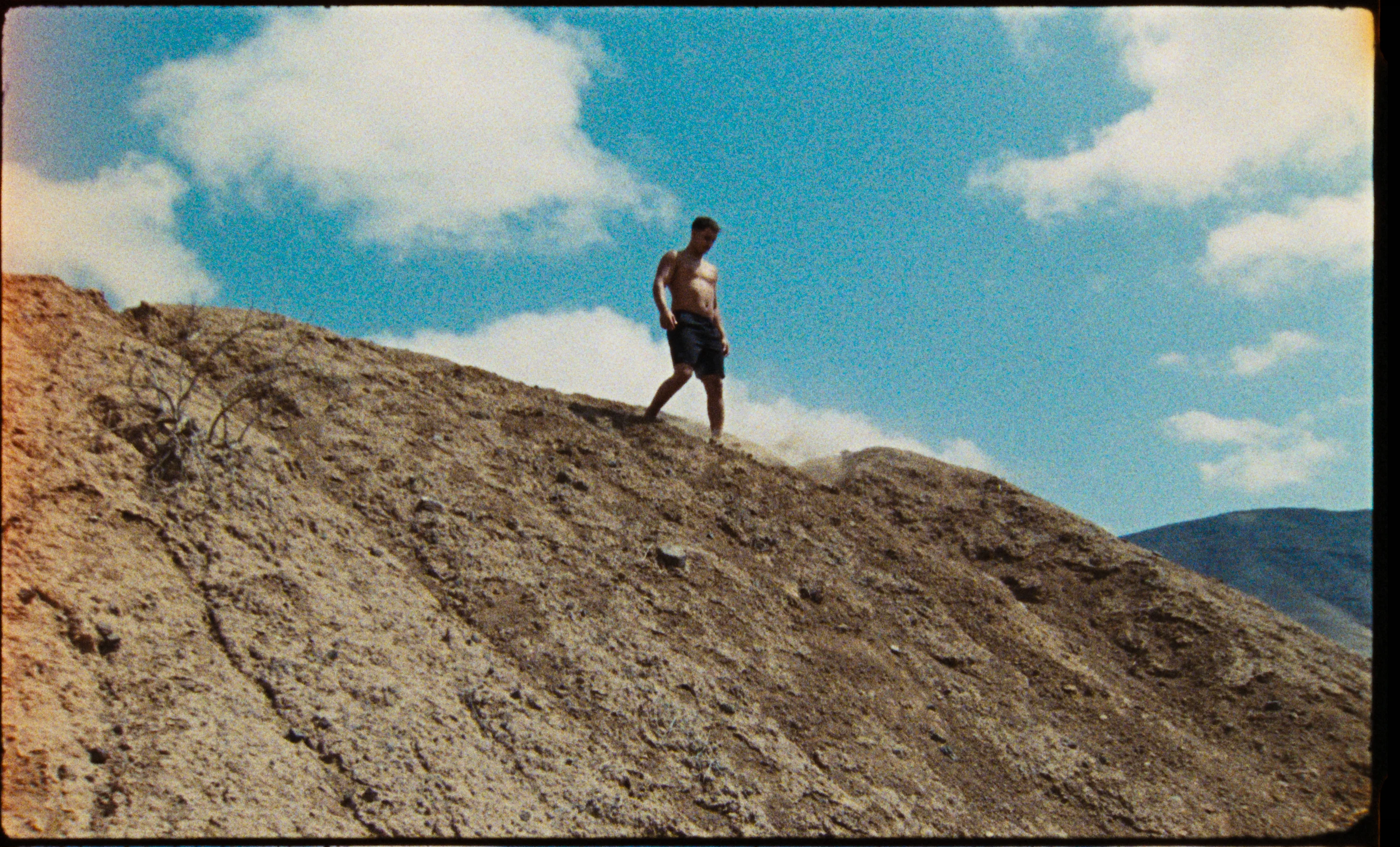
Two men kick up clouds of dust with their bare feet as they grapple with one another against a backdrop of blackened volcanic rock. This is “Lucha,” Ilan Lampl’s short film about Canarian wrestling, a combat sport that dates back to the Canary Islands’ indigenous Guanche people. He tells Joe Zadeh how he captured the inner world of one young wrestler, and the fine line this ancient sport walks between aggression and respect.
There is something wonderfully ancient about the sport of wrestling. Depictions of humans grappling can be found in the Lascaux caves, in Egyptian tombs, and on Greek amphorae. Literary references to it occur as early as the Old Testament and the ancient Indian Vedas. There is a particular shot in Ilan Lampl’s new six minute short film, “Lucha,” about the folk tradition of Canarian wrestling, that speaks perfectly to this primeval quality. Two men lock into battle in an arid and empty volcanic landscape, pushing, grasping and twisting, the sunlight bleaching their arms and legs. It was filmed in 2025, but it could easily be a vision of 20 BC.
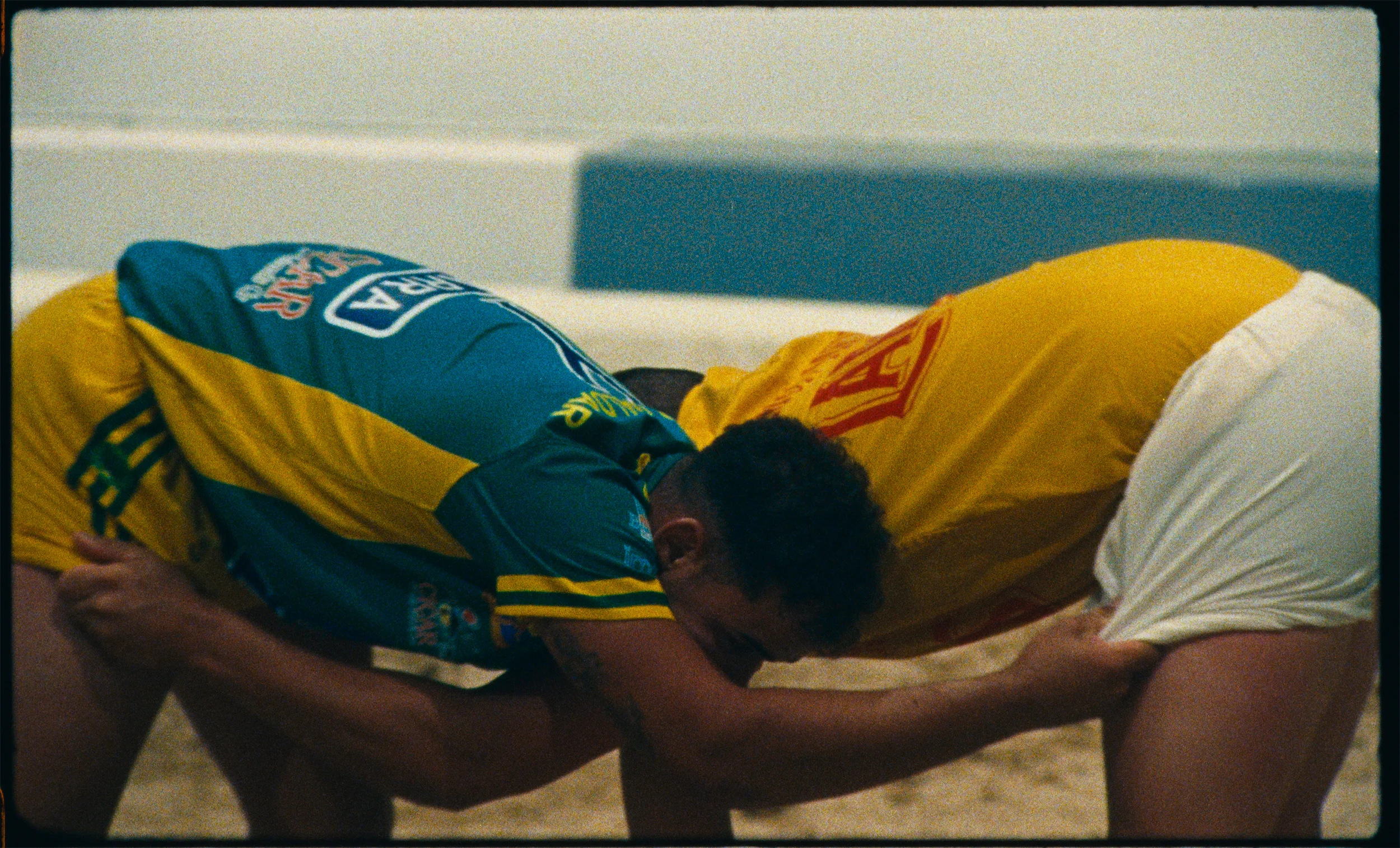
Ilan is based in London, and first heard about this unique tradition of the Canary Islands, Spain, via his girlfriend, Clara, who grew up on Fuerteventura. In 2024, he traveled to watch a competition. “I’d never seen anything like it. It was like a mixture of sumo wrestling and bullfighting,” he says. “It felt very noble and respectful. When a wrestler beat someone, they would help them up, hug them and walk them to their corner. I knew then I wanted to explore it further.”
Canarian wrestling (or lucha Canaria) was first documented in the 15th century by historians following the Spanish conquest of the Canary Islands, but its invention and practice by the indigenous Guanches inhabitants likely goes back much further. In 1943, the first lucha Canaria federation was created and today, some of the more important matches are broadcast on local television.
Beyond a brief introduction, Ilan’s film doesn’t rest too long on this history. Instead, he chooses to delve into the psyche of the handful of wrestlers he interviewed for the film, reflecting on the rich mental fruits they glean from it. It makes for a spiritual film that ruminates on the role of physical activity as a whole. “I wanted to tell a story about the connection between mind and body,” says Lampl. “I used to do gymnastics at a high level, training 25 to 30 hours per week, so I know how it feels to feel attuned to your body and develop this intuitive sense of your physical self.”
At its centre is Gaumet, a young Canarian who was told to give up on wrestling as a child but persevered and is now one of the island’s most exciting talents. He makes for a soulful protagonist: a man who meditates while fishing in the ocean, practices deep breathing exercises, and writes the names of his two grandfathers in the sand before each fight. “In documentary-making, you’re only as good as how much the people you’re filming want to help you explore something,” says Ilan. “Gaumet just had this beautiful way with words that I felt could really carry the film.”
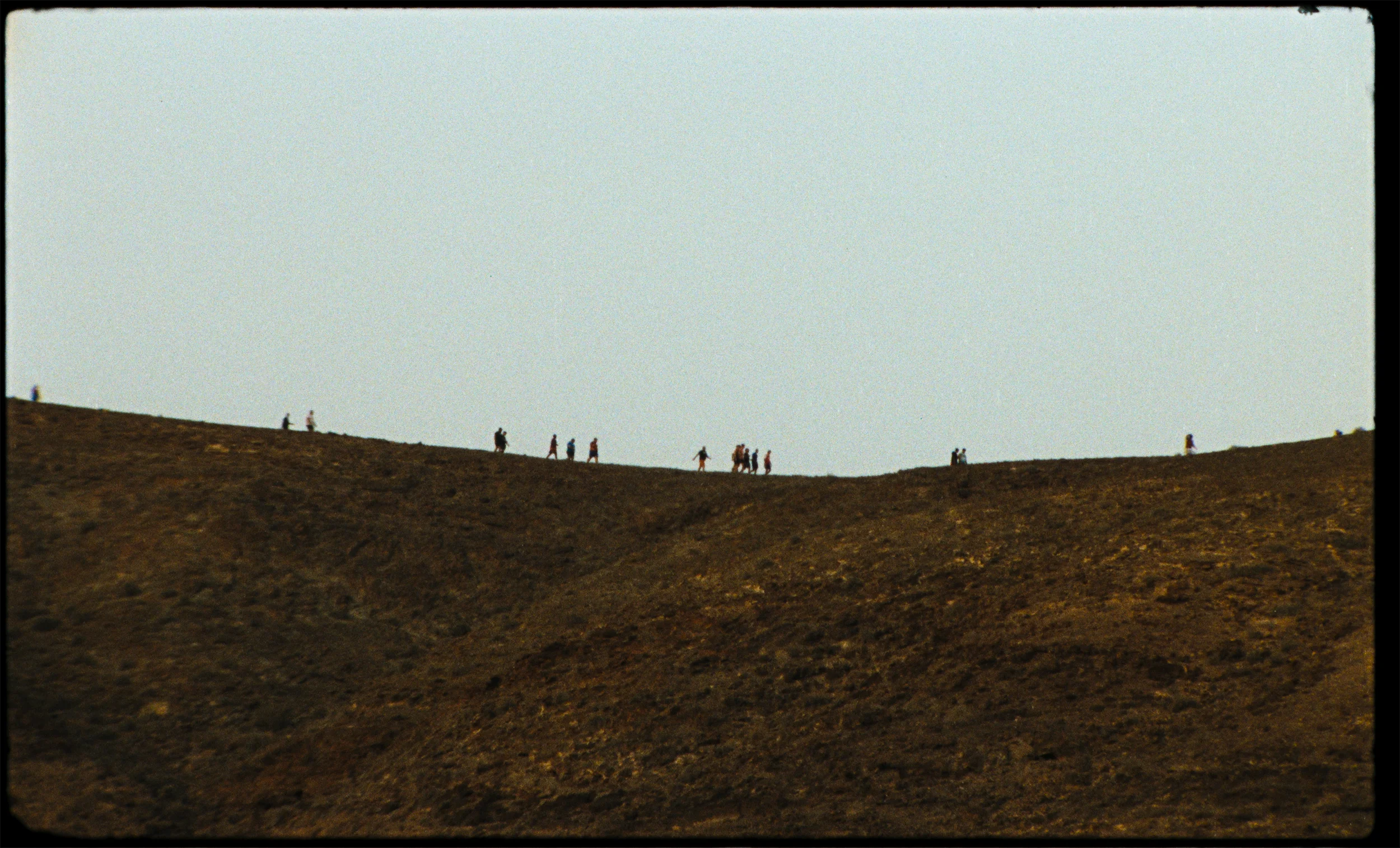
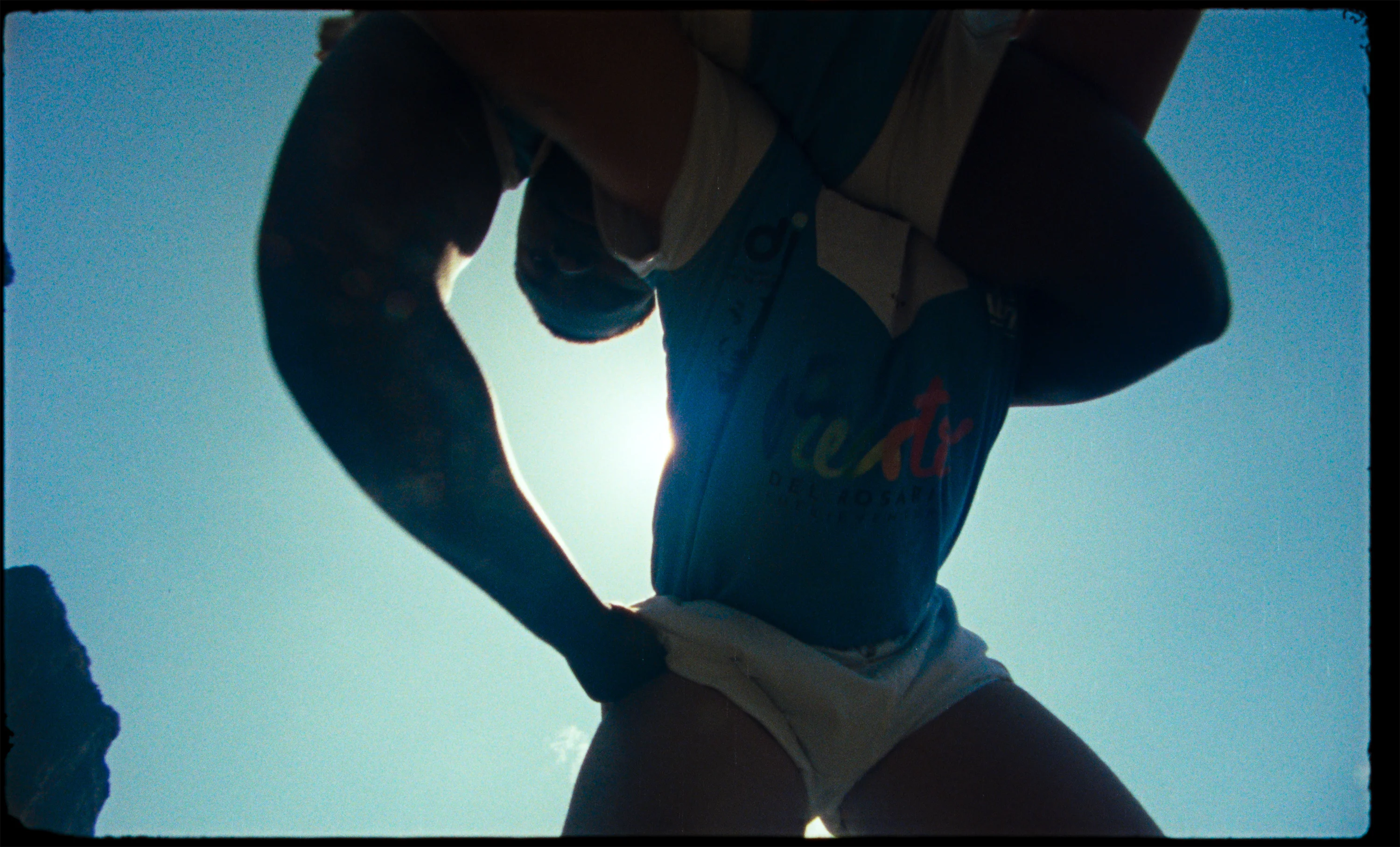
Ilan’s familiarity with athleticism is reflected in the film’s visual style, which displays a keen sensitivity to physicality. “There’s aggression to wrestling, but also an intimacy, because these bodies are very close to each other in a way that normally wouldn’t occur,” he says. Close shots of breathing chests, straining hands and rippling shoulders drenched in sweat are contrasted with spacious wide shots of wrestlers jogging across the volcanic Fuerteventura landscape, and of the circular blue and white arena where they train and compete.
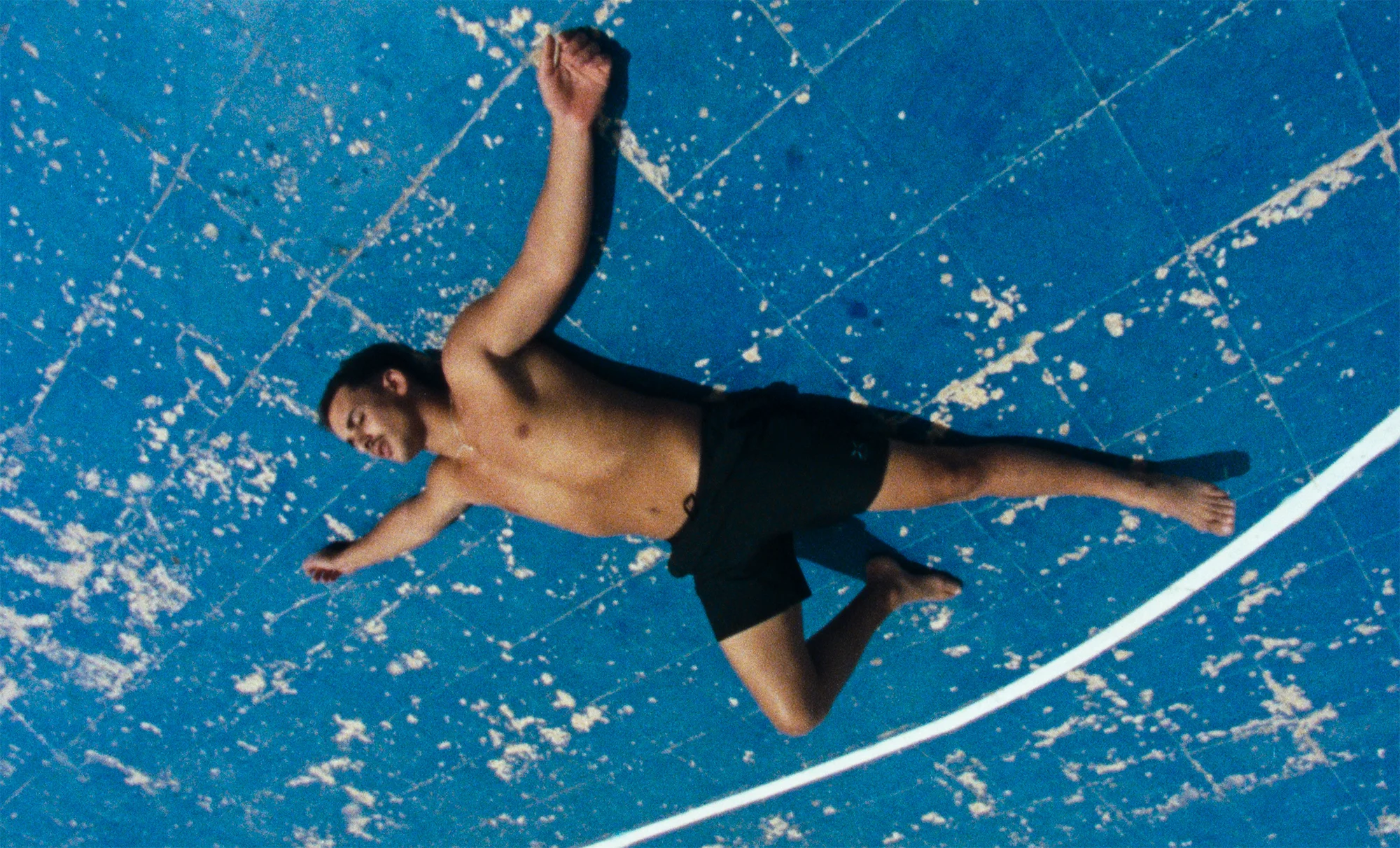
Shot on 16mm film, “Lucha” has a grainy and tactile quality that makes for some particularly ethereal sequences, like when Ilan captures fog drifting across the mountain tops at dusk. “I get excited about working with limitations,” he says, explaining that he arrived in Fuerteventura with just a three man crew and four rolls of 16mm – about 40 minutes of footage in total. “With limited stock, you have to be very selective about what’s worth capturing. You’re constantly doing calculations — how many feet of film in this location, etc. But that constraint forces you to eliminate what doesn’t matter and focus on what does. You become much more decisive, and that pushes things forward.”
Listening to Gaumet speak on why Canarian wrestling has become so central to his life, it’s not hard to see why this sport has lasted for thousands of years. In the center of that sandpit arena, life outside ceases to exist, restless thoughts dissolve, mind and body fly in sync like flocking birds, and all that matters in the world in that moment is using every sinew of your strength to put your opponent on their back and then, as is Canarian custom, pick them back up, embrace them, and walk them to their corner. “When we go out to fight, we compete against another person,” Gaumet says at the film’s close. “But really, the fight is against ourselves.”