The boys who spend their summers leaping from Marseille’s cliffs into the glittering Mediterranean appear fearless. When filmmaker Hector Aponysus first watched them performing for the crowds of sunbathers, one question stayed with him: What are they afraid of? His new film, “Plongeurs,” premiering below on WePresent, follows a group of young boys across one of their final childhood summers, uncovering the hopes, dreams and tenderness behind their teenage bravado. He tells Alex Kahl how he turned this everyday spectacle into an intimate portrait of youth, masculinity and the uneasy transition from boyhood to manhood.
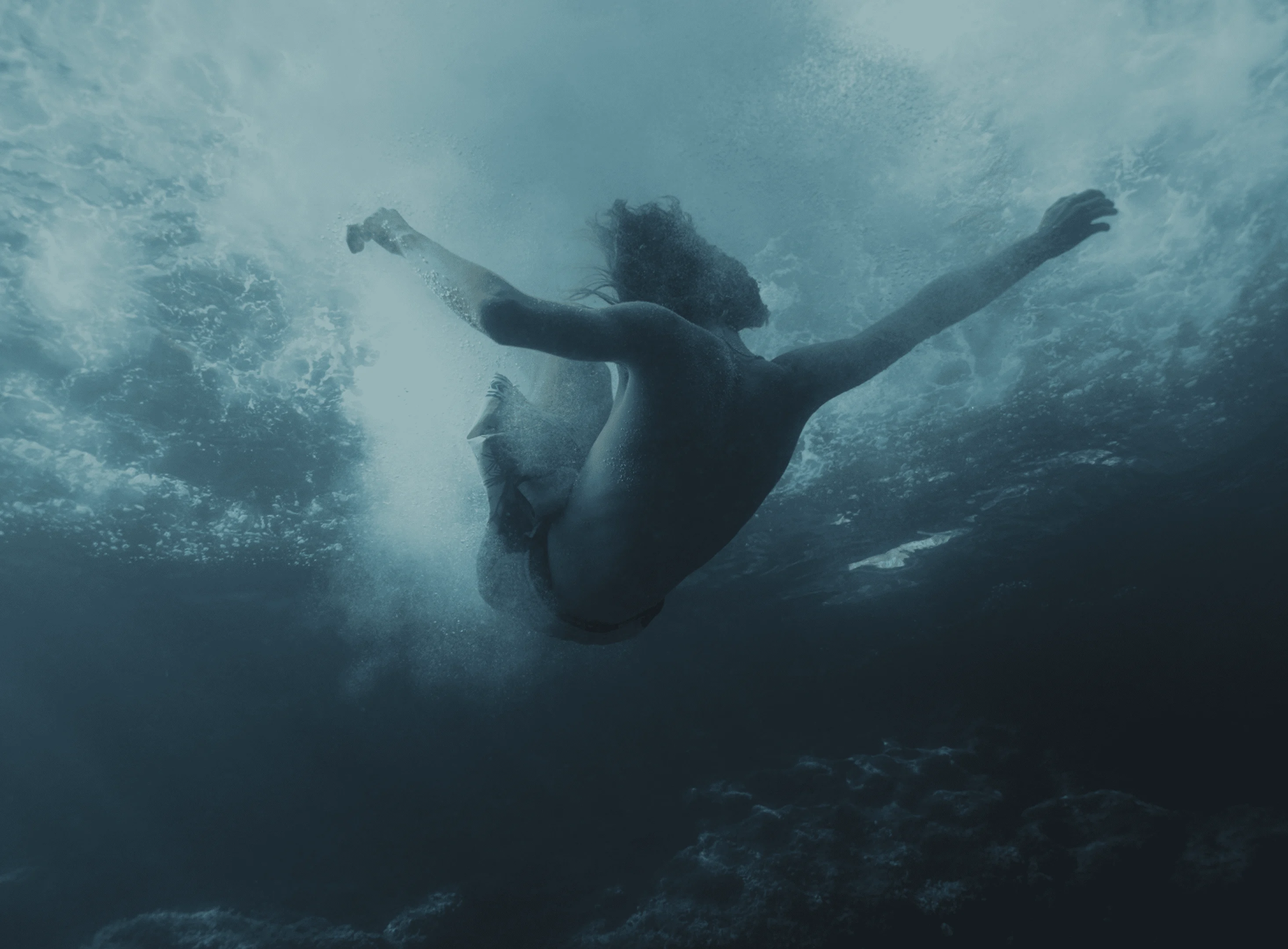
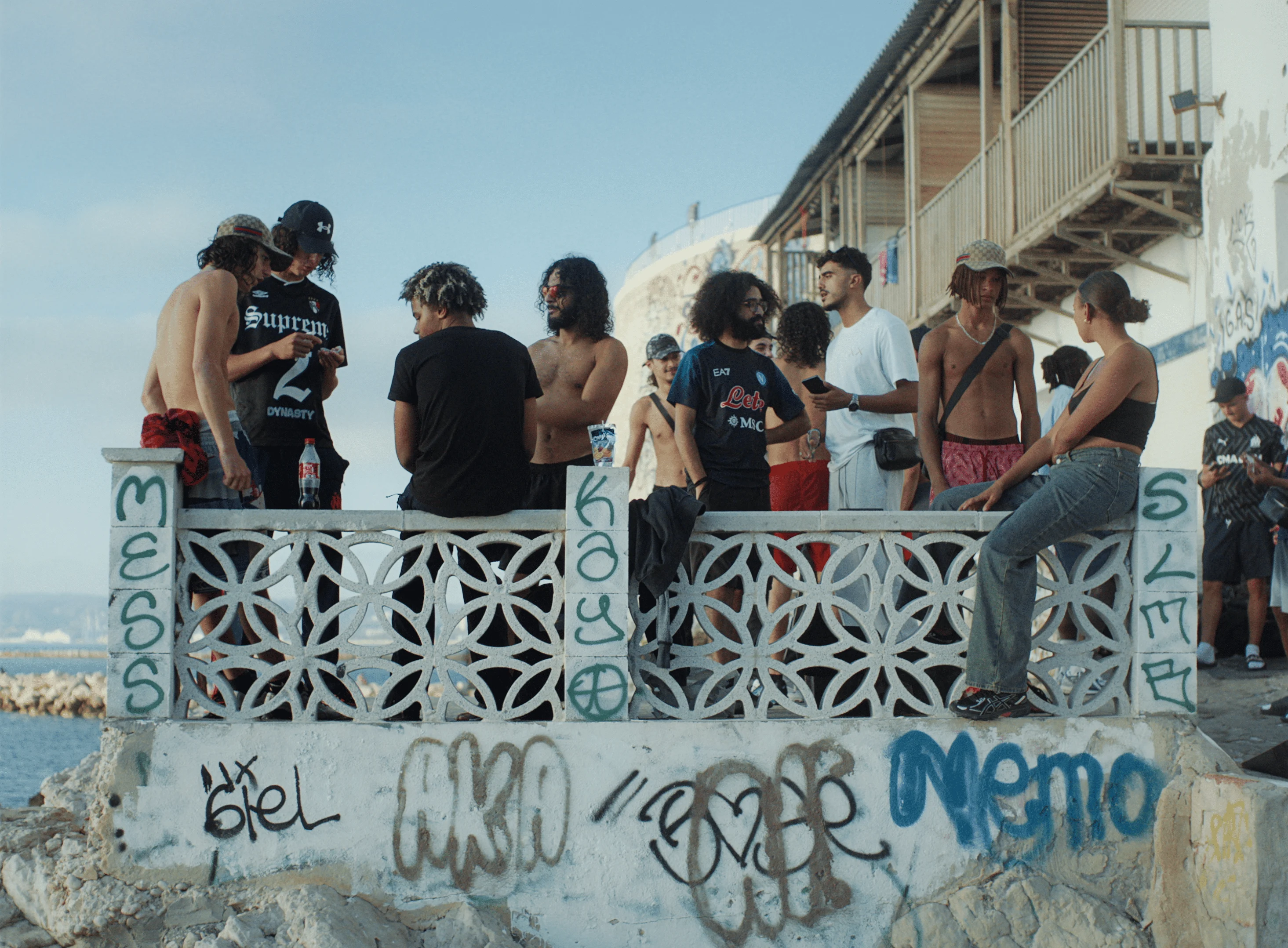
One summer, while staying with a friend in Marseille, filmmaker Hector Aponysus was relaxing on the coast when he noticed a group of boys jumping off the corniche into the Mediterranean. He was moved by the image, as so many are when visiting the coastal city. “They’re jumping to an audience of sunbathers on the rocks,” he says. “There’s a fence of separation between you and them, and you’re basically watching this spectacle. People that visit Marseille are always mesmerized by boys like this, but there’s often a little modicum of fear, of keeping them at arms length because they are quite wild and a bit scary.”
Aponysus had been thinking for some time that his next film should be about young men. “I think it’s such a toxic vision of masculinity being disseminated at the moment,” he says. “It’s really interesting to find young men who are growing up against that backdrop of that really ugly vision of what it is to be a man. I wanted to go make a film about young men that is a rebuke to that stuff.” Seeing these boys on the rocks, clearly presenting quite a tough and masculine front to each other and to the rows of people watching them, yet also hugging, laughing, and leaping into the sea like kids playing at the beach, it seemed like the perfect opportunity to explore what it means to be a man today. “I thought, ‘I want to get really close to those boys,’” he says. To Aponysus, closeness isn’t just access—it’s an act of empathy. “If they’re doing something as fearless as that, what are they afraid of? To be able to get to a place where you can talk about fear in an honest way felt really important.”
If they’re doing something as fearless as that, what are they afraid of?
And so, Aponysus’ film, “Plongeurs,” was born. He spent a year going back and forth to Marseille, embedding himself in these boys’ lives from home to sea to recording studio. We follow five narrators: Mohammed, Reda, Fares, Alex and Milo. The film oscillates like a rubber band between themes of childhood and adulthood. One minute the boys are talking about the violence in the city, the weapons being carried and how easily a brawl can break out at a party. The next, they’re seen playfully somersaulting into the water, joking and laughing together. At one point, we see two brothers, who are drill rappers, adjusting each other’s balaclavas, and the next shot shows two boys holding hands before they leap from the rocks, revealing how easily toughness and tenderness coexist. Aponysus shows us the darker side of life some of these boys are being pulled into, the pressure placed on them to act a certain way, before showing us their true colors coming through.
Just when we think we’re safe in the freedom and innocence of the sea, one of the boys, Fares, tells a story of when another boy was struggling in the strong currents—he tried desperately to save him, but couldn’t. “I just thought that was a really important story, because I think a lot of the French public will just pigeonhole these boys as delinquents,” Aponysus says. “To have this kid tearing about on his moped for the camera, but a story of him jumping into a really dangerous situation to try and save someone he didn’t know. Being traumatized by their death and seeing their face underwater, I think that’s the emotional apex of the film… revealing their true character.”
This group of boys are really not used to baring their souls in any way or being vulnerable.
An early edit of the film’s trailer told a very different story to the film we see now: “It was a hyperbolic montage of all the really explicit images,” Aponysus says. The fact that the same time spent with these boys could be looked at in a certain way and produce very different results from the emotional, vulnerable story we’re now being told shows how much perception shapes reality, how the locals who see them in a negative light have certain preconceptions and are often just seeing what they project onto them. Aponysus sees his job as peeling back the surface—the front teenage boys show the world—to find something truthful underneath.
That contrast, between how outsiders perceive the boys and how Aponysus came to know them, defined the filmmaking process itself. He kept the team small, the Handycam shots a sign that he was alone, “running around following the mischief and having fun,” as he says. He partnered with a local film school, with some of the students involved as runners and camera assistants: “It was really sweet because a kid carrying boxes of kit down the cliffs would bump into one of the boys you see in the film and be like, ‘Mate, we went to school together.’”.
That dynamic paired with the small team contributed to a relaxed atmosphere on set, allowing the boys to feel at home, which was vital for Aponysus to tell the kind of story he wanted to tell. “This group of boys are really not used to baring their souls in any way or being vulnerable,” he says, “so it felt like the right thing to do to get really stuck in together and to live quite a lot of life together.”
On top of all this, the majority of the film takes place by the sea, a place that feels like home for these kids. They all speak of life in Marseille and how it has the propensity to be really violent, but in these secret little coves, they can escape that. In Aponysus’ film, the sea is like a living, breathing organism. “Some of the kids were talking about it in this very human way, like, ‘Oh, she’s calm today,’” he says, and the sea comes across as a thing they can look to to heal themselves. “In town your freedom is constricted by these other forces, whereas down at the rocks, when they’re diving, they can finally drop their guard and be themselves, be teenage boys rather than this kind of facade of adulthood. It’s suddenly like they’re children, running around and connecting with their bodies and with nature and being silly.”
When they're diving, they can finally drop their guard and be themselves, be teenage boys rather than this kind of facade of adulthood.
We meet these boys at a formative moment in life—most of the film is shot towards the back end of the last summer before a lot of them leave school and go off into the world of work. The biggest question on Aponysus’ mind when he first noticed the boys jumping from the rocks was, “what are they afraid of,” and he found one answer in the filming process. “You can feel that nervousness in them,” he says. “They’re grappling with what they’re going to do when they grow up.” It’s an uncertainty we were all familiar with at that age. In one scene, they talk about their hopes for the future. One says they want to own a particular scooter, one dreams of having a yacht. “I’d buy the same house I have in GTA in Los Angeles,” another says.
For one of the boys, Mohammed, the dream was to be an actor. “You need to leave a mark,” he says. “I want people to know the name Mohammed Benhadda.” Aponysus tells me that it was inspiring and conflicting at the same time to hear about Mohammed’s “fragile dream.” “I thought, ‘Yeah, I believe you,’ but also, it’s going to take a fucking miracle for that to happen, because to break out of that system you’ve been born into is just really, really hard.” Since filming, the dream has become reality. Mohammed walked at Paris Fashion Week for Dsquared and Prada, and he’s the face of a global Prada campaign that’s living on billboards in London, New York and beyond.
This news changes the experience of watching the film. It’s filled with so many reflections on hopes and dreams for the future, and to hear that these dreams can come true is empowering. Their hidden cove gave them room to think big, to challenge each other, to be vulnerable—a pocket of calm the chaos of Marseille couldn’t touch. “The sea, the sun, the beach,” one of them says, “your spirit takes over and you’re truly yourself… it’s the voice from the heart that calls out.” In that cove, they found the freedom to dream without restraint, and as Fares says in the film’s closing, “To be a man is to be free.”