
Over three years, Haneul Lee traveled across Okinawa, photographing strangers and capturing the ways its complex past continues to echo through generations. Her project “Big Bang” captures the many different lives unfolding there, people who were born into this historical and social entanglement, and yet looking to the future and writing their own stories regardless. She tells Marigold Warner how, upon seeing that identity cannot be defined via nation or race, she began asking the more metaphysical question of what defines a person at all.
When Haneul Lee first visited the Japanese islands of Okinawa in 2023, she immediately noticed a distinct cultural difference. “I thought I was quite familiar with Japanese people, having spent a lot of time in Tokyo and Kyoto,” says the Korean photographer. “But in Okinawa, there was a sense of something mixed in, something that didn’t quite read as ‘Japanese’.”
A cluster of 160 tropical islands, Okinawa is a two hour flight, or a 25 hour ferry, from the southernmost point of mainland Japan. Its people speak Japanese, and its lands are governed by the country’s laws, but take a walk through the capital of Naha and you will notice a palpable American influence on its cuisine, entertainment and everyday way of life. This hybrid culture exists as a result of 27 years of US occupation after World War II. While the islands were returned to Japan in 1972, they are still home to 30 military bases today, accounting for roughly 70% of all US bases in Japan, despite making up less than one percent of the country’s total land area.
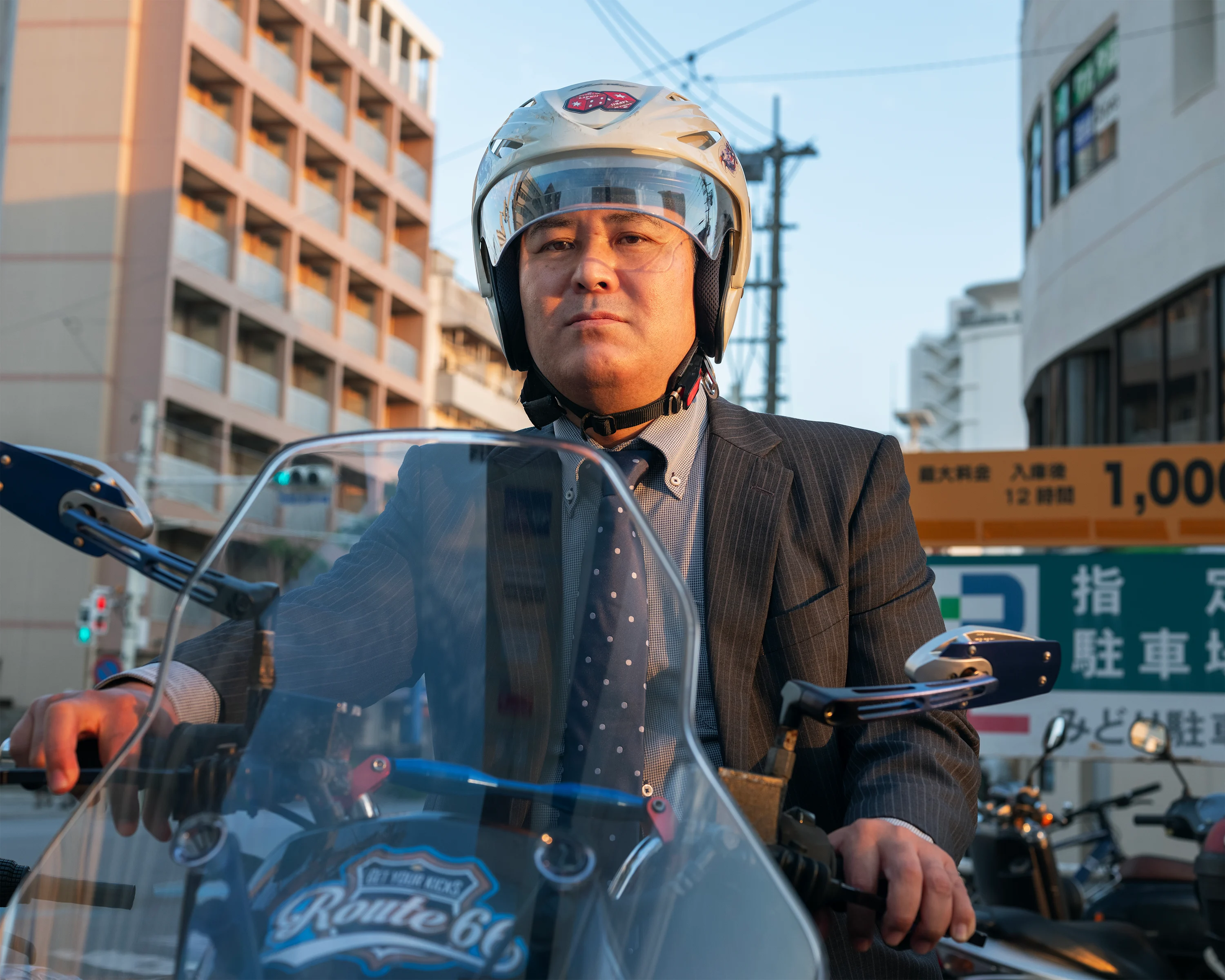
My generation didn’t directly experience war, but it still feels like the inherited memory of it runs through my blood.
In her research, Lee found that the wounds of colonisation reach even further back. Until 1879, Okinawa had belonged to the Ryukyu Kingdom—a unified, independent nation that governed the land for 400 years until Japan’s Meiji government colonised. She noticed parallels between Okinawa and her own country, which was also colonised by Japan for 25 years and subsequently occupied by the US for five years after WWII.
“My generation didn’t directly experience war, but it still feels like the inherited memory of it runs through my blood,” she says. On her first trip, Lee couldn’t enjoy her holiday. She was overcome by an impulse to photograph people, and went home with 100 portraits of strangers. Like Korea, Japan is one of the most homogenous countries in the world. But in Okinawa, Lee met many mixed race individuals and multicultural families, which filled her mind with questions about identity, memory, war, indigenous history and inherited trauma.
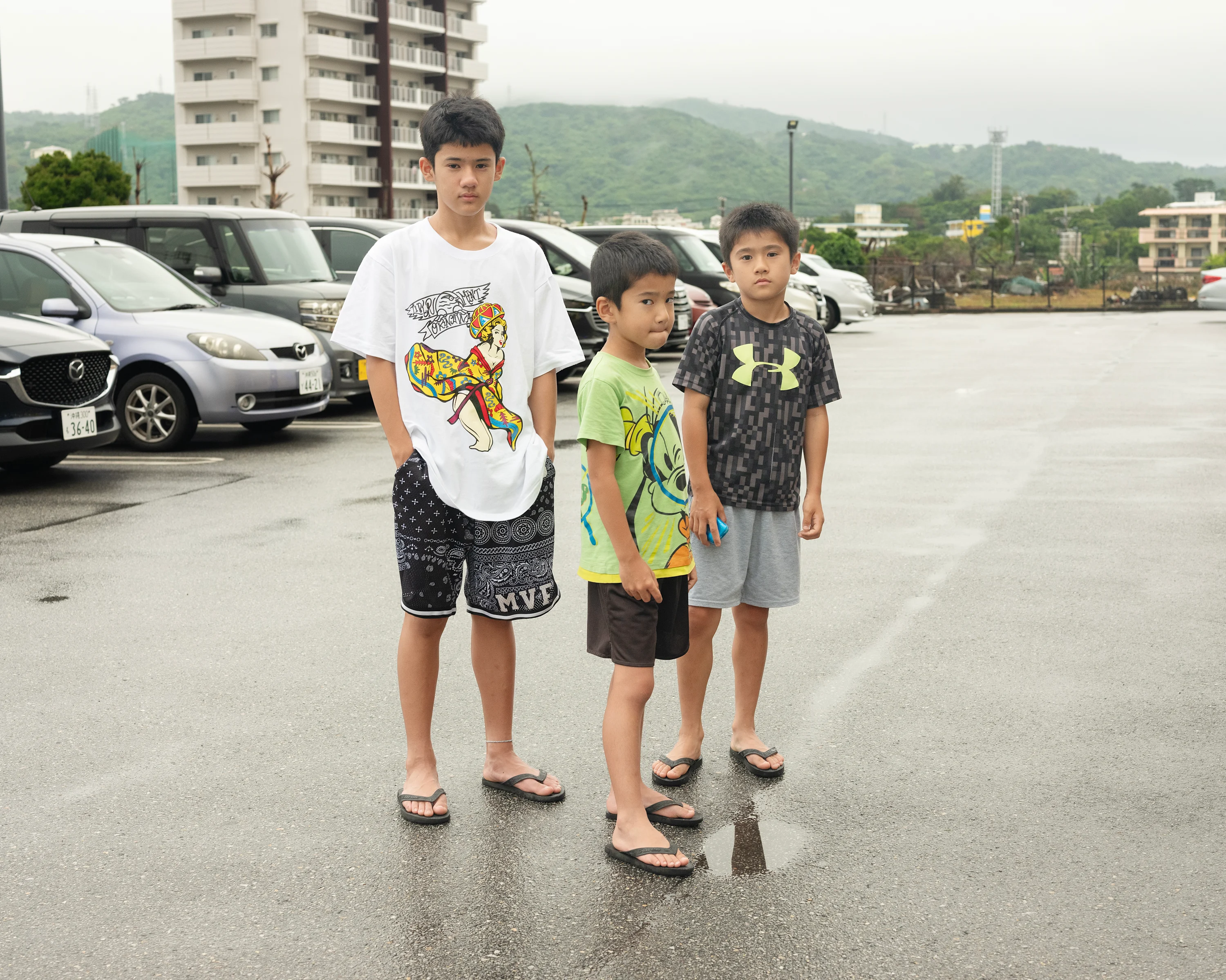
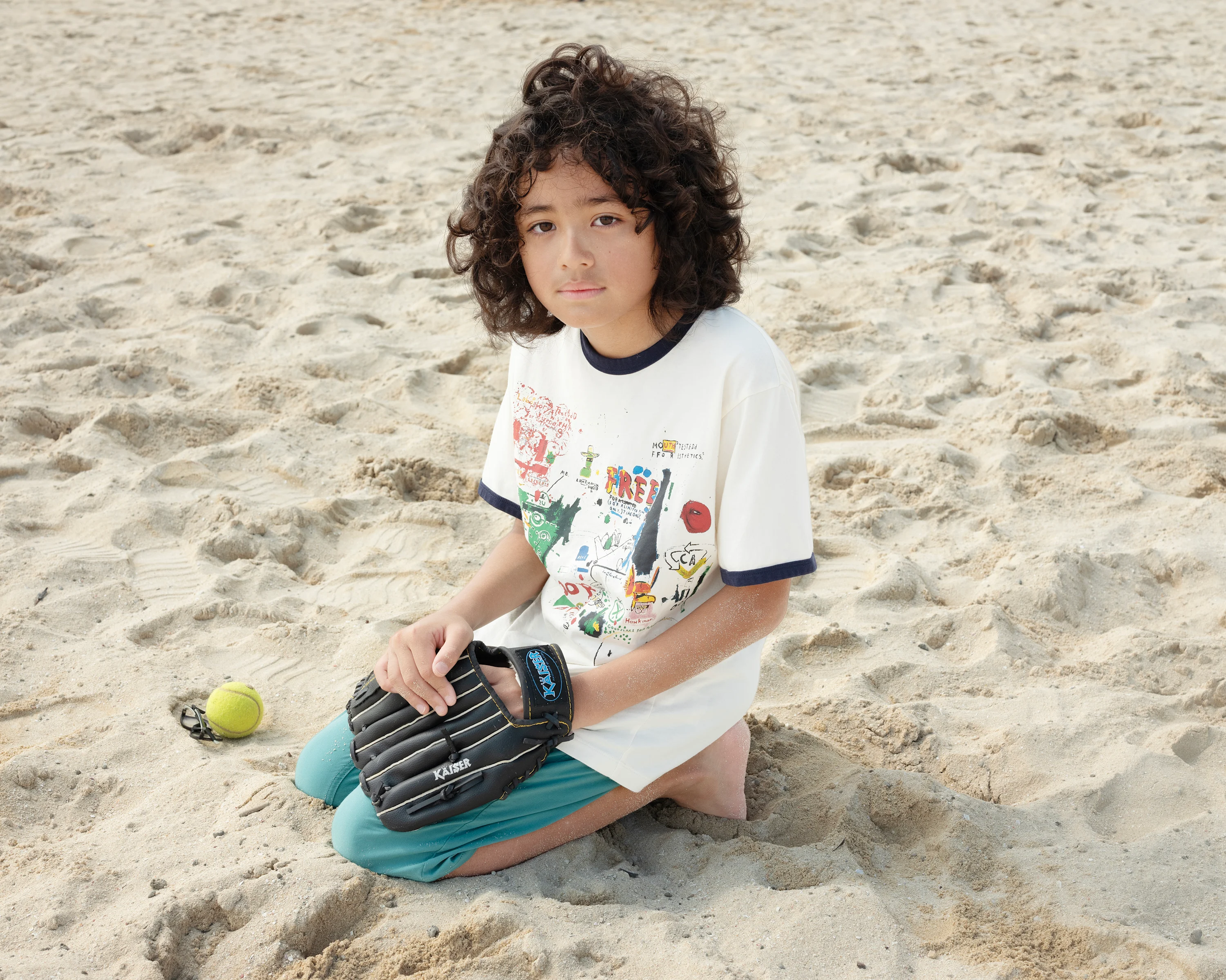
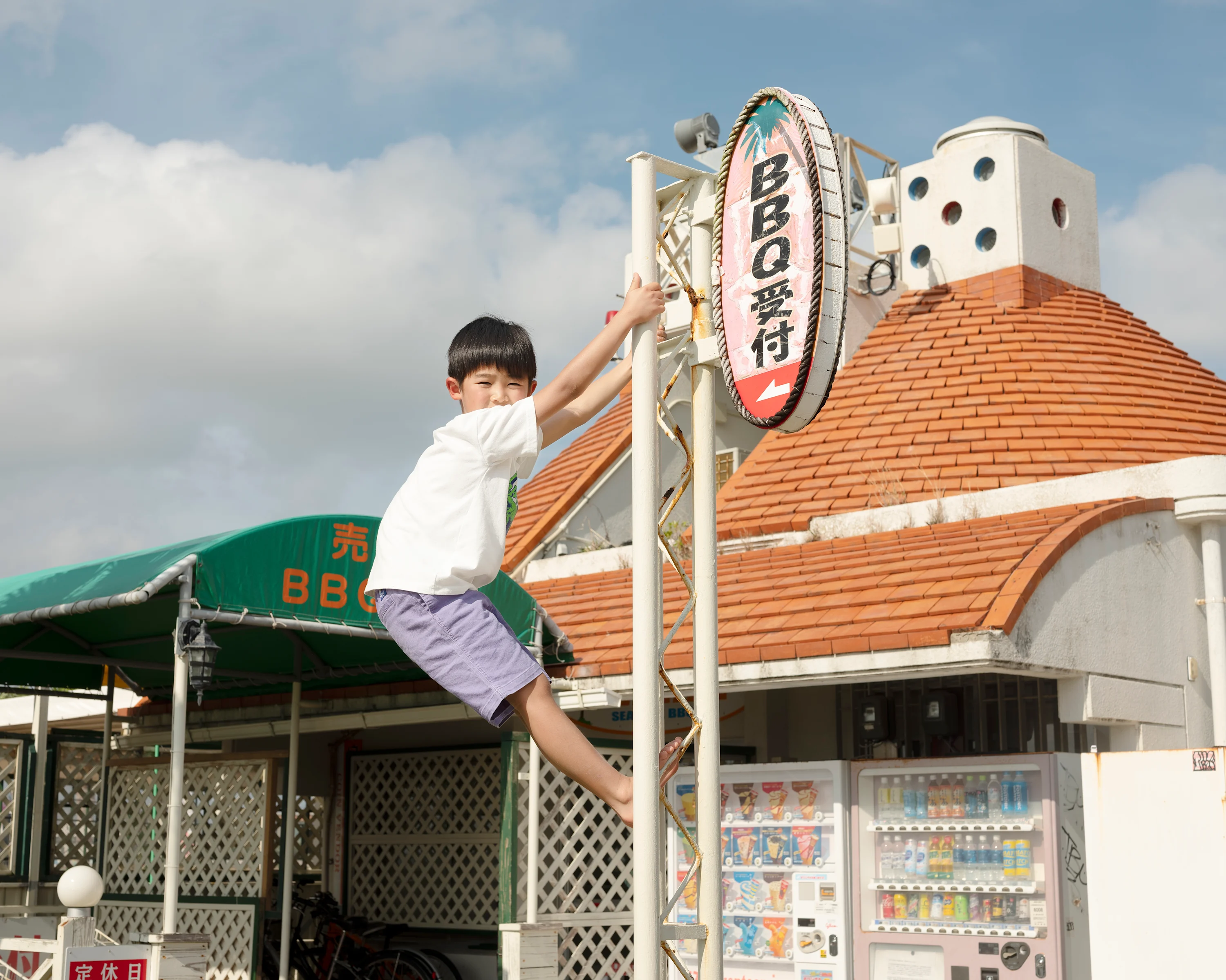
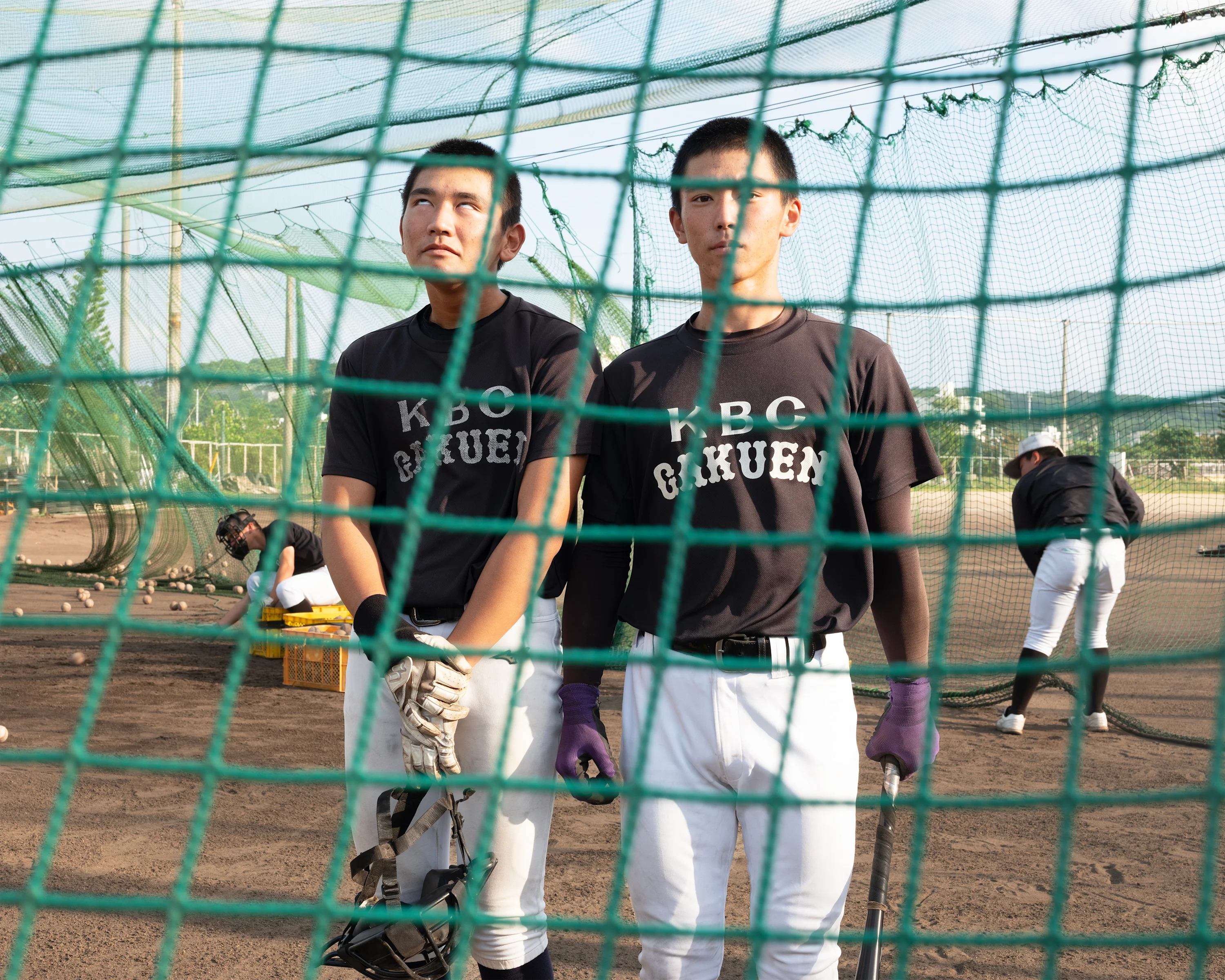
Over the next three years she returned for months at a time, traveling all the way from the southernmost to the northernmost parts of the Okinawa mainland, as well as Tokashiki Island to the west, Hamahiga Island to the east, and Ishigaki in the south. Piece by piece, she built a collection of over 1000 images, photographing a huge range of people from students at Okinawa’s AmerAsian School for children of mixed heritage, to everyday Okinawans she encountered by chance. The resulting work is titled “Big Bang,” a self-published book set to be released later this year.
Her initial intention was similar to previous portrait projects: to build a record of a certain group of people. Her 2019 work “Strangers” for example, is a collection of over 400 portraits of millennials in Seoul. “It felt like building a kind of botanical specimen book, but with people, like collecting samples,” she says. After that came “Boomers,” a project about middle-aged men who are known as “ajusshi” in Korean. “The word carries a very flat, stereotyped image,” explains Lee, describing out of touch men grumbling around the street in an old t-shirt and plastic sliders. But when she started shooting, she met many men who were stylish, energetic, and full of personality. “I realized I’d carried a negative bias,” she says. “Working on this project broke down my preconceptions.”
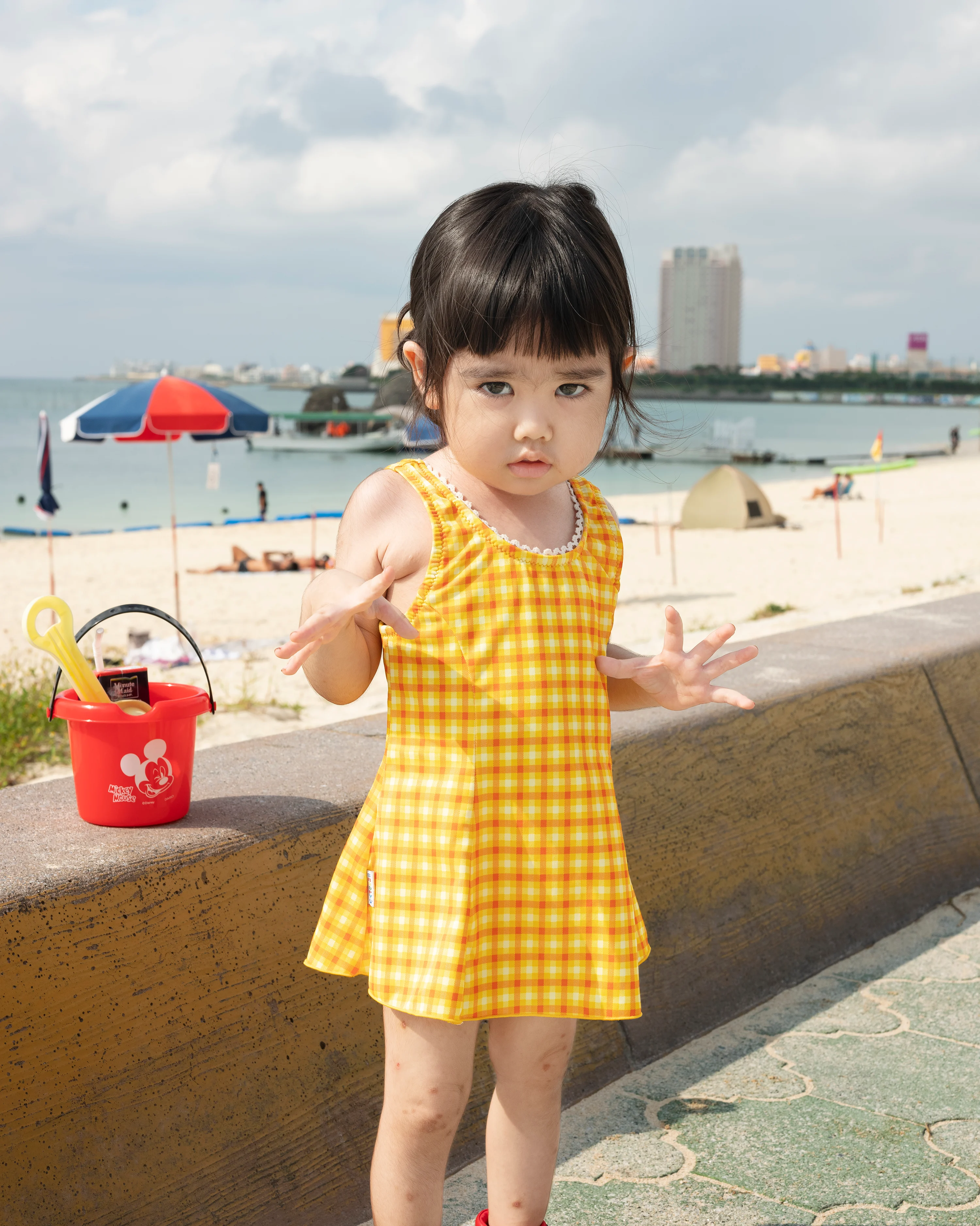
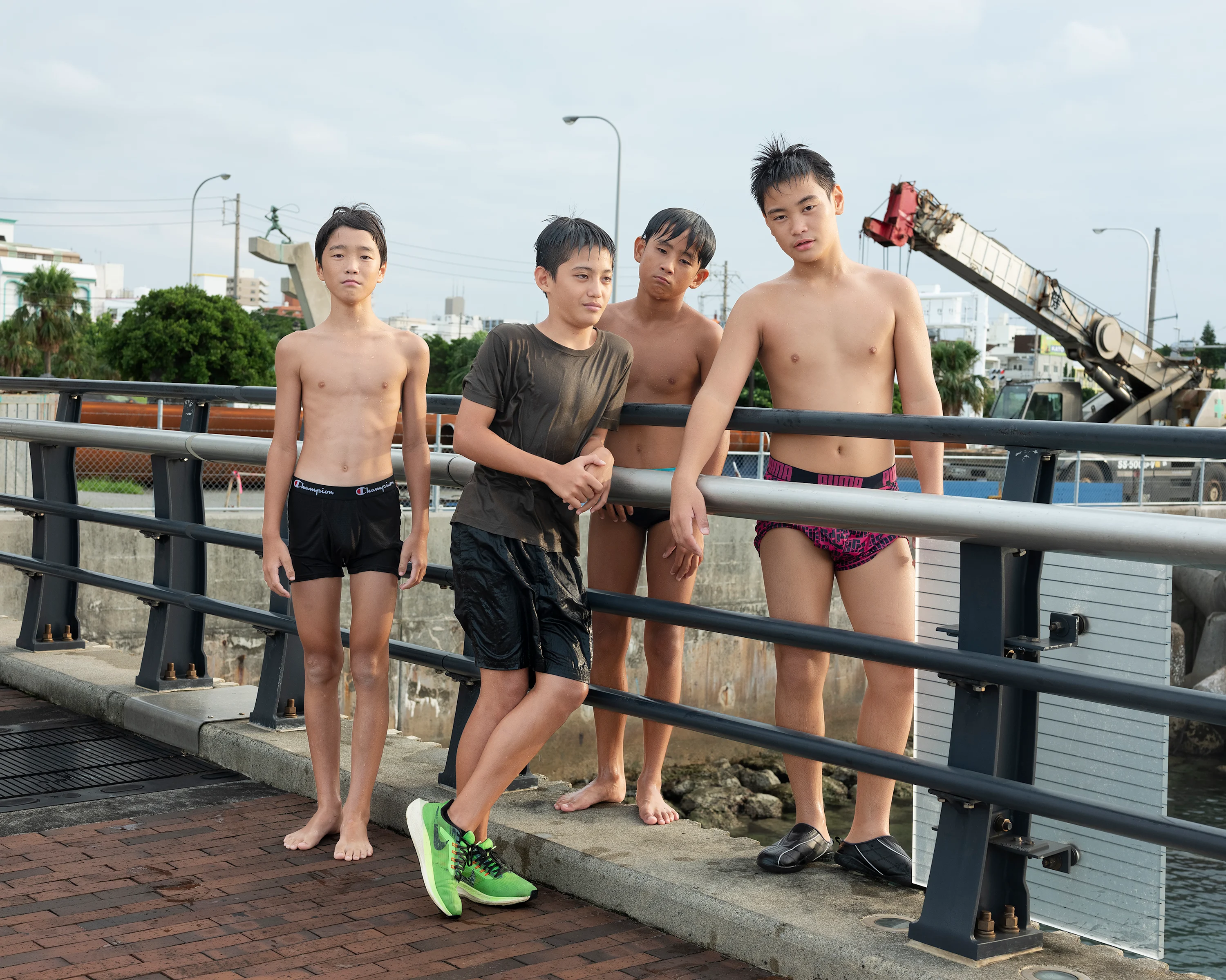
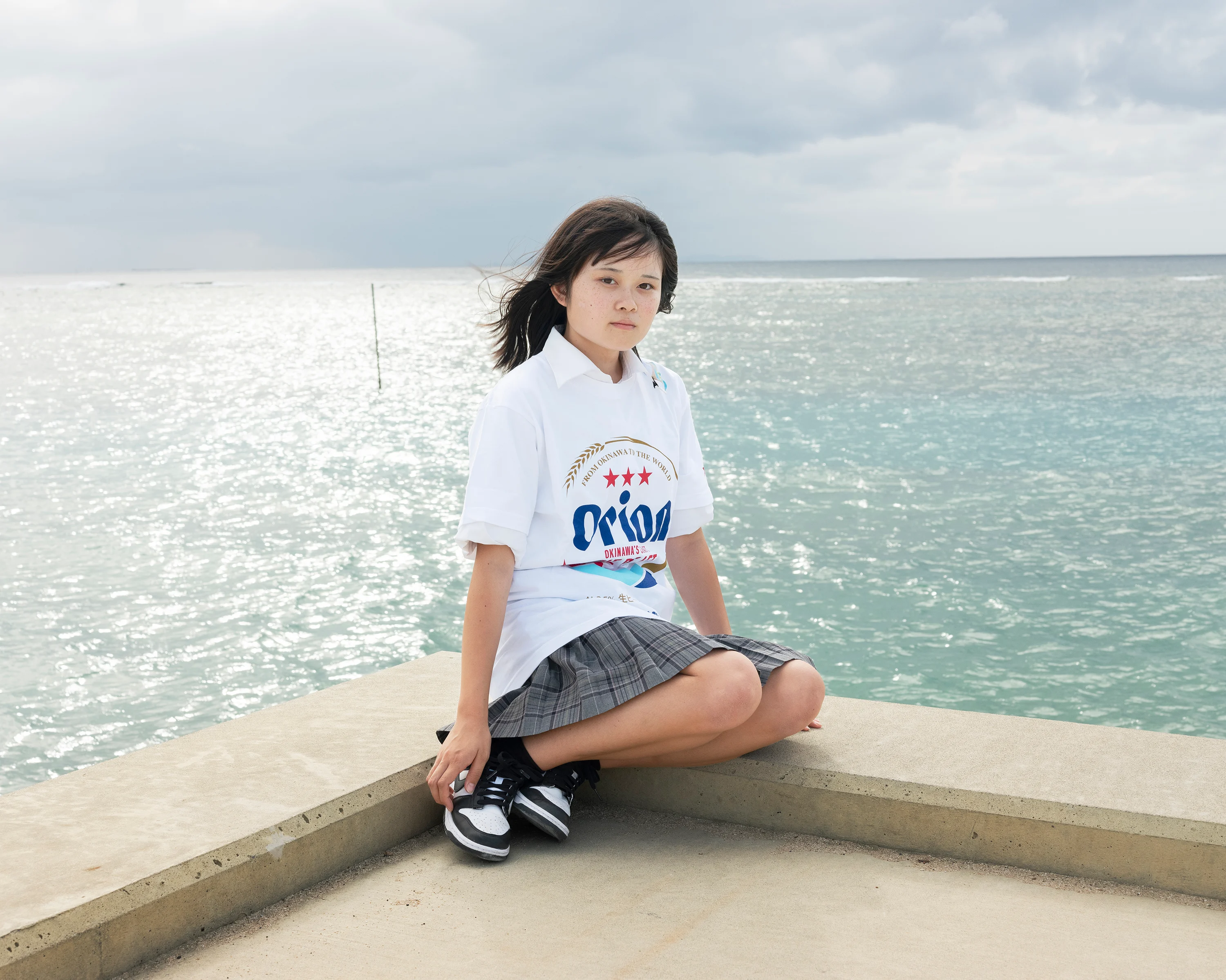
Lee’s interest in photographing strangers is rooted in a desire to capture the essence of a person with no prior knowledge of who they are. She sees portraiture as a layered medium, capable of holding information—both seen and unseen. “My usual method is to shoot broadly and then look for a category to emerge from within the material, but in Okinawa, there wasn’t a single throughline,” she says. Initially, she thought the work would be about multiculturalism, but when she discussed that with an Okinawan friend, they responded: “What even is a multicultural family?” In Okinawa, mixing cultures is such a norm that the term didn’t even exist in the local vocabulary.
Can identity really be explained through nationality or ethnicity? Is that even possible?
Lee noticed that there was a distinct ambiguity to life in Okinawa, and that became her sole focus. “I wanted to describe the ambiguity directly, rather than trying to define these people’s identities,” she says. “Can identity really be explained through nationality or ethnicity? Is that even possible?” While Lee’s earlier series were about profiling and dismantling stereotypes, this project pushed her past sociological questions and onto something closer to metaphysics—asking not “who are these people” but “what is a person, at all.” This led her way back to thinking about the origins of humanity, reading books about DNA, consciousness and the human species.
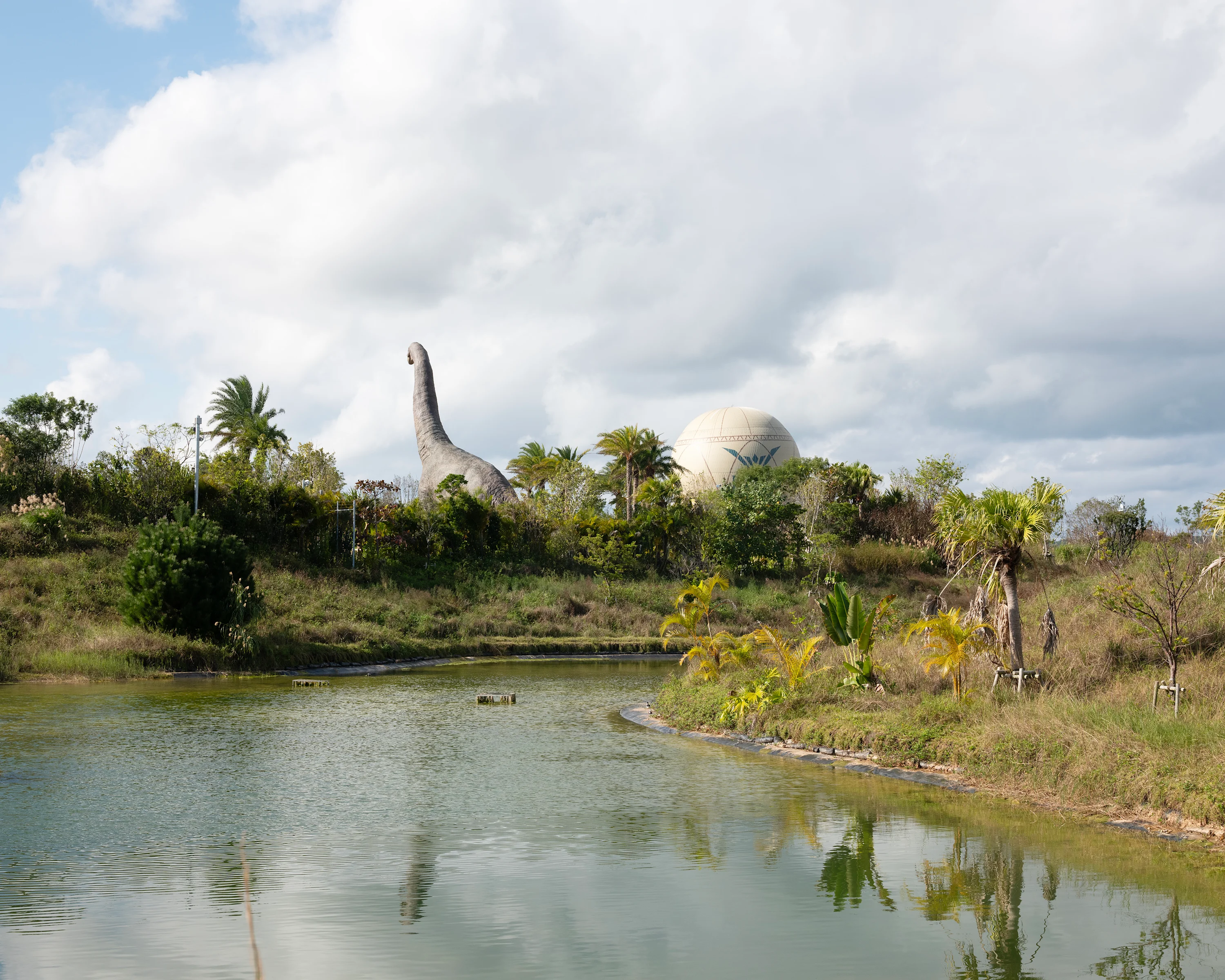
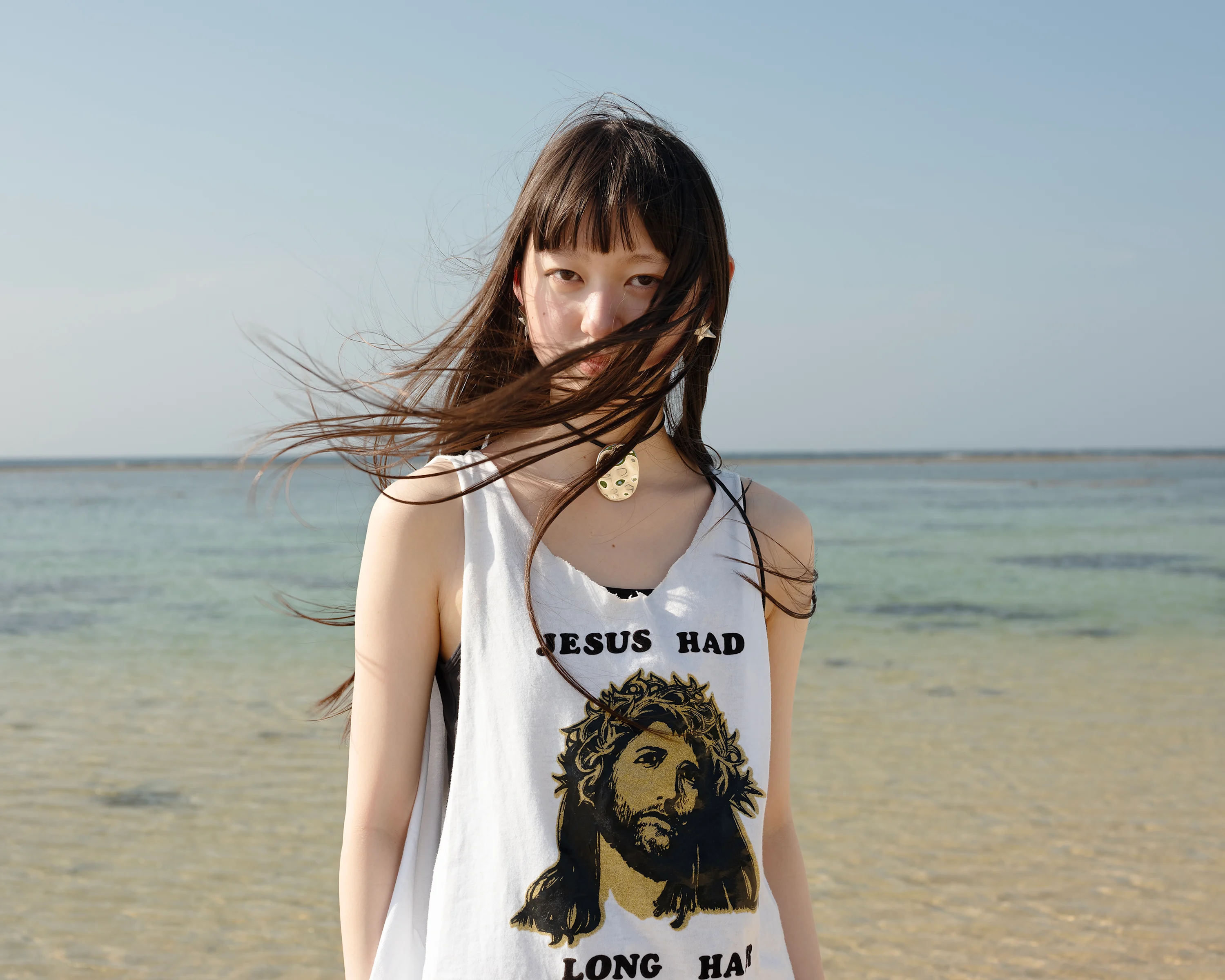
These themes surface vividly through the project. There is an image of a fake dinosaur captured in a nature-themed amusement park among the jungles of northern Okinawa, staged so convincingly it collapses the line between the prehistoric and the artificial. On a beach in Ishigaki, she approached a young woman, whose features struck Lee as almost Korean, even K-pop idol-like. Only later, back in Korea, did she notice the woman’s T-shirt read “JESUS HAD LONG HAIR,” its illustration of Christ uncannily mirroring the woman’s own expression. Another image of a snorkeller lifting a handful of rocks to search for fish captures a gesture that struck Lee as resembling a sacred offering.
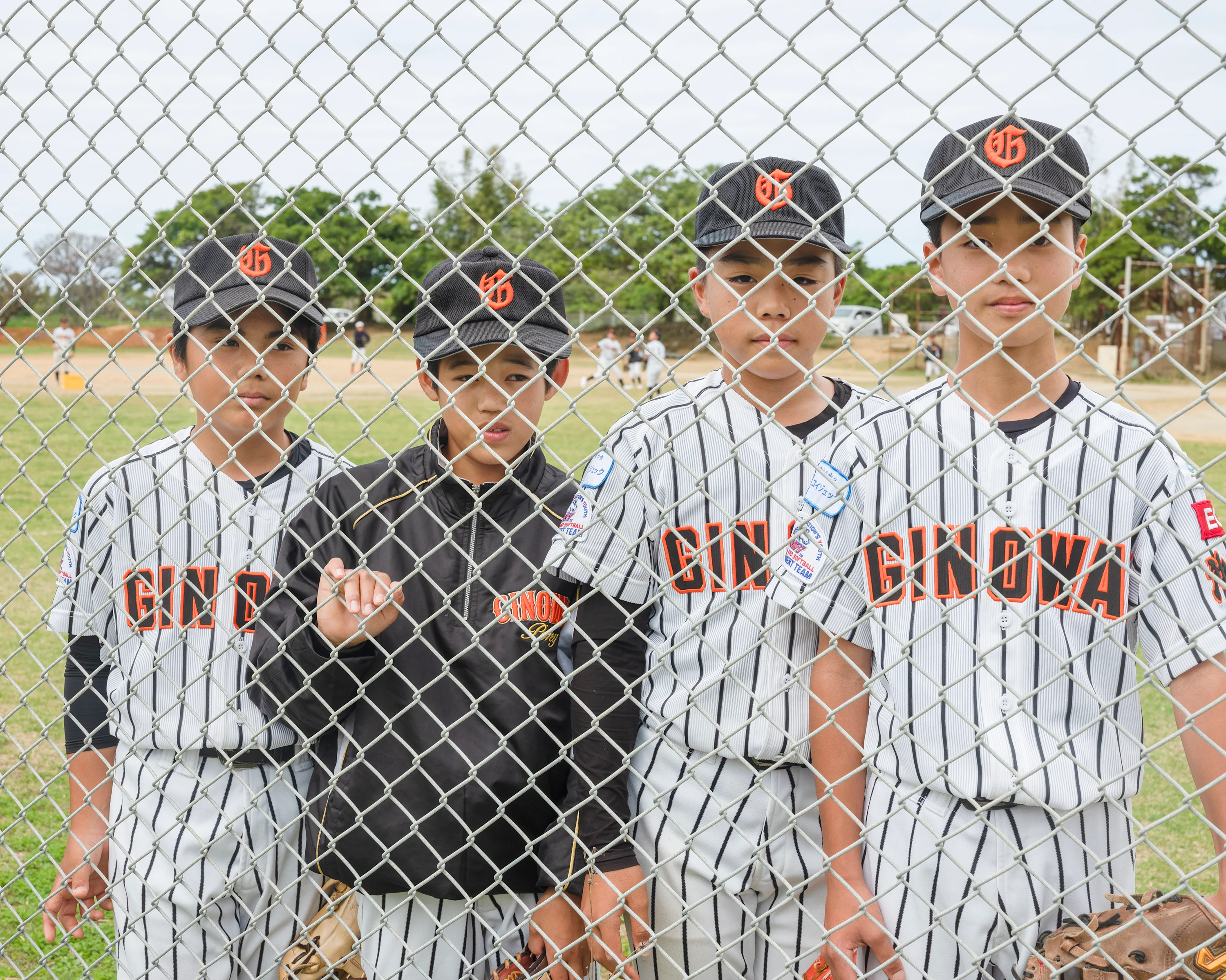
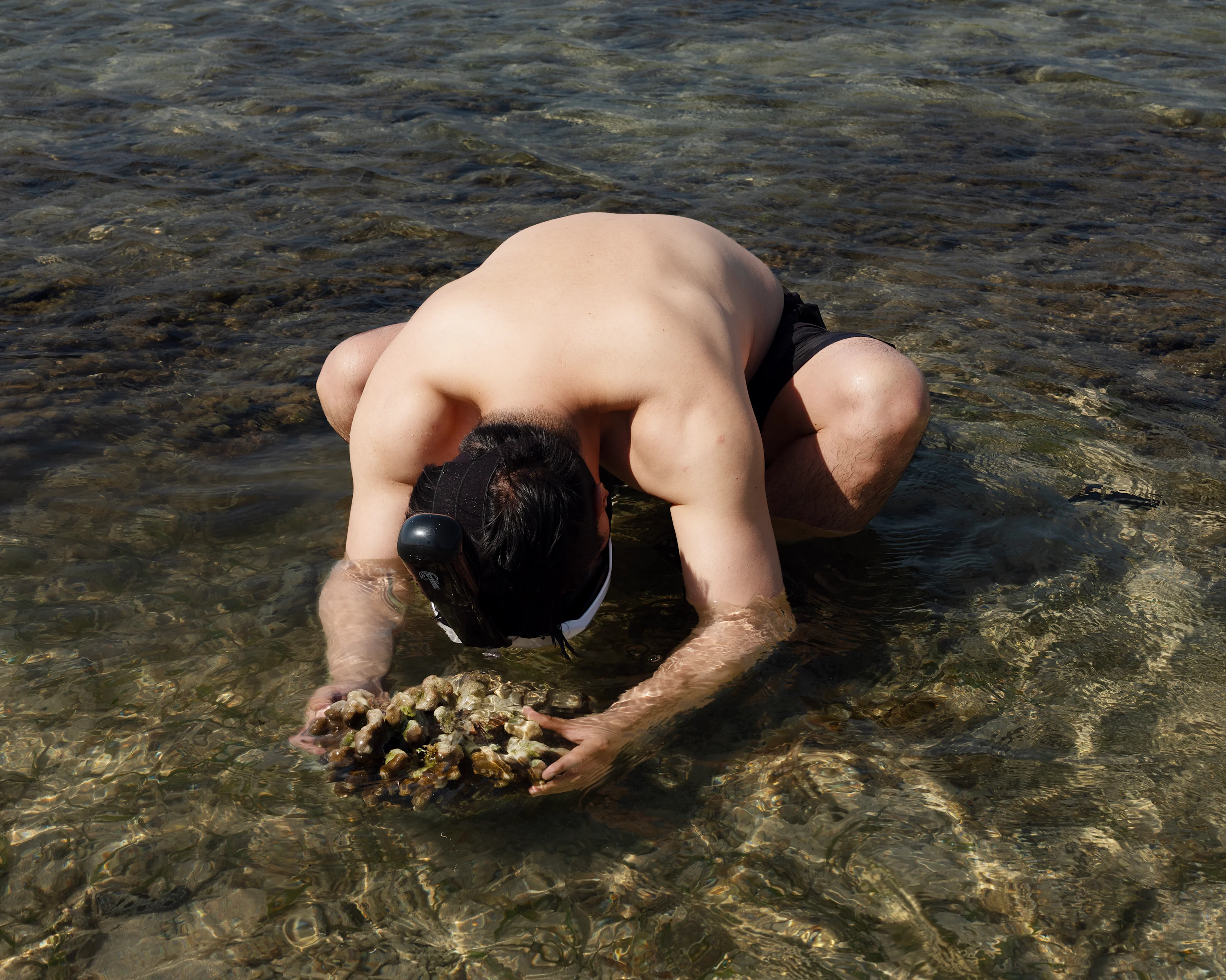
Lee continued to seek out moments that oozed a primal energy, such as unconscious behaviors, postures and facial expressions. A turning point in the project arrived when she encountered a wet specimen of a pregnant shark, suspended in a tank at the Churaumi Aquarium. It was a moment of new life frozen in time—not unlike photography. That photo eventually inspired the project’s title: “Big Bang.”
Eventually, the underlying subject in the work became universal, says Lee. While acknowledging real racism and conflict worldwide, she began to see that people are born into historical and social entanglement without a choice in the matter. “All these layers of war, history and culture that exist around the world aren’t something this generation of children experiences directly,” she says. “For them, it’s simply given, something they’re born into and have to deal with.” This resonates with Lee’s own experience as a Korean, but “it isn’t really an issue specific to Korea or Okinawa,” she says. “It feels like a generational issue playing out globally, everywhere.”