When Akinola Davies Jr. first heard cktrl’s album Spirit, he was floored—and knew it needed a visual language to match its cinematic scale. Now, the pair have brought that vision to life together. Friends for over a decade, their closeness runs through the resulting film; rooted in lived relationships, it resists spectacle in favor of quiet intimacy. They tell Natty Kasambala how the project became a way to celebrate neighborhood and the rhythms of everyday life in South London.
Over the years, Nigerian-British filmmaker Akinola Davies Jr’s visual language has sought to celebrate the richly textured lives of those in the diaspora through a host of different formats: from fashion films for Gucci to music videos for the likes of Blood Orange and Neneh Cherry. “I think as a Black person, or a person of color, or a person who tends to be othered in their own home, there’s a lack of urgency for other people to learn about your customs and norms and cultures and traditions. And if you spoon feed people then they don’t do any work,” he explains. “What’s normal in my community might seem so far-fetched in yours, but actually there’s rhyme and reason to all this stuff. I’m more interested in this idea of dialogues, like, really, what do you see when you watch something?”
Davies’ latest piece “Spirit” was made for and with artist, multi-instrumentalist and friend cktrl, born Bradley Miller, to accompany his long-form project of the same name. “When I first heard the album, I was floored,” Davies says. “It sounds so cinematic. I had just made my film and I was so impressed that I was like, this needs something that feels that it can match the scale.”
Shot across Bradley’s hometown and familial stomping grounds—the London boroughs of Lewisham and Southwark—the resulting piece is a sprawling ode to South London and the vivid lives that inhabit it. To cktrl, a proud South Londoner of Jamaican heritage, it felt like the natural nucleus. “Whether it’s London, Jamaica, the Caribbean as a whole. The diaspora has things to say other than what we usually see it say,” he explains. “Put it this way, one of the first Black families in Peckham was the Miller family. So it was significant to get that in there, and we did most of the film at my cousin’s house in Nunhead.”
Naturally, as a product of the diaspora, Davies’ work long investigated concepts of home, belonging and custom through the lens of his own heritage and experiences living between Nigeria and the UK. “Home has always been pretty central because it’s like, what does that even mean?” Davies says. “The feeling of creating this work for Bradley was that he’s coming into his own, I think he’s found himself as an artist. And what is really important within that is to acknowledge his support system, and that being his home, being his family. It’s really about, what is the backbone? Who are his day ones? And how do we honor them, because by honoring them we can honor him a little bit more.”
The diaspora has things to say other than what we usually see it say.
The cast is made up of generations of friends and family: cousins, in-laws and grand uncles alike. As strings soar, the camera orbits loved ones languidly. Through its ever-gliding gaze we take in the sky, the ground and all the tiny moments of real life happening in between with equal awe. That quiet intimacy flowing through the film mirrors the inspiration behind the project at the heart of it: “I hadn’t put anything out for three years, but in that time I was really experimenting and just trying to find some kind of peace,” says cktrl. “‘Spirit’ for me is just about centering your spirit and regulating life in a sense… The process of making [it] was just me kind of coming home to myself.”
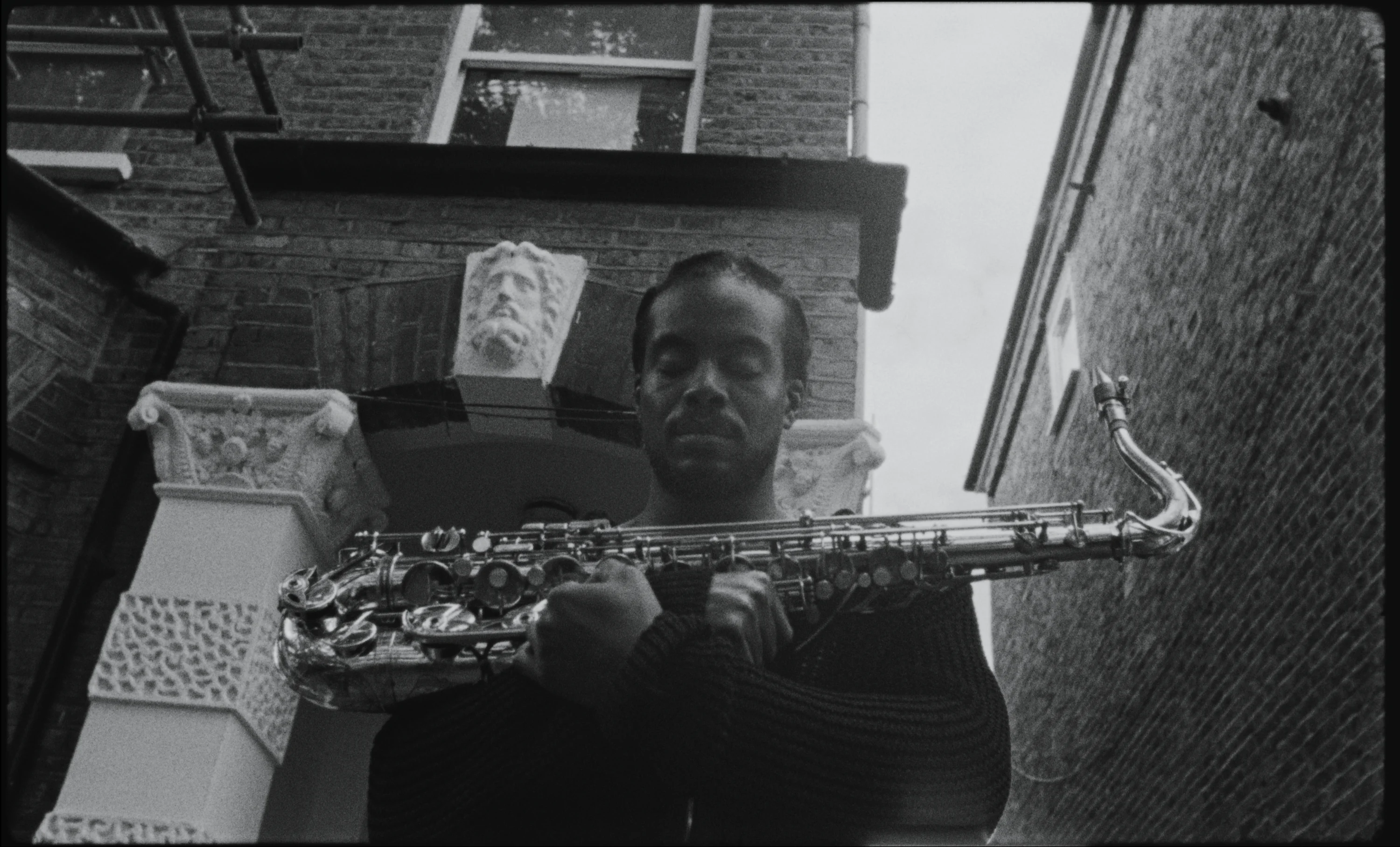
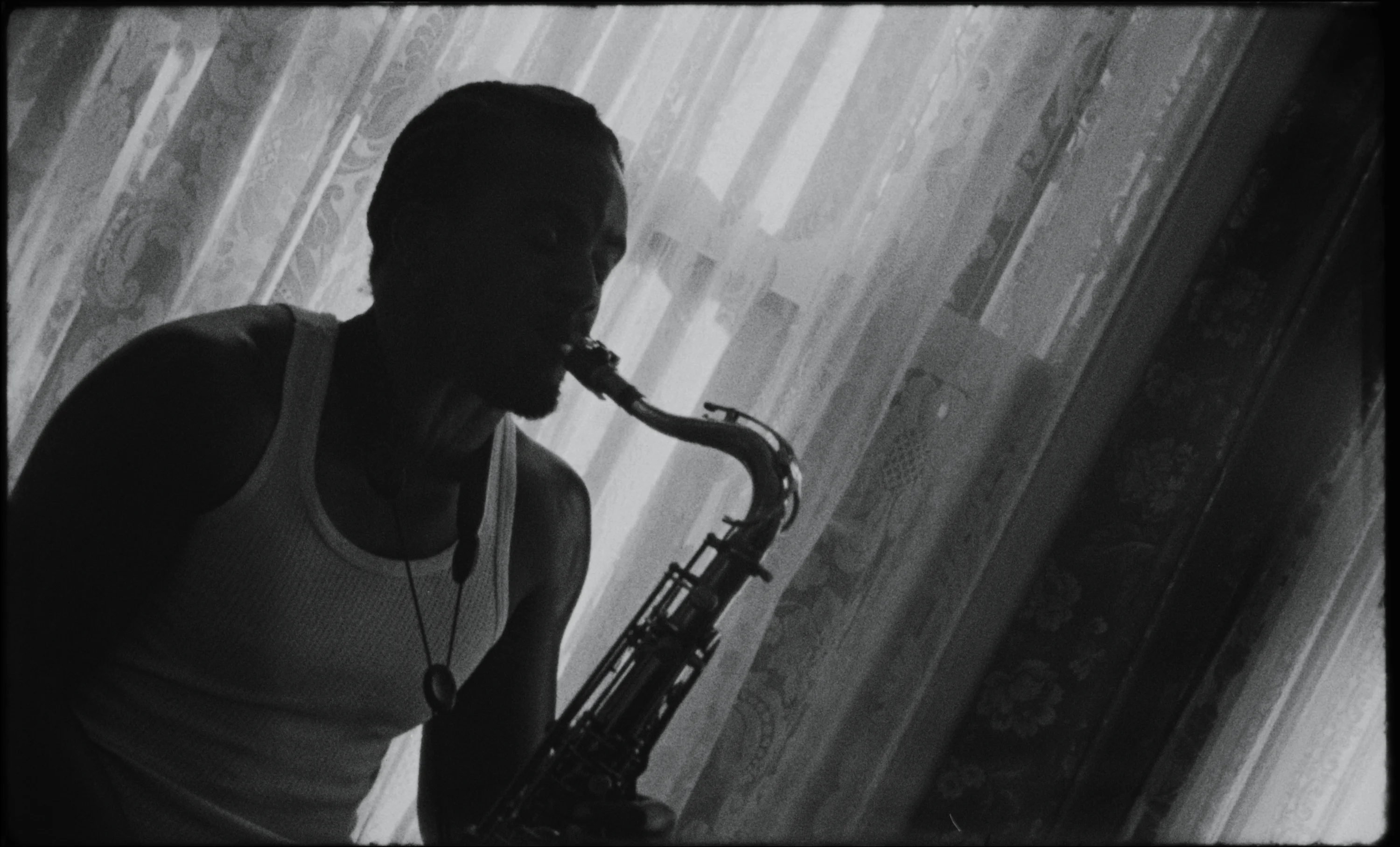
Jumping lightly between different pockets of the vibrant neighborhood, not unlike the collection of vignettes captured on the album, we are invited into cktrl’s world. In it, his meditative music serves as a score that transmutes something as small as a shared joke between cousins or a card game amongst elders into something monumental and transcendent. Shot on 16mm film, in glimpses, the original warm colors peek through on screen, before snapping back to rich, inky greyscale, giving the sense of these extraordinarily ordinary moments being immortalized in real time.
I’m interested in the mundane… the everyday, the stuff that people take for granted.
Towing the line between documentary and narrative, the film’s emotional core is dreamlike performance scenes, threaded through snippets of relaxed conversation and laughter, the unthinking comfort of a family gathering or congregating to tell stories until the last second around an open car door. The soundtrack is even punctuated and made tactile by the background noises of everyday life: the sizzling of chicken on the grill, train doors beeping shut, passing traffic, footsteps, sweeping. “I’m interested in the mundane, I’m not really interested in extremes,” Davies says. “I’m just very interested in what’s happening in the middle, the ‘boring stuff’, the everyday, the stuff that people take for granted.”
Finding ways to honor daily magic in a place as brimming with it as London is an enticing task, but rarely an easy one. Here, moving parts and outright barriers can often stop spontaneity dead in its tracks once cameras and crews are involved. Davies is no stranger to the obstacles of trying to bottle the lifeblood of the capital, though, and credits longstanding relationships for the unfettered access and trust he’s granted when making work. “My work is very embedded in being part of multiple communities, and showing up for people in communities,” he says. “By doing that, it means I get a certain level of access: to people, proximity to things I want to shoot. And by getting access it means I have the privilege of being able to film things that other people might have to stage or fabricate in a way.”
The pair’s friendship is testament to the same ethos. Having known each other for over a decade, cktrl remembers the early days of their creative careers, Davies running a night at Ace Hotel for people to come and share their projects in progress, for example. “Akin’s always been supportive, just a good friend,” he says. “He knows how to show up for people and to encourage you.”
That cultivation of community and closeness is palpable in “Spirit.” Witnessed in an embrace between relatives, friends teasing over secret handshakes, water fights between kid cousins, the sheer scope of the world captured and the tender naturalism of the people it gazes on. The result is a case study in film as exchange, not just extraction; equal parts art and documentation.
When both are asked about their favourite memory from the project, the common theme is how its impact stretches across time: special and enriching from conception right through into its future and potential as legacy. For Miller, the memory of actually living it on the day and carving out that shared experience with his family proves unrivaled. For Davies, it was the privilege to preserve that and extend its life indefinitely. “It was his uncle coming and initially not wanting to be involved at all. Everybody spoke to him about what we were doing and Bradley was like, just shoot man, he’ll get on board,” he laughs. “And I think in that moment I realized, okay wow, we’re making a generational piece of work. It just felt pretty incredible, pretty special… that he’s going to have this forever. He’s going to have this moment where all his family were together in this absolutely incredible moment and I’m just glad to have been able to capture that on camera.”