When Camille Farrah Lenain’s uncle Farid passed away, she lost the person she would have liked most to learn from about what it means to be a queer Muslim in France. For her new book “Made of Smokeless Fire,” she met and photographed 50 queer Muslims across the country, seeking answers to the questions she never got the chance to ask him, and learning about their relationship with faith, family, desire, loss and belonging. She tells Neelam Tailor how what began as a journey into one man’s story became so much more.
Some questions arrive too late. By the time photographer Camille Farrah Lenain began asking herself what it meant to be queer, Arab and connected to Islam in France, the family member best placed to answer her was gone.
Her uncle Farid had died years earlier. “He was everyone’s best friend, and such a positive voice,” she says. The uncle who laughed constantly, wore distinctly tight trousers, handed down Madonna tapes, and was the “glue” that held together a sprawling French-Algerian family in Paris. The uncle whose absence would eventually guide Lenain to create “Made of Smokeless Fire,” a six-year photographic project exploring queer Muslim life across France.
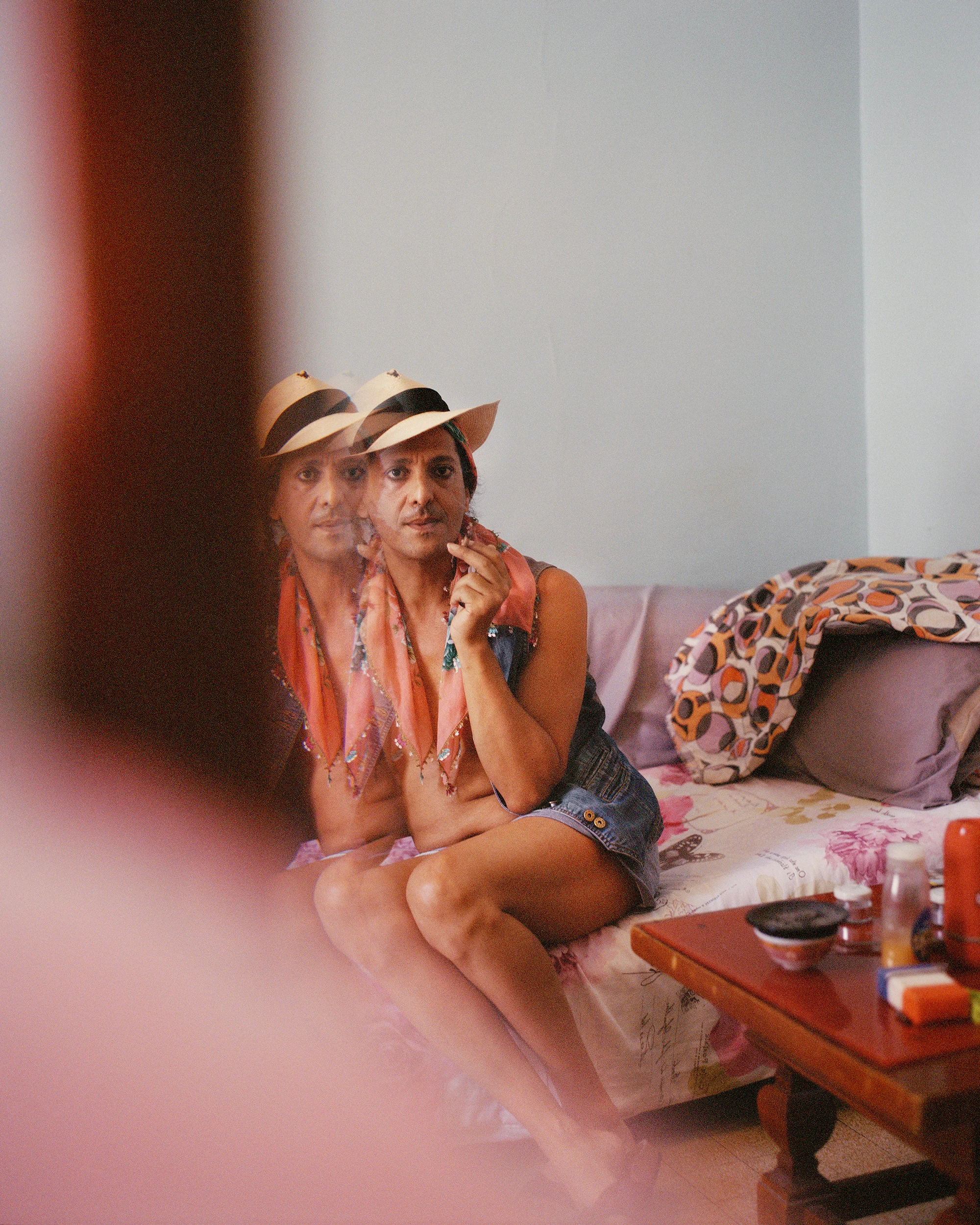
I felt like a therapist sometimes. We would speak for hours, and there would be so many tears.
“The feeling was that this grief was irreparable,” she says. In her early 20s and living away from home, Lenain found herself mourning not only Farid, but everything she would never get the chance to ask him. “I felt like there was this huge void,” she says. “I realized there were all these questions that would never be answered. I wanted to know what faith meant to him. Did he feel accepted? What was necessary for him to feel alive and complete? I wondered if he felt the need to come out?”
No one else in the family could answer them, so she started looking elsewhere. What began as an attempt to understand one man evolved into six years of conversations, portraits and friendships. Traveling across France, she photographed around 50 queer Muslims and spent hours listening to stories about faith, family, desire, loss and belonging. “I felt like a therapist sometimes,” she laughs. “We would speak for hours, and there would be so many tears.”
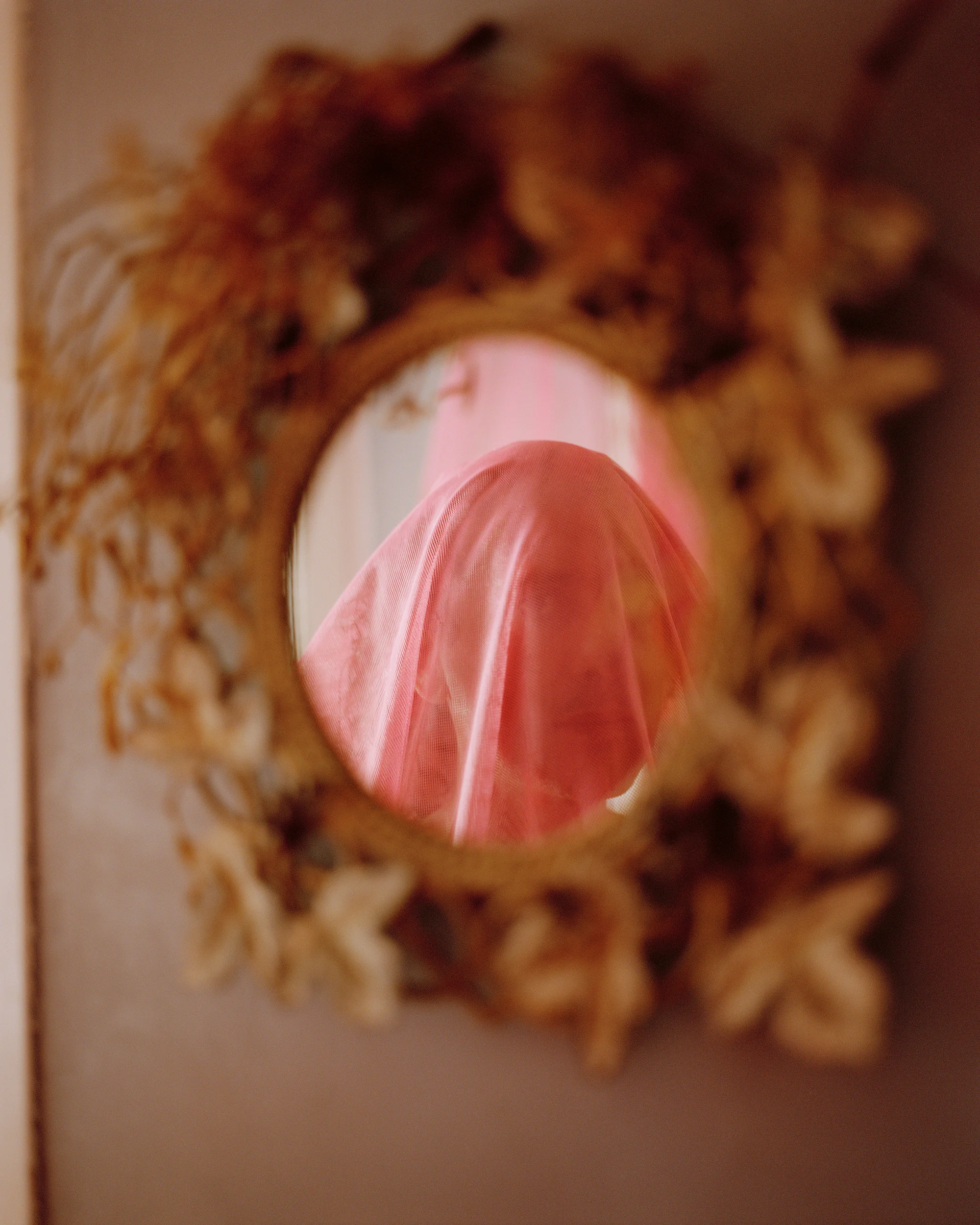
Those conversations became as important as the photographs themselves. Lenain distilled them down into fragments of text she calls “poetic portraits,” weaving together memories, reflections and moments of revelation—individual voices connected to something larger than themselves. The more people Lenain met, the less interested she became in finding definitive answers, and that uncertainty began to shape the photographs themselves. Windows appear throughout the book. So do curtains, shadows, reflections and doorways. Lenain is fascinated by thresholds and portals. “To me, this speaks about privacy and openness at the same time,” she says. “I like these liminal spaces.”
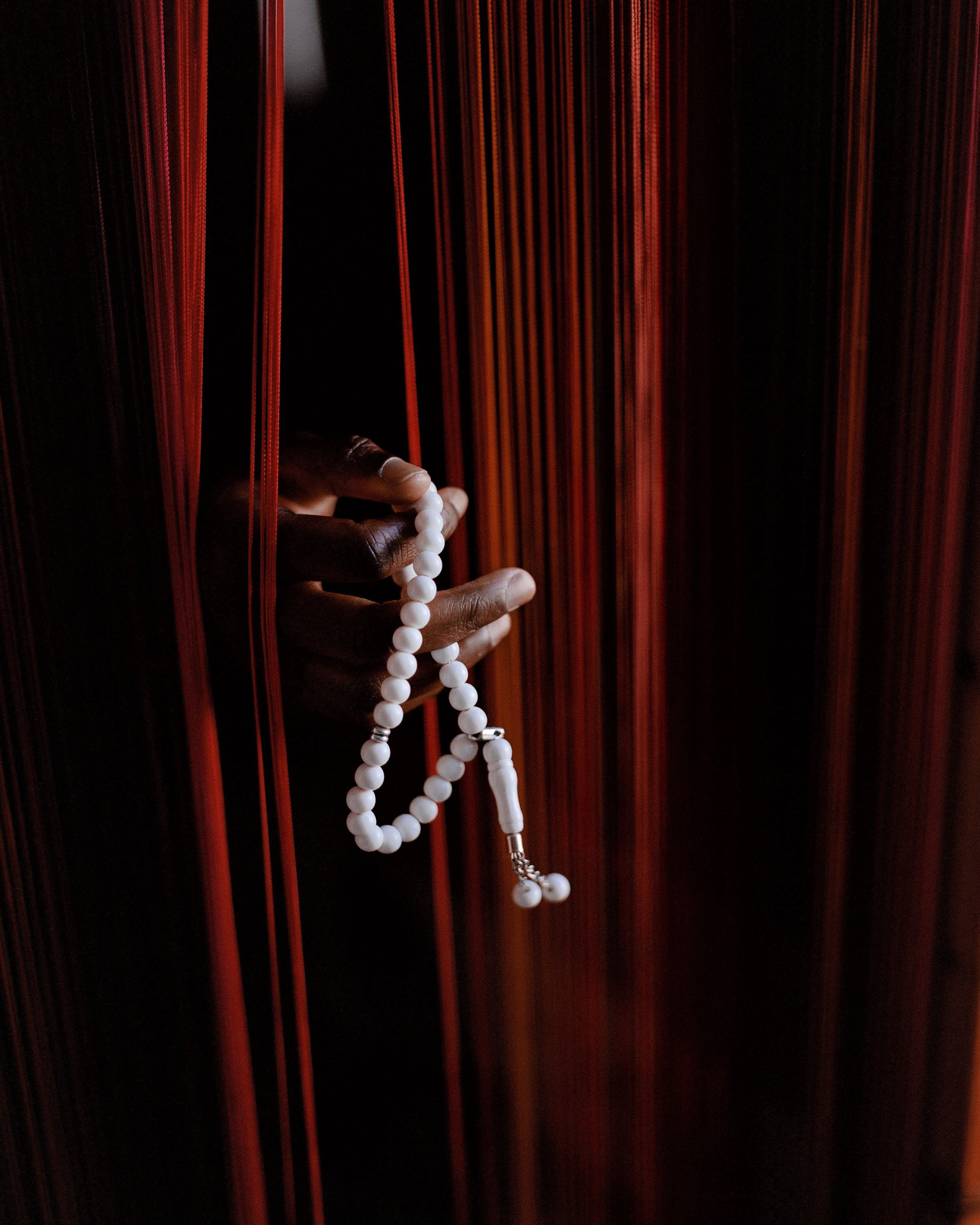
A striking image that nearly didn’t make it to the book shows a hand clutching white prayer beads, halfway out of a red fringed curtain. “At that point [for the woman being photographed], even speaking to me about her queerness was already a huge step,” says Lenain. “It was this tiny first step. In a way, Islam was helping her take it, helping her move from behind the curtain.” A year after it was taken, the subject withdrew permission for it to be shown publicly. “I knew this photo contained the aura and the experience of this person because it was too hard for her to see the photo exist,” Lenain says. “It was the first time I grieved a photograph.” The image disappeared from exhibitions, but the trust built through years of conversation allowed them to keep talking, and eventually, the photograph returned.
Lenain sees it as a visual expression of a question that runs throughout the project: how do you photograph people who are often unseen, but not always safe being fully seen? “I was really questioning how to photograph anonymity, how to conceal identity to protect people,” she says. “How do you express secrecy, people who are staying in the dark for their own protection, but who are also made invisible by a society that often refuses to acknowledge they exist?”
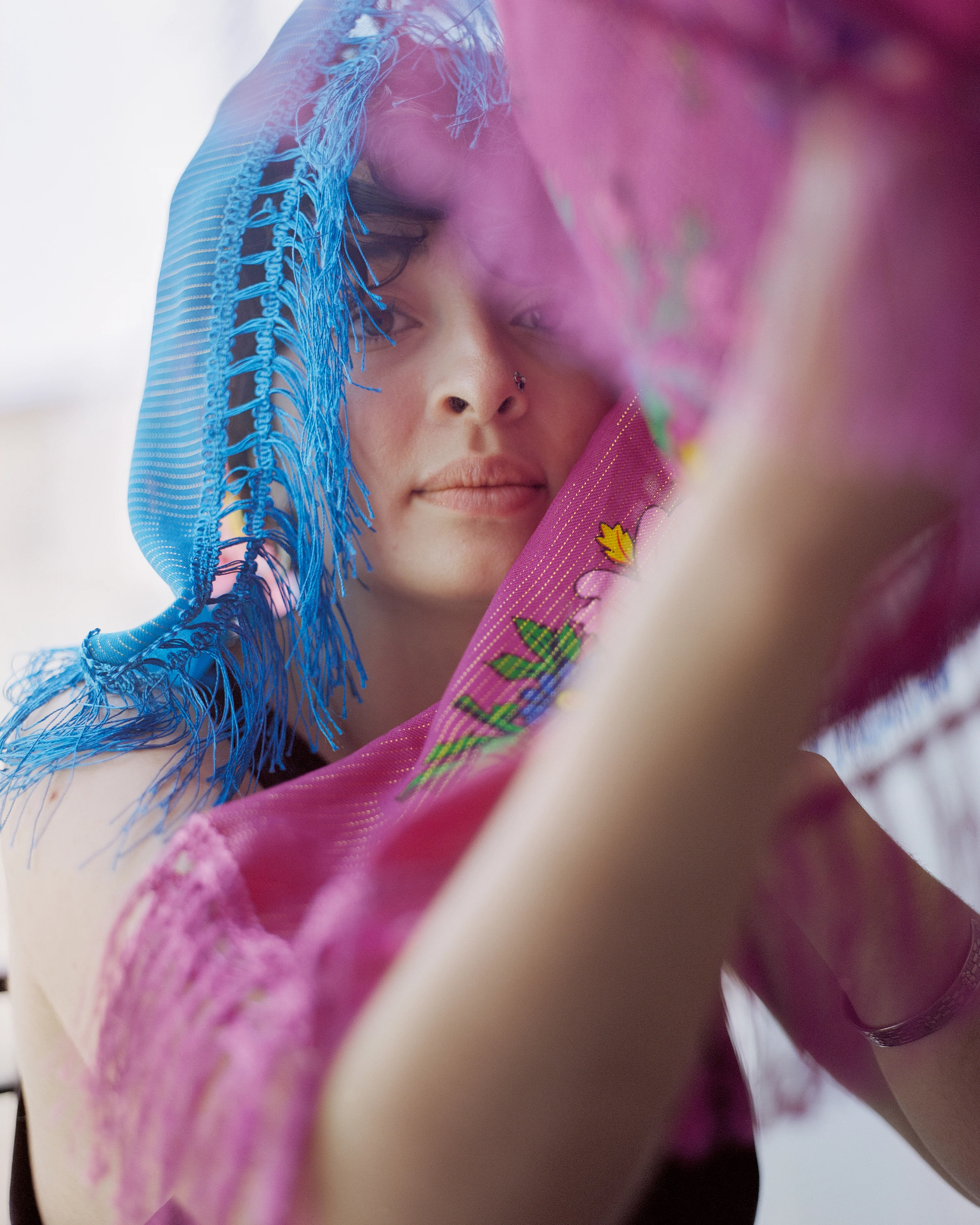
“I’d love for someone to open the book and understand that it’s possible to exist beautifully, faithfully and spiritually as a queer Muslim person.”
That tension feels particularly acute in France. “I think French society does not even understand that [queer Muslim identity] can exist,” she says. Islam is often discussed as an immigrant issue or a security issue, while queer Muslims frequently disappear from public conversations altogether.
Even the book’s title speaks to identities that resist categorization. It comes from the jinn, pre-Islamic spirits made of smokeless fire: neither wholly good nor bad, yet often misunderstood. “As a queer person, you’re going to be challenged by society every day,” Lenain says. “It’s not a choice to be gay, lesbian or trans. But it becomes a choice to be out in the world and live in a world that can be very hateful. So having some form of faith that is higher than you to survive is actually important.”
I think French society does not even understand that [queer Muslim identity] can exist.
That revelation changed her too. When “Made of Smokeless Fire” began, Lenain wasn’t actually religious, though she grew up in a Muslim and Christian household. Six years later, after countless conversations about prayer, spirituality and belonging, she is considering converting to Islam. She is careful not to romanticise this experience, though. “I’m not trying to say that homophobia and transphobia don’t exist in Islam,” she says. “They do. There are still people being killed for this.”
The reality of this pain runs throughout the book in the experiences and conversations of the people she photographed, but Lenain made a conscious decision not to make suffering its defining image. “I want [this book] to be a positive proof for people who still don’t understand that queer Muslims exist,” she says. “Or for people who are still struggling with those internal conflicts. A sister, a mother, a friend. I’d love for someone to open the book and understand that it’s possible to exist beautifully, faithfully and spiritually as a queer Muslim person.”
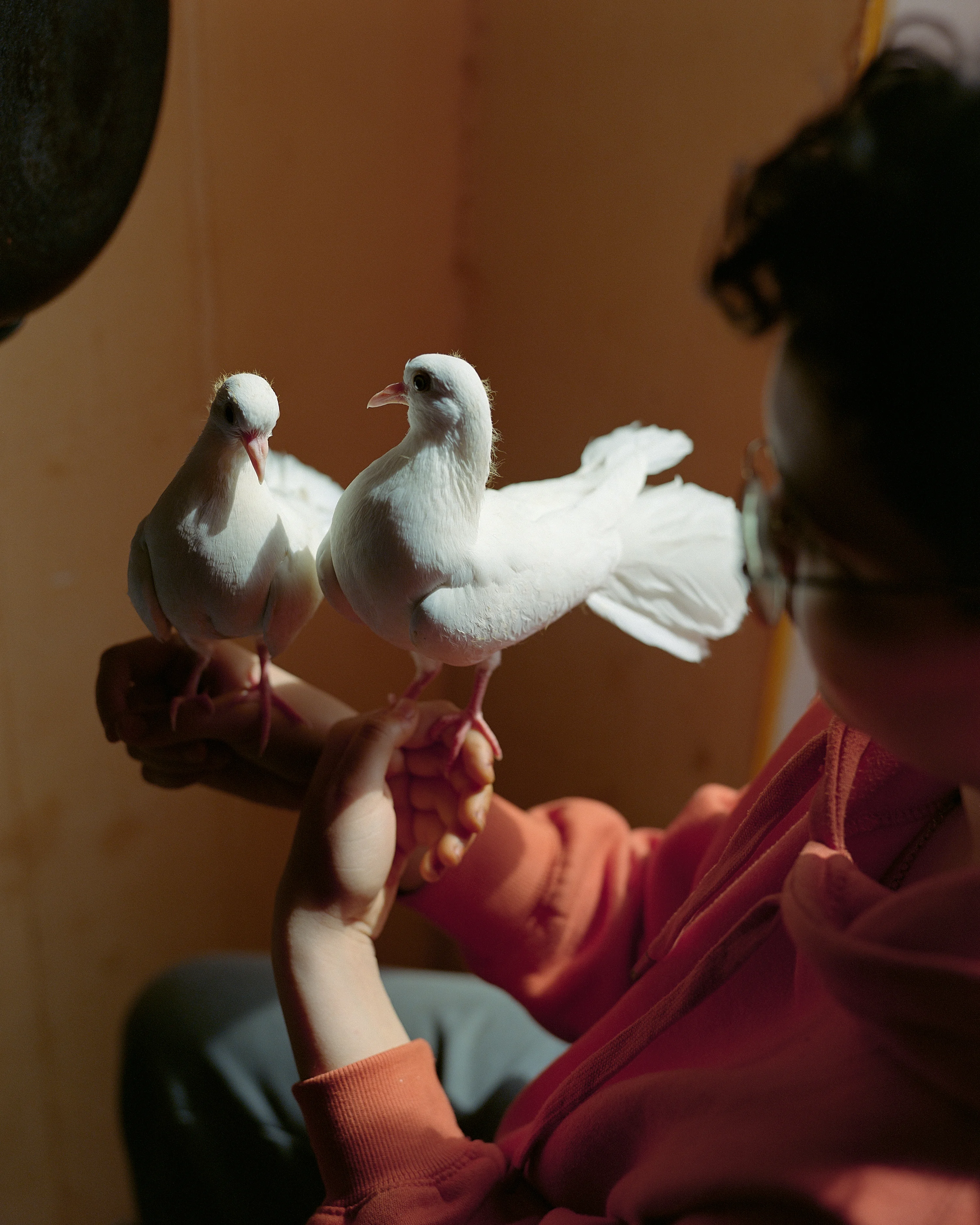
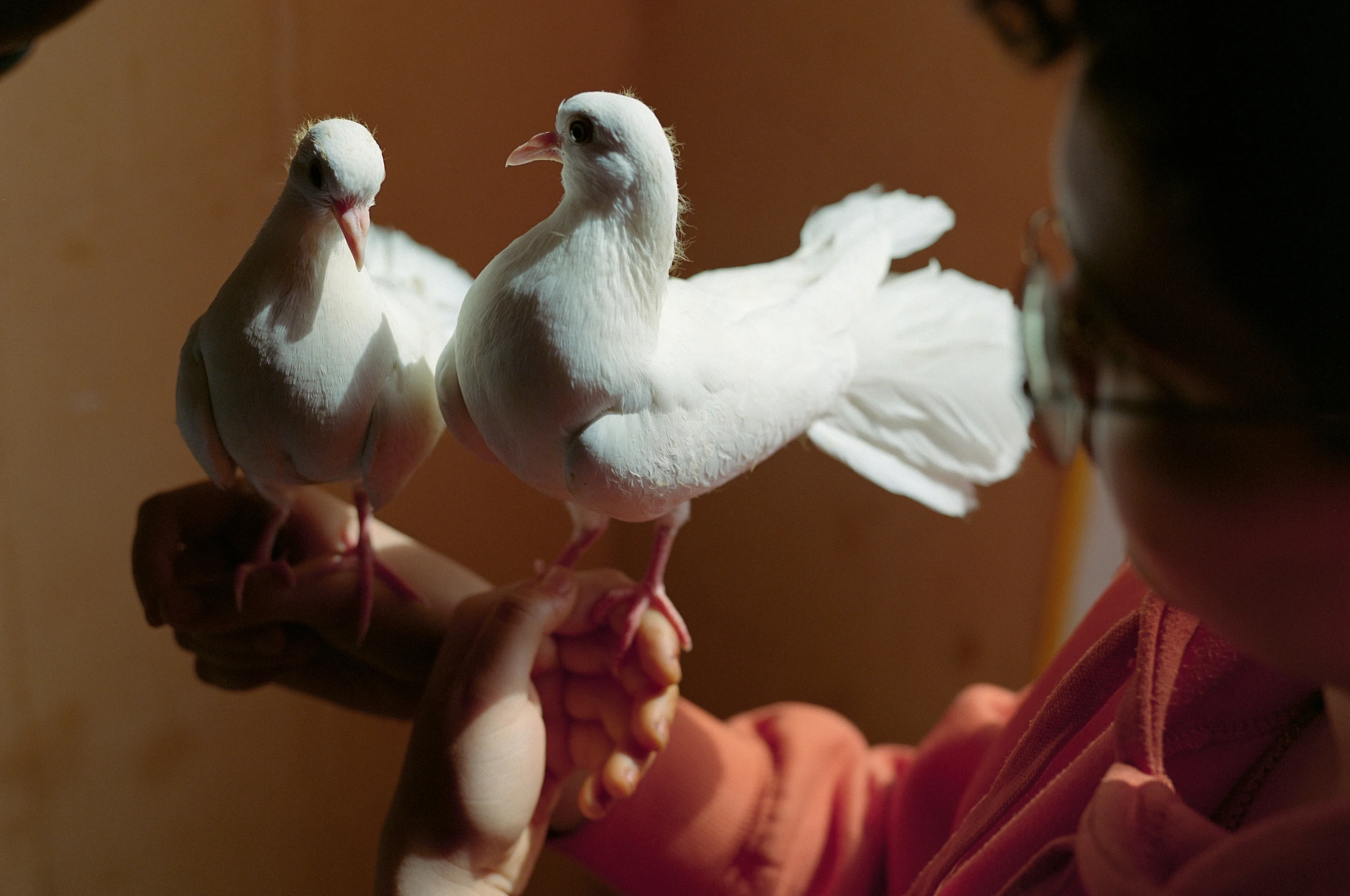
The final chapter of the book is titled “For Lamine.” Lamine was 18 when Lenain met them and photographed them, and was 20 when they died after struggling with their mental health. One of the most luminous photographs shows Lamine holding two white pigeons, a token of forgiveness from their mother, with whom the relationship was fractured.
Their death hangs quietly over the later stages of the project. Yet Lenain refuses to let tragedy become the defining frame through which they are seen. Instead, she returns to their beloved pigeons, to forgiveness, and to a celebration of how loved they are in Marseille. “The project started with being for Farid,” she says, “and ended with being for Lamine.”
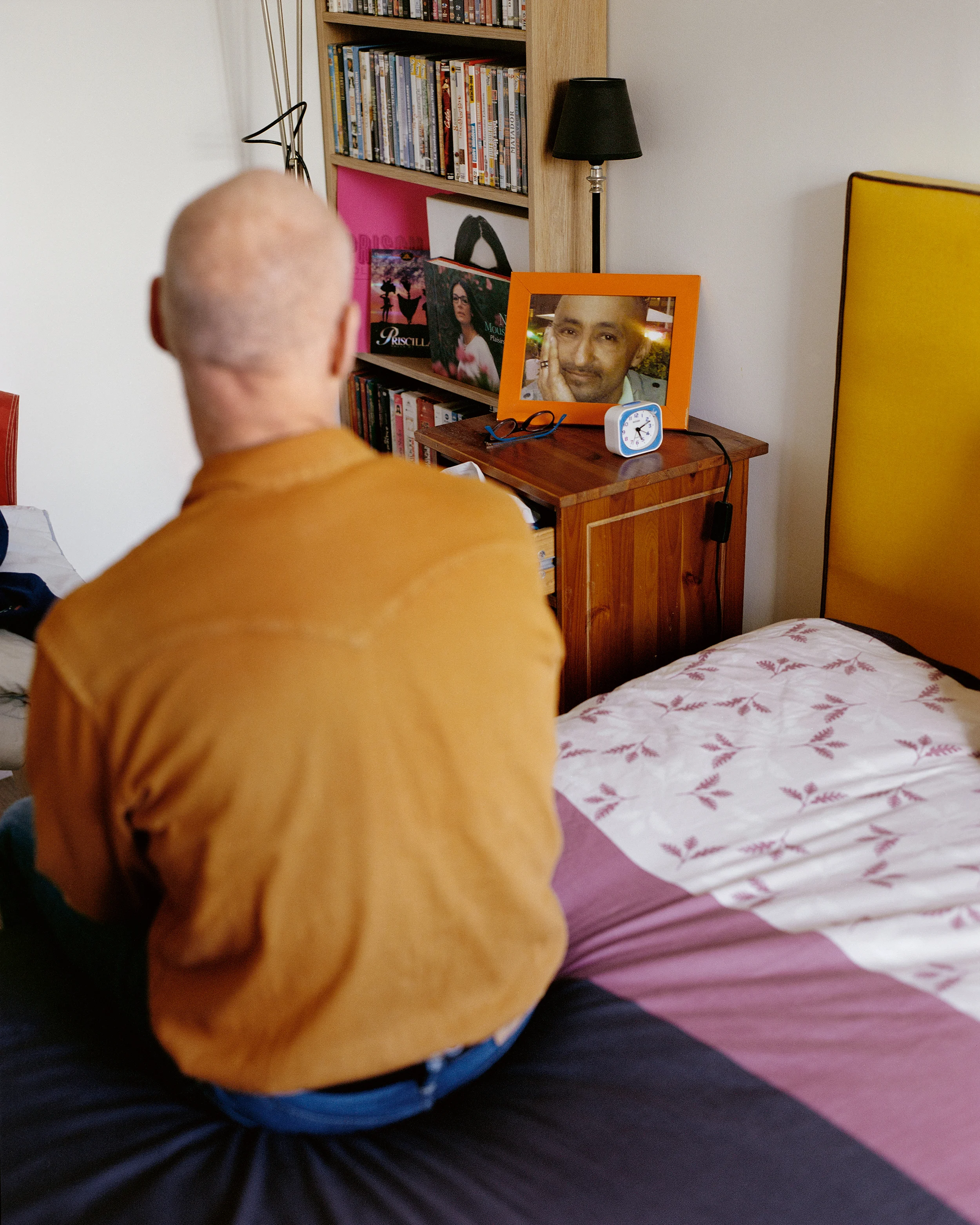
When asked which page she would most want to show Farid if she could, Lenain says it’s the image of his long-term partner, Thierry, facing away from the camera and looking at a photo of him next to his bed. “I’d want him to see how much he still loved, and missed in a painful way,” she says. “I didn’t get the direct answers to my uncle’s story, but I think what resolved it was understanding that’s okay. Through him, I was able to meet all these people. I was able to learn, be touched and be open. And I was able to give something back to people too.”