

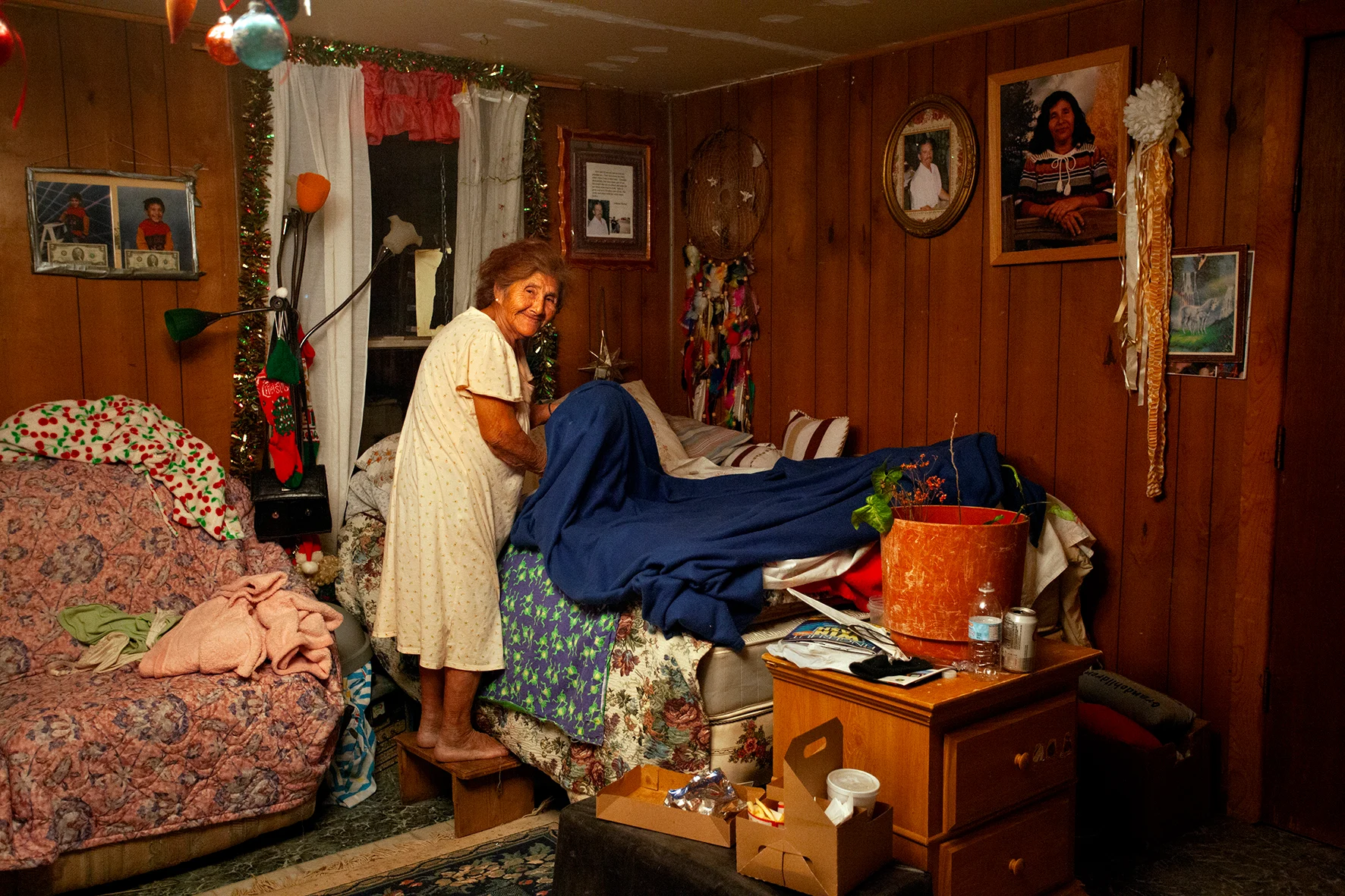
United States of America. 2011, November 21
While she spent eight years working on photographic projects in Russia, the US and Egypt, photographer Bieke Depoorter spent every night in a stranger’s home. Each night, she’d take a photo of the room she would sleep in. At the time, the photos acted as evidence for herself, proof that she was somewhere safe for the night. She had no intention of publishing the images, but now, 10 years on, she’s returned to them to create “The Beds I Slept In.” Depoorter tells Ryan White how it became clear that she was fostering far greater intimacy with her subjects inside their homes than on the street.
‘Bieke Depoorter: The Beds I Slept In, Blinked Myself Awake and The Line’ is on show at Westfront, Nieuwpoort, Belgium, until 3 January. The book, published by Hannibal Books, is available to order here.
Between 2008 and 2016, Bieke Depoorter travelled across Russia, the United States and Egypt, creating three distinct photographic projects united by the same concept: to allow her to travel further on less money, every night was spent in a complete stranger’s home. “Ou Menya,” Depoorter’s first book, shot in Russia, propelled her from photography student to Magnum member, becoming one of the youngest ever to join the agency in 2012. Her next book, “I Am About to Call It a Day,” shot in the US, followed soon after. By the time of her third, “As It May Be,” exploring Egypt in the wake of the Arab Springs, she had grown disillusioned with the practice, drawing a line under it and looking to new methods of storytelling.
Sometimes it was dangerous. I put myself in a very vulnerable position constantly. If I think about it, I wanted to prove to myself that I could be safe.
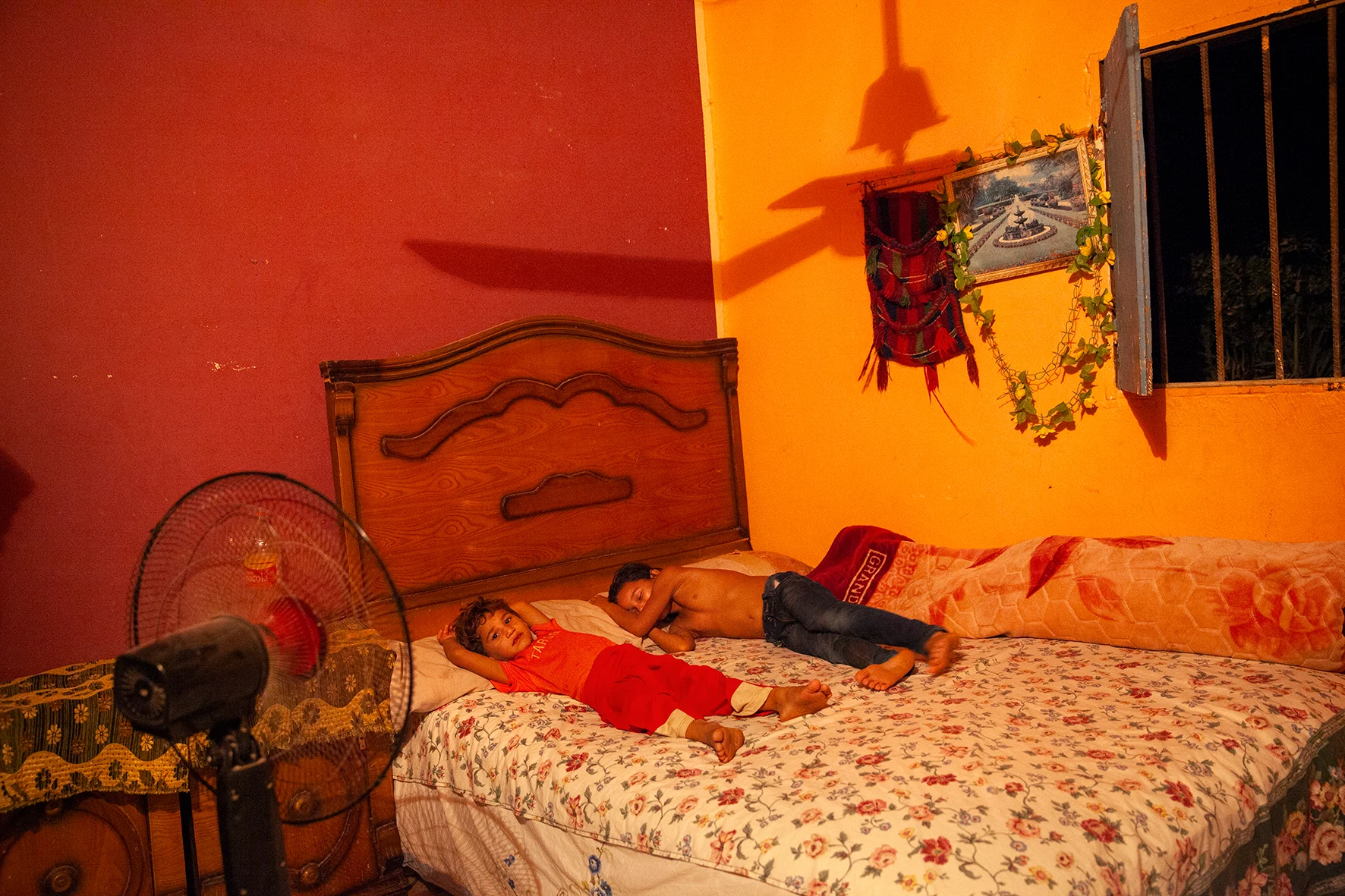
Now, a decade later, Depoorter has returned to the hard drives she accumulated on these trips and recalled the one scene she captured without fail every night: her bed. “I never thought of publishing them,” she says from her studio in Belgium. “They are like, ‘Here I slept.’ More for myself.” The photographs contrast with the meticulous compositions of her earlier projects, more characteristic of a personal camera roll than a high-end photobook. “The images are not very good as single shots,” she says, “but that doesn’t matter.” Viewed together, sequenced in chronological order, the assorted beds—single, double, inflatable, empty, occupied, messy, clean—reveal another layer to Depoorter’s original works: the kindness of her subjects, and the psychological toll travelling this way took on her.
“The book I made before this one is called ‘Blinked Myself Awake,’ and it’s a book about memory and the fragility of memory,” she says. “Something happened in my childhood, a trauma, and because of that I don’t have a memory of it. But my whole life, I’m trying to make sure people believe me that it happened. When I was making it, I started to think about my previous work and about why I was doing these previous projects: why do I put myself through this? I like my privacy. I like to be alone. Sometimes it was dangerous. I put myself in a very vulnerable position constantly. If I think about it, I wanted to prove to myself that I could be safe. I was trying to find safety. In a way, it served as evidence, showing myself another night that I could be safe.”
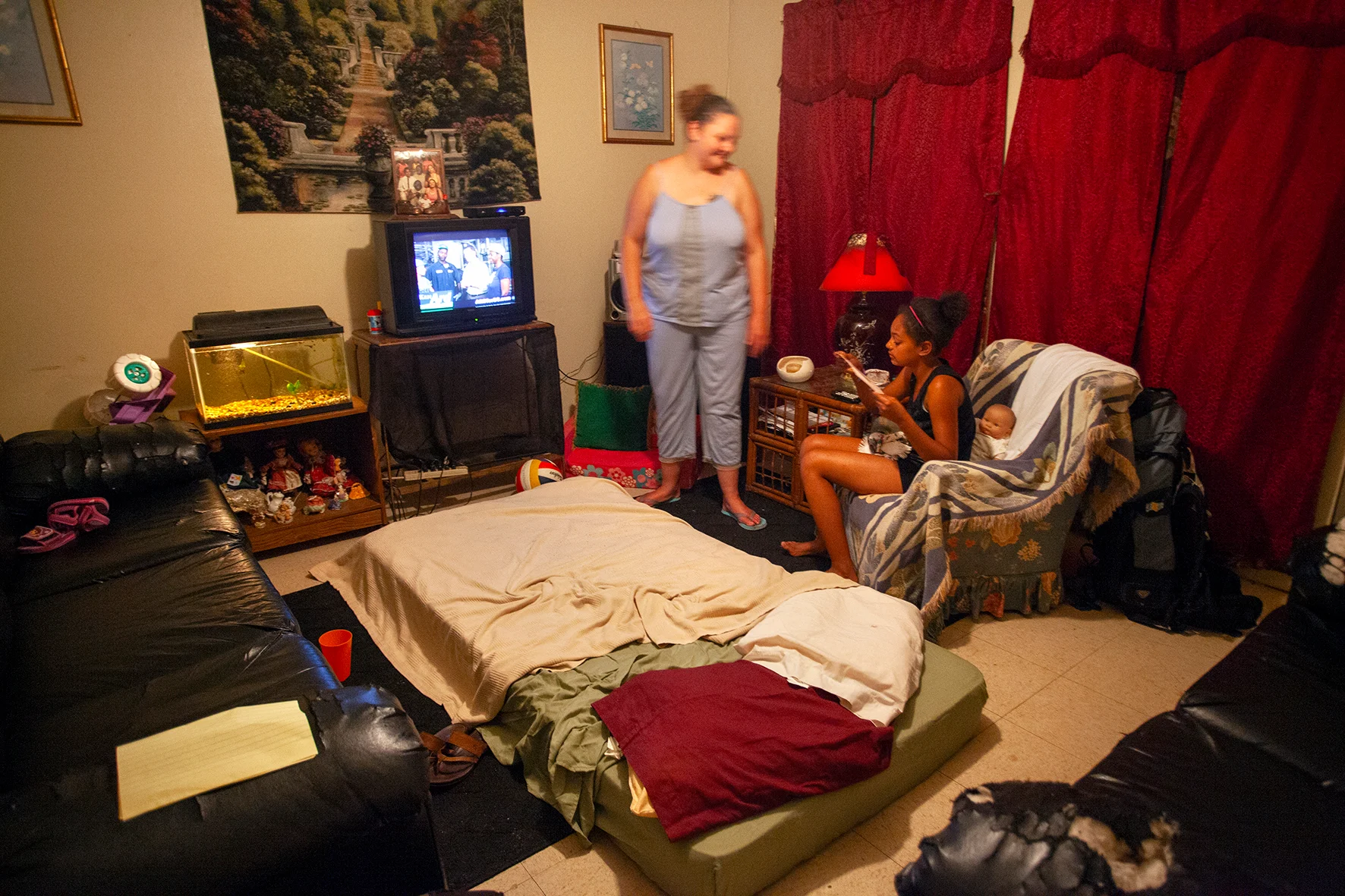
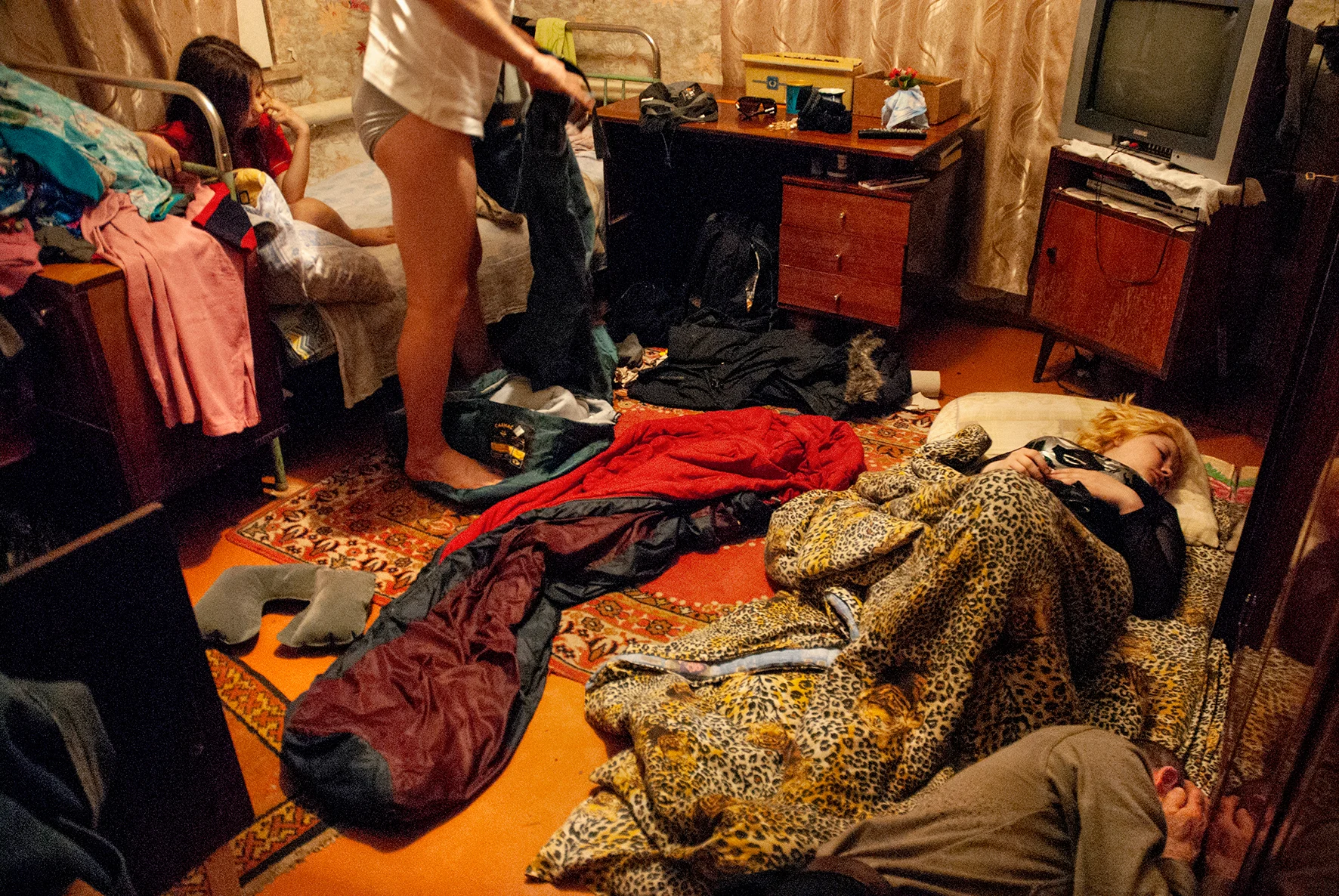
Though they span three continents, visually the sections do not differ vastly. Old-fashioned wallpaper, chintzy furniture, brightly colored bedding—most rooms feel far older than they are, perhaps saying something about the shared characteristics of her hosts, or simply because they predate the grey-and-beige interior trend. Occasionally, the steady sequence of simple rooms in the US is punctuated by something far more spacious and grandly decorated. Such images only draw attention to the fact that most of the homes Depoorter slept in, in all three countries, belonged to people with modest means. “I had the feeling that the less people had, the more hospitable they were,” she says. “All over, it seemed people who had less gave more.”
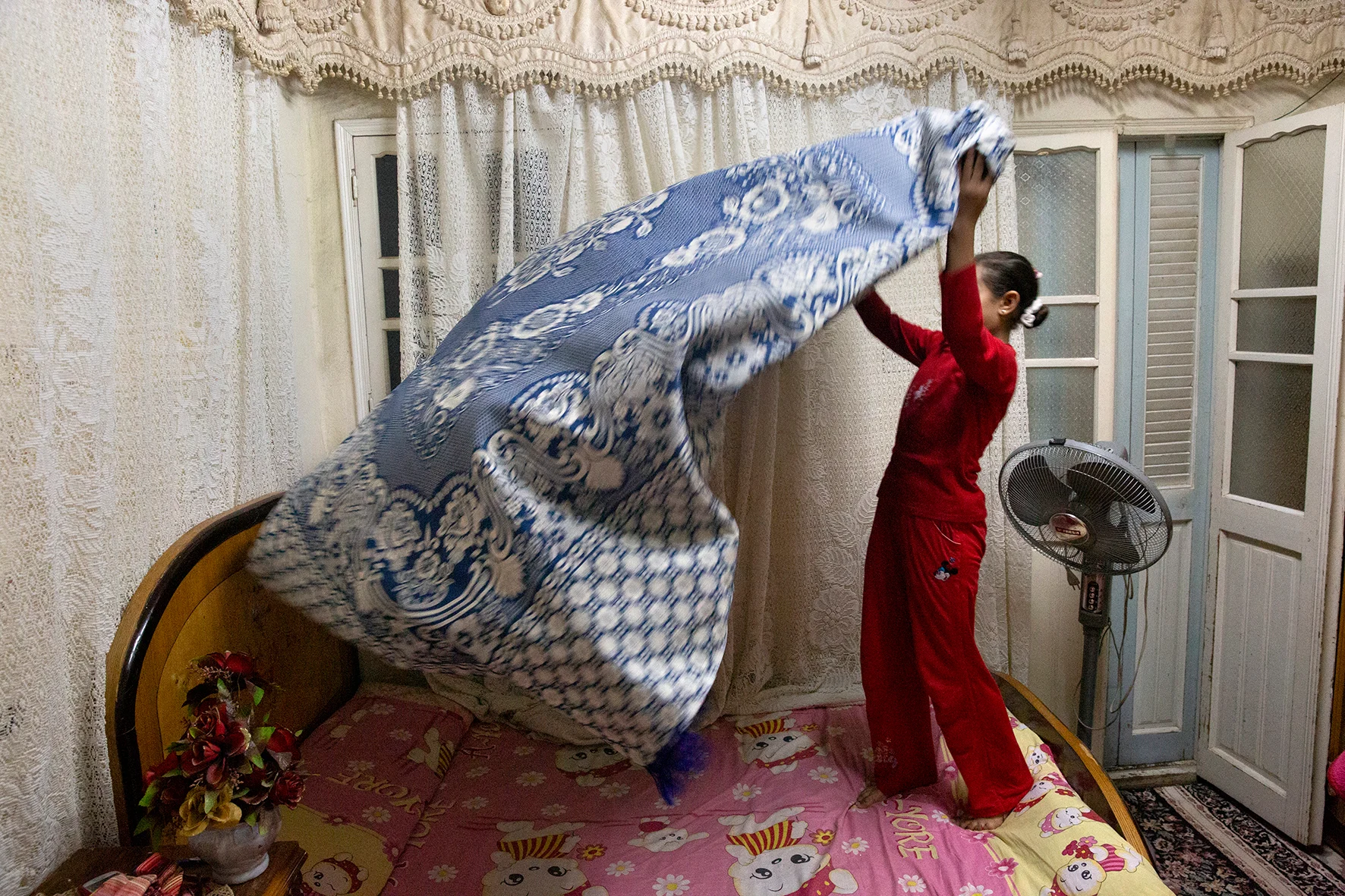
Sometimes her hosts had such little space, she would share not just a room but a bed. “I remember this lady, she didn’t speak English. She lived close to Albuquerque. My father was sick at the time, and we were lying in a bed that was for one person, and we couldn’t really speak much because I don’t speak Spanish. We were lying down in the dark and suddenly, at night, and I have a recording of that actually, she started to pray for my father, which was very beautiful.”
Perhaps we can attribute such an anachronistic custom—giving a bed to a stranger—to religion. After all, crucifixes, Biblical and Islamic quotations appear on many of the walls. “I am not sure, but I do remember in America once, they were praying and I was in the prayer, and they said they took me in because they thought I could be an angel,” she says. In contrast to Russia and Egypt, where religion is just as, if not more prevalent, Depoorter found Americans the most concerned with her faith. “People wanted to convince me. While in Egypt, people were extremely religious often, but they just accepted me not being religious, and that was actually beautiful.”
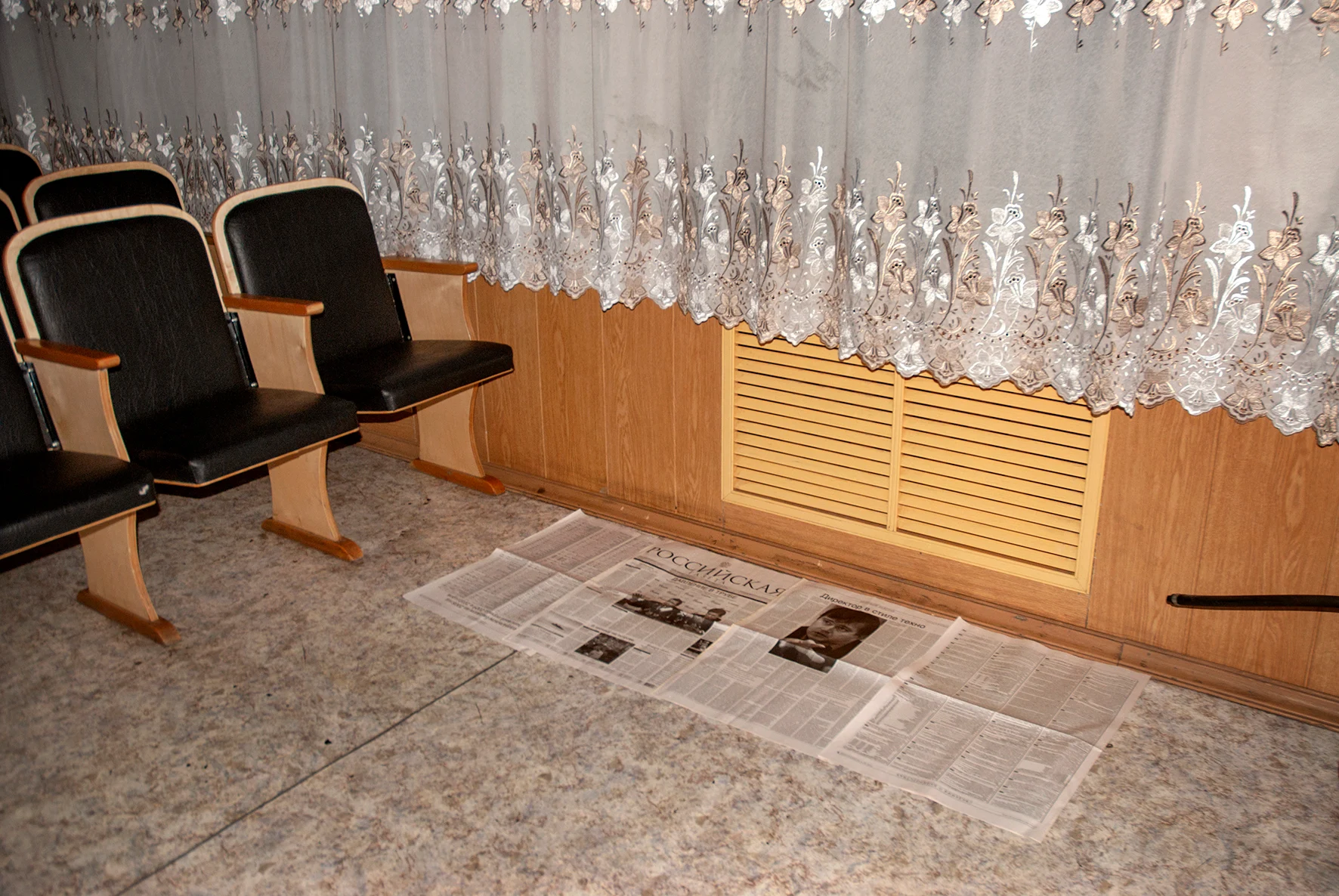
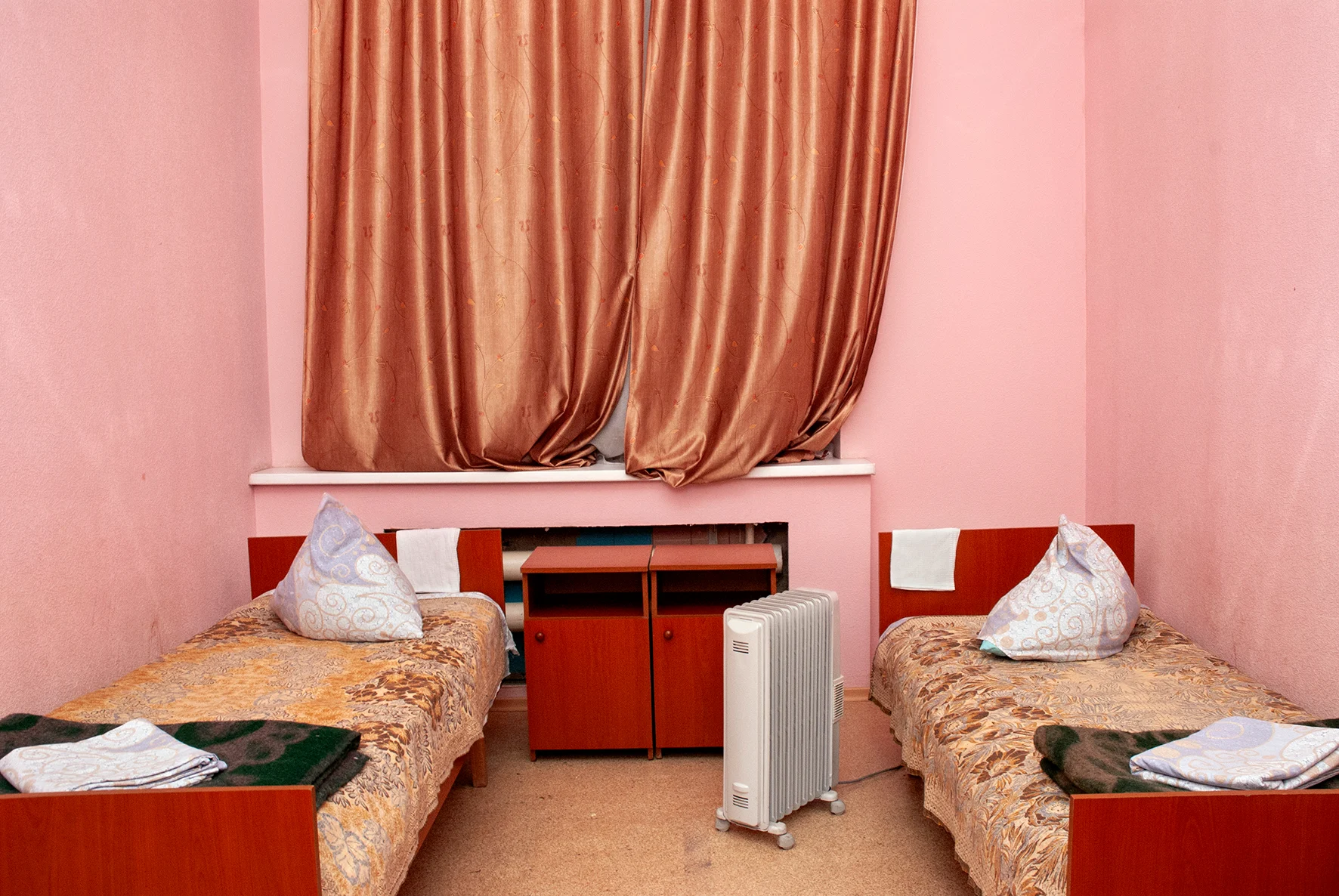
In America once, they were praying and I was in the prayer, and they said they took me in because they thought I could be an angel.
Though the pictures are captionless, notes at the beginning of each of the three sections hint at more challenging encounters: bad nights’ sleep, interactions with the police, creepy men. “Note: Never been so scared,” reads one. Revisiting not just these beds but the handwritten notes from the time brought back memories she had long buried. “I think I was always saying at the time, ‘If you’re good to people, then the goodness of people comes back.’ But I had some tough moments there, and I think I ignored those difficult moments. Now I realize that it was both good and bad.”
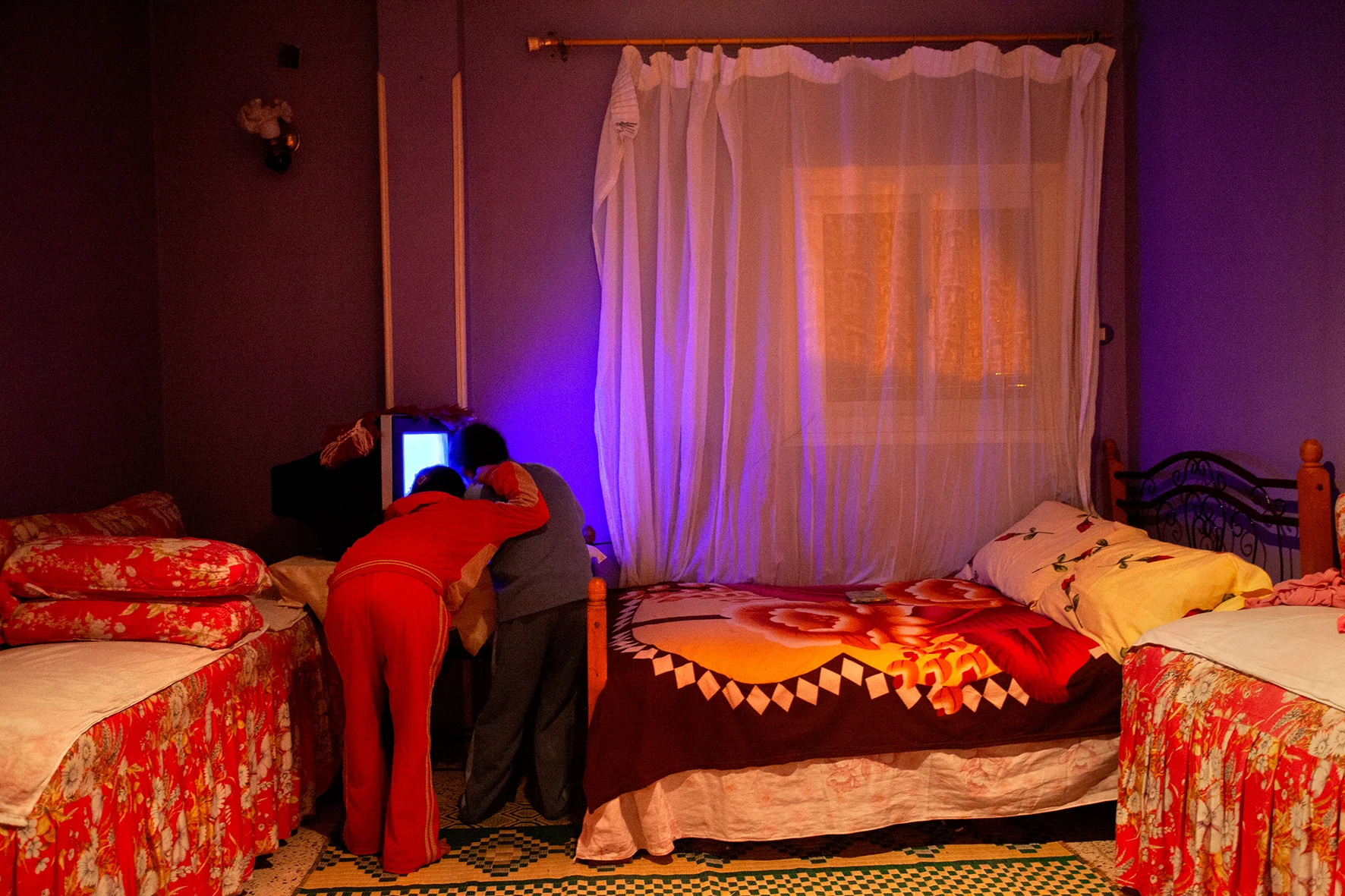
The notes also anchor the images most explicitly in the real world and their particular moment in time. “Osama bin Laden killed,” reads one. “Morsi wins presidential elections,” reads another. One imagines these stories quietly playing out on the small TVs that appear in the corners of a few bedrooms. The global financial crisis, the Arab Spring, Putin’s return to the Russian presidency—Depoorter’s travels unfolded against a backdrop of accelerating political change that would fundamentally reshape the world we live in today. Now, a decade later, she considers this way of working almost impossible in post-revolutionary Egypt. As for the US and Russia, in the wake of Trump’s return to the White House and the full-scale invasion of Ukraine, one imagines that heightened tensions and suspicion of strangers would make it harder in these countries, too. Still, as for whether she would let a stranger stay in her own home? “I couldn’t say no.”