

Filmmaker Arsalan Motavali grew up with vivid memories of watching home videos with his parents in London. It’s the everyday aspects of life those VHS tapes would record that inspired his debut short film, “Cameraman,” and those same home tapes are central to the film. He tells Dalia Al-Dujaili how he captured the sacrifice, the hopes and dreams of the day-to-day immigrant experience, and how the challenges of displacement are met with humor, perseverance and an enduring commitment to finding a sense of belonging.
Who doesn’t love watching back an old family VHS tape? For those of us old enough to have our first memories recorded on them, VHS tapes are one of the ultimate symbols of nostalgia. Especially for diaspora kids or immigrant families, they represent the documentation of journeys from one life to another—one home to another—and the passage of time in all their glitchy, lo-fi glory.
These VHS tapes were the inspiration for Arsalan Motavali’s debut short film, “Cameraman.” “When you immigrate, these basically become forms of communication,” he says. “A lot of the VHS footage I have is from when I was a kid in London and my parents would record our life and ship them to Iran, so that family members could watch tapes of us. Likewise, we would get shipments from family members in Iran, sending wedding videos and so on.” Motavali always knew he wanted to make a film centered around these tapes, “and around the idea of watching something from a distance and longing for something that you no longer have access to,” he says.
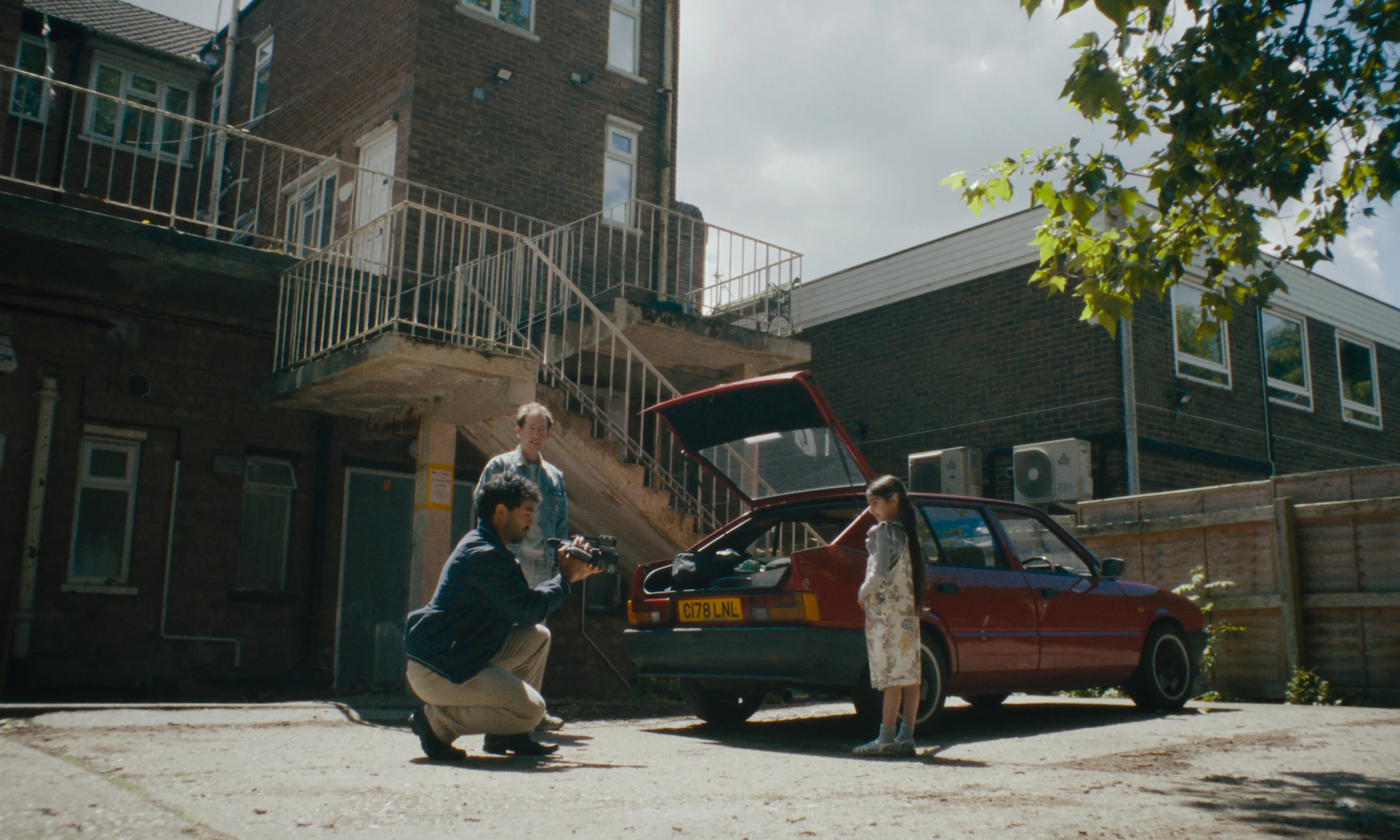
Motavali was born in Iran, and his family moved to the UK when he was two-years-old. “Cameraman” is his debut film as a writer and director. The film focuses on an Iranian family newly immigrated to the UK. The father, Masoud (Sia Alipour) is an aspiring cameraman, keen to purchase a new VHS camera. Facing financial struggle, alongside his wife Farzaneh (Isabella Nefar) and his daughter Ayla (Ayla Behresi), the family come to a difficult realization when the purchase of the camera from Jamie (Martin Bassindale) goes wrong. The film ultimately culminates in the family making the best out of a bad situation (silver linings, when life gives you lemons, etc…). “What happens in the film is true,” he says. “It was a story my parents had told me.”
Motavali feels that immigrant stories in particular are so often centered around racism and discrimination. “Despite their importance, I don’t think they really reflect the day-to-day reality of the immigrant experience,” he says. “It’s the daily things that can feel really taxing. You face questions such as: how do I continue to follow my dreams? How do I continue to live the life I want? How do I come to terms with the choice I’ve made, and its demanding from me certain sacrifices?”
Not only is this the case for films about immigrant experiences, but Motavalli thinks the same goes for Iranian films. He grew up with Iranian movies, and so was desperate to make something in Farsi, but was aware of how often Iranian stories are politicised. “I support those films, but when it came to what I wanted to make, I felt like I didn’t really have anything particularly original to say about the politics,” he says. “But I felt like I had something to show about the mundane, overlooked problems that a lot of immigrant families face.
One of the challenges of the film was casting; Motavali didn’t start with a network of Iranian actors in the UK, so he enlisted casting agency Shaheen Baig (a giant in the industry) to find the Iranian actors. When Alipour first read for the part of Masoud, he immediately connected the character to his own father. After that, so much of their conversations were about the men they had both seen growing up: “how they adapt, hide shame behind pride, struggle to communicate and wrestle with who they’re supposed to be in a new place,” he says. “He intuitively understood the character.”
The director experienced the same with Nefar; she understood how Iranian women carry themselves despite difficult circumstances. “She brought that instinctive busyness to Farzaneh—always doing something, making notes, trying to create structure. I think that’s innate to many Iranian women: they often feel responsible for taking the lead because so much ultimately falls on their shoulders,” Motavali says.
“Cameraman” took around three years to produce, from start to finish, with the help of the BFI’s film fund. It captures the textures of immigrant family life, showing how the challenges of displacement are met with humor, perseverance, and an enduring commitment to creating stability and belonging.
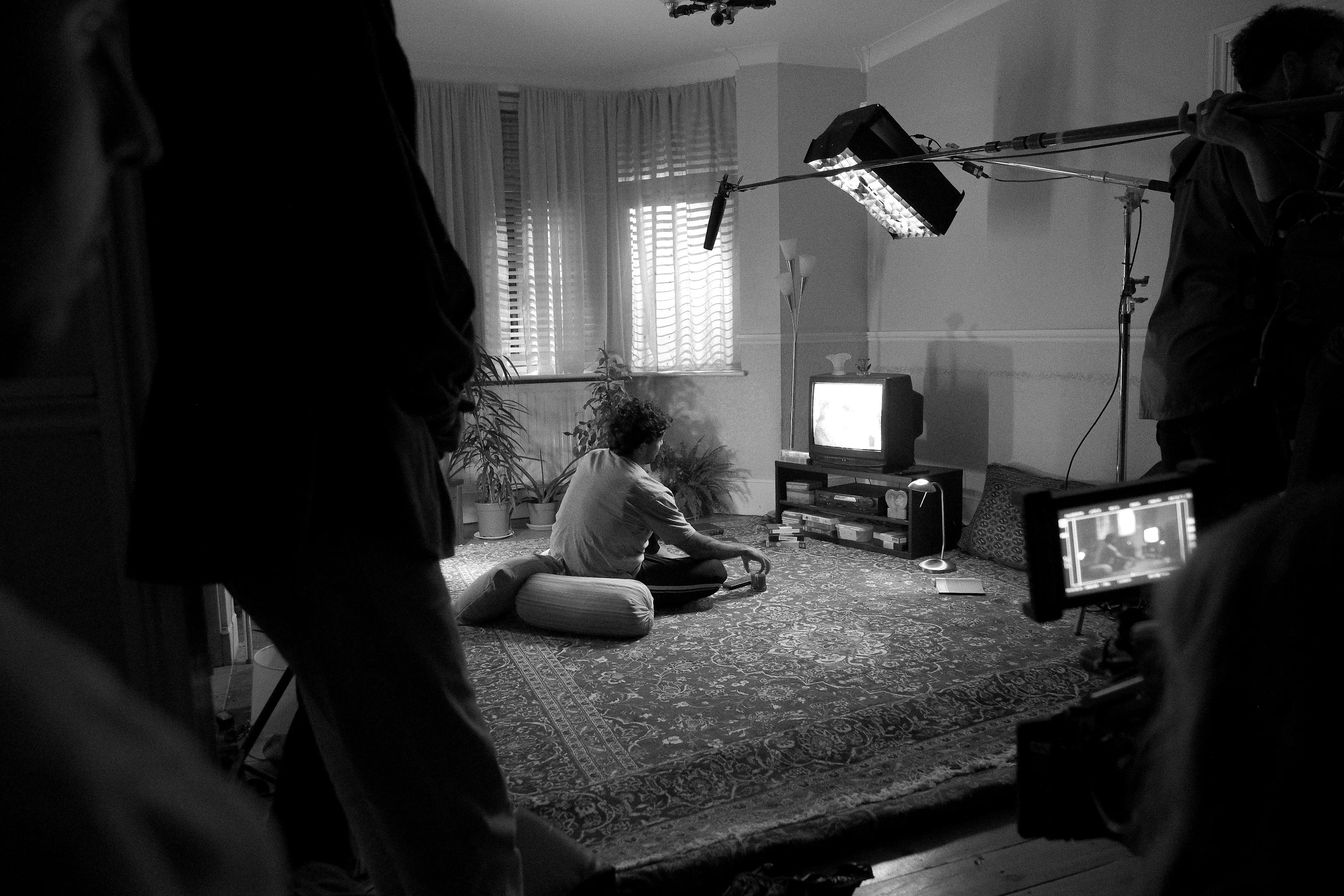
The film screened at the London Short Film Festival and at several festivals in the United States, experiences Motavali described as especially meaningful given the current political climate. One particularly memorable screening was organised by Collective Aid with Worlding, where the audience was “90% Iranian” and “laughed at every joke,” remembers Motavali.
The screening that remains most significant to him was the film’s very first private showing for friends and family. It was the first time his parents saw the finished film and fully understood what it was about. “I didn’t tell my parents I was making the film,” Motavali says. He recalls being “probably the most scared” he had ever been while showing it to them. One image from that day has stayed with him: sitting beside his mother during the screening. Trying not to cry, he glanced over and saw her staring intently at the screen, her eyes wide. “She just looked a little bit like a five-year-old,” he tells me. “And I remember just saying to myself, ‘this is what you made the film for.’”