

High up in western Bulgaria’s Rhodope Mountains lies Ribnovo, an isolated village home to a centuries-old cultural tradition: the Pomak wedding. These three-day celebrations, shaped by history, faith and place, unite the community through an array of customs and celebrations. In “The Gelina of Ribnovo,” photographer Alex Kurunis reflects on the collision of tradition and modernity in this centuries-old rite of passage. Here, he tells Gem Fletcher how the project came to life and what he discovered about the anchors of tradition in our increasingly digital world.
In February 2025, photographer Alex Kurunis journeyed to the isolated village of Ribnovo, Bulgaria, to document Fatime’s marriage to her high school sweetheart, Kadri. Kurunis’ photographs—a wedding present for the couple—trace an elaborate, centuries-old custom that marks the couple’s transition into married life. “I always dreamed of being a Gelina,” Fatime tells Kurunis. “When you close your eyes and feel the energy of all your loved ones around you, that feeling stays with you.” Fatime is part of the Pomak community, a Muslim Slavic-speaking minority in Bulgaria, whose cultural practices—until recently, when they began capturing the imaginations of artists and tourists alike—have often existed at the margins of national narratives.
Since his early teens, Kurunis has been a passionate photographer, yet didn't study photography after a friend scared him off, suggesting it would take the love out of the medium. He took the advice to heart and pivoted to study Social Anthropology, which turned out to be the perfect complement to his interest in social documentary. Over the last decade, his work has been rooted in exploring traditions and customs that bring people together, with a particular focus on instances where tradition intersects with modernity. He communicates complex stories through intimate imagery, alive with energy and personality, bound together by a warm palette.
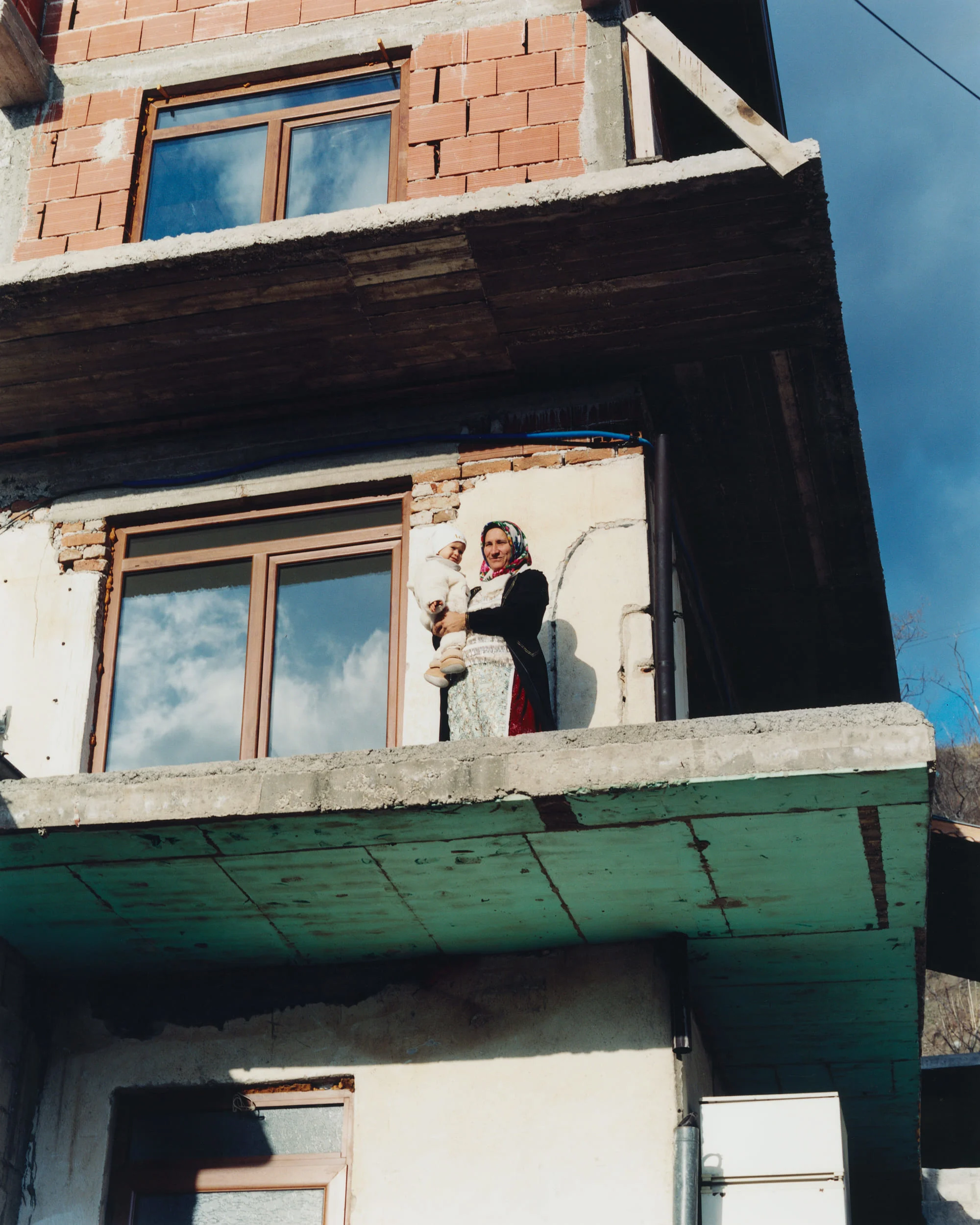
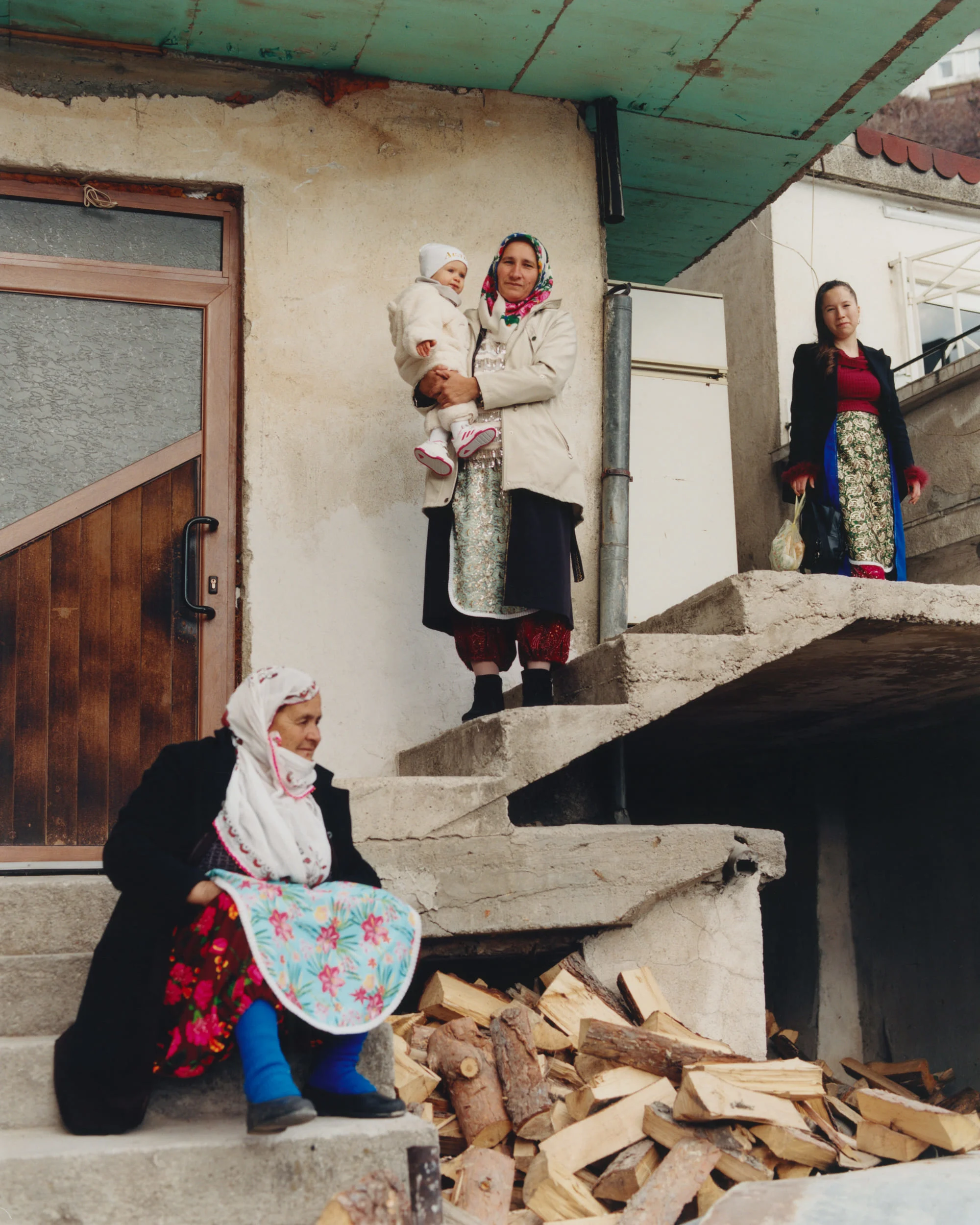
Kurunis’ interest in the tradition began years ago when he came across images of the Gelina from the 1980s. He continued to read about it over the years, until he found a fixer who could help him connect with the local community. Ribnovo is isolated, nestled in Bulgaria’s Rhodope Mountains at an altitude of 1150 meters. It isn’t easy to reach, especially during winter, when weddings take place, and the roads can be affected by heavy rainfall and landslides.
While it might seem unusual to host weddings in winter, the season is significant to locals. Many of Ribnovo’s community are seasonal migrants, working on farms across Europe throughout the year. Every November, there is a cyclical mass return when the whole community reunites at the wedding ceremonies, bonded by the traditions they so passionately uphold.
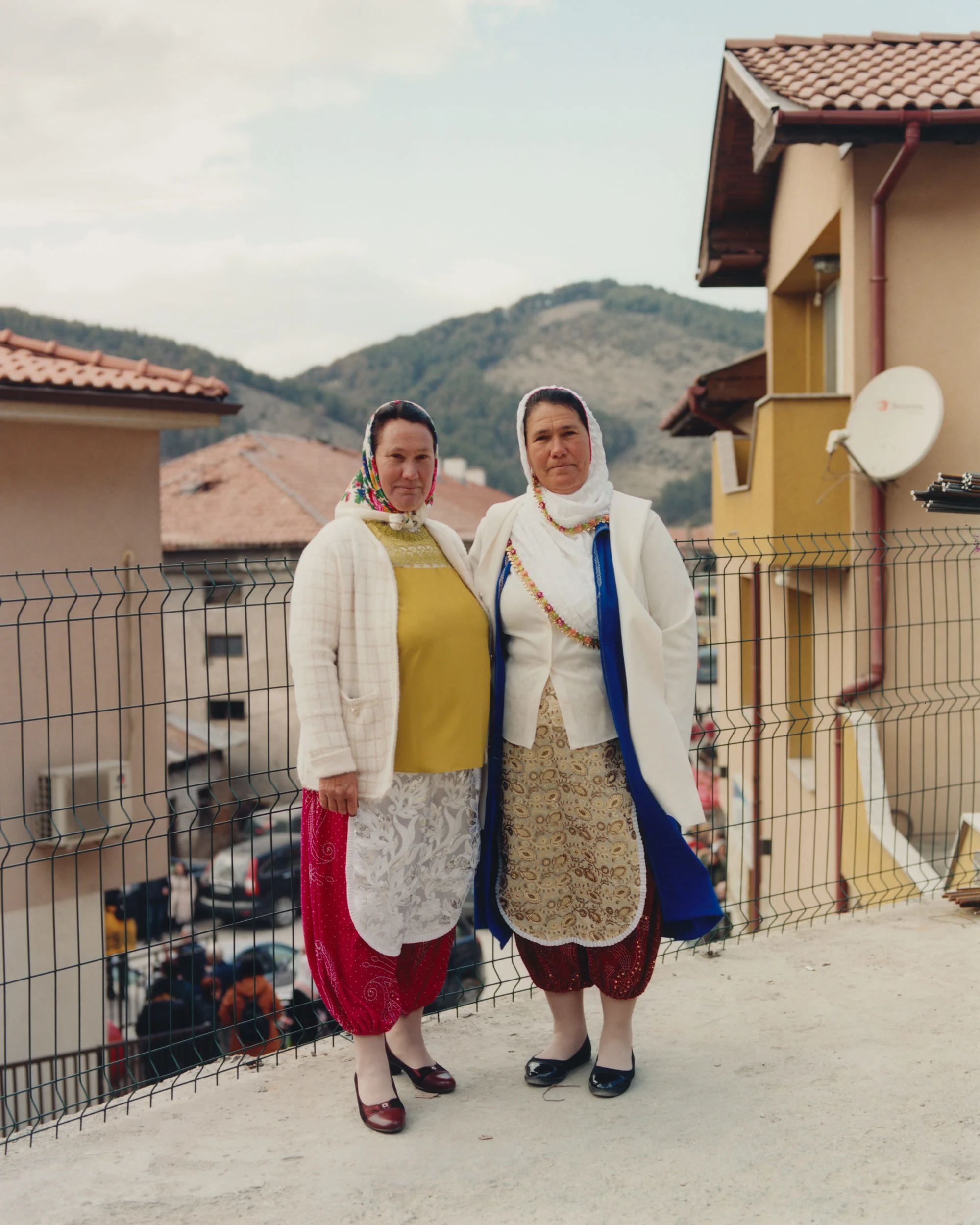
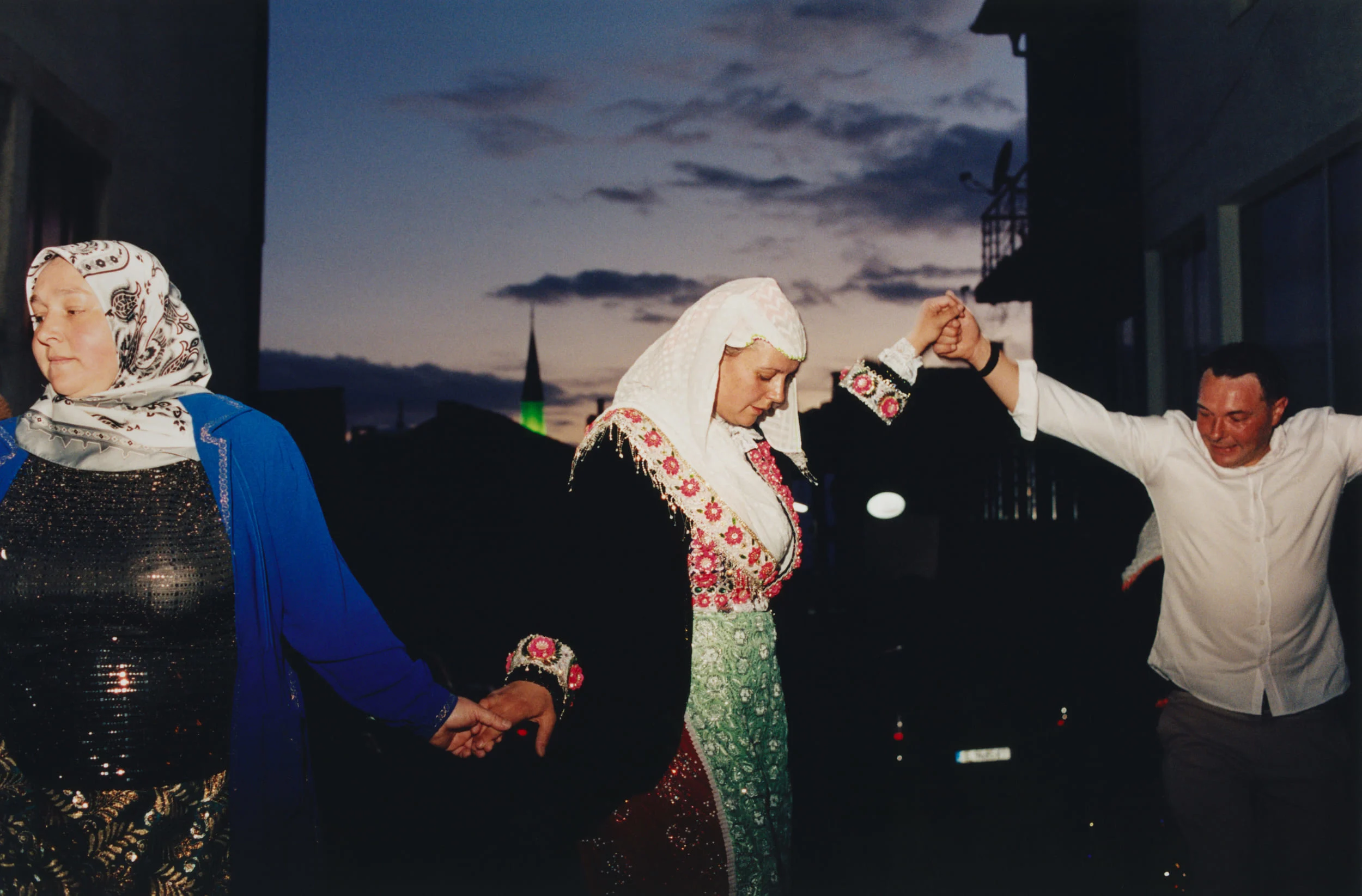
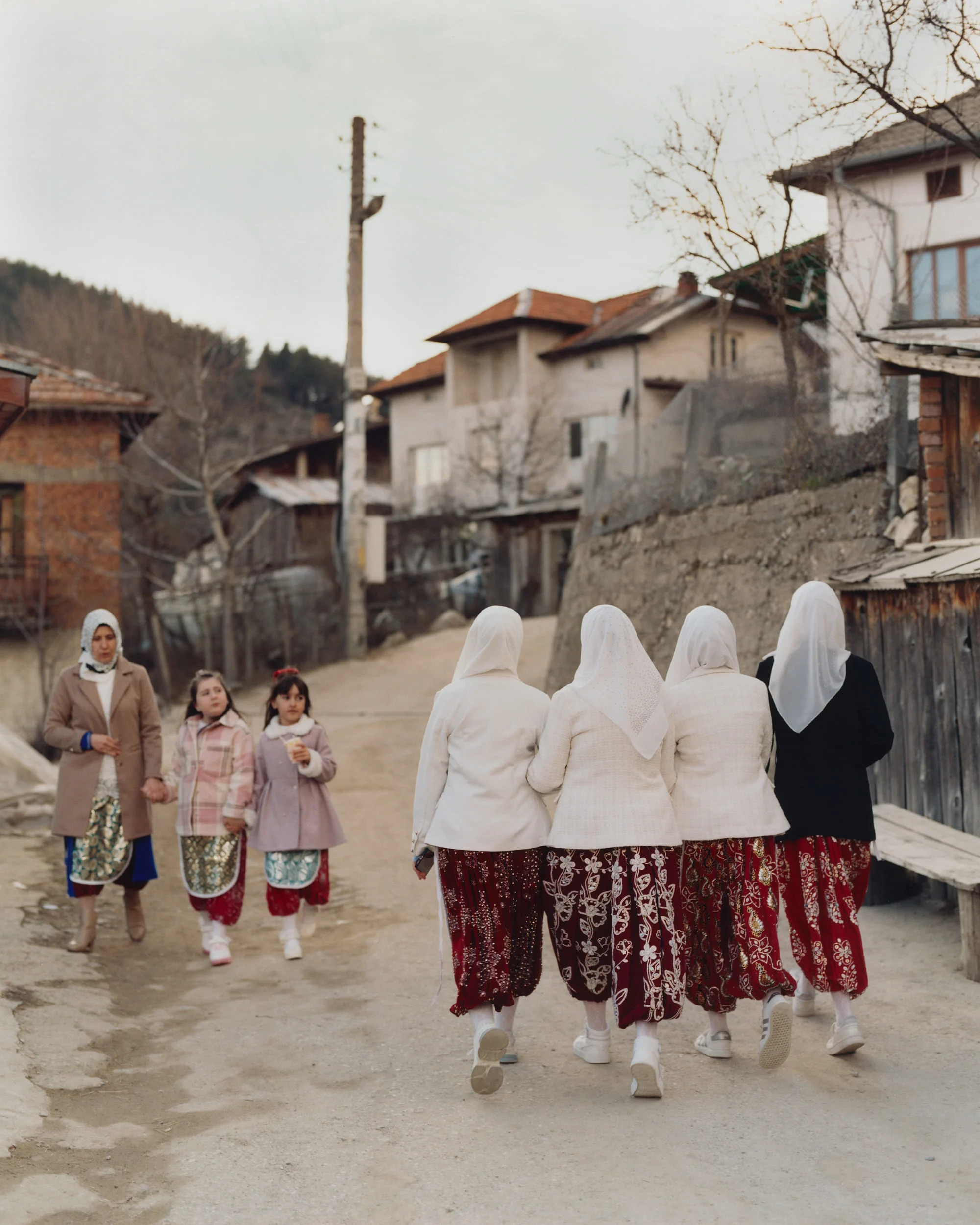
“Upon arriving in Ribnovo, the whole village was helping adorn the main square and town hall with balloons, neon lights and signs for the upcoming celebrations,” Kurunis recalls. “There was a real buzz. As night fell, everyone gathered in the town square for dancing to symbolize the beginning of the celebration.” On the second day, the couple welcome guests on the groom’s side to the village hall for food and dancing, followed by a popular Balkan custom in which people pin money onto the bride’s dress and the groom’s suit. Day three repeats the previous day’s rituals, but this time hosted by the bride’s family, followed by a procession from the groom’s house to the town center with dowry.
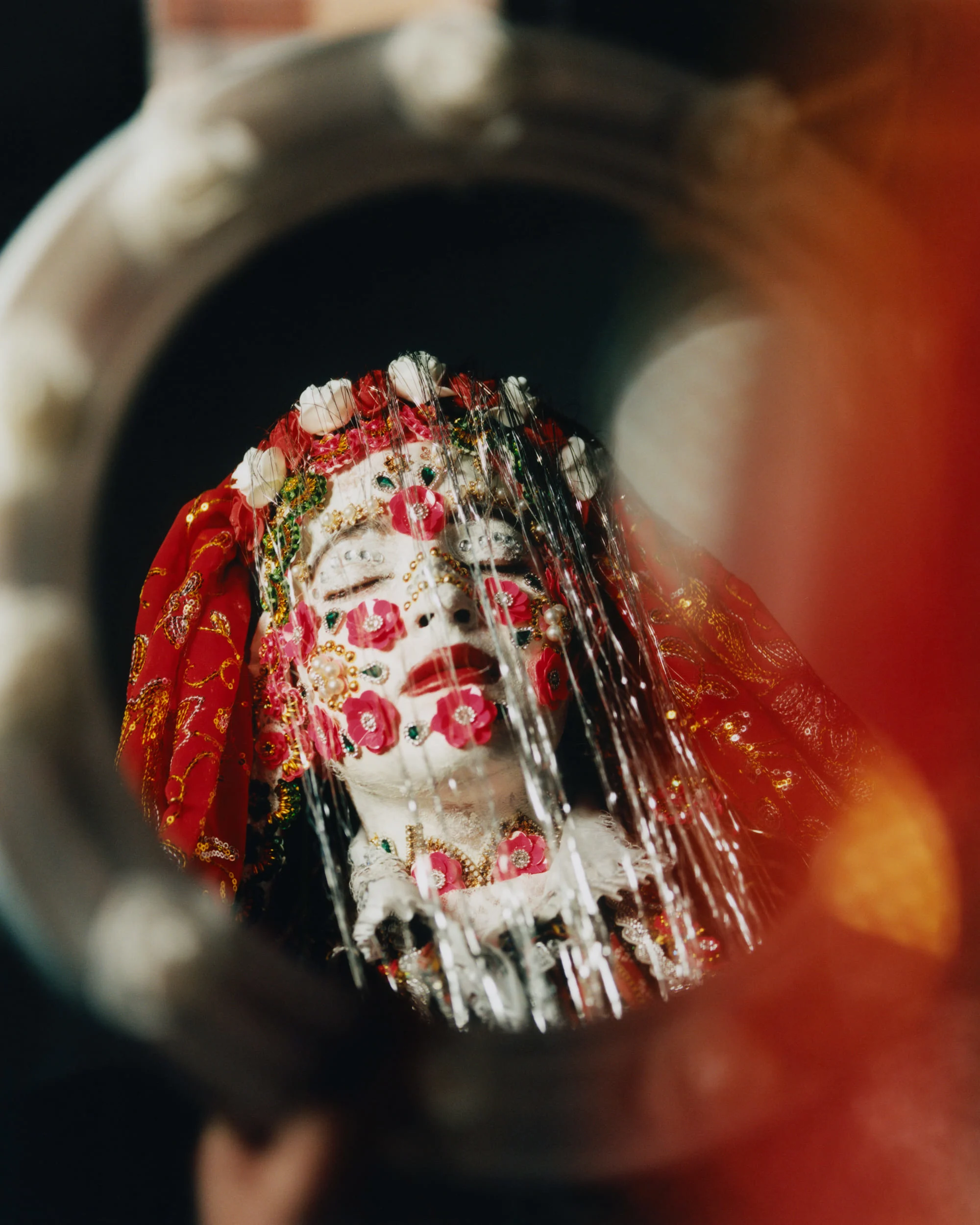
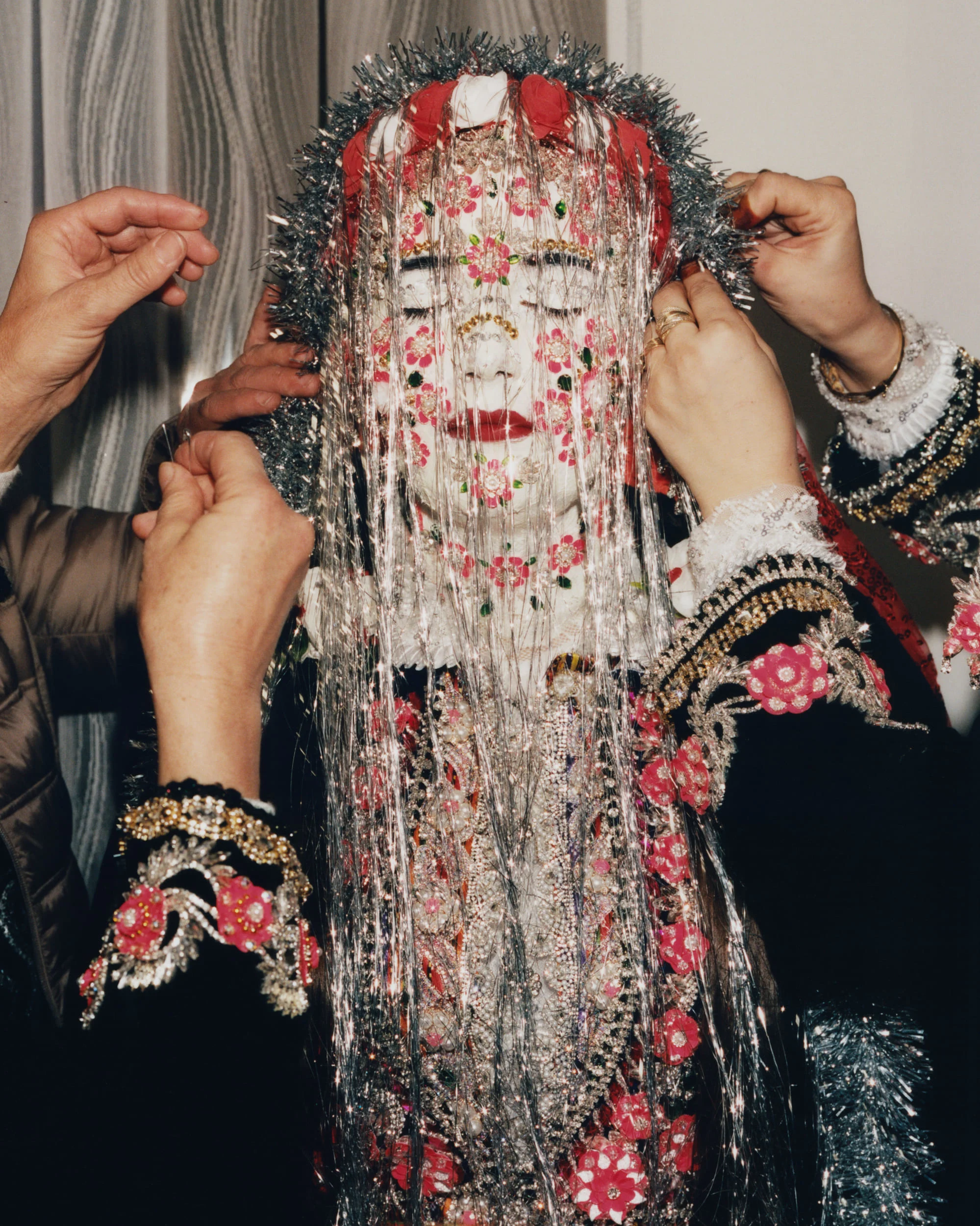
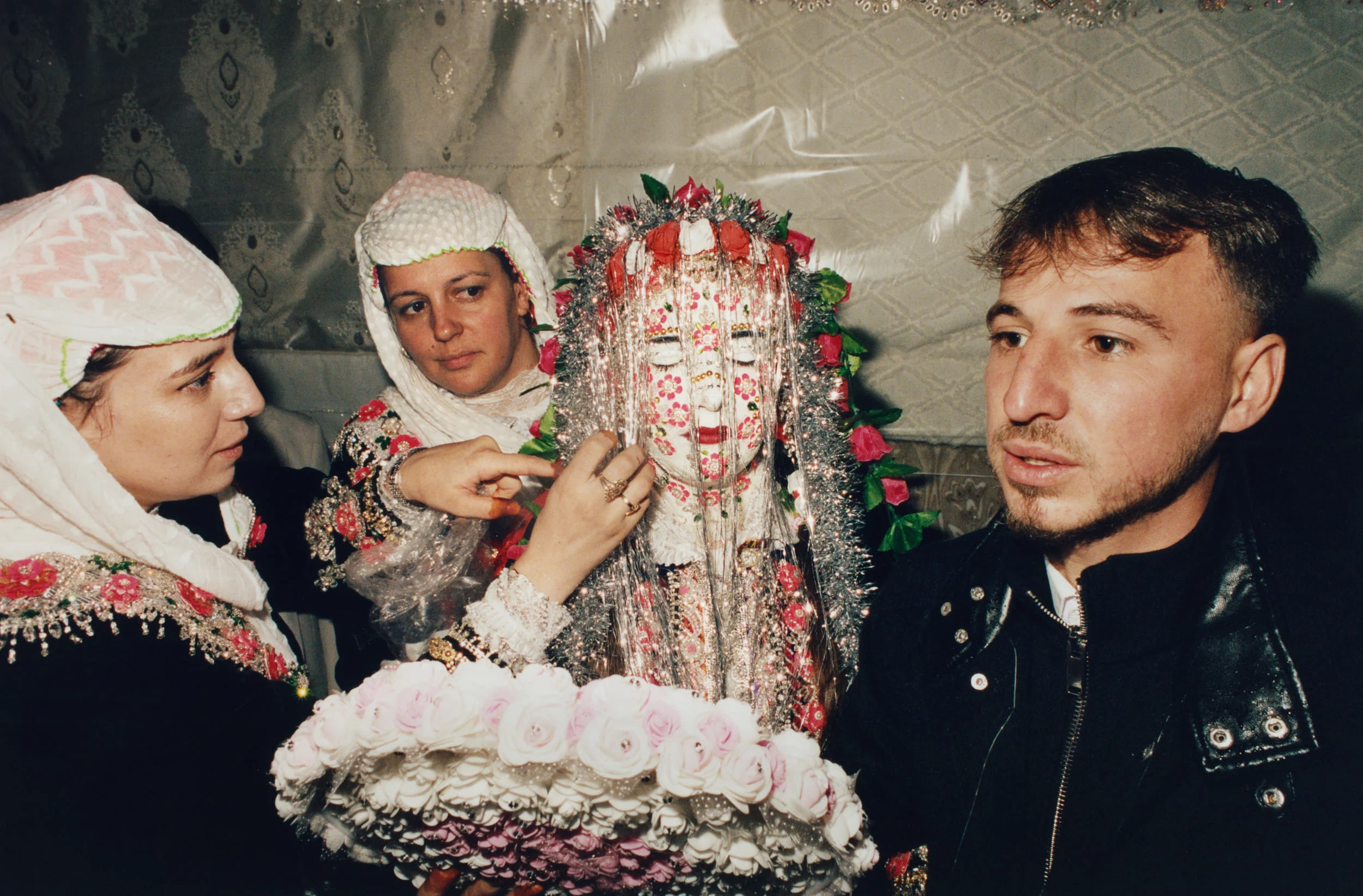
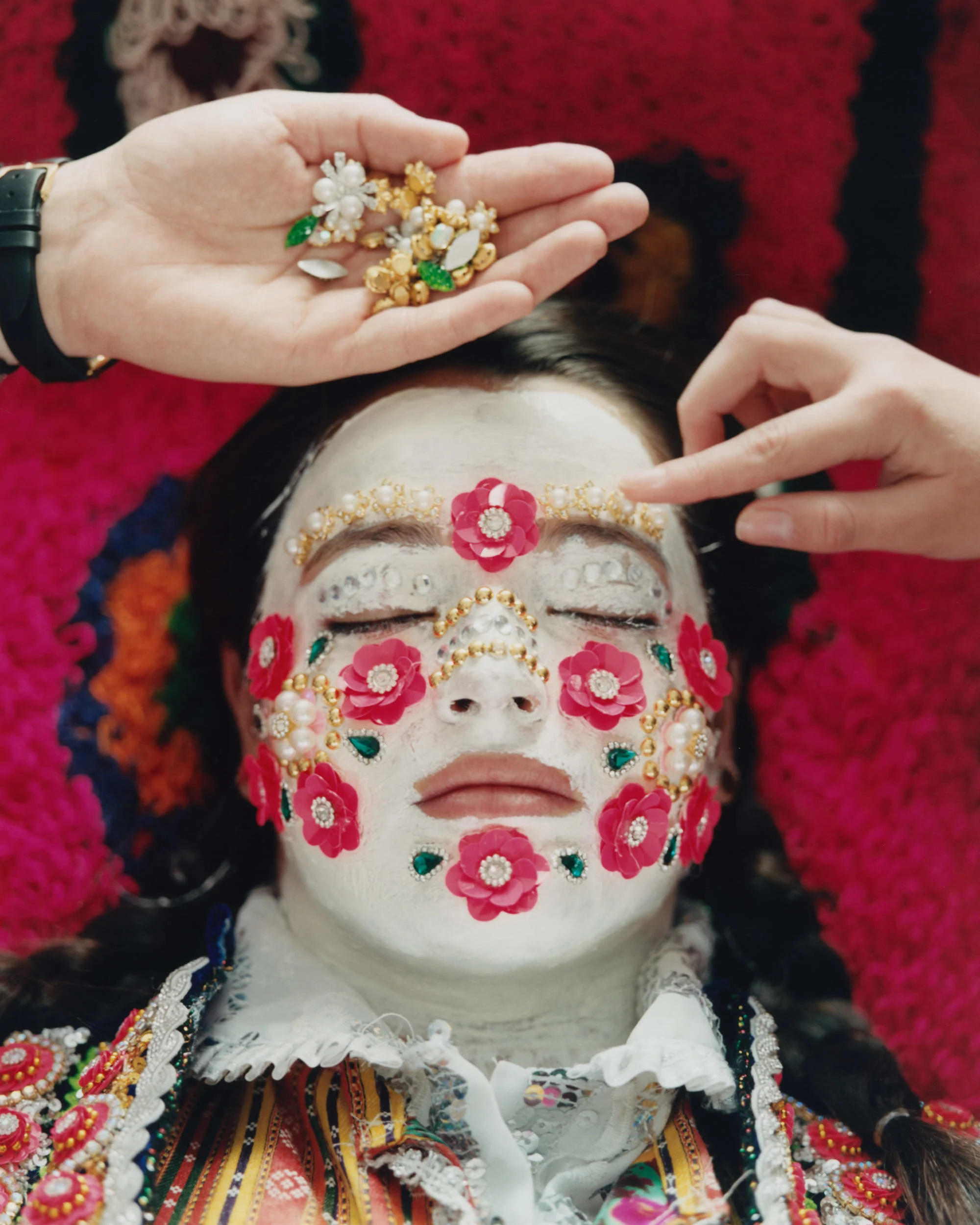
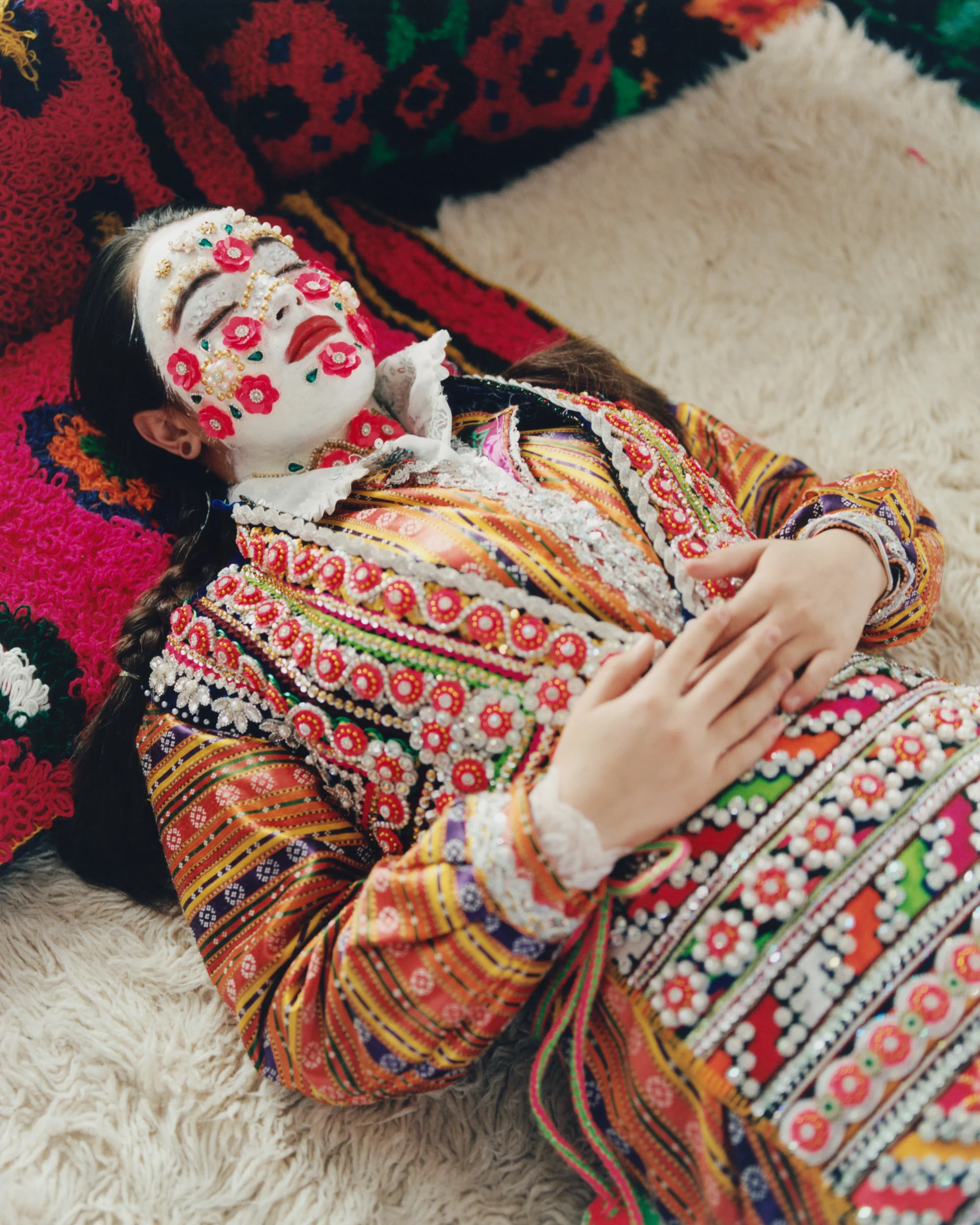
Perhaps the most potent tradition of the Pomak wedding is the Gelina ceremony, in which the bride lies in her family home for up to four hours while elaborate makeup is applied to symbolize purity and piety. The intricate process, once made from natural ingredients, has gradually incorporated modern cosmetics, decorative flowers, sequins and jewels. “It’s an emotional time,” says Kurunis, who was granted rare access to this sacred ritual. “It’s described as the moment where the bride dies as a maiden and is reborn as a woman. There are a lot of tears as she says goodbye to her old life.”
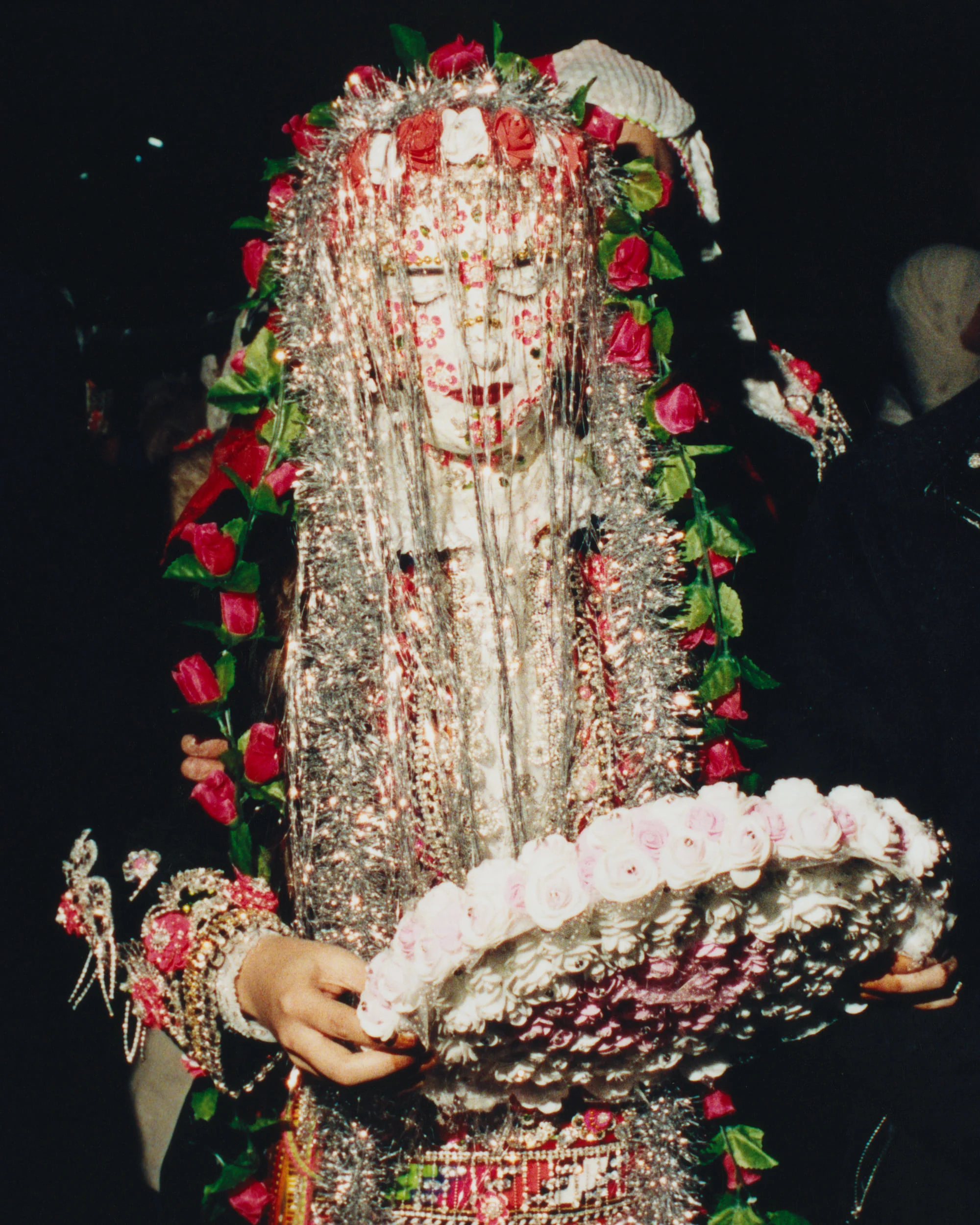
When the bride is finally ready to go, she holds a mirror in front of her hands, keeping her eyes closed in order to ward off the evil eye. She then walks to her husband’s home, while the whole village watches on, and only reopens her eyes in her new marital home, the process marking her transition into married life. The groom then removes the sequins one by one in privacy in a sweet ritual set to test his patience, while marking their new commitment to each other.
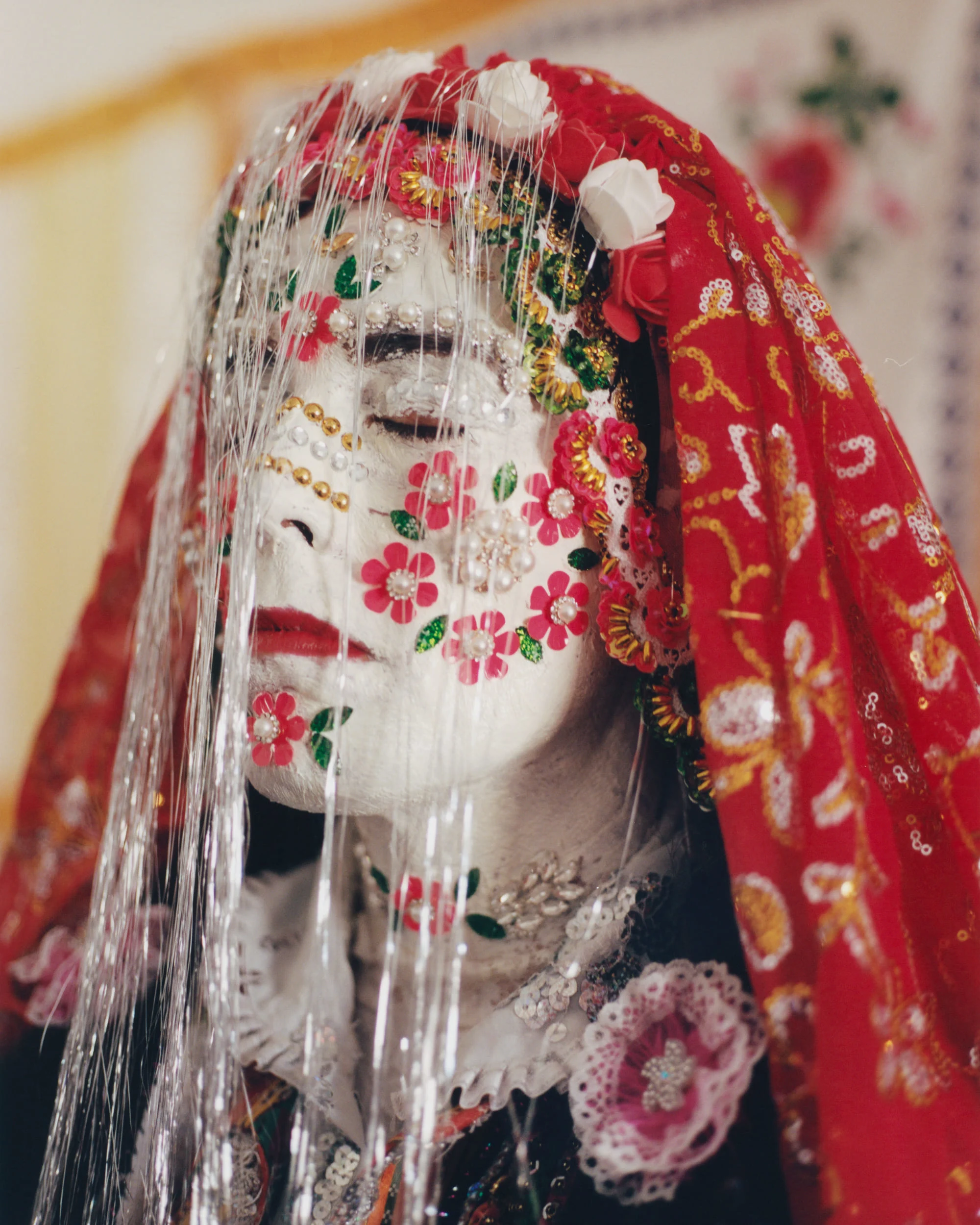
While the ceremonial language appears ancient, the rituals themselves are neither static nor isolated from contemporary life. “I believe these Gelina traditions endure not as fixed relics, but living practices that intersect with modernity,” says Kurunis. “Pomak identity is shaped by ongoing negotiation between preservation and change, taking on influences as diverse as technology, fashion and evolving gender roles. Each generation subtly reshapes the rituals they inherit, but Ribnovo’s wedding traditions remain resilient precisely because they adapt, absorbing modernity while maintaining a strong sense of communal memory.”