While many people seek success on social media by throwing constant work online, Brighton-based artist Alex Khabbazi has built a devoted audience through slowness. Distancing himself from noise, screens and distraction, he moves between mediums and techniques to create deceptively simple artworks that blur the line between irony and sincerity, reflecting on morality, desire and uncertainty. He tells Rhys Thomas why boredom is essential to creativity, and how silence and isolation inform his way of seeing.
Brighton-based artist Alex Khabbazi intentionally puts himself into states of boredom in order to “find a sort of higher level of creativity.” He does this by living 81 miles away from many of his friends, down on England’s south coast, just beyond the smoke of London. He also isolates from those nearby, and tries “not to look at screens.” It’s usually by around day four that creativity starts to flow from him again.
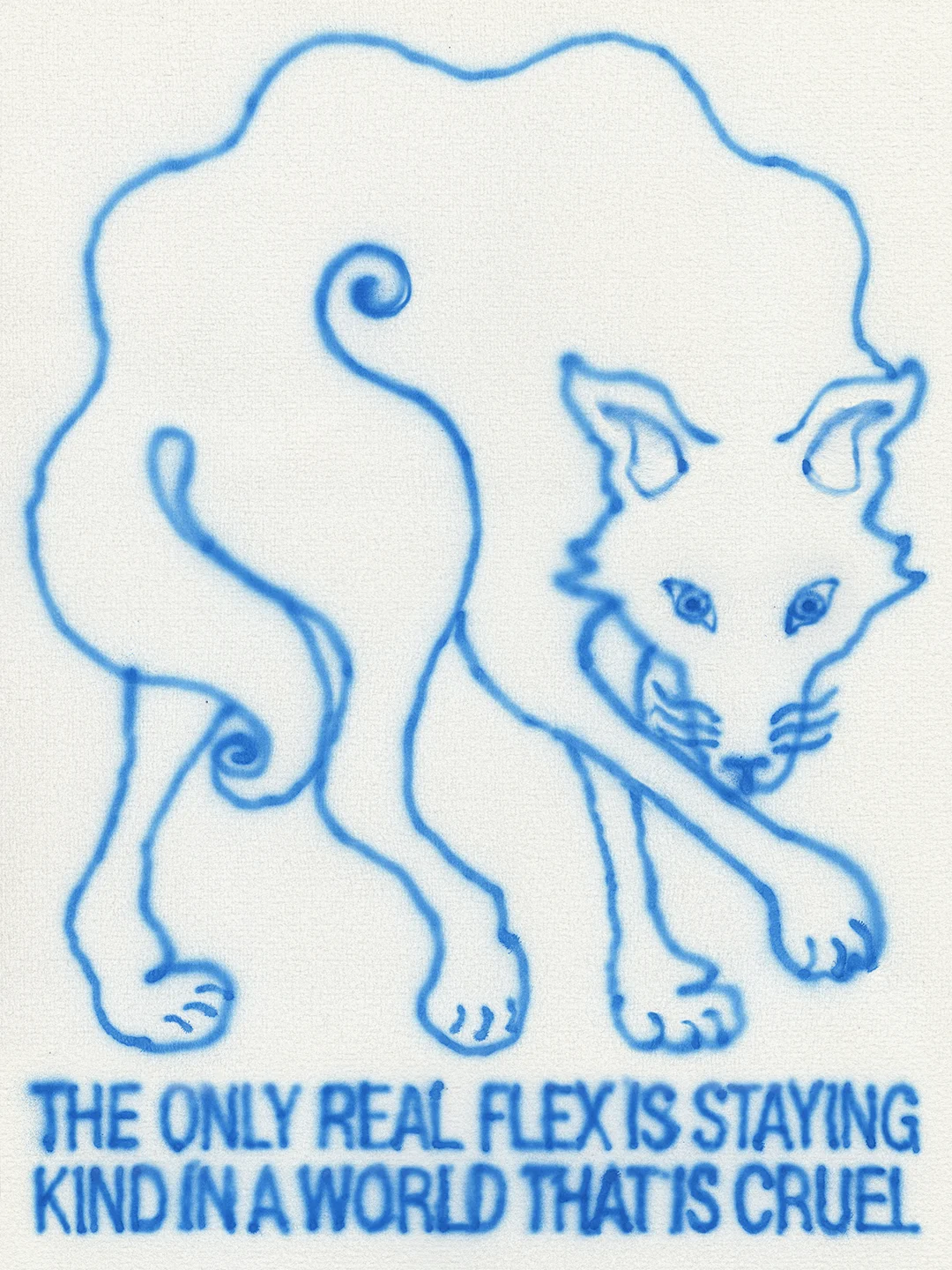
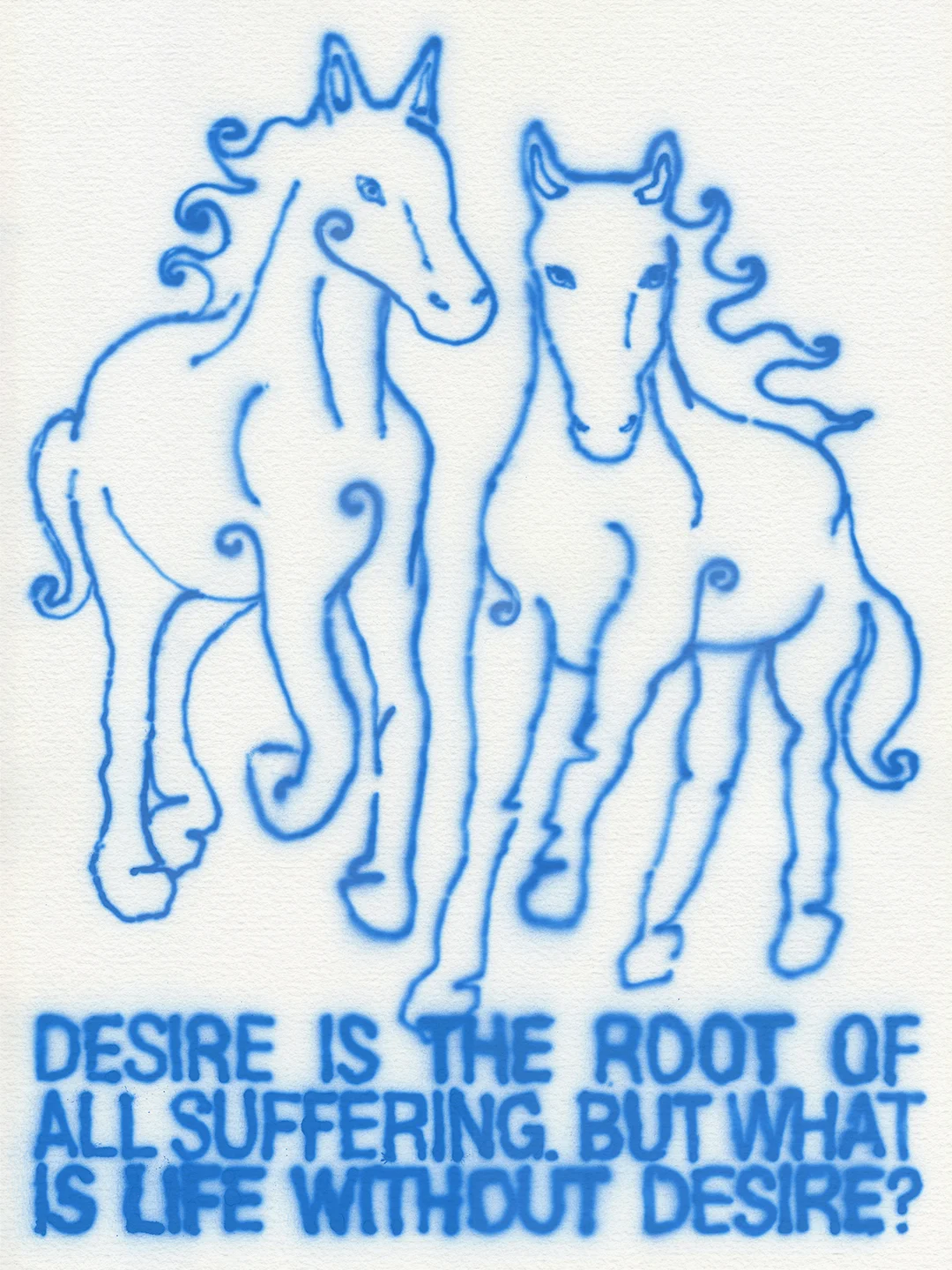
It’s a time-intensive cycle, but in this fast and frantic world, time is a luxury Khabbazi has managed to cultivate for himself. Often known as Kbar, he’s an artist who makes us take a good hard look in the mirror. His works appear simple and light but quickly they make us feel something deeper. Often humor, irony, that affirming gut-pull of being seen. Much of the magic of feeling profound reactions to what appear as simple compositions comes from his architectural background.
“I drew my whole life, it was like instinct,” he says. “But it wasn’t until I started studying architecture that I learned how to think creatively, how to conceptualise an idea and turn it into a piece of work.” Three years post-graduating, he found himself craving more autonomy in life and in creativity. The grind of hard hours for no creative freedom, “not great pay” and little satisfaction was no way to live. So he left. During this time illustrations were forming in his mind like bubbles. The instinct to draw had always been there, the knowledge of how to communicate a concept was learned, and the time to listen to these ideas was now his.
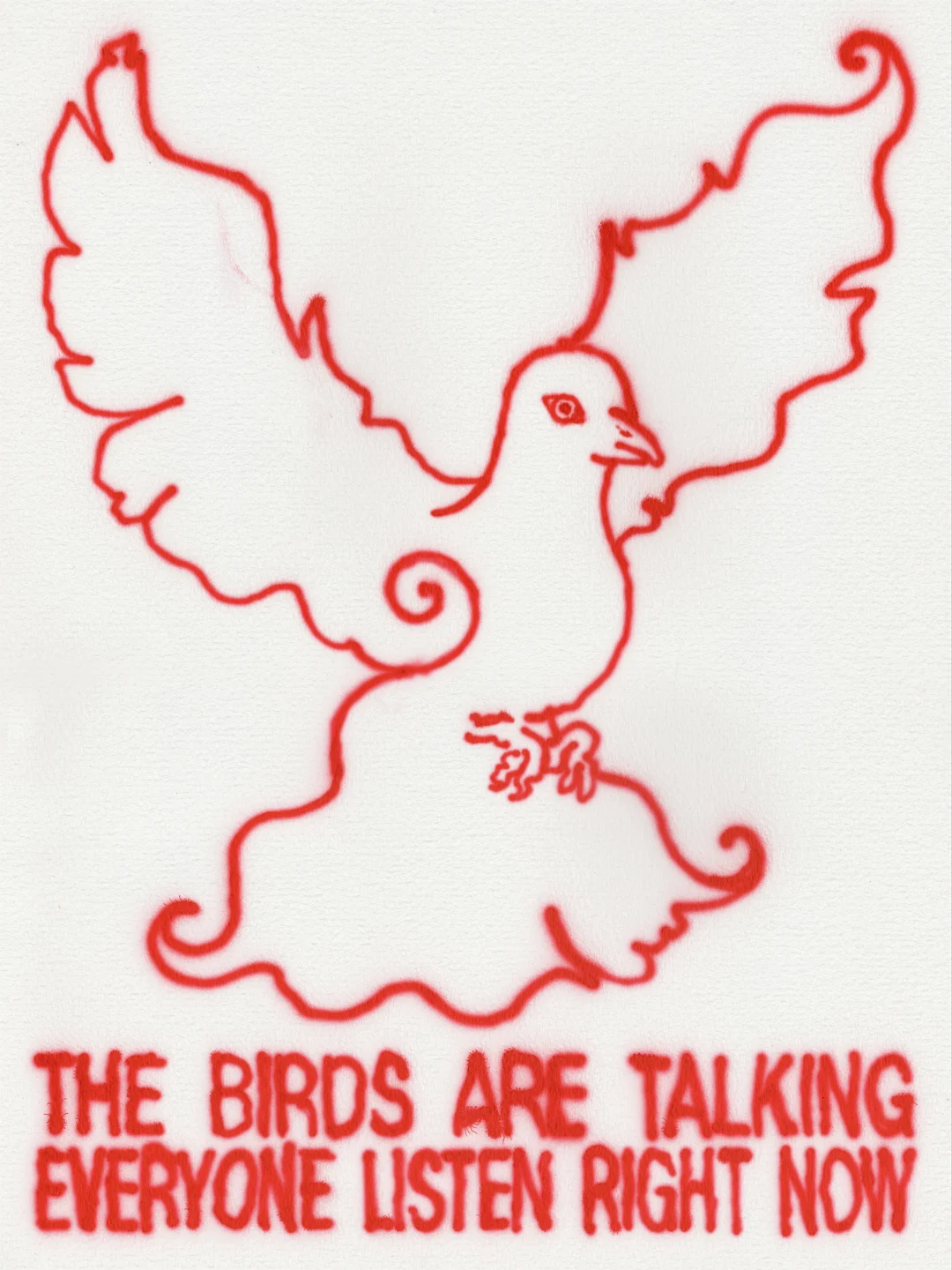
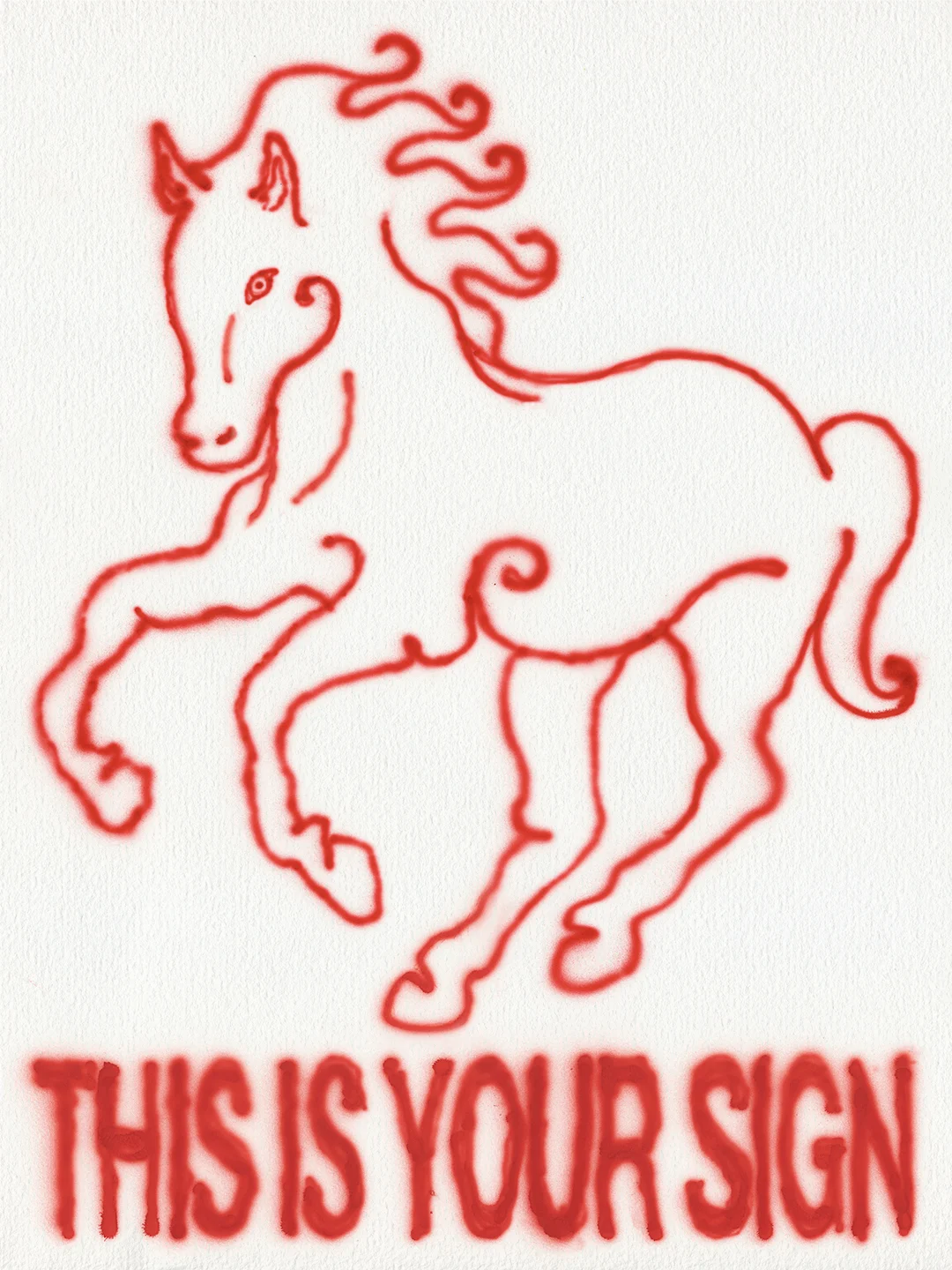
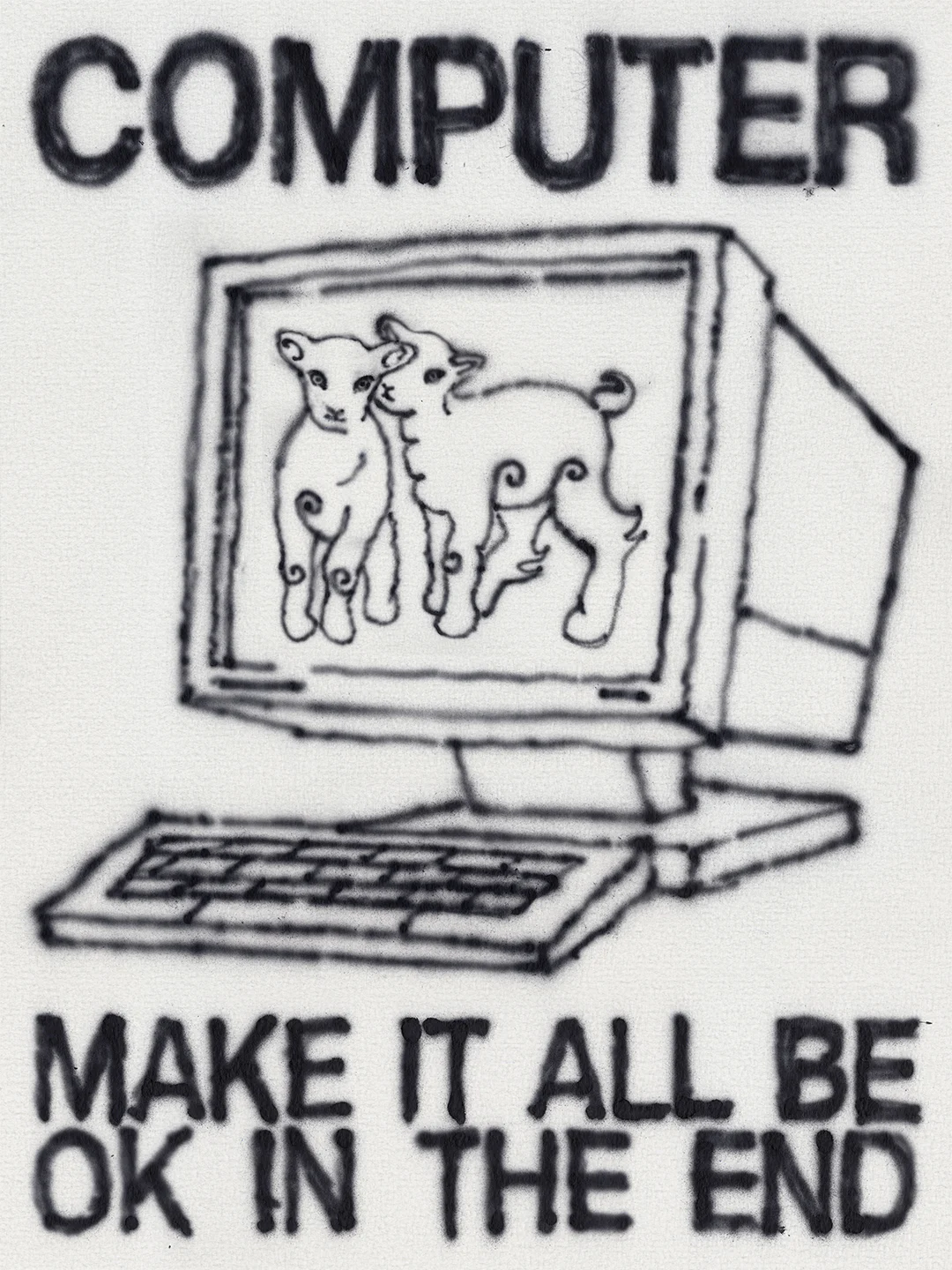
He began making illustrations of jesters, cherubs, animals—often there’s the evocation of innocence or deviousness, coupled with little phrases. Things that play with text to evoke irony or the dare to really stare into the ways of the world. People paid attention. As loneliness increases around the world and the average screen time rises, works like Khabbazi’s take hold. An image of two innocent lambs looking at us curiously through the boxy screen of a noughties computer, with the quote, “computer make it all be okay in the end.” We are invited to see things as they are—absurd, strange, a bleak shade of laughter.
Few artists manage to resonate as well as Khabbazi has. He believes this comes from the architectural principles instilled within him through study. The idea of a functional and pleasing experience for the person walking through the work, something that’s fundamentally intuitive and comfortable, and yet connects.
Experimentation is almost half the fun of it for me... I just get the urge to evolve my work constantly.
He often experiments with different materials and techniques, “to communicate the mood of the work I am creating as well as possible,” he says, “and generally these are analogue based.” Digital illustration, linograph, oil on canvas, oil on paper, risograph printing, embroidery, knitting, dotwork animation, mixed media—he’s tried it all. “Experimentation is almost half the fun of it for me,” he says. “A lot of people just get one thing working for them and then only do that for the rest of their career, but it would be a nightmare for me. I just get the urge to evolve my work constantly.” He’ll often spend the majority of the week learning how to create with new equipment or trying a new method of printing, normally only posting on Instagram once a week, “because that’s roughly how frequently I make something,” he says.
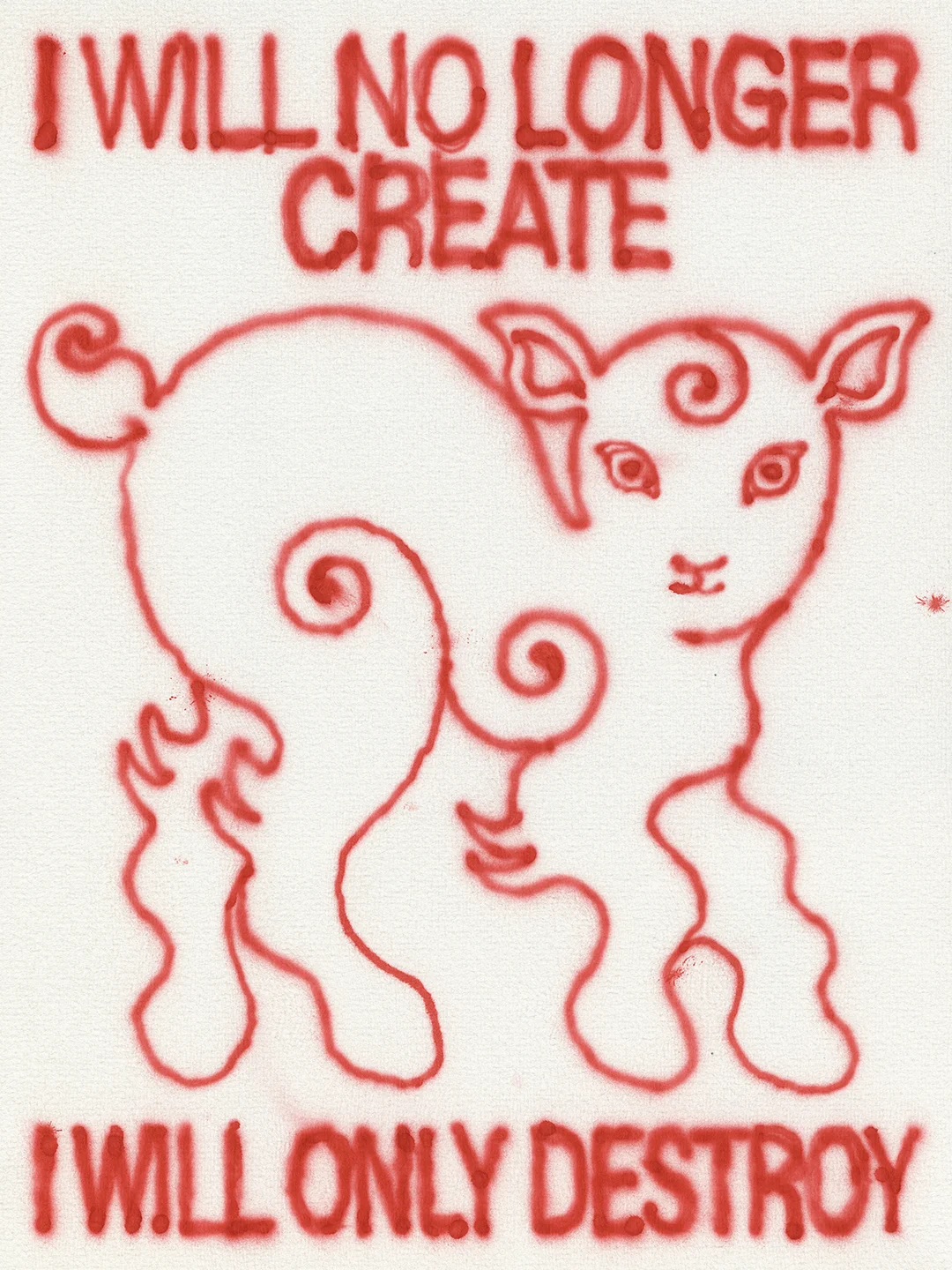
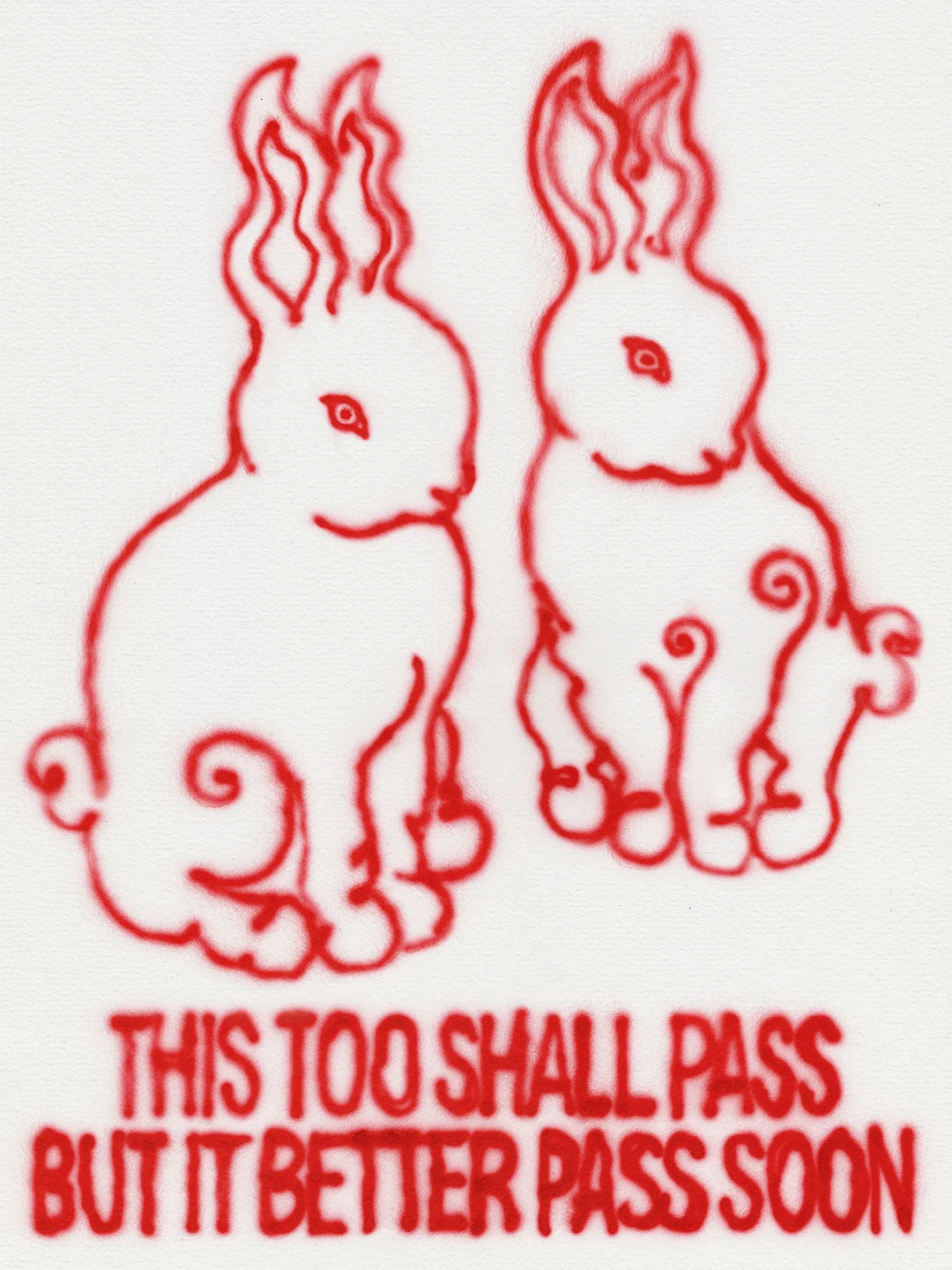
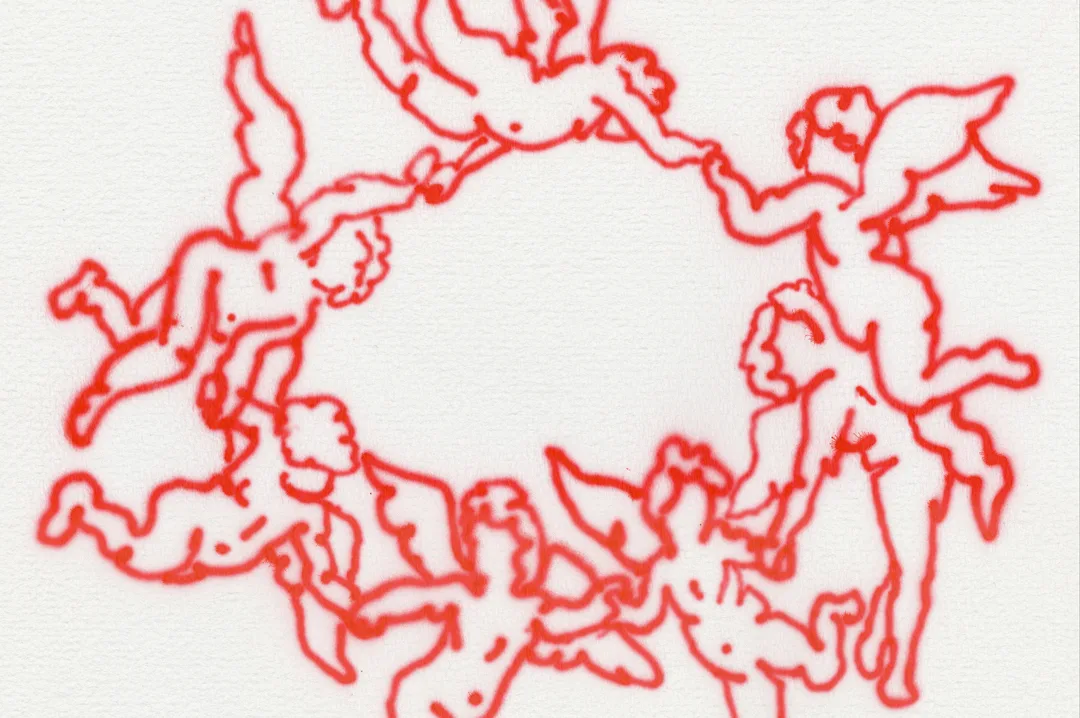
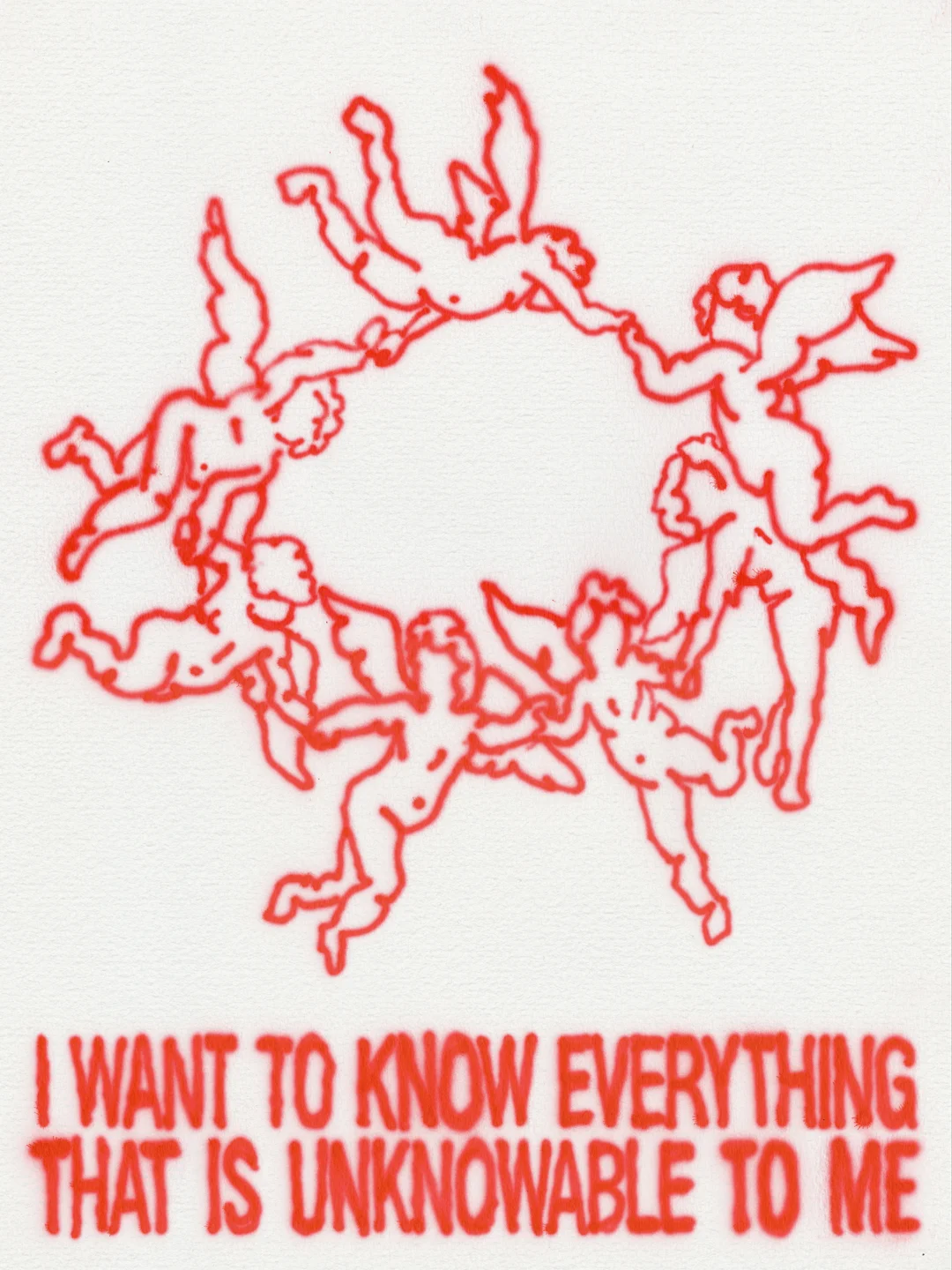
Most recently his experiments have led to airbrushing acrylic paint onto paper, a method in direct opposition to his previous work. “Everything I was designing had been very blocky with solid outlines, quite clearly architectural in some ways,” he says. An airbrush is inherently freeflowing; there is relatively little structure. “It forced me to think about form in a completely different way,” he says, “and I’m having a whole lot of fun discovering new ideas through that.”
Aesthetically, airbrushes are very human. Relative to the laser-straight lines a computer can provide, hand-drawn, airbrushed lines are full of inconsistency and error—thickness where you go over the same line twice or apply more pressure than you intended. These quirks can be seen in the first image Khabbazi made with the tool, depicting a blue wolf. Lines overlap and deepen at the top end of a hind leg, creating a little blob of blue. In later images, the outlines are less blurred and smudged, more intricate. “The cherubs are likely as complex as I’d like to go with it,” he says.
For Khabbazi, it’s often actually the process and technique used that inspires the subject matter. “How I want to do it comes before what I want to make,” he says. “Often, I find that the process involved makes me think of certain images. For example, the airbrush is fairly delicate I suppose, and I see cherubs as delicate too.”
These instinctive images and their accompanying simple pieces of text help Khabbazi to communicate clearly, and the way he sees it, the more he can expand his vocabulary—his set of tools—the more he can find clarity and depth in the work he produces. “I'm not really in control of what my artwork means to someone, but it doesn’t mean I haven’t put a specific message across that I feel,” he says. “I spend so long thinking about the smallest things that I know no one even cares about, or might not even see because they’re on their phones. But I feel more learned when I overthink, more confident that I have explored every option possible in my mind, and therefore that I have made what I want to the best potential I can.”