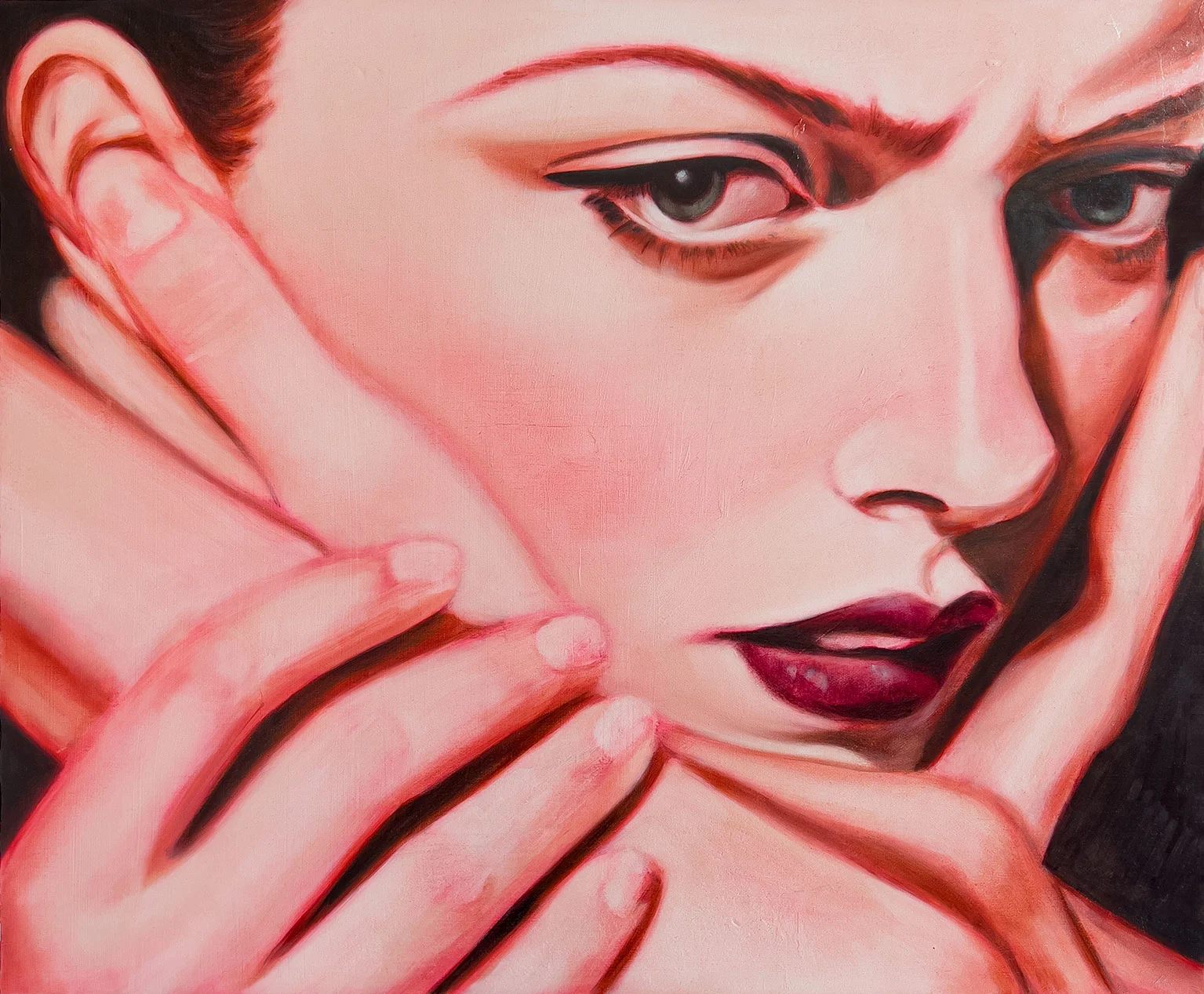
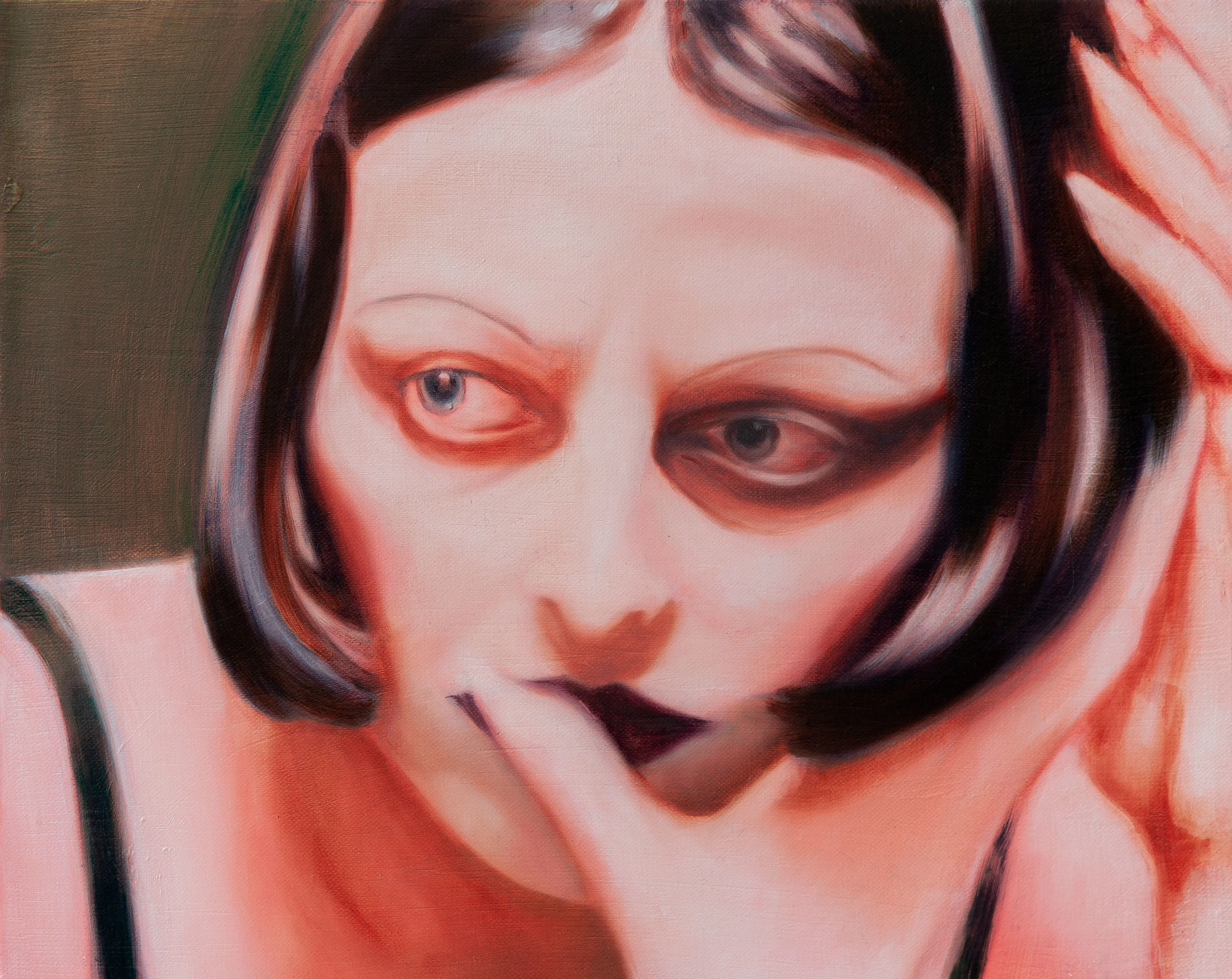
There’s an air of tension and trepidation in the faces of the women in “Incantations,” Taylor Franklin Quinn’s latest collection of paintings. She sees each character as an allegorical stand-in for people’s interior psychology, so the exact emotions each subject is feeling aren’t clear; the viewer projects their own. With their furrowed brows and searching stares, each of them seems to be grappling with something, and Franklin Quinn tells Maisie Skidmore how an immense period of transition in her life translated into a group of characters experiencing their own moments of flux.
“Incantations” is currently showing at RHODES Contemporary Art Gallery, London.
Taylor Franklin Quinn is living through a season of change. In the past few years, the California-born artist and her husband, ceramicist Aran Quinn, have established their personal art practices and moved from New York City, to Marseille, to London in the process. She’s spent months preparing for her first solo show, “Incantations,” and very soon, they’re expecting their first child. But for a woman in the eye of the storm, she appears entirely at ease.
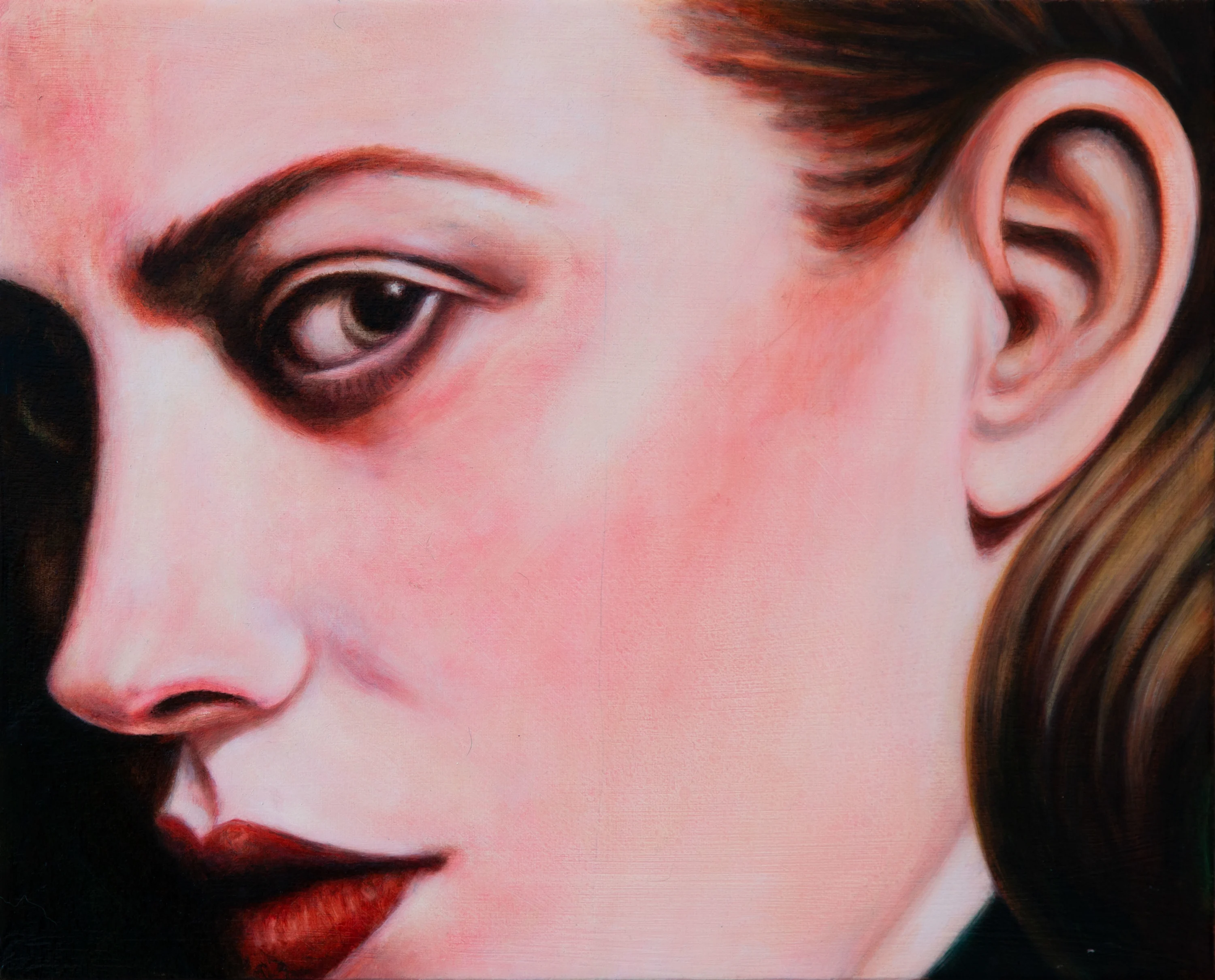
Some evidence of the transformation she is living through comes to life through her paintings. She makes emotionally evocative studies of women, their inner landscapes hinted at through objects: fruit; columns; a single flower. Dreamlike and charged, with a dose of Baroque theatrics, these pieces nod towards themes of beauty, power and mortality.
Her female protagonists evoke Hollywood movie stars—and Franklin Quinn’s practice more broadly is underpinned by a cinematic glamour. “I became fascinated by how you can get human emotion without painting something super realistically,” she explains, speaking to me from her kitchen, the wall behind her dotted with treasures sourced in Marseille’s brocantes. “When there’s no context outside of the frame, you can really feel the emotion.” Her crops are often tight and, stripped of context, subtleties loom large. The quirk of an eyebrow or twist of a lip hints at an inner tension—a quiet fury, growing resentment or puzzled determination. The emotions themselves are often allusive; the viewer projects. “I don’t really paint portraits,” she says, “I paint allegorical stand-ins for people’s interior psychology.”
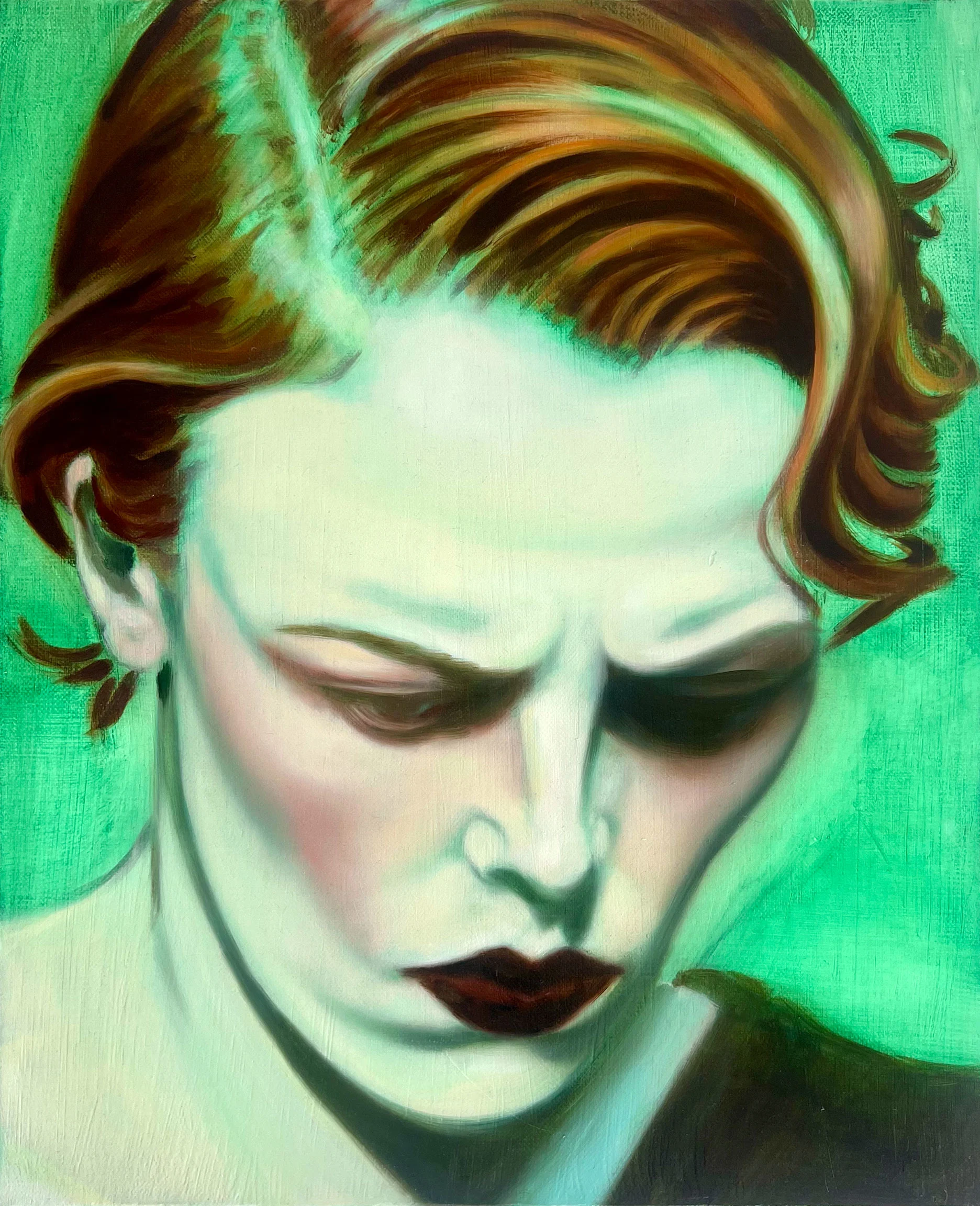
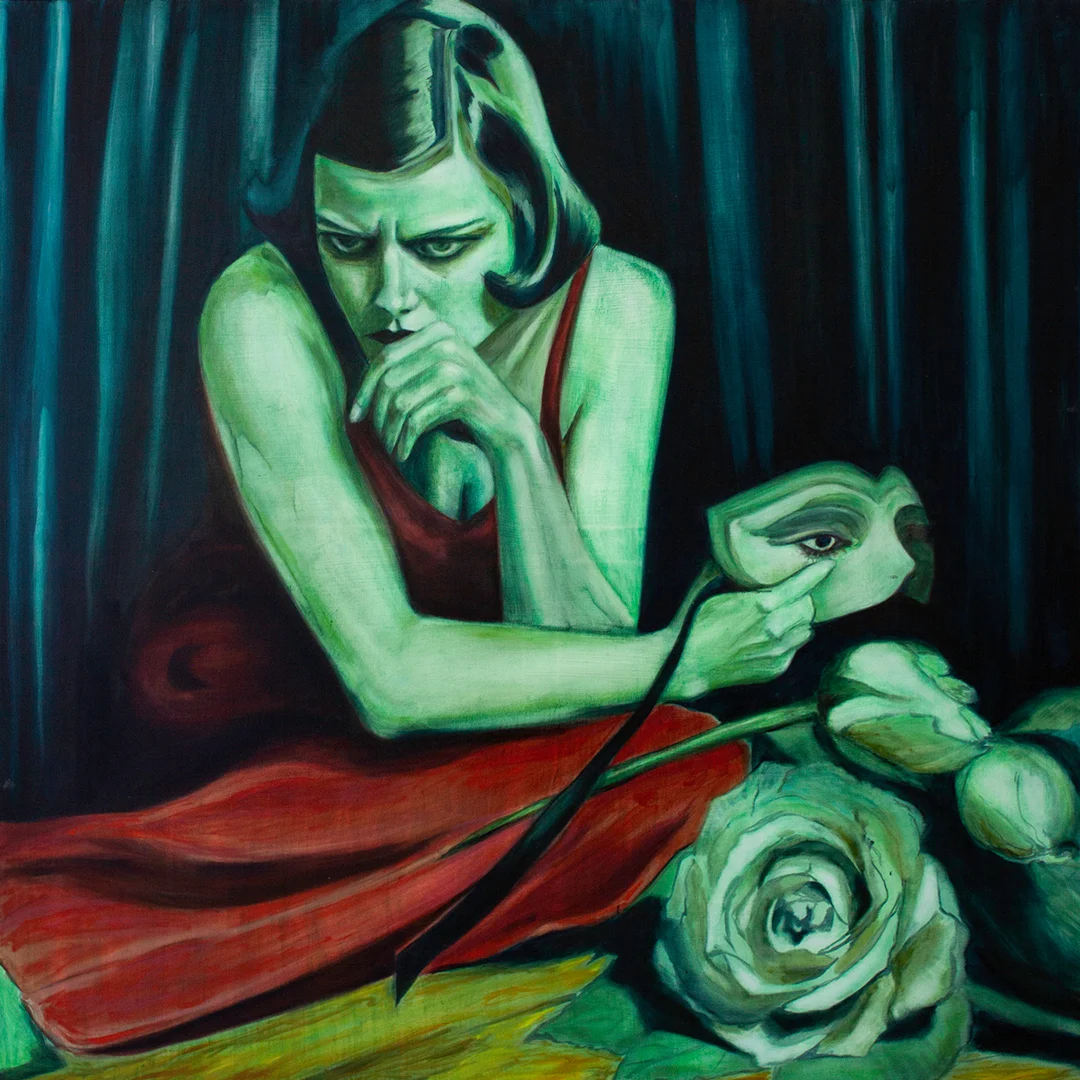
This pervasive, latent tension informs Franklin Quinn’s color choices, too. She often paints subjects’ faces in an atmospheric, suspenseful green, creating a sense of unease in their expressions. “I was on a Hitchcock kick. I love ‘Vertigo,’” she says. “I painted that scene of Kim Novak by the window, and the background is completely green.” The otherworldly hue cast a strange light over everything, and it marked a turning point in her practice. “It’s a terrible painting. I’ll never show anyone, but it was important nonetheless.”
Her practice feels entirely self-possessed, but finding her way with paint has been a journey for Franklin Quinn. She first studied Painting at UC Berkeley. “No one really taught you how to pursue art professionally,” she says. “So I worked at a fine art framing store for two years – and then I was like, Fuck this, I’m going to design school.” She went to California College of Arts, in San Francisco, and from there she moved to New York City, where she spent ten years—almost to the day—building a career as an art director and graphic designer, a field she continues to work in. She works primarily in high fashion and lifestyle, collating references, crafting images and working towards a feeling.
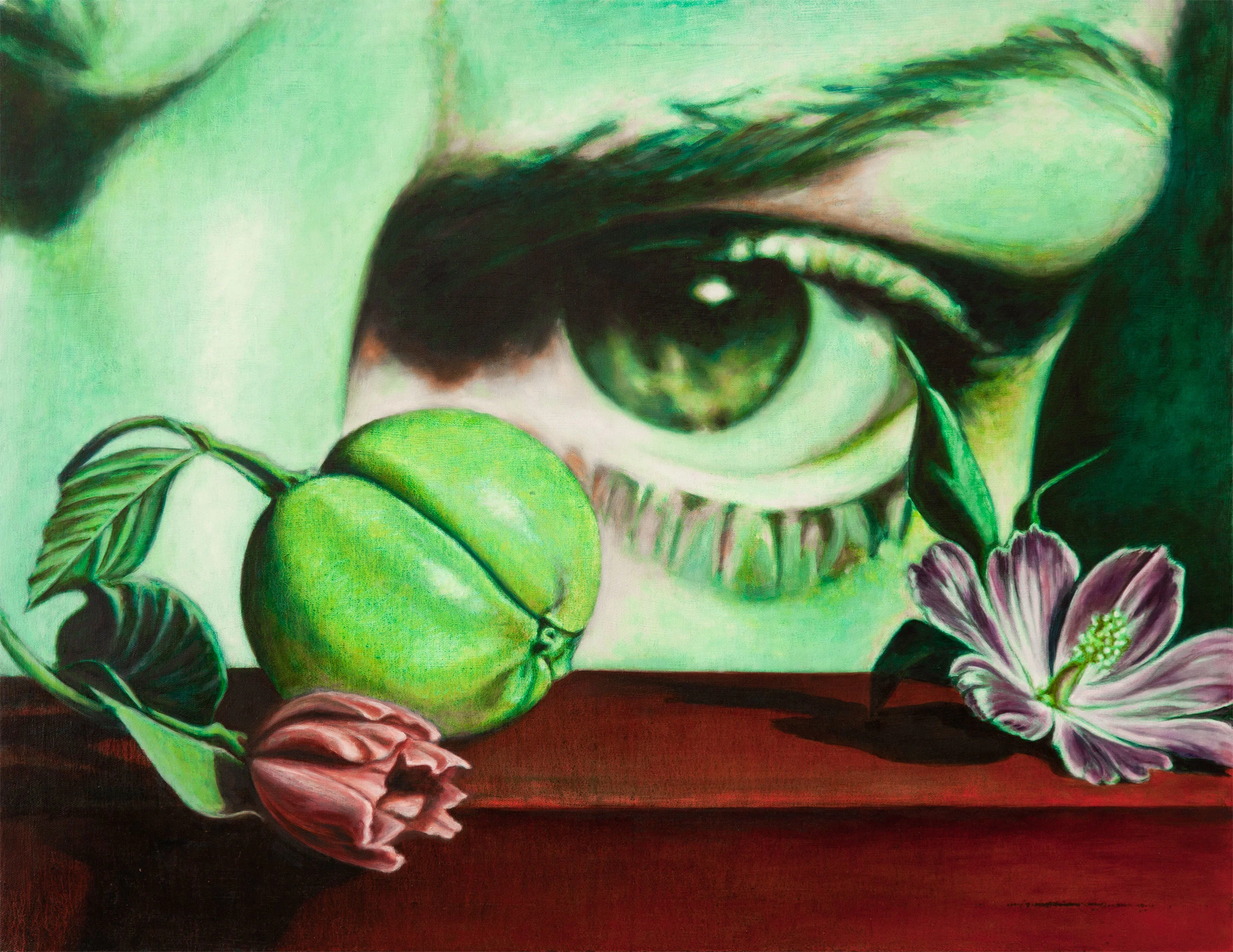
It wasn’t until the pandemic hit that it occurred to her to turn back to her painting practice. “I hadn't picked up a brush in 12 years before 2022,” she says. “It is not like riding a bike. I was terrible. It was so, so humbling. As a professional in your early 30s, there’s no patience for things you’re not good at right away.” Still, it was something of a coming-home for the artist. “It felt so good to move a brush around in paint. It was an intoxicating feeling.”
Soon afterwards, she and her husband moved to Marseille in order to make more time and space for their artistic practices. “People often go to Marseille to change directions, and that was it exactly,” she explains. It was a transformative period. “I didn’t paint the ocean. I didn’t paint a sunset. None of the physicality of Marseille seeped into the work. It was just sort of like I had time to think about my life more, rather than just being on the treadmill.” An artist’s residence in London opened her eyes to what life in the UK might look like, and lit a new spark. So far, it’s suiting her well.
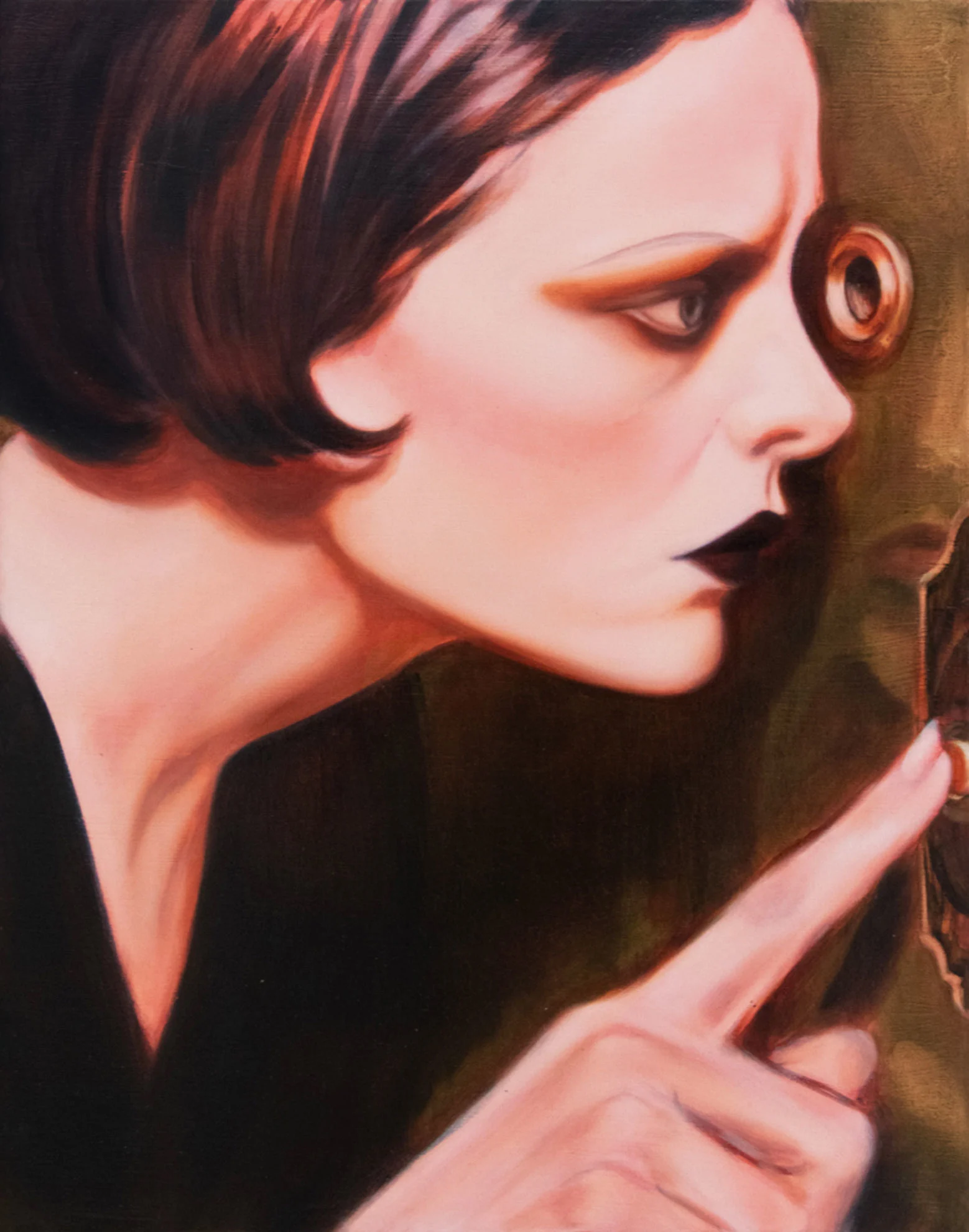
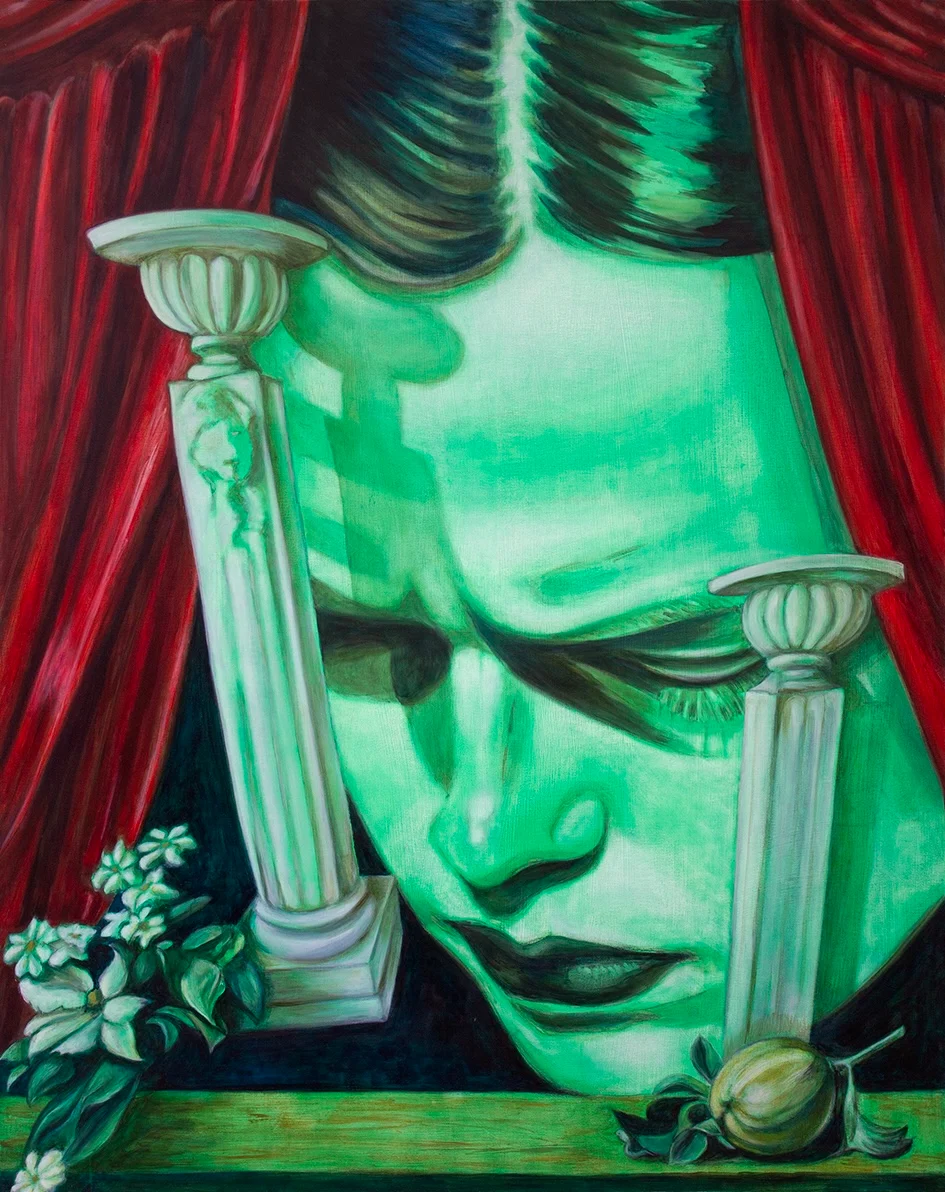
“Incantations,” now showing at RHODES gallery, comprises work made over the period starting the day that Franklin Quinn began the application process to move to the UK. The poetry of this is not lost on her. Still, she maintains that it’s not an autobiographical show. “There’s one work about Psyche,” she explains—a beautiful mortal who violates the trust of her husband, Cupid, and is forced to endure his mother Venus’s tests to make her way back to him. “There’s one that’s like one of Aesop’s fables; there are some Garden of Eden references.” There’s a portrait of Lilith, too—the first wife of Adam, who, according to Jewish folklore, refuses to submit to him and is thus ejected from the garden of Eden. In the cultural consciousness Lilith has come to represent female autonomy—Franklin Quinn’s depiction sees deep in thought, her shiny black bob and needle-thin eyebrows recalling a 1940s Hollywood actress. Both Psyche and Lilith appear restrained, tangled up either in their own limbs, face pressed into hands, or held back, bound, by others.
Often, she explains, the resonance of a work won’t land until some time after its creation; the parallels become apparent after the fact. “When I look back, everything becomes clear,” she concludes. “This show is a perfect example of that. These women are going through transitions of their own, but the period when they were painted was potentially the biggest transition of my life.”