
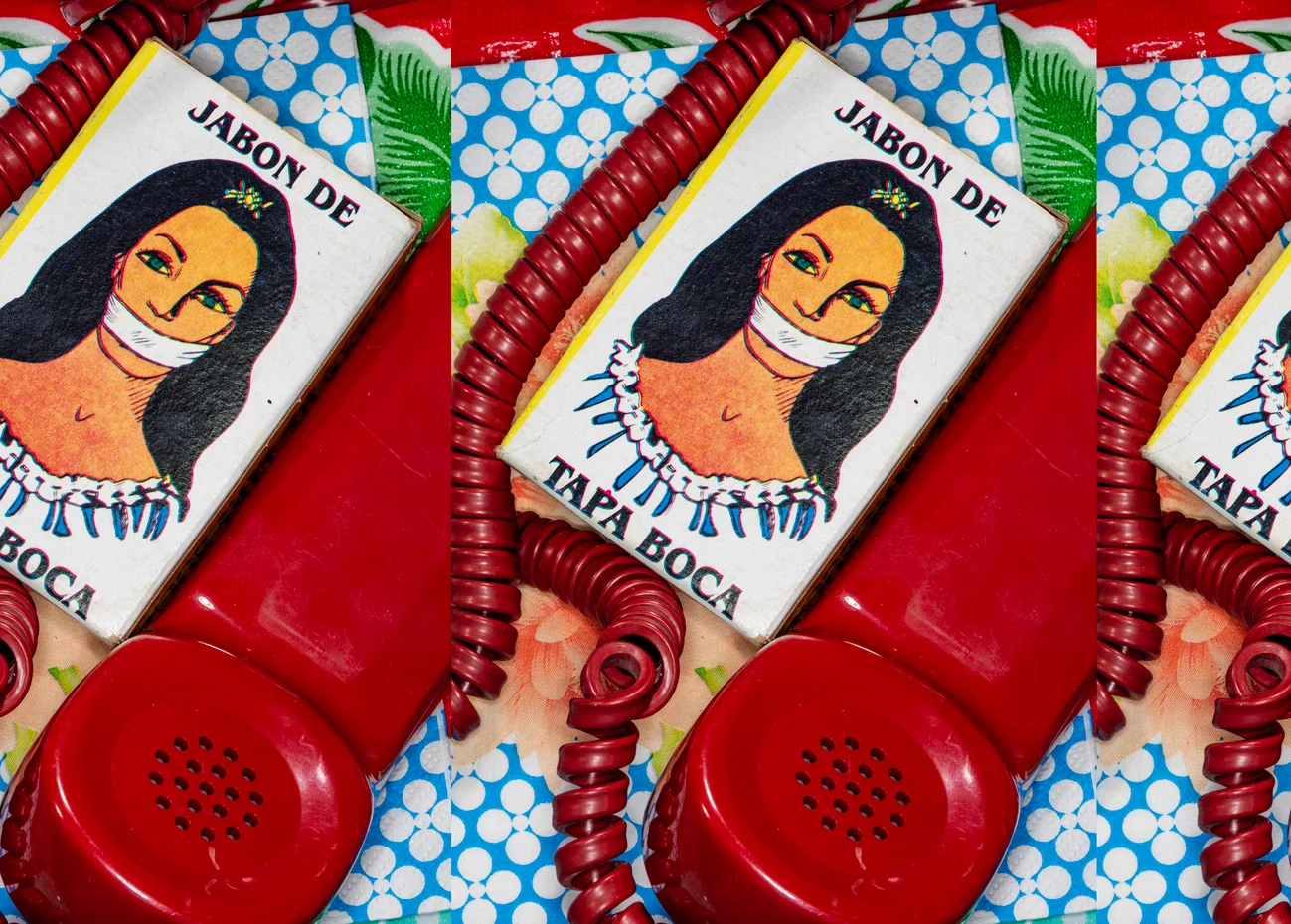
While exploring the chaotic corridors of Mercado de Sonora in downtown Mexico City, Stephanie McArdle was drawn to the magical soap boxes. One box might promise to banish your enemies, another to make your loved one obsessed with you, or shield you from evil. “JABÓN: Magic Soaps of Mexico,” a photobook made with artist Maisie Cousins, transforms these ritual soaps into visceral, maximalist art. McArdle and Cousins tell Dalis Robinson how they captured both the mundane and the mystical—everyday objects that speak to our universal search for answers, and to the quiet power of faith and hope in a world that so often feels unmanageable.
“JABÓN: Magic Soaps of Mexico” is available to buy here.
Amid street stalls, diableros whistling as they push their carts, and the typical chaos of downtown Mexico City, stands the notorious Mercado de Sonora, famous for housing the largest esoteric market in the Latin American capital, if not the world. A place where the mundane and the occult coexist, vendors sell amulets, crystals, herbal remedies, occult objects, statues and symbols from different faiths, alongside just about anything to remedy any ailment or tip fate in one’s favor.
Amidst the chaos of the market, it was the bright, colorful soap boxes that stood out to Stephanie McArdle. These vibrant artifacts of folk magic and outdated graphic design sparked the idea for “JABÓN: Magic Soaps of Mexico,” a photobook made with artist Maisie Cousins that transforms these ritual soaps into visceral, maximalist art.
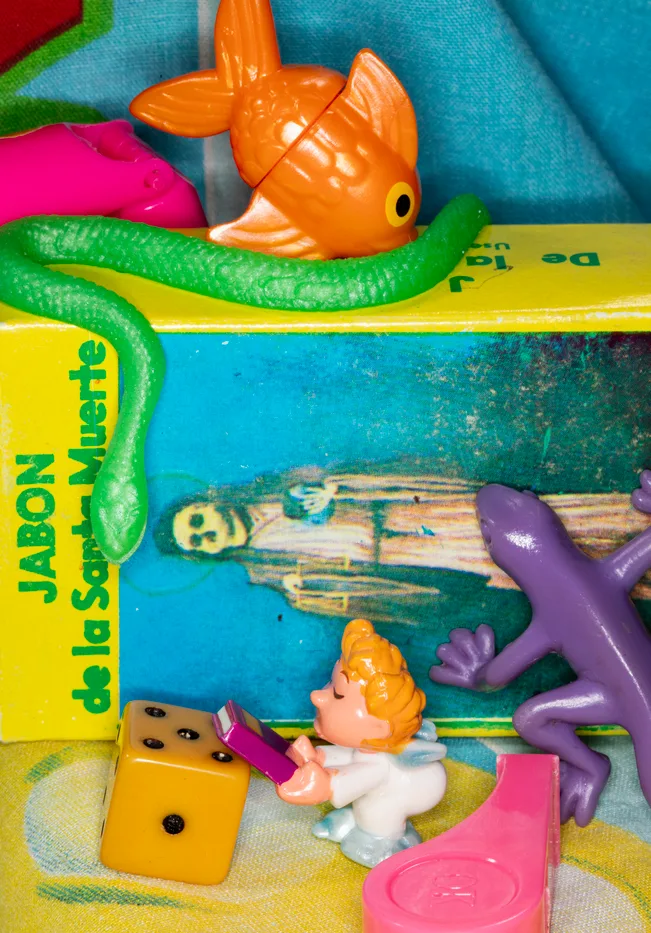
The design and packaging are from another era… It’s this unintentionally beautiful thing.
Recalling the first time she wandered into Mercado de Sonora, Stephanie remembers moving through a labyrinth of produce, costumes, piñatas and traditional goods hanging throughout the corridors. Then came the unease of entering the witchcraft section, where the tone shifts abruptly, captivating and unnerving at once. Ingredients for spells, offerings to various saints and deities and objects steeped in intention surround familiar Catholic iconography, recognizable to someone from Ireland yet disorienting in this context. “Seeing a mix of Catholicism, folk magic and pagan practices interwoven in all sorts of objects blew my mind,” she says.
While living in Mexico, McArdle spent her days roaming the city and its markets, collecting objects; as a designer, the ritual soaps were gold. “The design and packaging are from another era, artifacts of history and graphic design, lo-fi and perfectly imperfect,” she says. “It’s this unintentionally beautiful thing.” Beyond their visual appeal, the content printed on each box was just as compelling. Prayers that blend Catholic devotion with ritual instructions and over-the-top promises, delivered in formal, somewhat archaic Spanish. Protection from ill will. Money. Success. Taming your lover. Each line reads like a condensed spell.
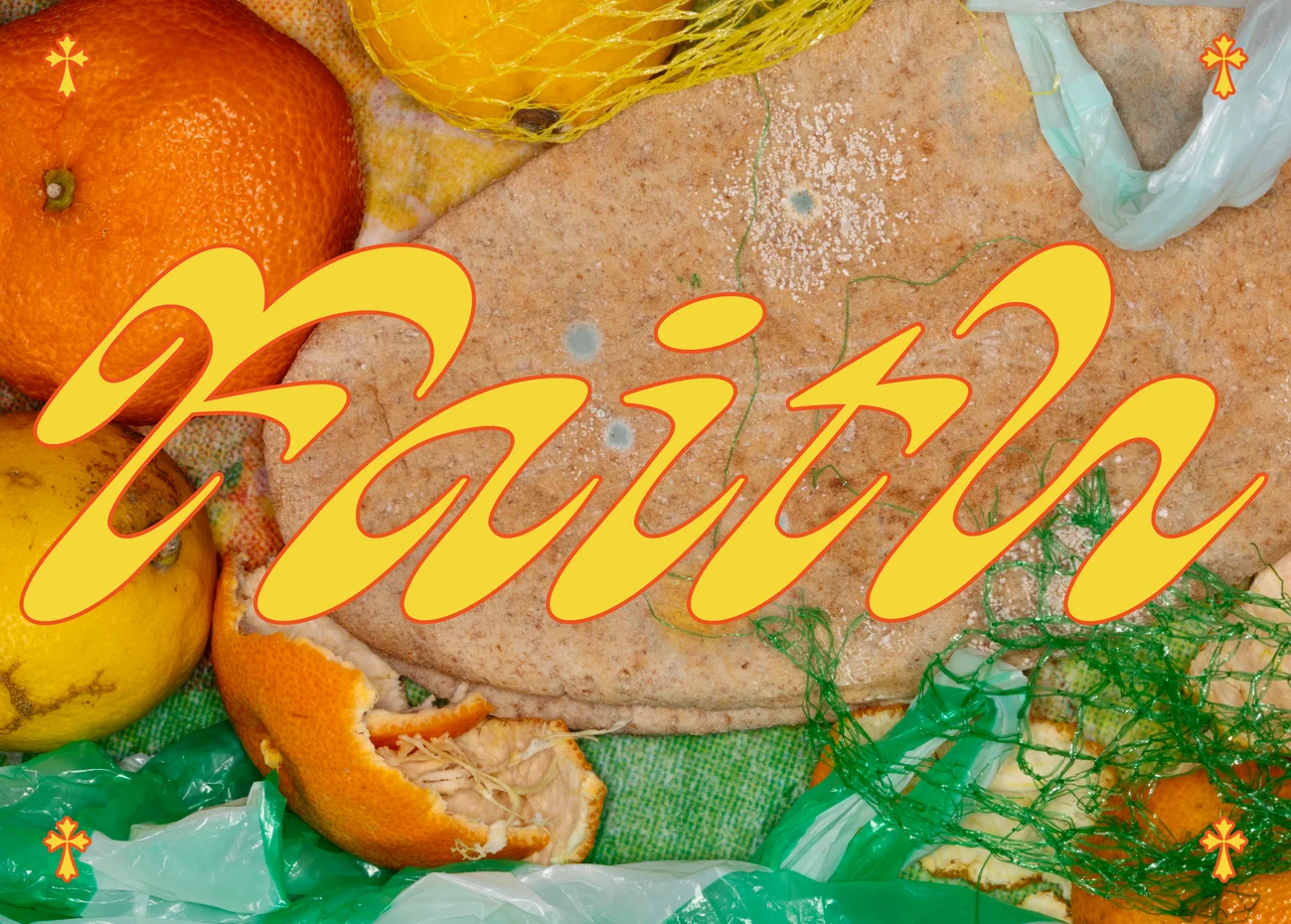
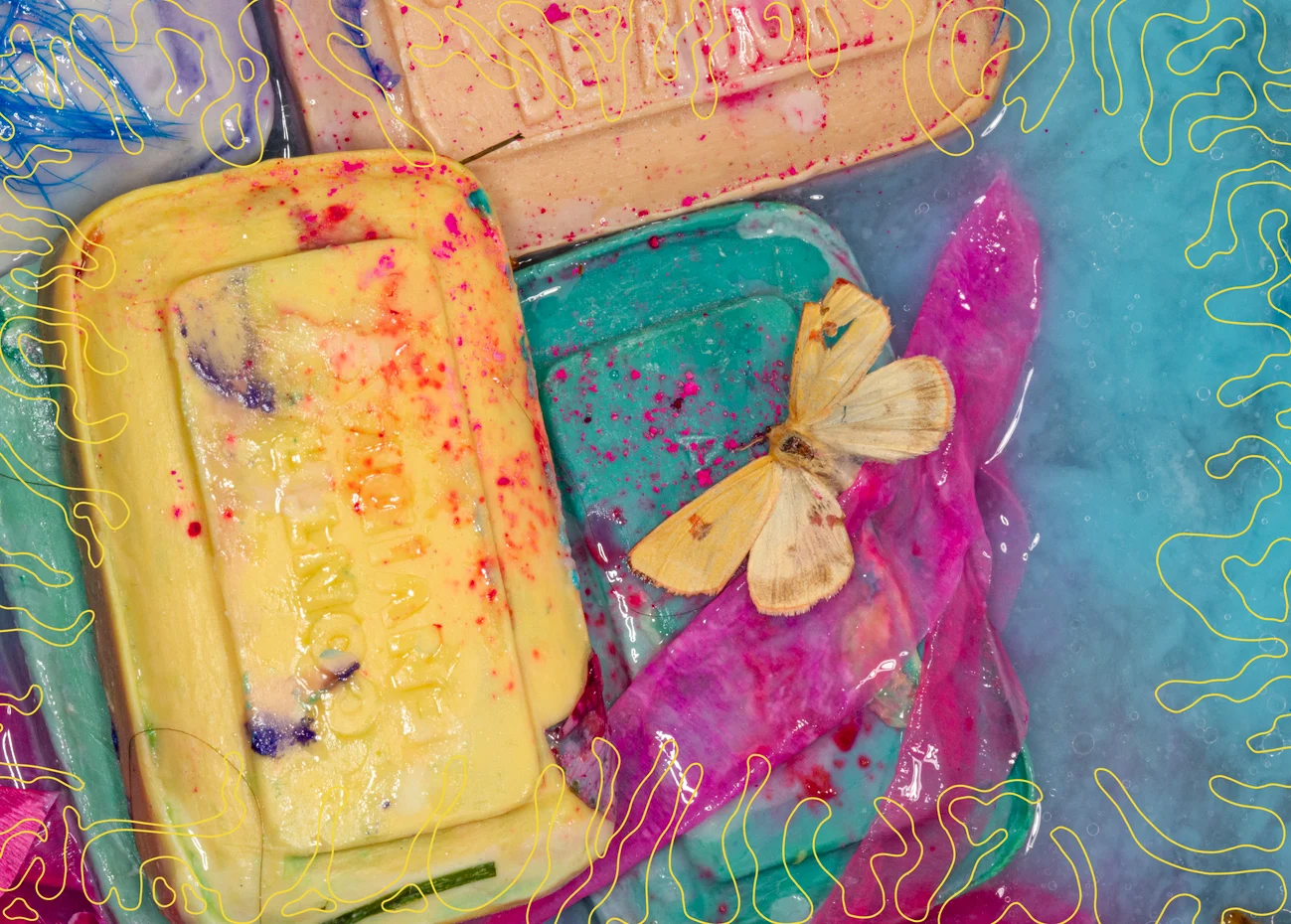
The presence of these soaps in Mercado de Sonora reflects a specifically Mexican context, shaped by centuries of syncretism, in which Catholicism, Indigenous ritual practices and folk beliefs coexist in everyday life. For those who use them, these soaps are part of rituals of protection and intention embedded in daily experience.
What drew McArdle in was a recognition of layered belief systems that felt unexpectedly familiar. She points to Ireland’s own history of Catholic conversion intertwined with older pagan traditions, with folk healers and ritual practices persisting in the culture. ”I find the intertwining of beliefs so fascinating,” she reflects. “It definitely made me think about Ireland, which is like that in a way, but definitely not to the same level. These are just really fascinating parts of Mexican culture because you can see all that active history there.”
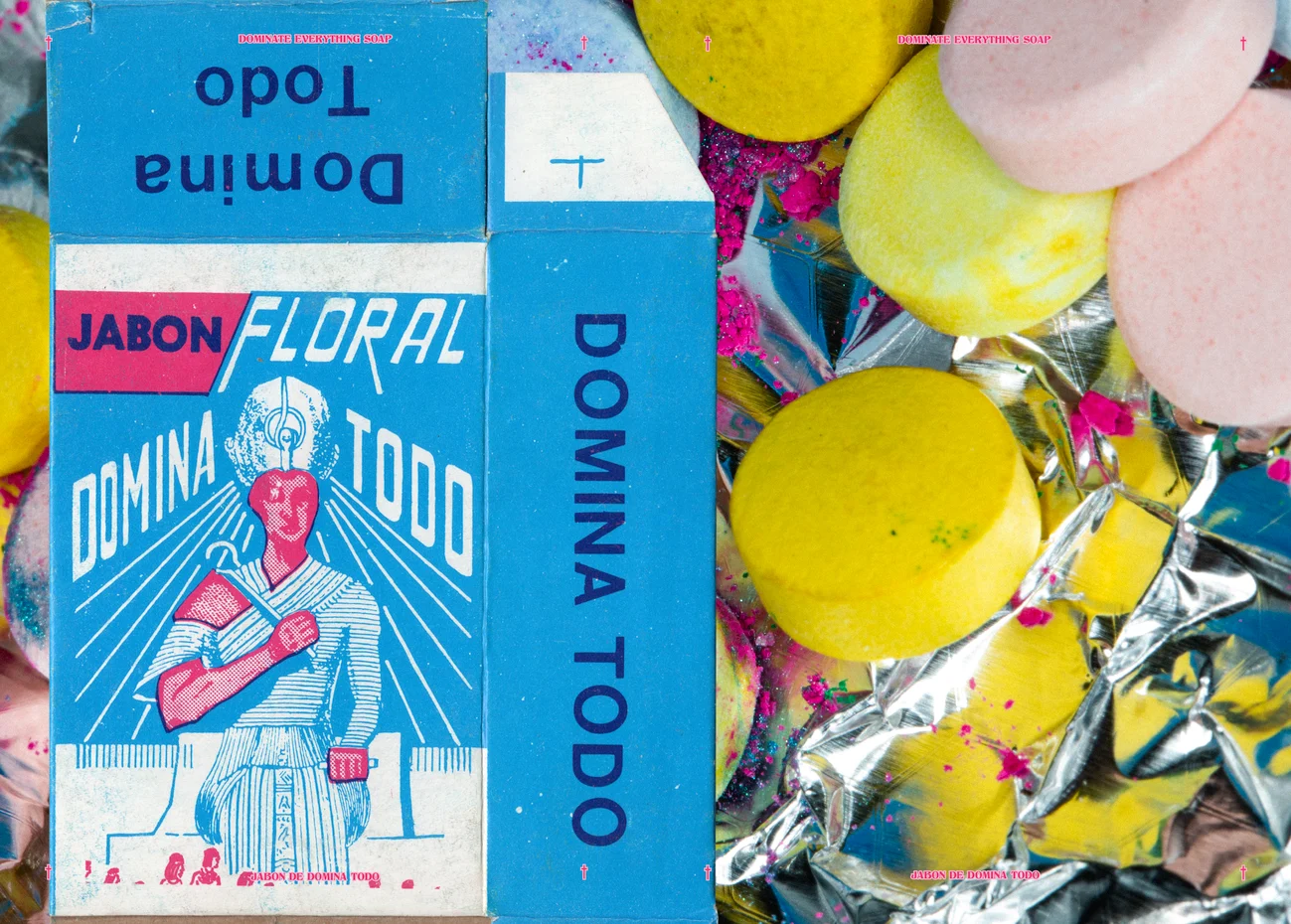
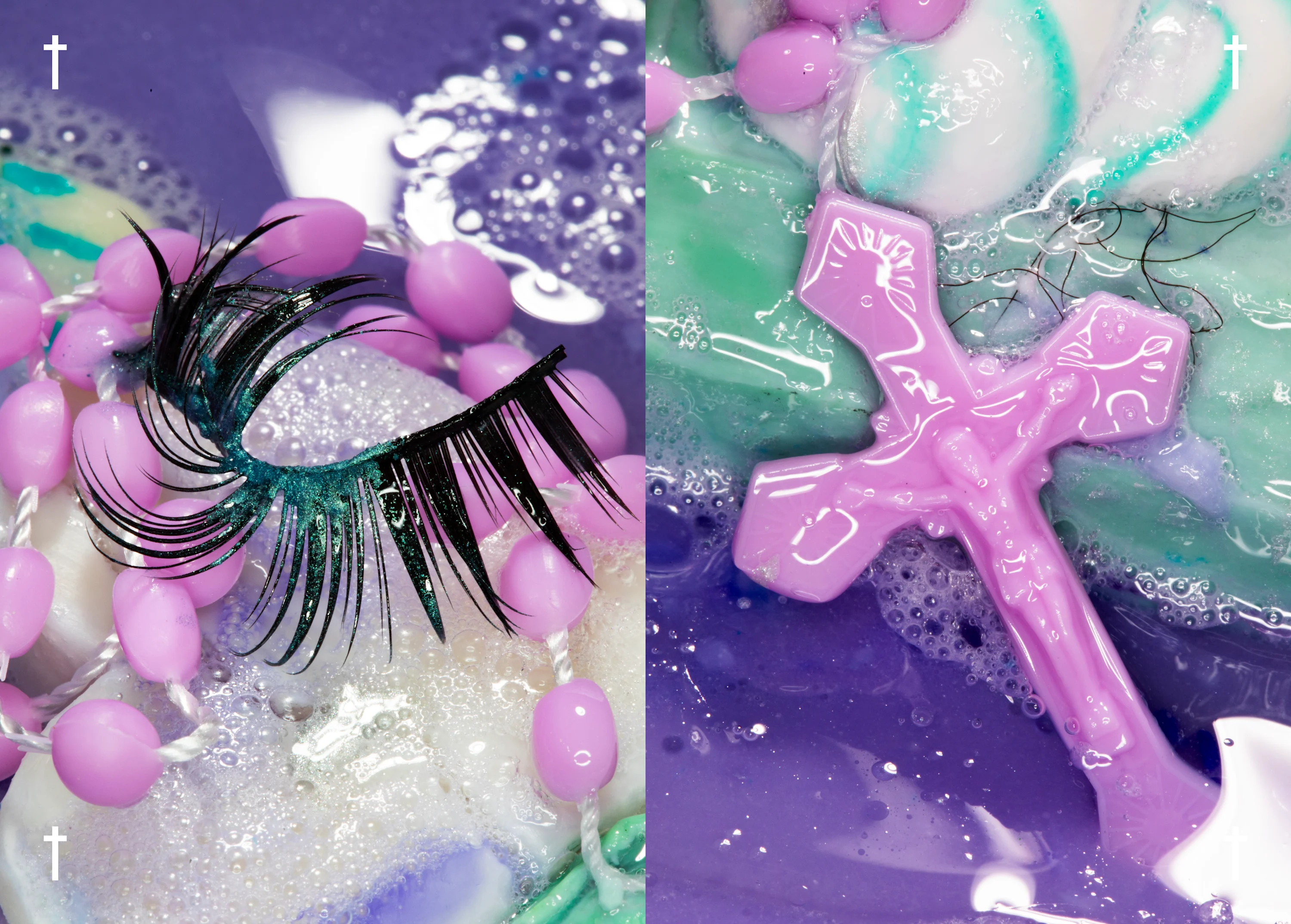
Emerging from an outsider perspective, the project encounters Mexico’s living spiritual traditions. Fascinated by these, Stephanie bought about 40 magical soaps. Initially planning simply to document them, the idea evolved over time. Struck by the richness of the illustrations and prayers, McArdle reflected on their cultural context and what these soaps speak to more broadly, revealing the universal need for answers, reassurance and some sense of control in the face of uncertainty. They sit at the intersection of faith, fear, hope and desire, serving as small, repetitive daily rituals aimed at agency in a world that often feels unmanageable.
Enter Maisie Cousins, whose oversaturated, eye-catching compositions felt like a natural extension of the project. Cousins’ work is known for its intensity; images that overwhelm, seduce and unsettle. Together, the duo conjured memories from their respective experiences in Mexico, setting out to convey the sensory overload and the constant coexistence of joy and darkness into an evocative visual language that’s chaotic, visceral, and maximalist. “I wanted to approach these images in my usual layered and chaotic way,” says Cousins. “The images needed to feel messy in an organic way, which ties itself nicely to the markets these are found in.”
It’s not about whether a soap will actually work, but more about what it gives you in that moment, a sense of control.
The book carries the prayers embedded in these soaps, translated in collaboration with Mexican translator and graphic designer Daniella Trigo, and set mostly in Reforma, a typeface developed by Monterrey–based foundry Dum Dum Studio. The design oscillates between dense compositions packed with objects, with color playing a central role. Each soap’s visual world is anchored in its own palette, while recurring motifs such as rosary beads, miraculous medals, dirt, hair and bathing elements thread the images together alongside Tal Brosh’s illustrations.
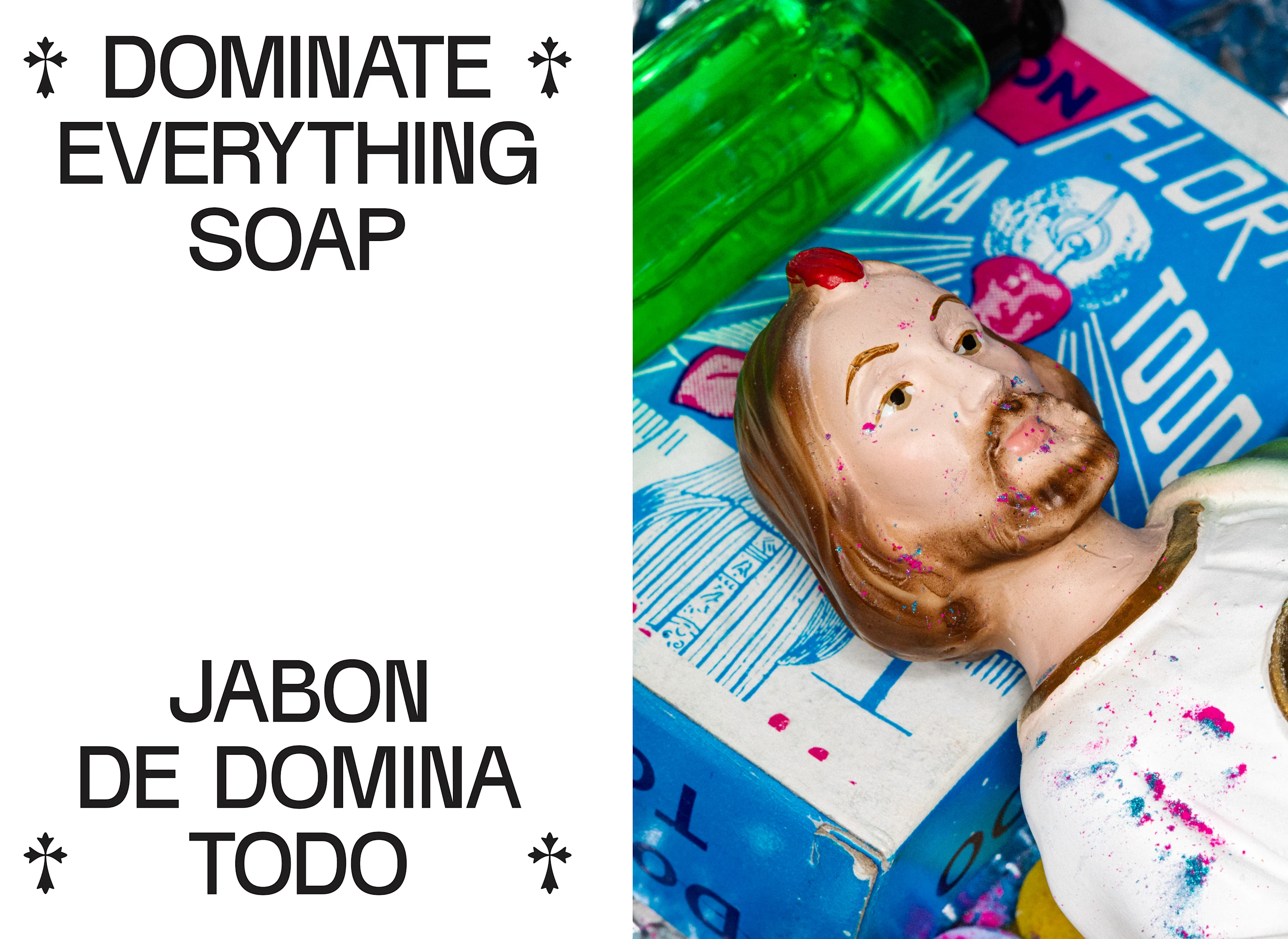
Throughout the process, certain soaps inspired particular narratives, with motifs imbued with intention for each composition. “Dominate Everything” becomes a story about addiction and criminal pursuits, incorporating pills, foil, lighters and the figure of San Judas Tadeo. Known traditionally as the patron saint of lost causes, he’s popular among the urban working class in Mexico and, against the church’s will, claimed by some criminals as their protector.
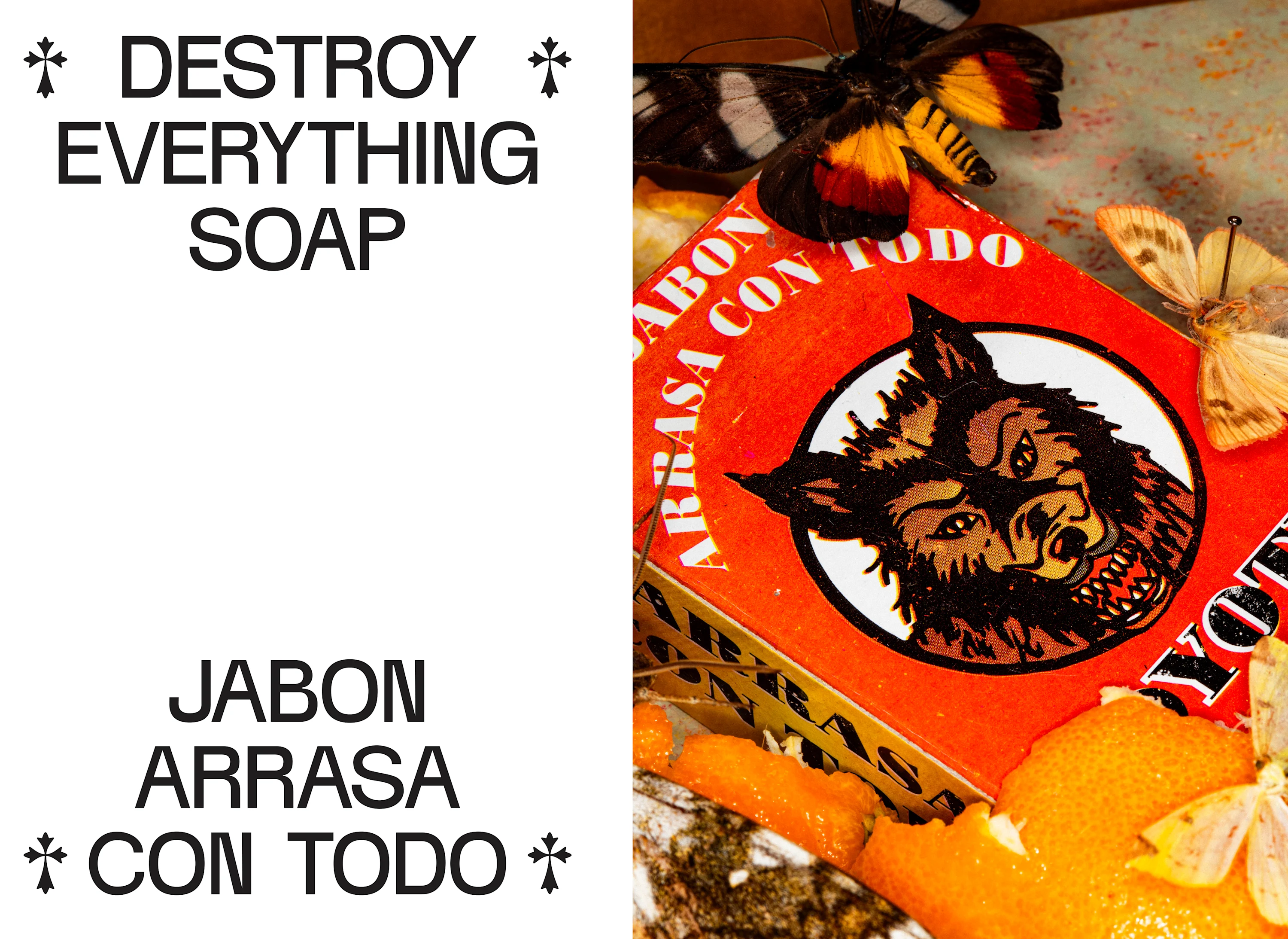
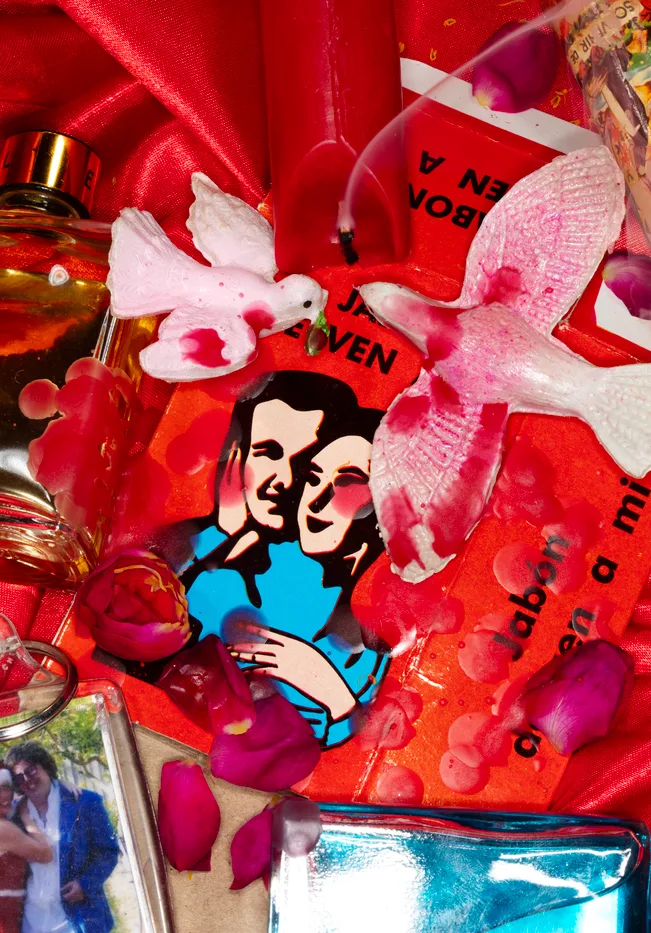
The “Destroy Everything” spread explores self-destruction and transformation through butterflies and orange peels, symbols of renewal and decay. “Seven Machos,” an essence originating in Mexico associated with attraction and good fortune, is staged through beauty rituals and superstition, including the cracking of eggs, a gesture rooted in popular belief.
“JABÓN: Magic Soaps of Mexico” is a dialogue between order and disorder, structured around the belief that cleansing is an intentional act. Reflecting on what the soaps represent, on both personal and universal levels, shifted her own relationship with belief. “Before this project, I didn’t really give it much thought,” she admits. “Now I see it less literally. It’s not about whether a soap will actually work, but more about what it gives you in that moment, a sense of control, but in the repetition of intentional acts. I left the project feeling more open to leaning into things that don’t have an absolute logical sense to them.”
What began as a study of graphic design became an expansive project sitting at the intersection of belief, doubt, humor and darkness. Like Mercado de Sonora itself, constantly oscillating between the mundane and the mystical.
Book credits
Author: Stephanie McArdle
Photography: Maisie Cousins
Design & Art direction: Stephanie McArdle, Tal Brosh
Illustration: Tal Brosh
Translation: Daniella Trigo
Production: Katerina Gharraph
Retouching: Caitlin Davis, Lauren Mustoe
Proofreading: Ella Thomas, Cristina Corredor
Artwork: Ewan Jones
Sans Serif typeface: Reforma by Dum Dum Studio
Publisher: The Midnight Club