
Raised to embrace his mixed heritage, photographer Stéfan Weil nonetheless learned early how the world would read him—phenotypically, as Black. Inspired by his own experiences, his masters project “To Be King” reimagines Black British figures as knights and dynastic rulers. He tells Nicolas-Tyrell Scott how the series not only highlights the armor needed to endure the perspectives of others, but also paints Black British people as figures of power, dignity and belonging.
As an infant, photographer Stéfan Weil was taught to embrace, acknowledge and love all aspects of his racial and ethnic makeup, his British-New Zealand father and French, Togolese and Ghanaian mother celebrating each and every region across his childhood. “Being mixed was an important part of my identity growing up,” he says, “because it was important to my parents,” but straddling all facets of his identity didn’t come without challenge. At nine years old, a CD seller questioned his refusal to buy a rap CD: “Why don’t you want it? You’re not Black?” he asked. The presumption, Weil notes, became a frequent occurrence, to the point where at 16, he realized he navigated the world, phenotypically, as Black, before any other nuance was offered. “I basically get a lot of the experience of a Black man who’s just got the privilege of colorism,” he says.
He studied fine art at an École des Beaux-Arts close to Geneva, before honing in on graphic design in Brittany, eventually completing a masters in commercial photography at The University of the Arts London. His experiences overseas were isolating, often being the only Black student or person of color in classrooms and institutions. “I remember someone telling me that I should eat my jollof rice in another room,” he says. Comments like these—alongside being reduced to nicknames such as BB (big arms and big biceps)—compressed his identity into spectacle rather than personhood. That persistent flattening of his humanity would later inform “To Be King,” a project which re-imagines people of color as dynastic figures. Watching Merlin one night, his yearning for London and England at large at its peak, he wondered, What if Merlin was Black? “I knew I wanted it to be my masters project immediately,” he says.
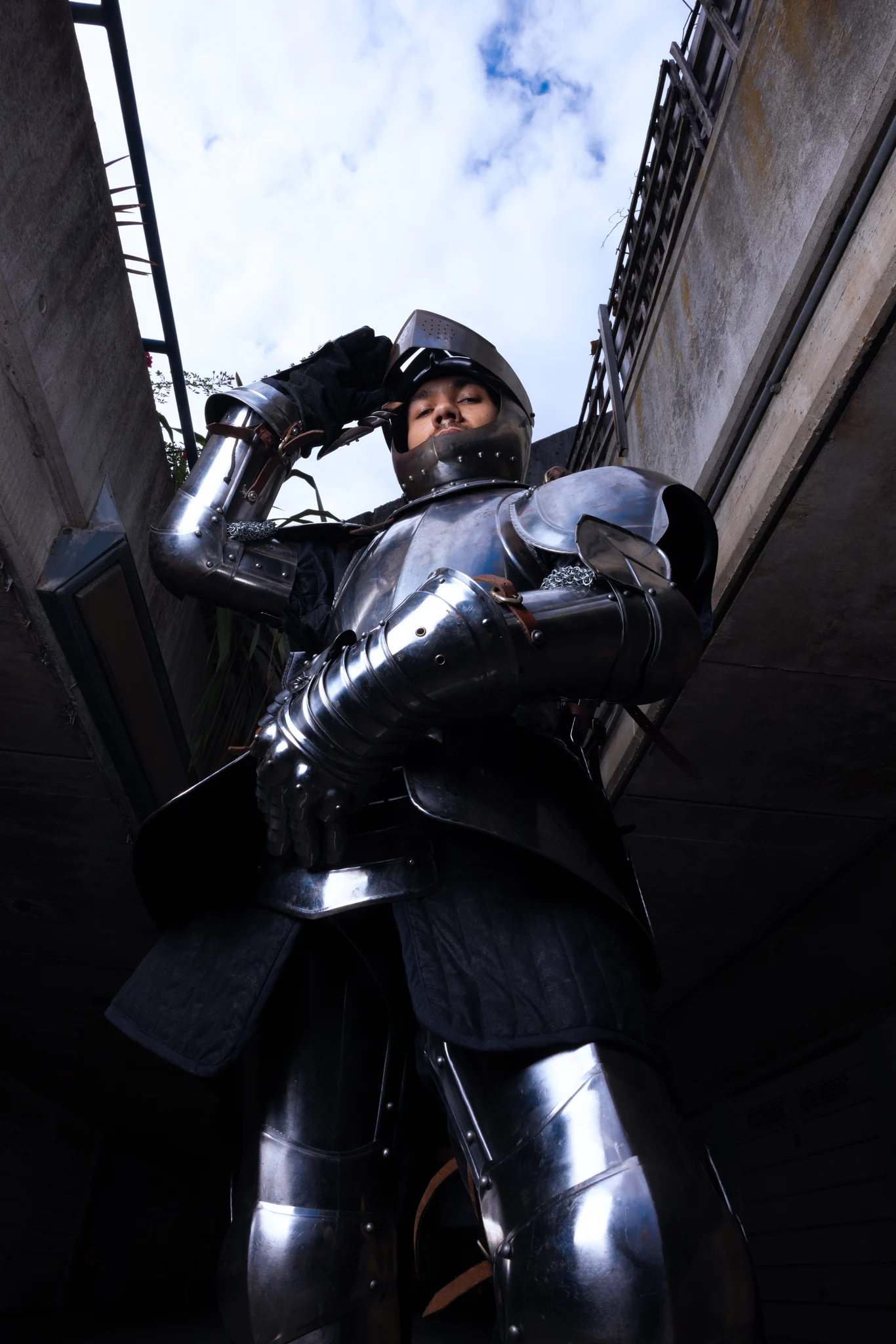
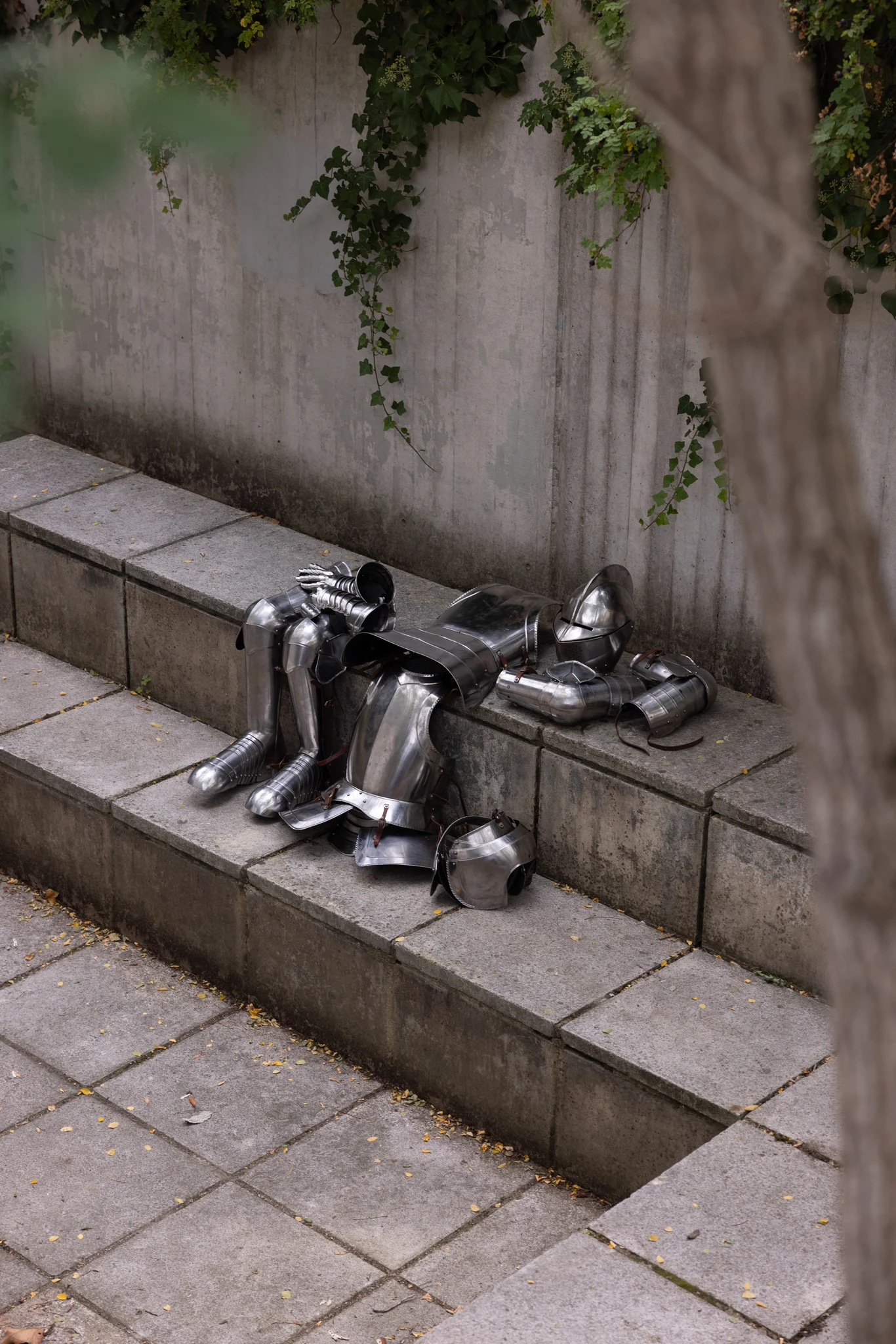
I just really want to show the toll wearing this armor takes all the time.
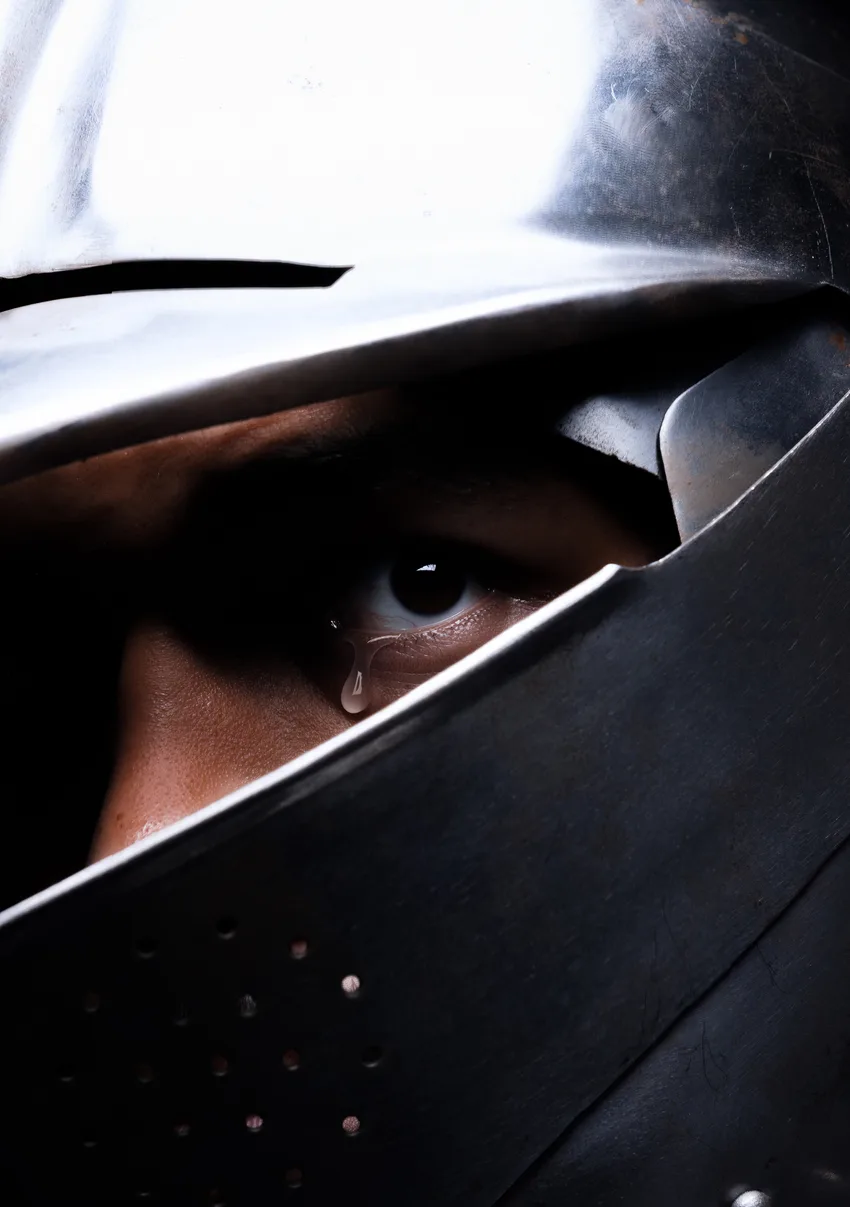
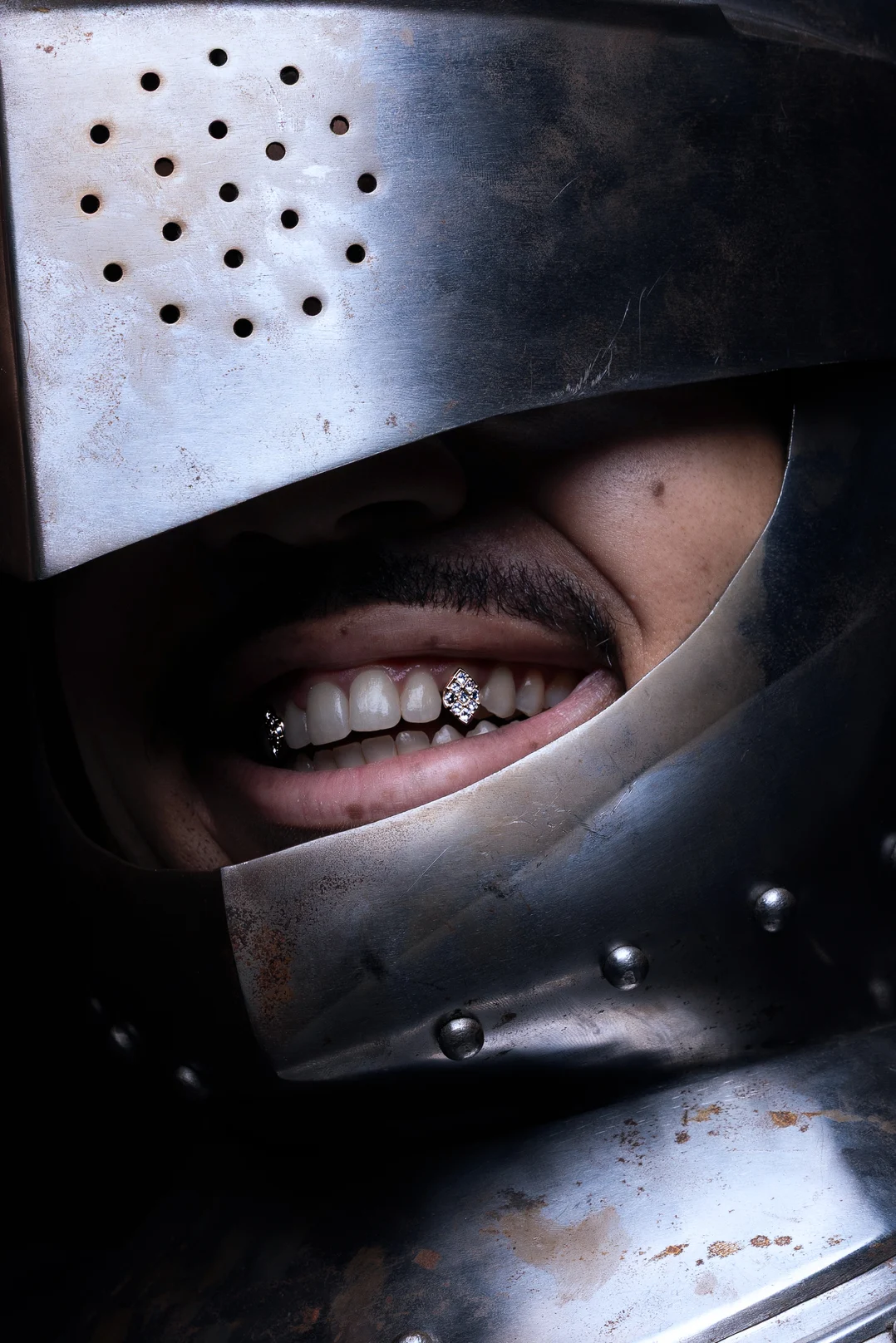
It’s kind of about having to fight for your place in ways that on paper make no sense.
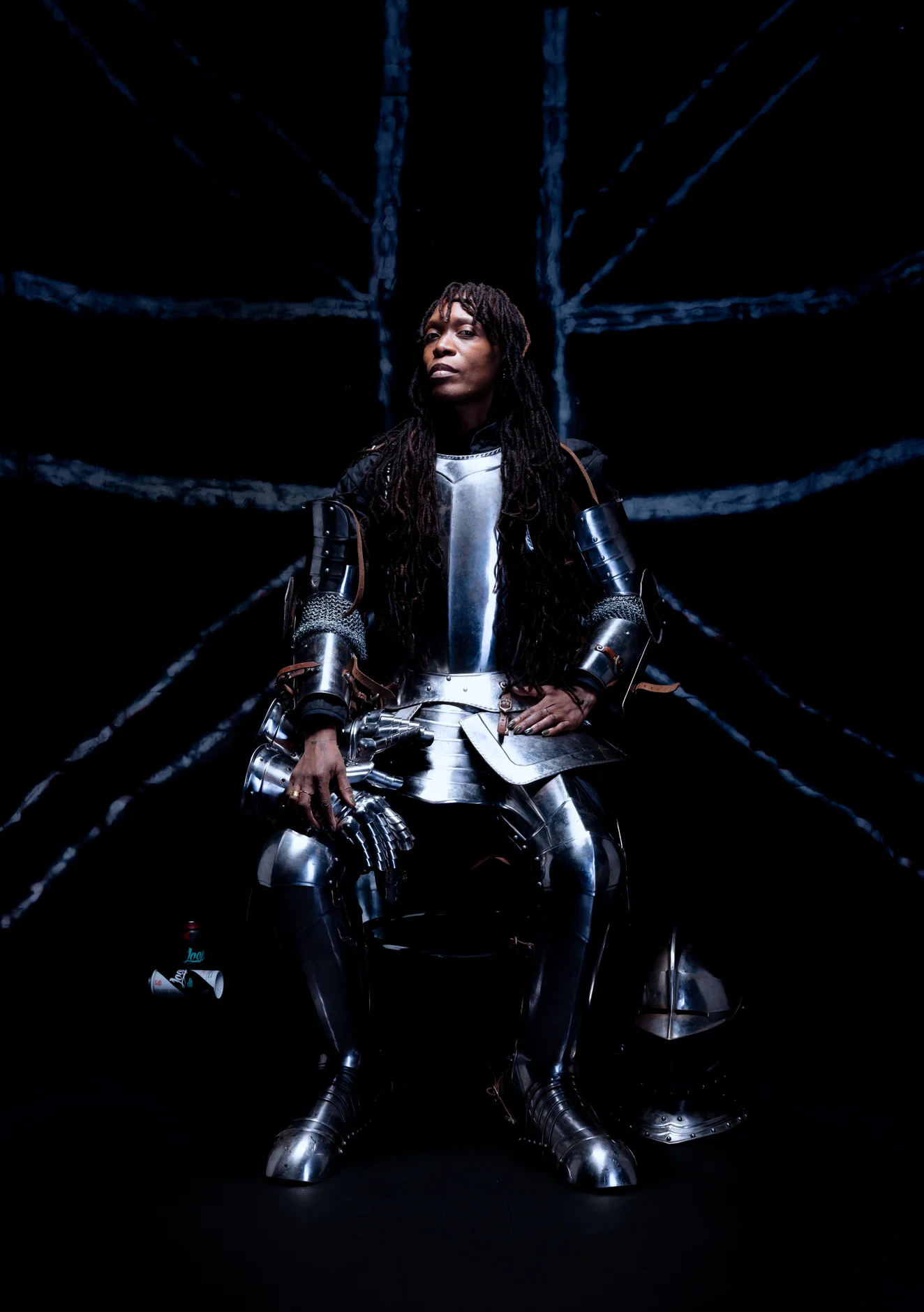
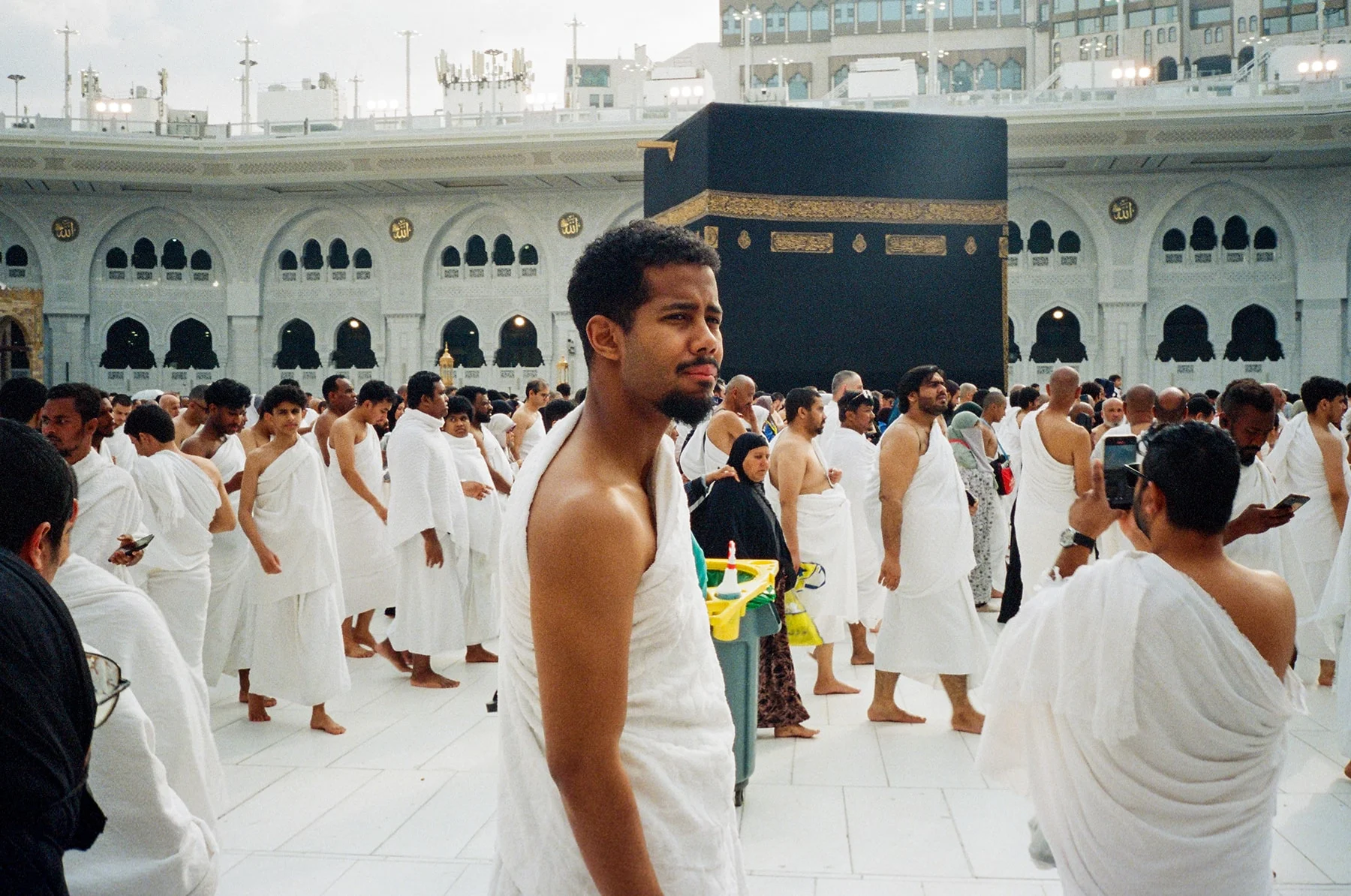
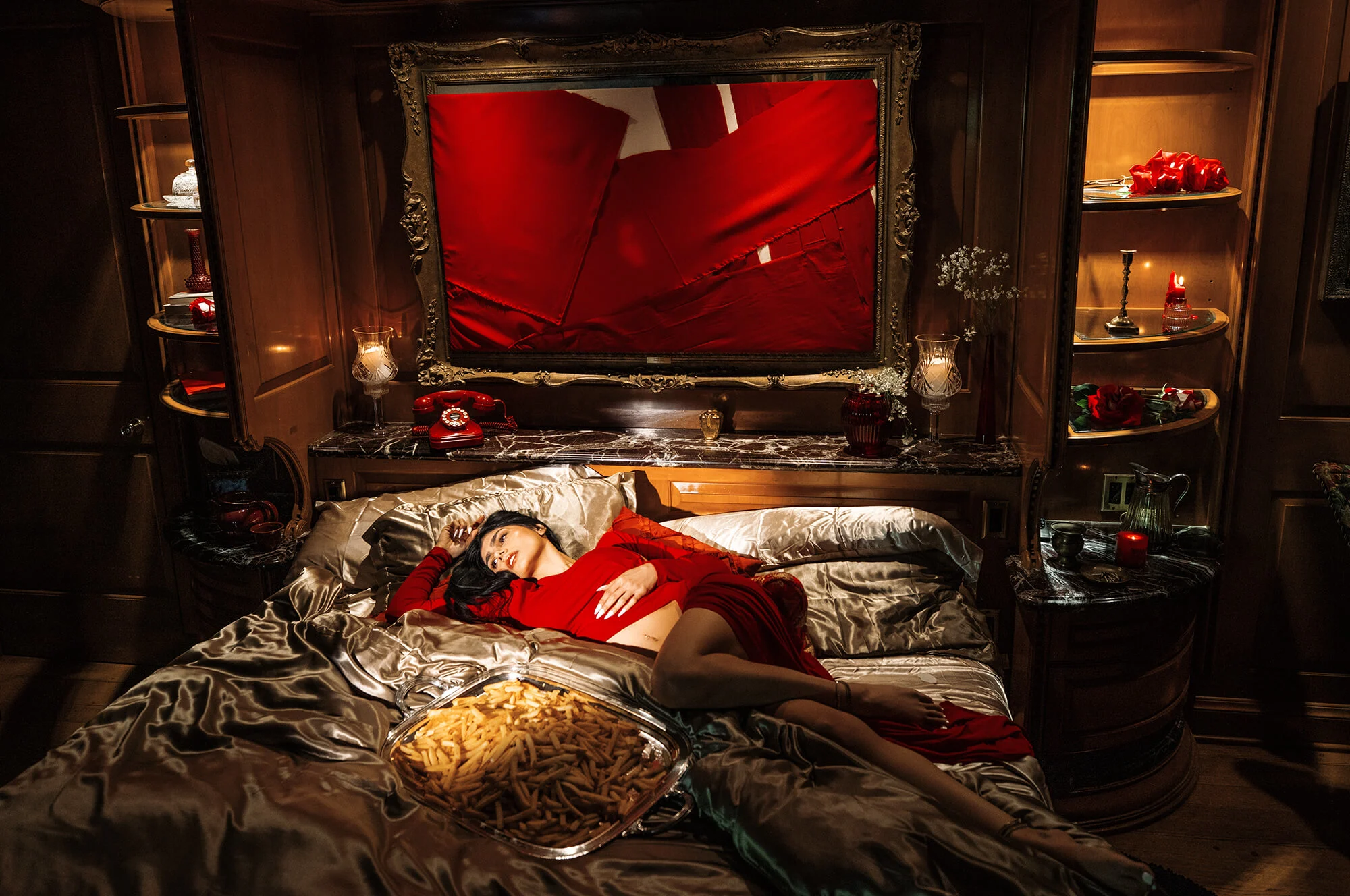
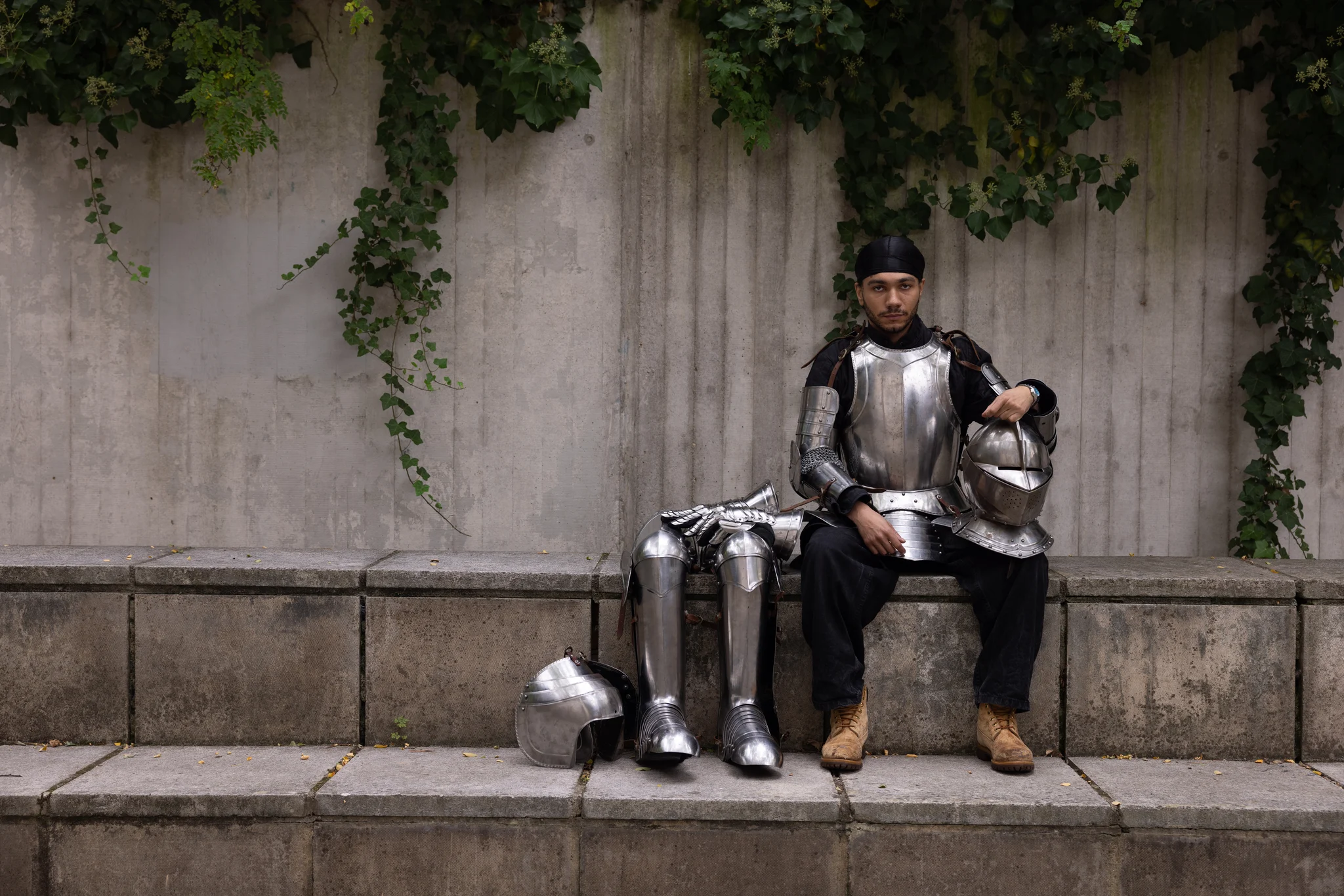
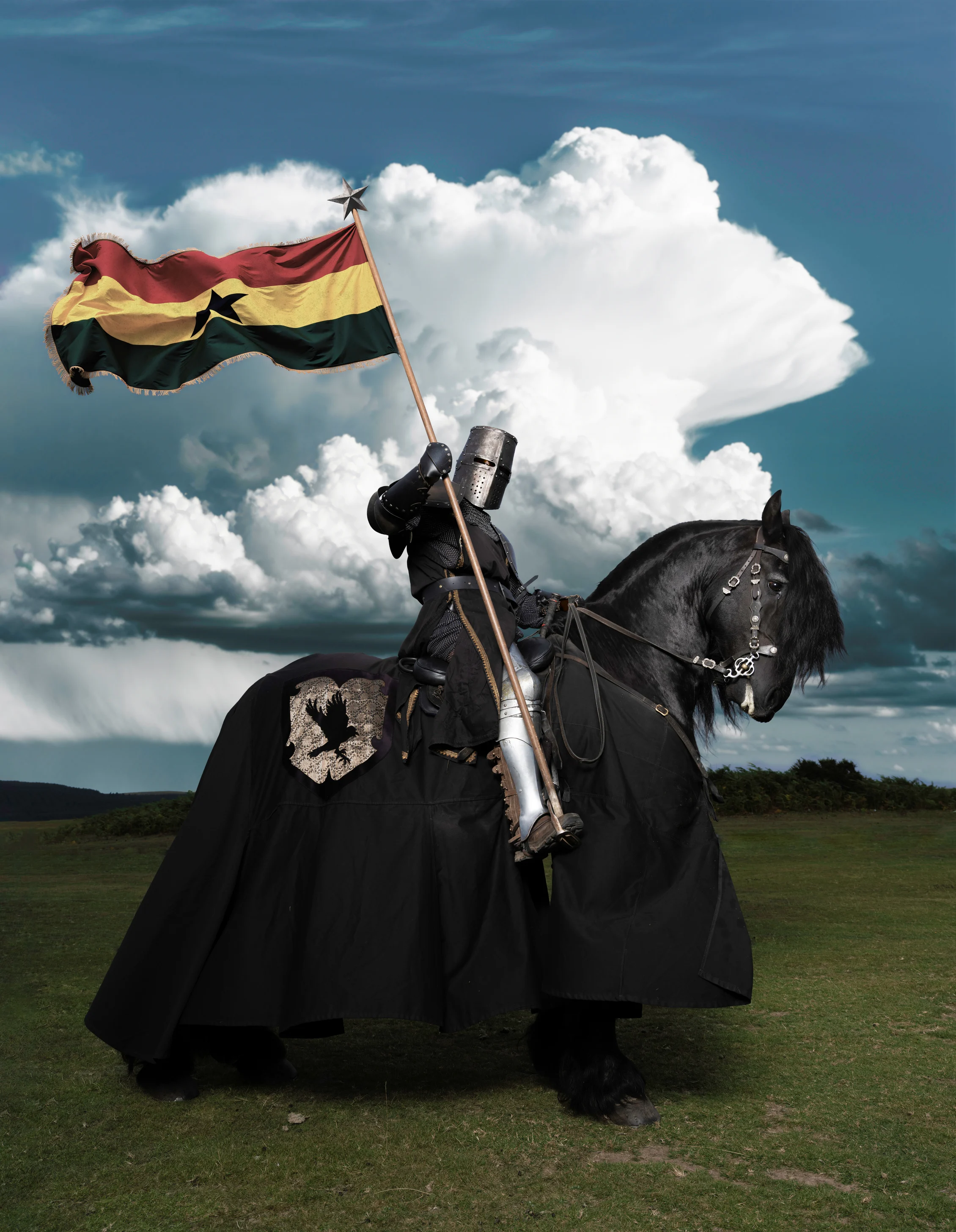
“To Be King” weaves together the perseverance of Black Brits and people of color in Britain through visual contrasts. A Ghanaian flag held aloft by a knighted Black figure on horseback places contemporary diasporic identity against antiquated perceptions of British dignity and nobility. Shot across Wales’ Hay-on-Wye, UAL, and Weil’s bedroom, the dynamic collection of photographs meld aesthetics, drawing inspiration from lived and collective experiences.
One set of photographs illuminate the humanity and vulnerability of the “knights” photographed, a tear illuminated beneath the armour. By allowing emotion to rupture the otherwise rigid iconography of knighthood, Weil lifts the veil for the spectator, exposing the cost of constant composure. “I just really want to show the toll wearing this armor takes all the time,” he says, the armor reflecting the thick skin required to deal with the complex experiences of being Black British. “I can have somebody say some of the most horrendous shit to my face and I’m going to take it on the chin because the last thing I want to be is the angry black man.” Visualizing that pain that comes from swallowing anger became central to the project. From an artistic canon perspective, it also references Alexander Kabell’s 1868 painting “The Fallen Angel.” “There’s just this anger, this emotional response that I love,” he adds.
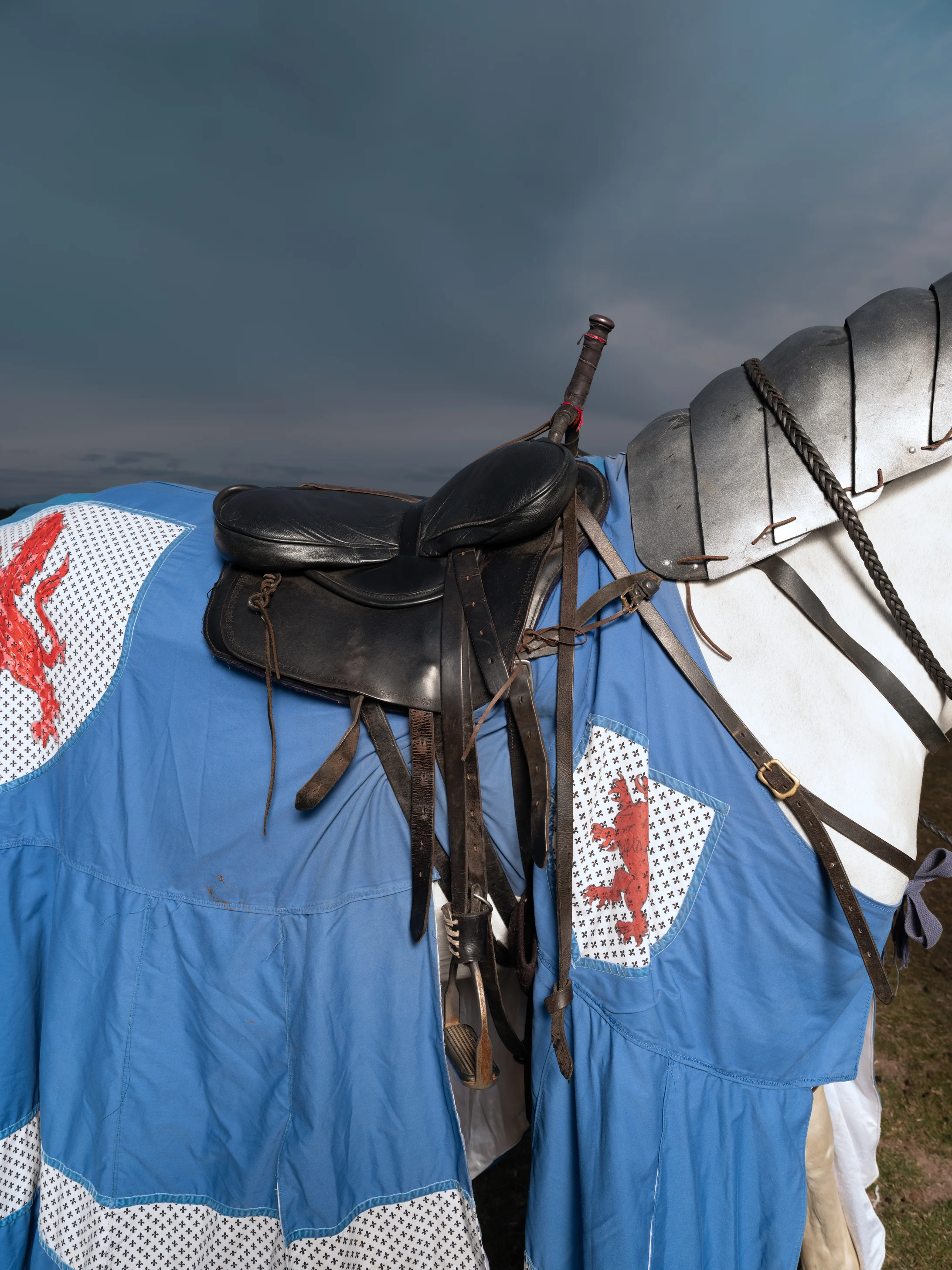
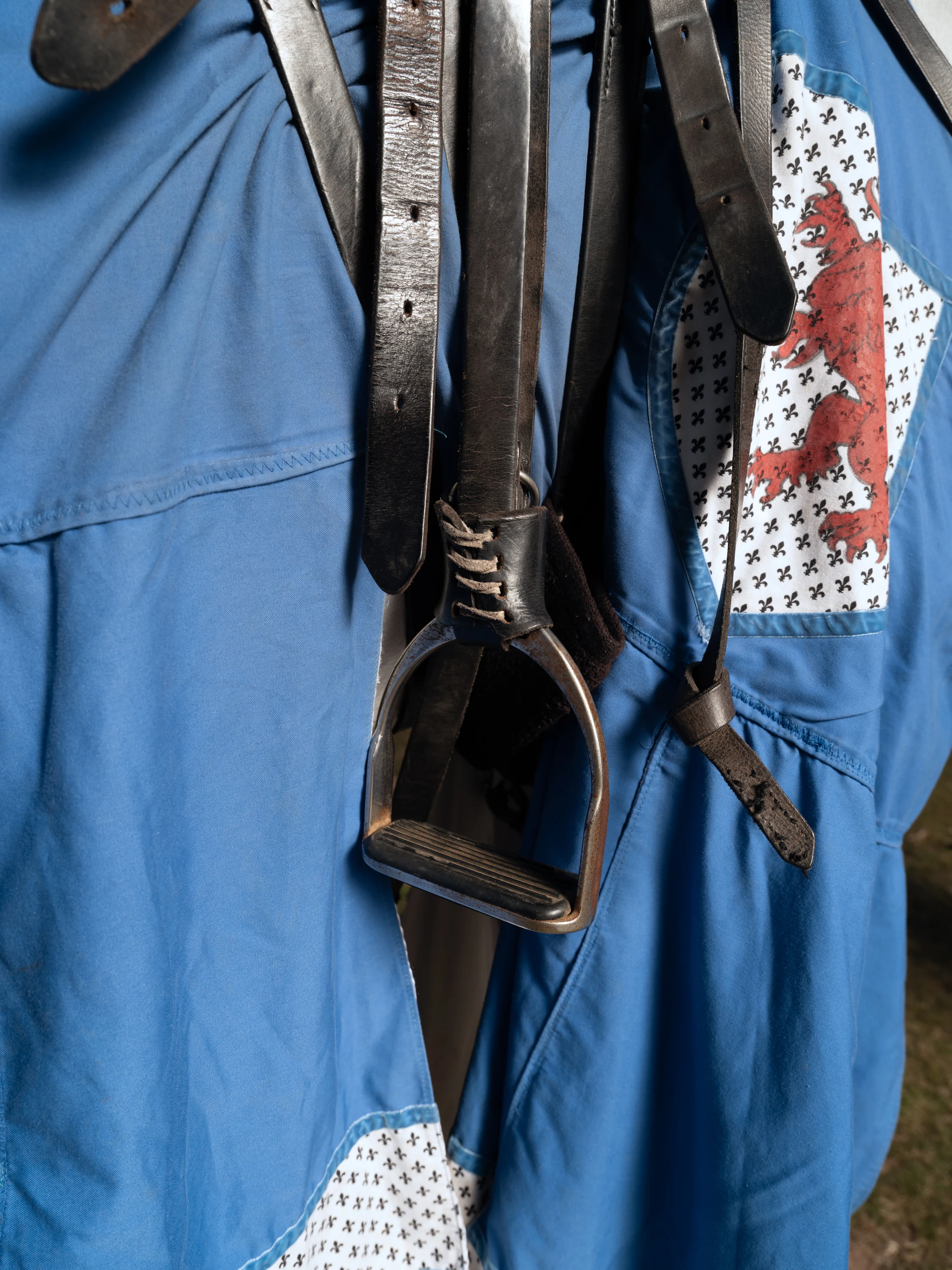
Weil printed and displayed the works in measurements of three by two meters, intentionally making the canvases bigger than a King Charles painting that sits at the National Portrait Gallery. “[The King Charles portrait] is under a very specific royal sizing as they have formal requirements,” he says. “I’m a sucker for referencing so I made my collection slightly bigger as a sort of ‘screw you.’”
There are so often conversations about what Black Britishness means, what it encapsulates and ultimately, what Black Brits have to endure. In Weil’s view, it’s multifaceted. “In some ways, it’s kind of about having to fight for your place in ways that on paper make no sense,” he says. But while building up your own personal armor light the knights in Weil’s work feels necessary, there’s also strength to be found in one another. “Being Black British is also a sense of community,” he says. “It's walking into a space, seeing someone else who looks like you, and knowing that if something happens, they'll have your back. It's knowing that that's your security.” In Weil’s project, that shared understanding becomes visible, through presence, scale and the insistence on being seen as worthy of reverence.