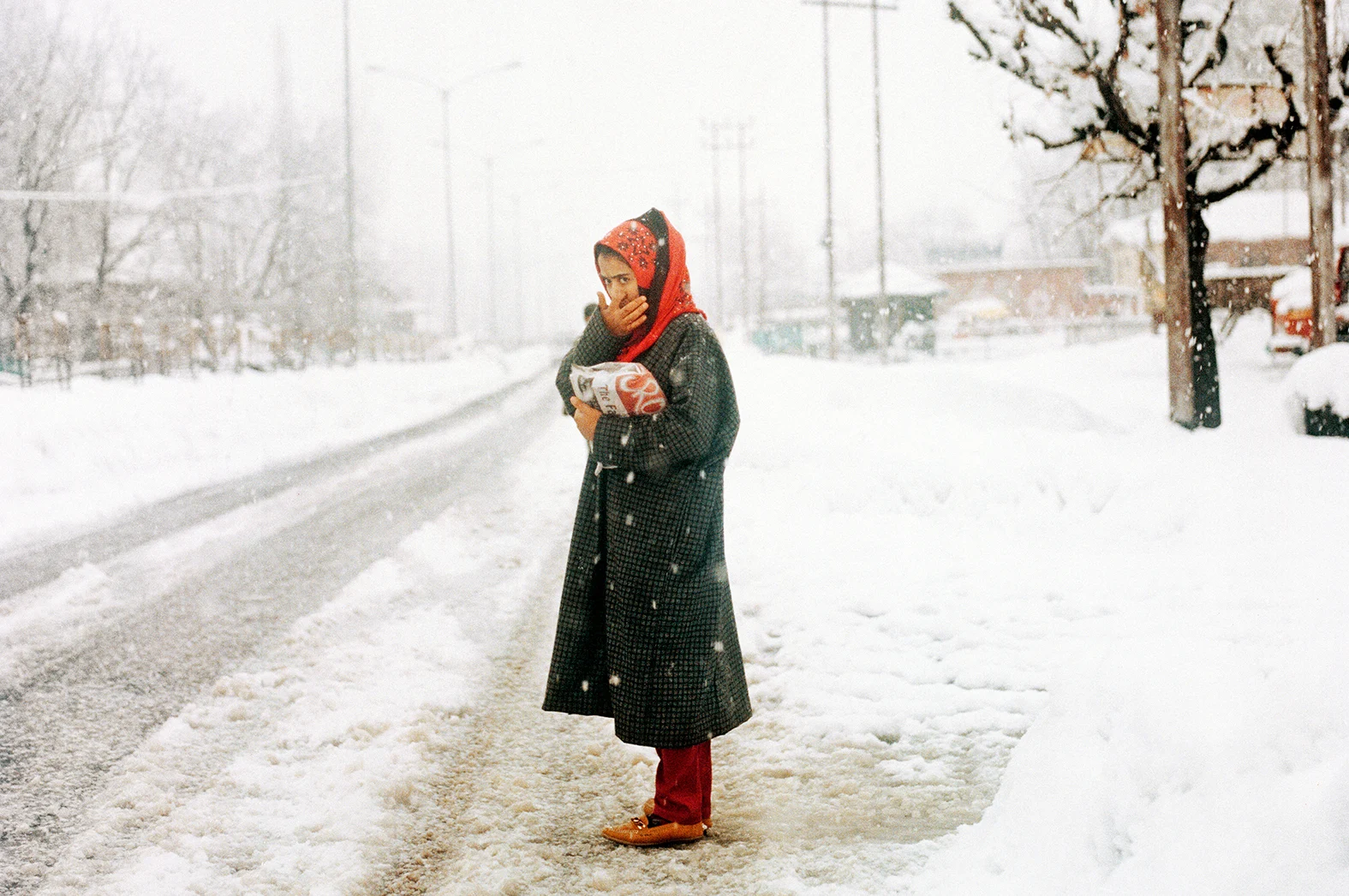
When Sohrab Hura first visited Kashmir in 2015, he saw the usual tourist spots of Gulmarg and Srinagar and was struck by its picturesque landscape. As he returned more often and spoke with the locals, he began to build a more honest picture of a place that has been one of the most militarized regions in the world for generations, with China, India and Pakistan all staking a claim to sections of it. Over four years, he took photos as he walked there, until he stopped visiting in 2019 in the wake of the revocation of Article 370—which resulted in India stripping the region of its semi-autonomous status—and the subsequent internet blackout that followed. His photos capture a moment in time when the region still had a semblance of constitutional autonomy. He speaks to Upasana Das about Kashmir as told by its people, and about how he captured the line between beauty and brutality, and between what is seen and what is not.
“Snow” (2026) by Sohrab Hura is published by MACK.
All images courtesy of the artist and MACK.
When fashion photographer Norman Parkinson flew to India to shoot the 1956 winter holiday spread for British Vogue, he captured model Anne Gunning reclining on a shikhara on the Dal Lake in Kashmir. It was almost a decade since Indian independence, after almost 200 years of British colonialism, and Parkinson painted a postcard of exotic serenity with misty mountains dim in the evening light, following in the footsteps of colonial officers who would escape to cooler Kashmir as a respite from Indian summers. This image of Kashmir would be further churned out by post-Independence Bollywood cinema—as artist Sohrab Hura recalled as we spoke about his new book “Snow”—with Shammi Kapoor’s frolicking in the snow in “Junglee” (1961) determining the holiday plans of a generation of Indians.
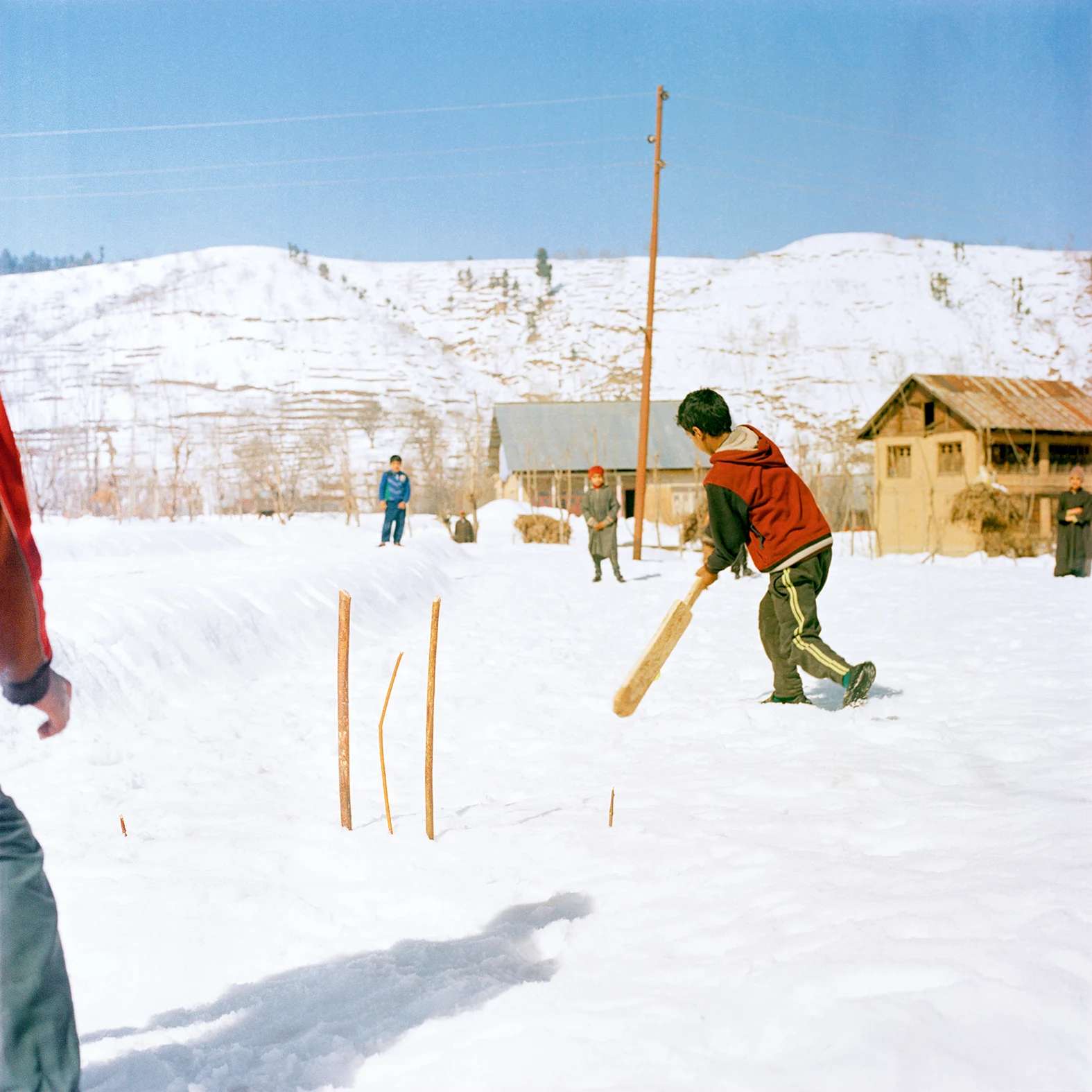
What these visualizations didn’t reveal was the Indian government’s agitation about Kashmir’s semi-autonomous status and how the state—now union territory—had become a site of power-play for India and its neighboring state Pakistan right after Independence in 1947, with the latter laying claim to a segment of the region in 1949, calling it Azad Kashmir. China, too, had staked its claim and taken control over a segment—now called Aksai-Chin—after the Sino-Indian War (1962). With such skirmishes being played out on Kashmiri soil and India making Kashmir one of the most militarized regions in the world, many Kashmiris wanted their land devoid of Indian control. Not only did they not get that, but in 2019, their constitutionally-granted semi-autonomous status was revoked by the Indian government, with the region facing internet shutdowns and missile exchanges.
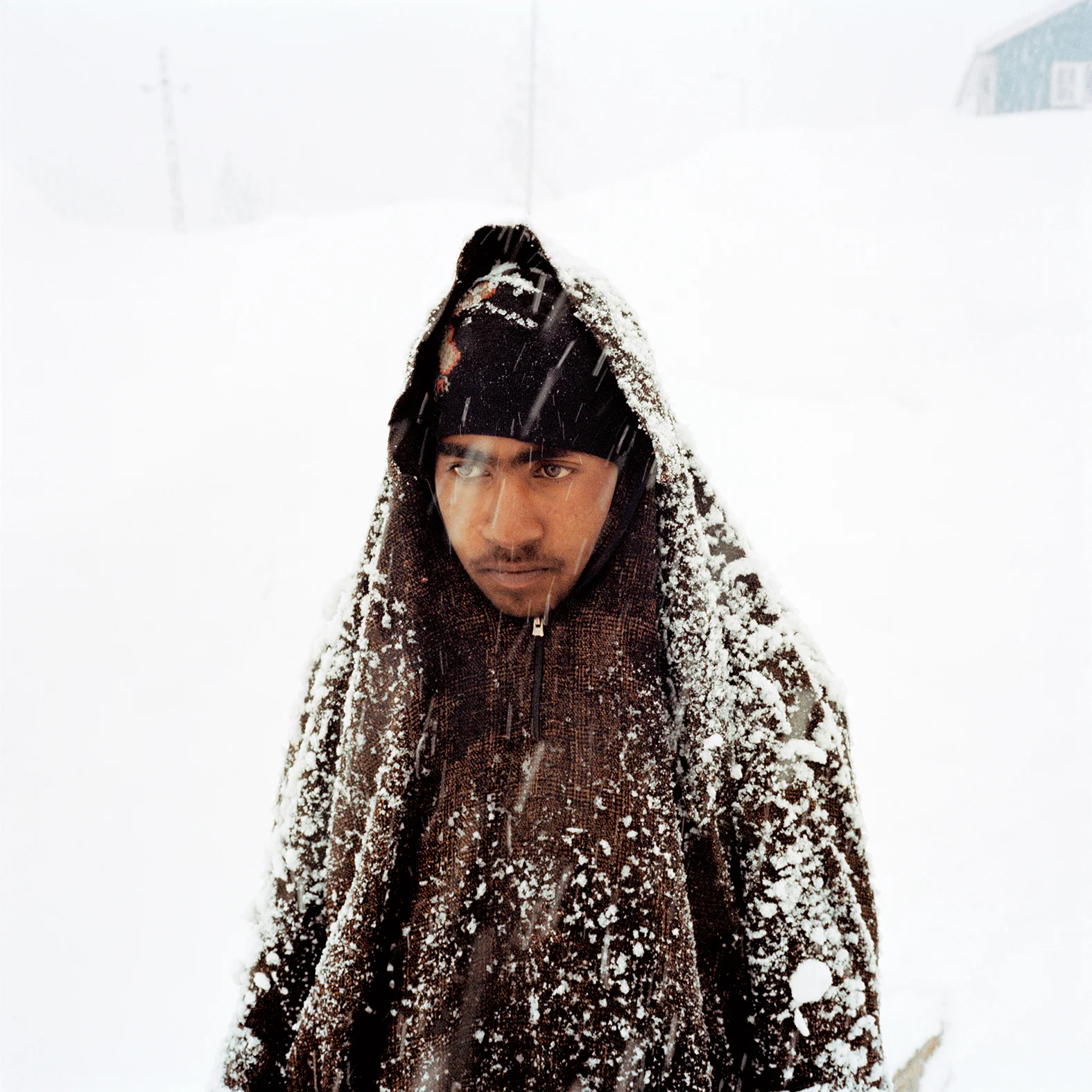
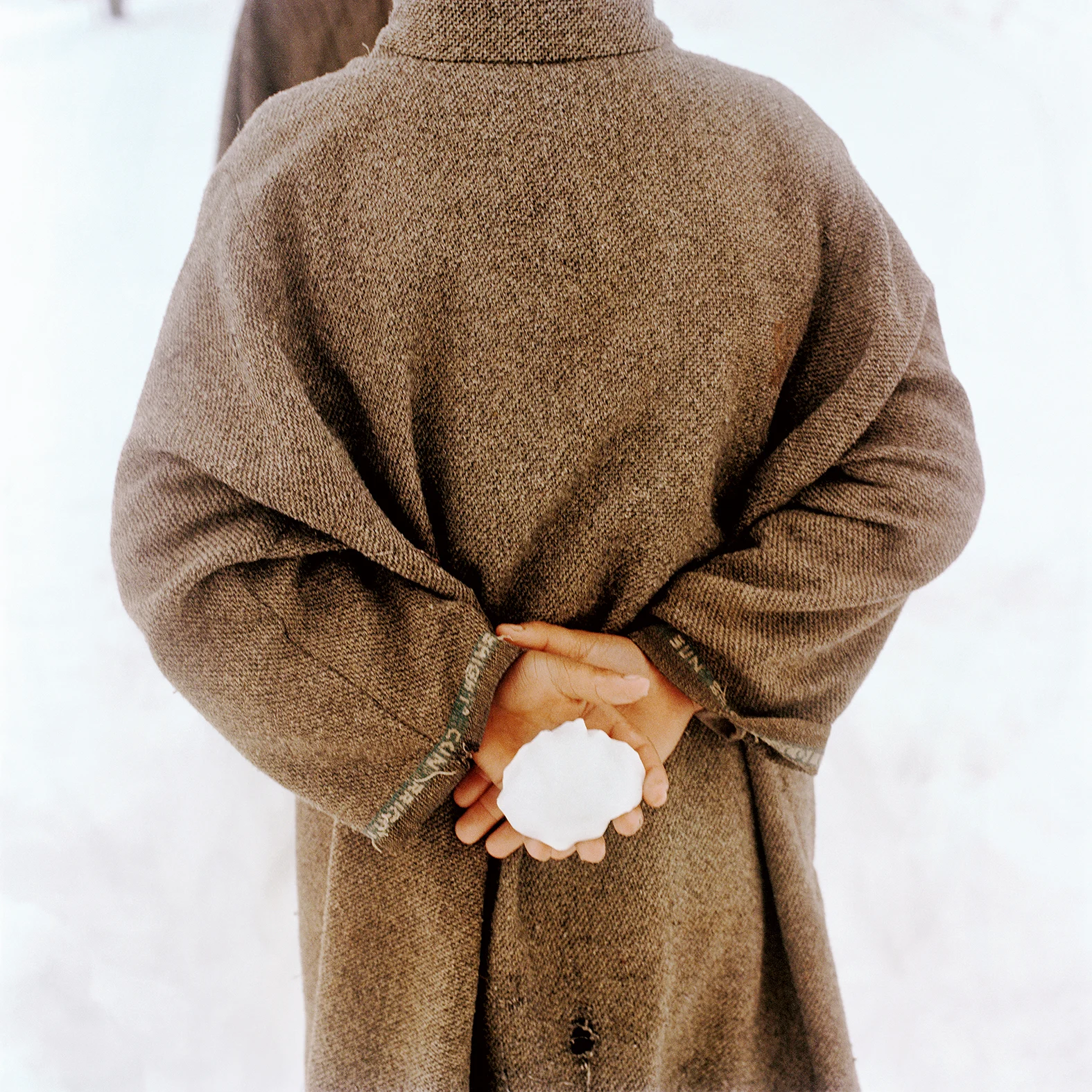
It was a few years before that moment that Hura found himself in Kashmir for a friend’s wedding in 2015. He was questioning photojournalism at the time, and didn’t want any of the photographs he might take in Kashmir to be about a “project” or a certain “practice,” but rather simply to “see.” “At first, you’re obviously taken in by the picturesque landscape, but at some point, it wears off,” he says. He continued to return, often staying with friends. “One of them, Sajad, would casually tell me how in his childhood the rivers would be full of blood, of martyrs,” he says. In one photo, an orange blanket covers his friend as he prepares Hura’s bed beside him. “While doing that my friend said how the first thing the army checked was for any extra bedding to figure out if the house had someone unaccounted for.”
“There were so many people who disappeared… I hear people lamenting over how a certain Kashmir is gone from them.”
Conversations like these revealed the truth behind the fantasy. Photos in the beginning of the book are shadowy silhouettes hidden in the thick mist of the valley, much like Kashmir itself, which seemed to be shrouded in an illusion. “The snow enveloping Kashmir felt like a masquerade,” Hura says. He kept visiting the region for four years, taking photos as he walked. “It made the locals curious that I had chosen to walk,” he says. “They would invite me in for tea and show me their family albums. There was always a separation of identity as they would say, ‘you are Indian, I am Kashmiri.’ It was the first time I felt it was important to embrace that identity attached to the nation, to locate myself as an outsider.” It was something he felt acutely every time he took a shared jeep and the Indian army stopped them at checkpoints, checking the Kashmiris while he was told to step aside.
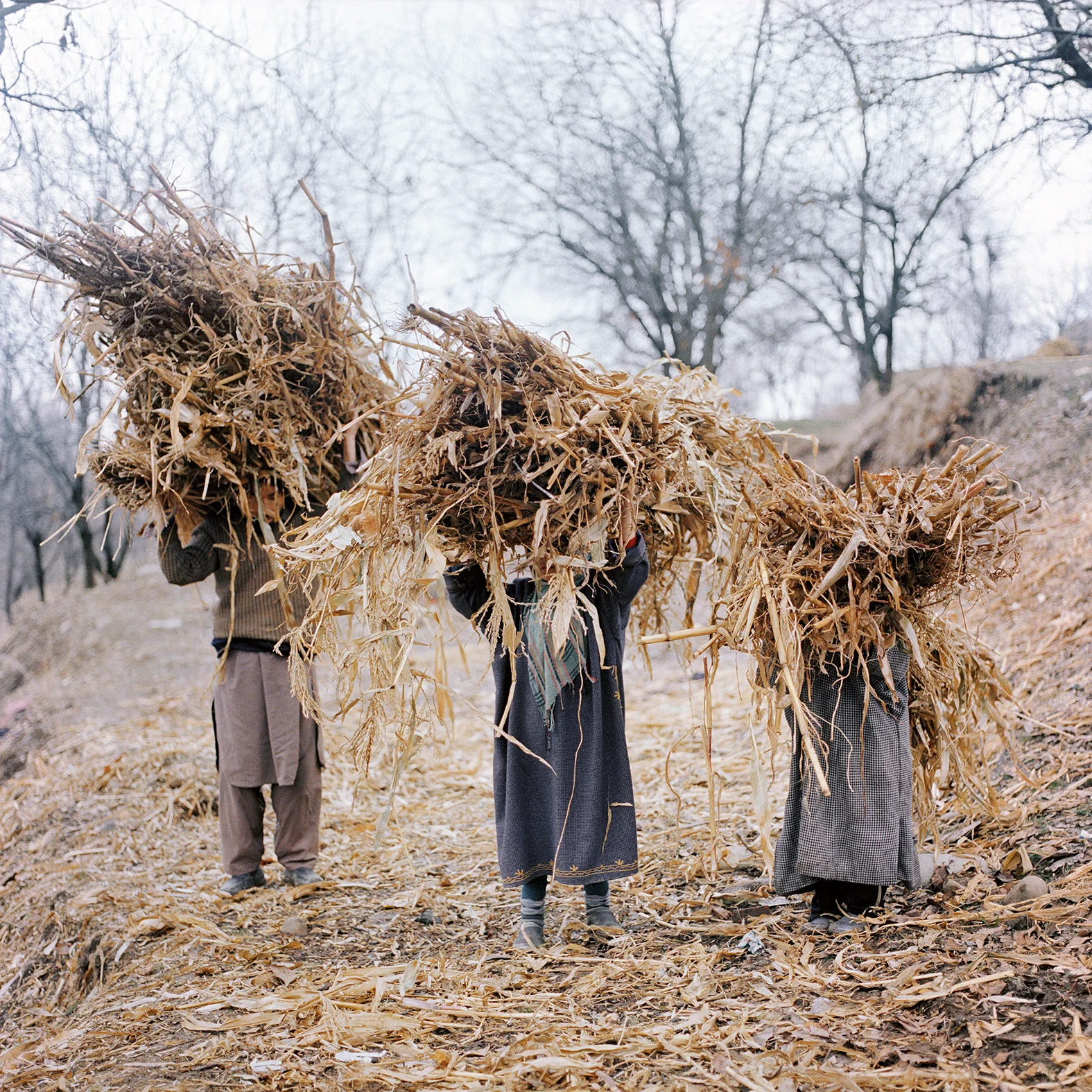
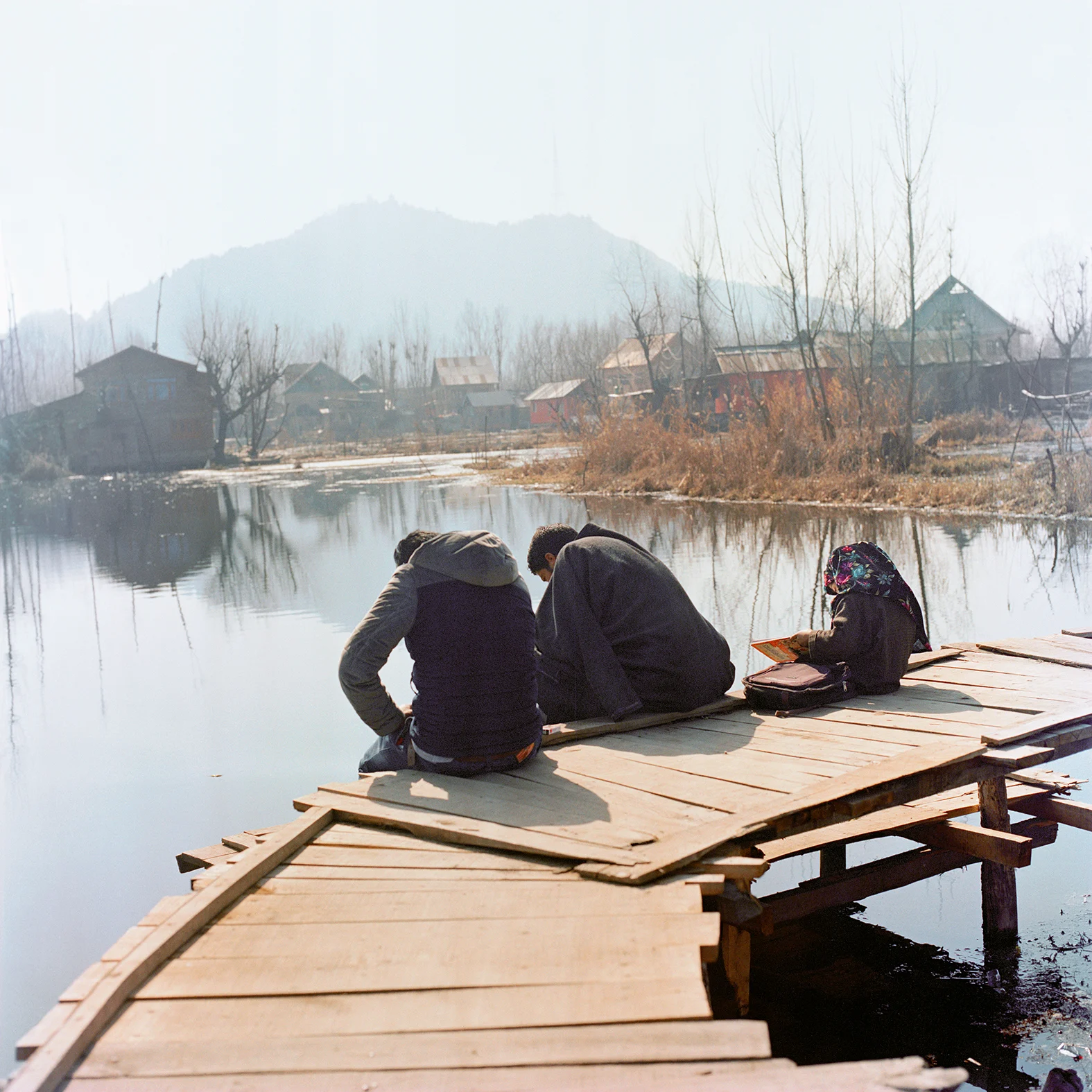
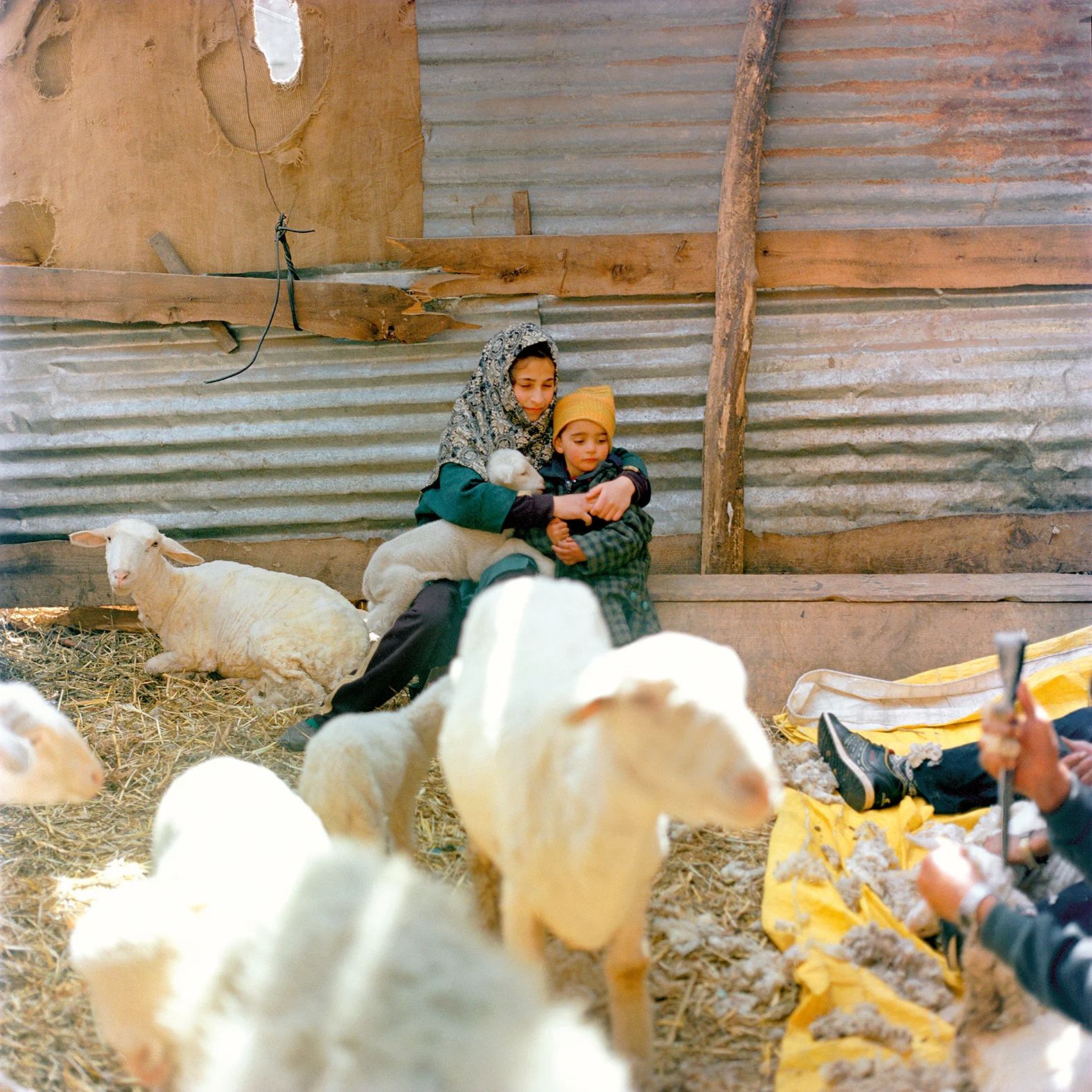
Kashmir has not had many instances of peace since independence, but Hura does capture rare moments of quiet in the valley. An aspect of touch returns throughout the book as an old man carries a curious young boy over his shoulder, or a mother embraces her son in the middle of a yard full of sheep. White almond trees bloom as an old dog rests in the shade of midday. However, undeniably there is violence. “In the everyday,” Hura says, as we looked at a photograph of women forming a picket line as they held hands and protested in Srinagar city. A blood-stained river gurgles, pointing to an undetermined act of political violence. An animal sacrifice which stains the terrain red. “I remember the curator Sabih Ahmed once told me,” Hura says, “how protests are often accompanied by images of burning buses or tyres. I wasn’t thinking of such associations consciously when I was taking these photographs.”
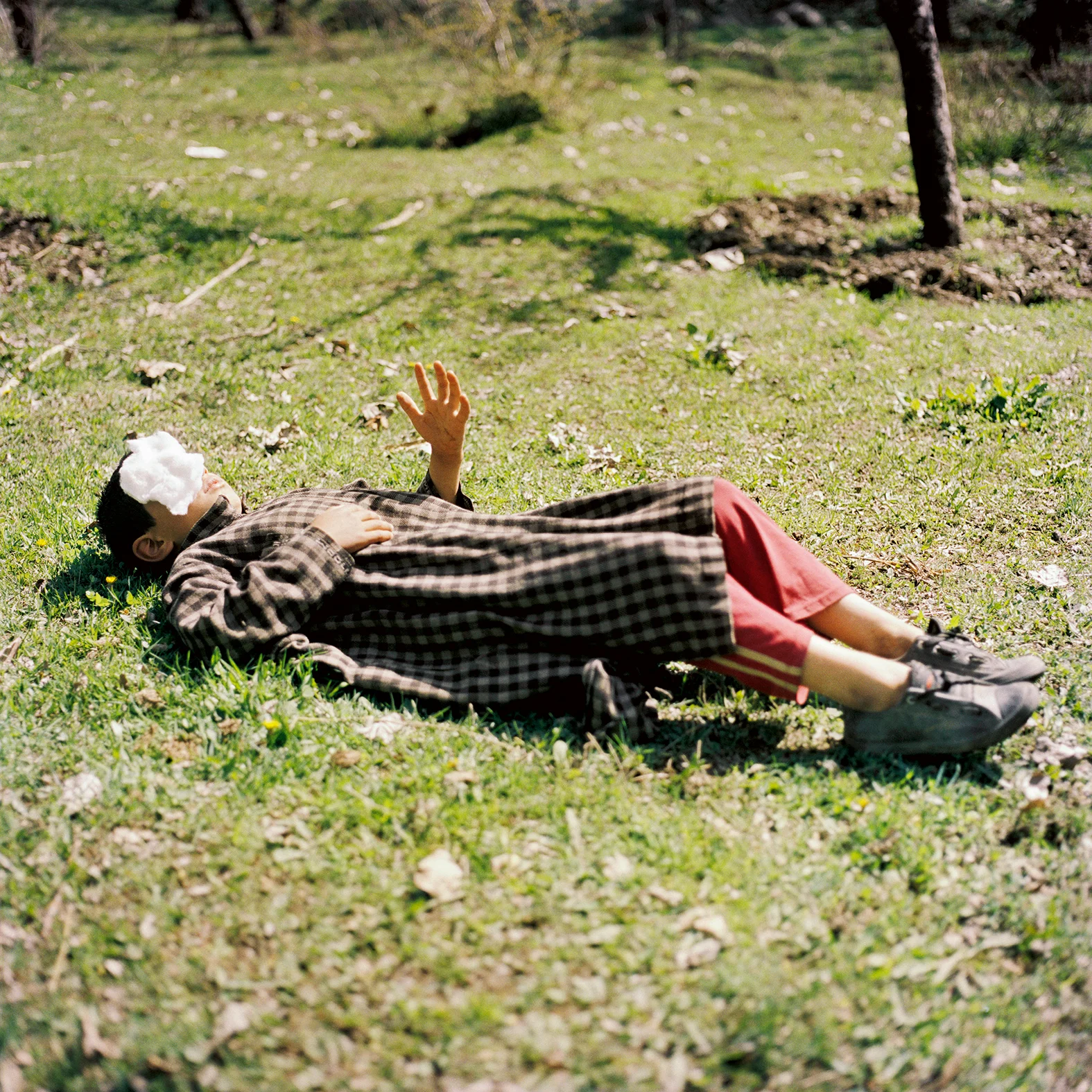
Hura frequently resorts to the intimacies of portraiture and the gestural to insinuate the bodily and the physical—a child covering his eye with one hand, for example, to refer to young children being blinded by pellet guns shot by the army. “I stumbled upon a protest in Srinagar during my walks and the police had arrived,” he says. “Some kids caught hold of me. ‘Get your camera ready,’ they said, ‘because now you’re going to get epic photos.’ Every time a cop would raise his stick, the kids would shout, ‘Epic Photo!’ It was a decisive moment for documentary photographers and the kids knew that.” It was like they knew what exact moment would be printed in the papers and were self-directing, which Hura was fascinated by.
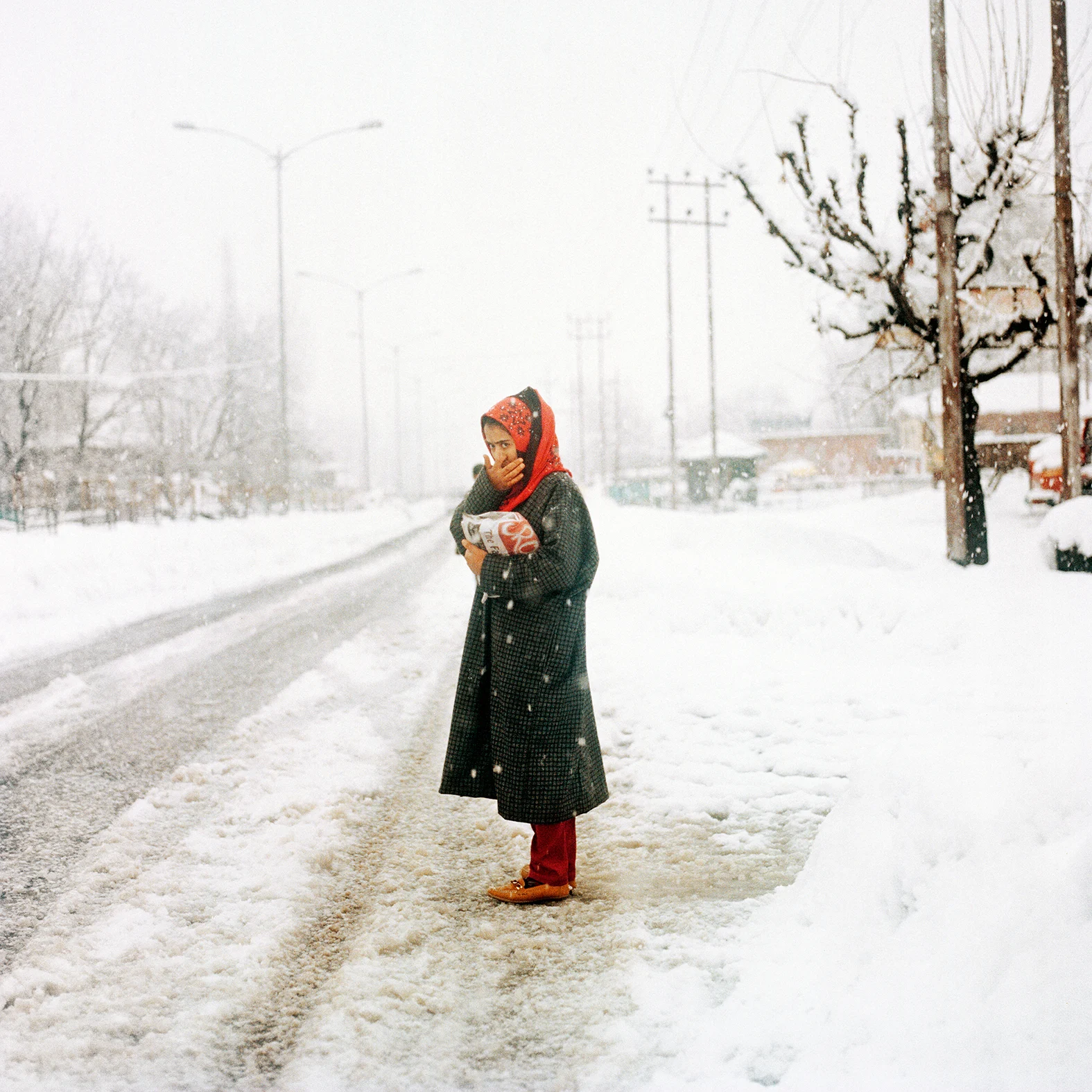
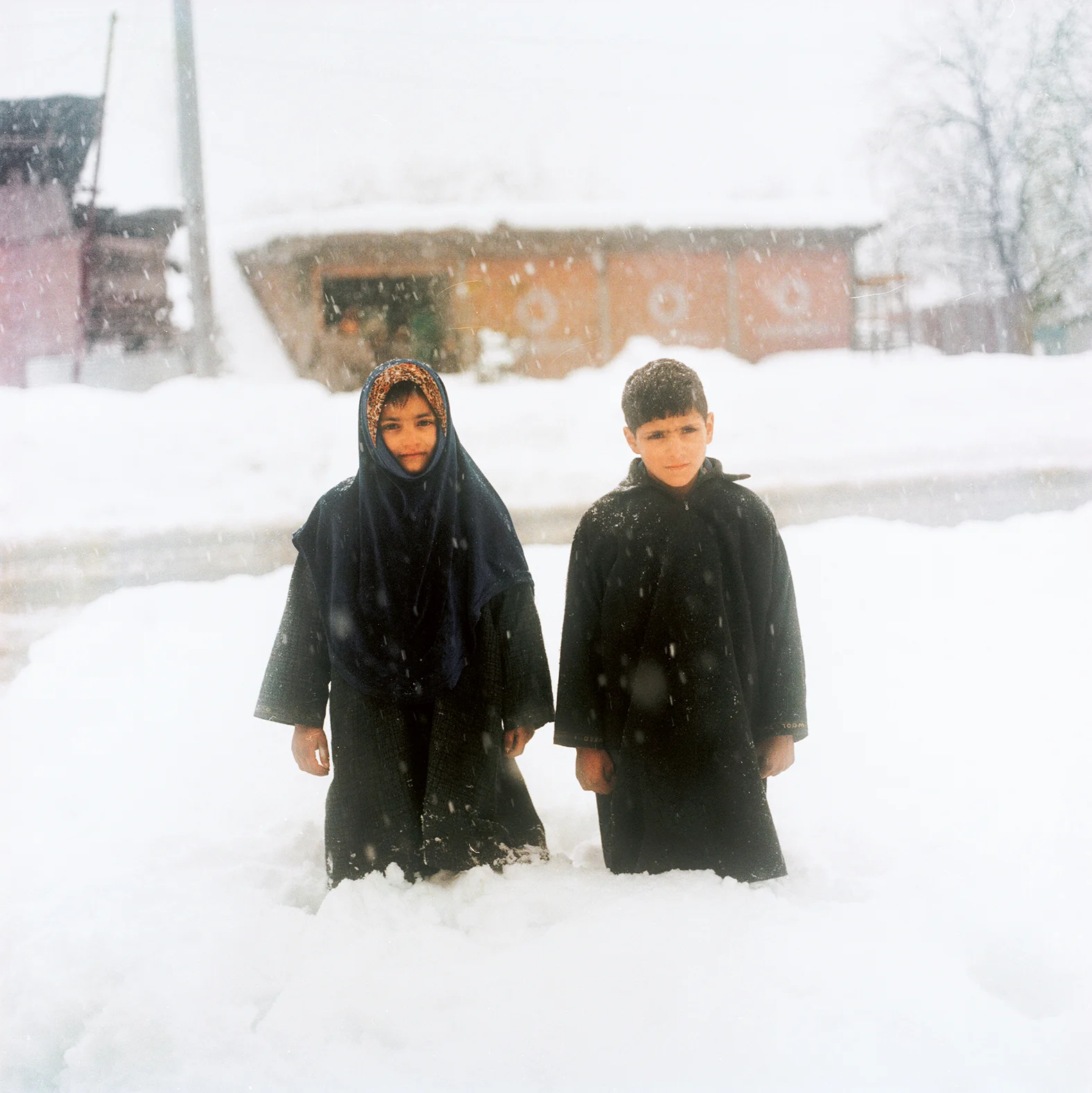
Hura was in Kashmir during the Pulwama attack in 2019, after which the government took away Kashmir’s special status, enforcing a lockdown and increasing surveillance. “There were so many people who disappeared or who have gone quiet,” he says. “I hear people lamenting over how a certain Kashmir is gone from them. The whole place is different.” He didn’t feel like going back after that, nor like looking at the archive of images for a while.
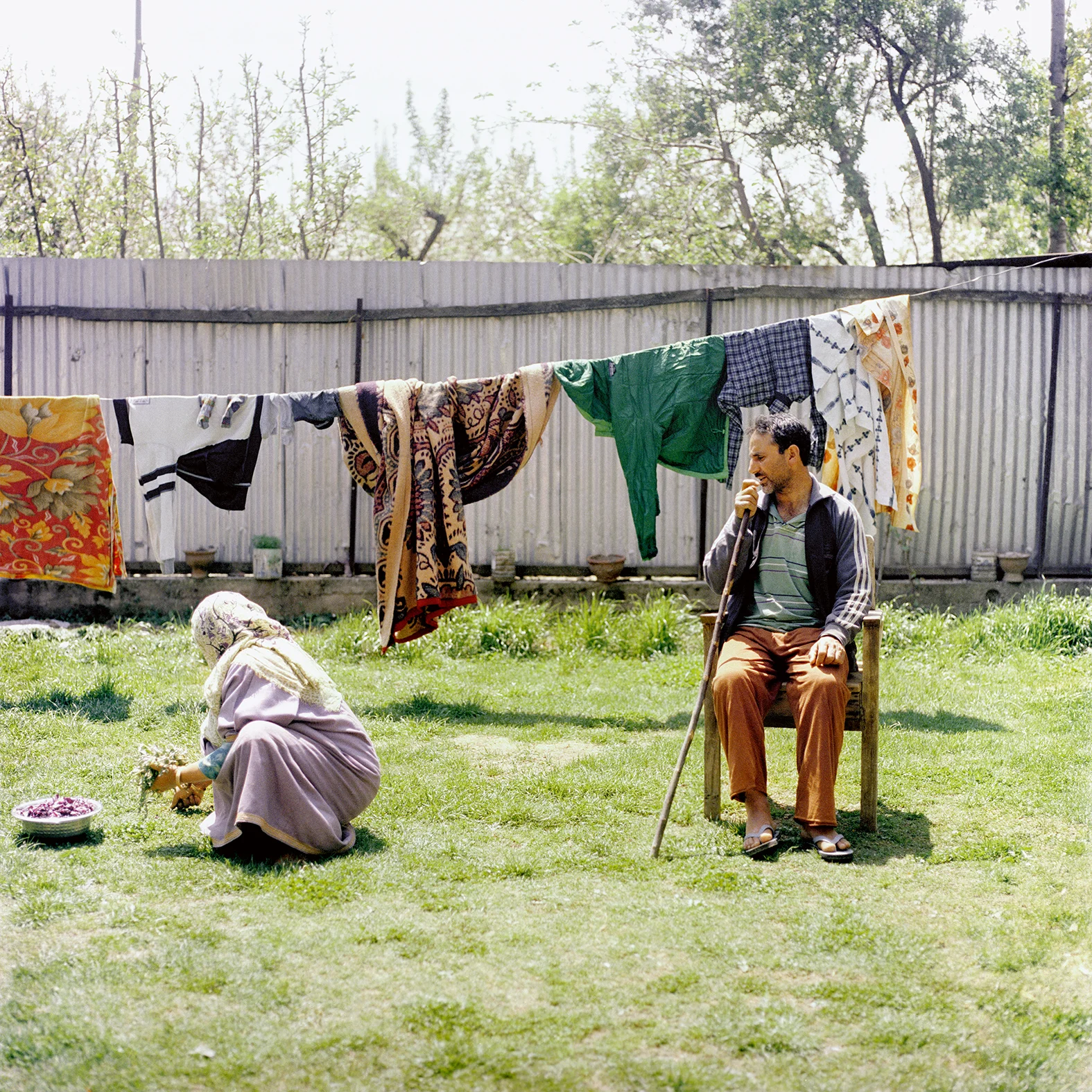
How does one interpret those images from a time when Kashmir still had a semblance of constitutional autonomy, today? Hura doesn’t offer a direct answer to this but insinuates the present through his photographs—particularly those of absences, like empty chairs out in the cold or untouched tea. Unfinished food left out in the open, insinuating broken conversations and halted friendships. Above it all a group of ravens and sparrows—even a furry mountain dog—seem to stand witness, listening. “They are the empathy which still remains among Kashmiri people,” Hura says, as he mentions the videos of soldiers killing animals for sport in other military zones around the world. “For me, as long as animals are there in a photograph, I have hope in what I’m photographing.”