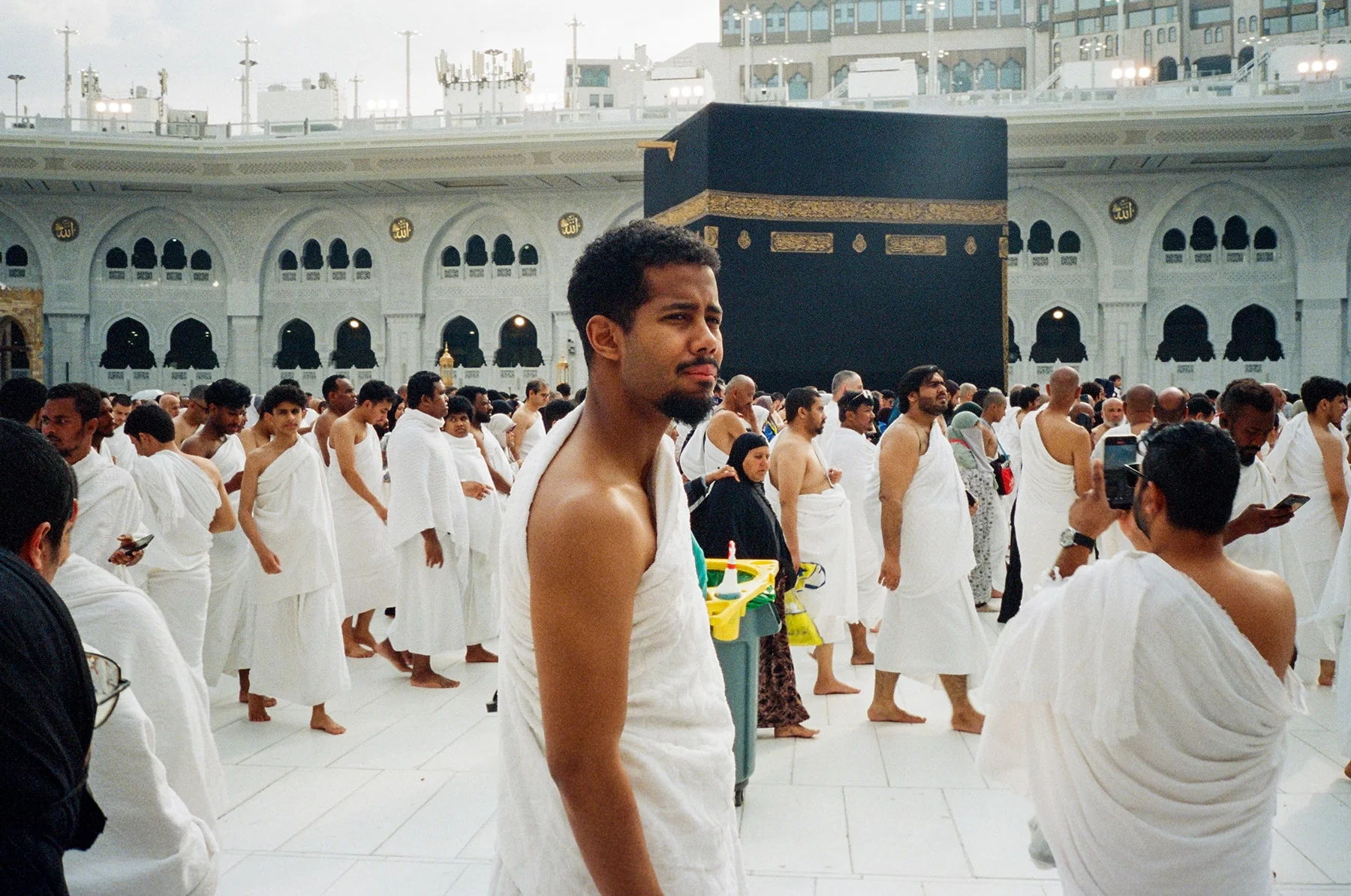

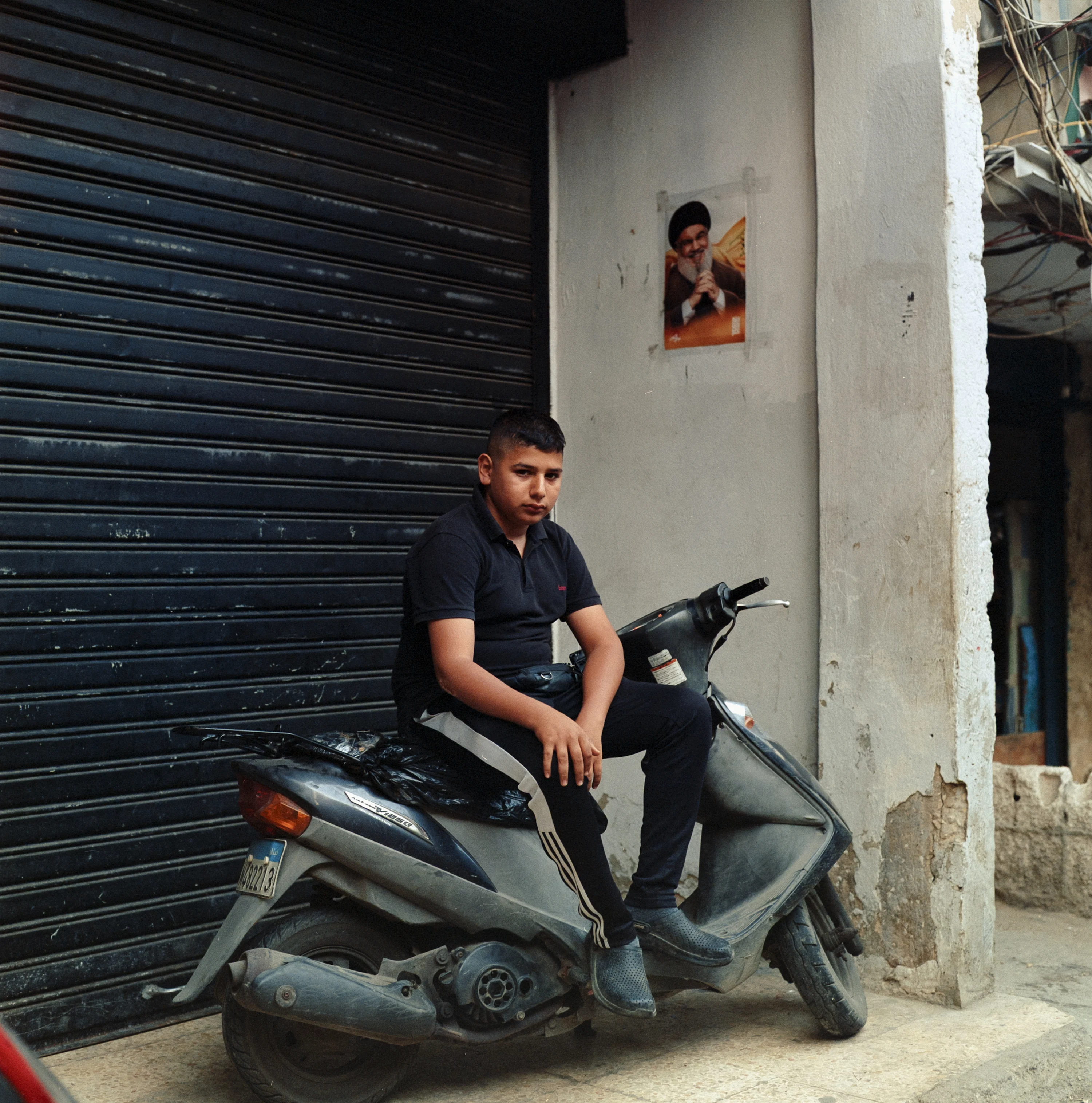
How does one recount a city that, like Beirut, is yet to be granted the right to stand still? And what happens when a conflict takes root in an archaeology of earlier ruins? Developed on the ground, between April and May 2026, Italian photographer Savino Carbone’s new series surveys the city’s history of destruction, rebirth and transformation, and examines how war and displacement continue to shape life there. Carbone tells Gilda Bruno what a dove, a map and a girl’s gaze can show us about a place condemned to survive yet determined to keep reinventing itself.
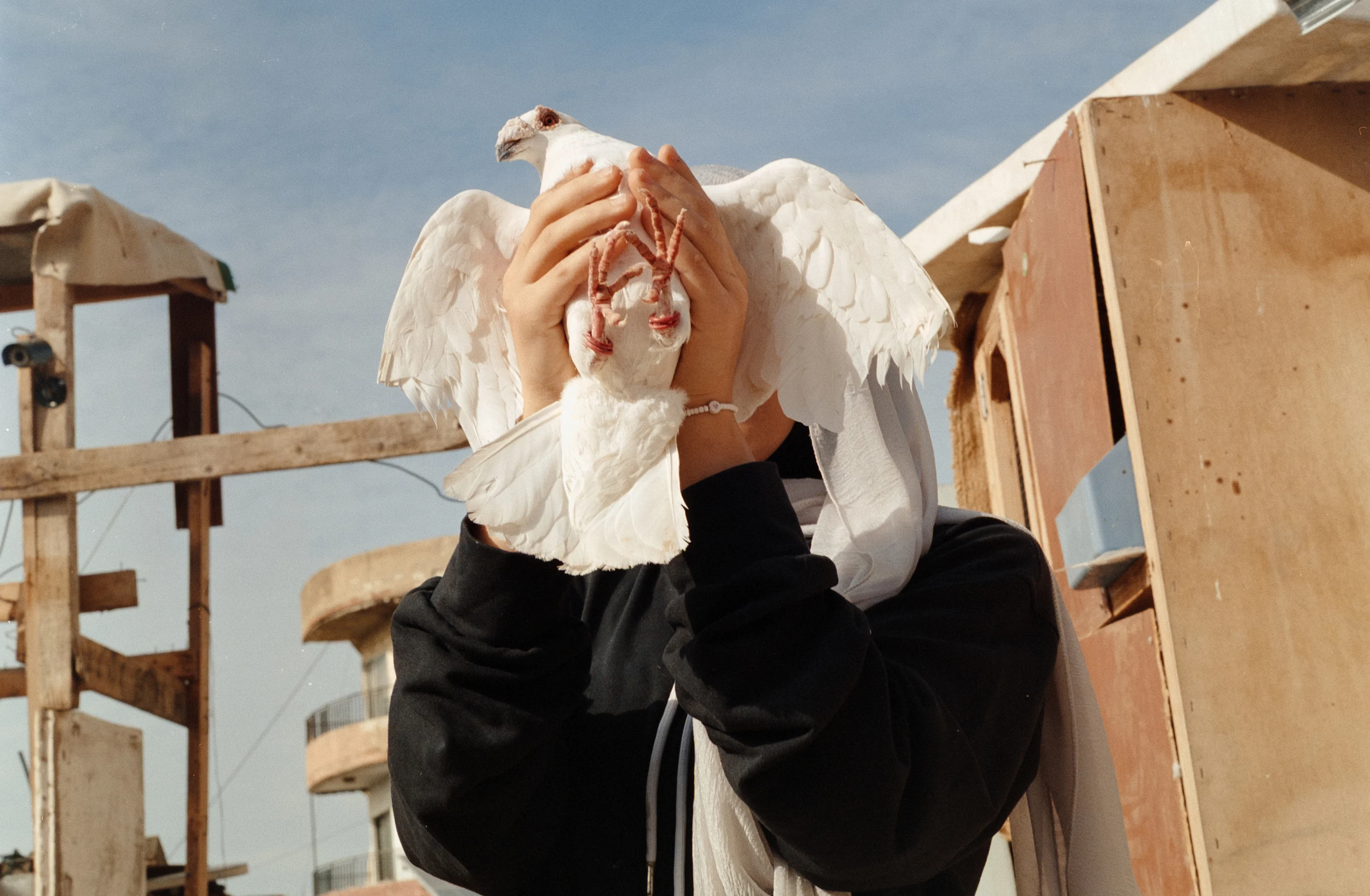
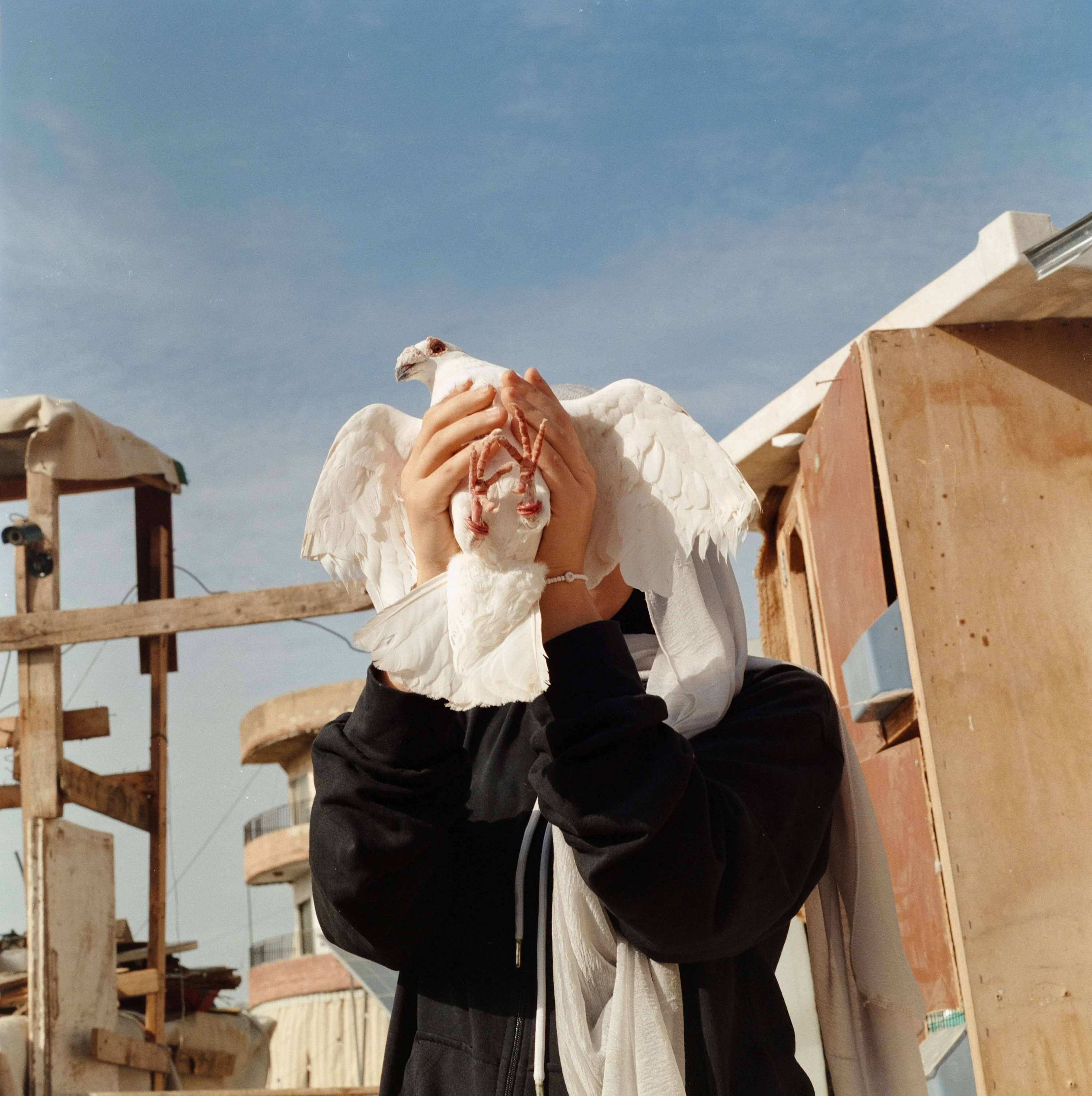
The sky over Beirut is milky. Only a thin veil of clouds undulates across it, sketching imaginary geographies over the pale surface. Below, a cacophony of rickety wood and cement structures bathes in a muted golden hour. Nadya* raises her hands to that same shy sky, her face disappearing behind the wings of the dove she holds spread wide, like a priest with his chalice. Aside from a black sweatshirt and a silky gray hijab, we know nothing of her. Nor do we know whether she will set the bird free. Maybe that is precisely the point.
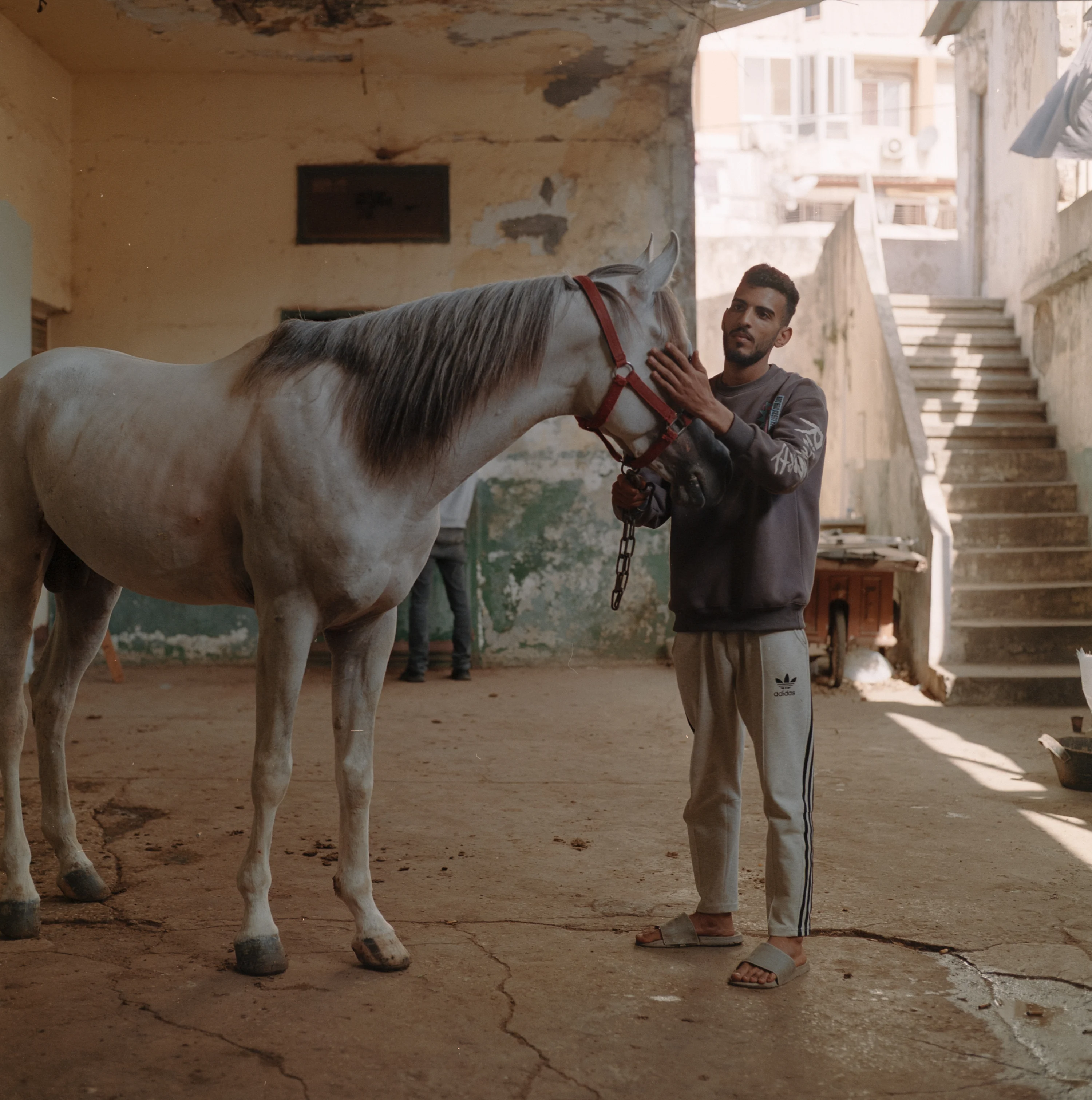
It is photographer Savino Carbone’s favorite shot from his project “And still you remain a language that refuses to die,” set on a rooftop in Shatila, the Palestinian refugee camp in southern Beirut where two worlds meet. At street level, the camp stands on the square kilometer where the first tent settlement rose in 1949, in the wake of the Nakba—the 1948 displacement of around 700,000 Palestinians. The space hasn’t grown, but the volumes have, “without any urban planning,” until “the sun doesn’t reach the streets.” Above, the dove and the sky hold the promise of flight, though a small surveillance camera watches from the left edge and drones circle all day. “It’s in this sense that Beirut becomes a city, finding space for life even in this camp,” the photographer says, wary of “consoling resilience.”
Providing a definitive portrayal of Beirut was never Carbone’s intention. When the photographer and filmmaker began to research for this new series, he knew that the city’s 5,000-plus-year history could not be reduced to a set of images. Hailing from Bari, southern Italy, Carbone is an outsider eye on the “Pearl of the Middle East,” so to be able to move intuitively across the city’s landscape, he leaned into the familiar “resonance” that ties his practice together: “gestures, ways of living or situations that ‘bring me back home,’ despite the geographical and cultural distance.”
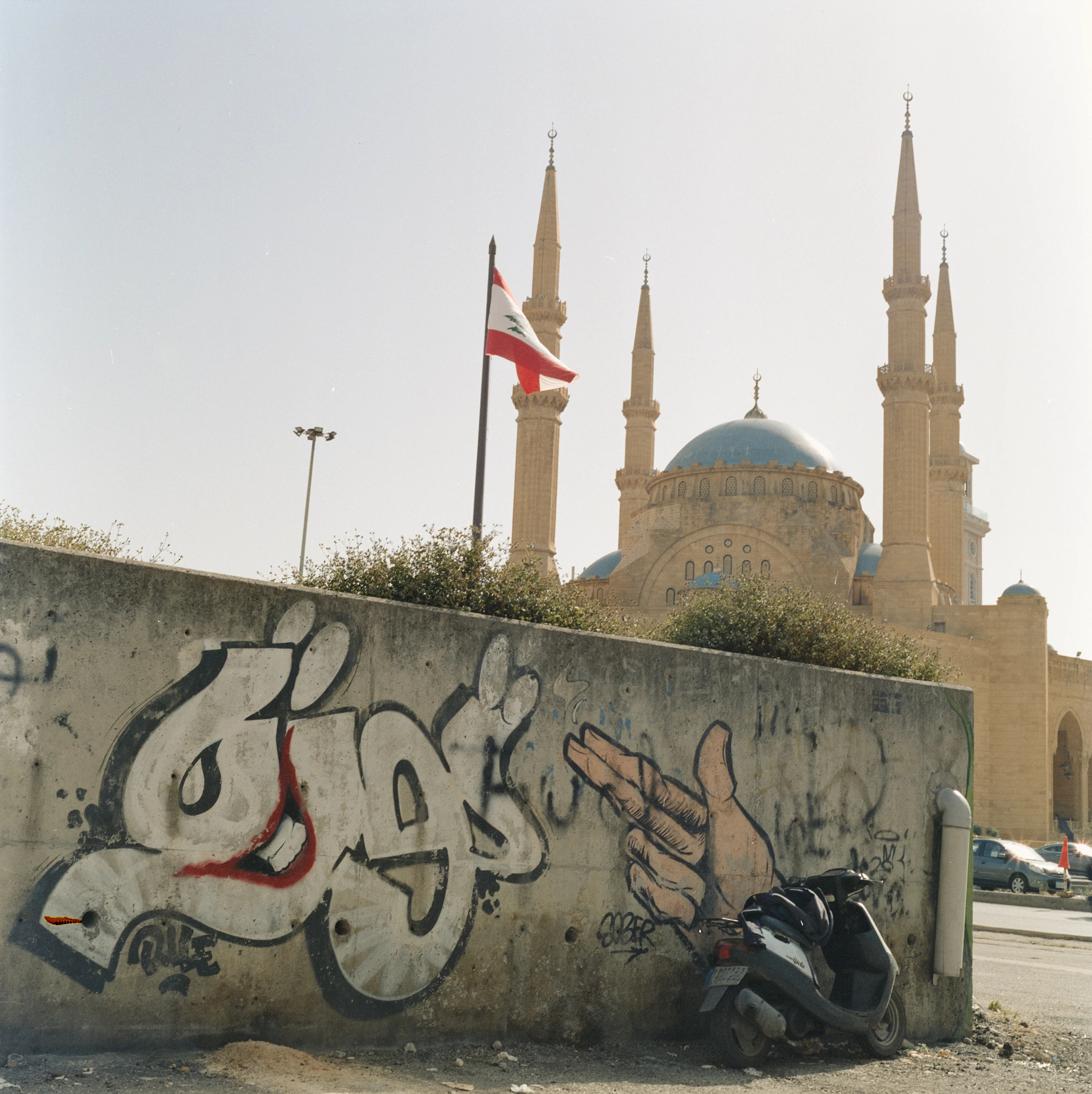
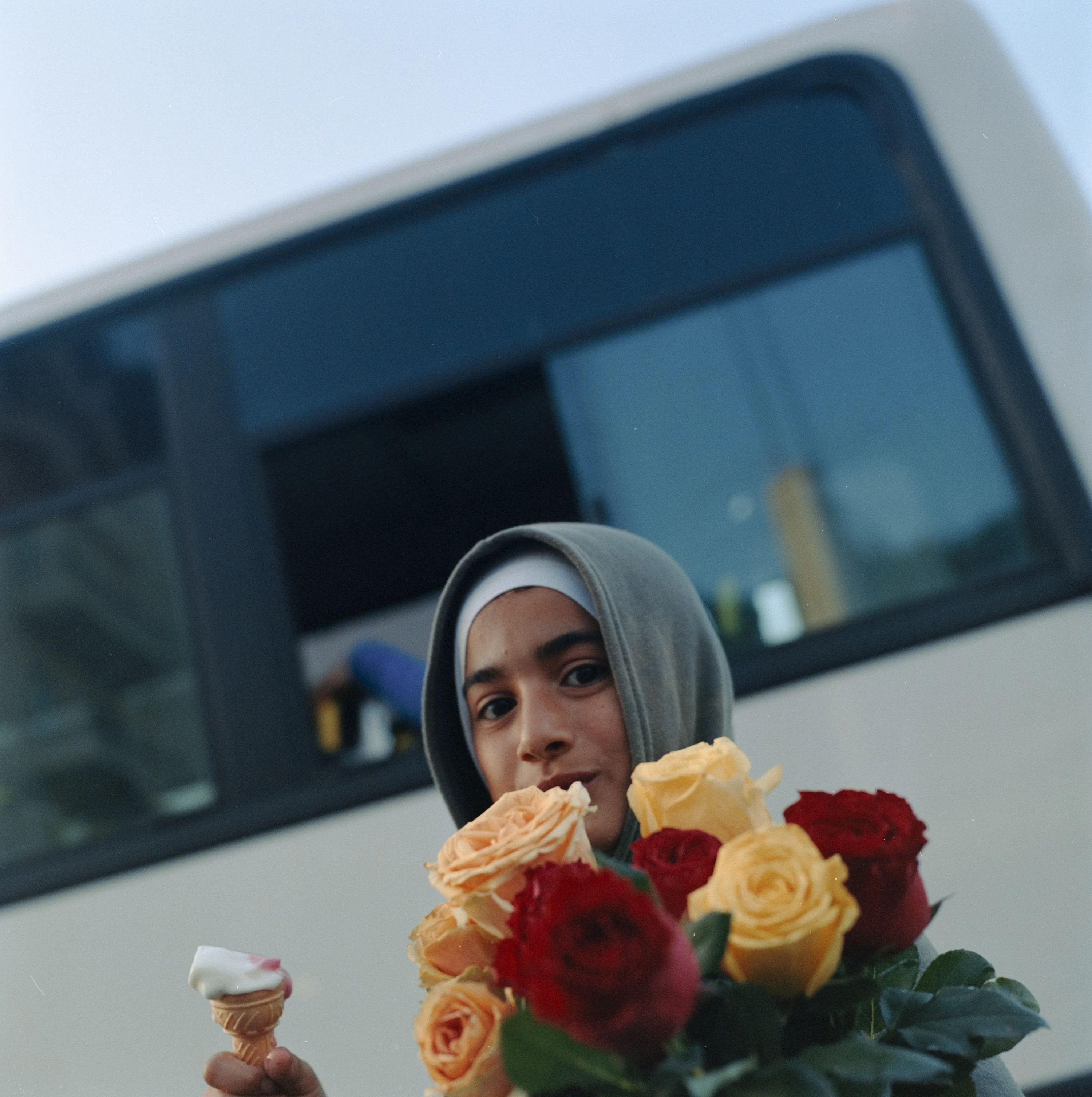
Italian literature also offered a way in. “Italo Calvino’s Tecla, the scaffolding-concealed, forever-under-construction fictional city of his 1972 postmodern novel ‘Invisible Cities,’ is a setting that fits Beirut quite felicitously,” Carbone says. The reconstruction of war-torn downtown Beirut, led by then Prime Minister Rafik Hariri and entrusted to the private company Solidere in 1994, holds lessons for the whole Mediterranean. “They erased historic Beirut to create a city center where gathering places are leveled out to make room for luxury malls, restaurants and the like,” Carbone explains. “It’s part of a wider phenomenon unfolding across the world, even in my own region, Puglia. Beirut’s rebuilding became a testing ground for it, replacing collective spaces and social life with commercial developments designed around consumerism.” Amid recurrent geopolitical and economic crises, the redevelopment is far from complete, but it has already rewritten how citizens engage with their streets.
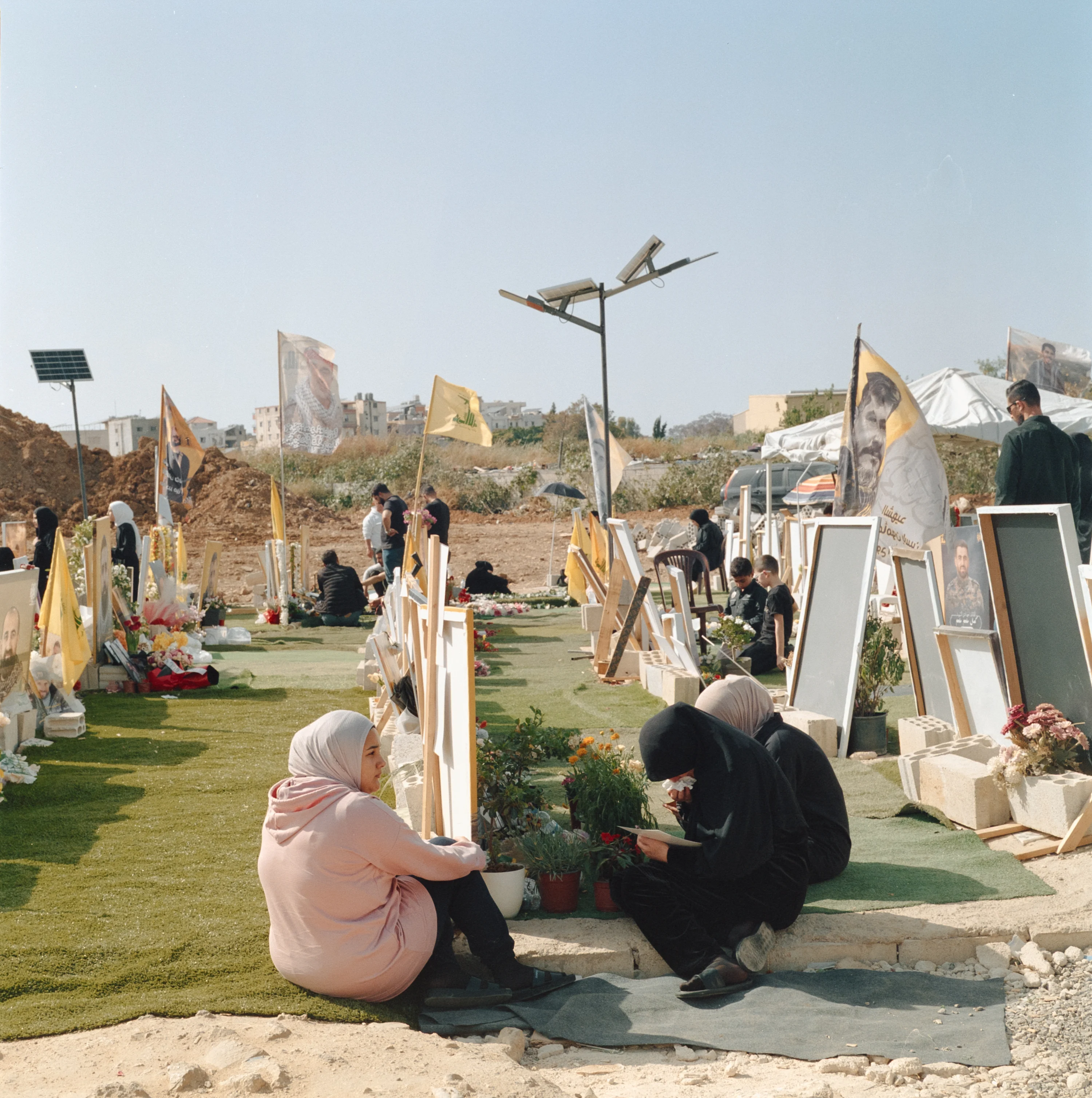
“As with other great cities, the capacity to readapt space to life defines its identity.”
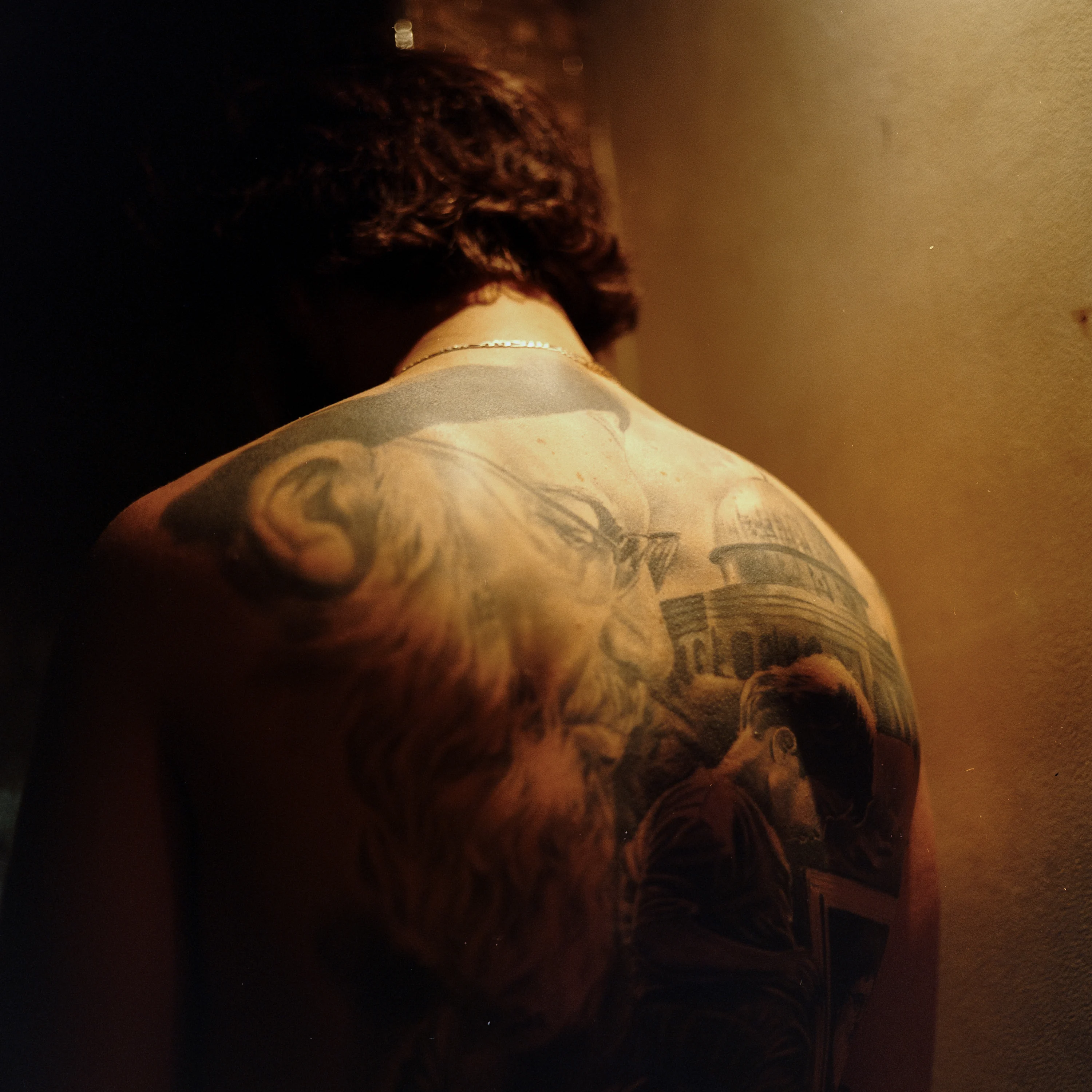
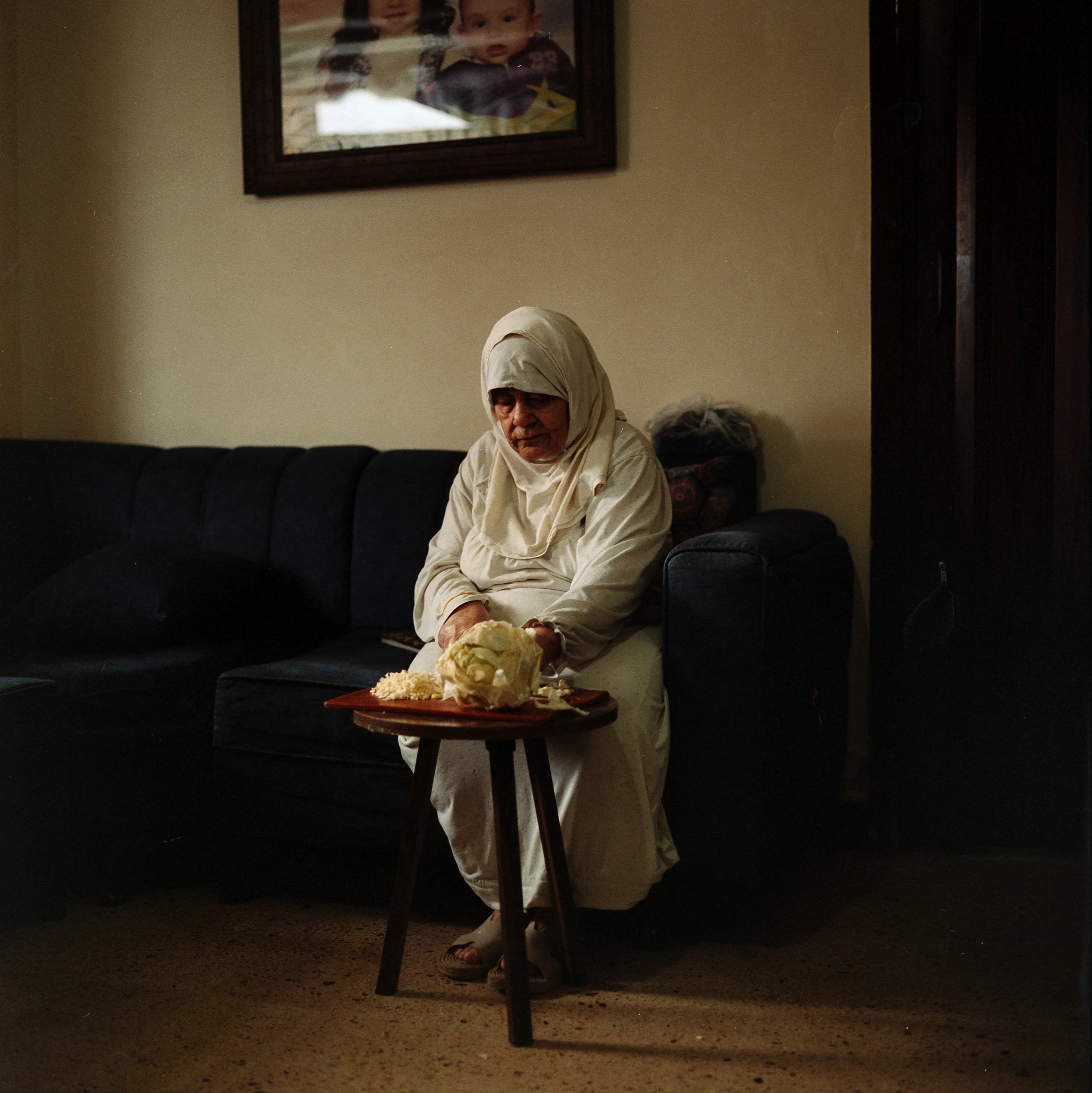
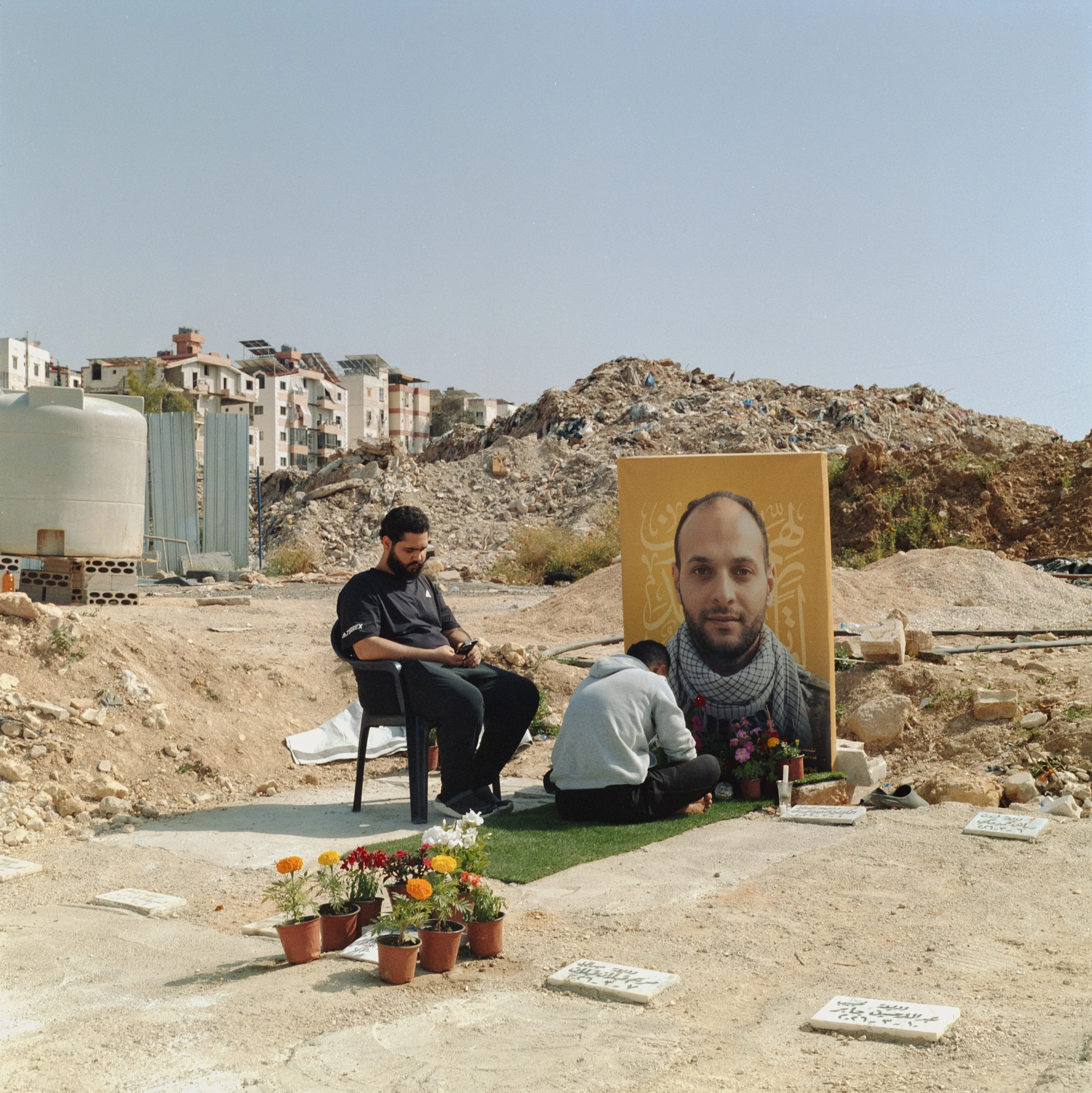
Carbone describes the city’s downtown as “spectral, impossible to live in for Beirutis.” “It’s telling that the only moments when downtown Beirut has really been lived were two dramatic ones: the 2019 revolution, and the internal displacement crisis that broke out after the Israeli escalation at the start of March this year,” he says. Many, like the Hussein family, photographed with their backs to the camera, looking ahead, found refuge downtown in “tent camps that sprang up out of nowhere.” “At the margins, in Dahieh for example, the territory is much more battered, but also far more inhabited, and by locals with an actual relationship to the space they live in,” Carbone says. “That makes the hundreds of airstrikes that, since March 2026, as in 2024, have hit those populous places twice as cruel, as they are a deliberate attack on the communities that belong there.”
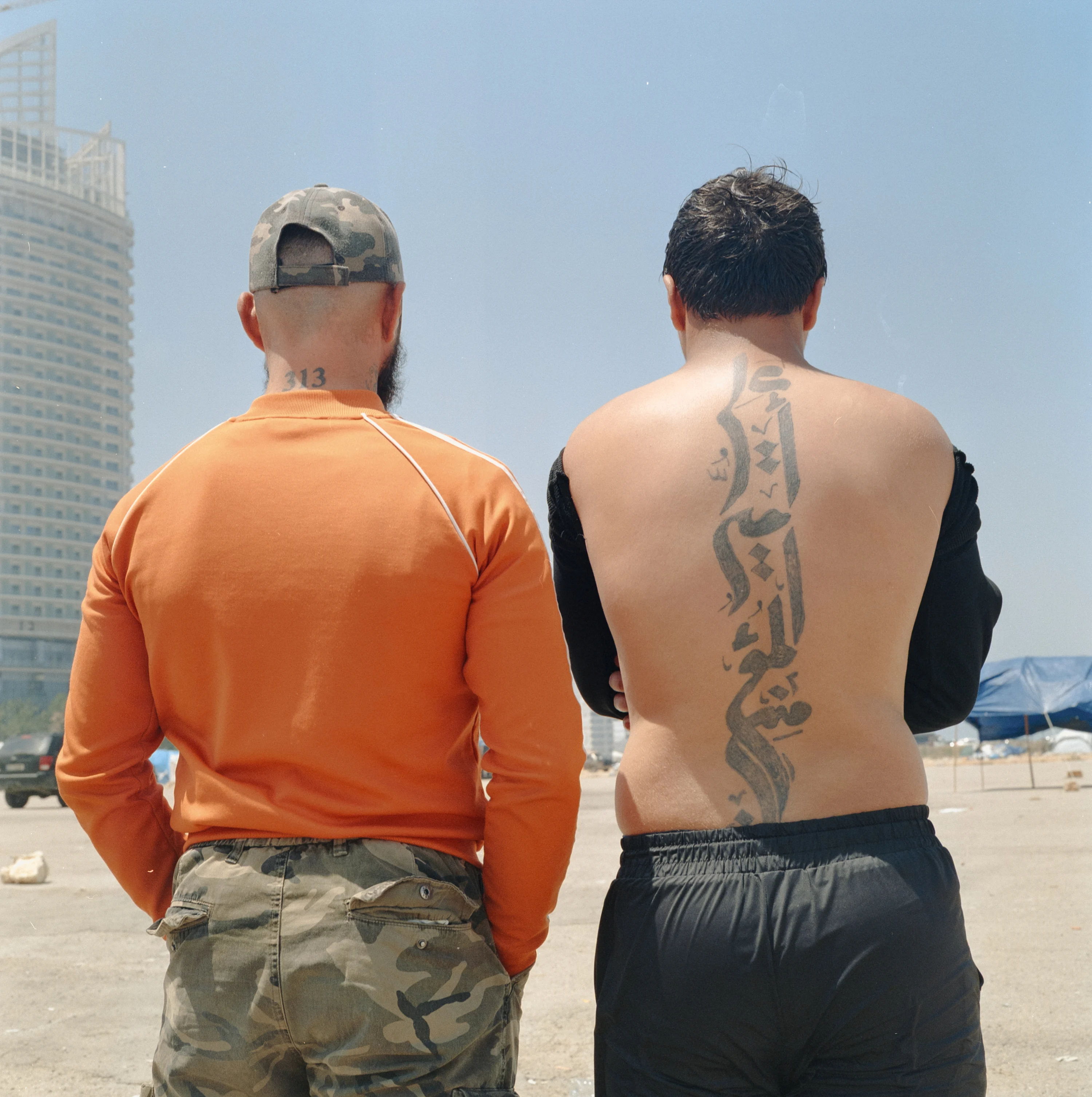
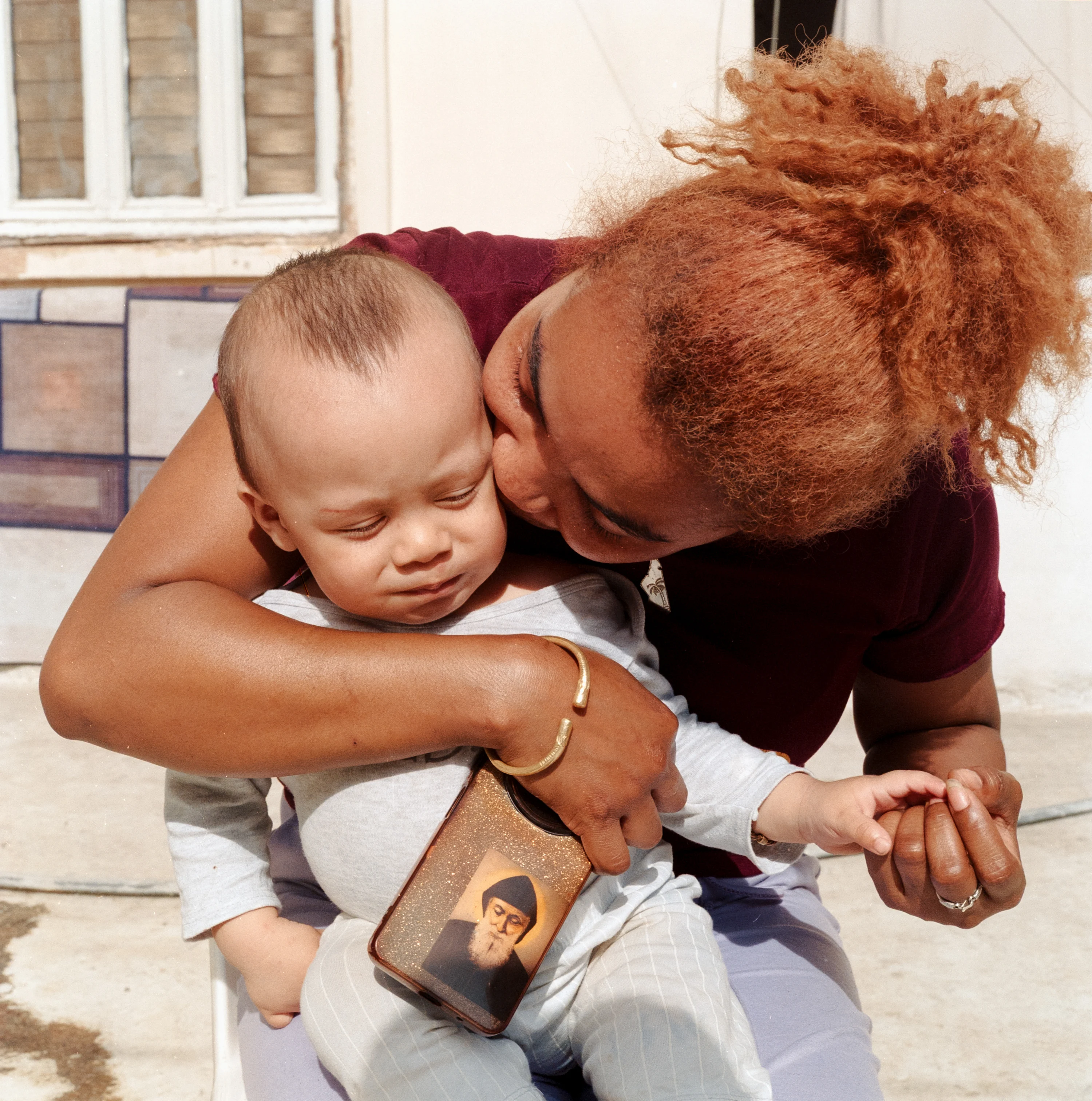
Carbone’s project, shot on medium-format film, was supported by the Strategia Fotografia 2025 grant from Italy’s Ministry of Culture, with the Beirut Art Center as local partner. Carbone’s series to date have largely presented Shia Islamic and Palestinian populations as both political agents and targets of conflict. In Beirut, the creatives who guided him through the most vulnerable districts such as Dahieh and the refugee camp of Shatila, the families who “opened their home,” and the Malagasy community of Bourj Hammoud, who welcomed him as one of their own, offered “a perspective that is missing from, and flattened by, the standard war-zone media ecosystem.” The Malagasy, migrant domestic workers who arrived under Lebanon’s Kafala (sponsorship) system, are among the conflict’s least-known victims: “the last link in the chain, on whom the harshest consequences risk falling,” the photographer says.
Beirut itself was made great through cross-cultural exchange, a metropolis as dense in Phoenician, Roman, Byzantine, Arab, Crusader and Ottoman artifacts as in tales of a glorious past. To the Romans, it was “The Mother of Laws,” until an earthquake and tsunami destroyed much of the city in 551 AD, killing 30,000. Its resurgence came, like the destruction that preceded it, from the sea: first a commercial and intellectual hub, then, after independence from France in 1943, a jet-set wonderland for the global elites. All along, prosperity alternated with devastation, most notably when the civil war’s “Green Line” split it into a Muslim West and a Christian East. Scars yet to heal have now reopened under new attacks, as documented by the rubble in Carbone’s haunting vignettes of targeted architecture.
“The Syrian author Adonis described Beirut’s space as perpetually wronged, because it was condemned to survive and denied the privilege of dying. I disagree,” Carbone says. “As with other great cities, the capacity to readapt space to life defines its identity. It is plural, contradictory and mobile, like most Mediterranean cities.”
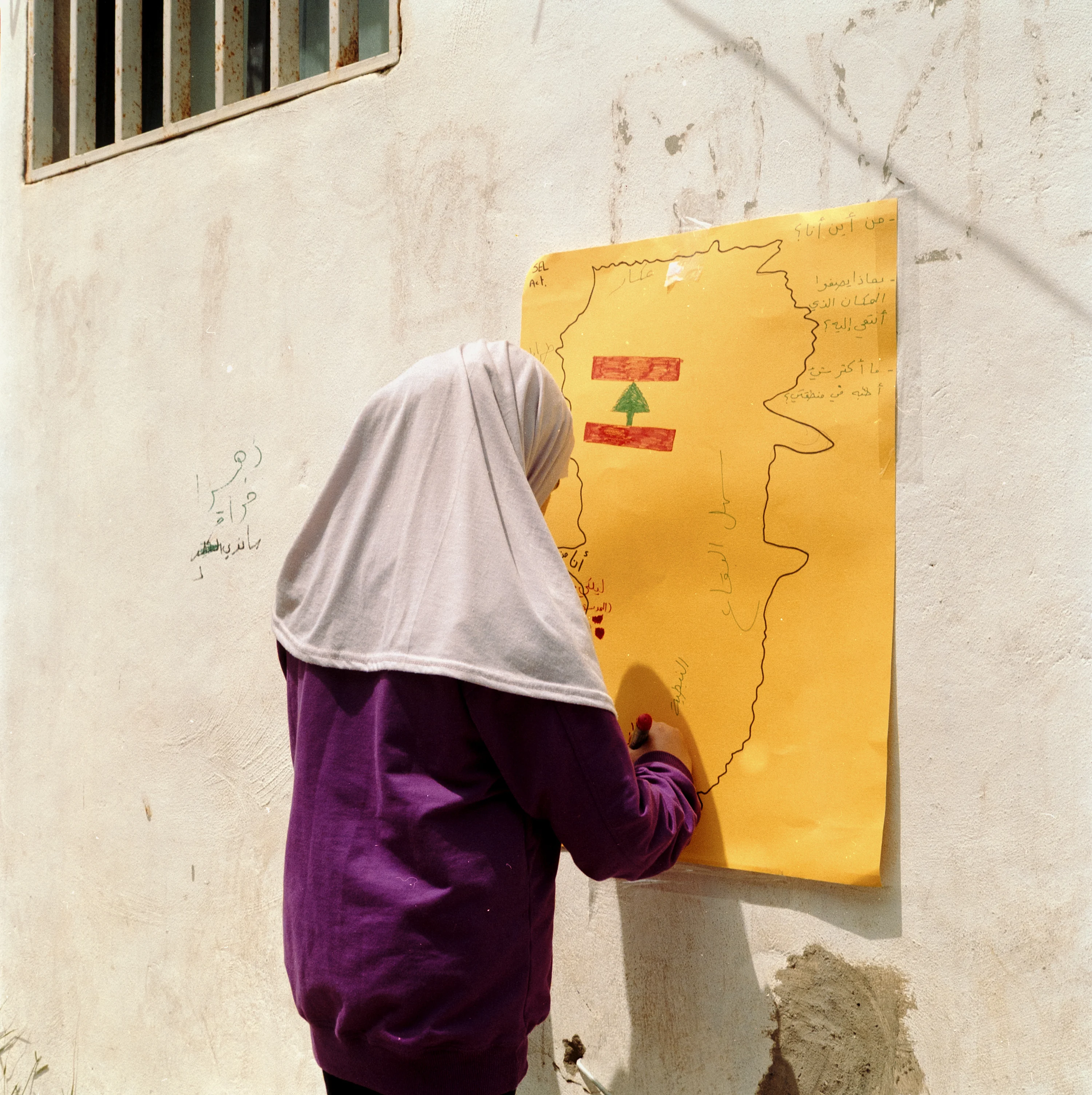
In a government shelter on the capital’s southern outskirts, a girl marks her own village on a map of Lebanon, asking herself when—or if—she’ll get to come home, an image he finds “emblematic of the situation.” Beirut, too, is left with a question to answer: when will the city, and the country with it, get a chance to mark their own destiny?