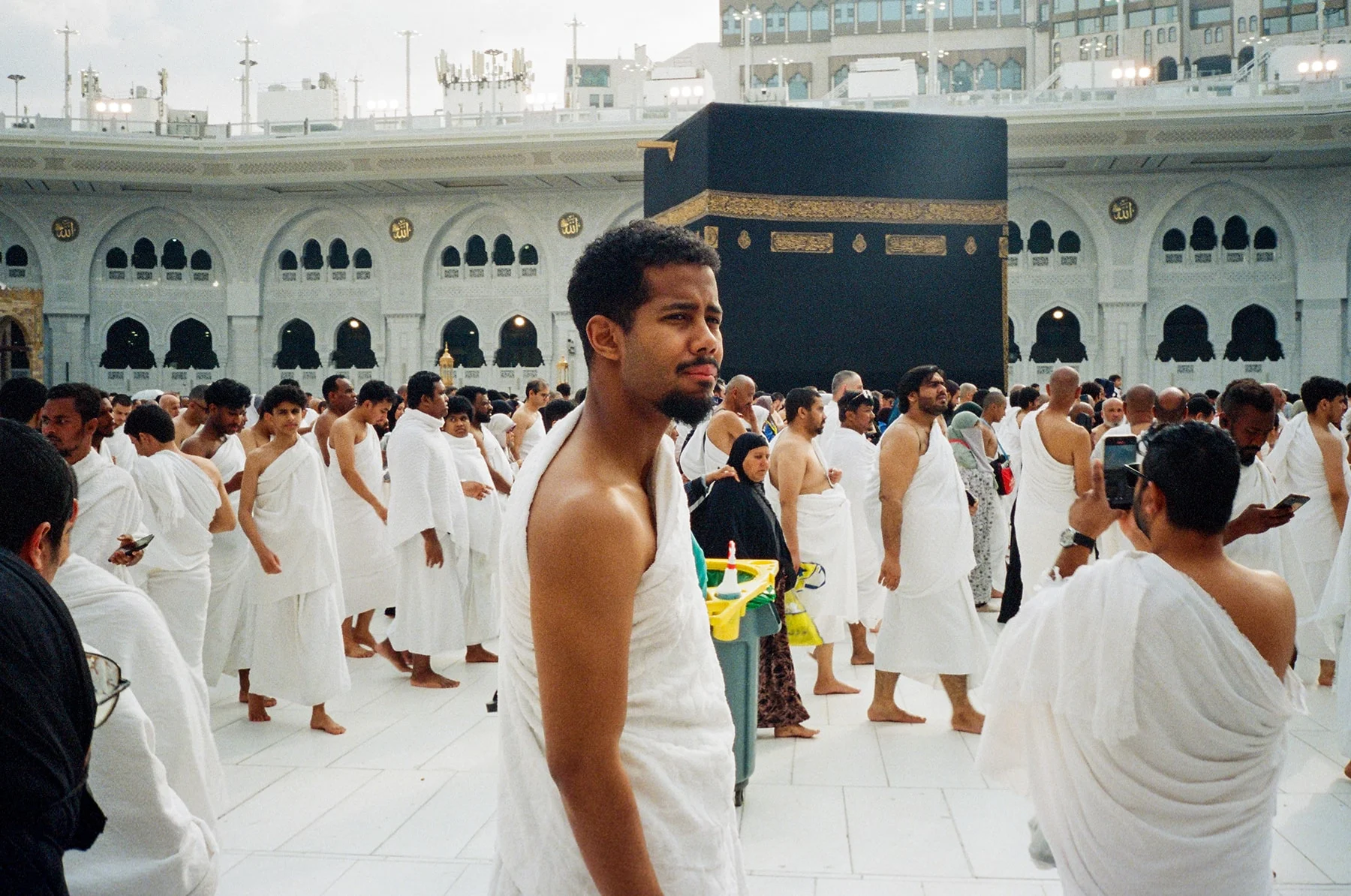
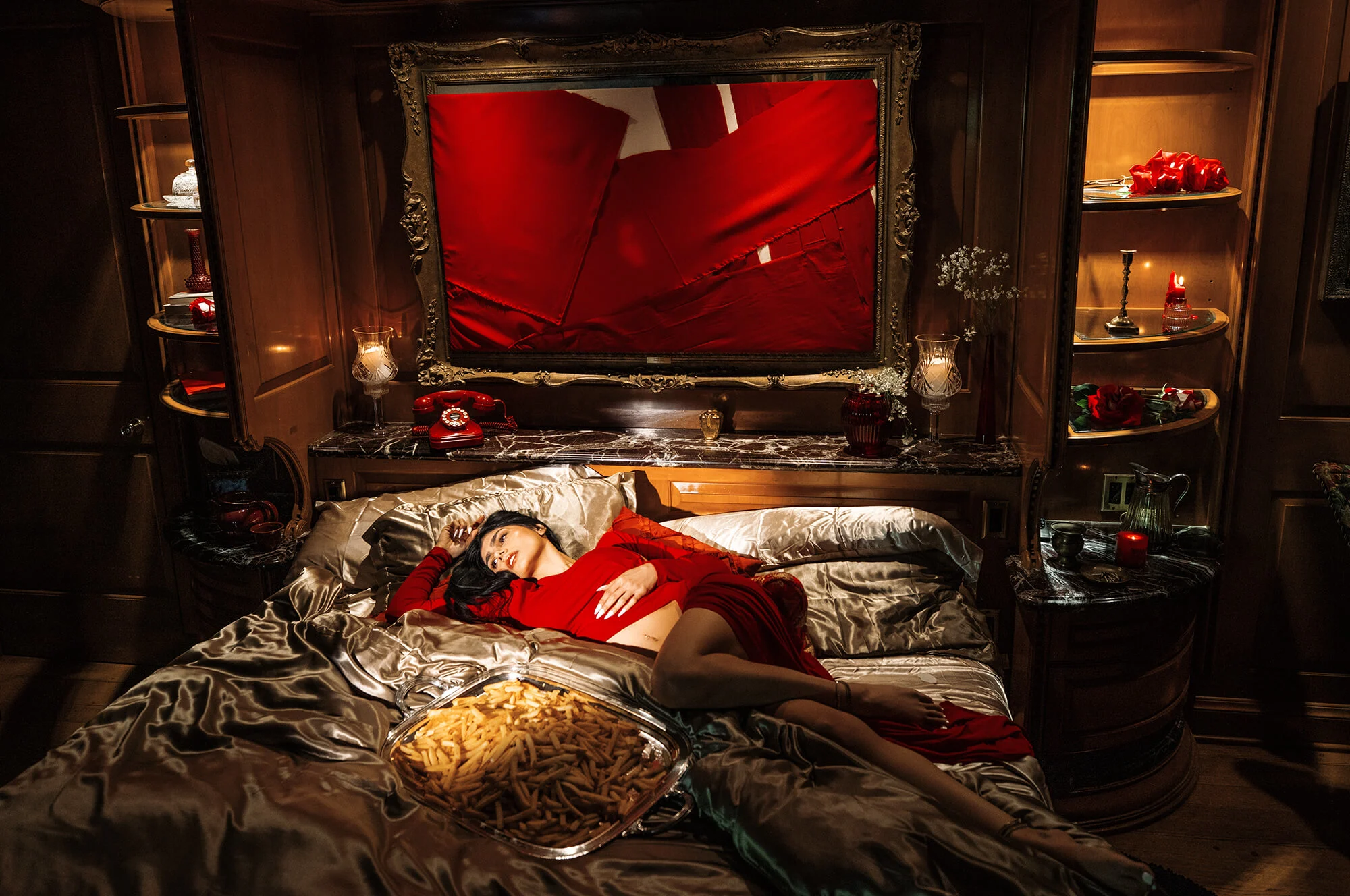
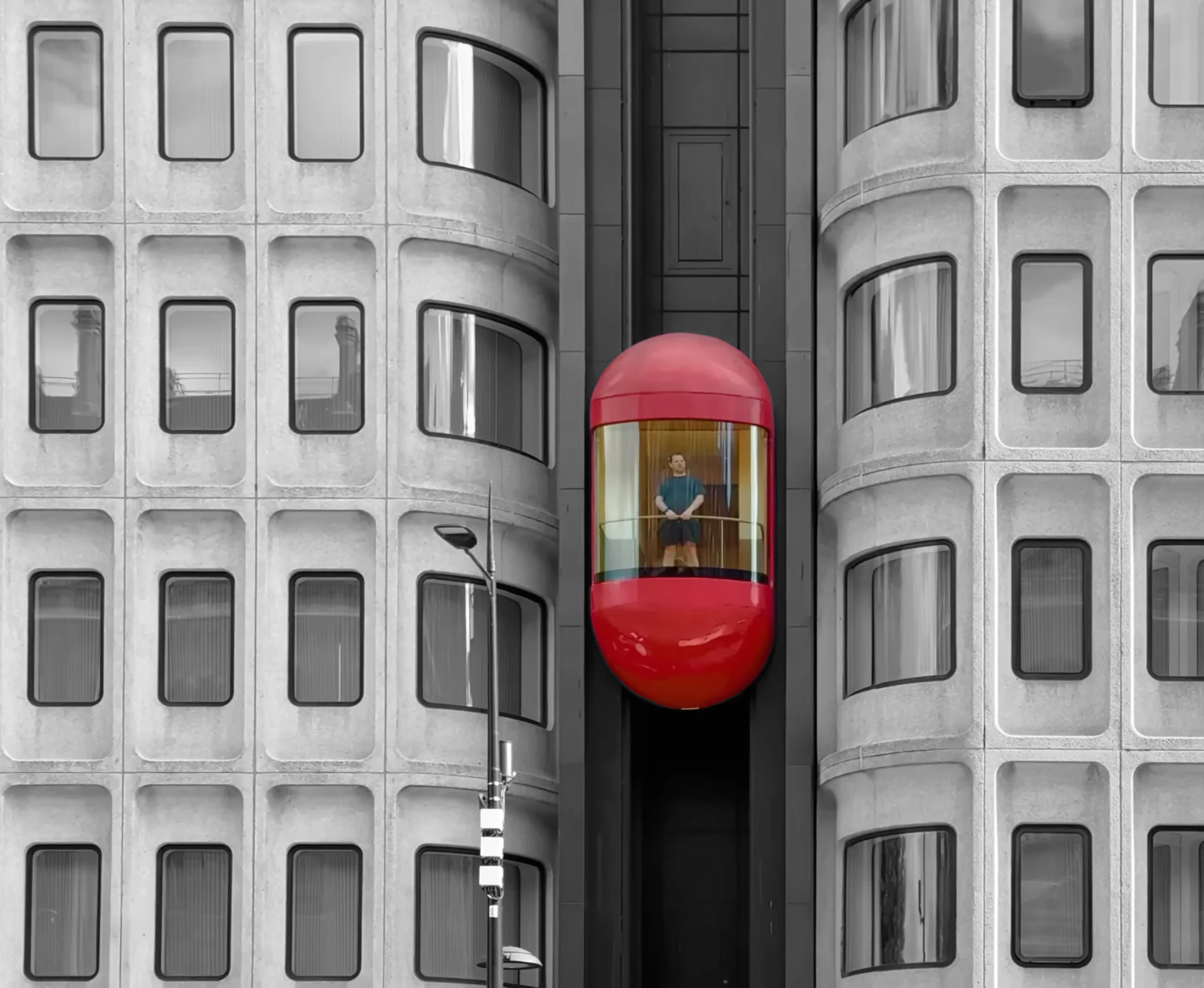
In January 2025, longtime collaborators Patrick Taylor and Adam Singodia found tickets to Paris on a Eurostar flash sale, with the goal of creating a project “just for them.” The plan: to shoot two short films—“Auxanna” and “Elyas”—in just two days. They tell Dalia Al-Dujaili about the fly-on-the-wall, reactive process, and how time constraints encouraged them to listen to their intuition and led to some of the films’ most inventive moments.

In March 2025, Patrick Taylor and Adam Singodia arrived in Paris for an ambitious project—shooting two films in two days. The task sounds near impossible, but by the end of the 48-hour trip, they had produced “Auxanna” and “Elyas.” The motivation was propelled by what Taylor calls “a growing sense of disenchantment and a lack of opportunities, where the usual hustling, trying to get commissioned work and build lasting relationships, was falling on deaf ears.” The duo briefly considered Marseille and Rotterdam before deciding on Paris. “I’d made a similar film in Kiev towards the end of COVID,” says Singodia, “and wanted to revisit that stripped back, improvised documentary aesthetic.”
The project embodies the best of what the creative act is supposed to be, and what it’s supposed to feel like—energetic and challenging, spurred by a love of creating beautiful film work. No commercial restraints or strict deadlines with the pressure of client consequences. “We knew that it would be very fly-on-the-wall and reactive when we got there,” Singodia explains. “There’s always been this proactivity to create,” Taylor adds. “We’ve been fortunate enough to develop a shorthand over many projects, so when we work together, it’s to make something we want to make, with the freedom to answer to no one but ourselves.”
I think you have to be open and reactive to what’s going on around you.
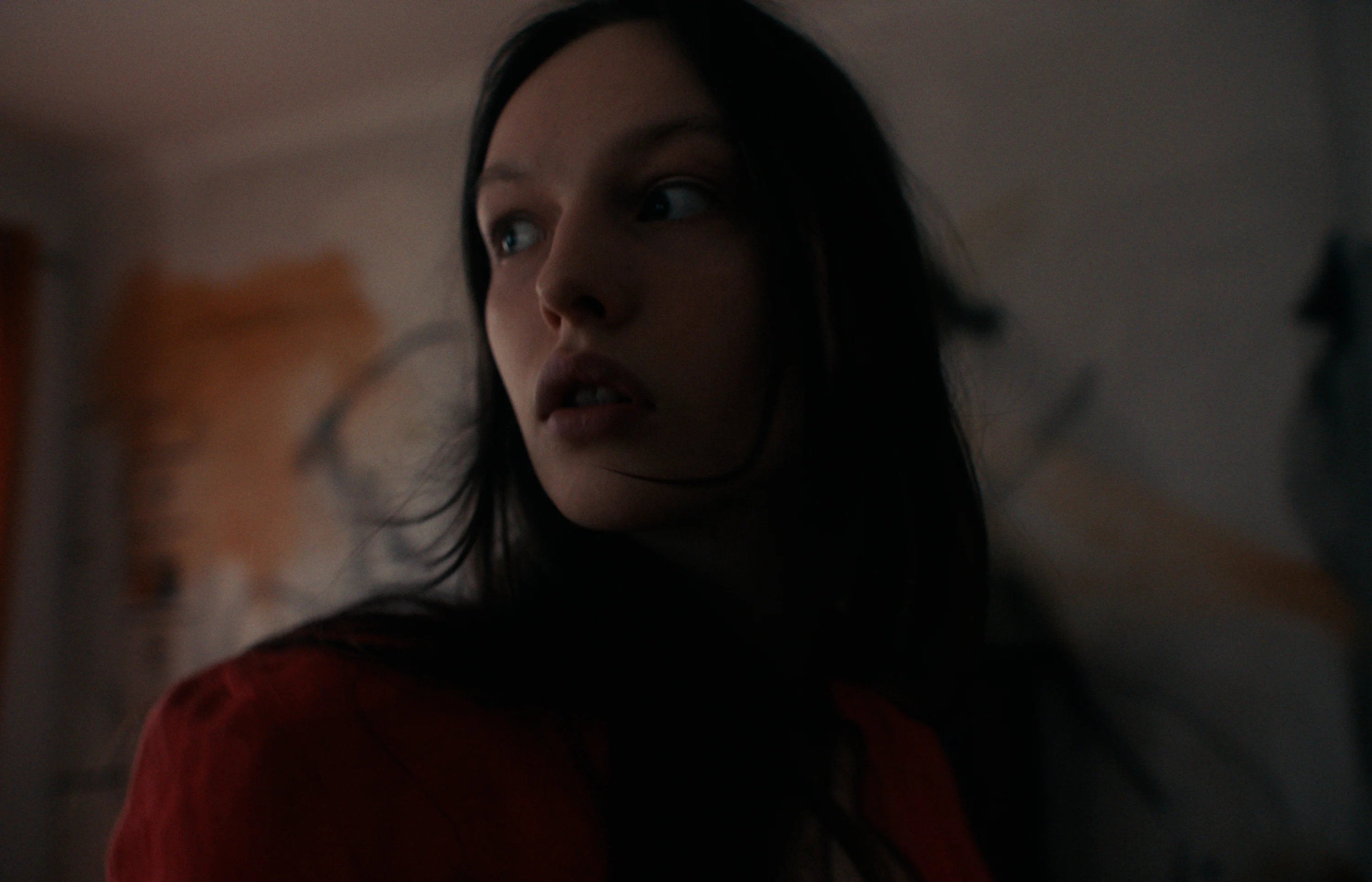
“Auxanna” was the first film to be shot. It follows the eponymous young woman who—whilst working as a cleaner in an expensive apartment—invites her friend over, pretending it belongs to her parents, supposedly out of town. Meanwhile, “Elyas” follows three young men drifting through Montmartre over the course of a day, building new friendships that erupt in unspoken rivalry before renewing stronger than ever.
Just like most independent creatives these days, the two filmmakers had to reach out to friends and collaborators over Instagram to build a team. Some crew hadn’t been contacted until just a few weeks before, to “keep the prospect of our project fresh and exciting,” says Taylor, with the idea that too much of a lead-time might cause a drop in interest. The films needed somewhat of an enjoyably pressured environment, it seems, to come to life.
Finding the right location for “Auxanna” was a challenge. “Having to find somewhere that was 90 percent there visually, without having to do a major re-dress,” says Singodia. “It also had to double up as our accommodation!” In contrast, “Elyas” unfolds in unpredictable public spaces, so the filmmakers had to balance spontaneity with maintaining narrative coherence while shooting handheld and guerrilla-style. “We tried to push Montmartre as a fourth character that was just as active as our three protagonists,” says Taylor. The filmmakers enlisted the help of assistant director and Montmartre local Etienne Lefebvre, who created a Google Maps list of spots for the team to walk through, with each pin acting as a shooting spot, “from street corners and underpasses to Sacré-Cœur and back,” Taylor continues.
Shooting handheld and in public meant things were constantly shifting in an exciting way.
“I think you have to be open and reactive to what’s going on around you,” adds Singodia. “The best example is the Montmartre road train, full of tourists, that happened to show up behind us. George, one of the actors, started to chase after it and interact with the passengers. Shooting handheld and in public meant things were constantly shifting in an exciting way, so it became about reacting in the moment whilst holding onto the spine of the film.”
Taylor describes “Elyas” as sharing a “Cassavetes-esque” sensibility, less as homage than instinct. The clearest touchstone was a scene from “Shadows,” in which friends drift through the sculpture garden at the Museum of Modern Art—nothing plot-heavy, just people messing about. That loose, unforced chemistry was something he wanted to preserve. Singodia says both filmmakers were surprised by how naturally the actors settled in front of the camera. Giving them room to simply be present lent the films their ease; some of those on-screen friendships have, pleasantly and surprisingly, since carried over into real life.
Both films rely heavily on improvisation and the absence of recorded dialogue. Each film began as a brief synopsis and treatment deck and developed into a reactive, instinctual and improvisational work, shot handheld and brought to life by two sets of actors. “What I was looking for on these projects was that little spark or micro expression that told the story rather than having to go take after take trying to perfect everything,” says Singodia.
The pair would give the cast an emotional motive within the story and run with it. For example, during the opening of “Elyas,” shot under the Gare du Nord underpass, they wanted to put the overbearing George immediately at odds with the introverted Skander. “Shooting in chronological order really helped spark the tension between George and Skander,” says Taylor. “George was instructed to actively push people’s buttons, whilst masking insecurity and emotional repression through bravado and intimidation, and the polar opposite to best friend Elyas, who carries a far more open and emotionally fluid masculinity. You can really see this on screen too. The lack of recorded dialogue on set was designed to free our cast to roam and feed off one another through scenarios that, at times, blurred the lines between fiction and reality.”
Through the Paris experiment, Taylor and Singodia have found a way of working worth returning to elsewhere. Stripped of client expectations and external taste, they found themselves trusting instinct again rather than second-guessing decisions. The immediate reward was not commercial but a renewed sense of satisfaction, and a reminder that sometimes the most valuable investment is simply making the work before waiting for someone to ask you.
Elyas - Credits
Starring:
George Osborne
Elyas Polat
Skander Gueye
Director, Editor: Patrick Taylor
Director of Photography: Adam Singodia
Styling: France Hofnung
Casting: Remi Felipe
Assistant Director: Etienne Lefebvre
Original Score: IDRA, Francesca Pavesi
Color: Nielsen Bohl
Color Producer: Hannah George
Color House: Selected Works
Sound Design, Mix: Matt Valentine
Audio Producer: Carla Thomas
Audio Post-Production: 750mph
Voice Over: Carl-Philipp Wengler
Auxanna - Credits
Starring:
Auxanna Fonteneau
Maëlle Delor
Director, Editor: Patrick Taylor
Director of Photography: Adam Singodia
Stylist: France Hofnung
Casting: Vera Salomon
Model Agency: Just Faces
Color: Nielsen Bohl
Color Producer” Hannah George
Color House: Selected Works
Original Score: IDRA, Francesca Pavesi
Sound Design, Mix: Matt Valentine
Audio Producer: Carla Thomas
Audio Post-Production: 750mph
Voice Over: Maëlle Delor