The myth of reinvention (2026)
Adults need more than feelings to understand reality, while children often have little else to go on beyond an immediate emotional response. Painter Noorain Inam is interested in the ways our inner child continues to shape our adult worldview. She creates uncanny, supernatural worlds where the fears, memories and dreams we acquire in childhood live together. Ahead of her solo booth at Liste, she tells Yasmin Alrabiei how the things we experience in those formative years, and the way they linger long into adult life, became the root of her practice.
“I read somewhere once that the first decade of your life is pure experience, and everything after that is you spending time analysing said experience,” the Pakistani-Sindhi artist Noorain Inam reflects. “When you’re a kid you don’t necessarily tie logic to what you’re experiencing. I was always really scared of going under a table. I felt like there was a hidden trapdoor I’d fall through. I thought the moon was a place where people who leave this world go. I remember trying to find my grandfather’s face on the moon.”
Adulthood, she acknowledges, is built on rationalization. She cannot live believing the moon houses the dead, but she still honors the evolutionary value of fear—its presence in the body is already a signal to interrogate whatever it traces back to. “I’m drawn to things that feel emotionally true without needing to become logically stable,” she says. “Dreams function that way, memory functions that way, trauma functions that way. Phantasmagoria exists in that unstable emotional territory.”
When asked what phantasmagoria means to her, she describes “the point where fear, fantasy, memory, dreams and hallucination stop being distinguishable from one another.” Inam's paintings collapse all of these into the same frame, producing a confusion similar to the discomfort of growing up: realizing that getting older never fully resolves the world's strangeness. Reality remains crowded with “coincidences” and mysteries that survive our attempts to outgrow them.
Especially as a child, when you’ve only spent so many years inside a life, the urge to address both wonder and threat with the same urgency can result in an uncanny, inexplicable feeling rarely understood later in adulthood. “I don’t really trust nostalgia. I think our minds have a way of warping our sense of perspective, especially when we’re younger,” she says. She recalls being five years old, staring at a neighbour’s balcony, convinced it towered above her. When she returned to that street years later, the balcony stood perhaps 10 feet high. “What is that feeling? I don’t have the answer for it,” she says. “But I’m interested in that feeling. After all these years, why do I still remember that balcony?”
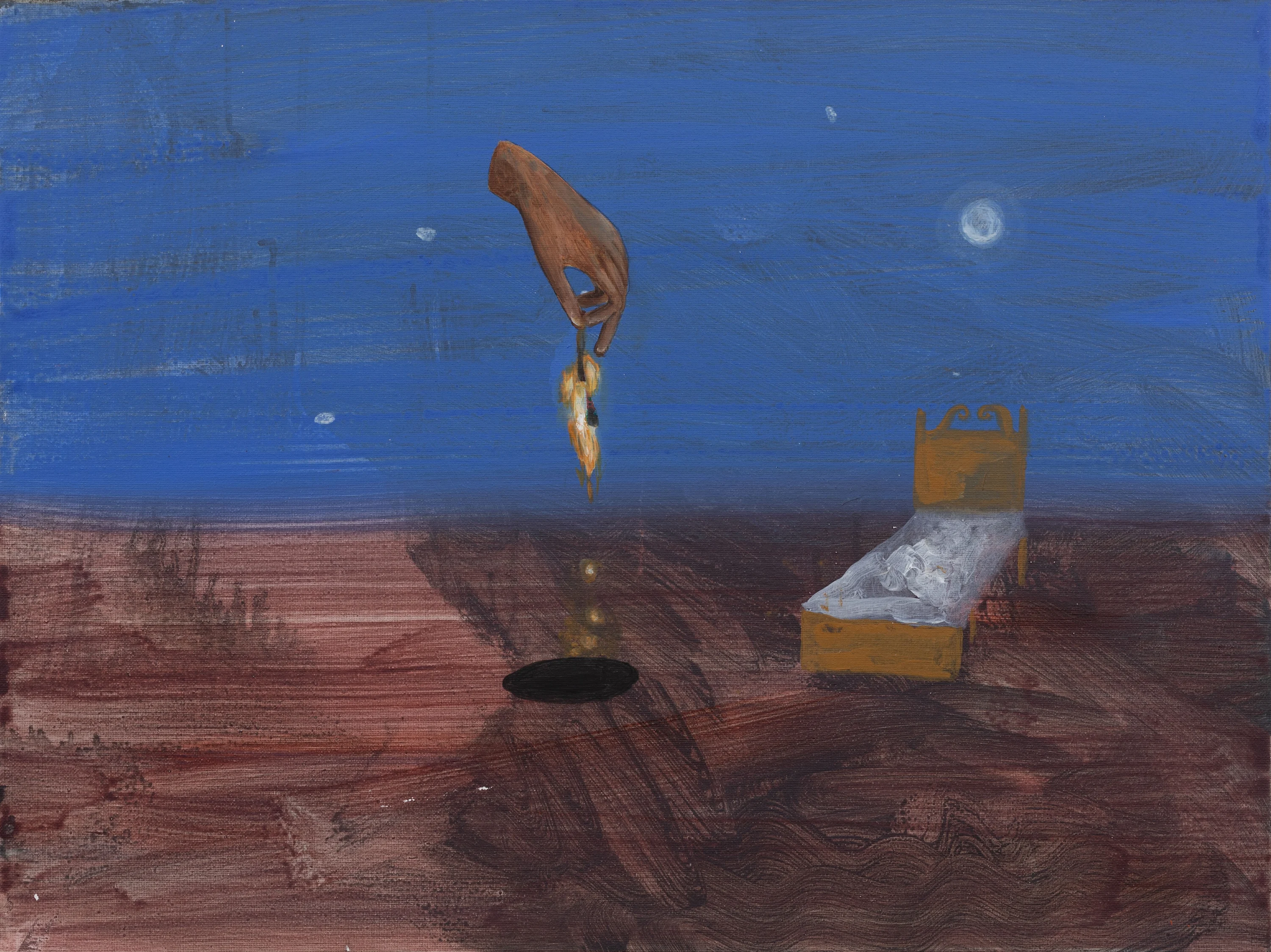
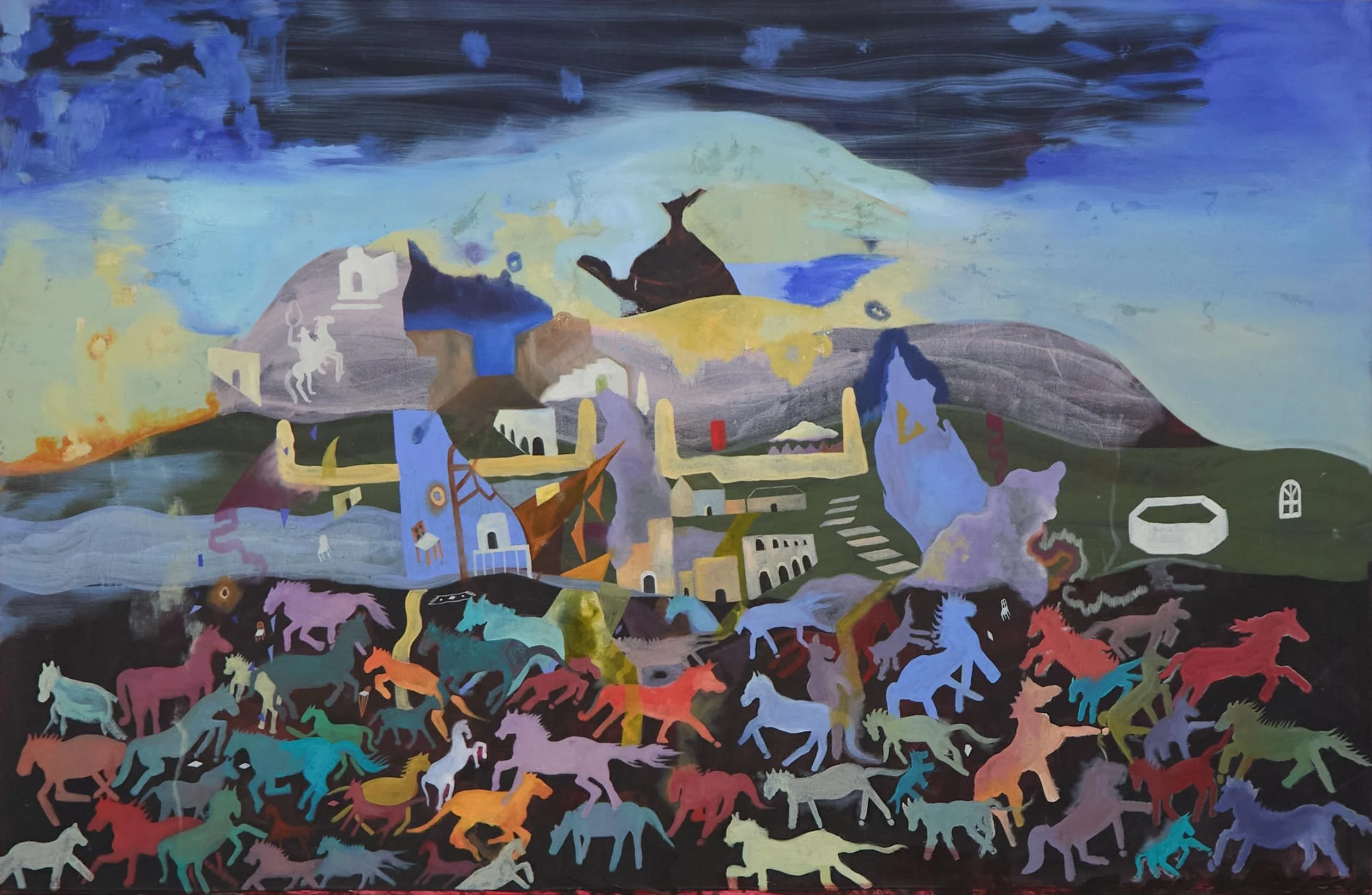
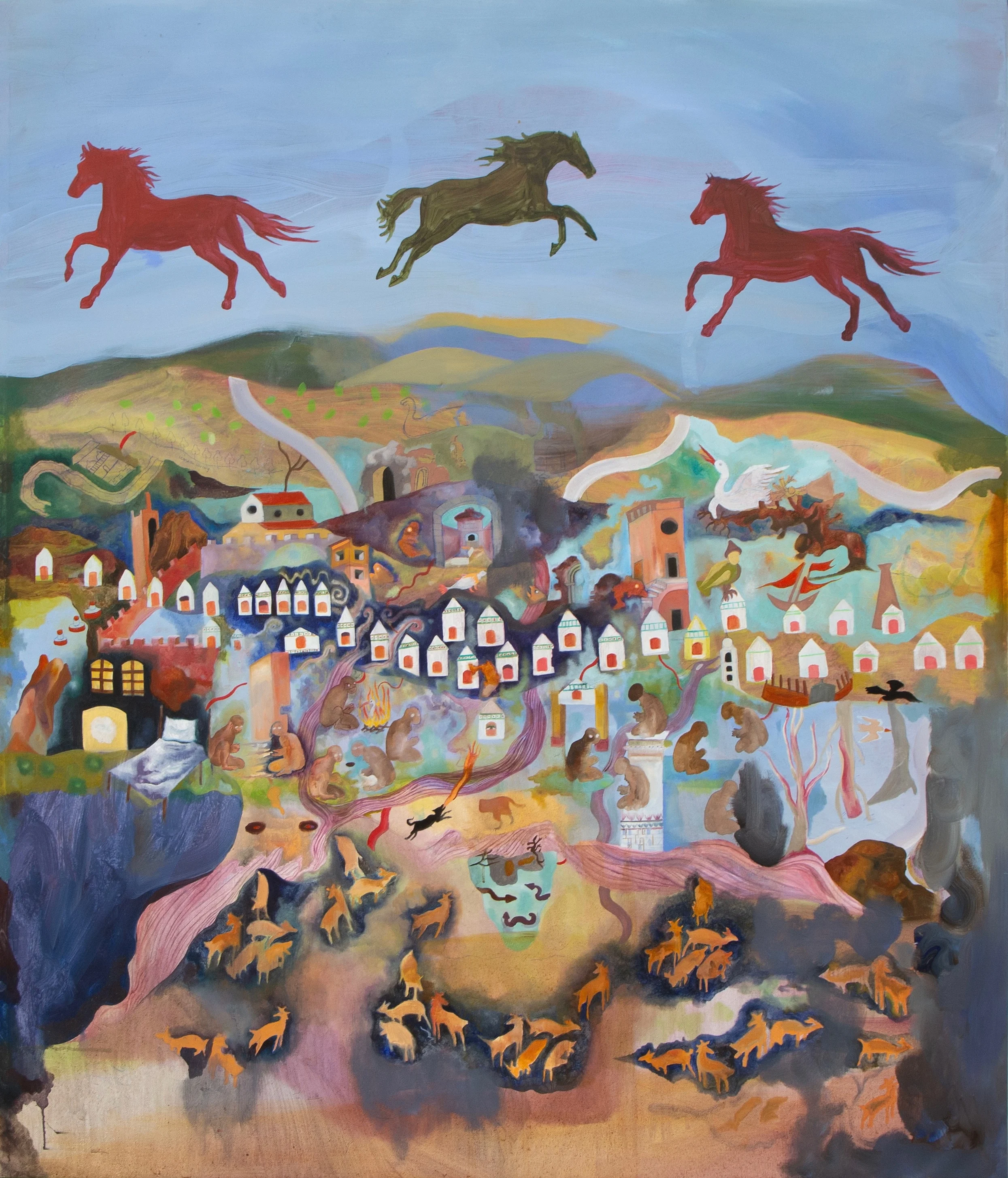
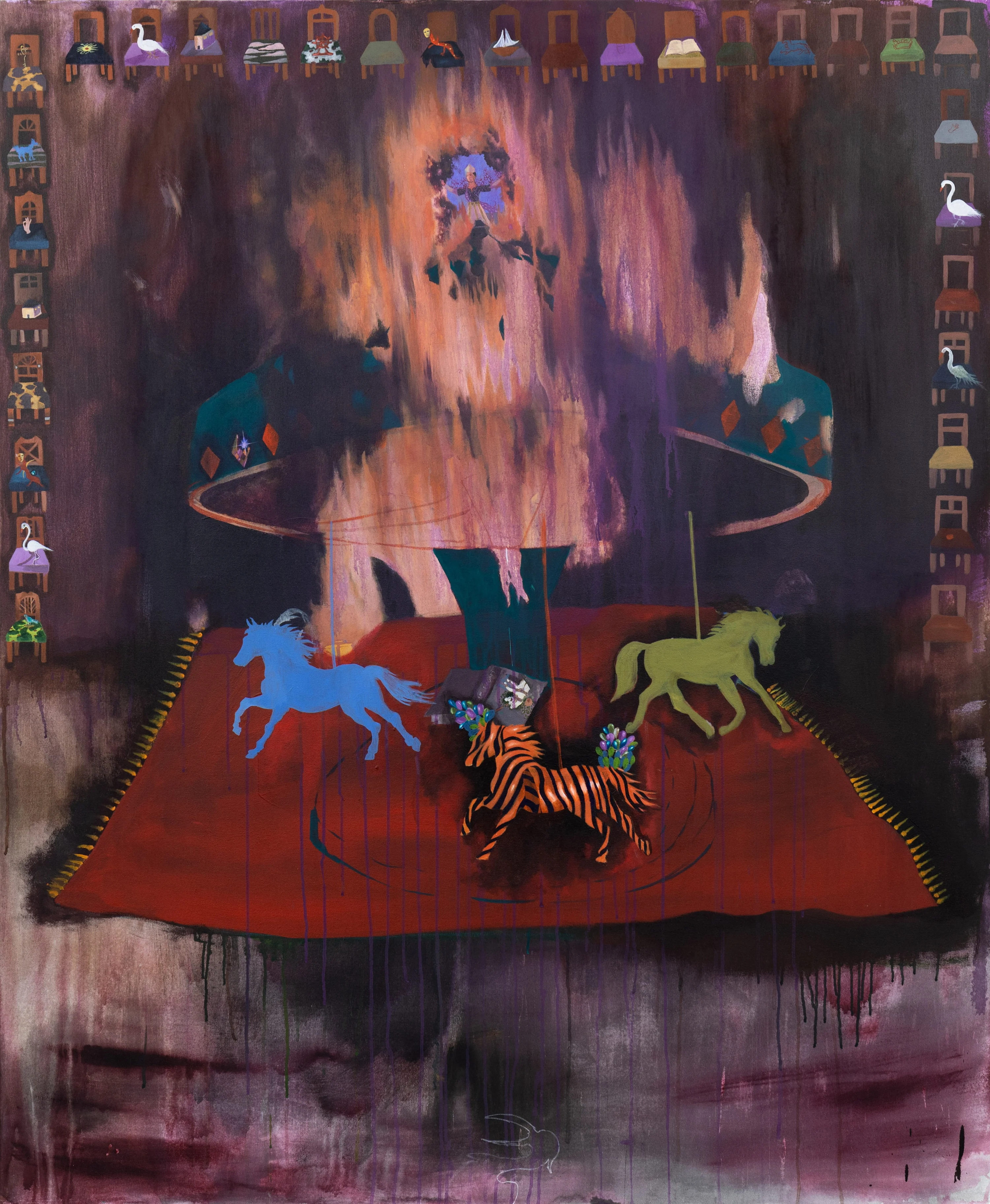
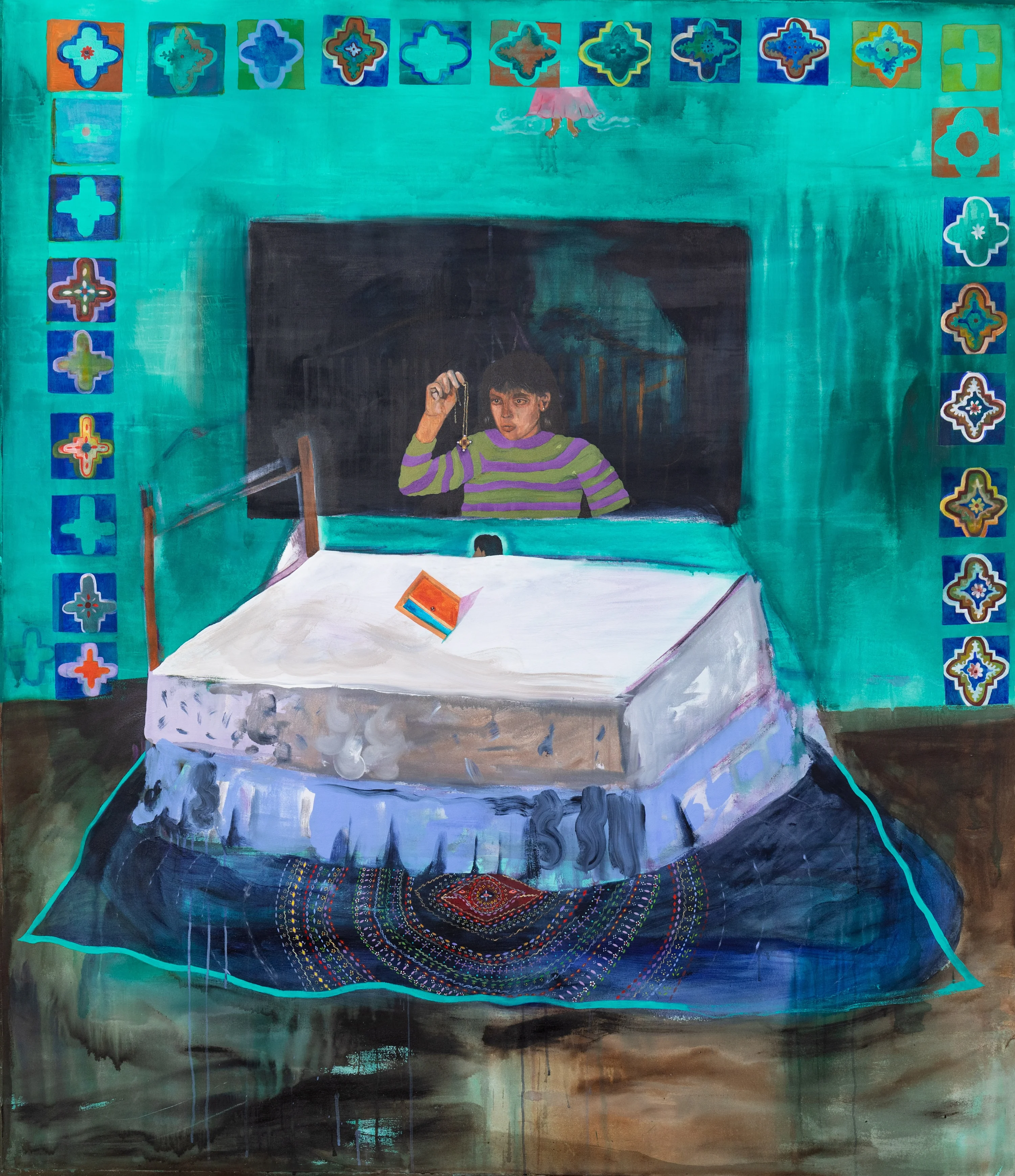
This question, unanswerable and persistent, drives Inam’s practice. Her work brings together this muddle of fears, memories and lessons we acquire in childhood and explores the traces they leave, the ways we carry them through the rest of our lives. Trained in Indo-Persian miniature painting in her hometown Karachi before completing her MFA at the Slade School of Fine Art, Inam creates canvases dense with symbolic motifs, like horses mid-rear, fires consuming domestic interiors, chairs suspended in fluid landscapes, doors opening onto darkness. It’s like viewing her memories through warped glass, familiar enough to enter but too strange to settle in.
Inam’s visual vocabulary was shaped early by horror. Growing up in Karachi, her father introduced her to “The Exorcist,” “The Shining,” and “The Hills Have Eyes,” and she was fascinated by the lurid covers of the horror novels her brother read. Together, they taught her to interrogate the mechanics of fear rather than simply submit to them. “I started to understand things like, ‘how is a prosthetic hand coming out of a wooden door with odd music in the background getting us to react this way?’”
The literary influences that remain closest to her share a similar investment in the uncanny potential of the domestic. Mary Shelley’s Frankenstein, she notes, is a book that “changes with you as you grow older.” Then there is Amparo Dávila, the late Mexican writer whose stories transform ordinary interiors into psychologically charged places of dread. Like Dávila, Inam locates the uncanny and supernatural within the corners of the world most familiar to us: our homes.
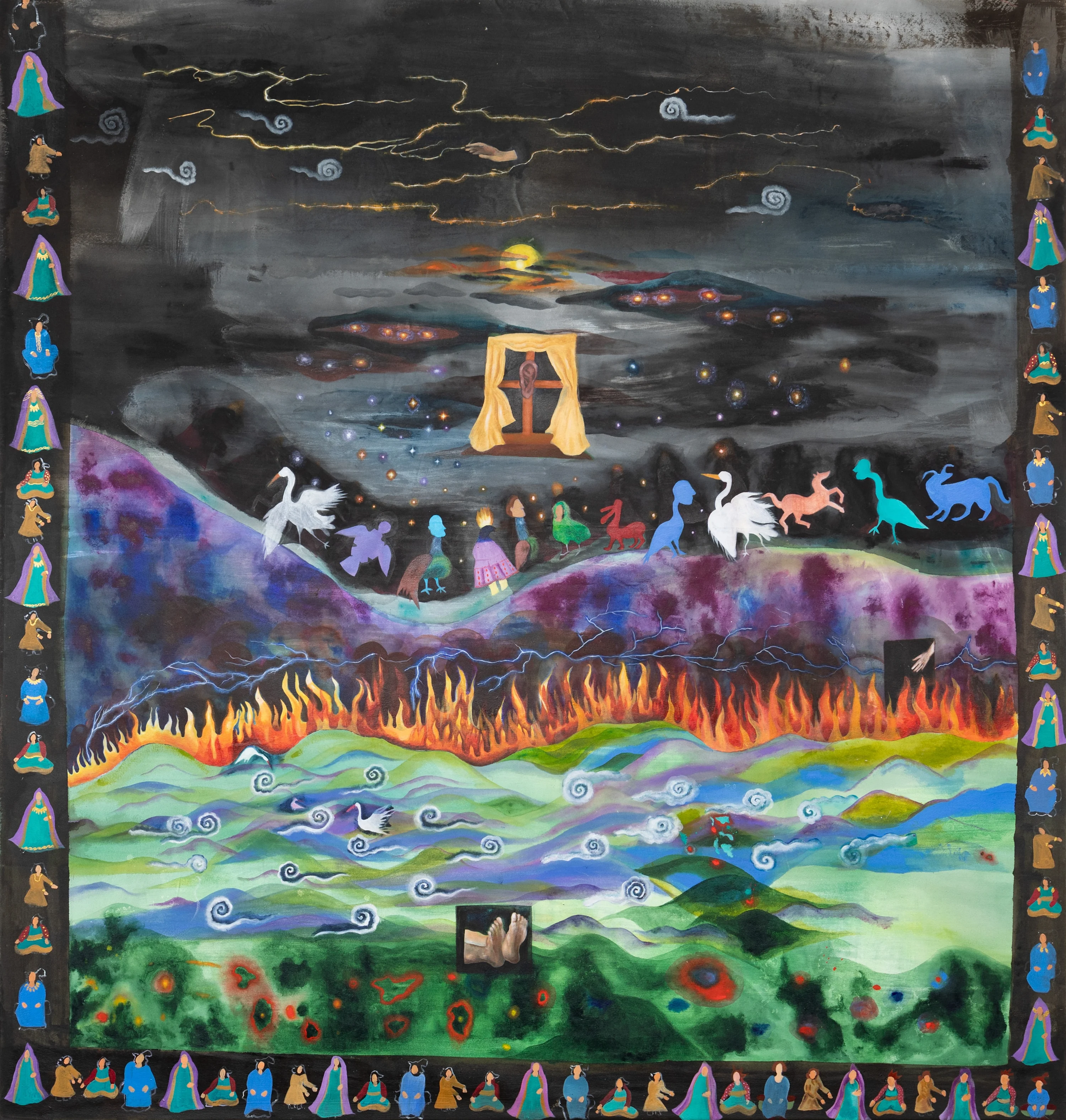
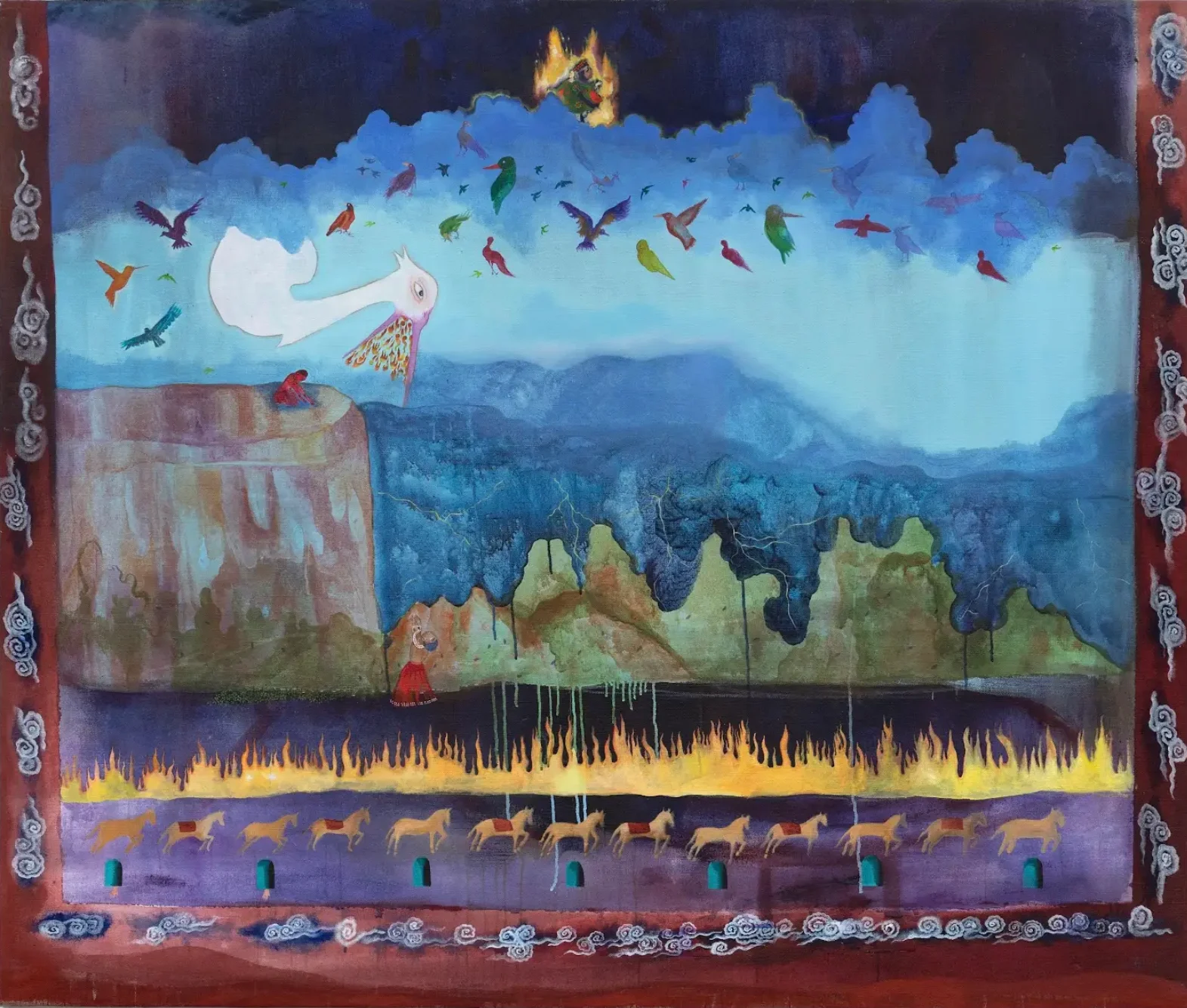
This sensibility feeds directly into her paintings. “I see them as trap doors,” she explains, “places of strange emotional suspension that belong to everyone and no one.” The recurring motifs in Inam’s work remain supple and shifting, like characters with unique personalities that integrate new traits and abandon old ones.
Horses, she says, represent “emotional volatility, freedom, fear, fragility and movement.” Even during her miniature training, her eye was drawn to their rendering. She spent time around horses as a child and found something “oddly contemplative” in them. “They mirror energy very well and can pick up on someone’s calmness or fear,” she says. “I’m interested in that.” Nature entered Inam’s work through what she calls her “quarterly disappearing acts.” She retreats into silence, often through residencies, to let thinking happen. “It’s you, your studio and the thoughts that keep you up at night,” she says, “but there’s something really comforting about that silence.” An artist once told her she seemed to thrive on tumult. “But it’s kind of the opposite,” she says. “I get my ideas when I’m away from noise, and I’ll live with them. Sometimes for years.”
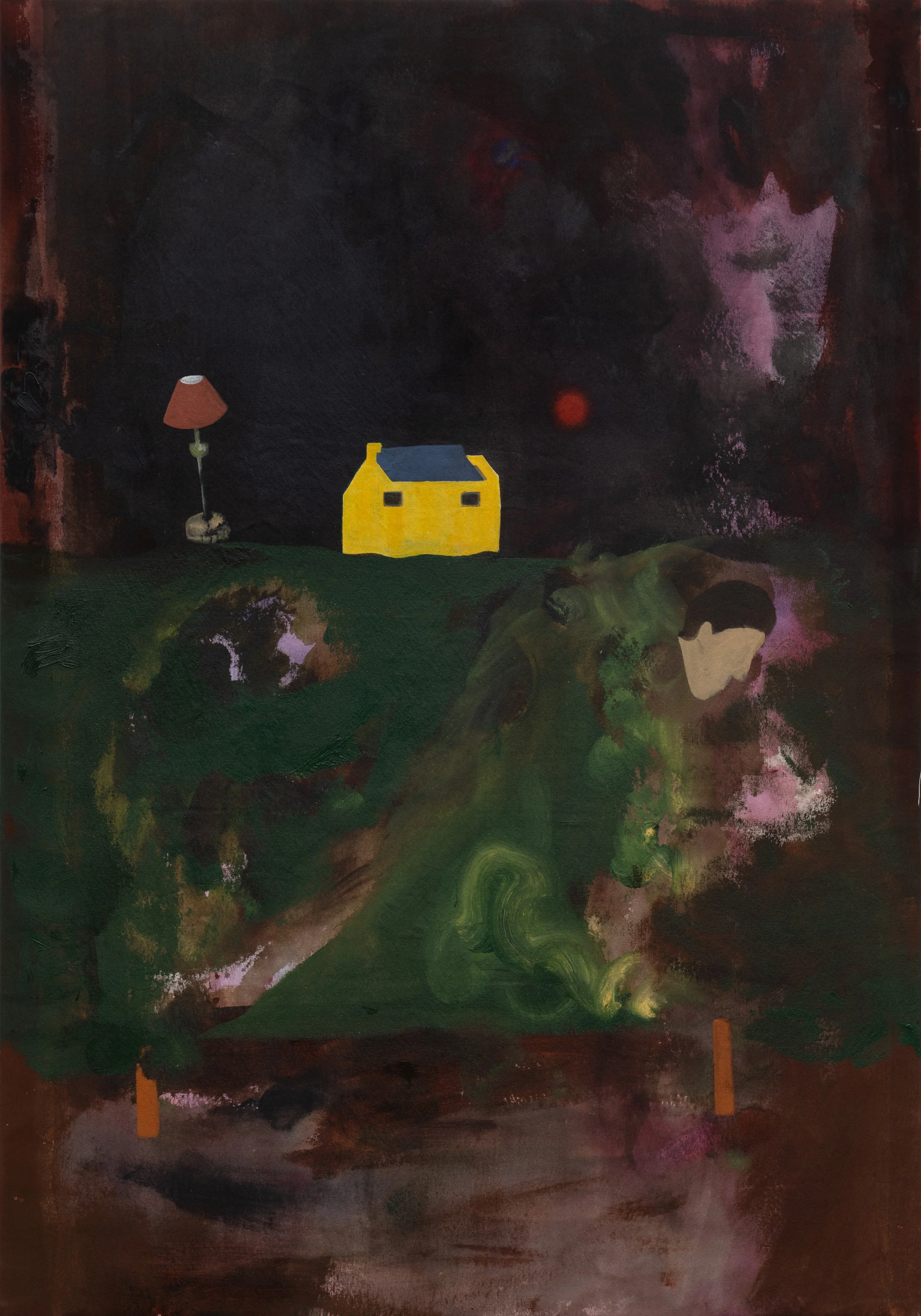
When she is deep inside a painting, time flexes around her progress. “Physically it’s exhausting but also strangely addictive,” she says. “I tend to work very intensely for long periods, so eventually your body disappears into repetition and instinct.” The strongest paintings, she finds, happen when she stops over-controlling them and allows “something more subconscious to emerge.” She recently completed a self-made book of over 200 ink drawings. “The ink drawings changed me a lot because making so many forced me to trust immediacy and intuition,” she says. “They became less precious and more alive.”
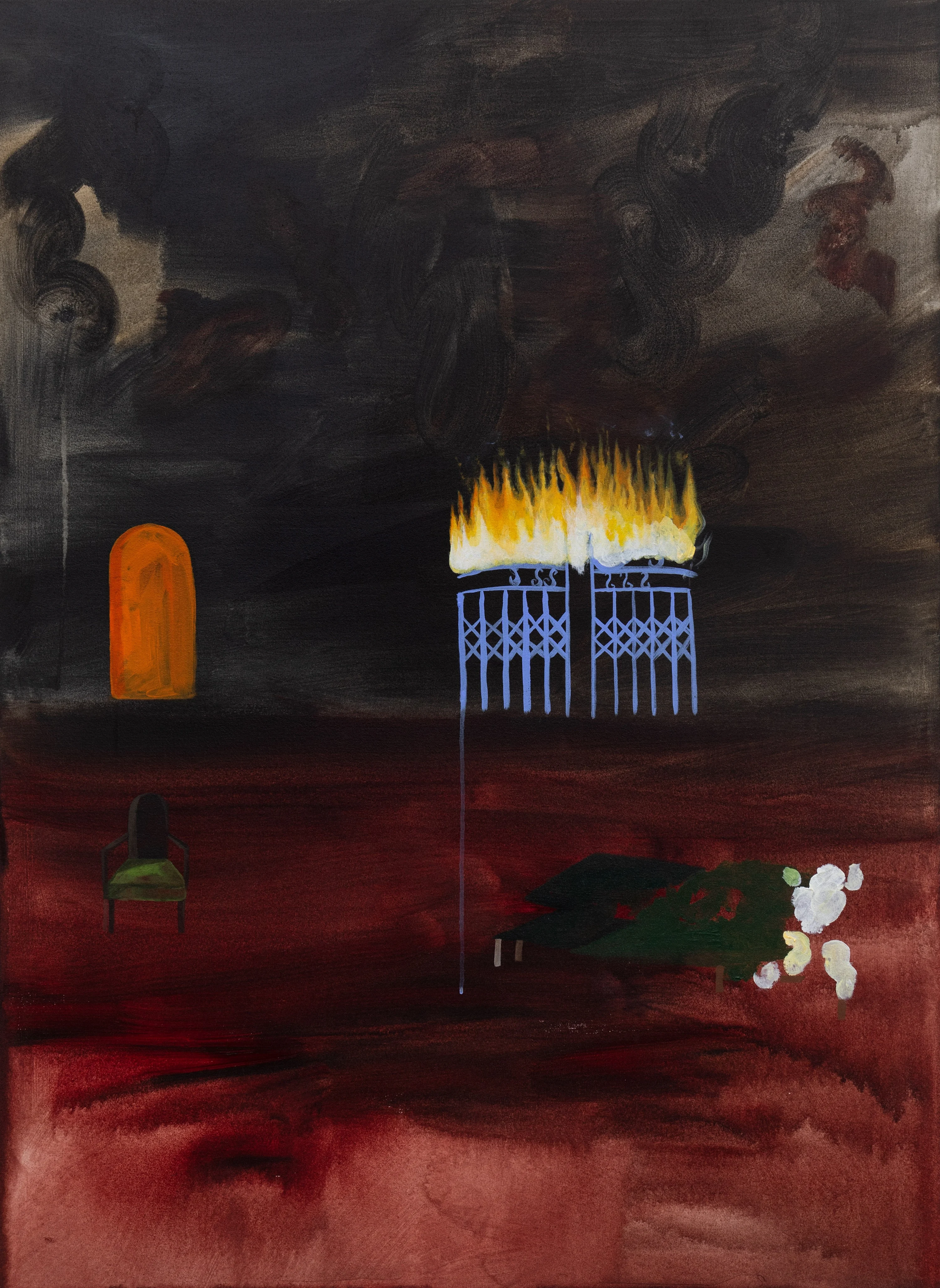
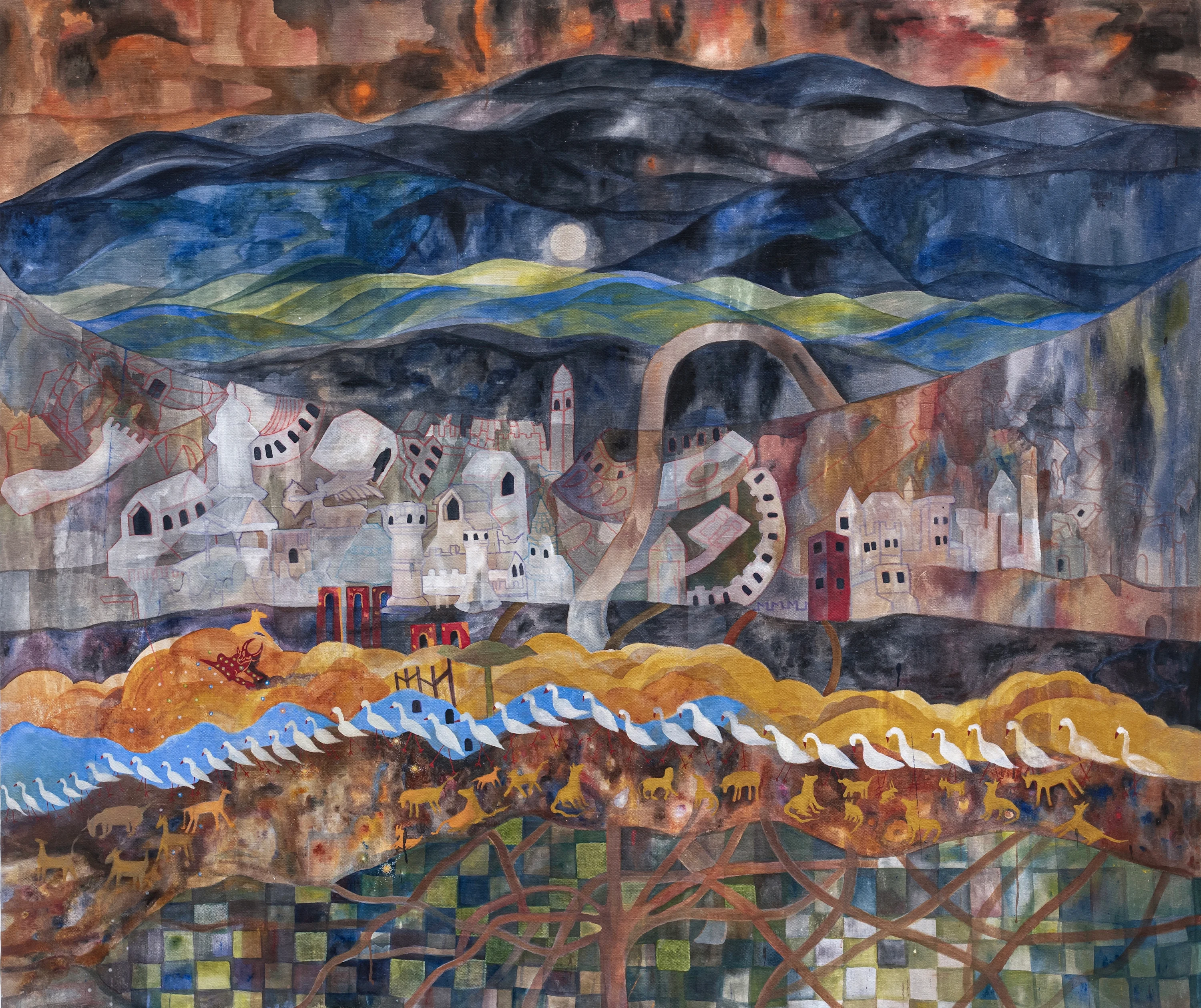
Inam’s second solo exhibition with Indigo+Madder, “Go back to sleep, it’s just the wind,” takes its title from a phrase often heard in childhood. I reflect on the eerie of my own childhood experience. When I was younger, I would fall asleep in the living room with my family around, only to wake and find it empty, except for the television’s static fuzz still glowing. I was unsettled by its scale and its bright, ominous monitor holding the room in its light. I would run to my father, wishing he asked less “why are you afraid?” and trusted instead the suspicion I had of screens. Inam’s works vindicate the child in me, unfolding as disquieting domestic interiors that render the familiar unfamiliar.
Adult life rarely grants our feelings epistemic authority. Consolidating reality often requires more than just emotion, but as a child, that is your most legitimate offering of evidence: “this doesn’t feel good, that feels wrong.” Inam’s ability to illustrate that affective confusion of childhood, where the world’s menace and charm has not yet been rendered familiar or predictable–is testament to her own experience living it.