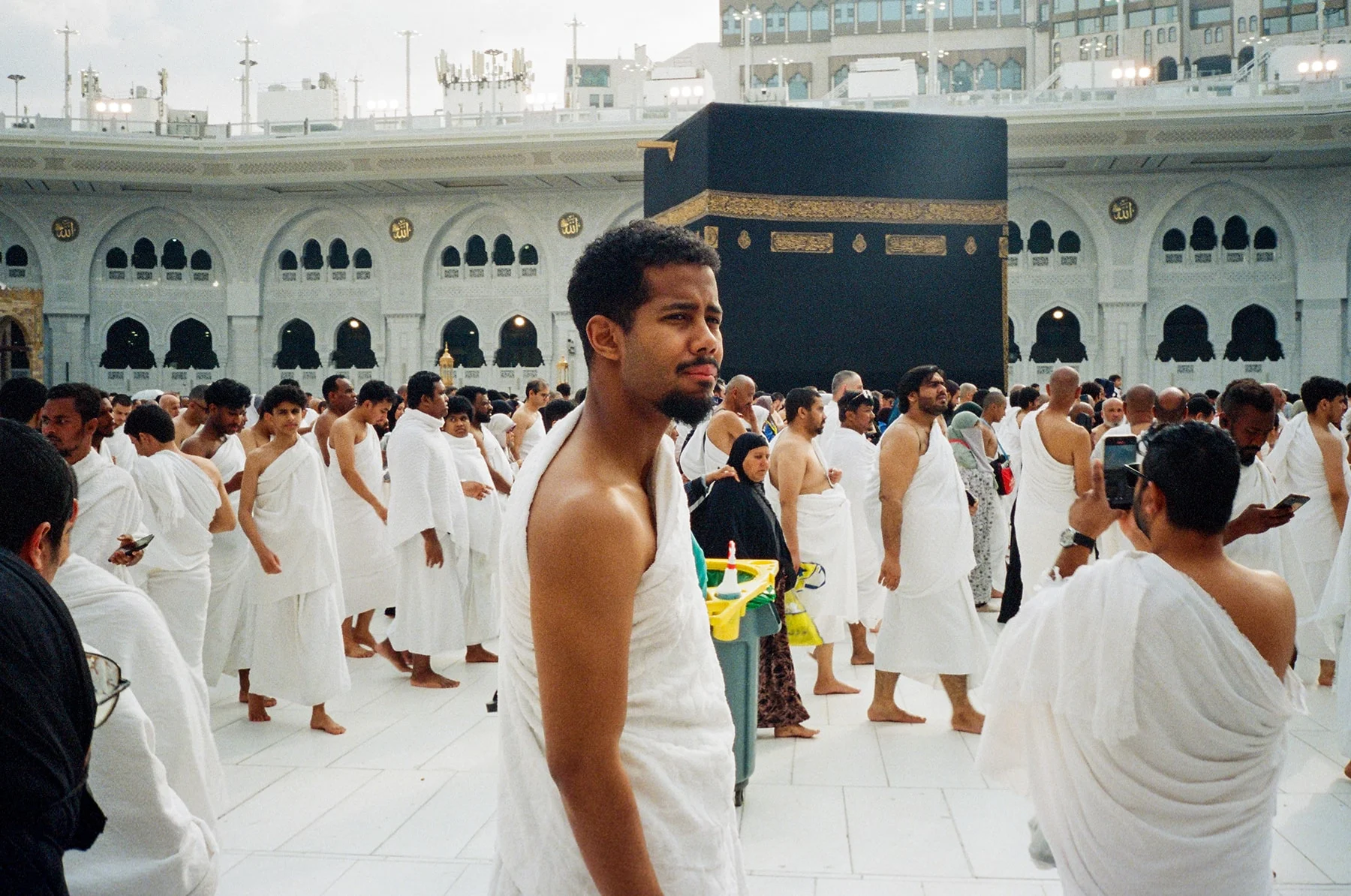
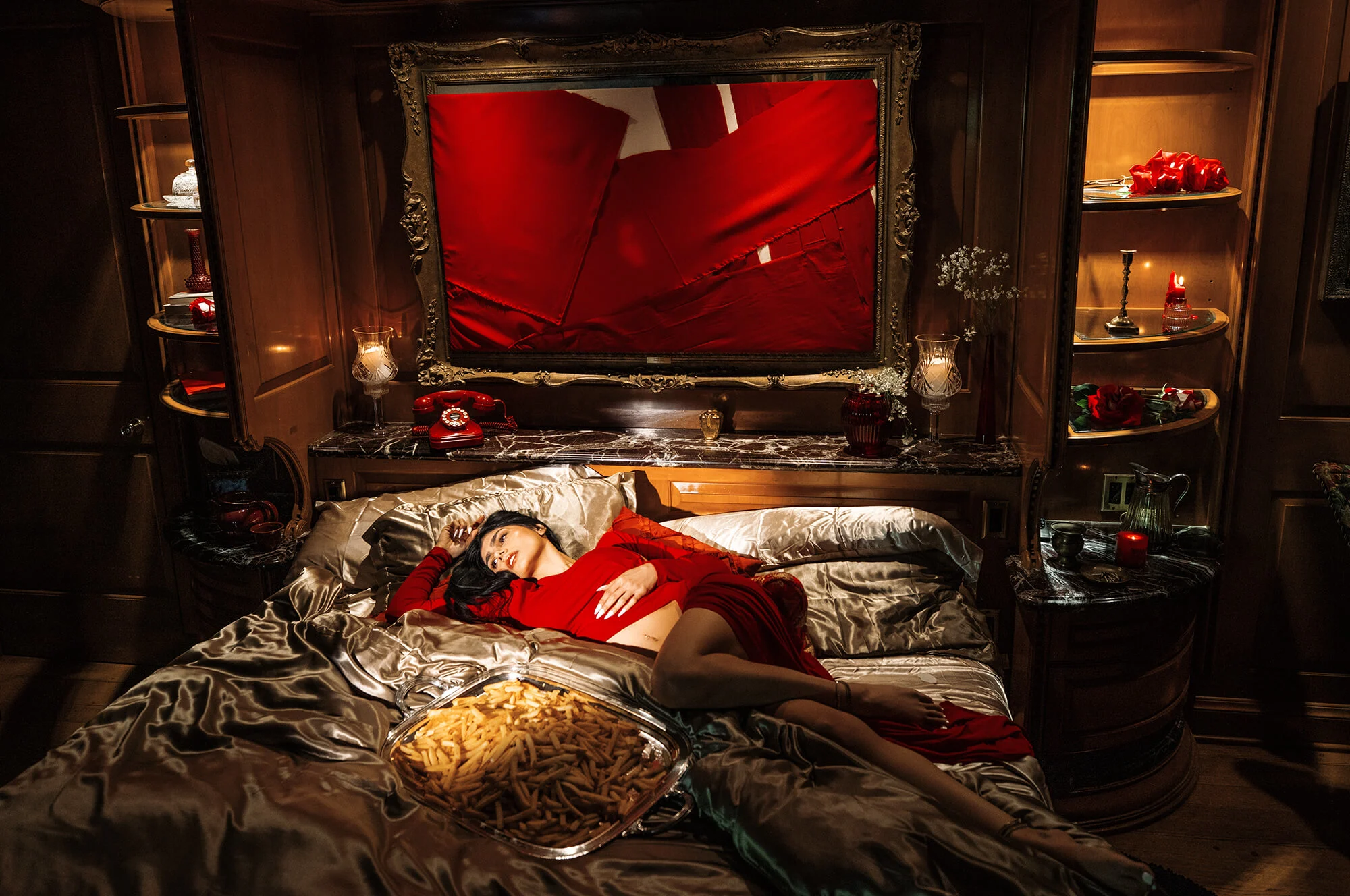

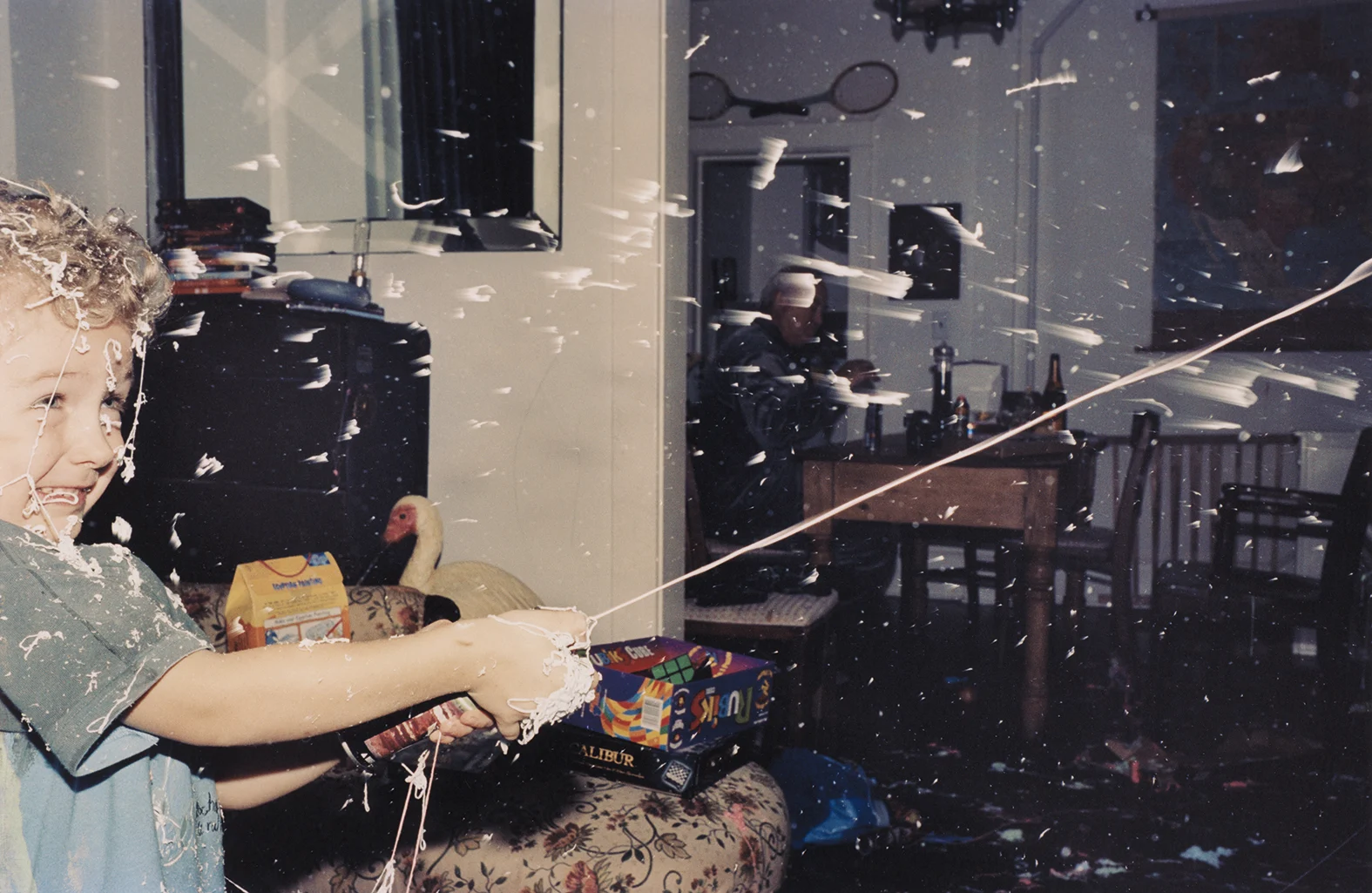
Nick Haymes was in his early thirties, a recently new father, when he began to turn his lens to his family. It was a way of understanding the place he was at in life, of comprehending parenthood. More than 25 years later, the result is “Chronograph,” a portrait of the pain and the poetry of everyday family life. He tells Joe Zadeh how he discovered that, later in life, it’s not the major milestones, but the whimsical, mundane moments that linger most in our minds.
“Chronograph” (2026) by Nick Haymes is published by MACK.
All images courtesy of the artist and MACK.
It came as a surprise on my first viewing that photographer Nick Haymes' epic new book, “Chronograph”—a kaleidoscopic portrait of family life, his own, over the course of 25 years during which they resided in New York and then Los Angeles—opened with the events of September 11th 2001. Shot from less than a block away at street level, his photos capture the surreal early moments of the attack: only the first plane has hit and the buildings still stand, some people are gazing up at the blazing hole in the North Tower, while others appear to walk by as if it isn’t happening.
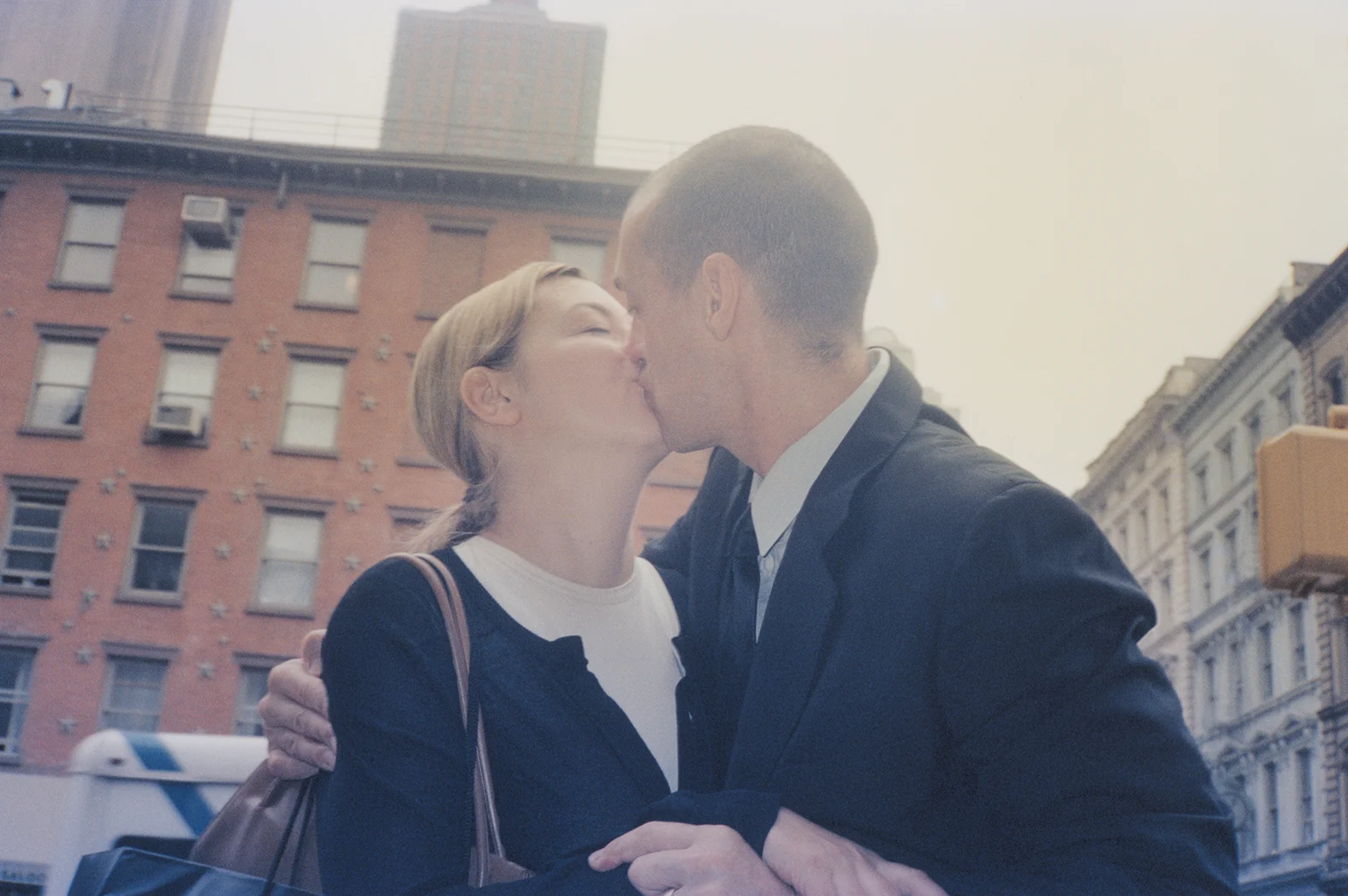
The immediate next images appear to be from a family holiday: Haymes’ partner, Lina, nestled in the white quilt of a hotel bed, then Lina and their son Philipp on a balcony beyond which a pale blue sea glistens under warm sunlight. The juxtaposition feels intentional: a registering of the way horrifying world-changing events drop into our lives like giant boulders from above and often become milestones within them, and yet—at least for those of us with the fortune of not being directly involved—our prosaic and everyday existence quickly and inevitably resumes its watery flow around them. Life goes on, as it will for the over 450 blissful, painful, ecstatic, tedious and ultimately mournful pages of “Chronograph.”
Haymes has an affinity for working at grand time scales. For his previous book, “Dancing on the Fault Line,” he spent 15 years immersed in the eventful social and personal life of entertainer and activist Bailey Love, the founder of Savage Ranch, a desert-based residence and gathering place for members of the LGBTQ+ community. But “Chronograph” would become the biggest project he’s worked on to date: his first pre-edit for the book contained 40,000 photos. “I’m not a photographer who takes one picture that says a thousand words,” he tells me over Zoom. “I can never find a single definitive image. I prefer a dialogue with people; the more I photograph them, the more it becomes a kind of dance, a form of communication, where trust builds and barriers break down.”
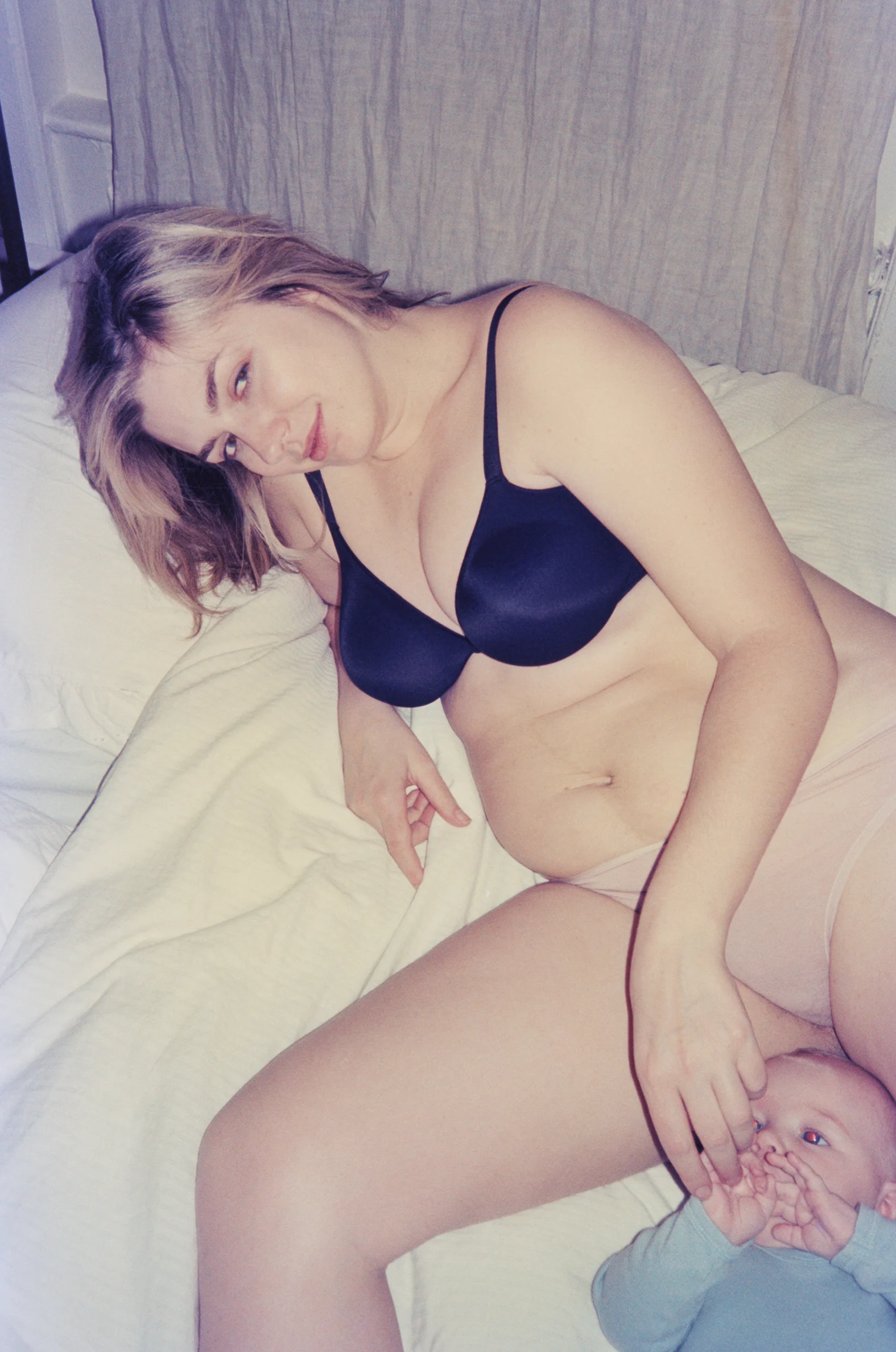
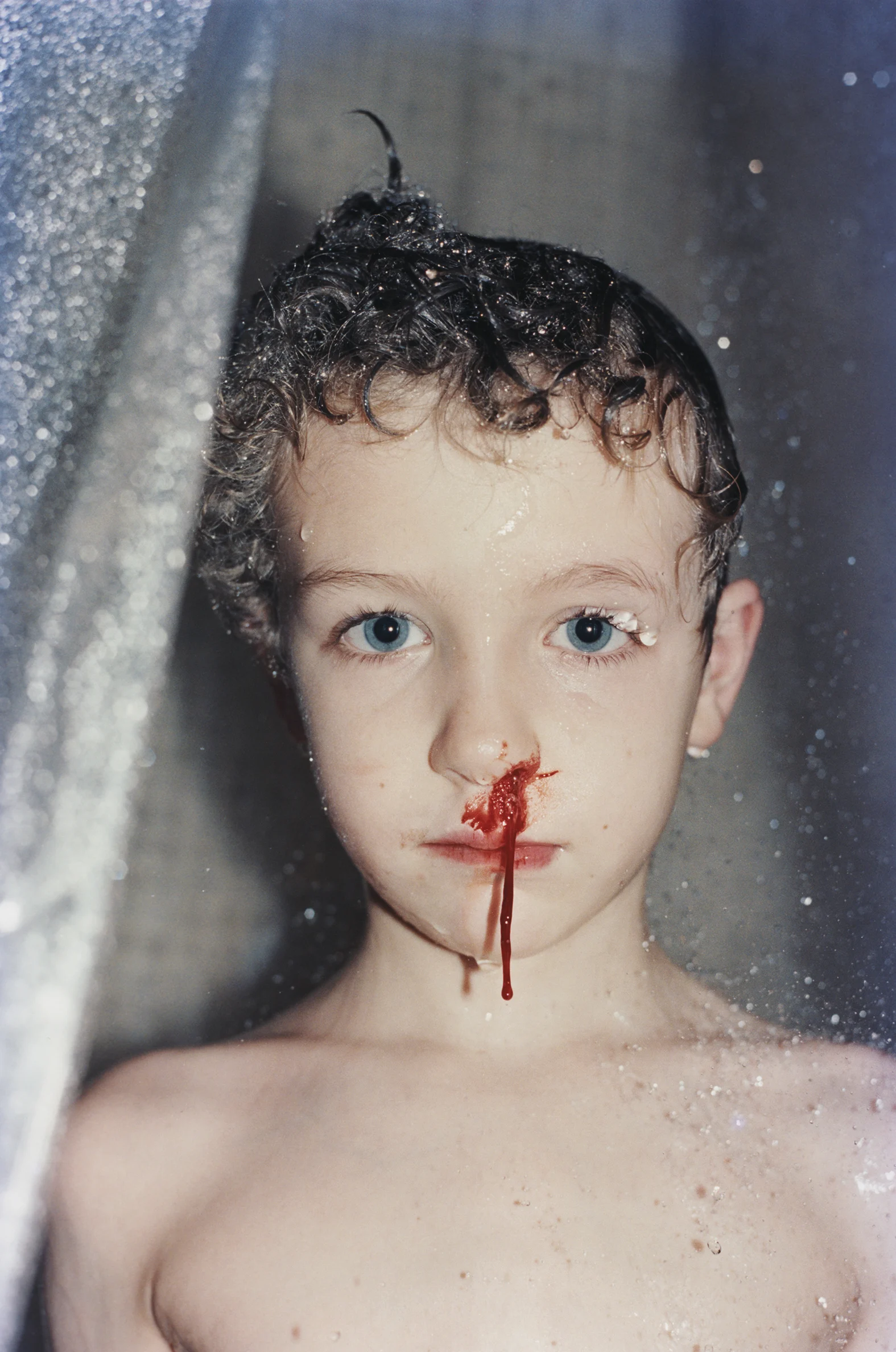
I prefer a dialogue with people; the more I photograph them, the more it becomes a kind of dance.
He was beginning his thirties when the work that became “Chronograph” began, but it was never intended as a specific project in those early days. Disillusioned with commercial work, he’d started to turn his lens to more personal subjects. “My family just happened to be one of the things I was photographing most frequently. I think it was a way of understanding what I was doing with my life, as a person, as a new parent. It was a way of trying to comprehend all of that,” he says.
He used whatever cameras were to hand—a Pentax 67, a Leica M6, some point-and-shoot compacts, as well as his iPhone later in the project—developed the rolls at cheap pharmacies or in his own dark rooms, and scanned everything himself. “I wanted to show the simple ups and downs, the relatable, the everyday,” he says, “because later on, it’s not the big smashing moments that feel powerful, it’s the mundane and whimsical that becomes the most attractive part of living.”
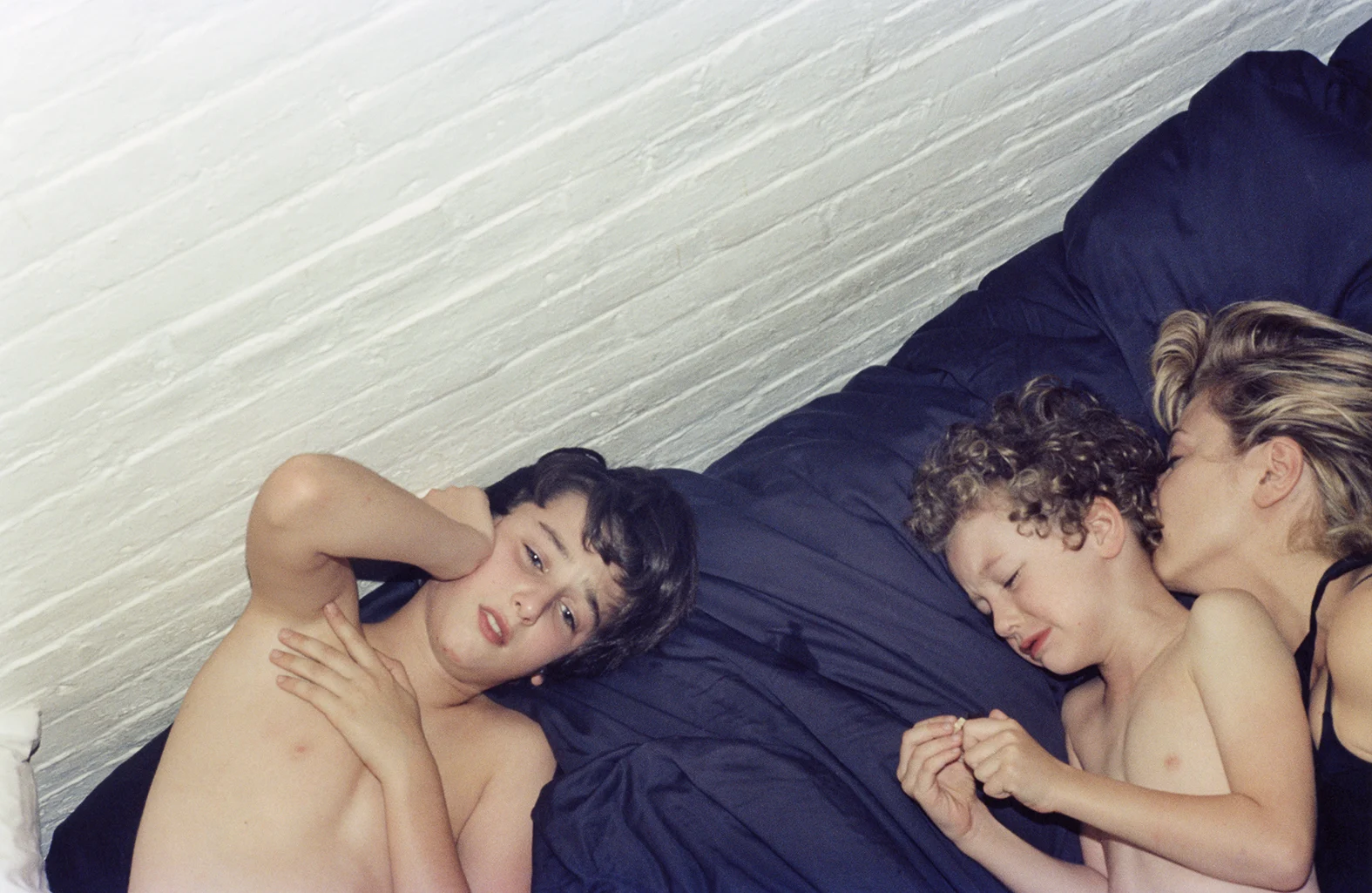
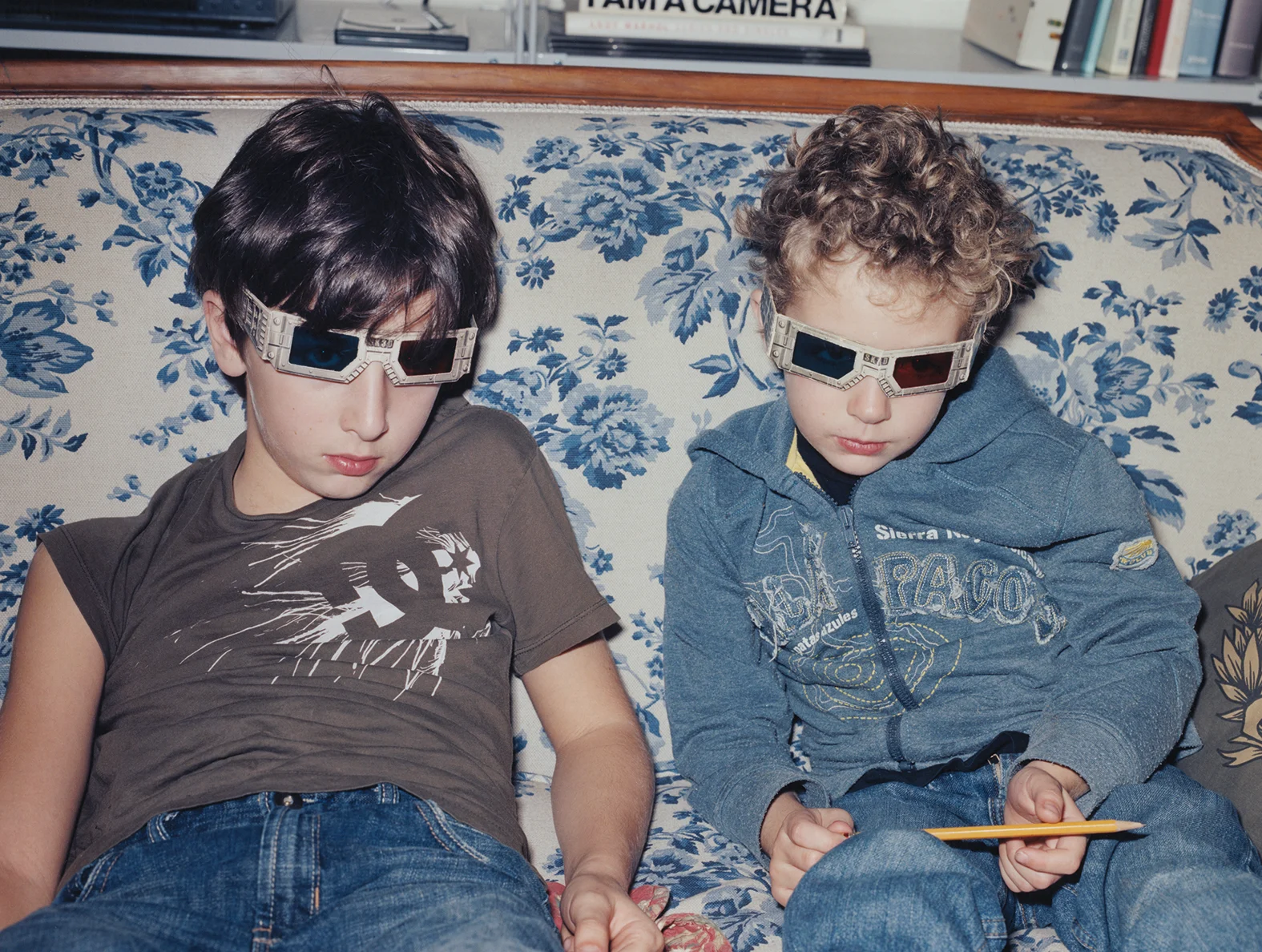
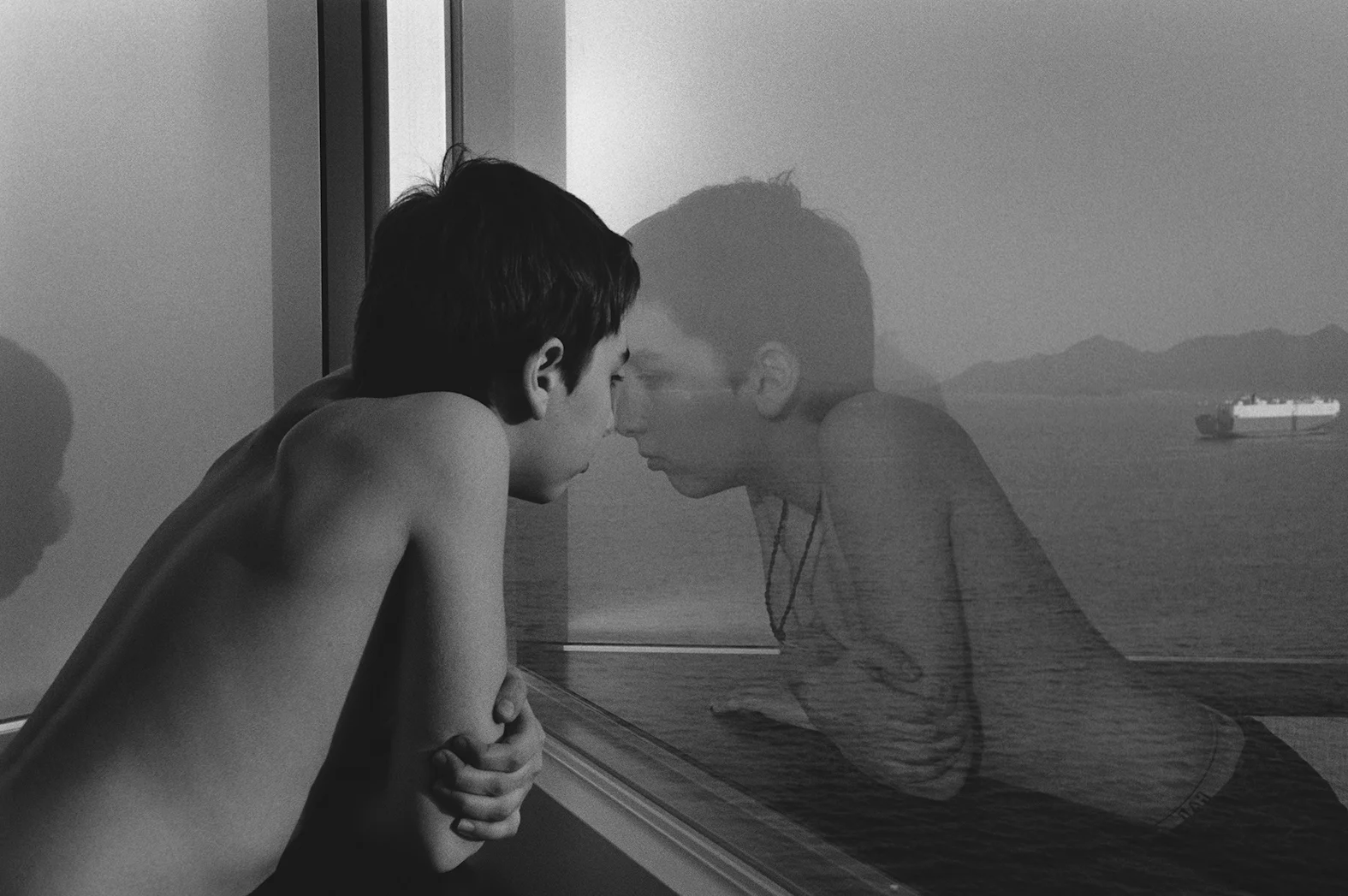
In “Chronograph,” we see birth of a child, a first lost tooth, a first bloody nose, bath times, breakfast times, road trips, house fires, pensive stares on a park bench, tears, a grandad standing proudly by the christmas tree in his grey velour tracksuit, the arrival of a pet hamster, the death of a pet hamster, beach combing, hair drying, hair combing, a bike ride in the rain, a visit to the dentist, fungal infections, operations and a dog invading the dinner table. These brief glimpses, it seems, are what make a life. And pairings like Lina posing nude on the sofa followed by an image of her, fully clothed, looking overwhelmed next to a half emptied dishwasher, capture the way the erotic and the humdrum live side by side in any long term relationship.
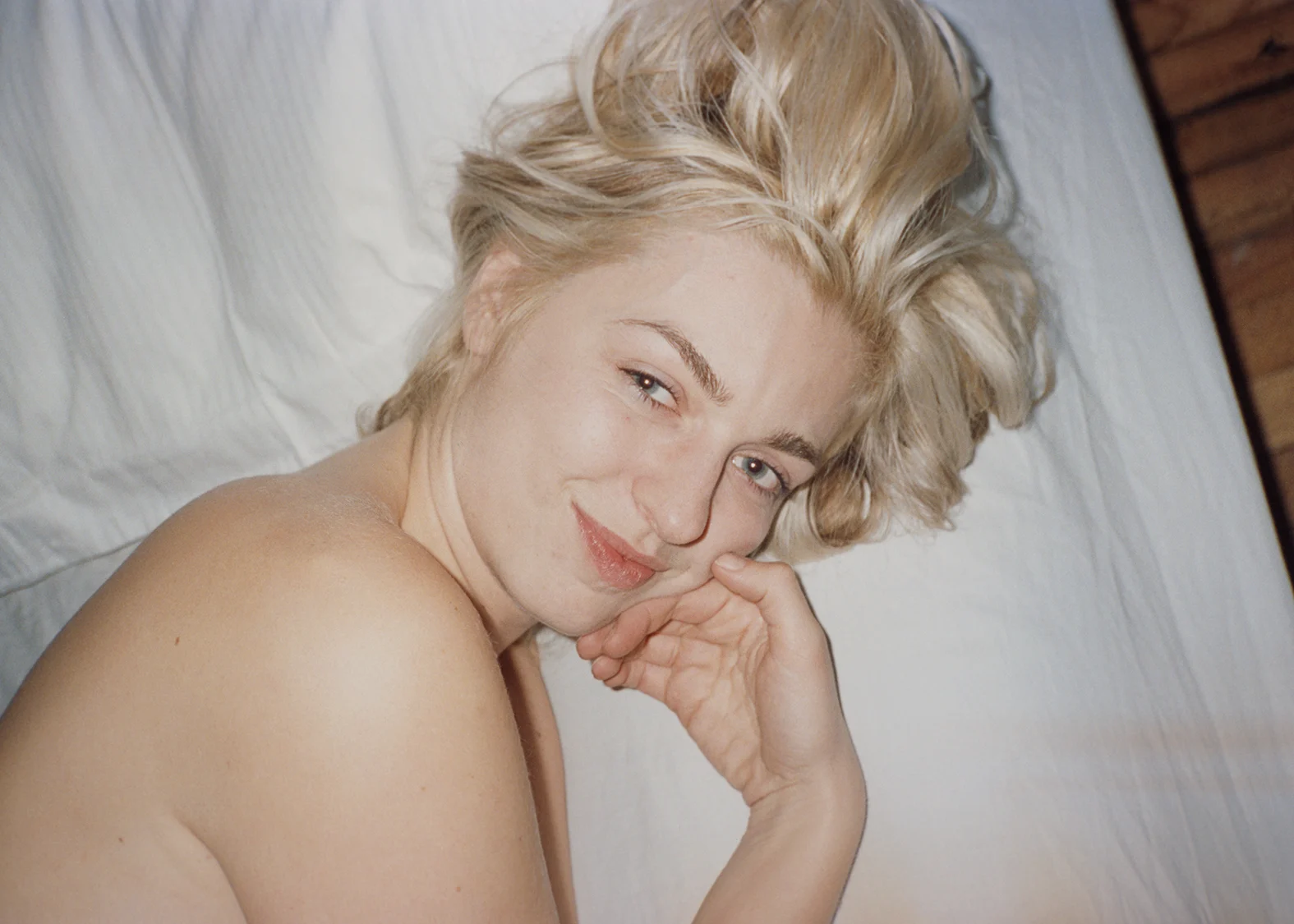
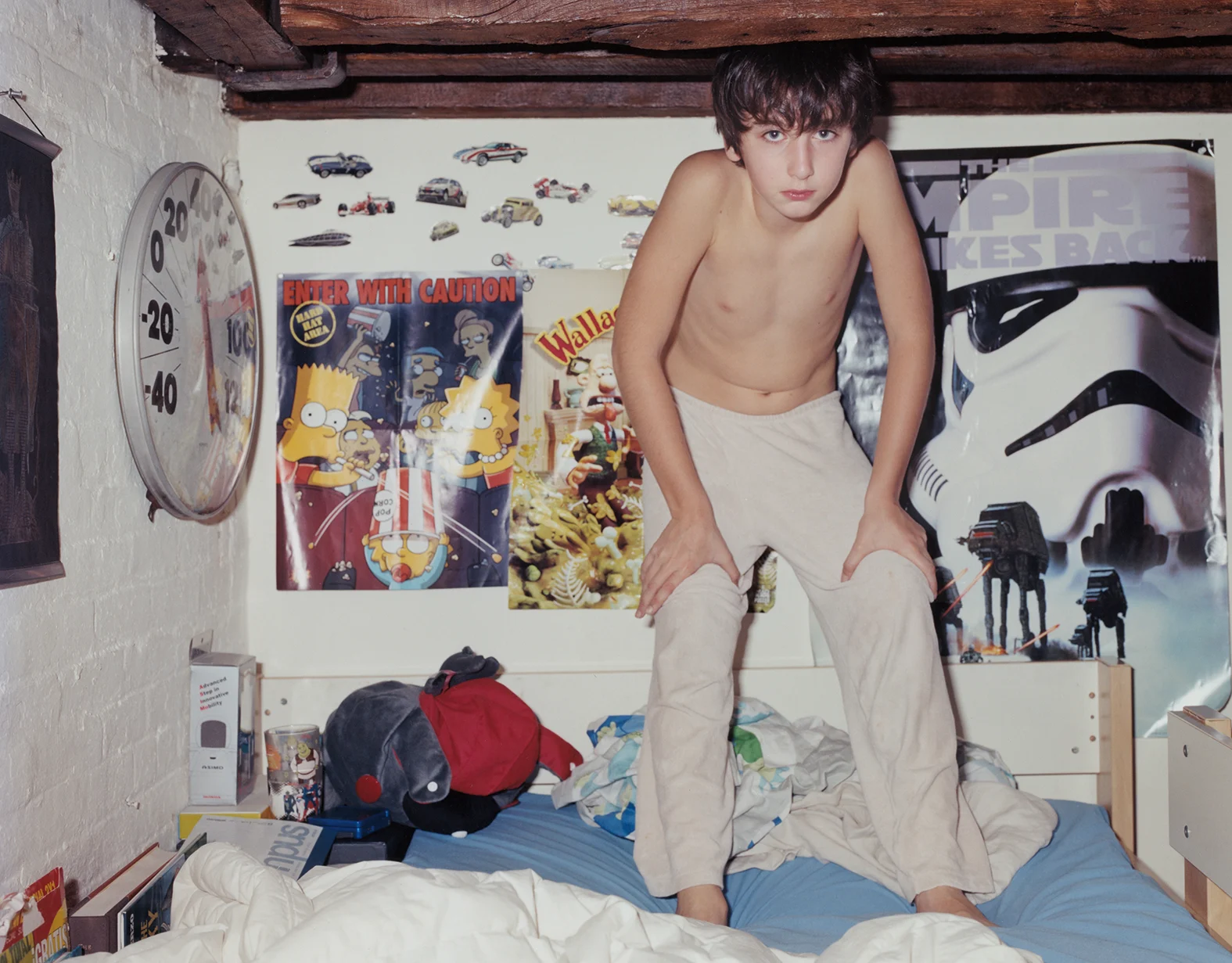
Later on, it’s not the big smashing moments that feel powerful, it’s the mundane and whimsical that becomes the most attractive part of living.
As I flicked through these pages it was hard not to feel a parasocial sense that I was coming to know these people rather well. The passage of time felt foreboding, and there was a desire for it to stop or just slow down. It comes as a shock when hairs appear on the legs of his youngest son, and the bittersweet sense that I was watching a childhood end and a far more complicated teenagehood begin is palpable.
"It’s the honesty of living together as a family in one small, cramped space—you can’t avoid anything, it’s all there, warts and all," says Haymes. And yet there is an irony that for him to observe and capture these moments he had to be visually absent from almost every single one of them—marooned behind the lens. Does the camera bring the taker closer to its subjects or put a wall up between them? It feels like a fundamental question of photography that rumbles beneath “Chronograph,” too big to ever be answered. “Later on I did start questioning how present I was in the moment,” says Haymes. “Am I there taking the photograph, or actually engaged in being a parent?”
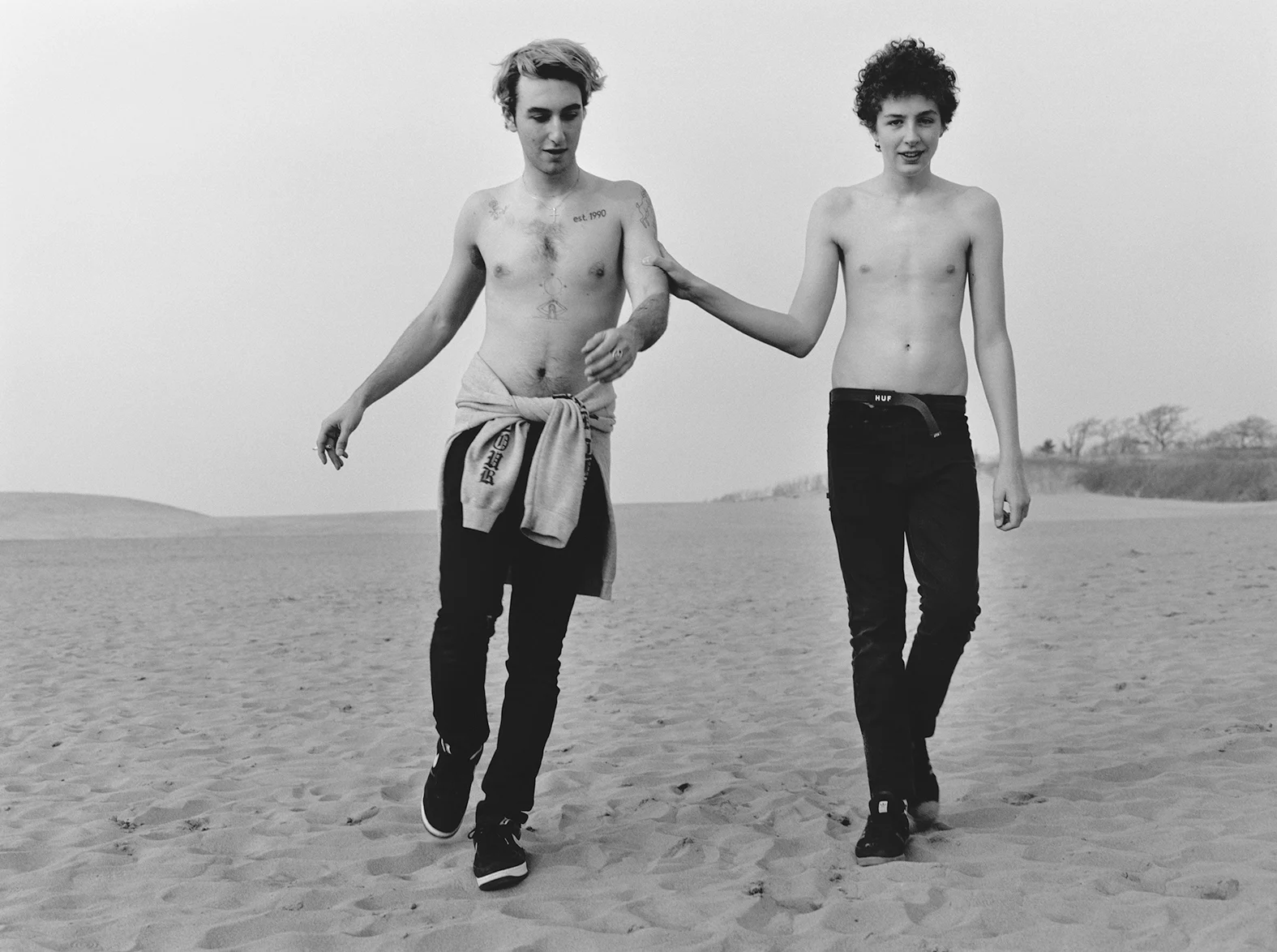
The rather abstract sense of death that permeated the global tragedy of the book’s opening pages returns in a more direct and personal way in its final pages. The camera watches as the children’s grandparents become frail, enter hospital and ultimately pass away. Haymes tells me that their death became something of a signal to him that this gargantuan 25 year project was reaching its climax. The boys, now young men, carry the urns at the funeral. A photo of the granddad holding them both as children—an image we’d seen in real time hundreds of pages and many years earlier—is displayed on a stand.
After this, the book’s final notes are poetic visions: extreme close ups of flowers, so close the petals look like landscapes, the stamens like trees, and the darkness around them turns to noise. “They were the flowers sent for the funeral,” says Haymes. “They were arriving daily, and they’d start to stink and rot at some point. But there’s that point where they’re not dead yet, but they are dying, and that turning point feels like the most romantic, beautiful and sad thing about flowers. It felt important to photograph that notion of existence.”