You may see the carefully-composed photos and selfies people throw on their social media profile as vain or vapid, but in Moka Lee’s work, they become something of substance. She finds pictures of strangers online and asks them to buy the image rights, before undertaking the physically demanding process of turning them into enormous paintings. She tells Alix-Rose Cowie how she’s exploring the ways we present a certain version of ourselves online, and how the act of sharing these carefully-composed images is an attempt to be seen, and to be loved.
Korean artist Moka Lee has never met the people whose portraits she paints. Her source material is strangers’ selfies that she finds by chance, or by algorithm, while scrolling social media. When she finds a face she wants to paint, she contacts them with an offer to pay for their image, and then work begins to supersize a screenshot into an oil painting much larger than herself—turning low resolution pictures into high art from her studio in Seoul.
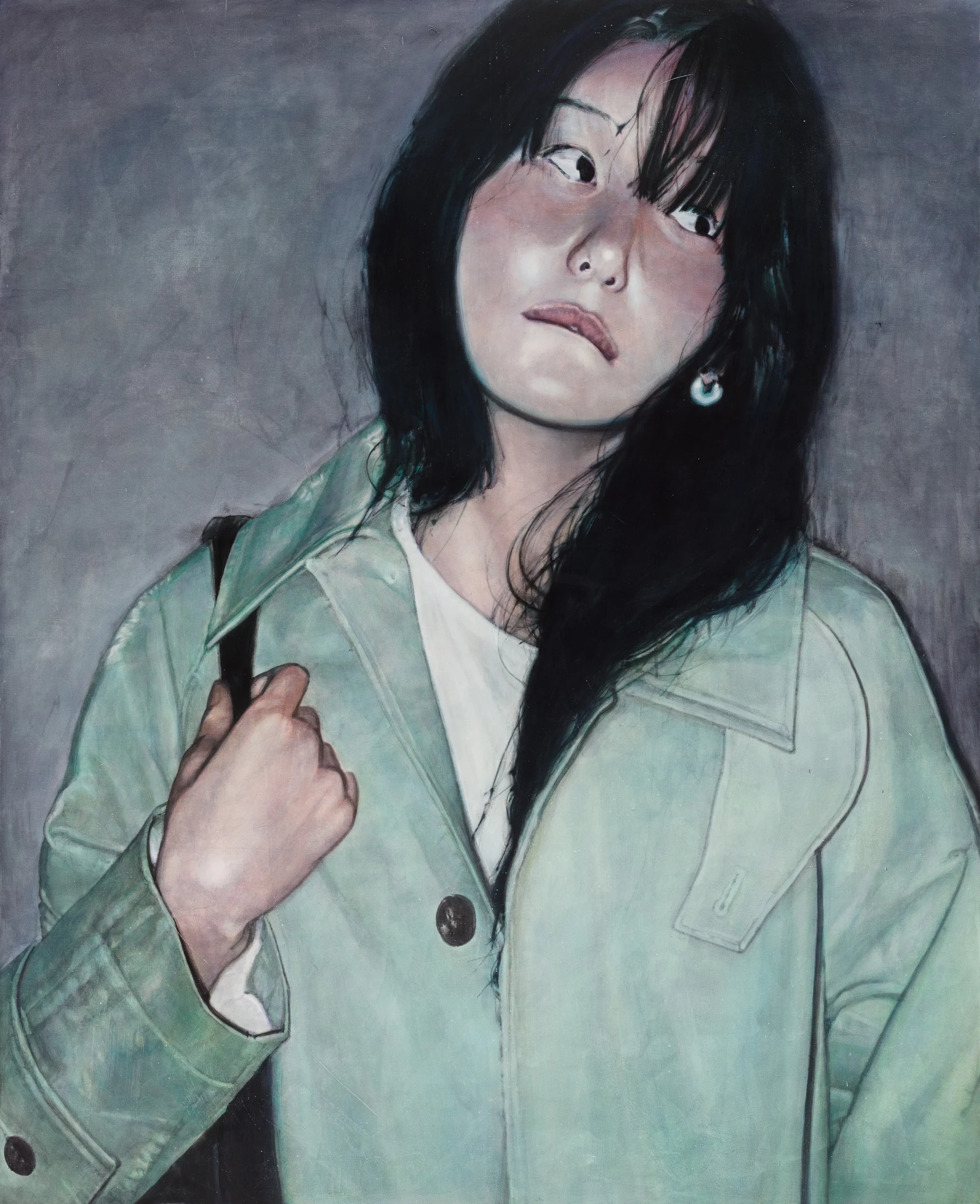
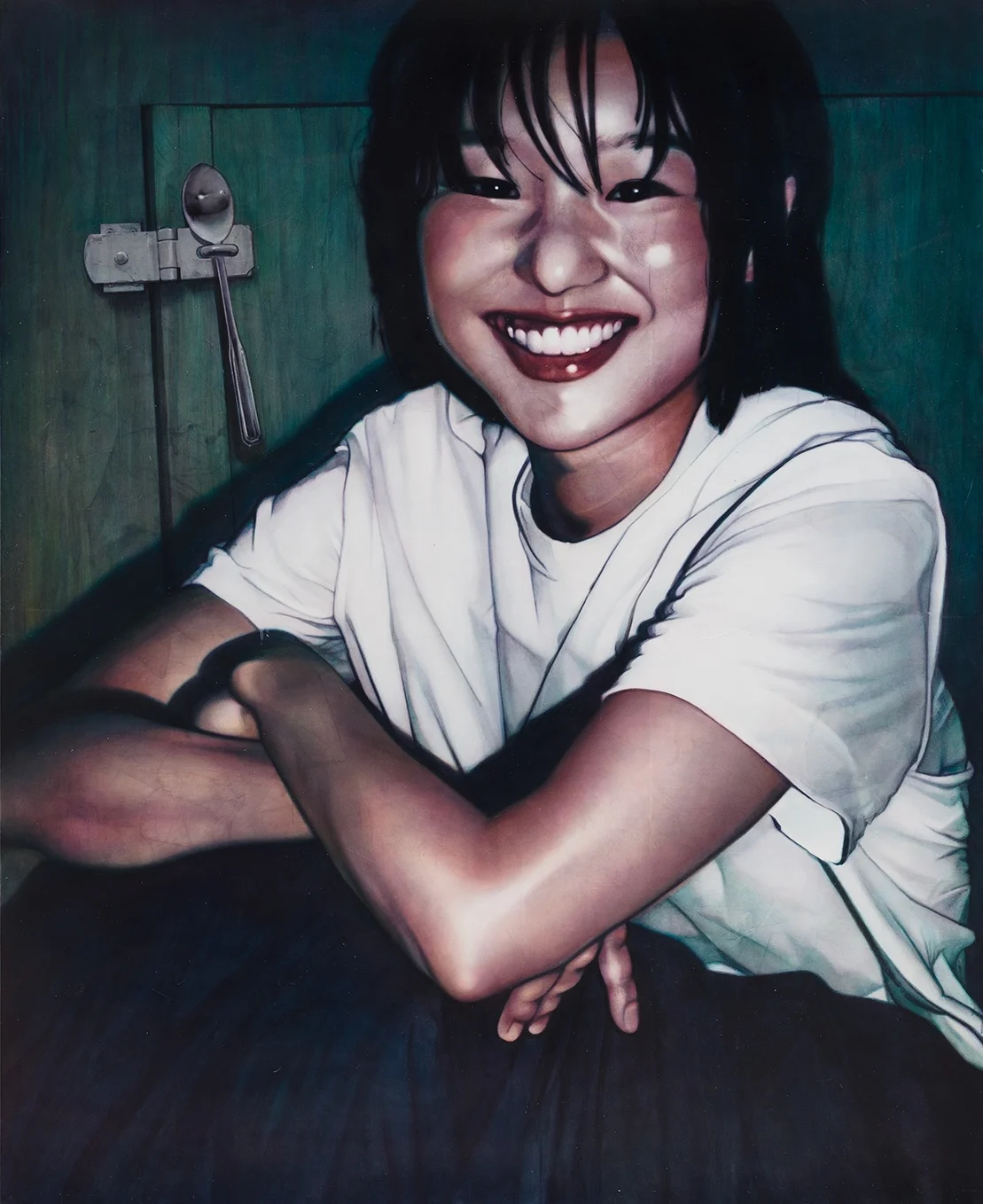
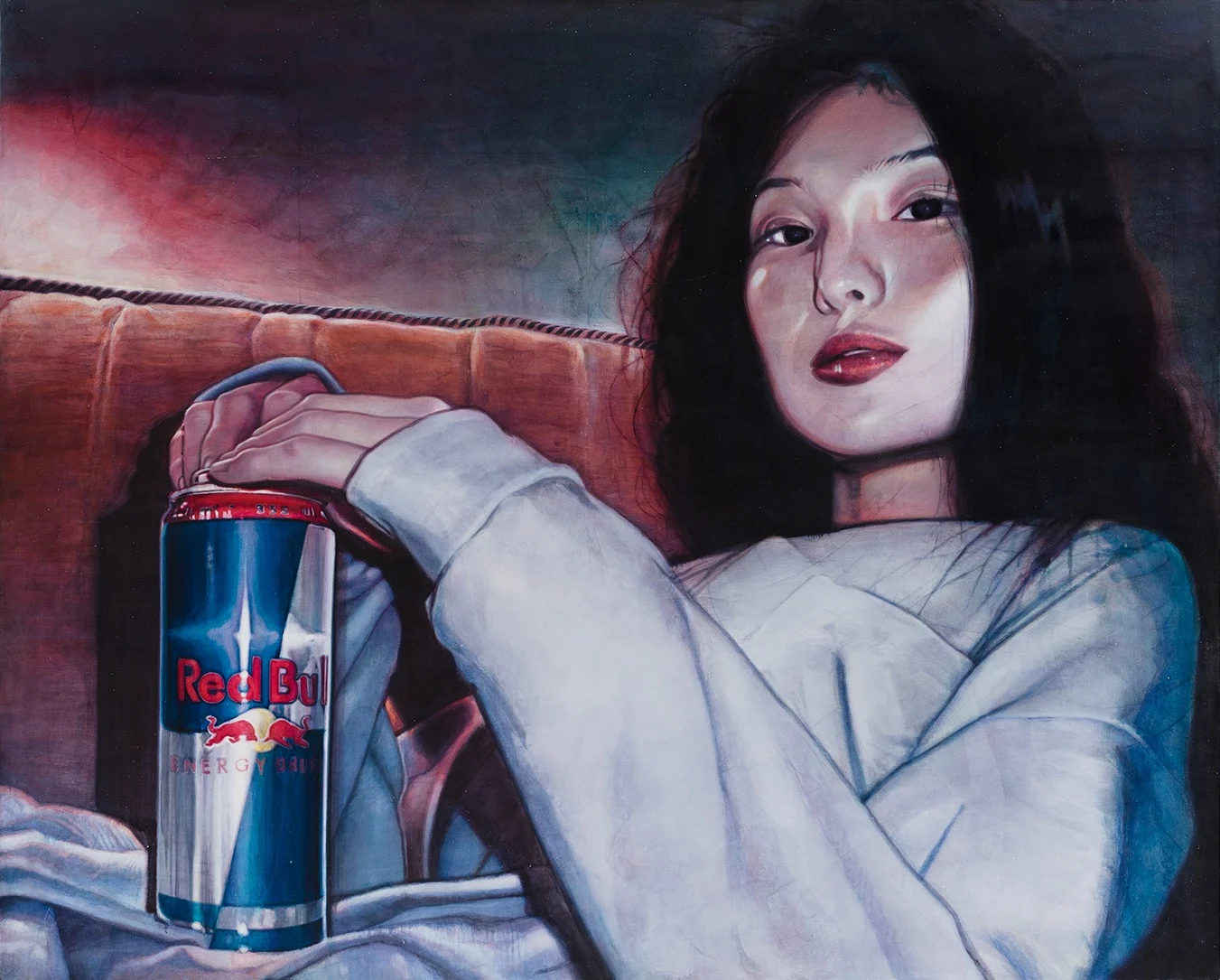
Women stare directly out from Lee’s paintings, with lips in a playful pout, or an arm outstretched to capture the most flattering angle. Others show poses planned to be candid; big smiles for whoever may be looking. “I am interested in the way people exhibit their personas,” Lee says, “People rarely present themselves directly to others. Instead, small intentions are embedded within the images they share. There is a narrative within that process. It reveals something about human nature and the ways we construct and present ourselves to the world. That is something I find endlessly interesting.”
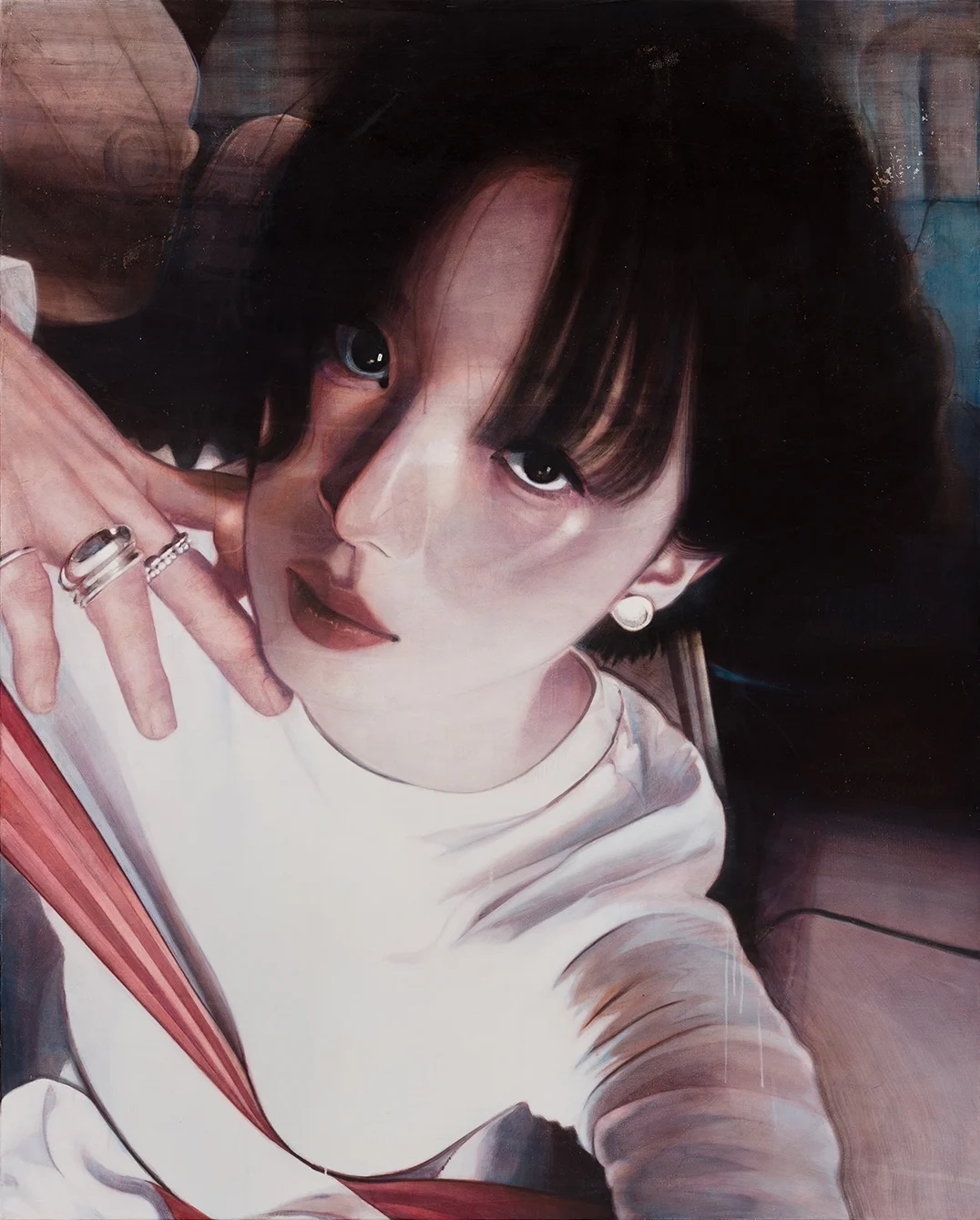
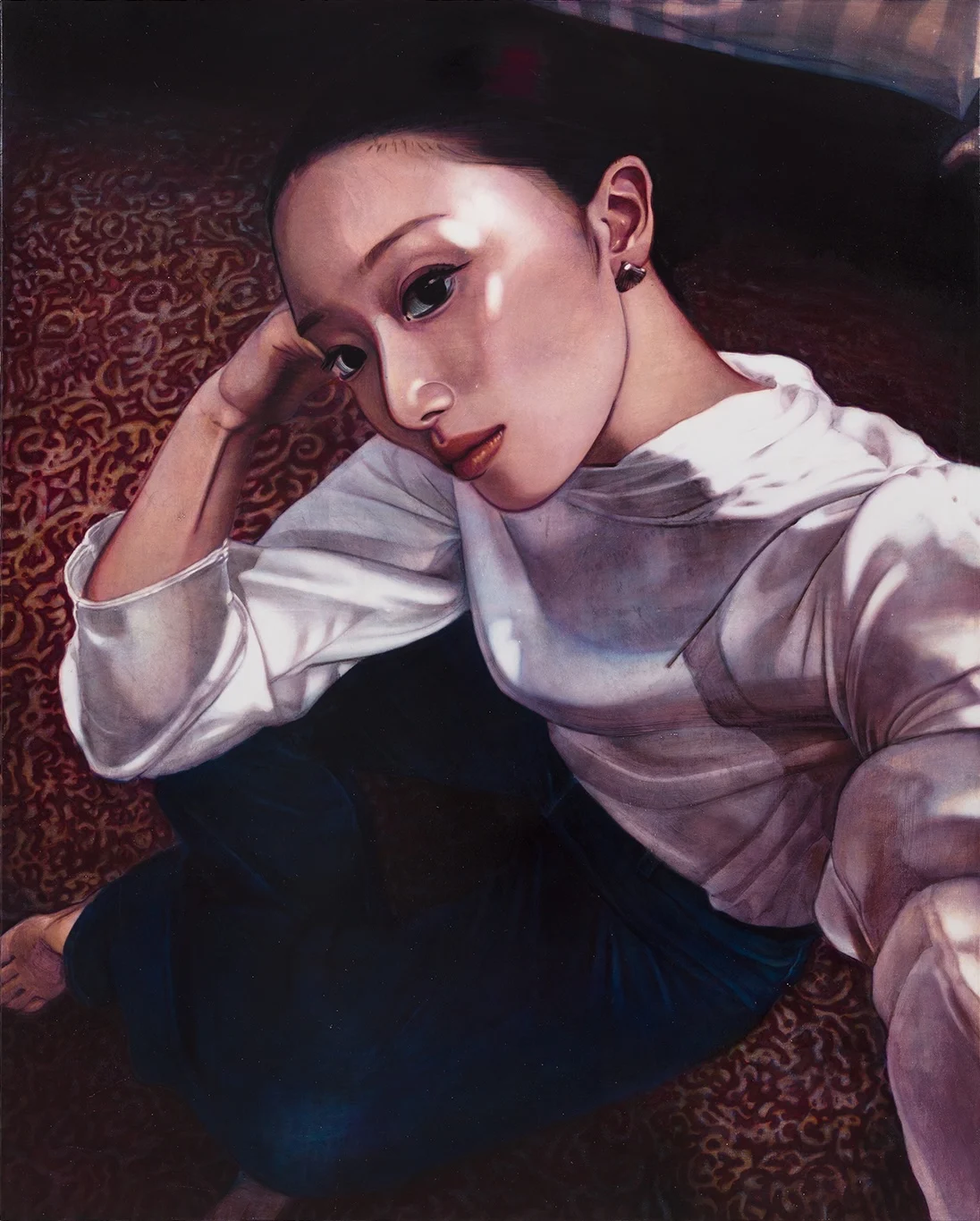
Lee studied western painting at Sejong University, and applying the techniques of classical painting to represent contemporary digital imagery is a large component of her work, both conceptually and visually. “A lot of contemporary portraiture is concerned with breaking away from classical conventions. In contrast, I use a methodology that remains close to older traditions. At the same time, the images I paint are unmistakably contemporary. They are images that people encounter every day on their phones,” she says. “I feel a strong affinity with portrait painters from the past. I always wanted to paint somewhat like a classical painter, while still talking about what is being thought about in the time I live in.”
The consideration of traditional portraiture and classical painting as valuable adds a conceptual layer to Lee’s work which provokes questions around worth and worthiness. “What I find particularly interesting is what happens when an Instagram image is taken out of its original context and translated into a painting,” she says. Pulling an image from the soup of the internet and rendering it in oils can make it suddenly important, and paired with the grand scale of Lee’s paintings, frivolous selfies become something of substance.
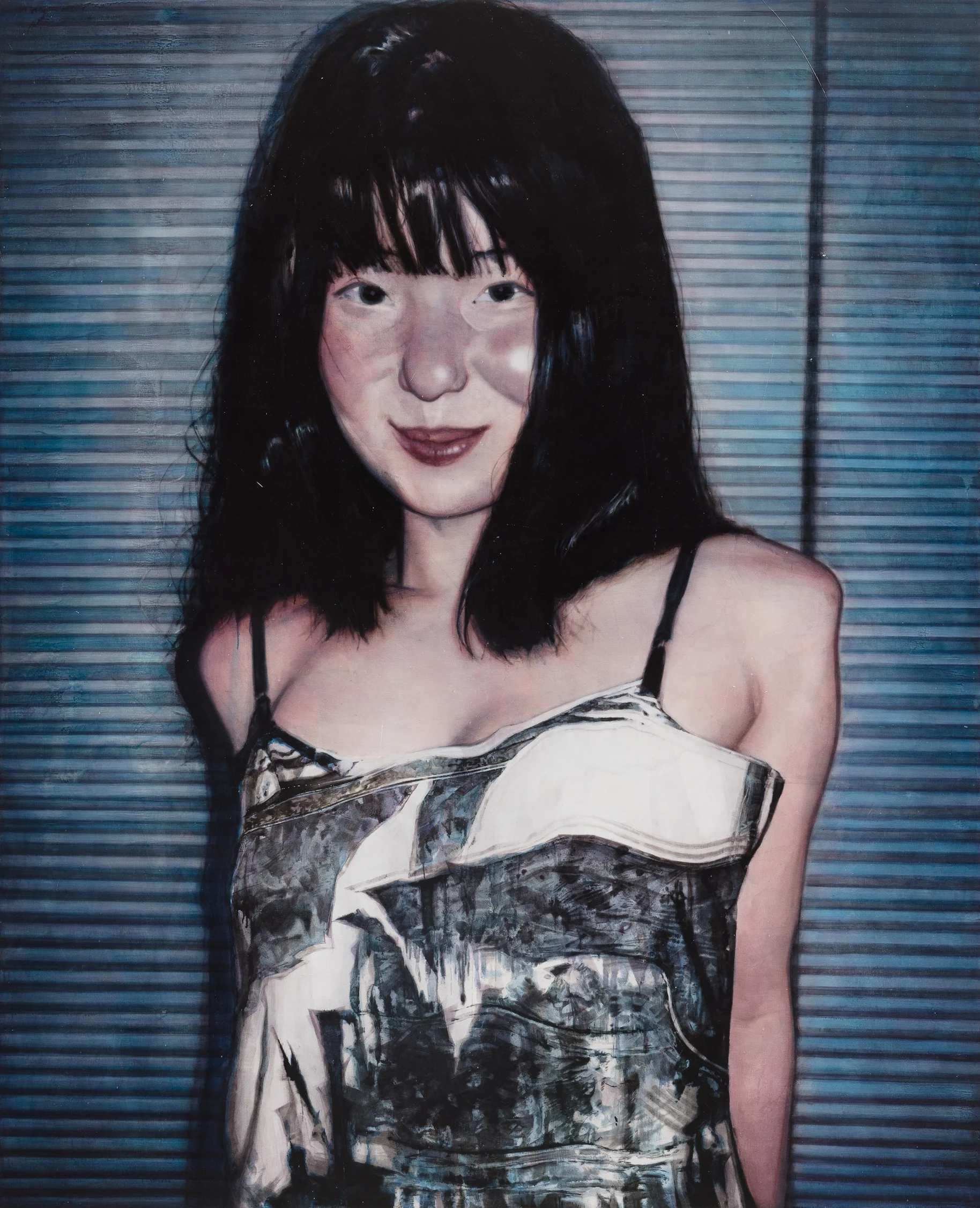
“Through that persona, people want to be seen, understood, and ultimately loved.”
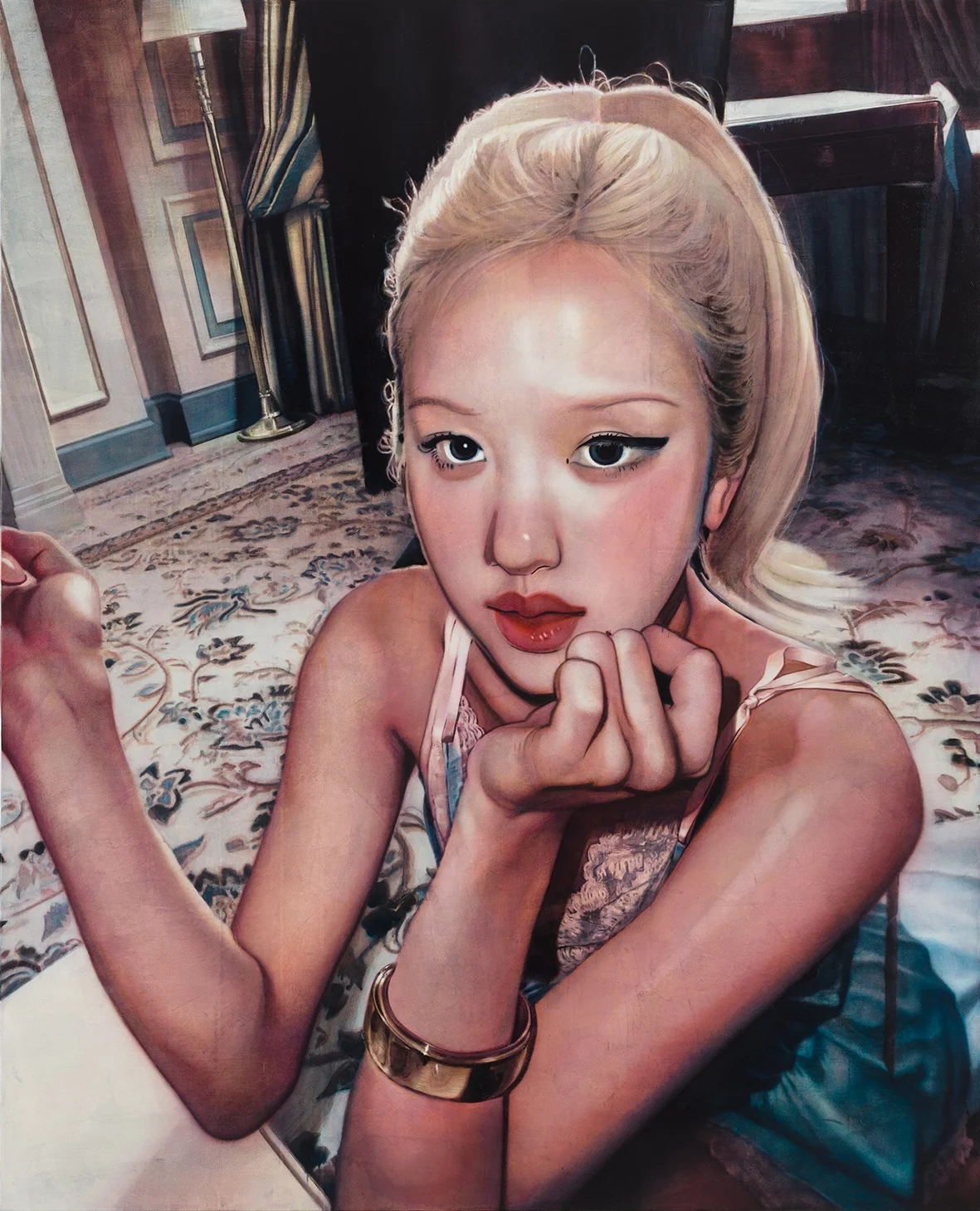
Lee is intrigued by this value transfer, but also when it fails to occur. Innuendo 01 (I’m In Love With My Car) is her painting of a woman’s self-portrait in the front seat of a car with her seatbelt fastened and her eyes up to the camera. Her free hand is placed beneath her chin showing the jewelry on her fingers. “One might assume that the gravity of painting would transform the image into something more serious or profound. I found the opposite to be true,” Lee says. “No matter how seriously I approached the painting, it still retained a sense of emptiness. I found that tension fascinating.”
Nevertheless, the painting is enduringly meaningful to Lee and is one that’s been reproduced as editioned prints. “I’m interested in how people express themselves through a single image online. There is often a remarkable compositional beauty in those images, and I think Innuendo 01 exemplifies that especially well.”
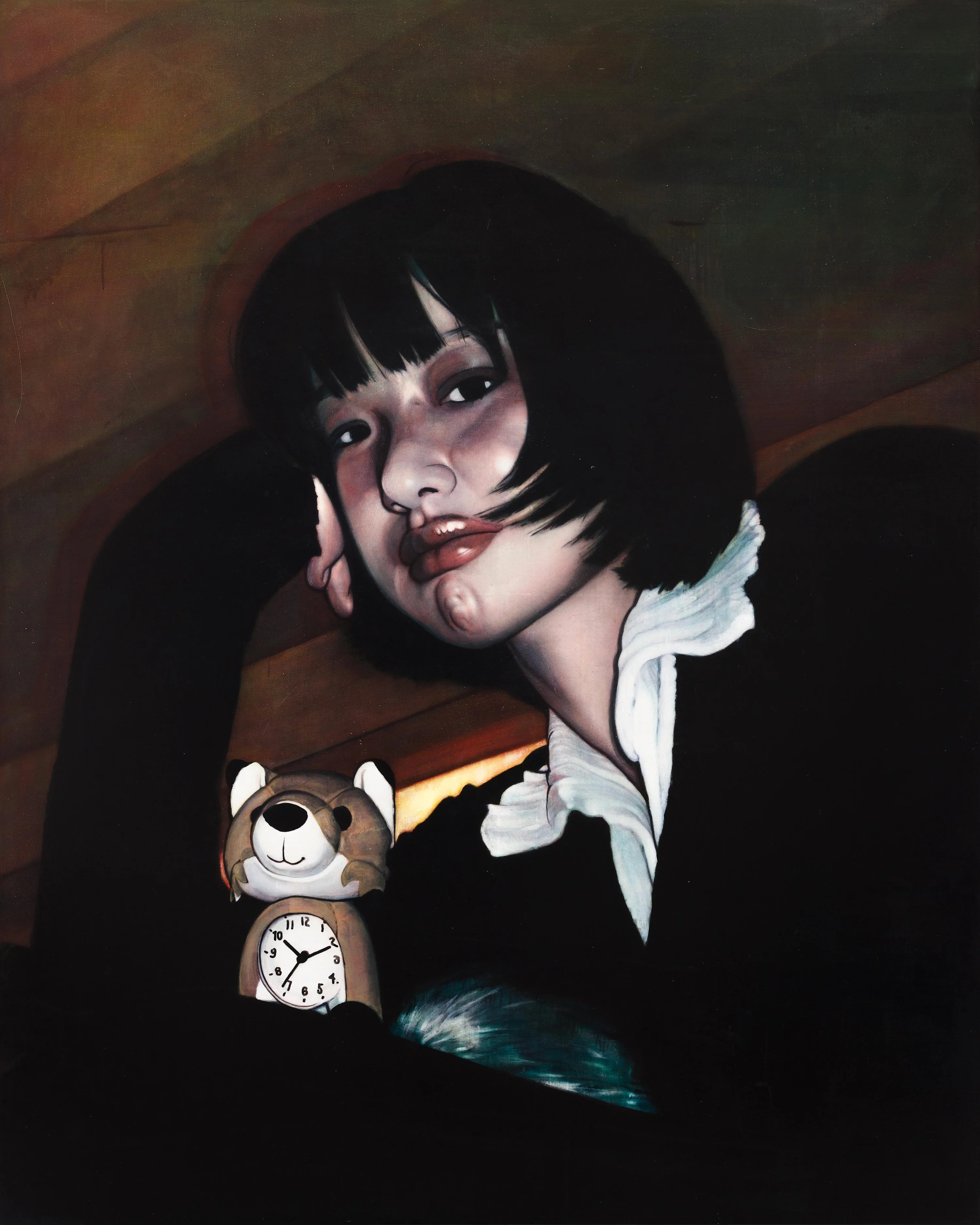
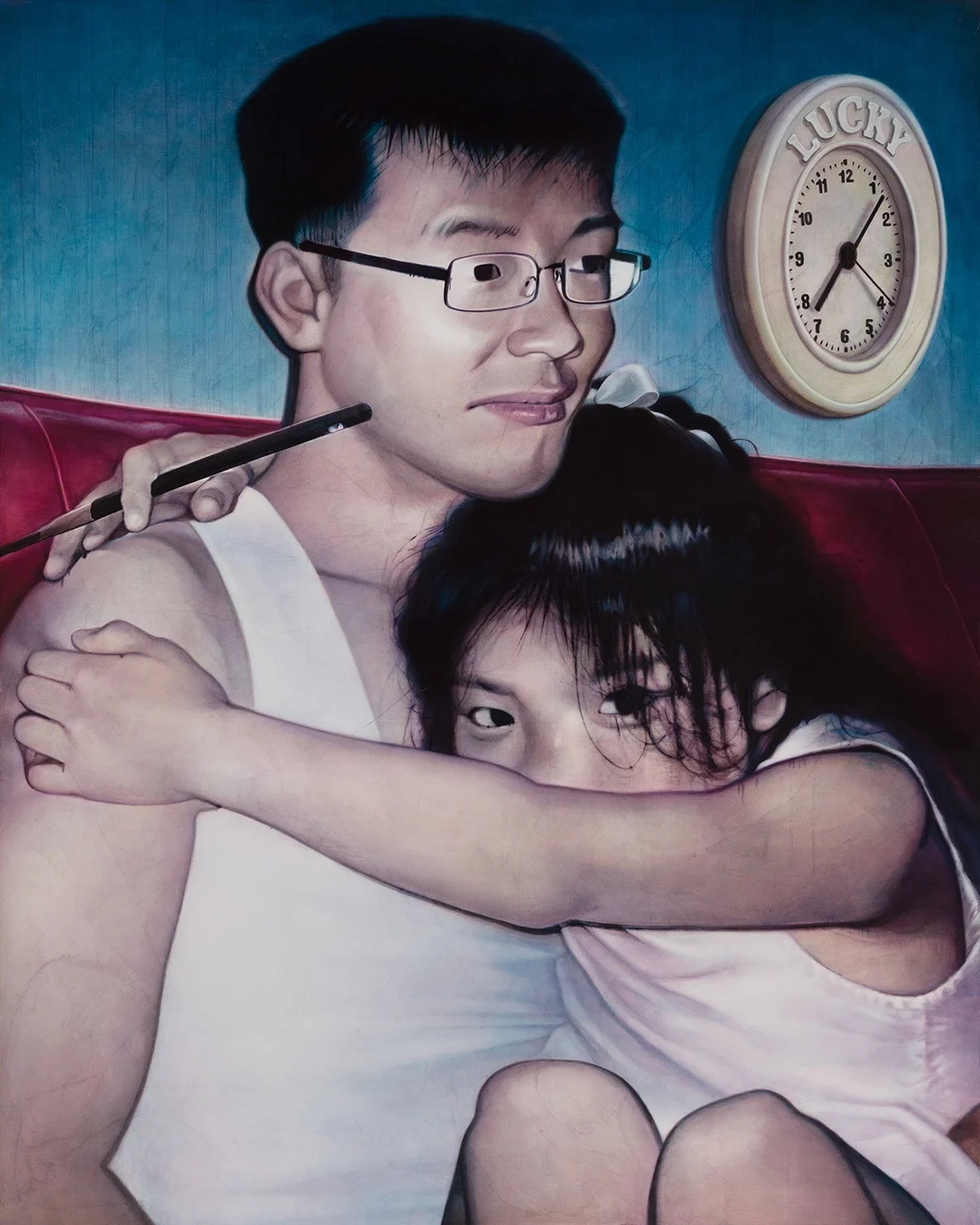
Lee spends many hours in her studio with the images of her subjects—her process is physically demanding, and she drops in and out of perspective while painting on such large surfaces, eventually becoming absorbed by the task. Even so, she doesn’t think about who they are. It’s as if her subject matter is not the individuals at all but what they’re able to convey. Browsing online for images to paint, Lee’s drawn to those in which she recognizes a person’s emotional state, and believes it embodies a wider collective feeling.
While self portraiture in the form of a selfie uploaded to social media can get a bad rap for being vain or vapid, Lee’s paintings suggest there’s more to see. “What’s presented online is not necessarily the person themselves, but a persona they have carefully constructed. Through that persona, people want to be seen, understood, and ultimately loved,” she says. “There is a very visible desire within that activity. At its core, I think it reflects a universal desire to be liked and loved through the most beautiful version of oneself that one chooses to present to the world.”
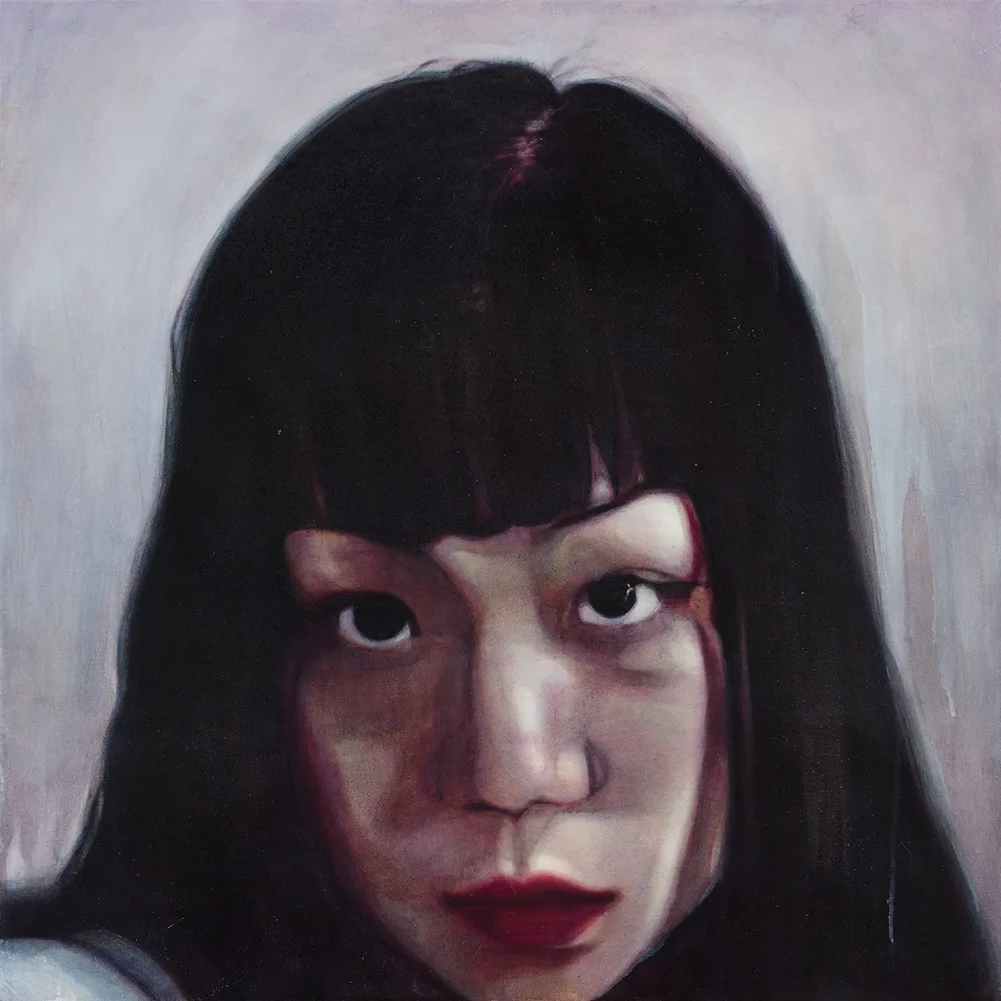
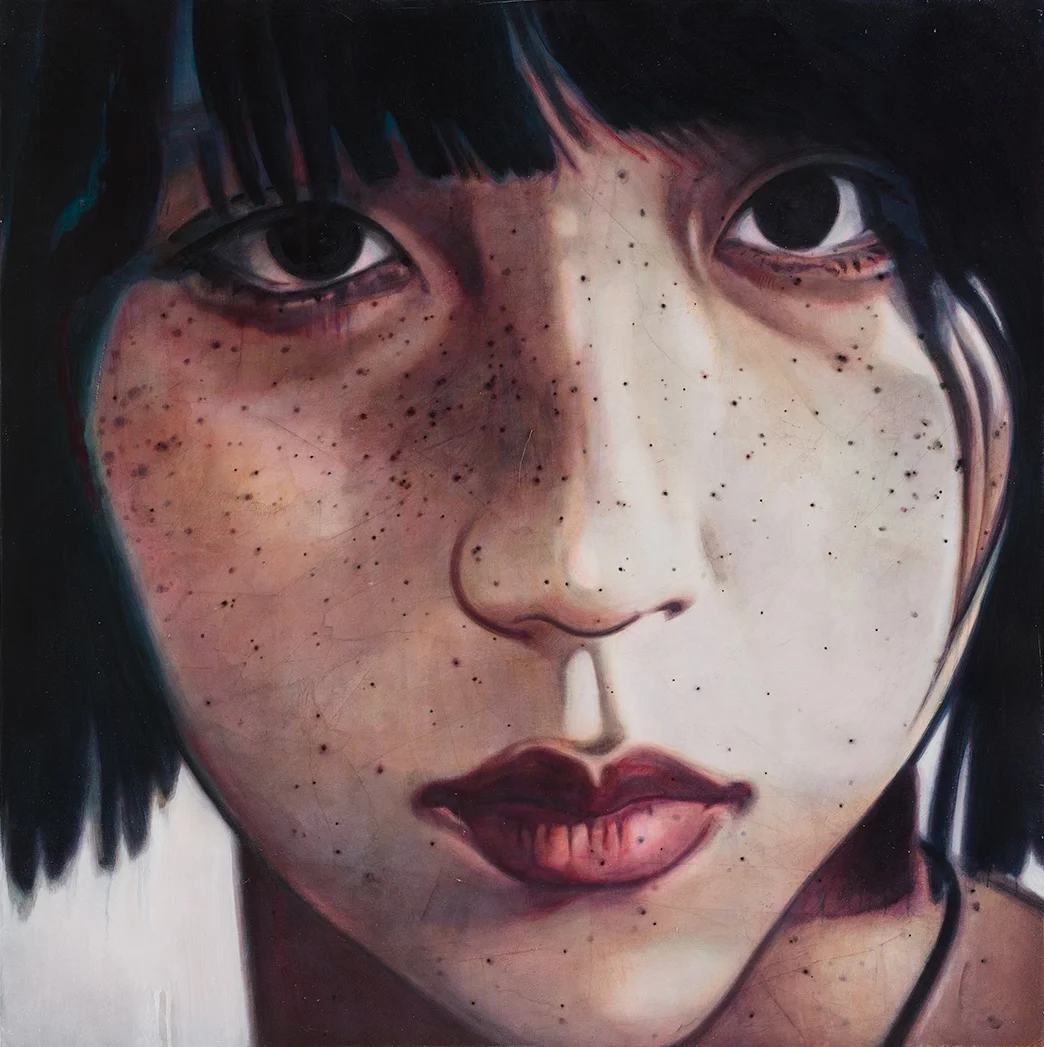
Before painting, Lee prepares her canvases with a primer which, because her paint layers are extremely thin, remains visible in her final works through unpredictable speckles and faint scratches that emerge naturally, disrupting the surface beautifully and showing the artist’s hand. Similarly, Lee is interested in what our online personas reveal. “I don’t think I will ever be able to determine what is real and what is not, because the image has already been filtered through a fabricated persona by the time it’s shared publicly. What interests me more is the act itself,” she says. “I see a strong sense of self-love in the desire to create and share these images, and I find a certain beauty in that. Whether the image reveals an objective reality is not especially important to me. The beauty lies in the gesture of self presentation itself.”