
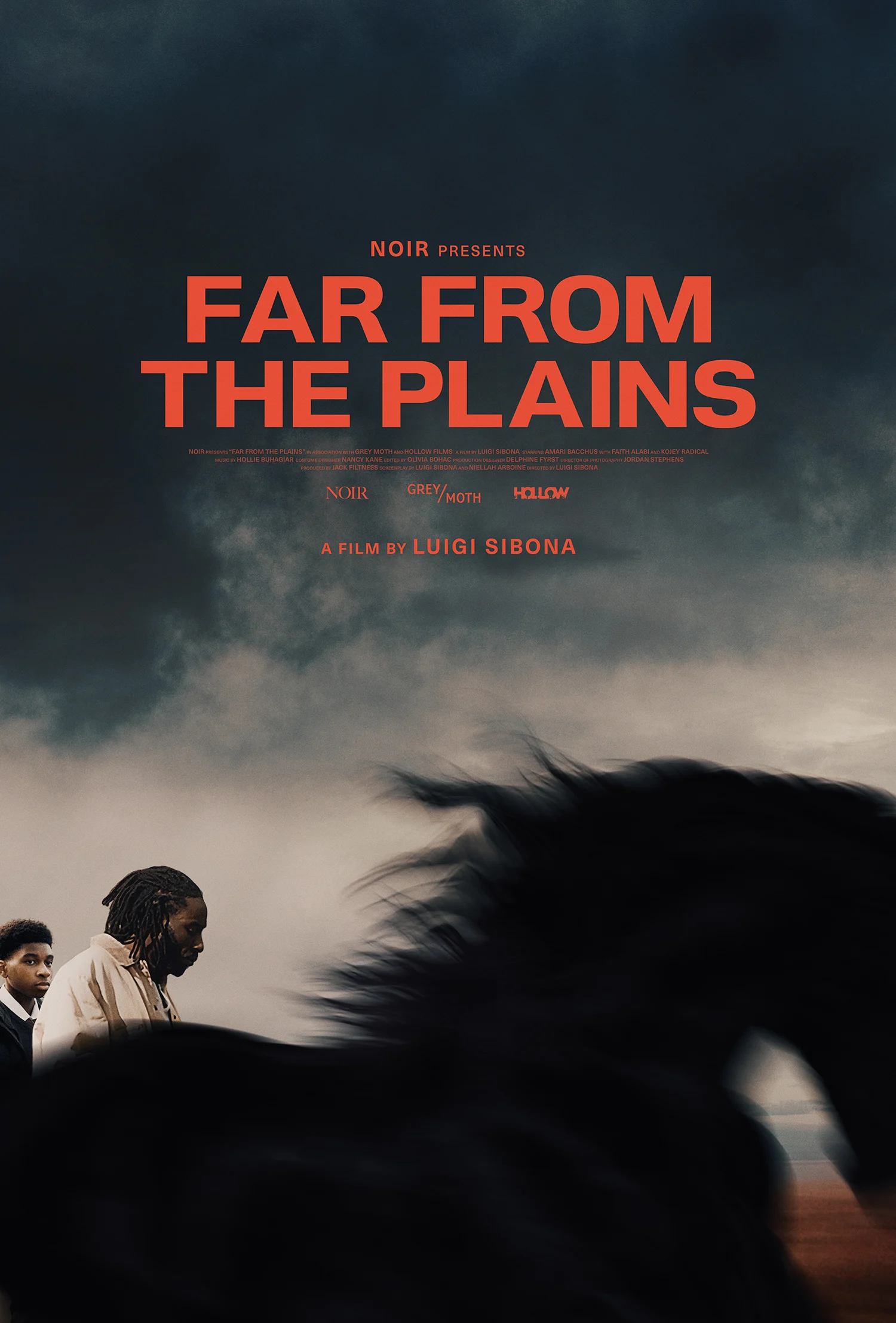
In “Far From the Plains,” Luigi Sibona and Niellah Arboine follow a teenage boy navigating his mother’s depression while searching for solace elsewhere. Flitting between the dark, ominous confines of a London flat and rare pockets of urban nature, it traces how grief, love, and resilience take root. Sibona and Arboine tell Emily Steer how they crafted a portrait of family life under pressure and explored what it takes to endure when all seems lost.
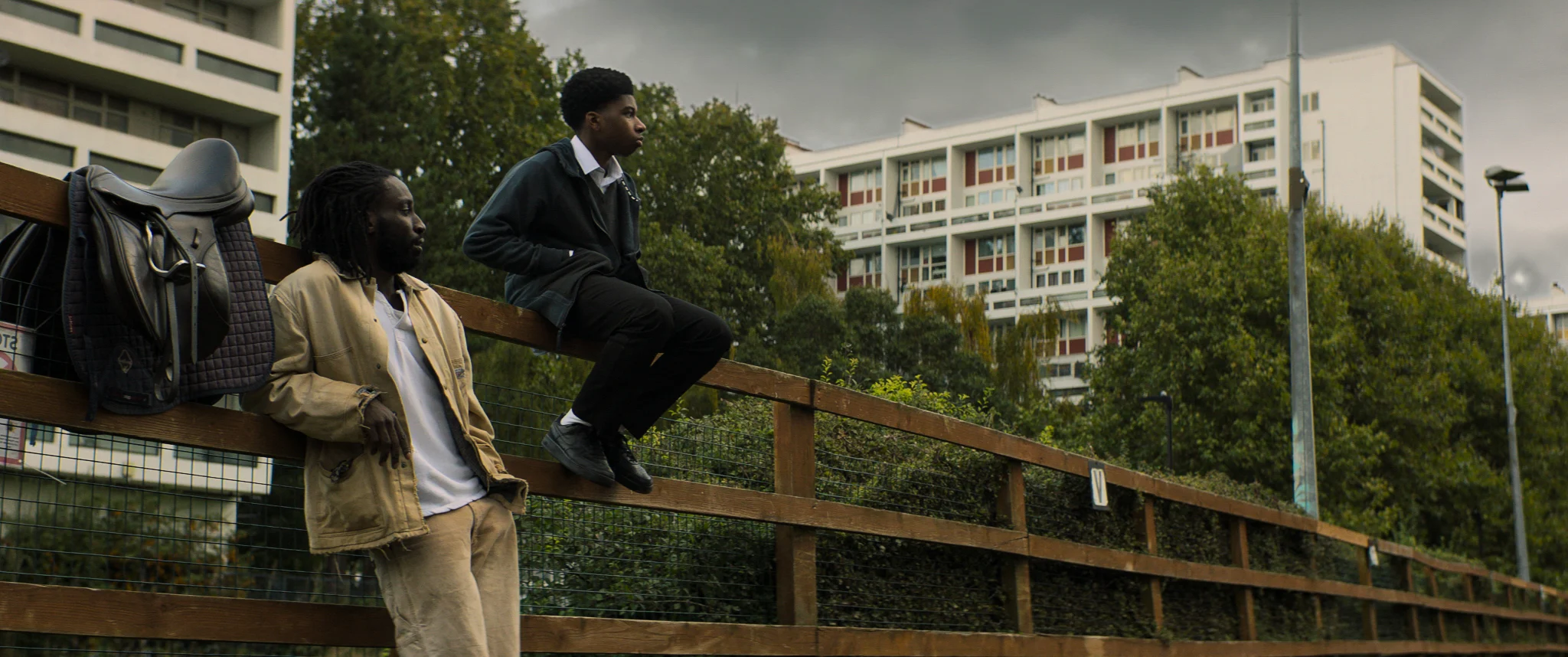
Luigi Sibona and Niellah Arboine’s short film ‘Far From the Plains’ is a story of two parts. In a dark London flat, a depressed mother lives with her devoted teenage son, Frankie. The mother’s body is overrun by an expansive black mold which creeps up the walls and threatens to devour them both. These claustrophobic scenes are contrasted with the son’s discovery of a horse in a rare green city space, forging a paternal connection with its nurturing stable hand. The film connects personal, psychological struggles with external environmental and racially-charged pressures. Shots of lashing waves, verdant plains, and elated galloping highlight both the beauty and destruction of the natural world, as fantasy and reality blend into one another.
You can see Frankie is going through these emotions and that his mum doesn’t want to be like this.
Sibona is a director, while Arboine is a writer and original member of gal-dem. They have been friends for a while, with Arboine regularly reading Sibona’s scripts and joining as co-writer of “Far From the Plains.” Like Frankie, both grew up in single parent London households. “It really took shape when we looked at it together,” says Sibona, who began to conceive the film when he was in a bit of a “funk or depression,” as he says. He had recently seen the highly acclaimed father and daughter movie “Aftersun” and was looking to create something more emotionally led than his previous horrors.
He began planning the film around a central scene, in which Frankie walks in on his mother crying in her bedroom. It was inspired by his own memories. “I was a bit younger than Frankie,” he says, “but I remember thinking, ‘This isn’t right.’ Your whole understanding of the world falls apart.” As the mother does in the film, he remembers his own mum flipping into protective mode, telling him everything was ok. The process of exploring this moment from his past “opened up something” in himself. When Sibona approached Arboine with the concept, he also had the idea to include city stables, having seen one in the middle of Loughborough Junction. “It felt striking to me. It was very anachronistic just sitting between these big blocks of flats.”
While Arboine’s background is as an essayist and journalist, she was drawn to the film, which connects with her own interest in nature. She saw that it was beautiful, but also that they needed to push it further. “We were both thinking a lot about parallel storylines and looking through the eyes of the child,” she says. Key inspirations were films such as “Beasts of the Southern Wild,” “Life of Pi” and “Pan’s Labyrinth,” which explore “how children use their imagination to cope with grief, pain and disaster,” she says. “Every time people watch ‘Far From the Plains’, they have so many questions about what’s real.”
The creeping black mold chimes with Sibona’s horror background, a device which expresses the mother’s inner world, while also conjuring the oppressive impact a loved one’s mental health can have on the space and people around them. “I think whatever Luigi touches is going to have elements of horror,” says Arboine. “It’s a classic sign of his work.”
The mother and son relationship is subtly acted, not defined by abuse or drama but love and concern. Moment by moment, it’s possible to read disgust, care and guilt into Frankie’s nuanced facial responses. “She’s sort of fermenting in this house, and it is kind of disgusting, which also makes you feel bad,” says Arboine. “You can see Frankie is going through these emotions and that his mum doesn’t want to be like this.”
The film presents a view of boyhood and masculinity that is softer than many of the extreme versions currently seen in the media. Frankie is sensitive and multi-layered, his relationship with the stable hand an example of positive male emotional support. The writers were keen to show how children of parents who struggle with their mental health often end up taking on responsibilities far too young. “I think a lot about Frankie and how he represents that inner child,” says Arboine. “I am very aware that a lot of Black children experience adultification. He has such an innocence to him that really struck me. He’s just a child holding onto small joys and feeling so much love that it’s overpowering for him.”
There is a massive link between mental health and being in nature.
While the mother and son relationship is central, the implications of the film are global and urgent. The mold evokes the sense of a drowning home. In the background, recorded tv footage from last year references severe floods, while the kindly stable hand speaks of London becoming submerged. The film highlights how entangled personal mental health is with a wider collapse of the world as we know it. It also considers the socioeconomic systems that leave some communities more vulnerable than others.
“The film is also about climate disaster and it’s important when we’re thinking about London, and cities more generally, that we think about racism,” says Arboine. “It is going to be Black people and those from marginalized communities who are most affected by climate disaster.” She mentions the tonal shifts in the film, where nature is sometimes shown in joyous terms compared to the dark flat. “There is a massive link between mental health and being in nature. If the pandemic taught us anything it was who had access to outdoor space and who didn’t.” Sibona wanted to show how all-encompassing mental health struggles can feel, as though the whole world is collapsing around the individual—an experience complicated by the reality of a planet in crisis. “With the world actually sort of ending at the moment,” he says, “there is a parallel with internal collapse.”
The film’s ending is purposefully ambiguous. It could be read as euphoric, devastating, or a bit of both. “I have my take, but I hope it’s a strength of the film that it’s open to interpretation,” says Sibona. Arboine tells me it ultimately is a “big sign of freedom and release” for the mother, but that could be read in many ways narratively. “For me, it’s a Rorschach test,” she says. “You’re going to take from it what you’re feeling in that moment. I feel different things every time I watch the ending.”