Chicago-based painter Liza Jo Eilers has a bank of all the images that have ever interested her, from 1960s advertising and retro erotic photography to more recent porn videos and Only Fans content. Inspired by this library, her multimedia artworks explore the ways patterns repeat themselves, pop culture’s obsession with women’s bodies and its effect on how women see themselves. She speaks to Emily Steer about desire, vulnerability, the impact of the internet and the duality of women's perception of their own bodies.
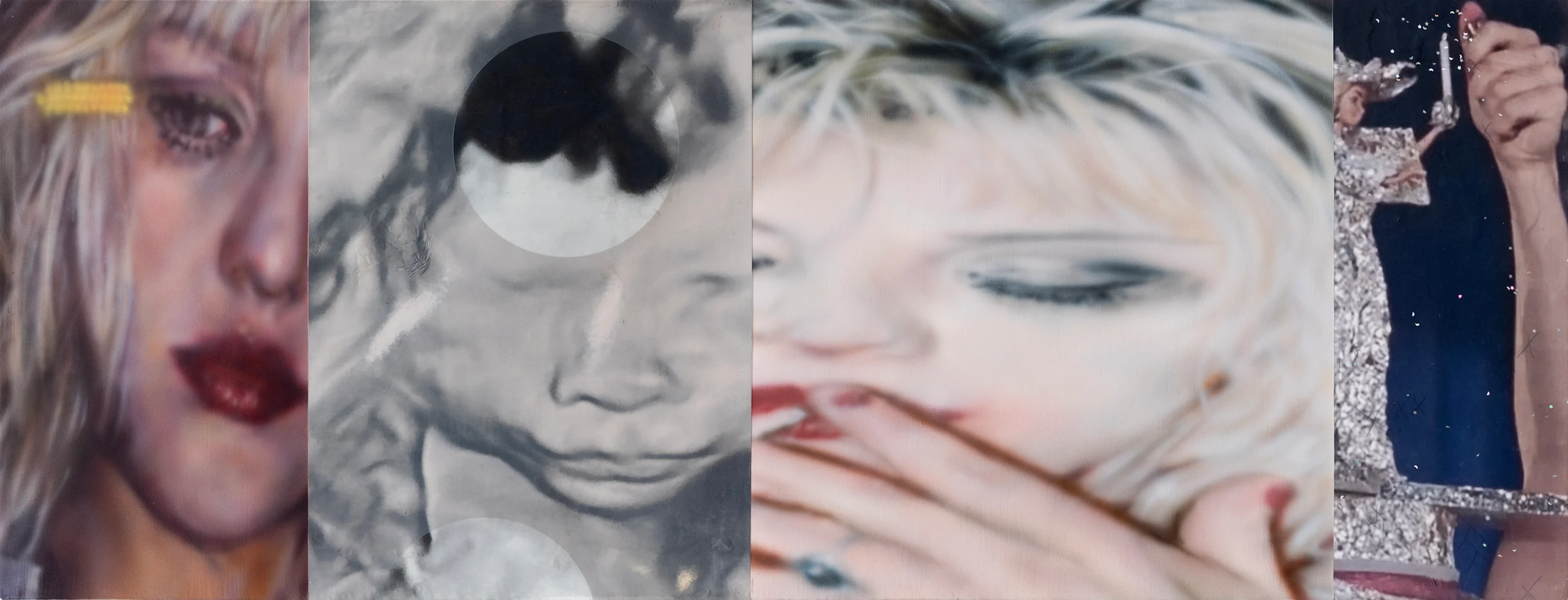
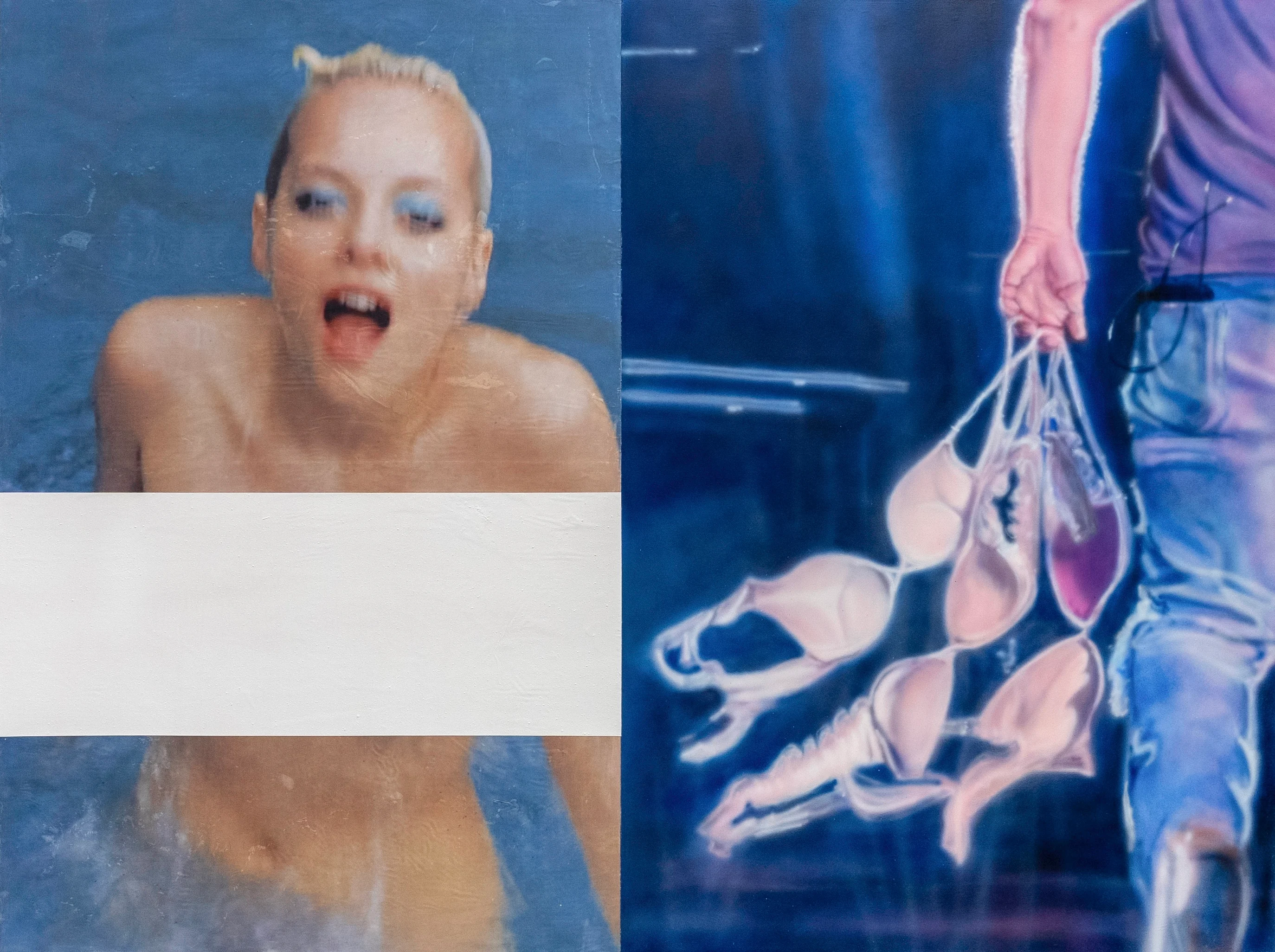
US artist Liza Jo Eilers describes her paintings as “exquisite corpses,” reflecting the Surrealist tradition of joining images together in a freakishly unsettling way. Crops of manically laughing, lipstick-adorned mouths sit alongside smoking blondes, pornographic nudes and wads of cash. She explores performative and everyday aspects of womanhood, displaying figures such as Courtney Love—who herself has very publicly manouvered what being a spectacle means—alongside disembodied torsos and masses of grabbing hands. With each piece, Eilers playfully exposes pop culture’s obsession with, and contempt of, women’s bodies.
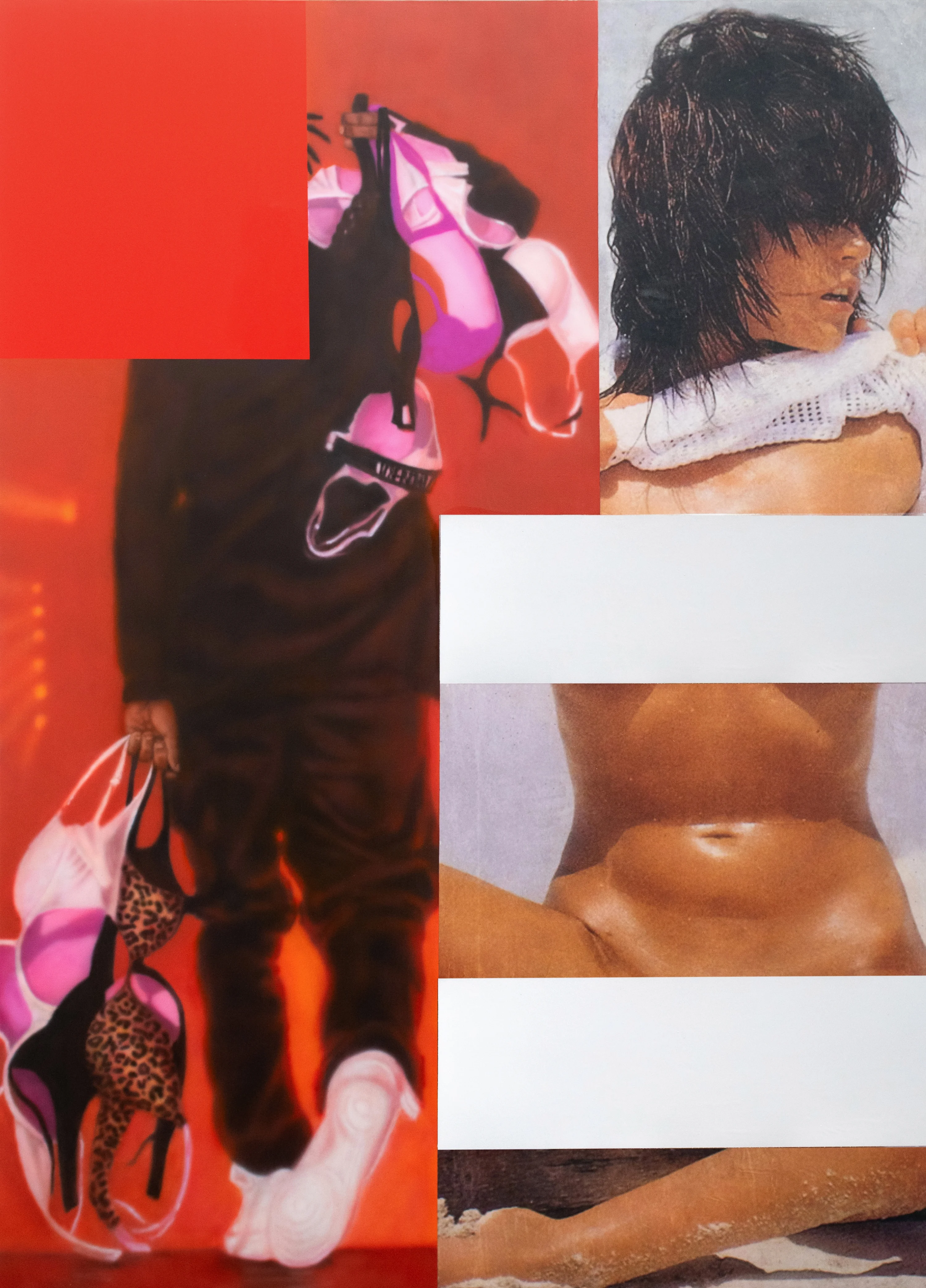
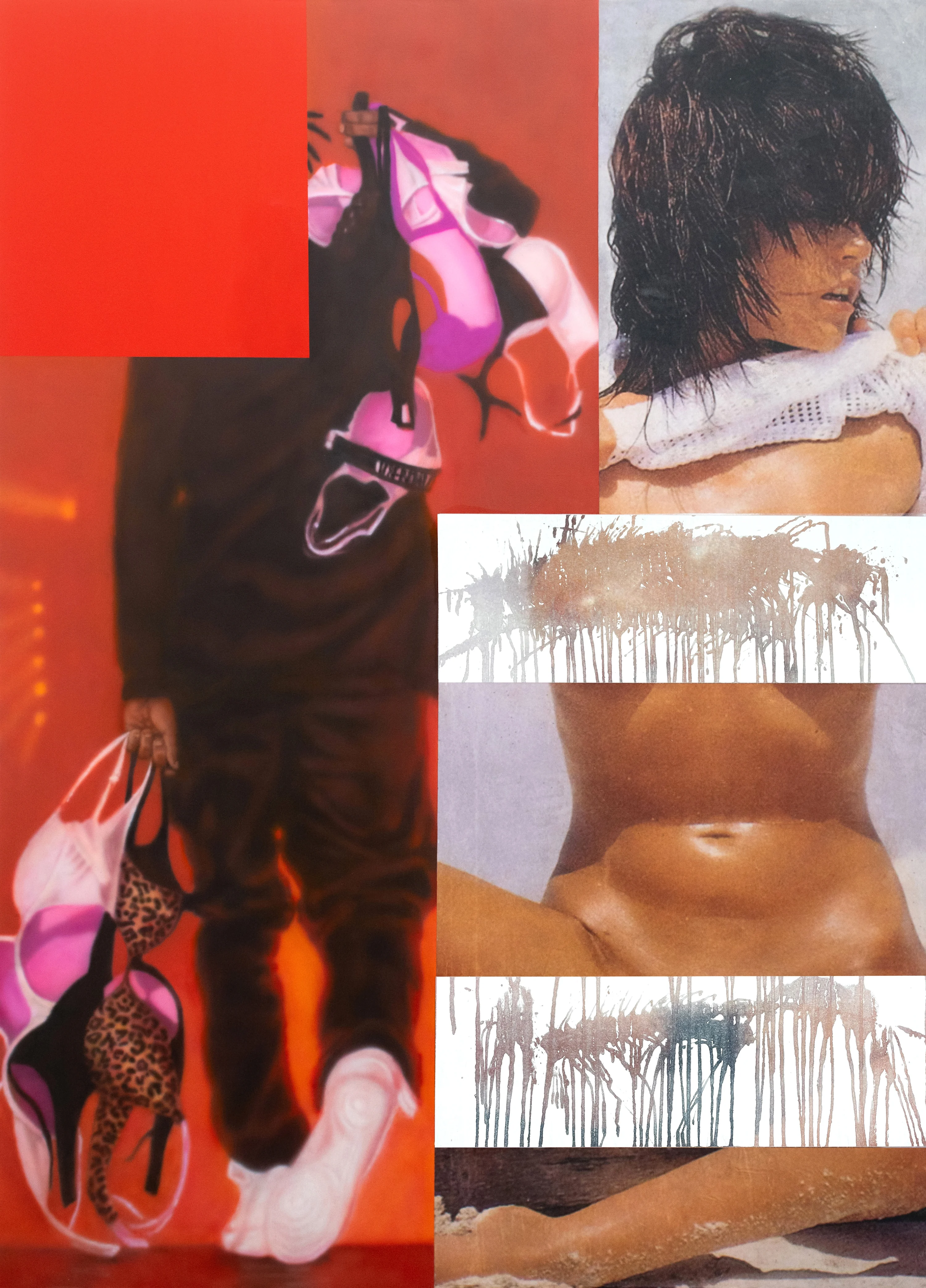
Growing up in the Midwest, Eilers has previously described the impact of dive bar culture on her work. These rowdy spaces featured men’s “trophies” on the walls, with posters of prize fish, fast cars and naked women. She is currently based in Chicago, following an early job as a high-end fashion consultant in New York, and as a result some of her earliest paintings were inspired by the composition of fashion advertisements.
During COVID-19 lockdowns she completed an MFA in Painting and Drawing from School of the Art Institute Chicago. While studying she departed from the body working with different mediums and ways of painting. However, a studio visit from the iconic LA painter Richard Hawkins during her studies left an impression on her, “Right before he left, he said, ‘You’re going to return to the body.’ At the time I was like fuck you, but years later I have to say he was right.”
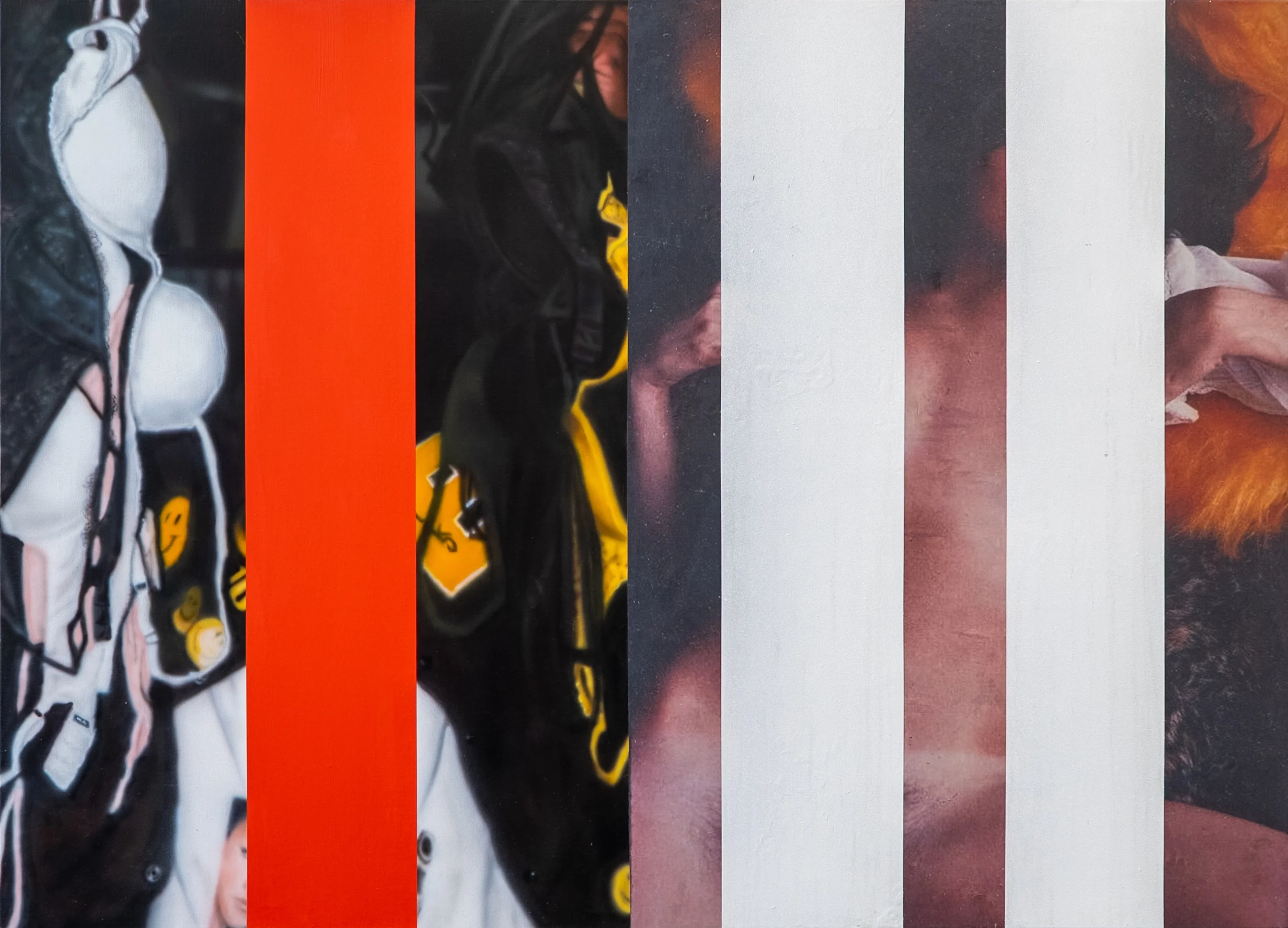
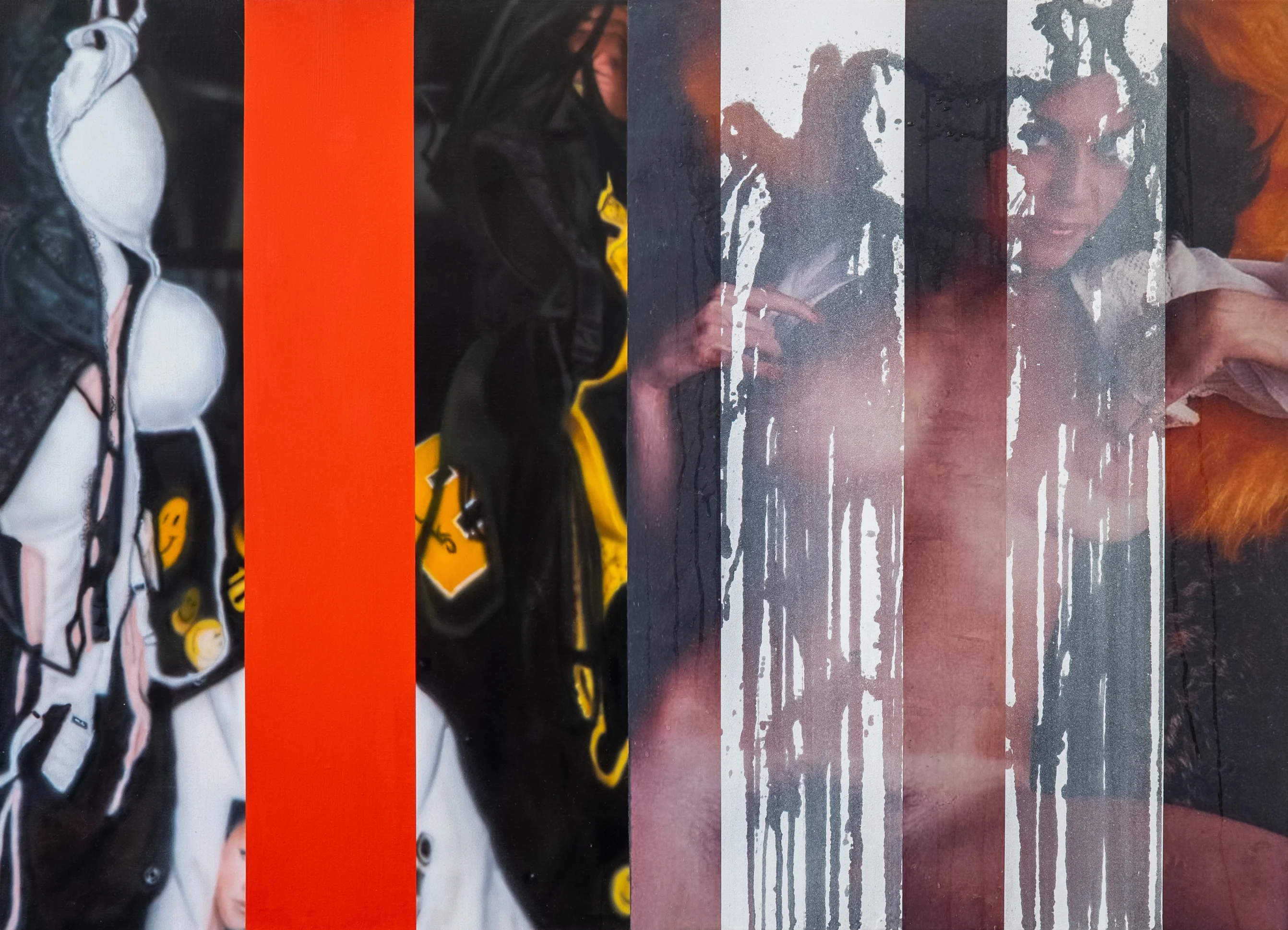
Now she works from a broad bank of source material saved digitally from film to reality TV toInstagram ads to her friends' photos, intuitively building “a folder with every image that’s ever interested me in any way.” Most of her reference images begin in the 1960s, when advertising ramped up in line with the sexual revolution. “Women, historically, have always been viewed as objects of desire,” she says, “but the mid 20th century and the boom in advertising is when it became very mainstream and acceptable, and everything started changing at a very rapid pace.”
Her work explores how trends and patterns repeat themselves. While the internet has sped up the rate of image consumption, underlying tropes can be seen threading from retro erotic photography through later porn videos and to current Only Fans content. “What happens when you push the boundaries to where there are no boundaries anymore?” she says. “It takes away the sensuality. You see more types of bodies online now. But the internet is an algorithmic curation of certain ways to be a woman and a lot of it is driven by the male gaze. I think it affects how men see women in real life.”
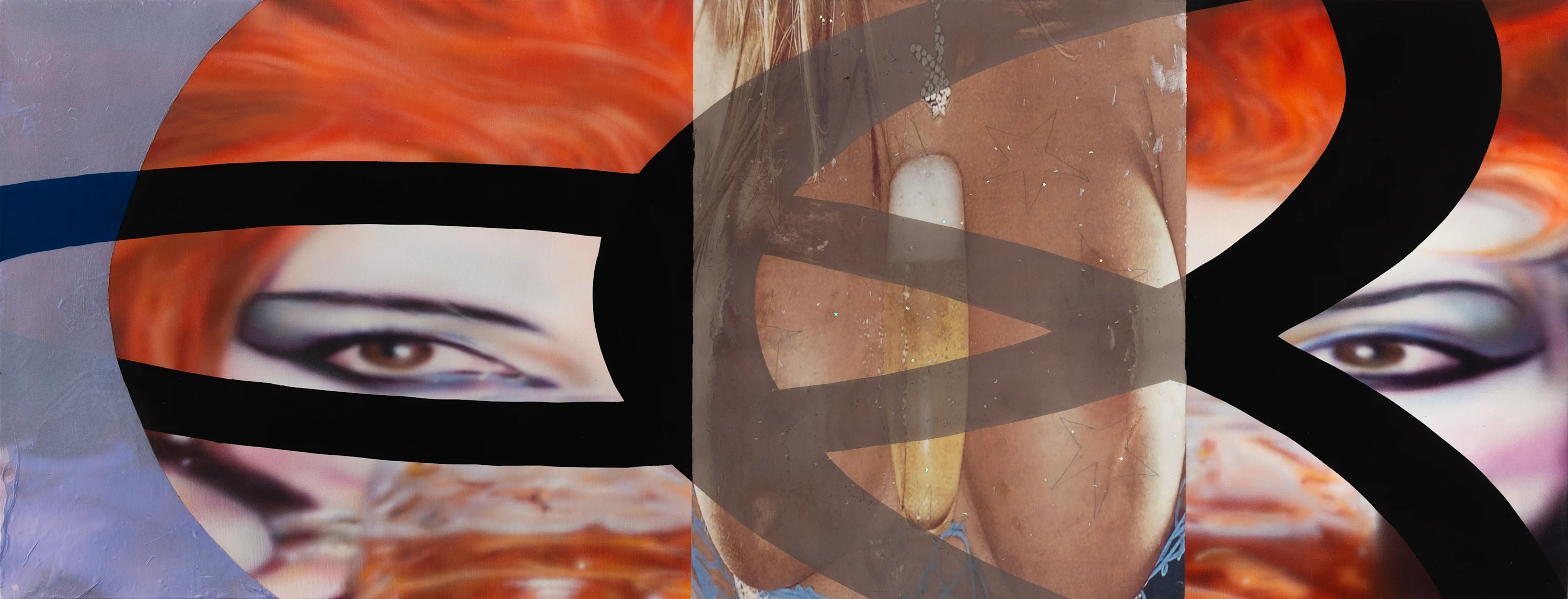
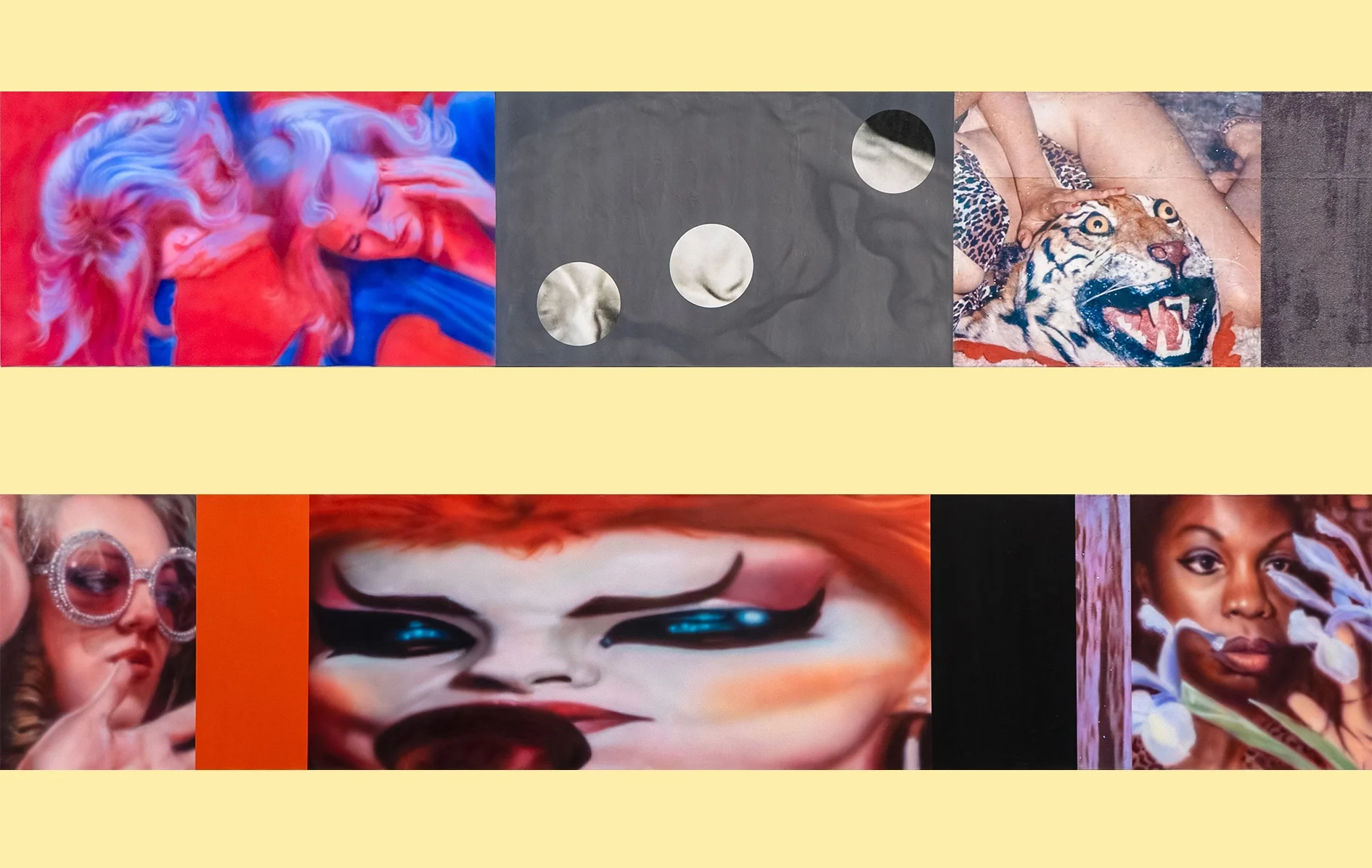
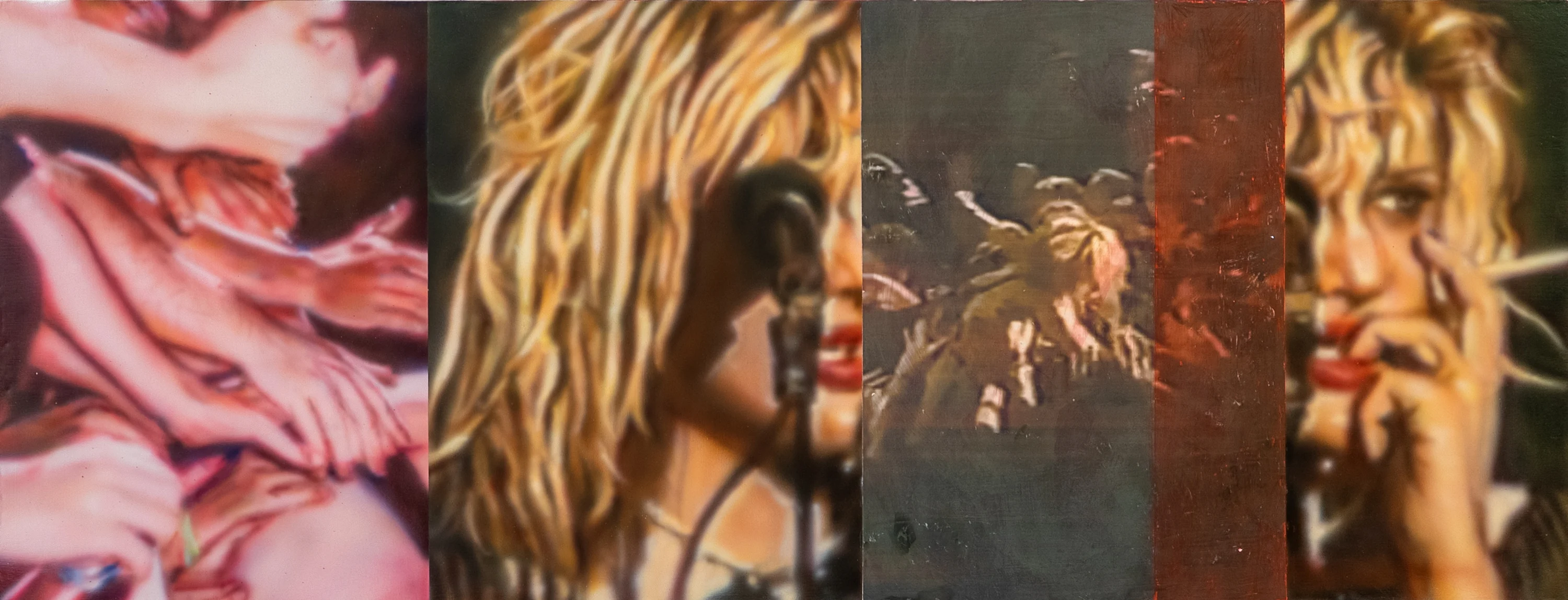
Throughout her works, images are distorted and cropped, concealed and revealed. Her compositions place sliced images together, leaving the viewer to untangle the separation between them and guess what might be seen off frame. Some images are painted as though slightly out of focus while others are repeated, creating a frenzied effect on the eye. She also works with responsive ink, meaning parts of a painting might be revealed to the viewer through touch or liquid contact. There is a tantalising element to all of this which mirrors the way women’s bodies are put up for ravenous public consumption. “It’s a way to play with perception,” Eilers says. “They walk a line of entertainment consumption themselves and can infinitely reveal and conceal, whether at the behest of the viewer or the conditions of the room. Sometimes revealing what’s expected and other times not.”
A recent series of “wet t-shirt” paintings brings to mind the rabid “American girl next door” sexualization of the MTV Spring Break and American Pie era. Using white hydrochromic ink, sections of paintings can be exposed by water. She first used this process in a dual show with Alessandra Norman at Yew Nork project space in Chicago in 2024, featuring beer coasters that revealed visual elements when exposed to condensation from guests’ glasses and beer cans. She later exhibited a series of “wet t-shirt” canvases at Grove in London, with visitors invited to use water bottles to soak them.
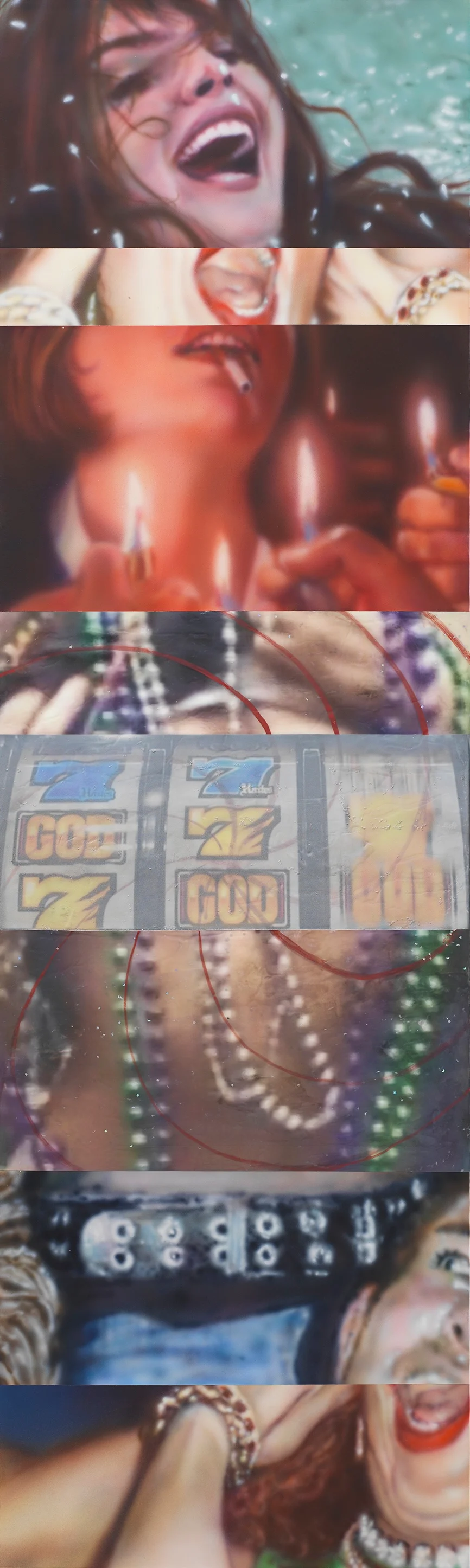
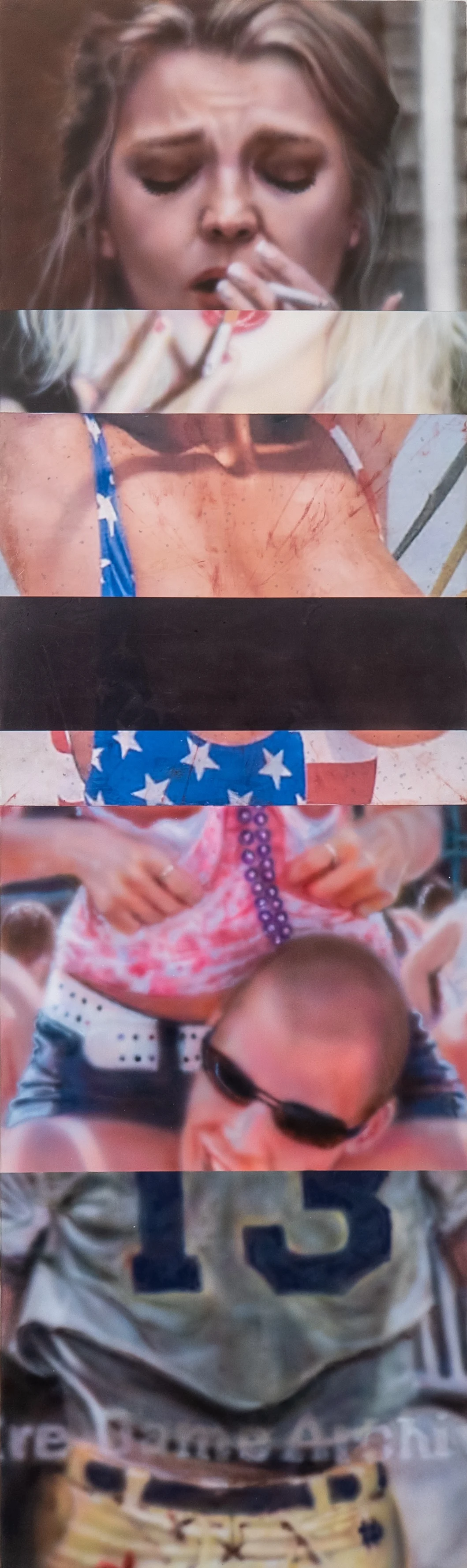
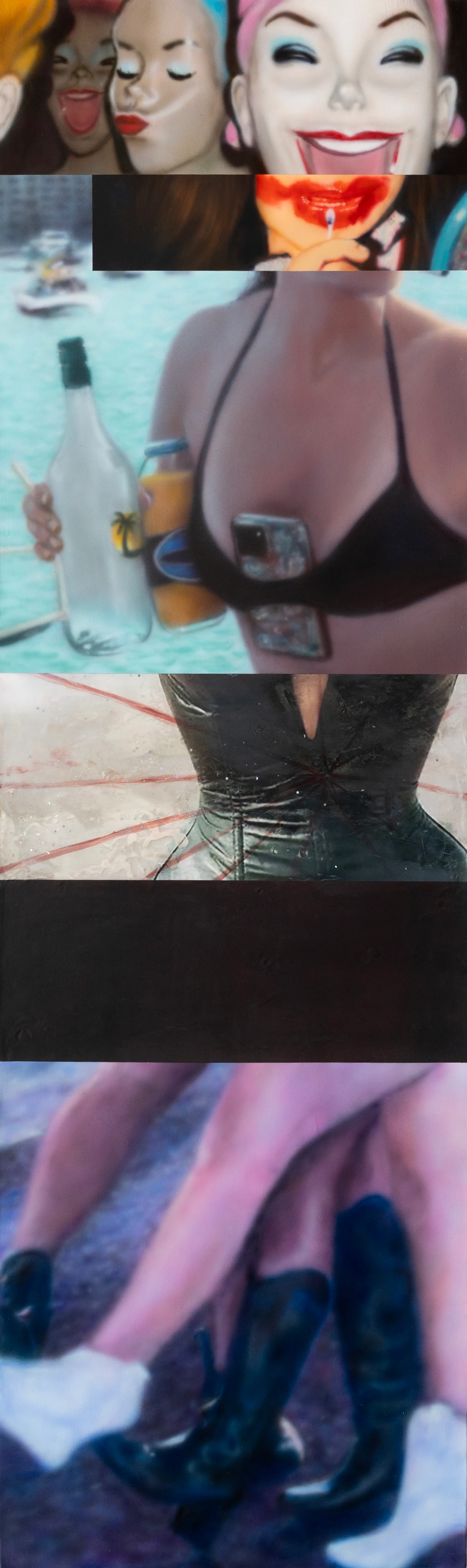
“Through the London show I found the wet tees fell too much in the realm of instant gratification, like cumming all over a painting.” She also noticed that it felt somewhat contrived as viewers needed to be given instructions. Now, she’s experimenting working with thermochromic ink, which draws the viewer into a more intuitive dynamic. “There’s something intimate about it. You have to touch it or get very close so you get your breath on it. I like how it implicates the viewer, also putting them in a vulnerable position.”
Eilers relates to the work not only as the artist and creator of it, but also a woman who ingests images on a daily basis in the world around her. Painting is “a way to process what is going on,” she tells me. “As much as I am thinking about the body, which is a grounding point, I’m really trying to think of both the internal and external. Being perceived but also perceiving. You are doing that constantly as a woman; This is a duality that all women know too well.”