


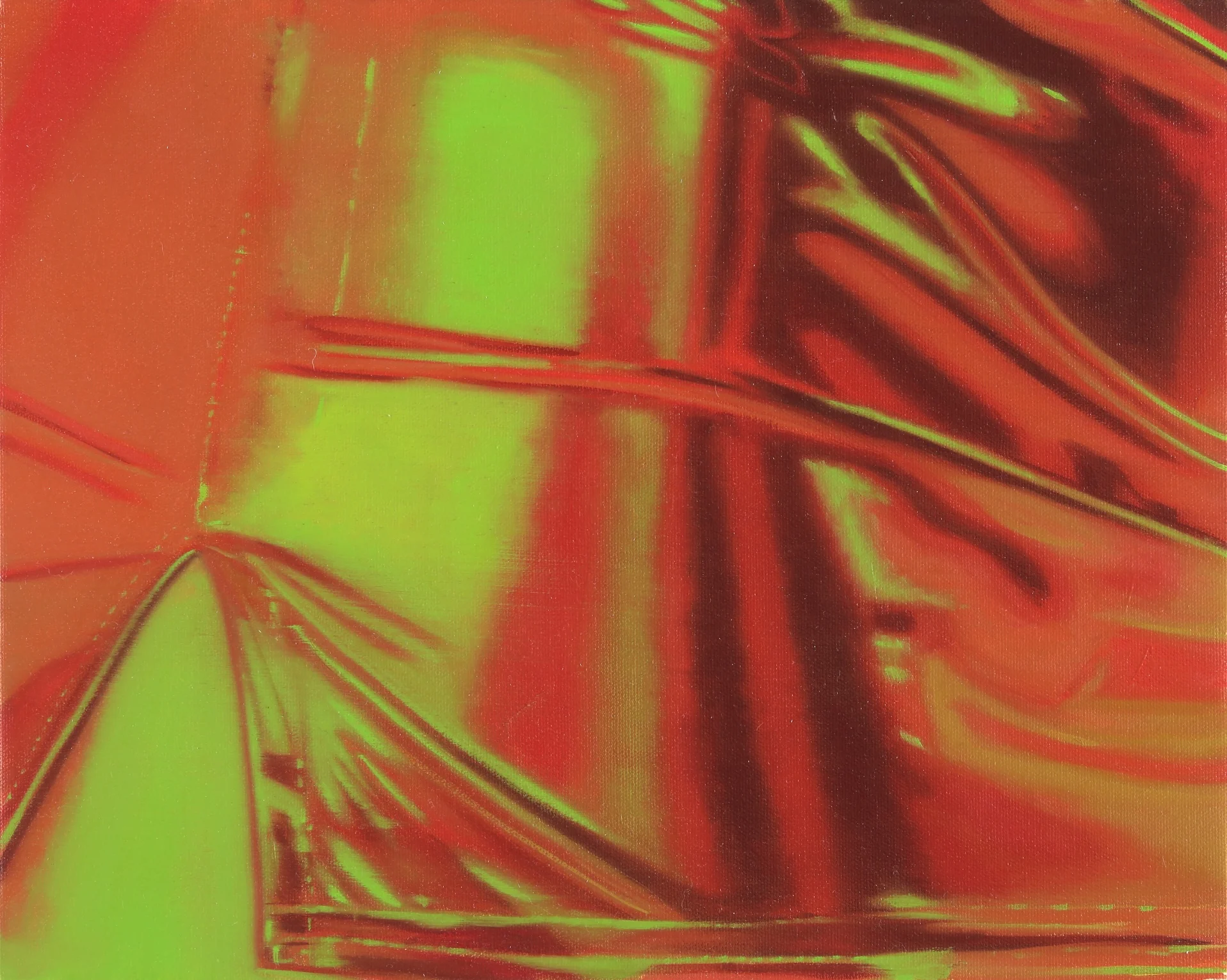
Jordan Sears’ work explores the aesthetic of product imagery, particularly online or digital advertising targeted at women, featuring women. “Not only are we seeing a proliferation of images all the time ad nauseum, but much of the time they're using the female body in order to sell something,” she says. “And in that way, our bodies become flattened and obviously objectified.” Alix-Rose Cowie meets Sears to discuss her new series, and how images can be used to “manipulate our perception, elicit desire, anticipate our behaviour and construct our reality.”
American artist Jordan Sears’ phone spits out an endless stream of e-commerce images: little squares of light at all hours of the day, swipe-swipe-swipe, front-back-side. The algorithm knows what she’s looking for: figure-hugging fast fashion in shiny fabrics that would melt rather than burn if set alight. She saves these images, uploads them to Photoshop where she distorts, squeezes and discolours them before transforming them into oil paintings.
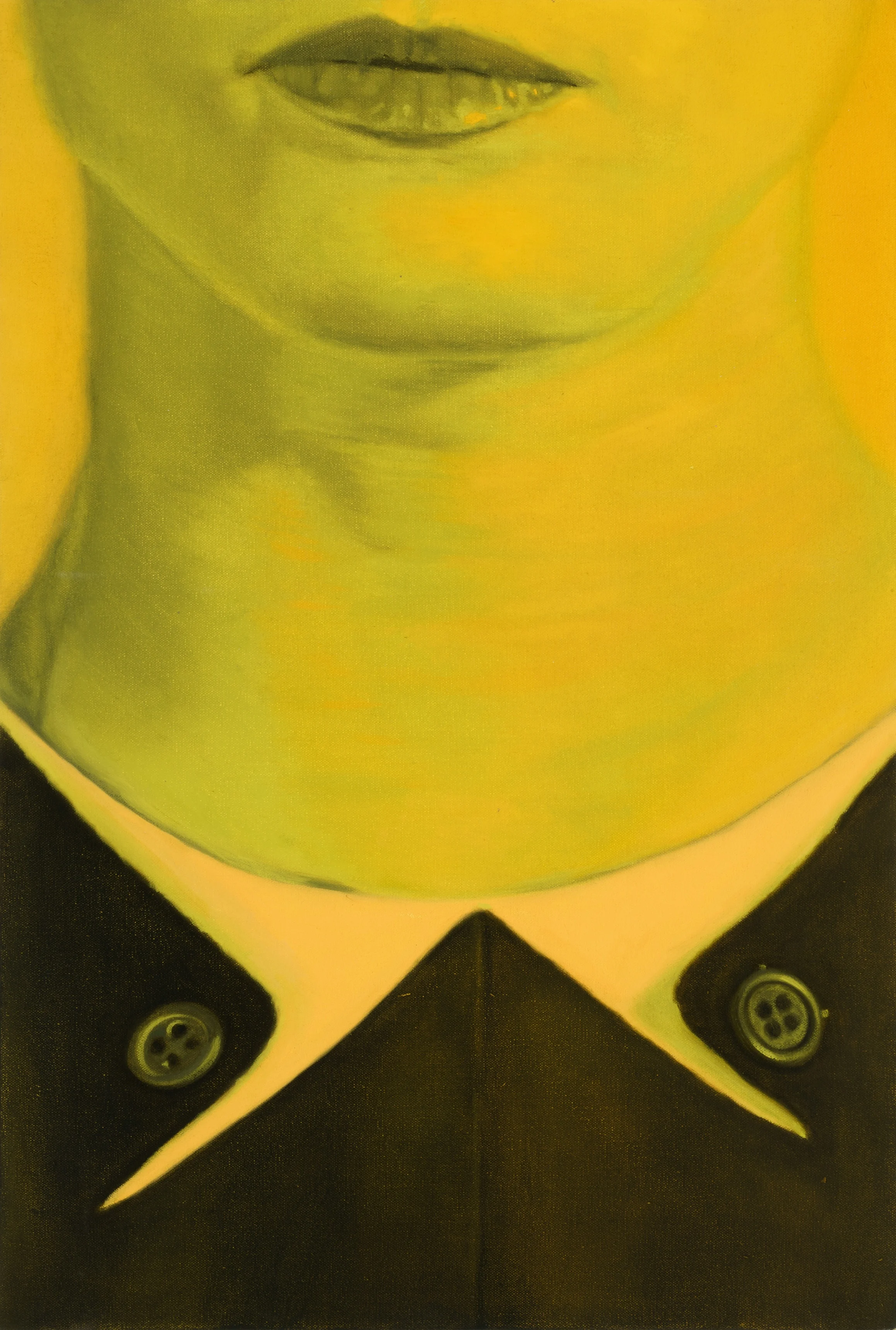
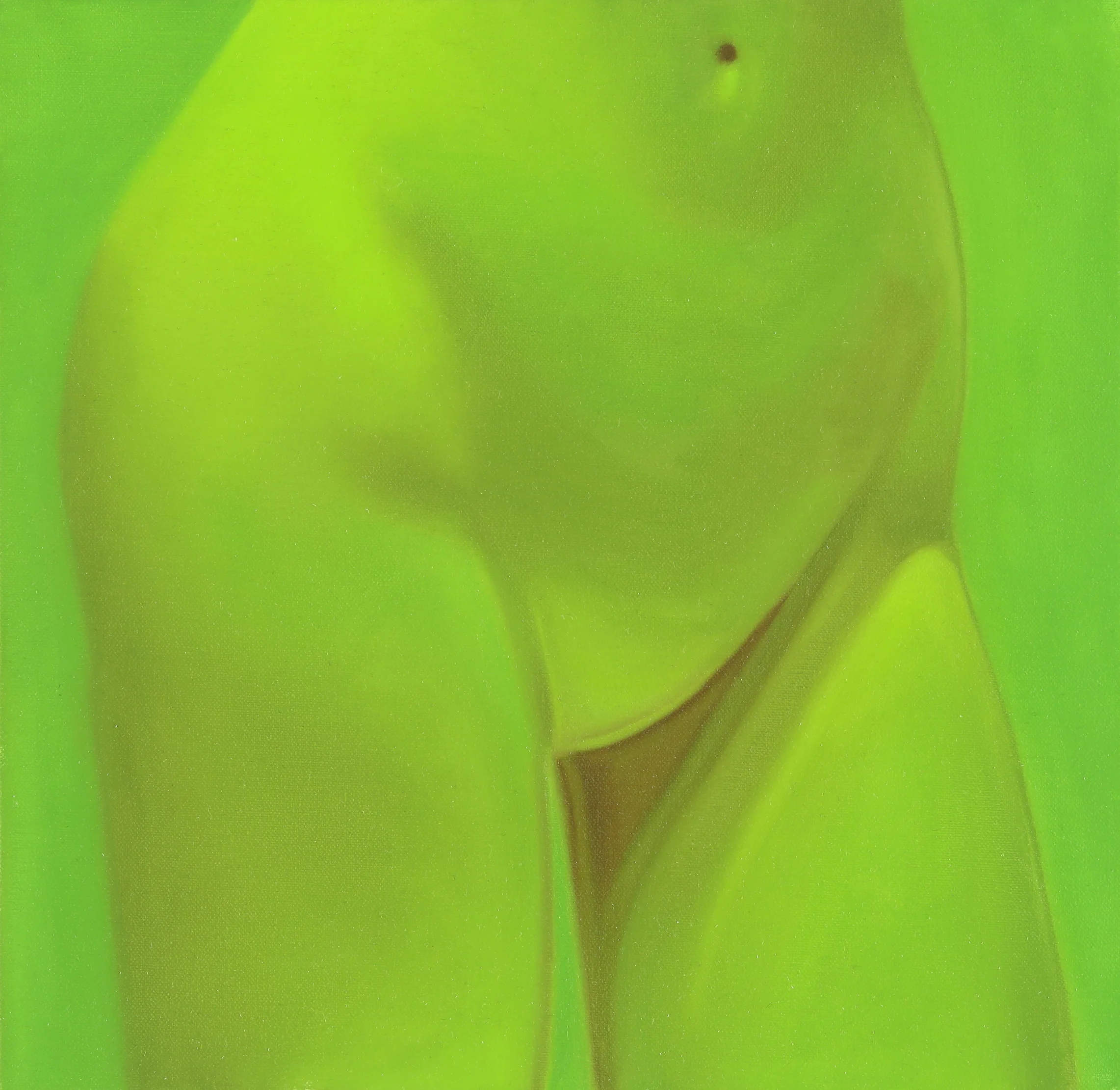
Sears is interested primarily in how images perform; how the formal elements of a picture—line, composition and colour—can be used to manipulate our perception, elicit desire, anticipate our behaviour, and construct our reality. “Once you start really looking at product photography, it all operates the same way,” she says. “It’s this system; a flattening, sort of void of any negativity. It’s just smooth. And smoothness is the aesthetic of our time: iPhones, Brazilian waxing, filters. Once you start to notice it, it seems that all we want to produce is something that’s likable and doesn’t have any friction to it.”
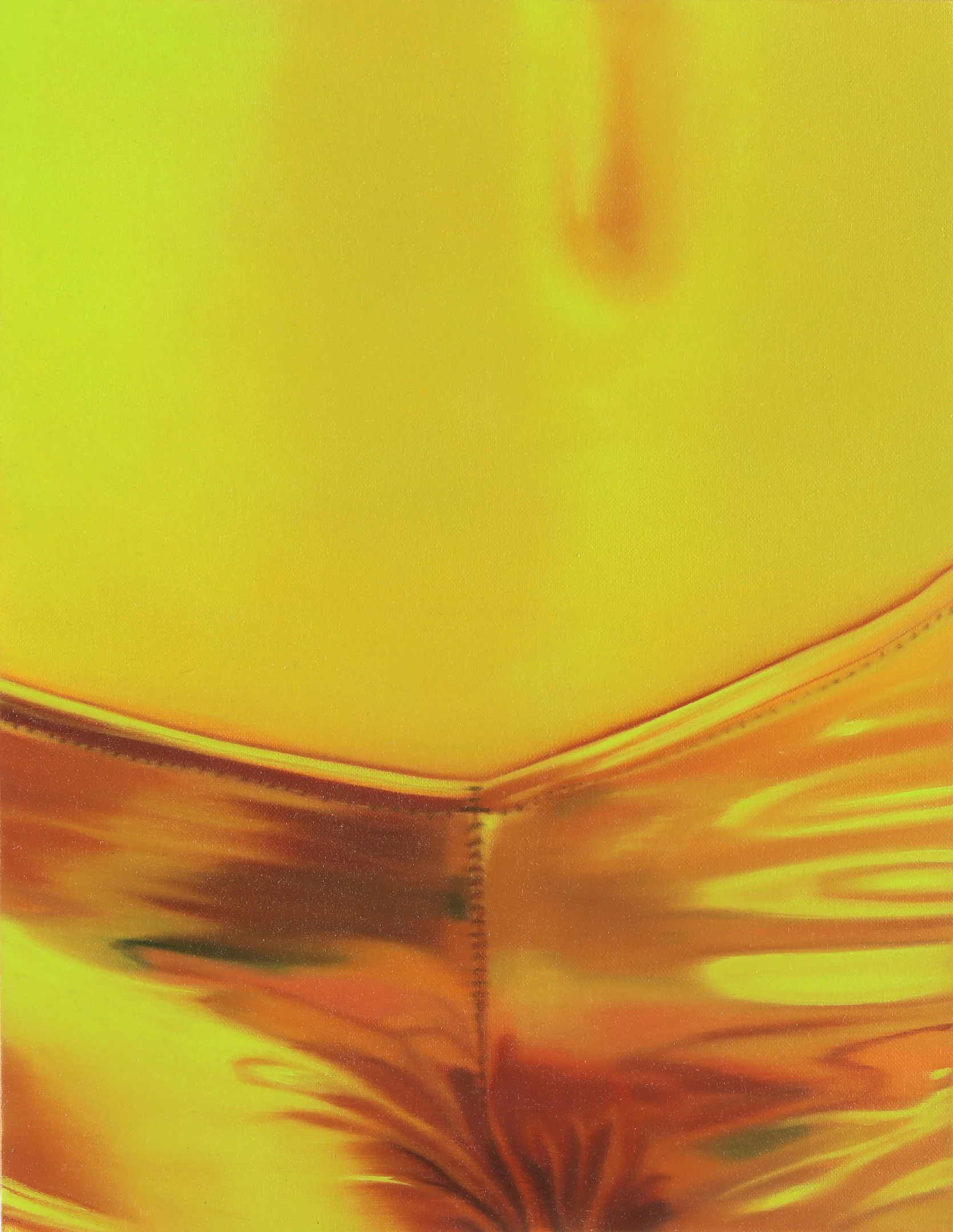
The paintings in Sears’ most recently completed body of work are extreme close-ups of high-sheen garments wrapped taut across parts of women’s bodies—hips, waist, breasts, crotch—isolated through strategic cropping. She studies the way fast fashion product photography is designed to be seductive. “The light hits the body at these very particular points, often right at the nipple and down the torso, and then on the hip,” she says, describing light as the guiding line that directs the viewer’s eye. “I’m using the same system that I’m noticing in order to lure the viewer in, but the cropping and the coloring destabilizes that,” she says.
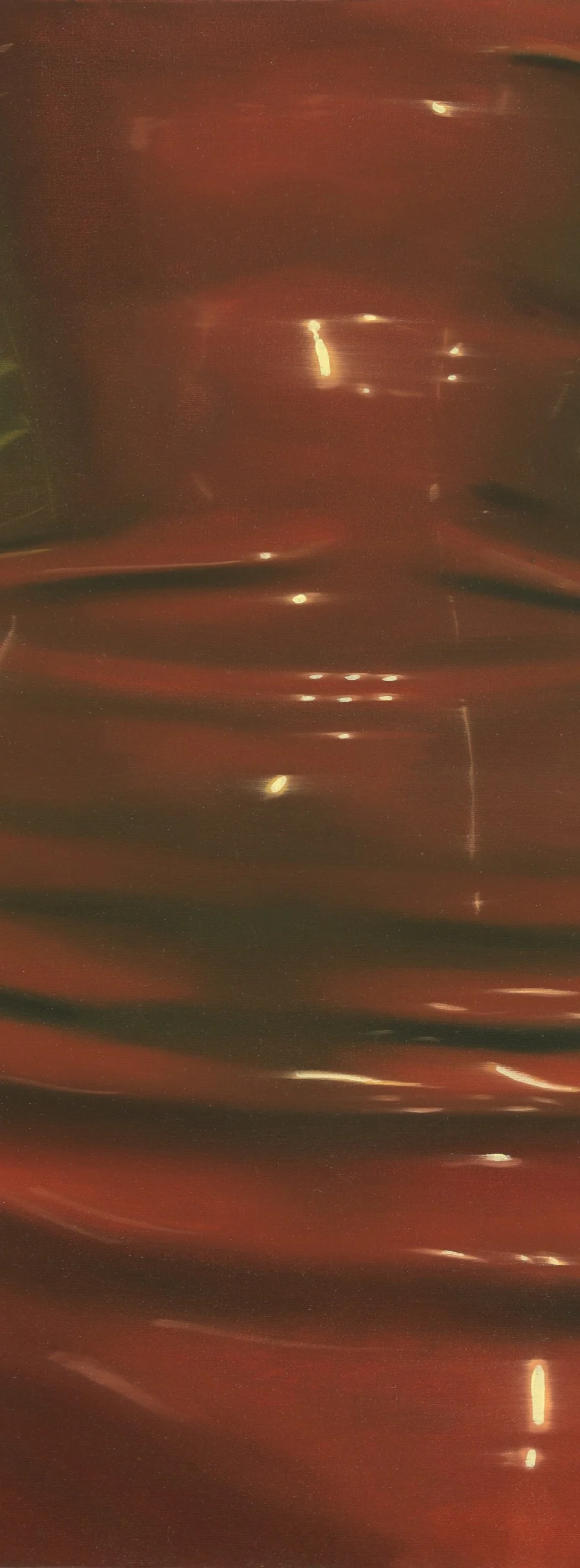
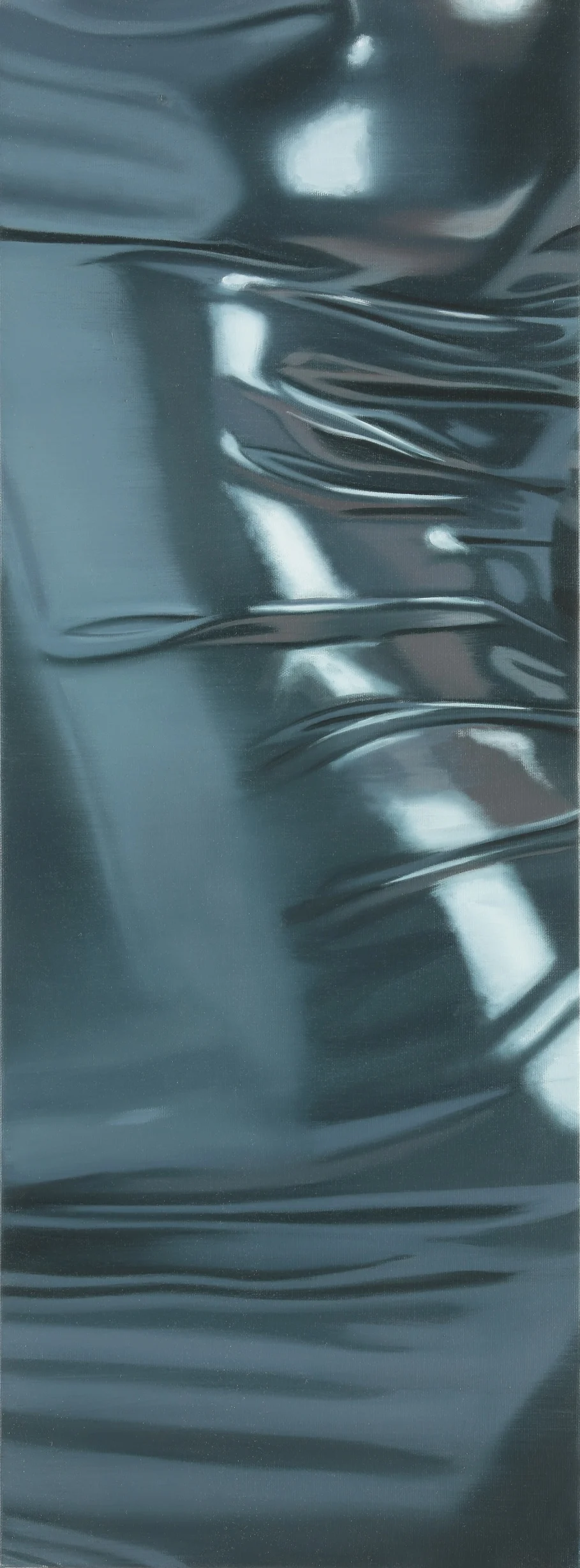
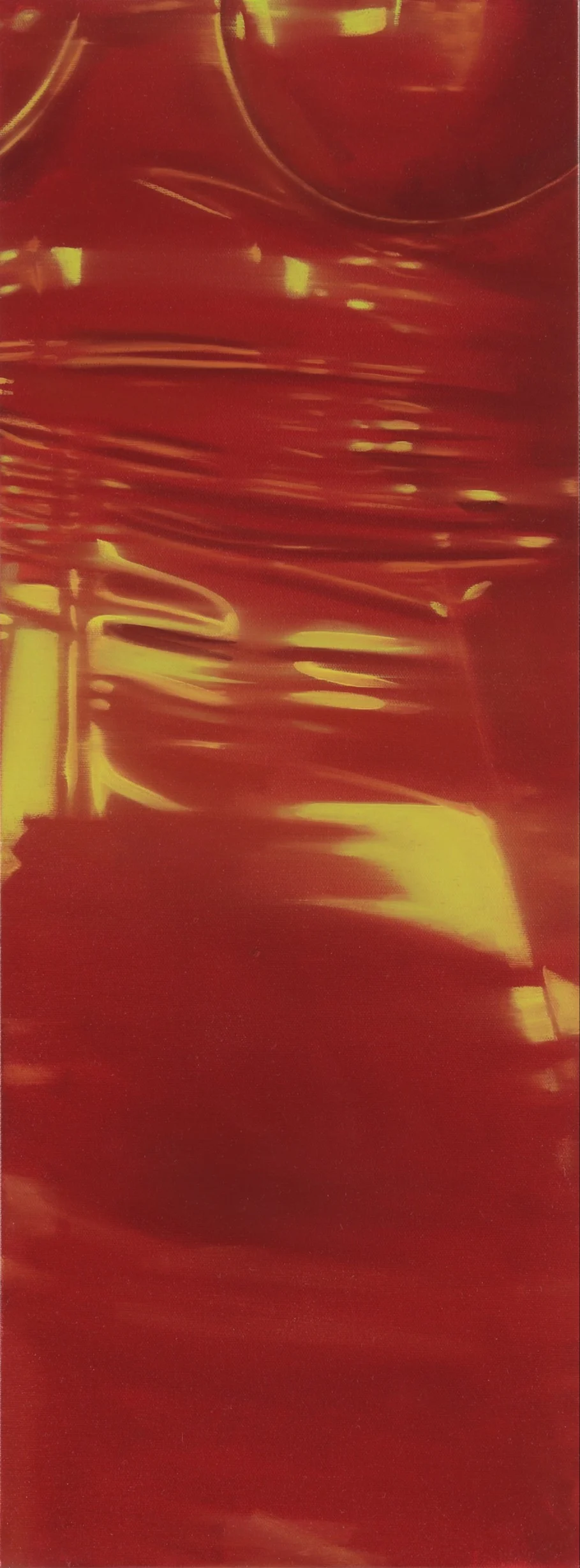
The ability to create an image from what’s omitted from the picture is a fixture of Sears’ practice. “[Cropping] is a really useful tool because it builds tension in the work. There’s this kind of anxiety that something is about to happen,” she says. Her older works focus on details like a bodice of satin-covered buttons, a pair of hands in lavender gloves, or heavily made-up eyes pulled downward by false eyelashes, igniting the memory and connotations held by the viewer to fill in the rest of the story. “I became interested in splicing an image at a moment where it would reveal too much information, giving everything away,” she says.
These works play with a collective nostalgia for mid-century feminine archetypes of showgirls, screen stars or bridesmaids in silks and satins, and her audience’s fluency in this visual language. “We’re all aware of fashion from the fifties to the nineties and the glamor and romanticization of it,” she says. “So I wanted to catch the work up to the present time as a contemporary artist, asking: ‘What are the materials that I'm surrounded by?’ I can’t think of any other material that’s more relevant to us than plastic.”
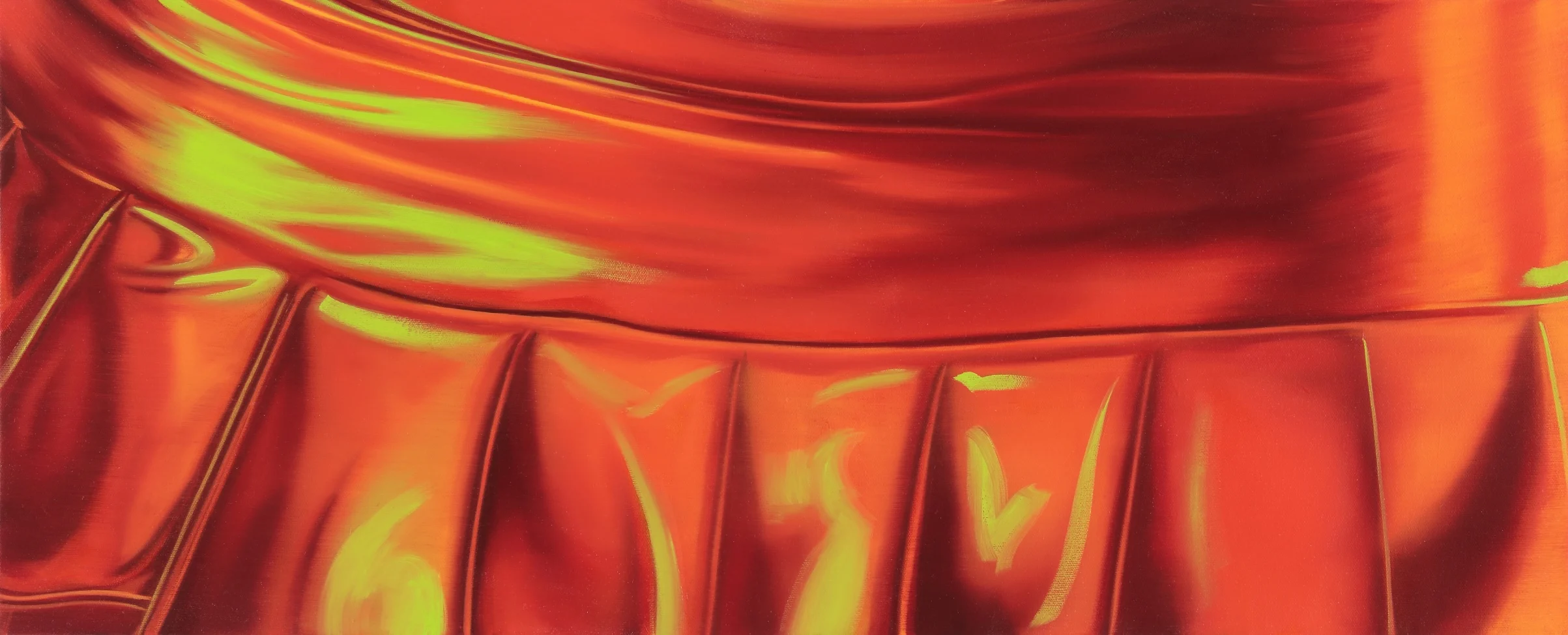
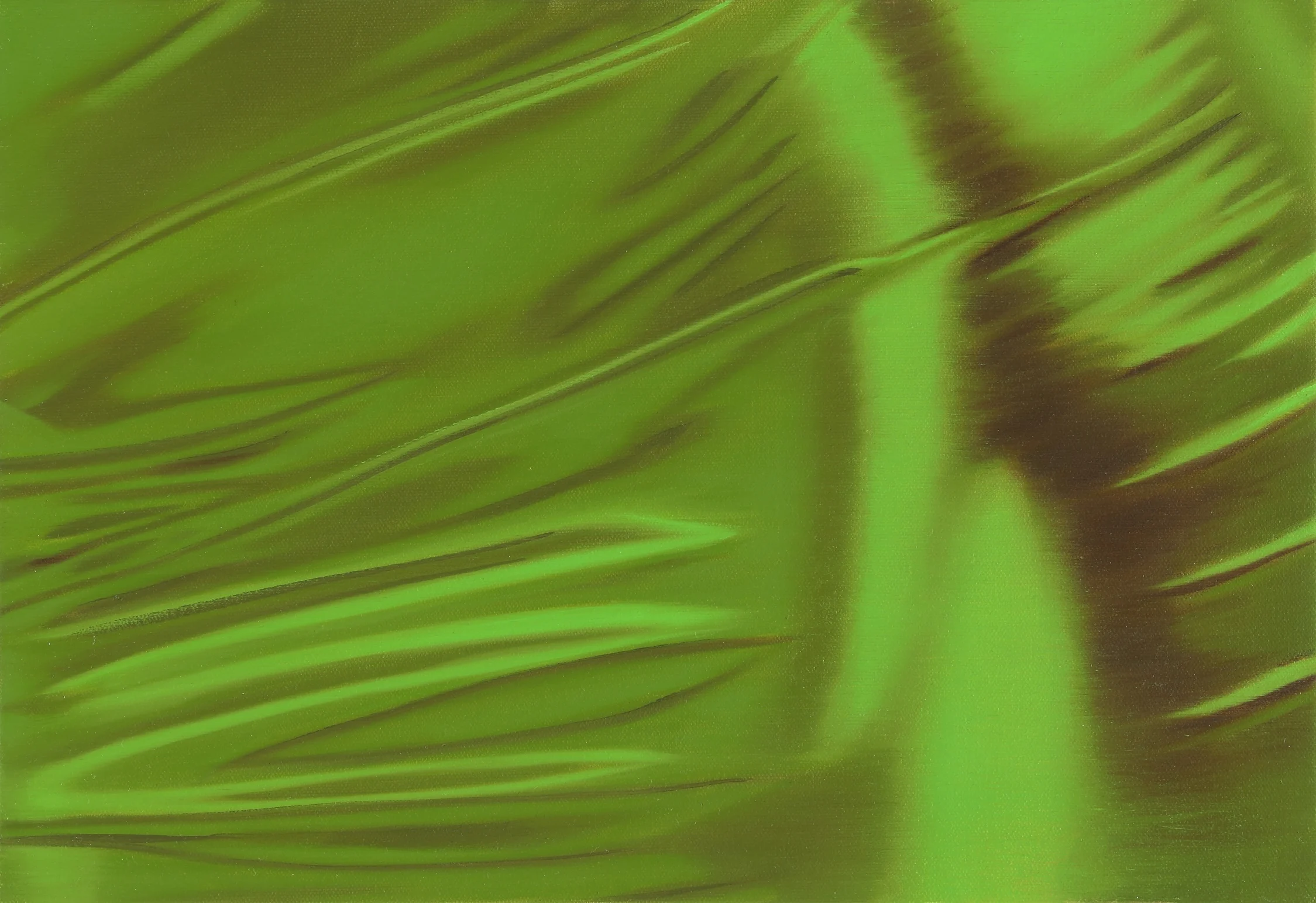
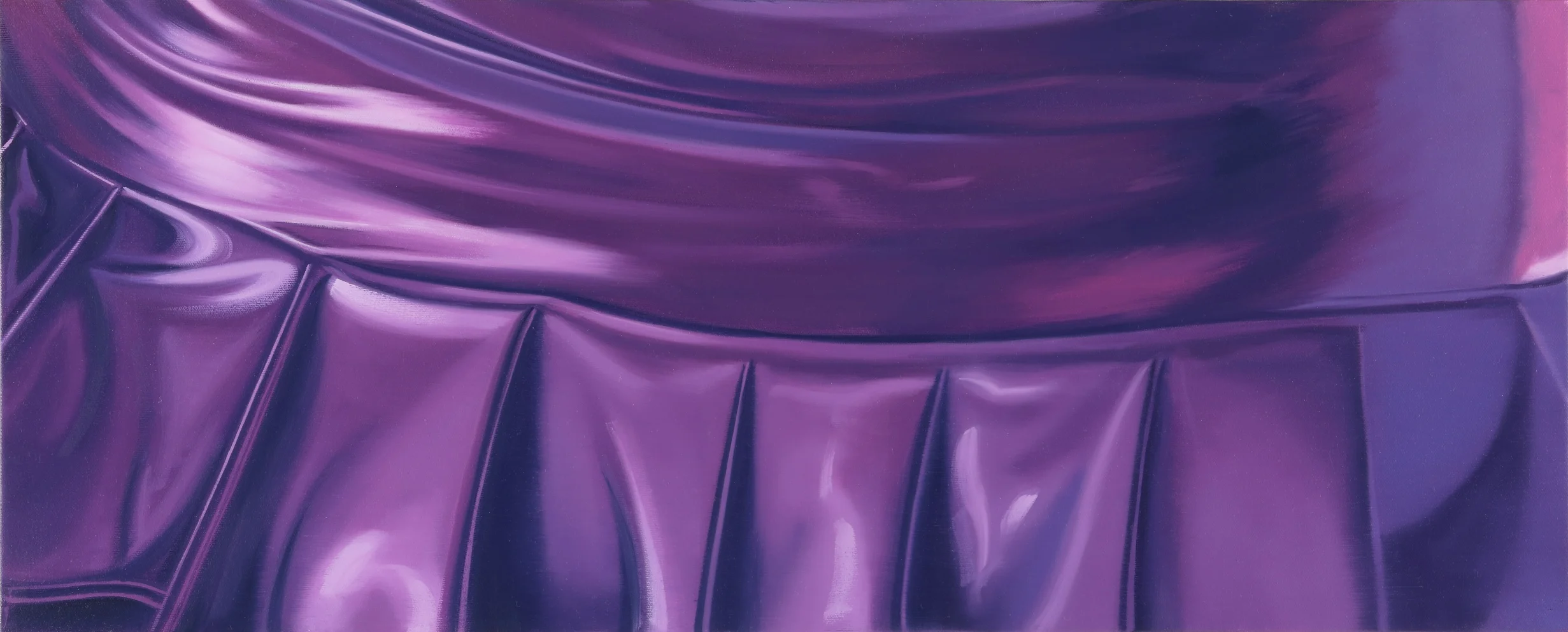
With the aesthetics of consumer culture as her starting point, Sears could focus on any commodified entity, marketed enticingly through smooth screens and delivered wrapped in materials that will outlive nostalgia itself. “But I chose to work with the female body because it’s the most mediated. And I feel like as women, we learn more about our bodies through images than we do in real life,” she says. “Not only are we seeing a proliferation of images all the time ad nauseum, but much of the time they're using the female body in order to sell something. And in that way, our bodies become flattened and obviously objectified.”
In these more recent works, Sears explores the explicitness of the framing used in fast fashion photography and what is discarded when headless bodies are displayed against stark white backgrounds in sharp focus and flat light so that every inch can be easily consumed. In her images, which zoom in even further, the folds of the fabric become slippery and liquid; abstract enough to stop a swiping finger momentarily to comprehend what the subject of the painting might be beyond the subconscious registering of a cheap, shiny fashion garment.
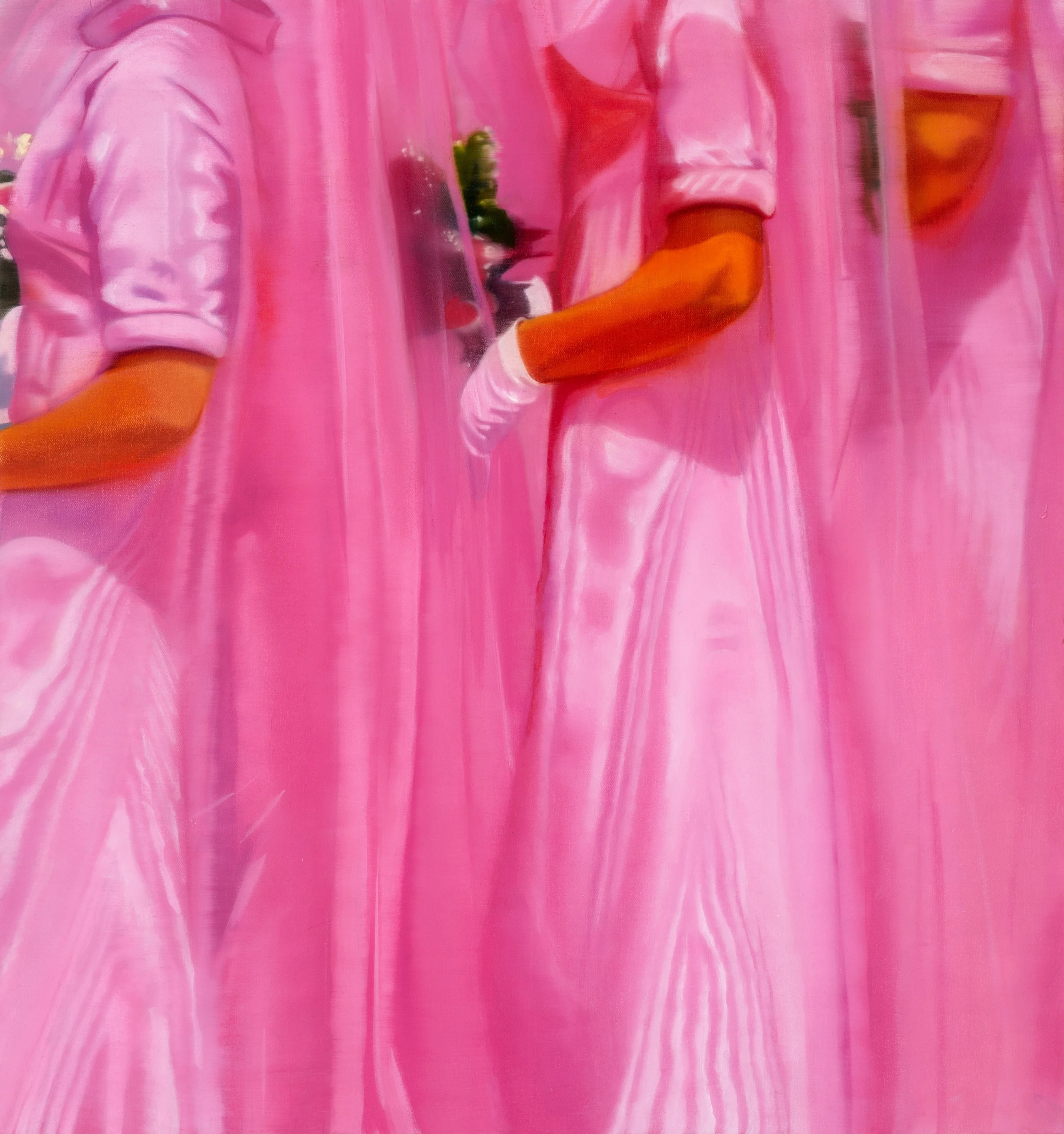
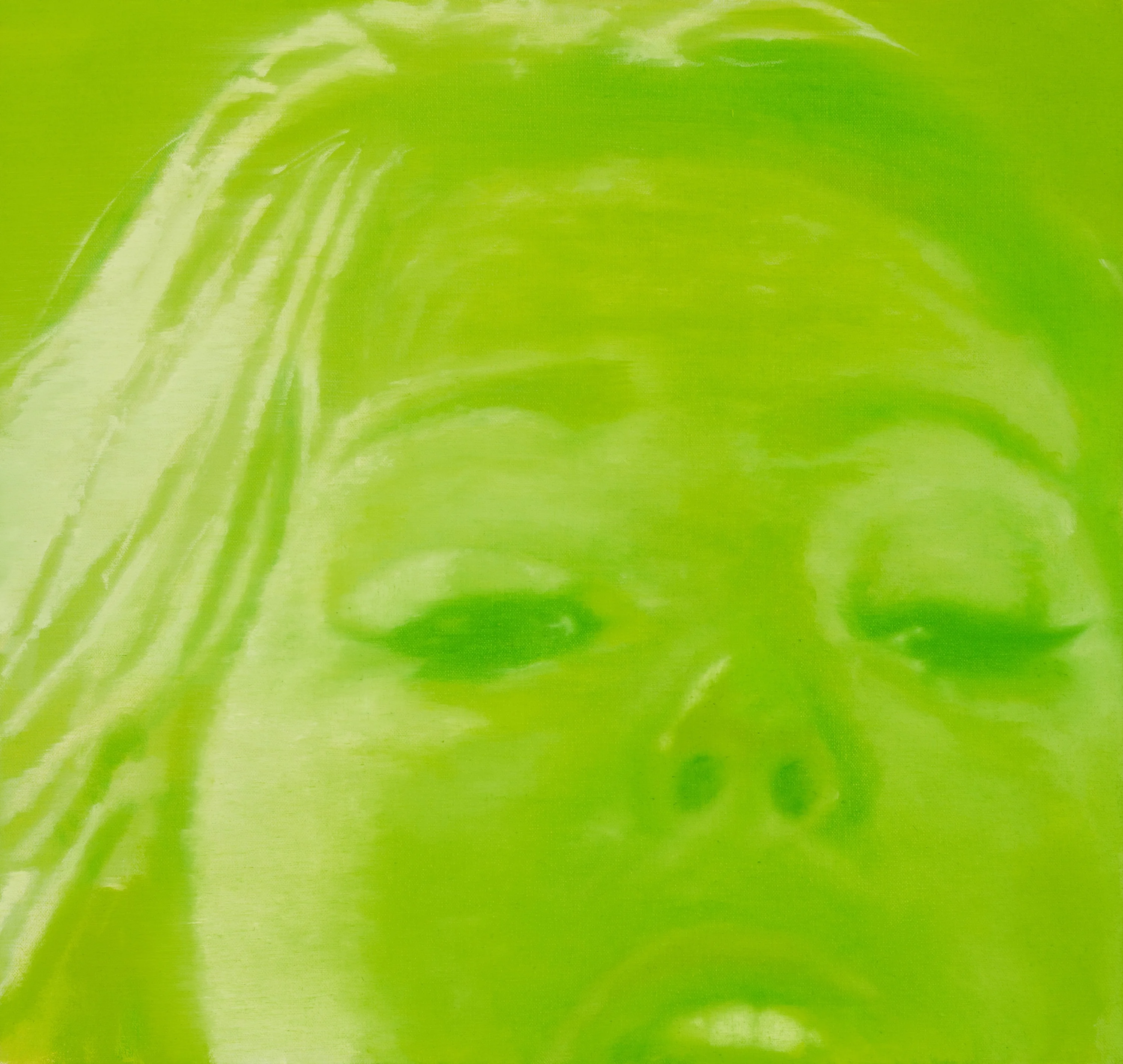
To achieve this “clickable” effect in her paintings, Sears slowly builds thin layers of transparent colours inspired by the light emitted from touchscreens. She uses oil paint for its blendable quality, and a dry brush to continuously buff the layers, keeping the surface as smooth as possible. The last step is adding the highlights once the painting is dry so that the white paint pops like a studio light on lamé.
Perhaps the most power an online image contains is in the promise of transformation that consumers buy into beyond our better judgement; that we may look as desirable as the body in the dress if we purchase it. But the illusion is that many times there is no body at all, only a plastic mannequin stand-in, or, increasingly, an AI-generated model. “With product photography, it’s just the garment a lot of the time, but the body is still implied. You’ll have the shadow of breasts or the shape of a belly or hips, but there's no body inside,” Sears says. “I always think it’s interesting to see this implied body against this white background. The image is absent of the body, but it’s also absent of the labor that goes into the garments, or of the company’s politics. It’s just about something being consumable.”
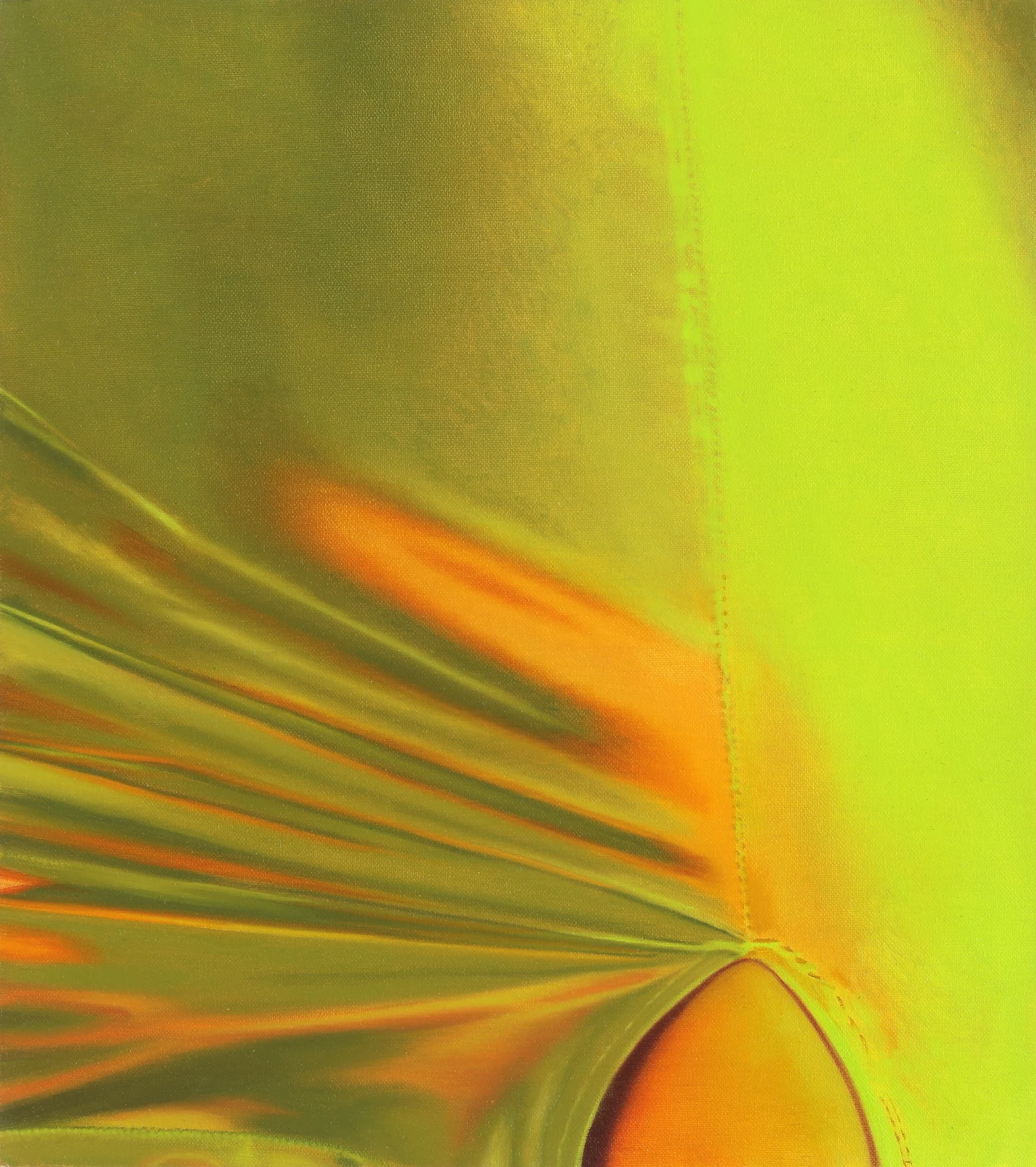
Like their reference material, the paintings that Sears presents are intentionally seductive, and she always hopes a collector will understand why, rather than buy an artwork for its sheer sexiness. “I frequently want to know who bought them because I don’t know what their vision for the work is. But at the same time, it kind of nails the consumer. We all fall victim to this stuff all the time,” she says. “As artists, sometimes you’re worried that you are creating the very thing that you’re critiquing. So when someone gets it, it’s like, ‘Oh thank god, I’ve done my job’.”