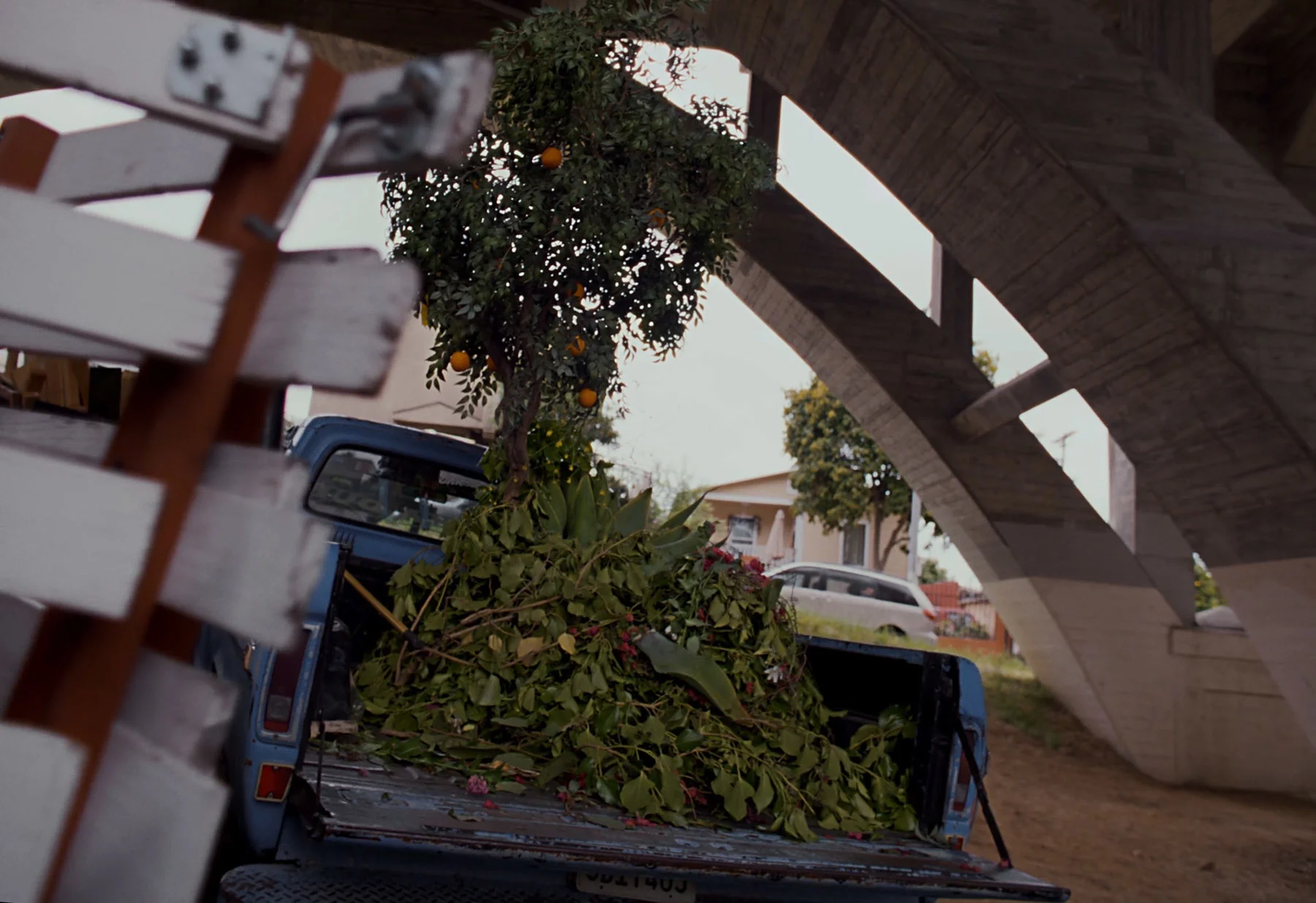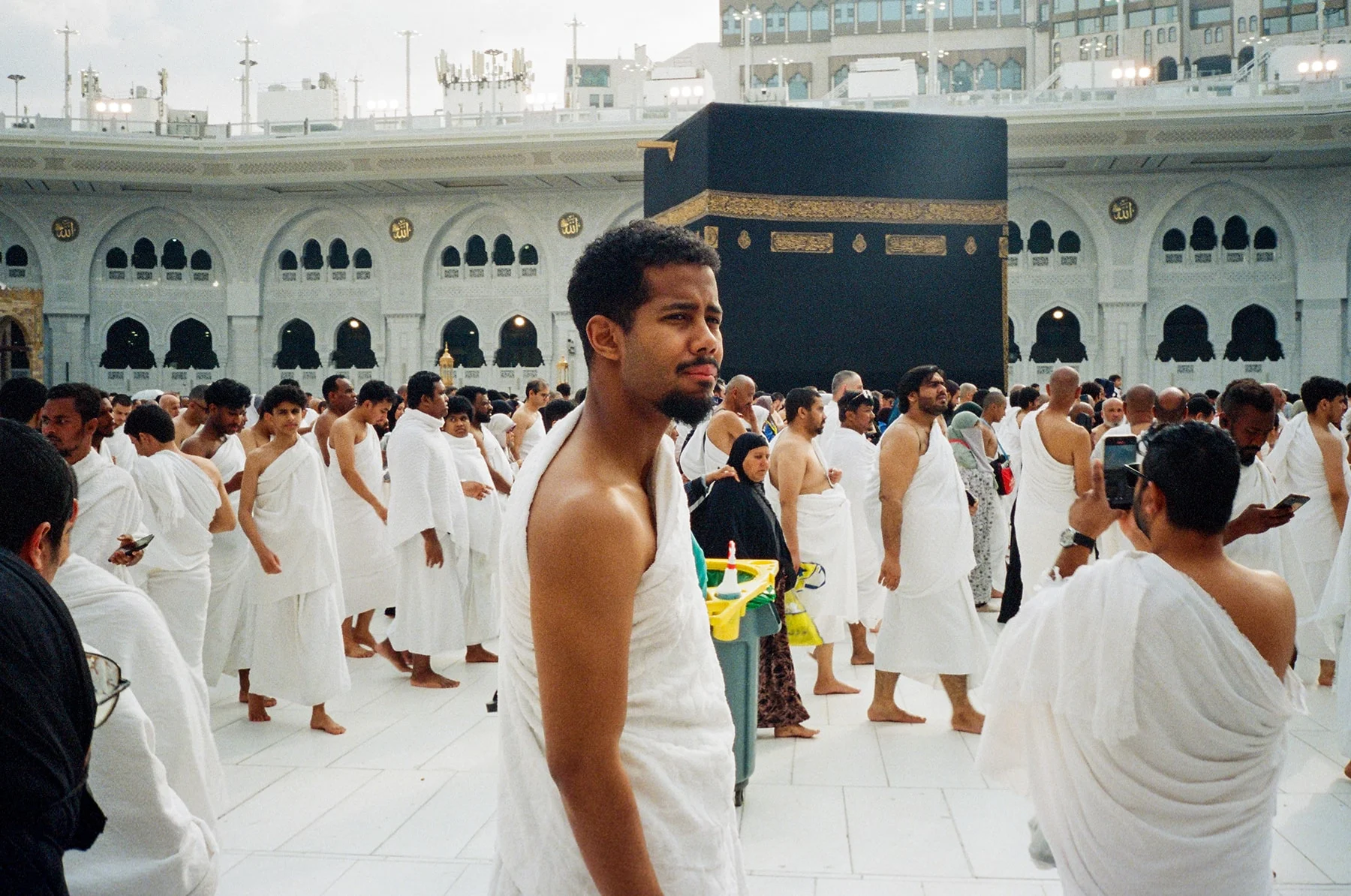
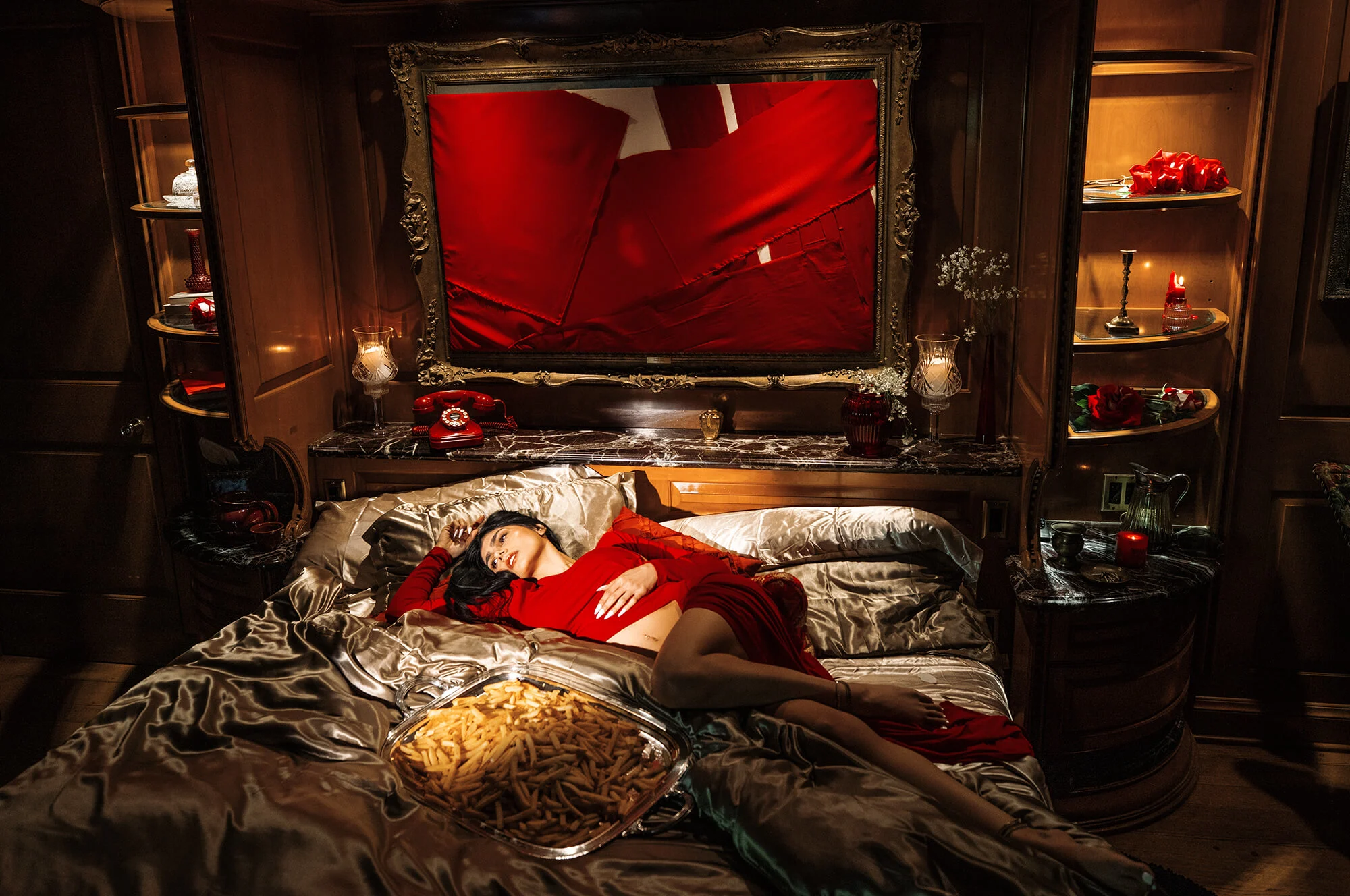

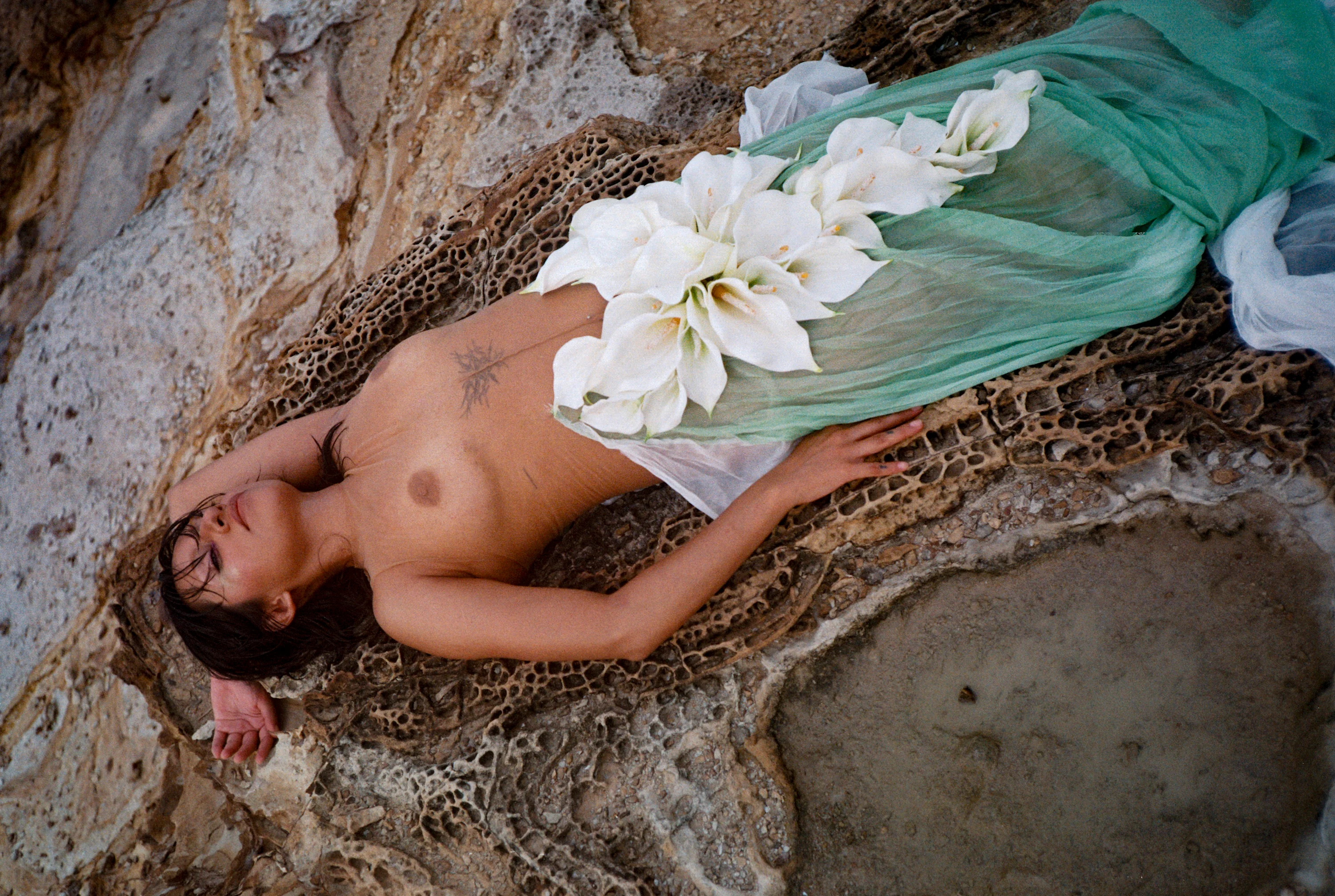
For Jazmin Garcia, beauty is not just decorative—it’s what keeps us reaching for something more tender than the world we inhabit. Flowers, for her, are its purest expression: at once delicate and defiant, a reminder of the link between life and death. She tells Marigold Warner about her debut photobook “Flor de Jamaica,” which blooms from that belief, blending documentary and magical realism to create an intimate meditation on memory, loss, renewal and the quiet magic that keeps us alive.
“Flor de Jamaica” is available to purchase here.
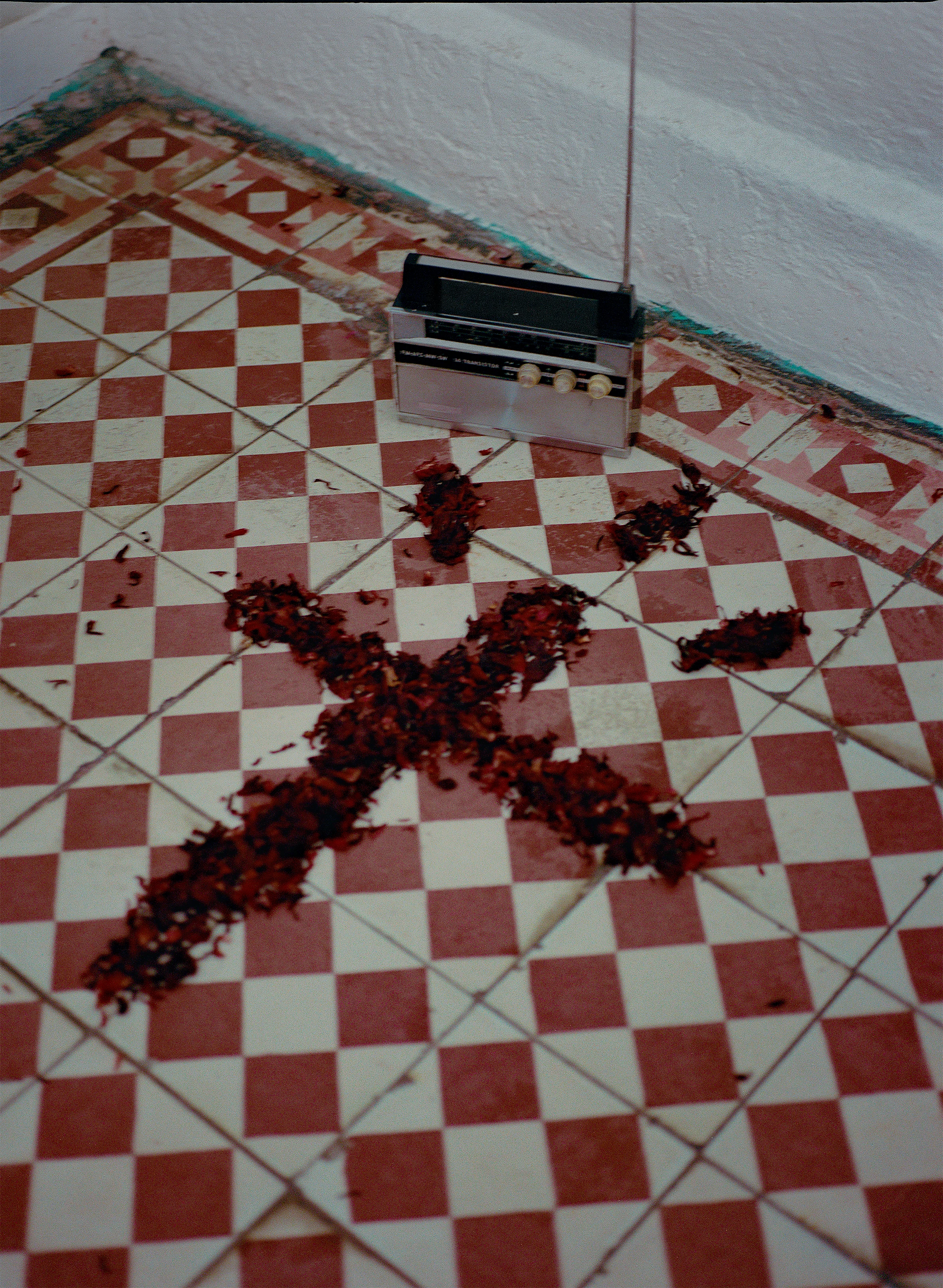
It is dawn in a landscape where desert meets ocean. Doña Berta, an elderly Guatemalan woman, is tending to piles of dried flor de jamaica. This hibiscus flower is all that survives in the fictional village, and all around her are piles of it. Doña is bound to tend to these flowers for eternity. She spends all her days sorting the leaves with her delicately wrinkled hands, and steeping them into a deep red tea known as agua de jamaica.
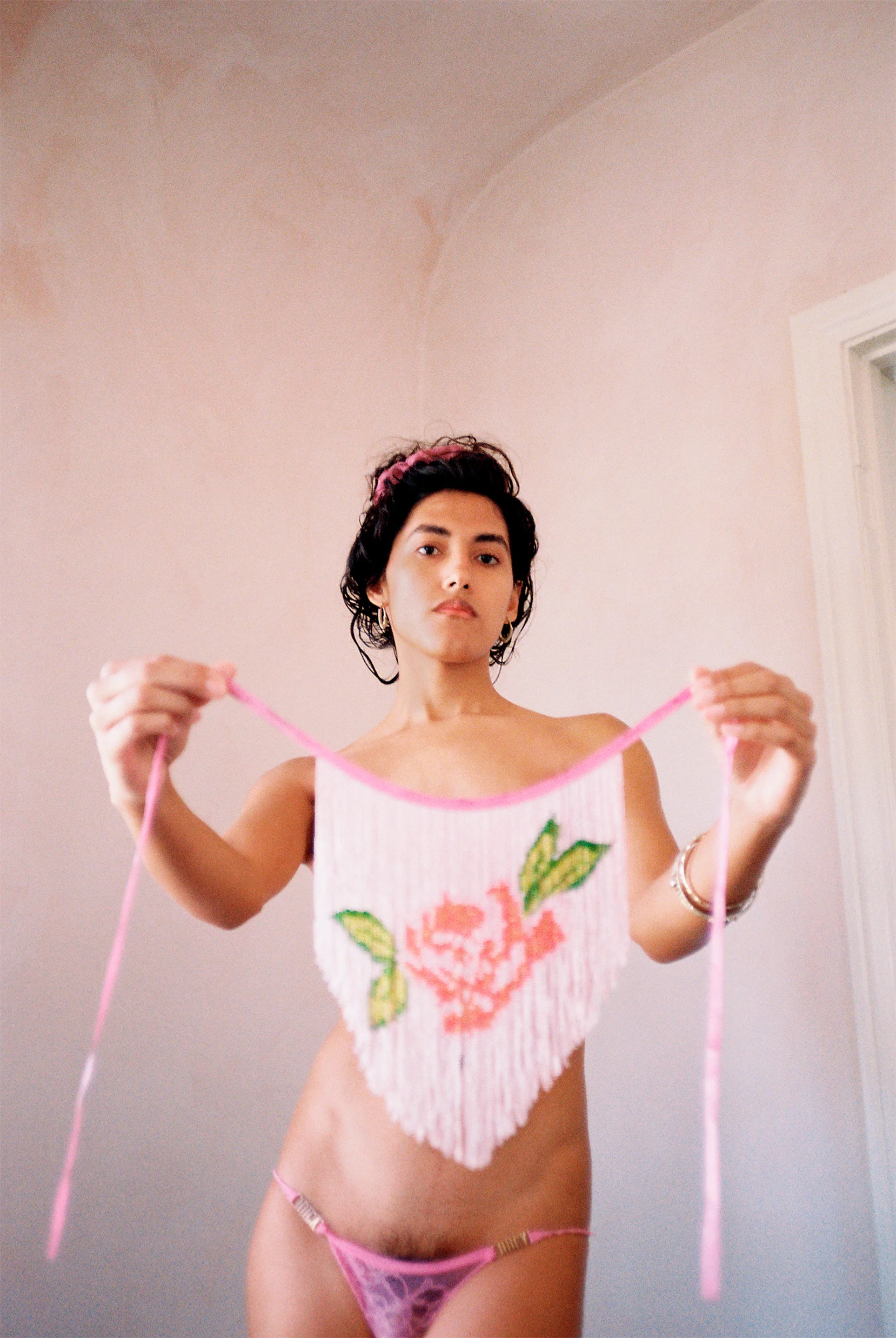
Everybody is attracted to beauty, and flowers are such a good example of that.
This faded world is the setting of a short screenplay by filmmaker Jazmin Garcia. It is the centerpiece of her debut photobook “Flor de Jamaica,” an enchanting meditation on flowers, women, beauty, and magic. Sheathed in a bespoke maroon sleeve—”like a delicate floral object”—the book compiles photographs made over the last eight years. It is designed by her good friend Symrin Chawla, opening with a love letter between the two artists unfurling the beauty embodied in flowers and women alike.
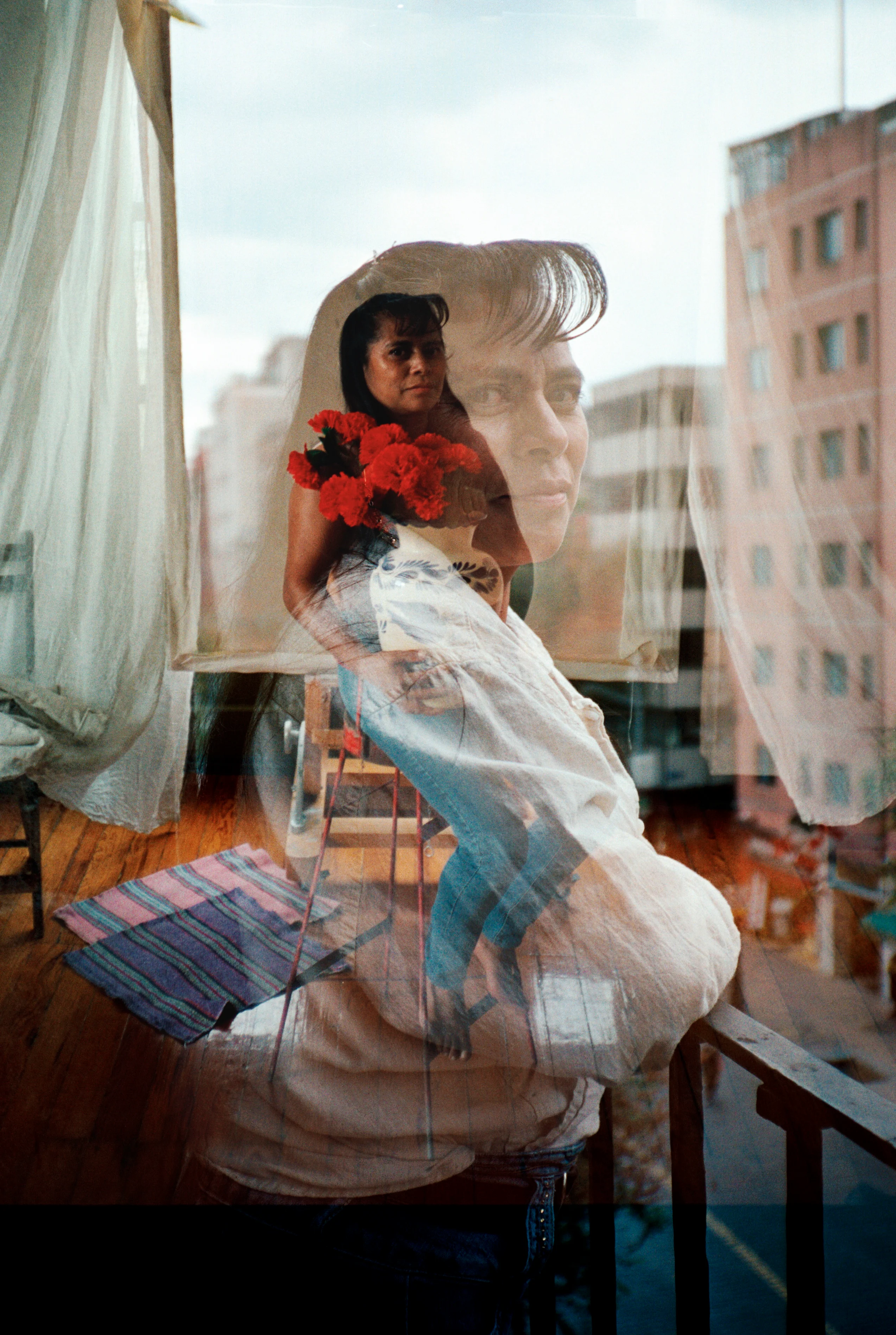
“[The photographs] developed as a kind of mood board, like a pathway to the stories that I wished to tell,” says Garcia, who works primarily as a filmmaker of short documentary and narrative film. Coursing through many of her works, including this book, are elements of magical realism. “I would never want to live in the so-called rational side of things,” says the Mexican-Guatemalan artist. “Magical realism was the natural form of understanding literature in my household, in the way I grew up and the stories my mom told, the films that we watched, the artists that she surrounded us with.” The images in Flor de Jamaica exist in a world that is soft and alluring, with a mystic quality. The people are Garcia’s friends, family, or frequent collaborators. When they’re not pictured with flowers, their images are overlaid with photographs of vibrant foliage and florets. These are printed on translucent vellum paper and scattered throughout the book like clippings of pressed flowers—an ode to Garcia’s love of keeping flowers from places she visits.
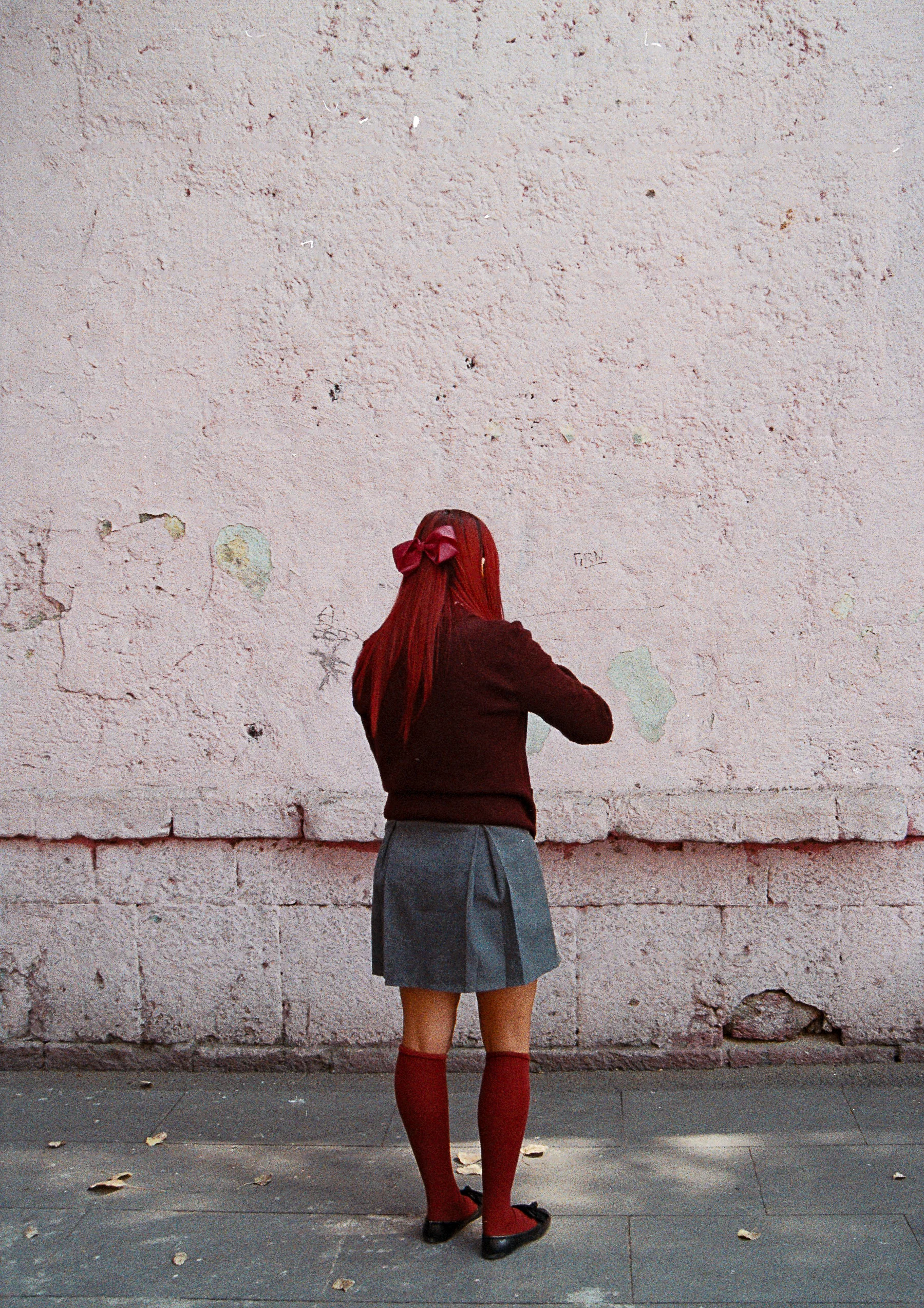
Like the genre that inspired it, Garcia’s book is both fantasy and documentary, melted in with narrative fiction and personal stories. Born in Los Angeles to a Mexican mother and Guatemalan father, she often creates through the lens of a first generation child of immigrants. “I decided to become a filmmaker in a very specific moment in time when slight windows were opening up to women like myself,” she says. The artist spent her early years at a Latino media company, before shifting into independent work. She has been working professionally for around a decade now, between LA, Mexico and Guatemala.
Music also plays a huge role in all of Garcia’s work. For almost a decade now she has been curating an NTS show, Como la Flor; its most recent episode is the soundtrack to her new book. “Music is extremely important, to my life, my healing, my inspiration,” she says. “I wanted to make a soundtrack that guides people through the various characters present in this photobook.”
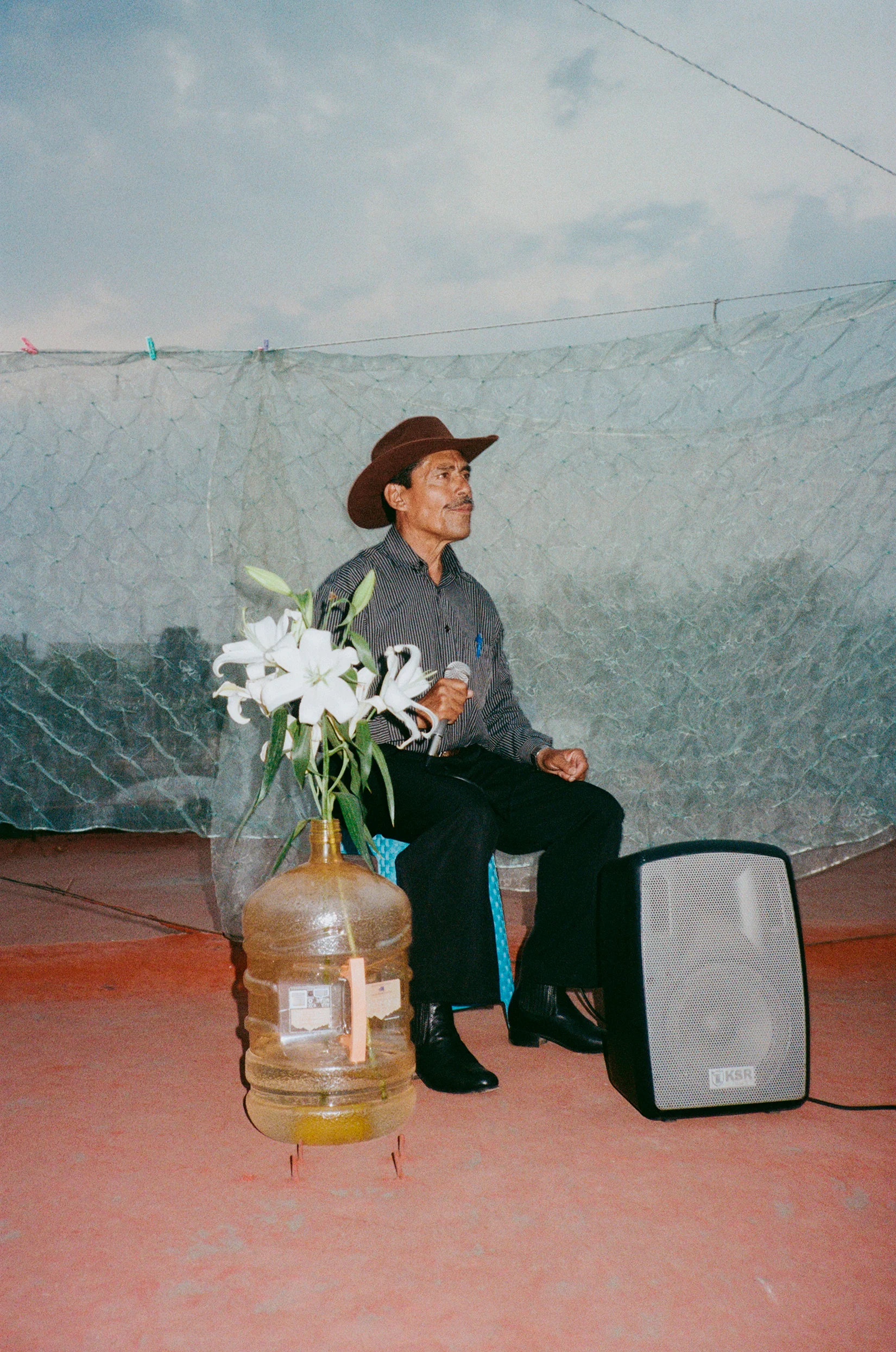

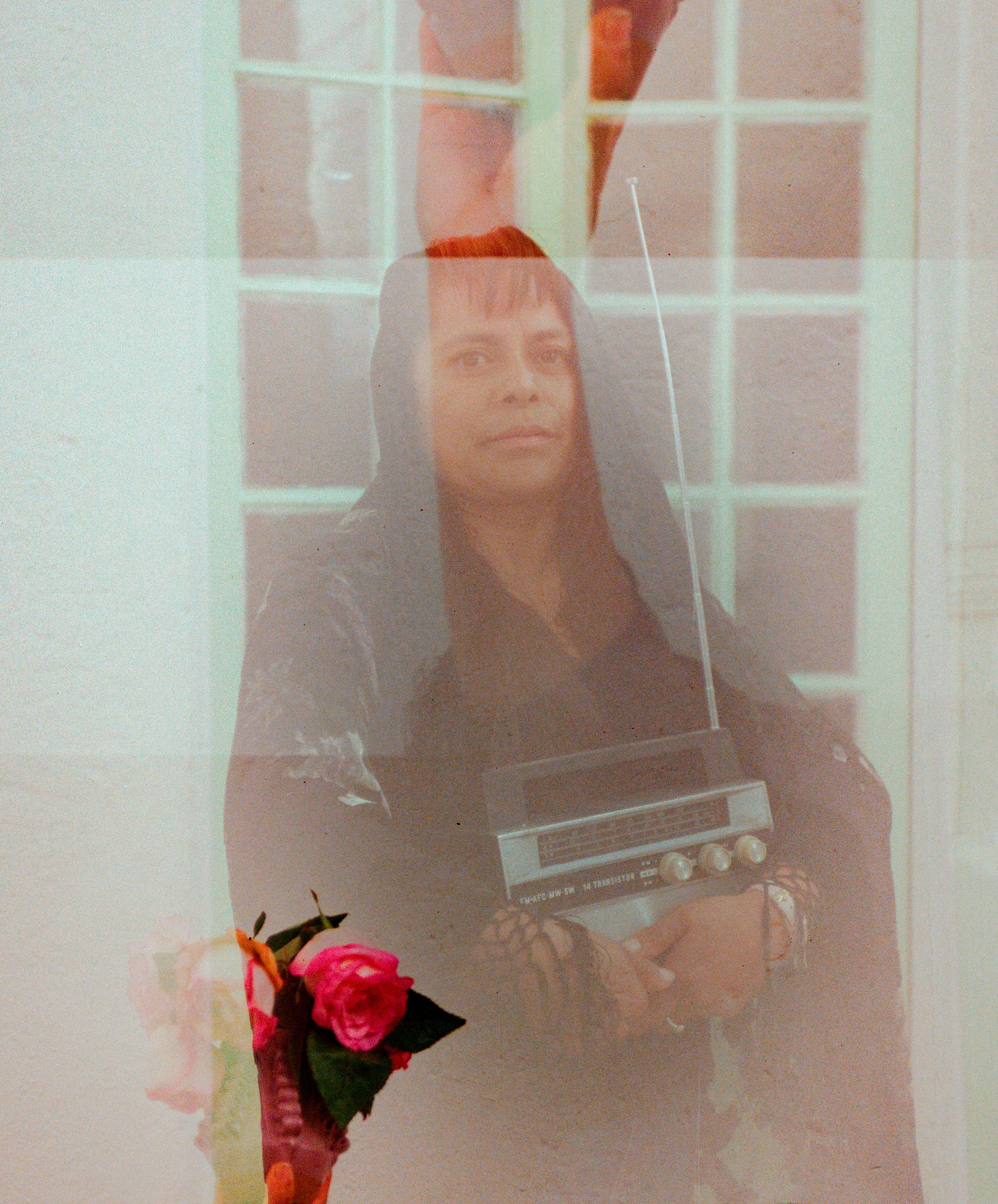
One character is Garcia’s father. There is one spread in the book that is dedicated to him. On one page is a photo of his empty kitchen; on the other is a portrait presented on Garcia’s iPhone, nestled within a makeshift altar of flowers that she created after she moved out of the apartment they shared. “When my dad passed away ten years ago, he became my angel. He's been kind of guiding me through this wild thing of pursuing a film career,” Garcia shares. After he was diagnosed with ALS, a neurodegenerative disease, Garcia moved in with him to become his primary caregiver. “Those two photos of my dad are extremely important and sentimental. They're my offering to that space where I took care of him. It was like a ritual I had to do in order to be able to leave.”
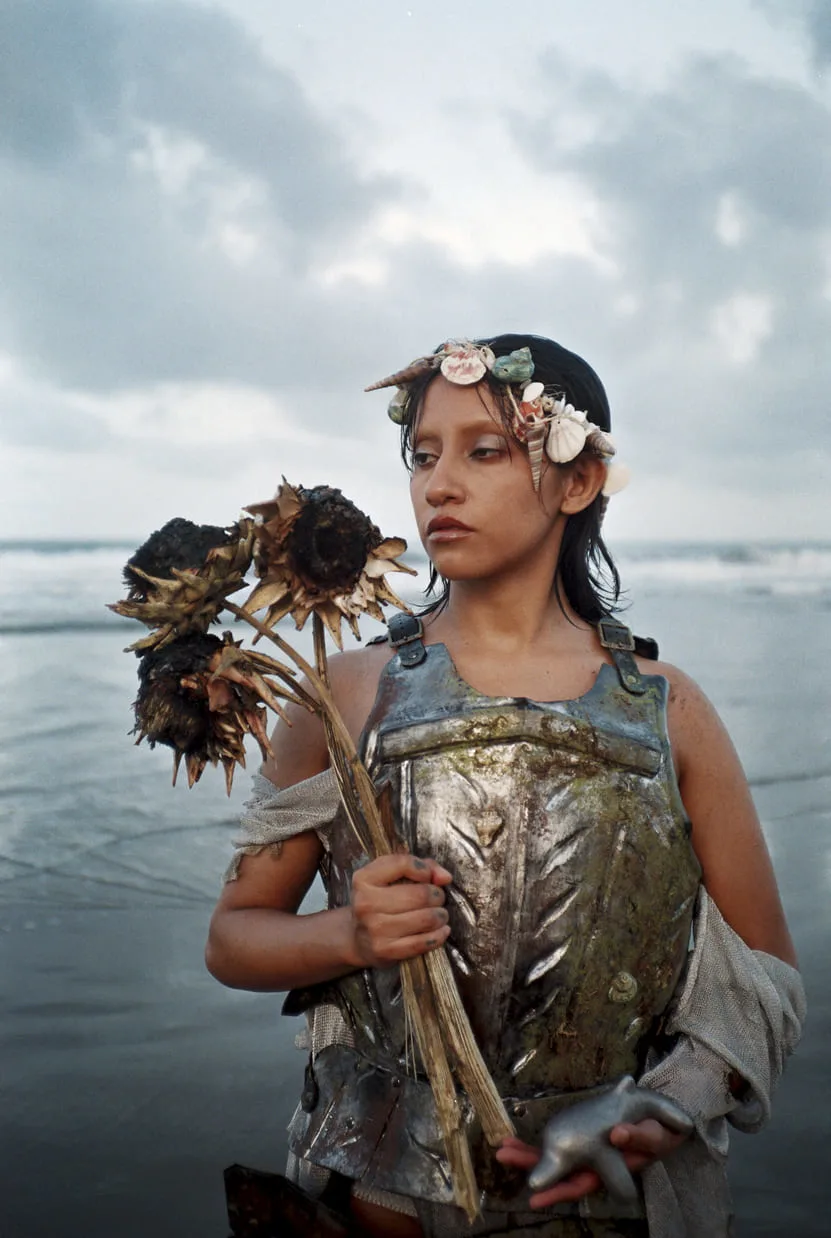
There is also Frida, Garcia’s version of a “video girl”—a model who featured frequently in music videos of the 90s and 00s. In one of their collaborations, Frida plays a woman that builds herself an armour – her tough exterior – on the beach. Over the course of the video she removes her armour, reclaiming her softness. By the end, she transforms into a mermaid—her truest, unarmoured self.

Beauty motivates our desire to see a better world. Beauty is the North Star for that change… that’s what keeps us going and gives us hope.
These kinds of narratives are inspired by stories of women who said no to rules, such as the 1992 film “Like Water for Chocolate,” a classic of the magical realism genre exploring female desire and rebellion. “The way we live our lives now, we’re consistently dealing with the most unbelievable magic, but also unimaginable violence and cruelty," she says. “And then there’s beauty and spirituality.” This conversation between beauty and justice was a theme that became important to both Garcia and her designer, Symrin, in the process of making the book. “Everybody is attracted to beauty, and flowers are such a good example of that,” says Garcia. “Beauty motivates our desire to see a better world. Beauty is the North Star for that change—that’s what we’re aiming for. That’s what keeps us going and gives us hope, to tell stories about people who have been neglected and who deserve dignified lives.”
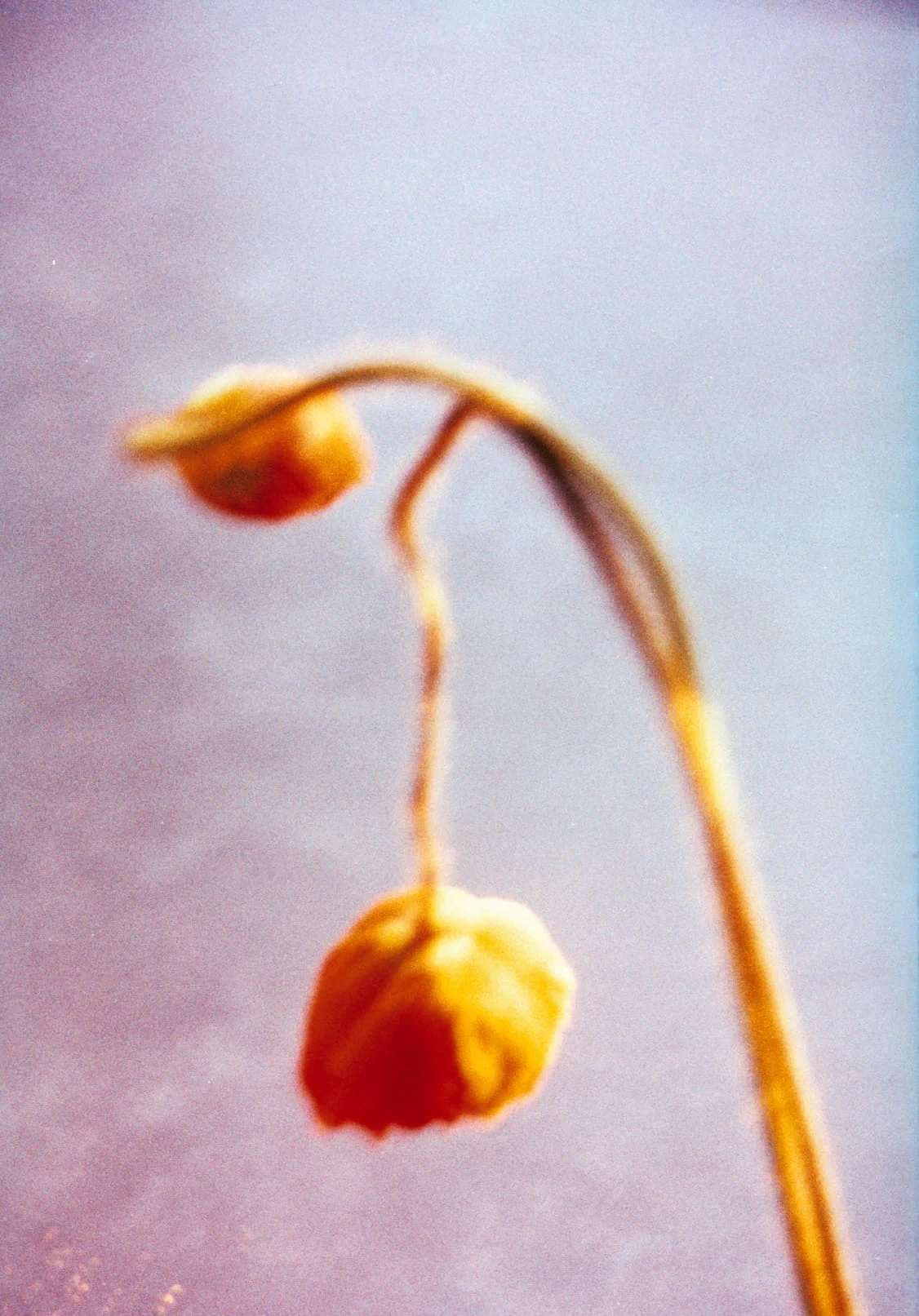
But what is behind that motivation, outside of superficial beauty? Why, for as long as humanity has existed, are we so obsessed and attracted to the beauty of flowers? “In my case, they remind me of the link between life and death,” says Garcia. Indeed, flowers can make us feel connected to something bigger to believe in: the natural, and the supernatural.

As Garcia’s screenplay progresses, the elderly woman Doña Berta enters into a surreal exchange with a singer on her old radio. She recounts a story about her lost lover, Elvis. He was once a musician, she says, but was abruptly swept into the army and pressured to commit violence against his own people. She begged him to desert, and later, rumors circulated that Elvis had “crossed over to the other side”. Whether that meant the border, the guerrilla, or to death—she never found out.
In her solitude, Doña Berta transforms her longing into a ritual. Each day she offers the flor de jamaica on an altar to the whales who still come to give birth along the coast. Their return is a sign of renewal. Even after great loss, life endures. Carried in the beauty and magic of the land, the sea, and the flowers.