

Ciudad Juárez is one of the most dangerous cities in the world for women. According to the UN, over 2500 women have been murdered there in the past three decades, and hundreds are still missing. Amid this climate of fear and inequality, a resilient group of female wrestlers, known as Luchadoras, are defying societal norms. Photographer Jana Margarete Schuler tells Gem Fletcher about the complex reality of these women’s lives and their quest for equality in the ring and beyond.
It’s easy to mistake the energy in Jana Margarete Schuler’s project, “Between Blood and Glitter,” as a glamorous spectacle. But what you’re really seeing is a group of women making a powerful statement against the gender-based violence that plagues their city. “The constant threat forces many women to fear for their safety in public spaces,” explains Schuler, a German photographer who has built a relationship with the female wrestlers in Ciudad Juárez over the last two years. “The Luchadoras refuse to hide. In the ring, they can be whoever they want and do anything they want—there’s a sense of limitlessness. Even if it only extends to the ropes.”
Like many borderlands, Ciudad Juárez is a place of contrasts. The border wall slices directly through its center, separating it from El Paso, Texas—one of the safest cities in the United States. Four international bridges connect Juárez and El Paso, facilitating daily movement, but the divide between their realities remains vast. For women and girls in Ciudad Juárez, their lives are shaped by the constant threat to their personal safety, rendering them hypervigilant every time they decide to leave the house. According to the UN, over 2500 women have been murdered here in the past three decades, and hundreds are still missing. The root of this violence is driven by a collision of organized crime, a patriarchal approach to women and legal impunity around femicide.
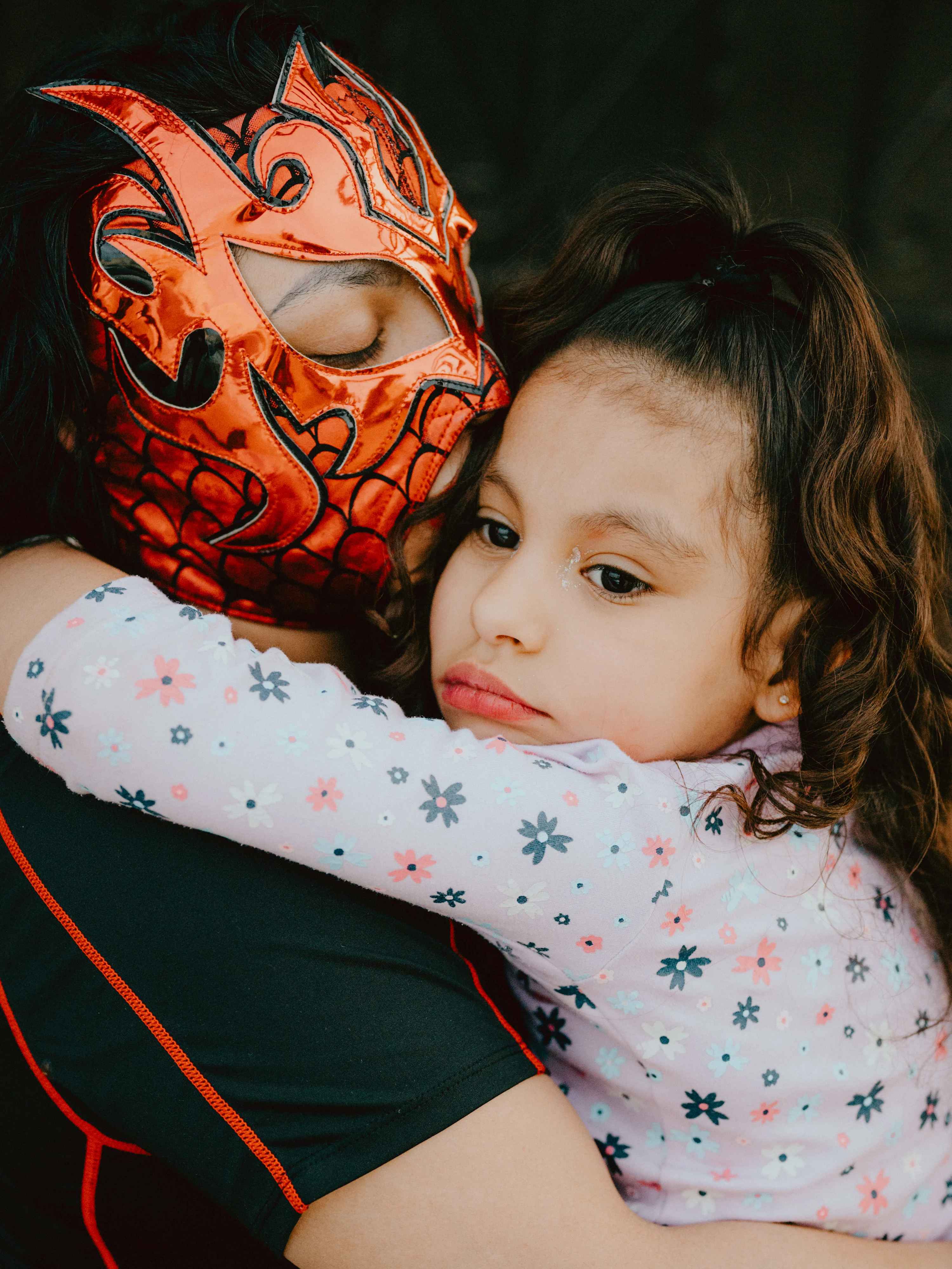
Keeping the issues in the spotlight is critical to holding authorities accountable and breaking this devastating cycle—a responsibility Schuler takes very seriously. The German photographer has dedicated her career to urgent stories told through small moments, documenting the nuances of everyday life to reveal larger social dynamics. Her approach—which focuses on how women navigate strength, vulnerability and resistance within social and political structures—is grounded in slow, long-term reporting. Together with her collaborators, she unravels the nuances of structural injustice, bringing an intimate first-person perspective that can only be gained through genuine trust and sustained proximity.
Schuler began the project in 2023 after connecting with Miss Kath, a German Luchadora based in Ciudad Juárez, affectionately self-described as “6 Feet of Brutality.” From there, she began carefully immersing herself in the local wrestling scene, learning the sport as well as the wider socio-political environment which shapes every aspect of the Luchadoras' lives.
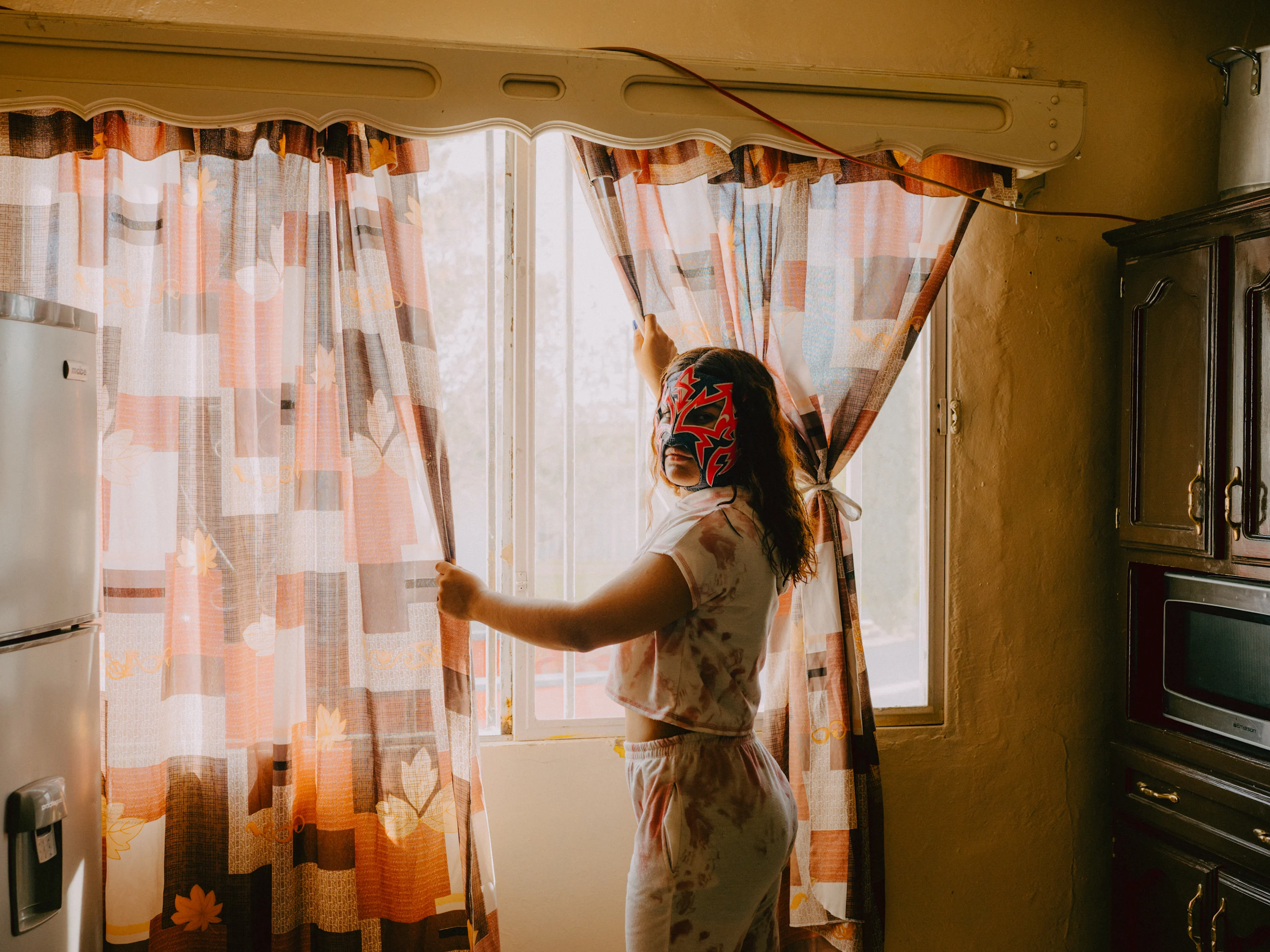
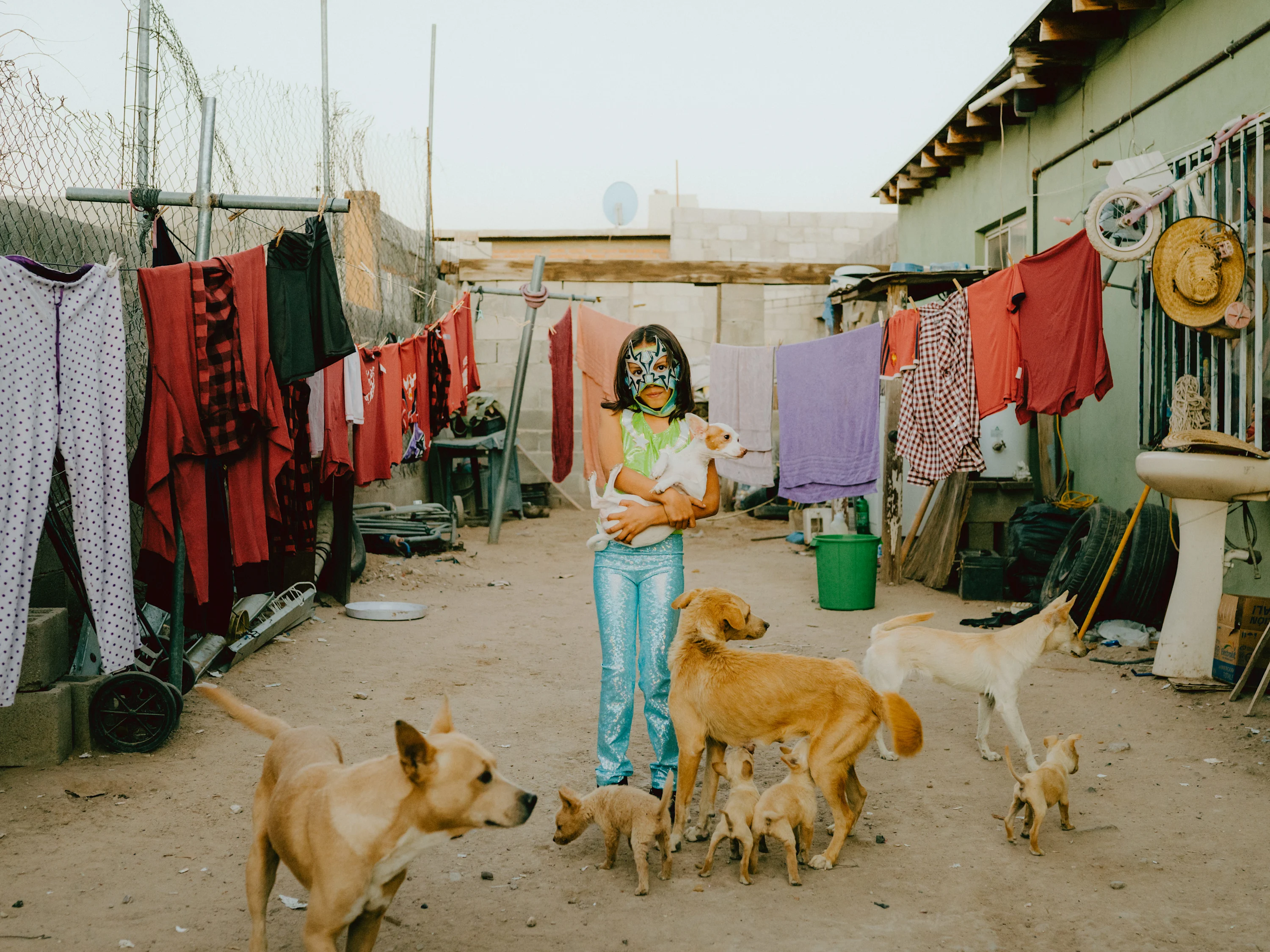
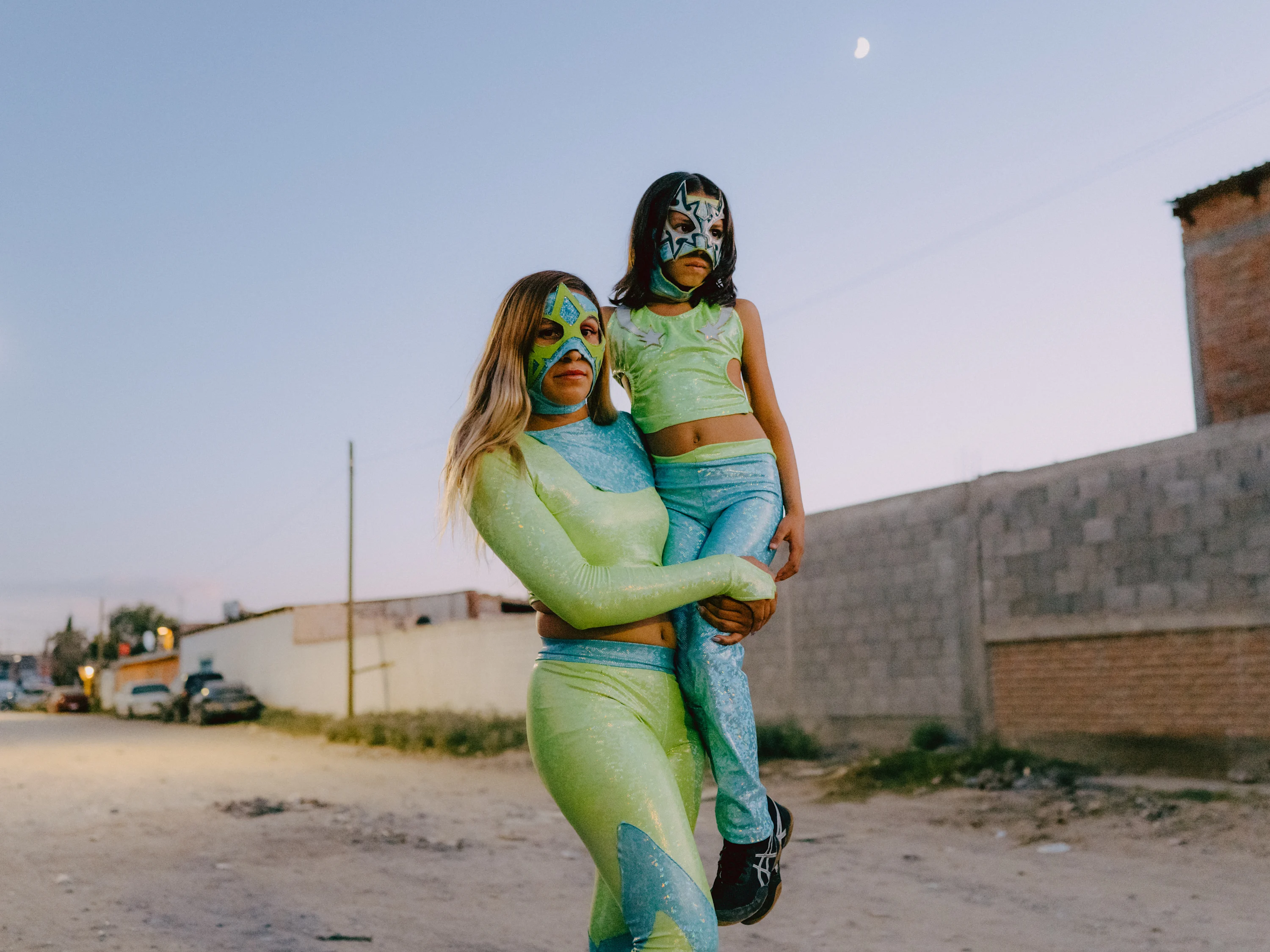
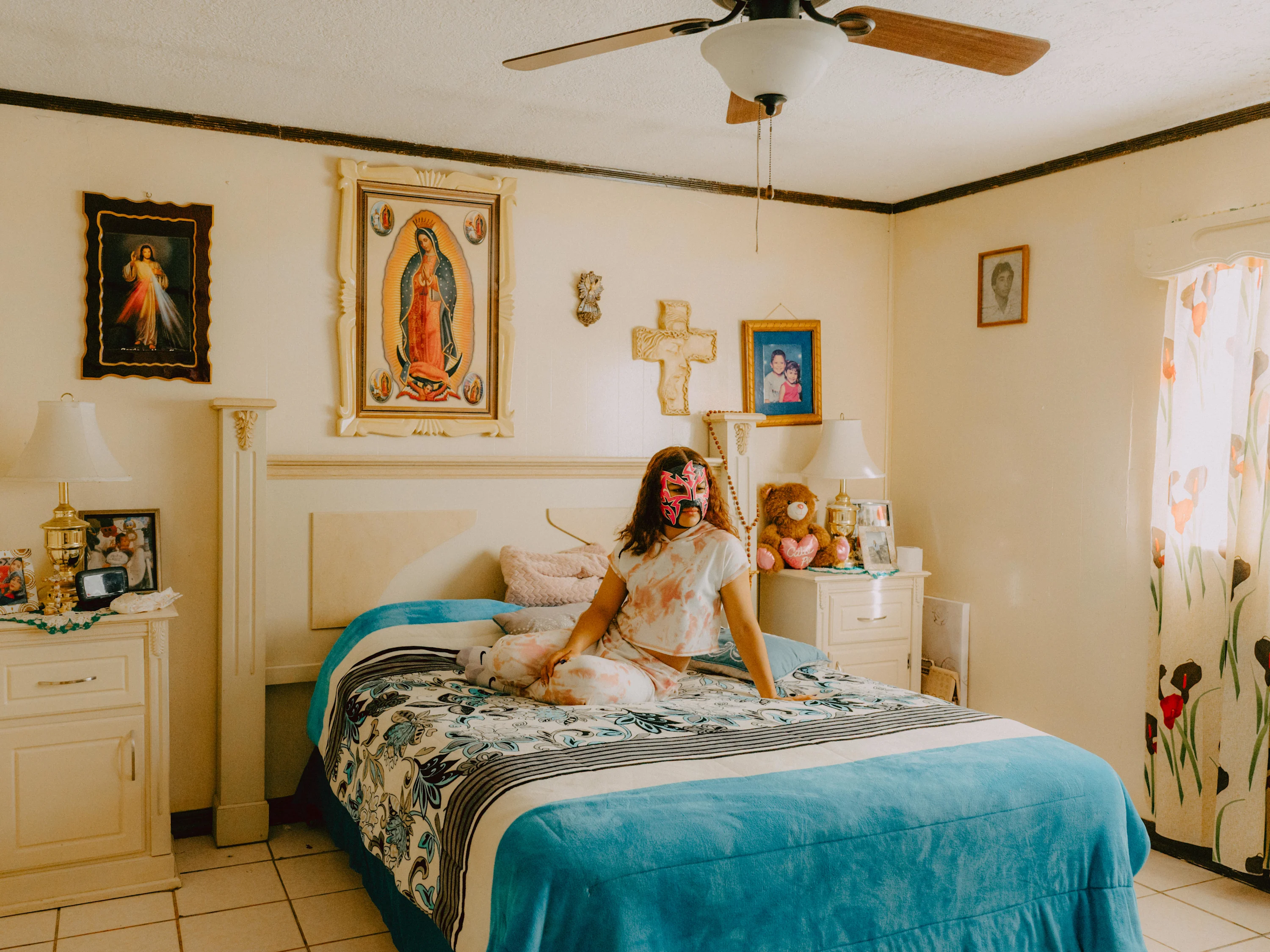
Among the 200 wrestlers in Ciudad Juárez, just 15 are women. Their diverse profiles reflect the eclectic nature of a sport deeply embedded in Mexican culture. Take Universis: she used to roam the streets with a brutal gang and is now celebrated as a heroine in the working-class neighbourhoods. Lola González, a local hero aged 66, who still competes in Mexico City, has reigned the sport for decades. In contrast, 15-year-old Sayuri is the youngest wrestler and wears a mask symbolizing her double life. Her classmates have no idea that she fights in front of thousands of spectators on the weekends. Baby Star, the city’s current champion—who is often accompanied by her daughter to fights—is from a family of wrestlers dating back three generations. Her grandfather participated when the sport was exclusively male. Today, she proudly carries on his legacy.
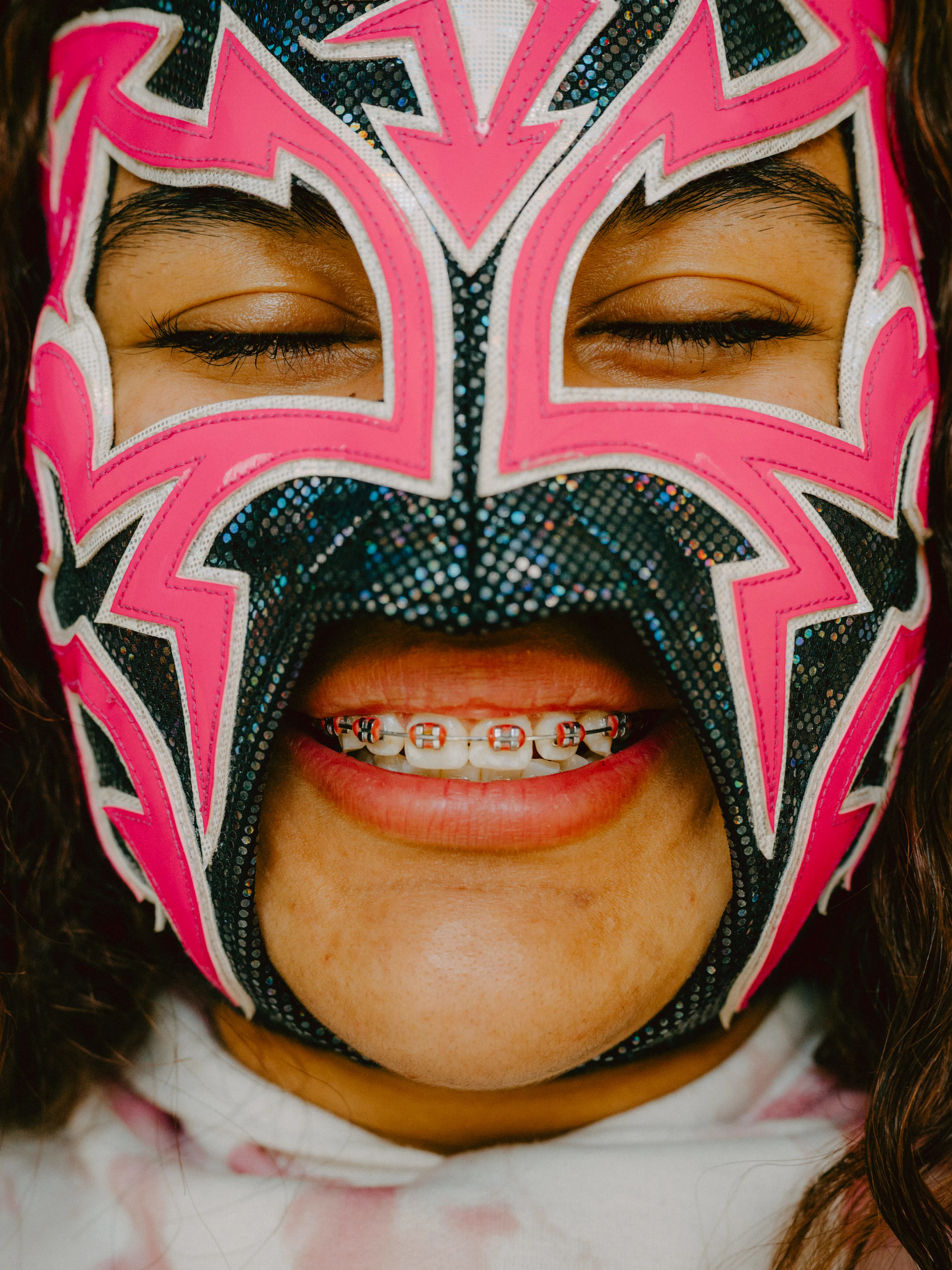
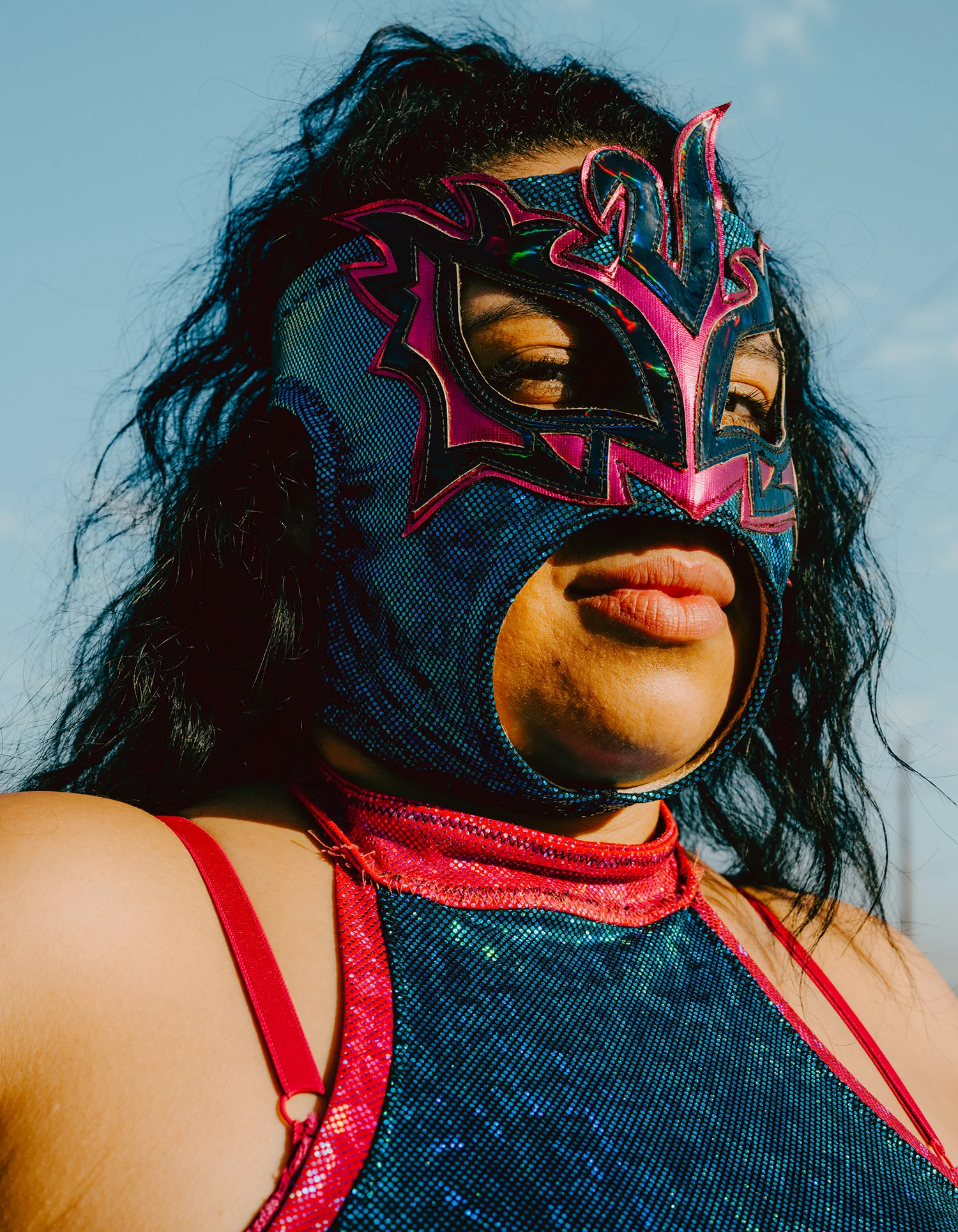
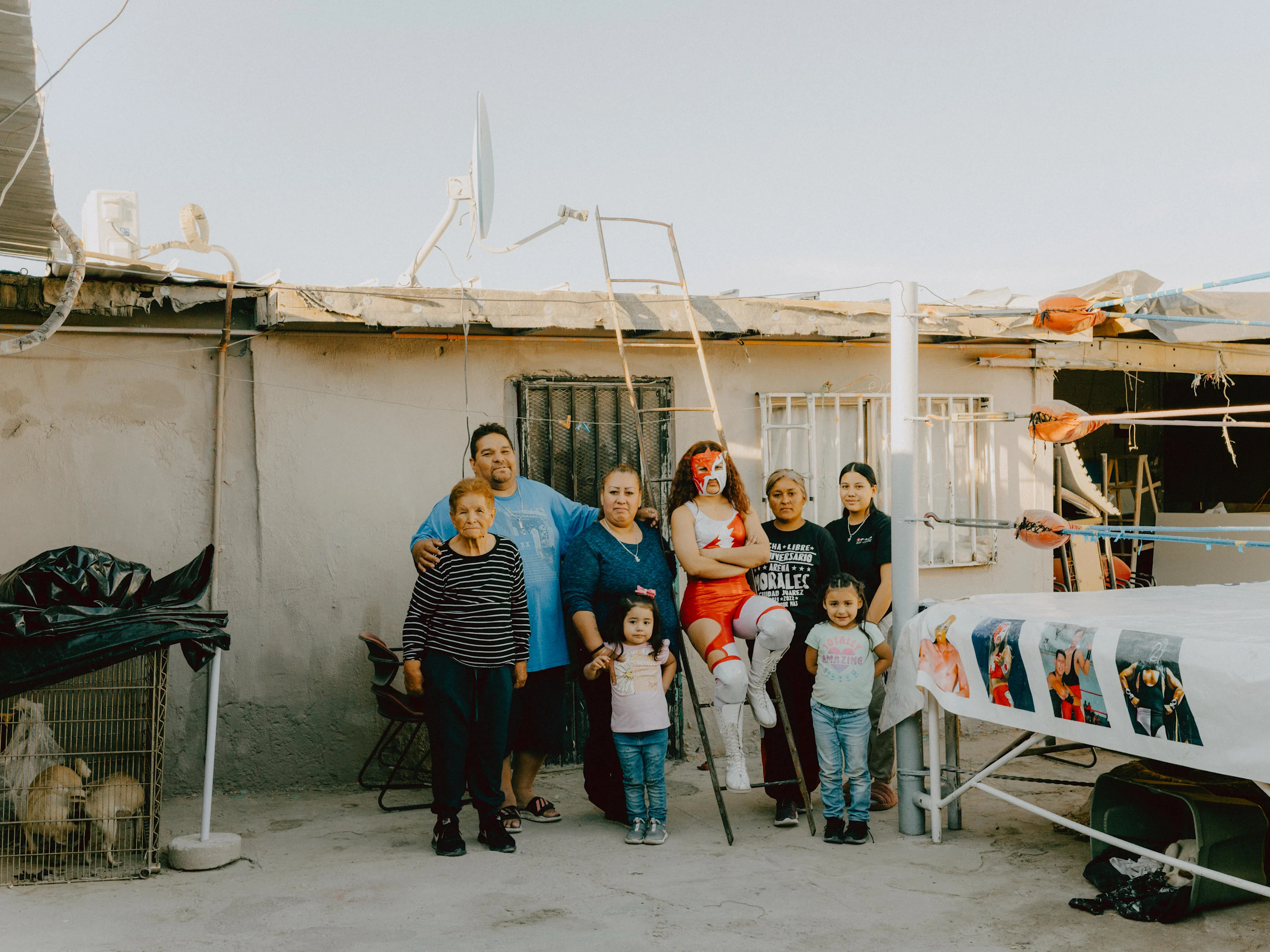
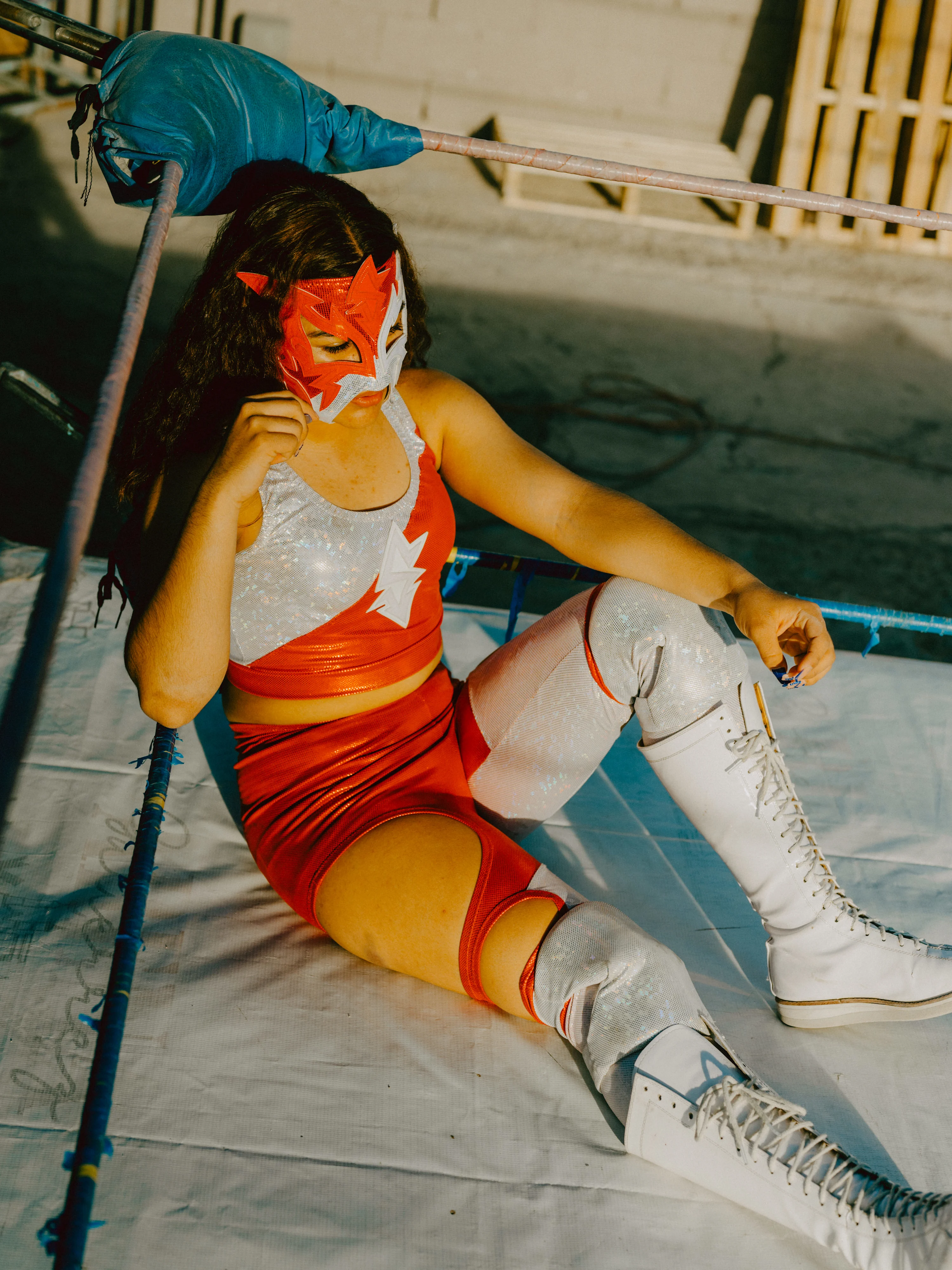
Unlike the more established scenes in Mexico City and Monterrey, the infrastructure for Lucha Libre in Ciudad Juárez is low-key and community-driven. Beyond a modest arena—known as “Neri Santos,” which has a capacity of 8000 for headline fights—fans gather in homemade rings in neighborhood backyards. “There’s no marketing, television or photographers,” says Schuler. “It’s just so raw.” This rudimentary framework doesn’t reflect the commitment of the athletes. “Many of the women began their training as children, participating first in traditional forms of wrestling before going on to study acrobatics,” Schuler explains. “Today, they train five times a week to remain strong and flexible enough for the high-intensity demands of each fight.”
As a sport, Lucha Libre is sometimes reduced to theatre, as opposed to an athletic competition. Schuler is quick to bust this myth. “Don’t be under any illusion, it’s always dangerous to be in the ring,” she says. “While the fights are family events, women can and do sustain serious and debilitating injuries. As the fees are low, the community often has to step in and provide crowdfunded support to get any injured Luchadoras the medical care and rehabilitation they need.”
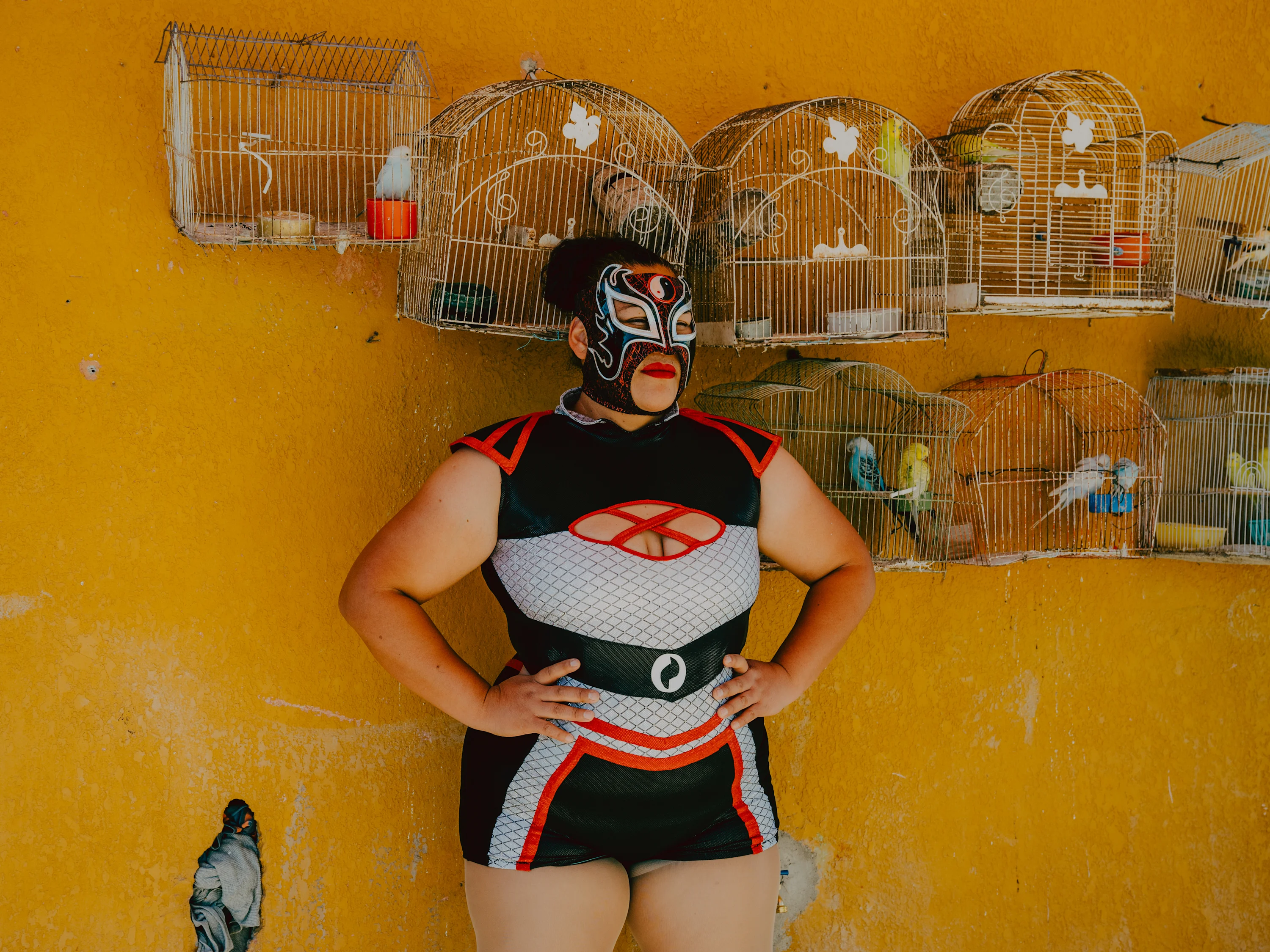
Schuler’s project carefully illustrates the duality of the Luchadora’s lives. Calm, connected portraits show them at home with their families, where many of them are the primary caregiver in addition to working or attending school. Once in the ring, everything changes. The Luchadoras show no mercy, engaging in aggressive grapples, duels and dramatic throws while rawkus spectators cheer ringside. Being a Luchadora requires charisma, power and agility, but each fight represents far more than just a show. It’s a display of strength and self-assertion in a context where they can demand respect and defy gender norms.
Rather than simplify a situation, the success of a contemporary documentary photographer resides in their capacity to illuminate complex and even contradictory stories. “Between Blood and Glitter” embodies these values, carefully describing how joy and empowerment exist alongside violence and inequality. Schuler shows the Luchadoras as more than competitors, but rather radical leaders advocating for equality while expanding the cultural imagination of what a woman can be, both inside and outside the ring.