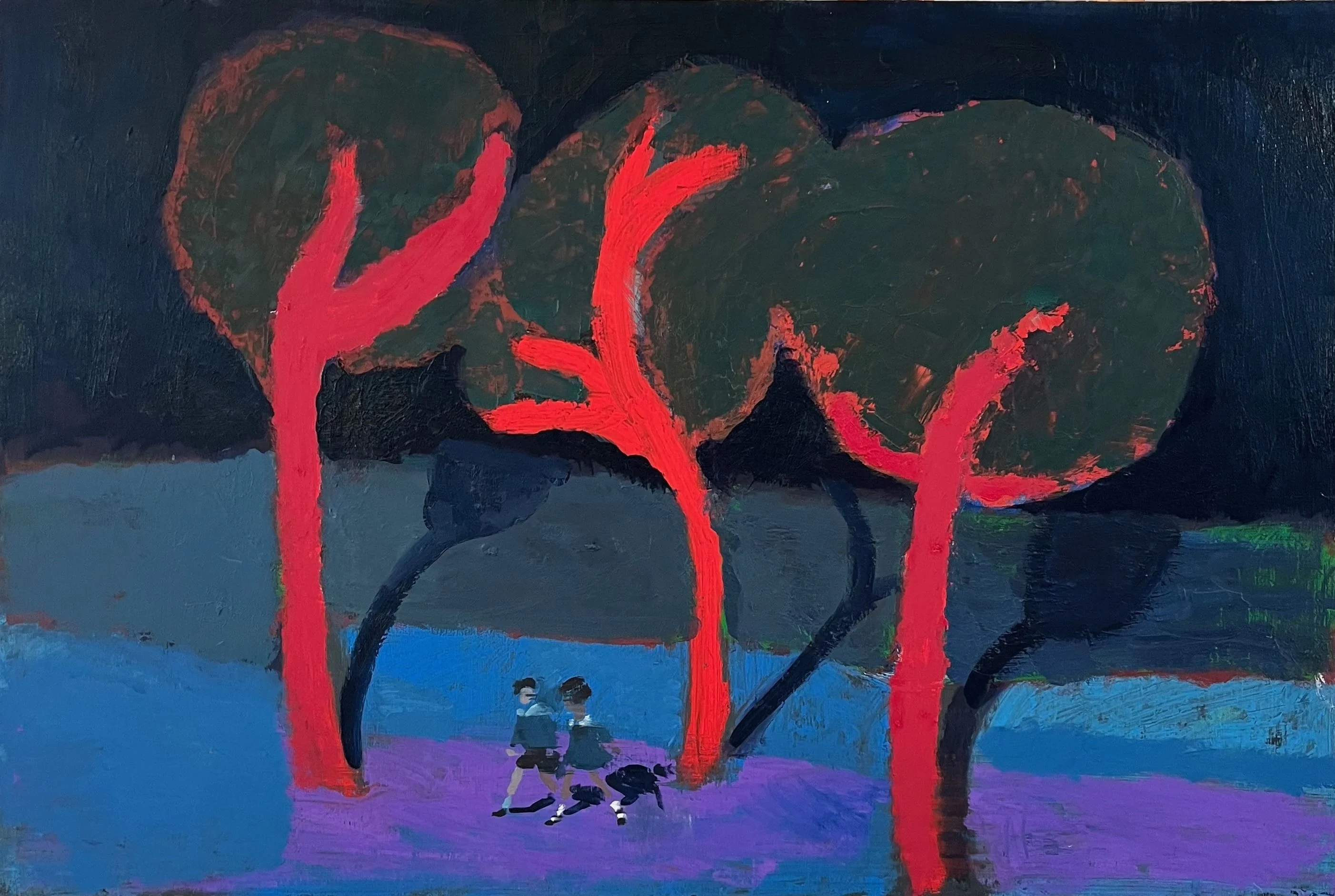
The strange alley of the moon (2025)
From his church-turned-studio in Hillsdale, NY, near the Catskill mountain ranges, artist and musician Ian Felice paints surreal, symbol-laden worlds that evoke folklore, fable, and feeling. He tells Maisie Skidmore about the inspirations and influences shaping both his songs and his paintings, and the ghostly energy that permeates his practice.
It’s mid-morning in early February, and in the beautiful-but-uninsulated Hillsdale church where Ian Felice draws, paints and writes, the temperature is below zero. “It’s been a hard winter,” he tells me over zoom. “When I come down here, the tea is frozen in my cup.” He shows me the view through the window, where snow lays a foot deep on the car outside, white and glistening.
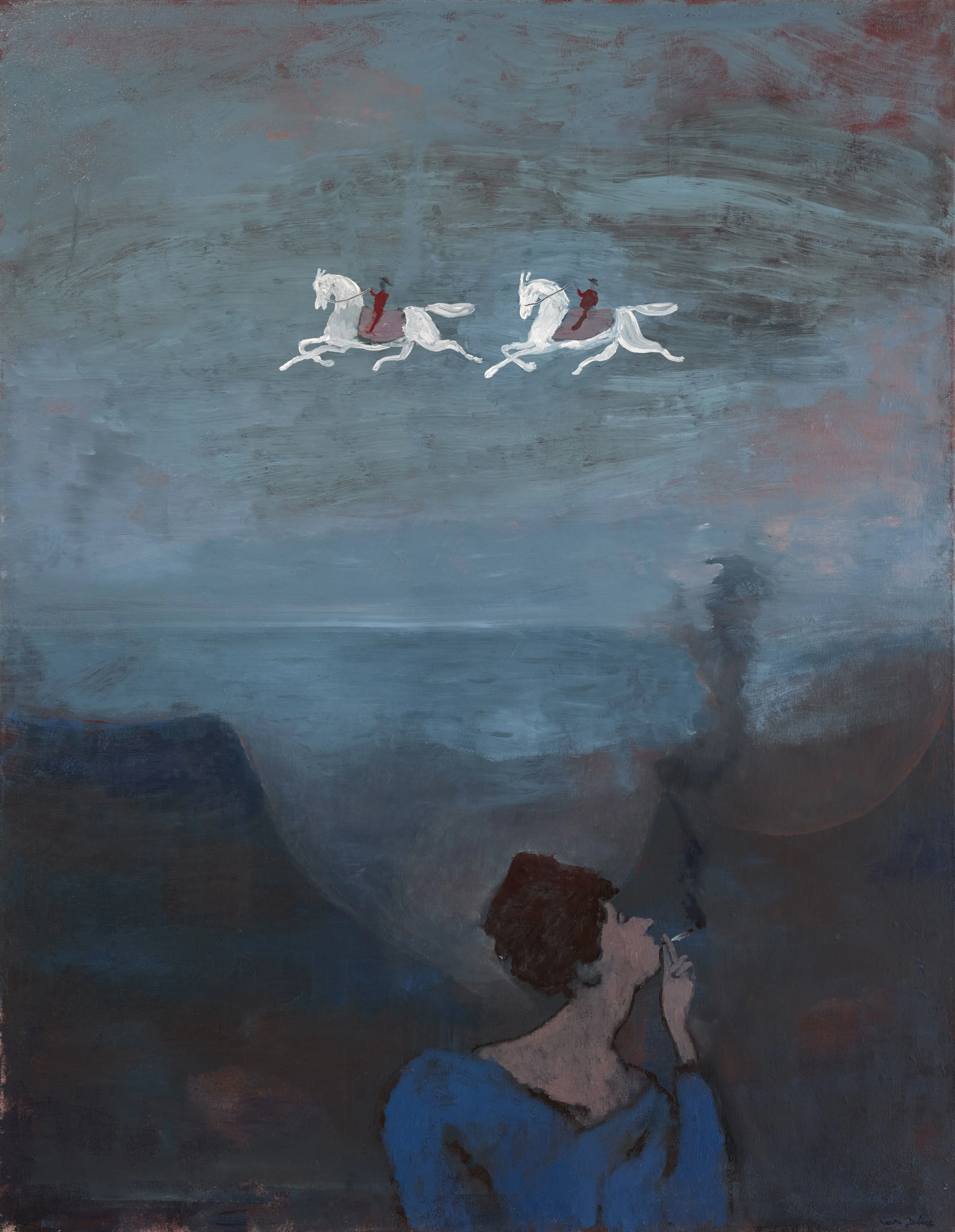
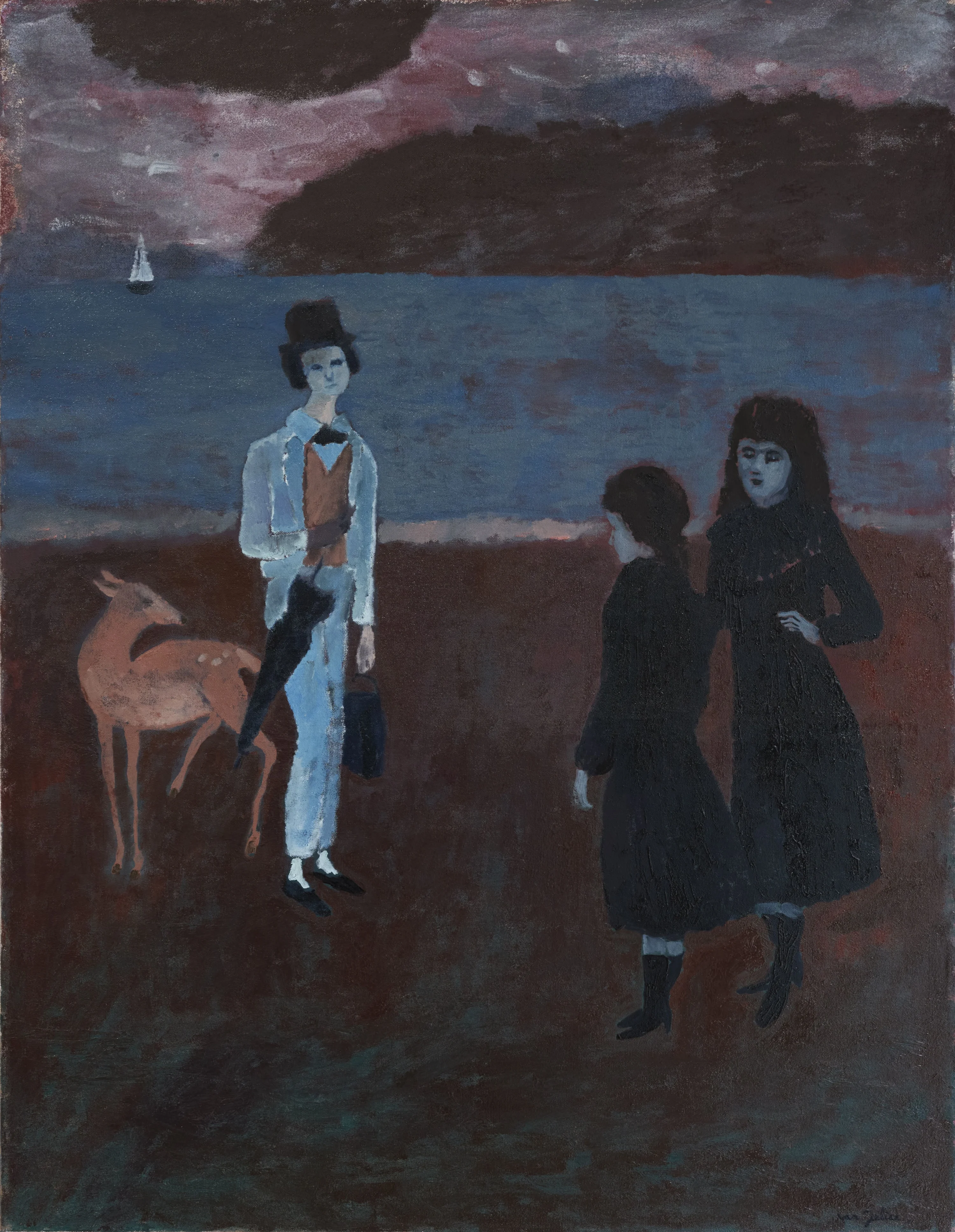
Even in such inclement weather, there couldn’t be a better place for the musician and painter to work. The church was built in the 1870s, supposedly by a single 18-year-old man, and served its local Lutheran community for almost 150 years until the last senior members of the congregation died four or five years ago. As Felice and his family live directly behind the church, he was able to buy it very cheaply and turn it into his studio. “It was a dream come true,” he says. “The light is so beautiful, it has a special energy.” The pale sunlight rolls in behind him. “I need something to react to, you know? I don’t know if it’s the architecture or just the atmosphere of a place, but to be able to work creatively in it I need to have a connection with it somehow.”
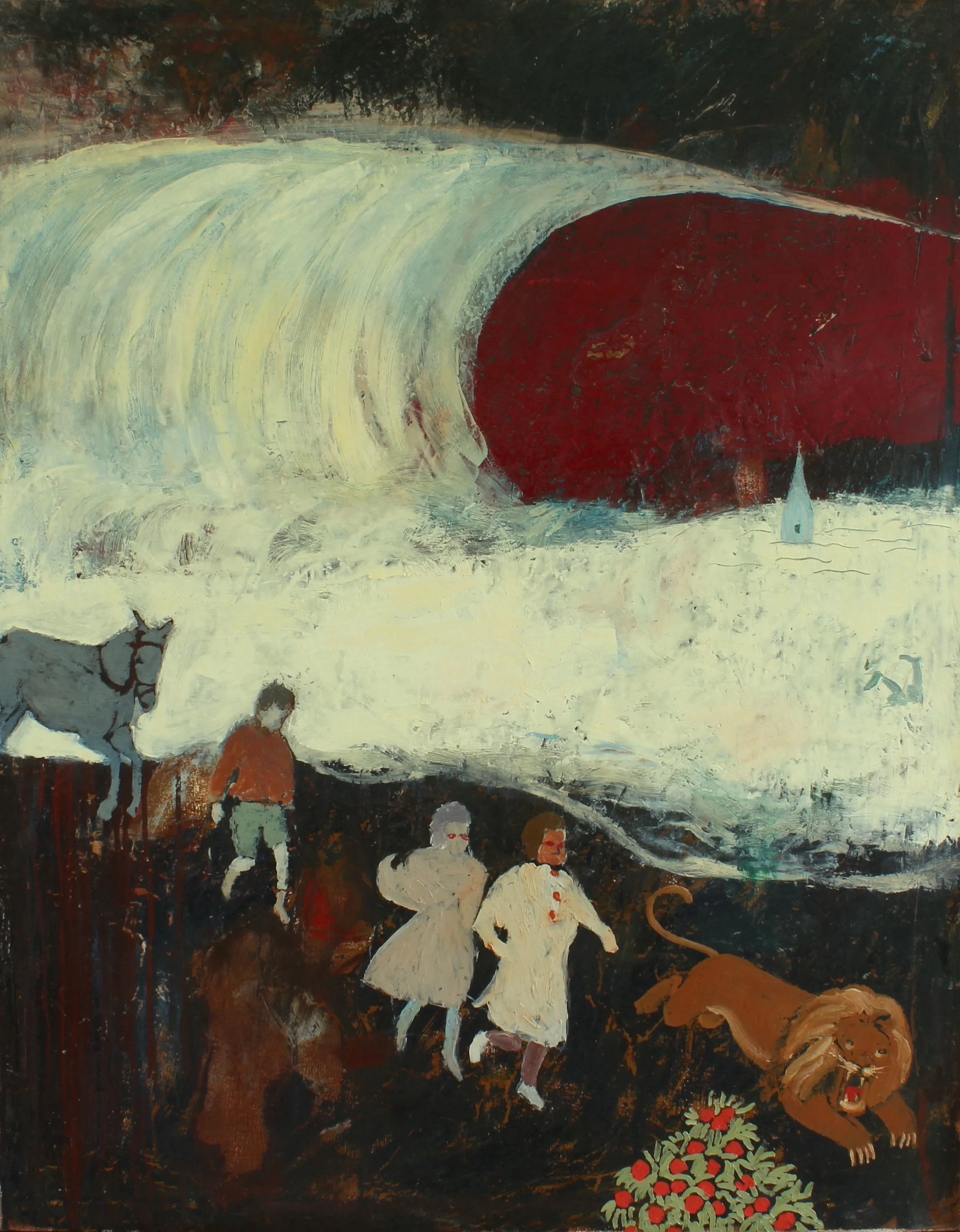
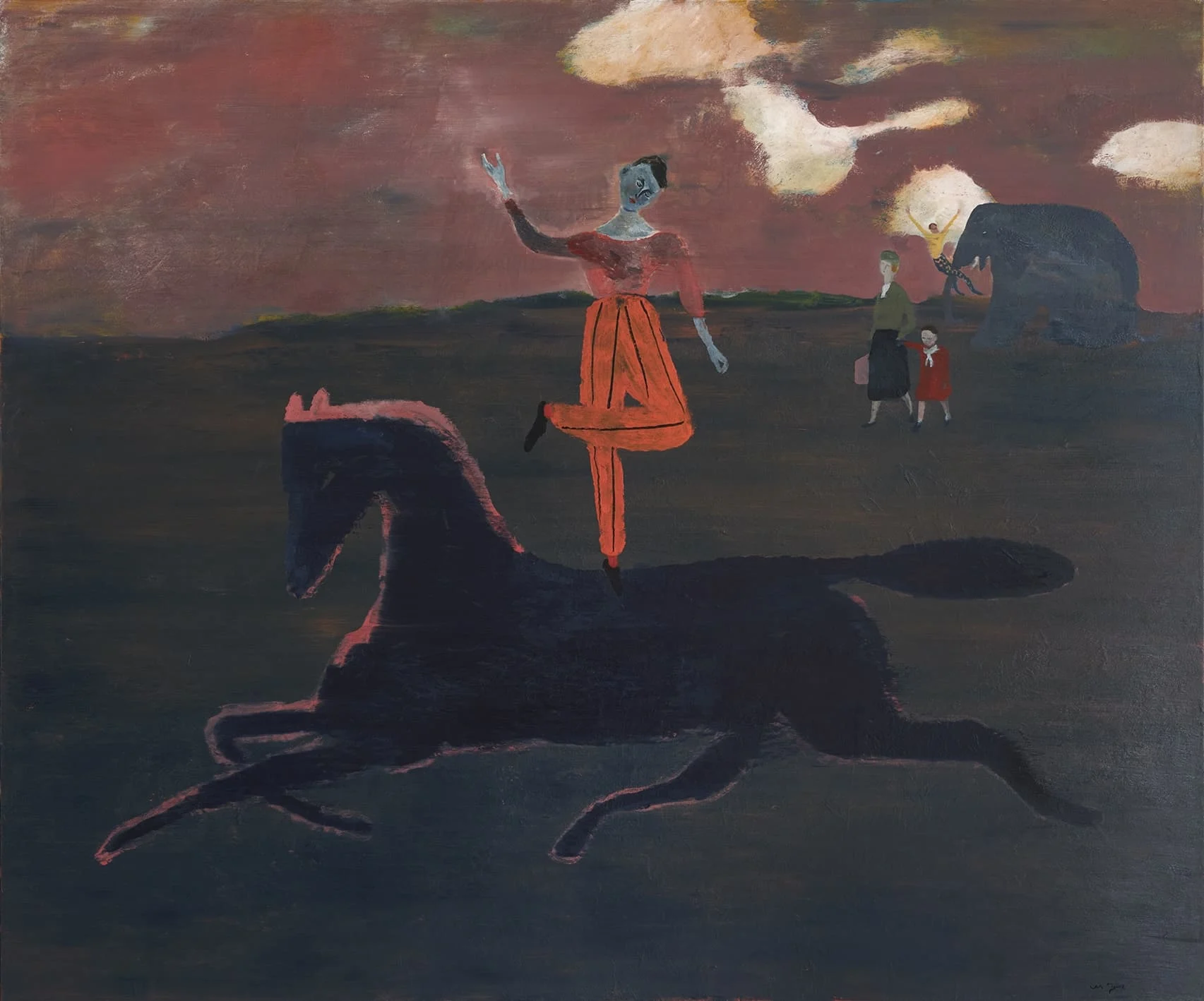
The church’s liminal energy does seem to emanate through Felice’s paintings—moody, sweet, sombre. Scenes glimpsed from a world that’s not quite real. The pictures he paints are familiar in the way that a forgotten character from a once-read children’s story is familiar; surreal, ambiguous, with the sharp edge of folklore. “Most of the settings are dreams,” he explains. “The lawless creativity of dreams and the subconscious are interesting to me.” Animals come up often, as do people with animals, though, “I don’t know why, or what they mean,” he says. The work stays with you, long after you look away. Felice exhibits often, and his paintings are collected by an audience that includes, among them, lauded designer Jonathan Anderson.
But the painting practice is one half of the whole. Felice is also a singer, songwriter, and the frontman of the Felice Brothers, an American folk-rock-country band from upstate New York founded in 2006. He returned to painting when his son was born in 2017, then started making more artwork when touring stopped during Covid. The music his band makes is poetic, dark and lyrical, full of cinematic narratives about American life that unfold slowly through the course of a song. The songs are written here, too—Felice, cold though his hands are, is working on an album right now.
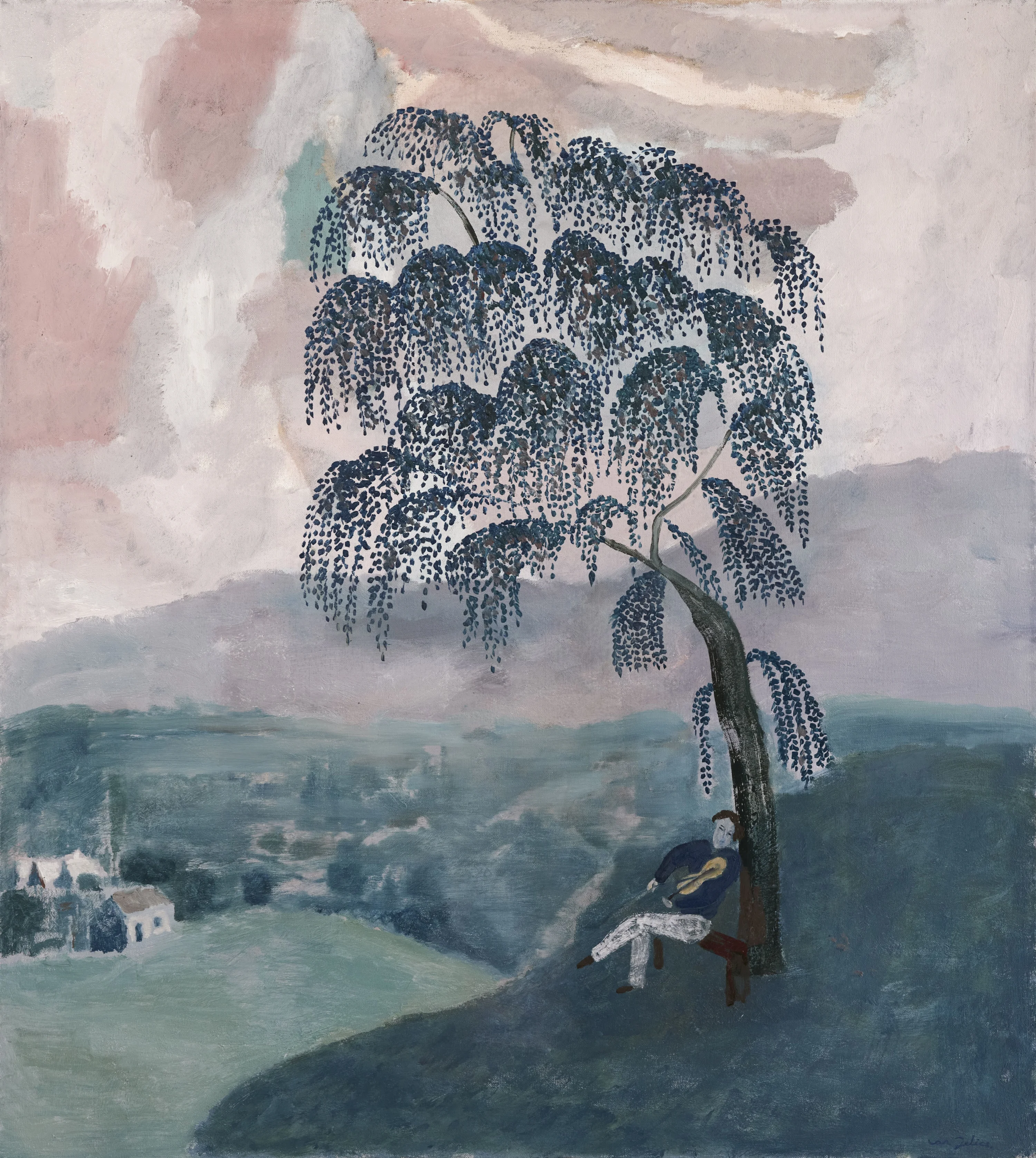
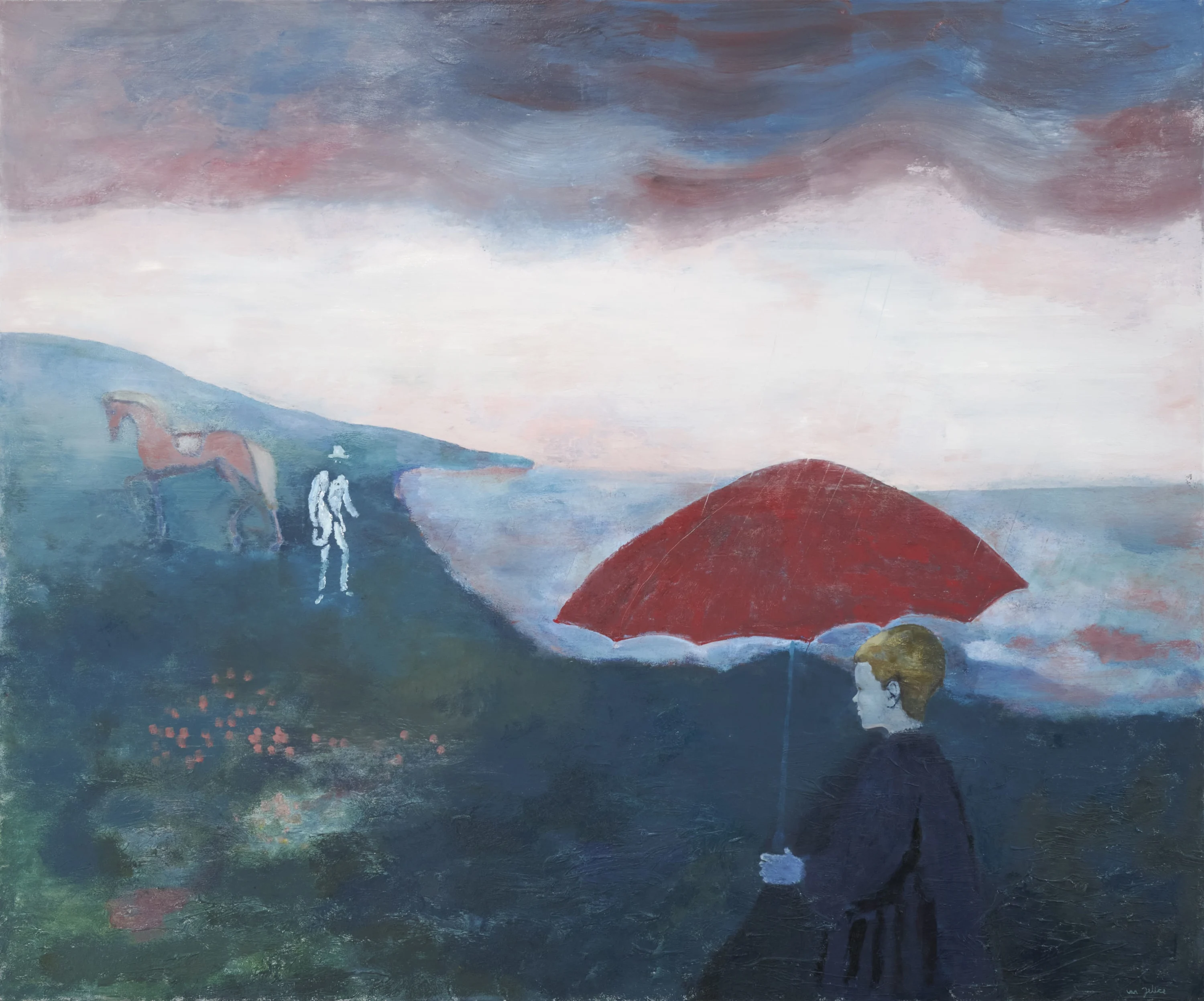
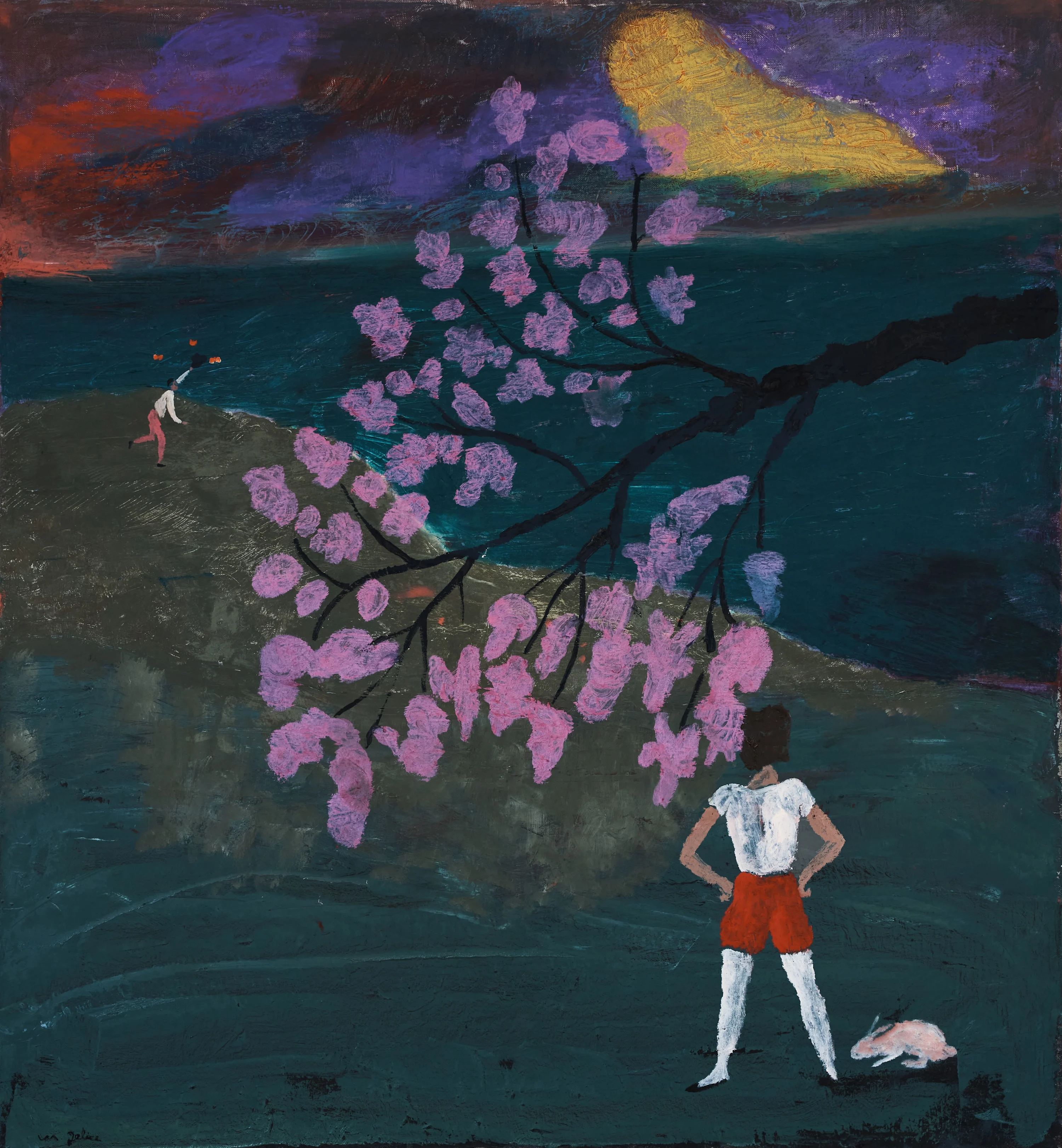
The lawless creativity of dreams and the subconscious are interesting to me.
While writing and painting don’t usually happen concurrently for the artist, they do share some common ground. “There’s some sort of communication between them,” he says. “There’s the correlation in my mind between form and color and abstraction, as relates to melody, harmony. Imagery is related to lyricism in my mind. But when I am writing a song, it’s like a storyboard of a film in my head. I like painting because it’s just one image. There’s less that has to be explained, so more can be given up to the imagination. Which is the most important thing, I think.”
Working in this duplicitous way pays off for Felice, the art feeding the music and vice versa. As he moves through the world, he collects images in the recesses of his imagination, but also physically, drawing or using scraps to collage. He also spends a lot of time outside. “Society is bombarded with imagery and news, it gives me a panic attack,” he says. “It’s just too much. I can’t function if I don’t have some kind of relationship with nature throughout the day.”
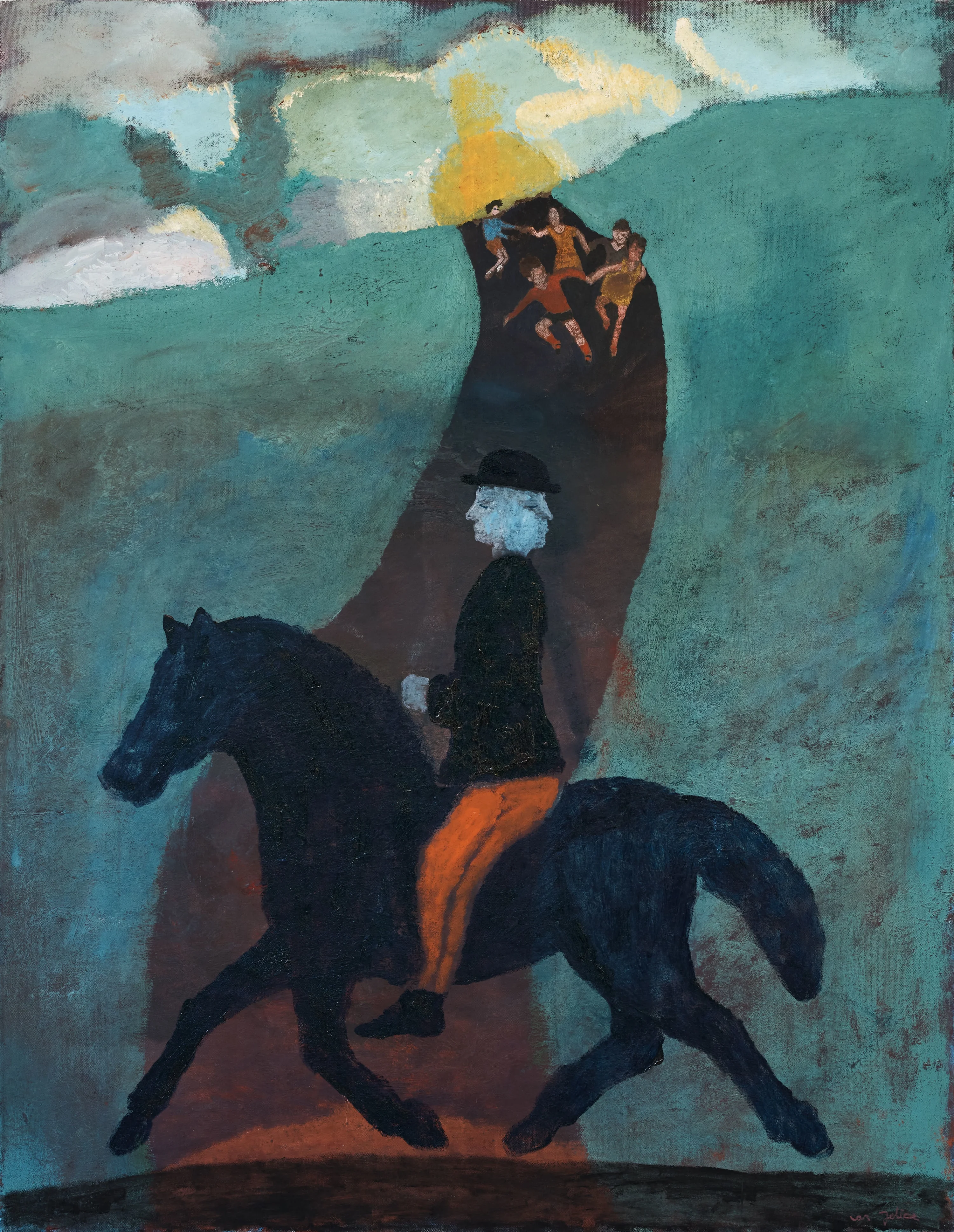
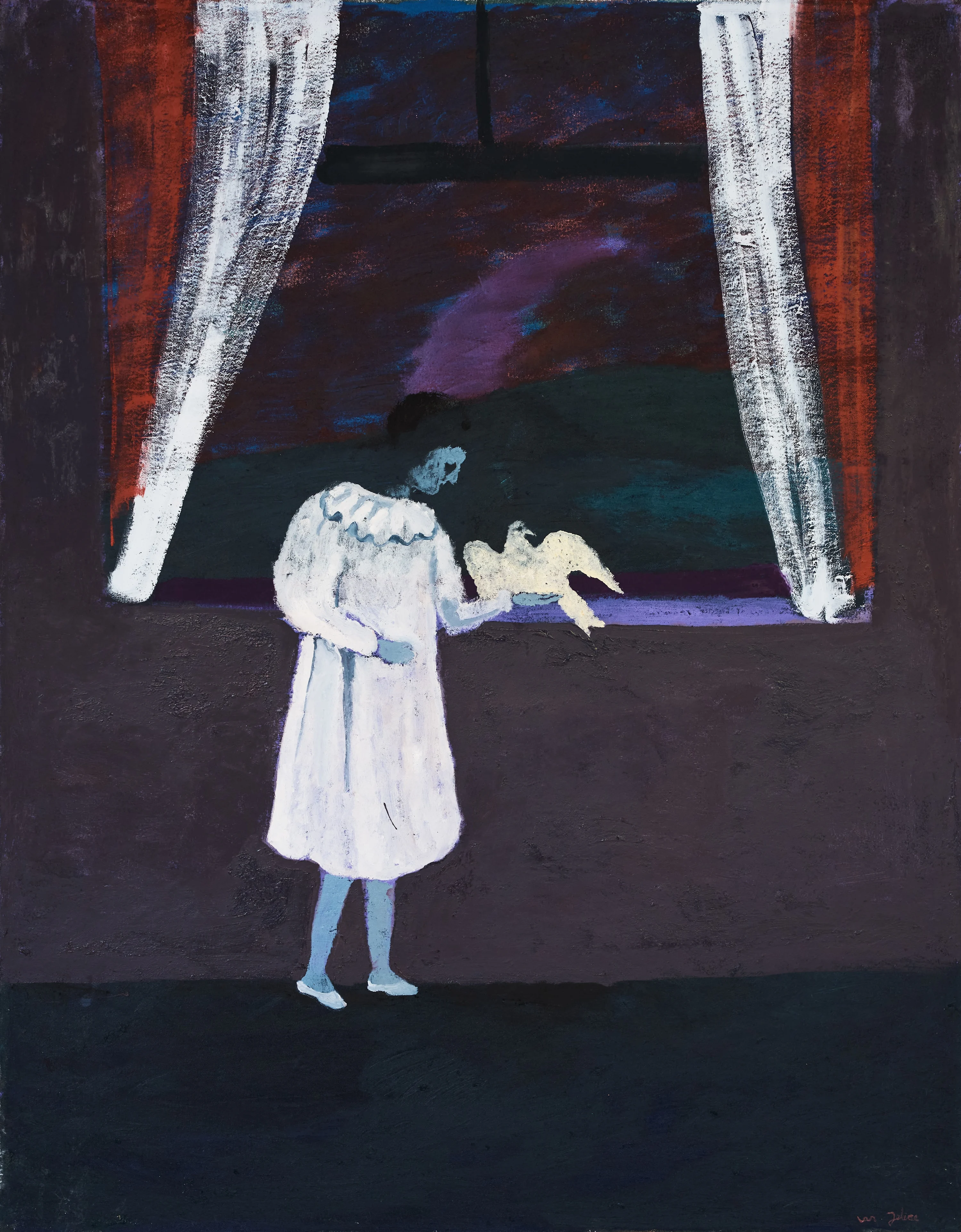
He never really knows what a painting is going to be when he begins, and this is part of what makes his work so distinctive. “I paint over, constantly,” he says. “There are usually 10, 20, 30 different paintings underneath the final painting, that didn’t work out, for one reason or another. I’m just shooting in the dark, trying to make something that I react to emotionally. There’s no real formula for it.” These past projects are ghostly presences within what eventually becomes the final work. Old figures, almost indistinguishable, shape later arrivals in ways that can be felt, even if they’re not seen. “The physical object itself has to have some kind of history, or else it just looks too pristine,” he says. “I like the texture that it creates, physically and energetically.”
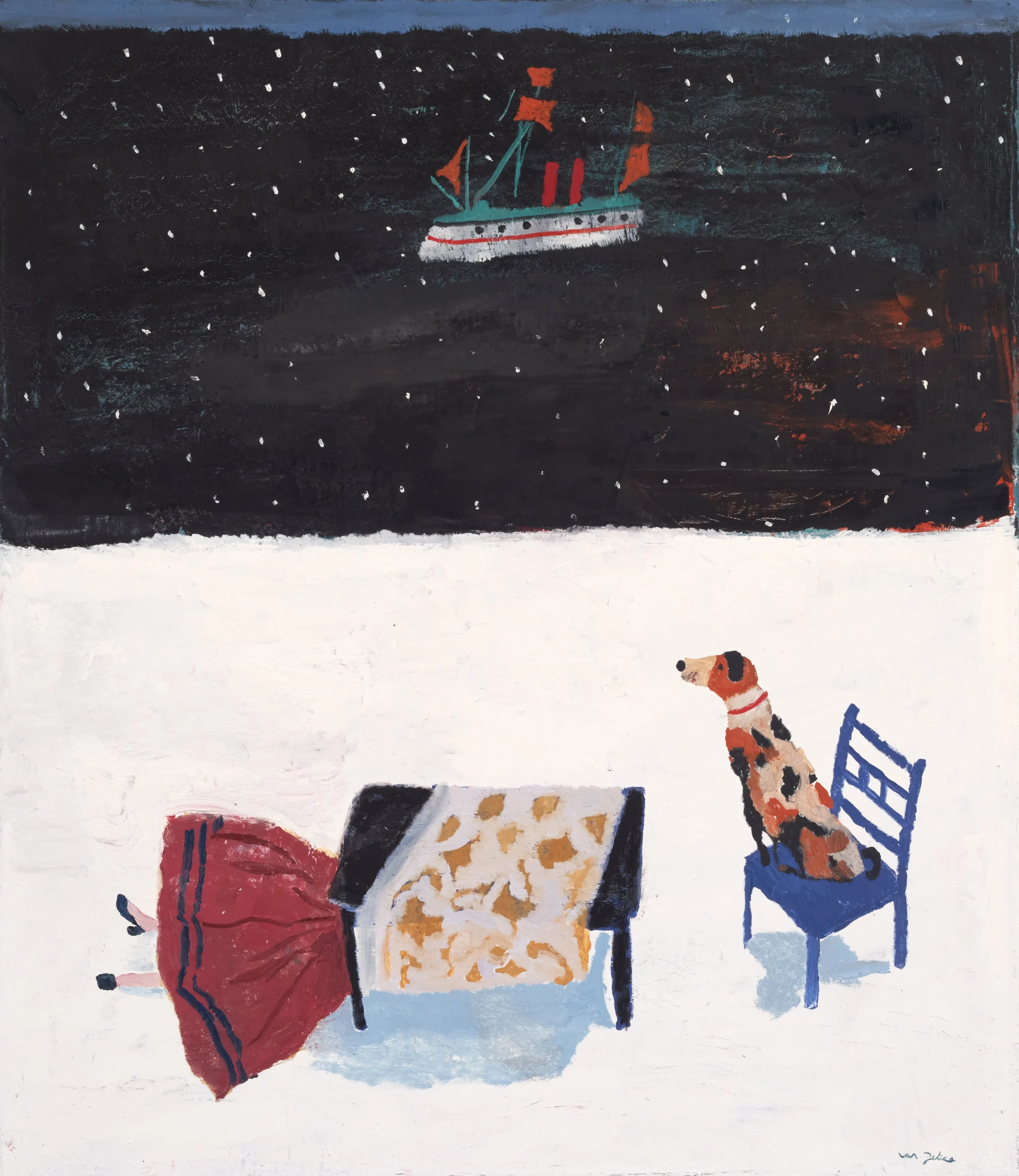
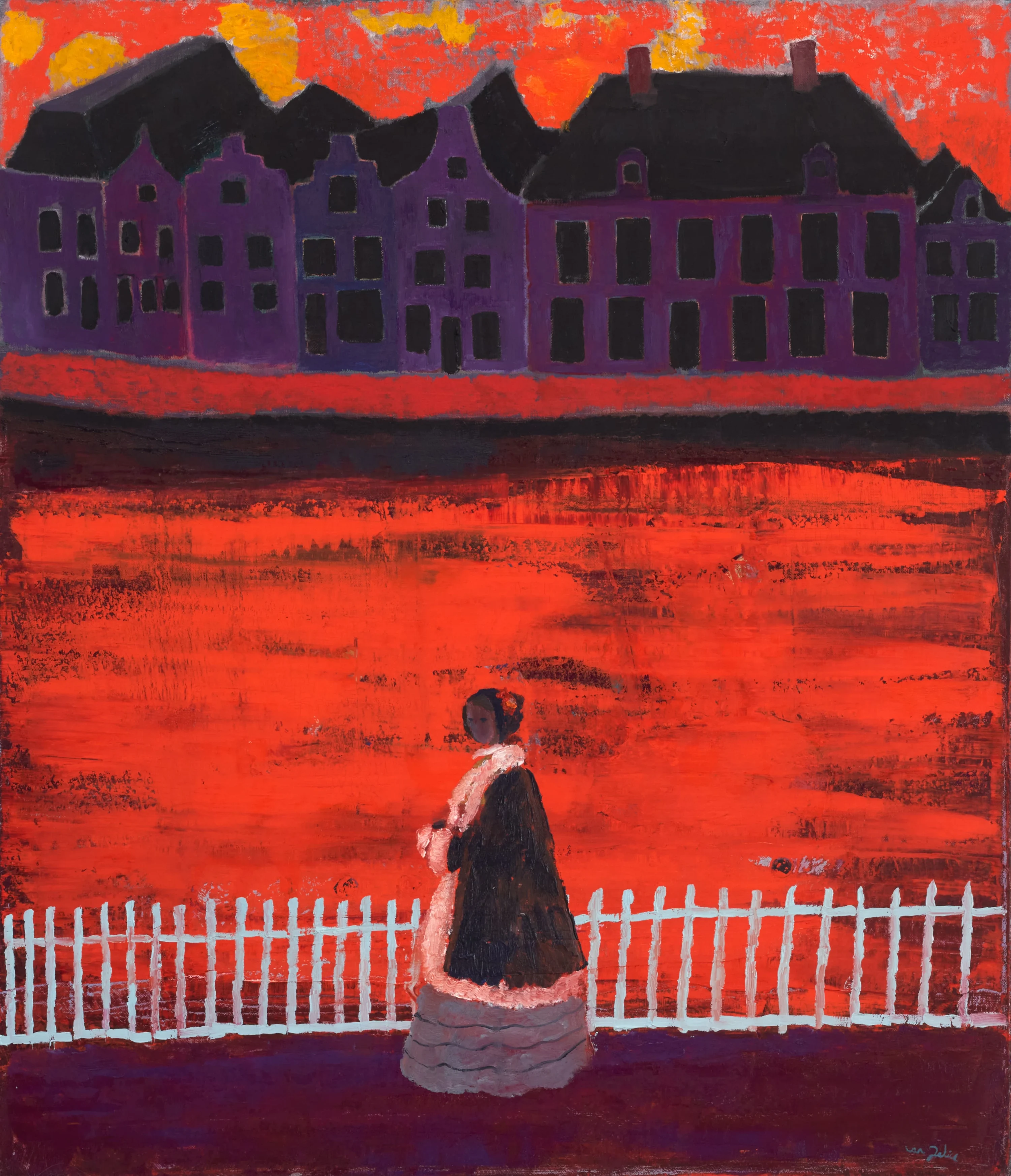
In the studio, chilly and bright, this idea of residual energy persists. In spite of the grand piano in the middle of the room and the canvases and instruments strewn around, Felice’s son and daughter, who are eight and four respectively, prefer not to spend too much time there. “My daughter thinks it’s haunted,” he says. “She says there’s a woman with a blue dress who comes. My son is very scared of ghosts, so he doesn’t come in much either.” Felice may well keep company with ghosts while he works. Fortunately, he doesn’t mind at all.