Seoul is an emerging nightlife market, and Nyapi is one of its rapidly rising clubs. The atmosphere there and in the city in general feels open-minded and curious, and that’s why Nyapi’s co-founder DJ Ffan felt that designer Hugo Capablanca—who steers clear of digital methods in favor of an analog, materials-led approach—was the perfect fit to create its visual identity. The Lisbon-based artist tells Vivian Yeung about his process, taking things back to the basics and creating from a sense of childlike wonder.
Hugo Capablanca brings his notebook with him on his travels. Wherever he goes, he picks up visual references, captured through notes and sketches. Once, after landing in an airport in Japan, he stopped by a hole-in-the-wall kiosk outside where a man was selling tobacco. Behind the tobacco seller was something that caught Capablanca’s eye: a small illustration of a man with a Japanese inscription. Whenever he runs Google Translate over it, he receives a different meaning. “We are addicted to life and there is no will” or “encouragement to live freely.” The shopkeeper gave it to him, and now it sits in his notebook on the first page. There were a few chance encounters like that, Capablanca says.
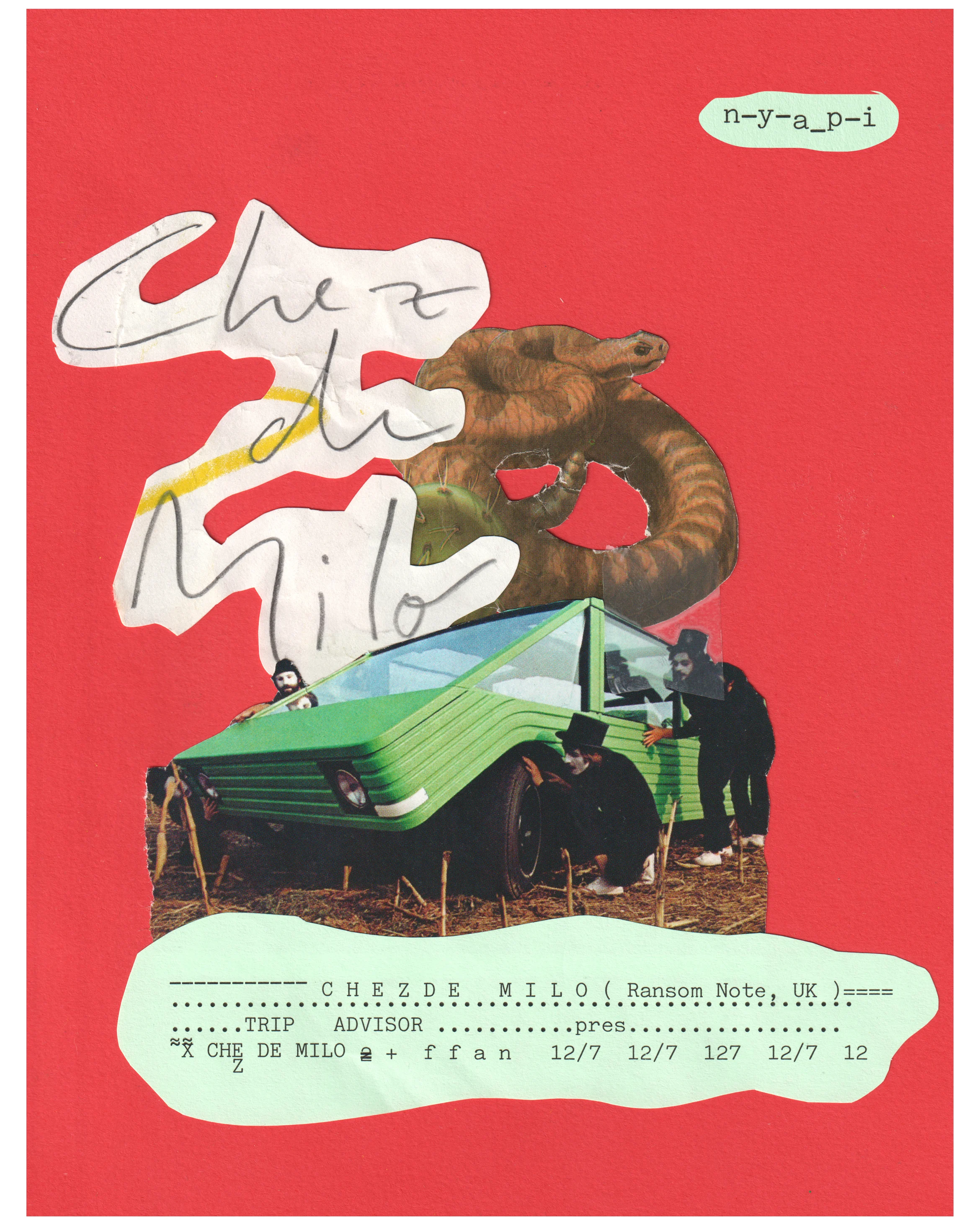
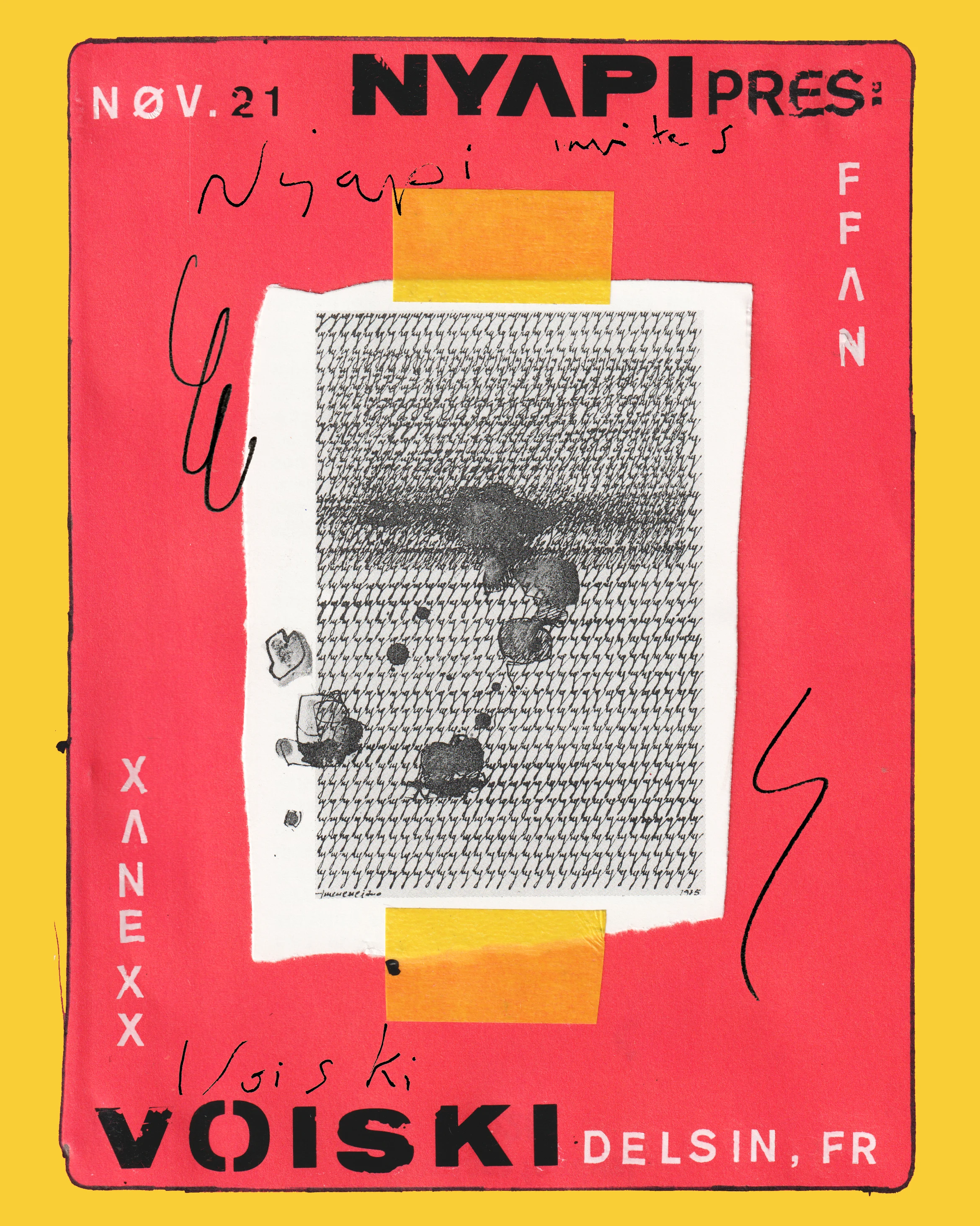
This act of collating material informs much of his design work, which is produced under the name of his studio, Tudo Mal. The artist, DJ and music producer was born in the north of Spain, in Castilla. Growing up, he spent a lot of time in Madrid and later studied art in Kassel, Germany. In the mid-2000s, he moved to Berlin where he DJ’d and art directed his own label Discos Capablanca. The city’s clubs became intrinsic to his art and when the party spirit shifted into something more rigid, Capablanca moved to Tbilisi to contemplate his next move. It was there that DJ Ffan—who co-founded the club Nyapi in Seoul with friends Daewon and Juheum—tapped Capablanca for the venue’s art direction. The brief was simple: to inject a dose of playfulness into the club’s image. Aside from that, Capablanca was given full creative control.
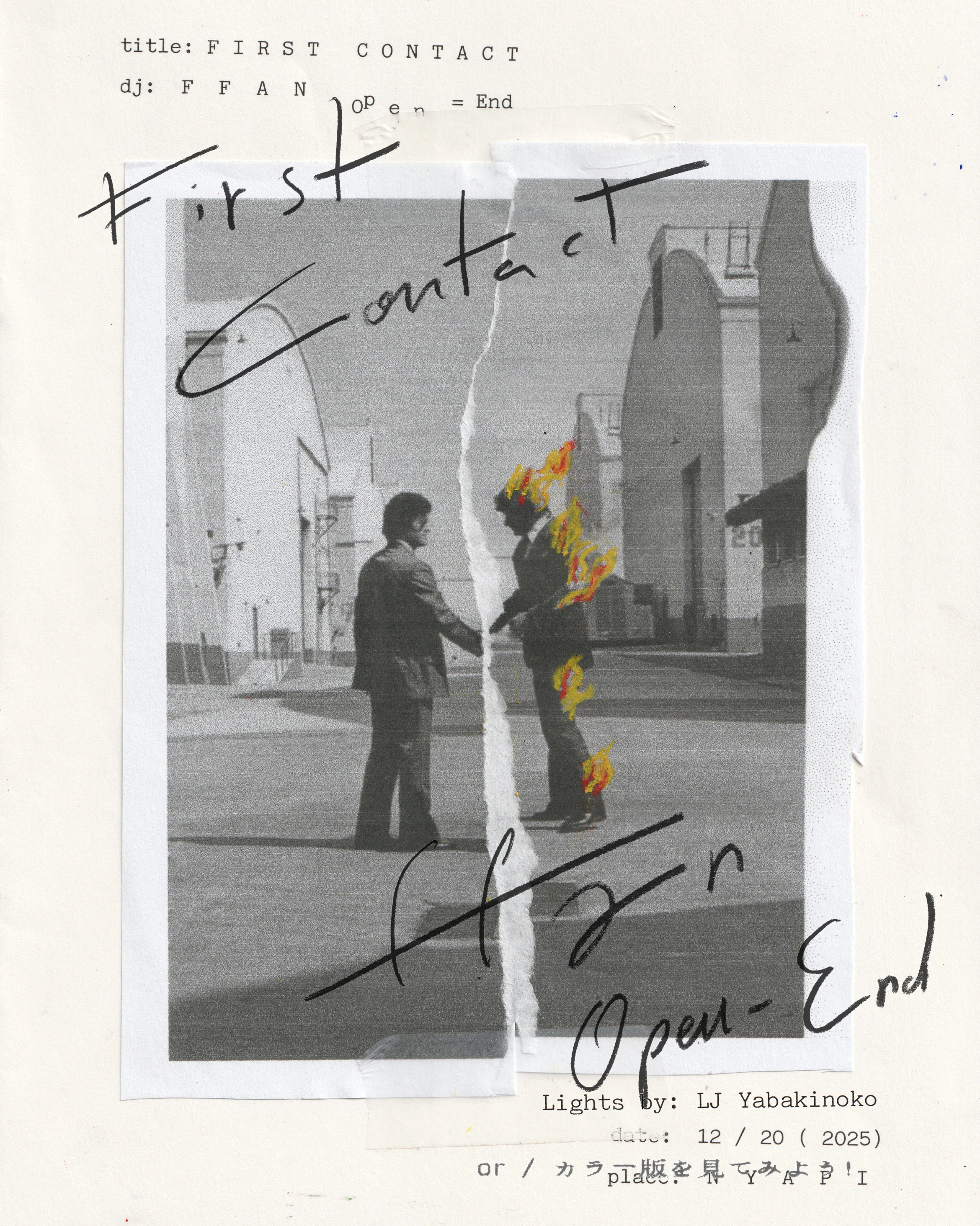
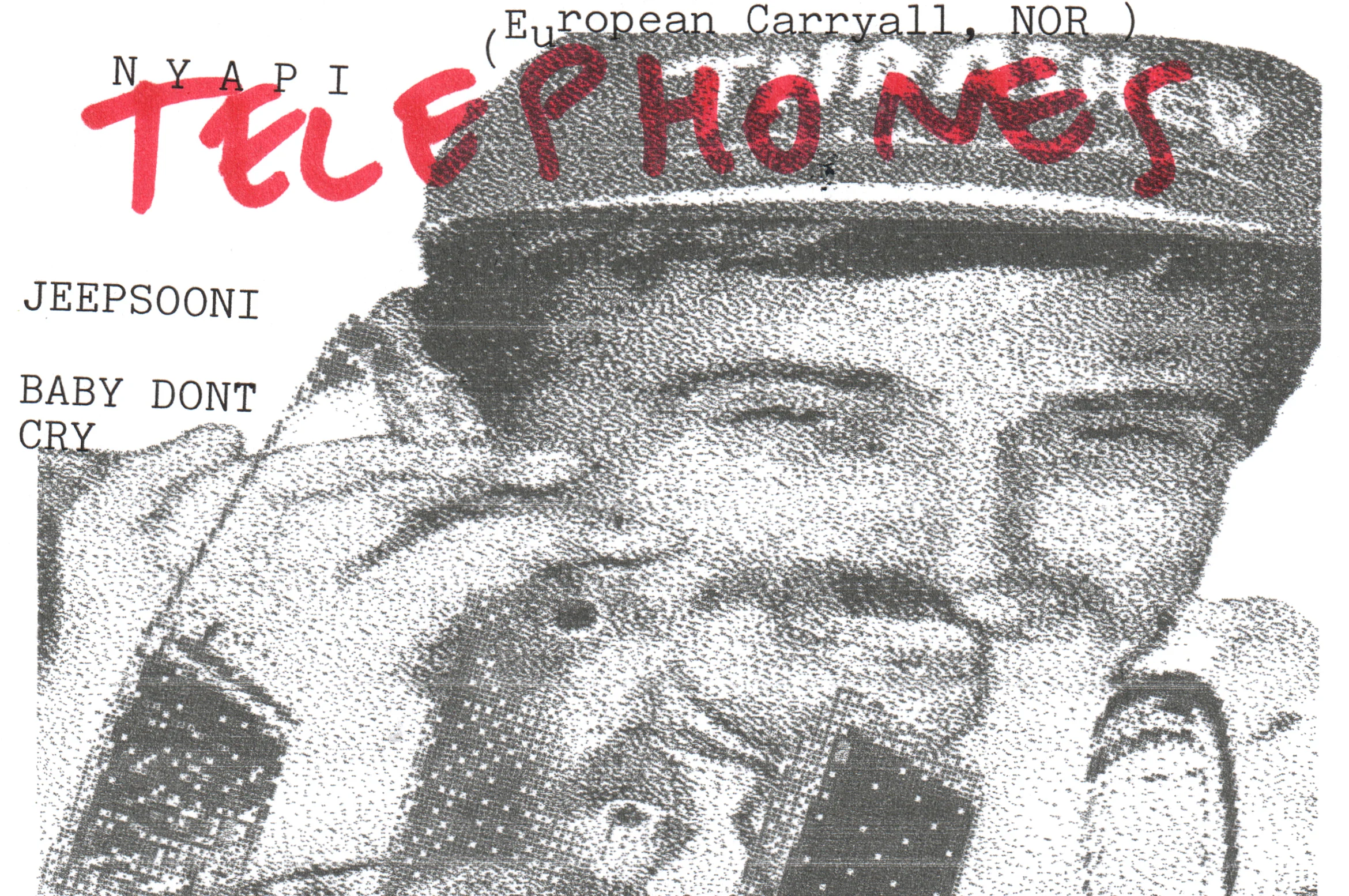
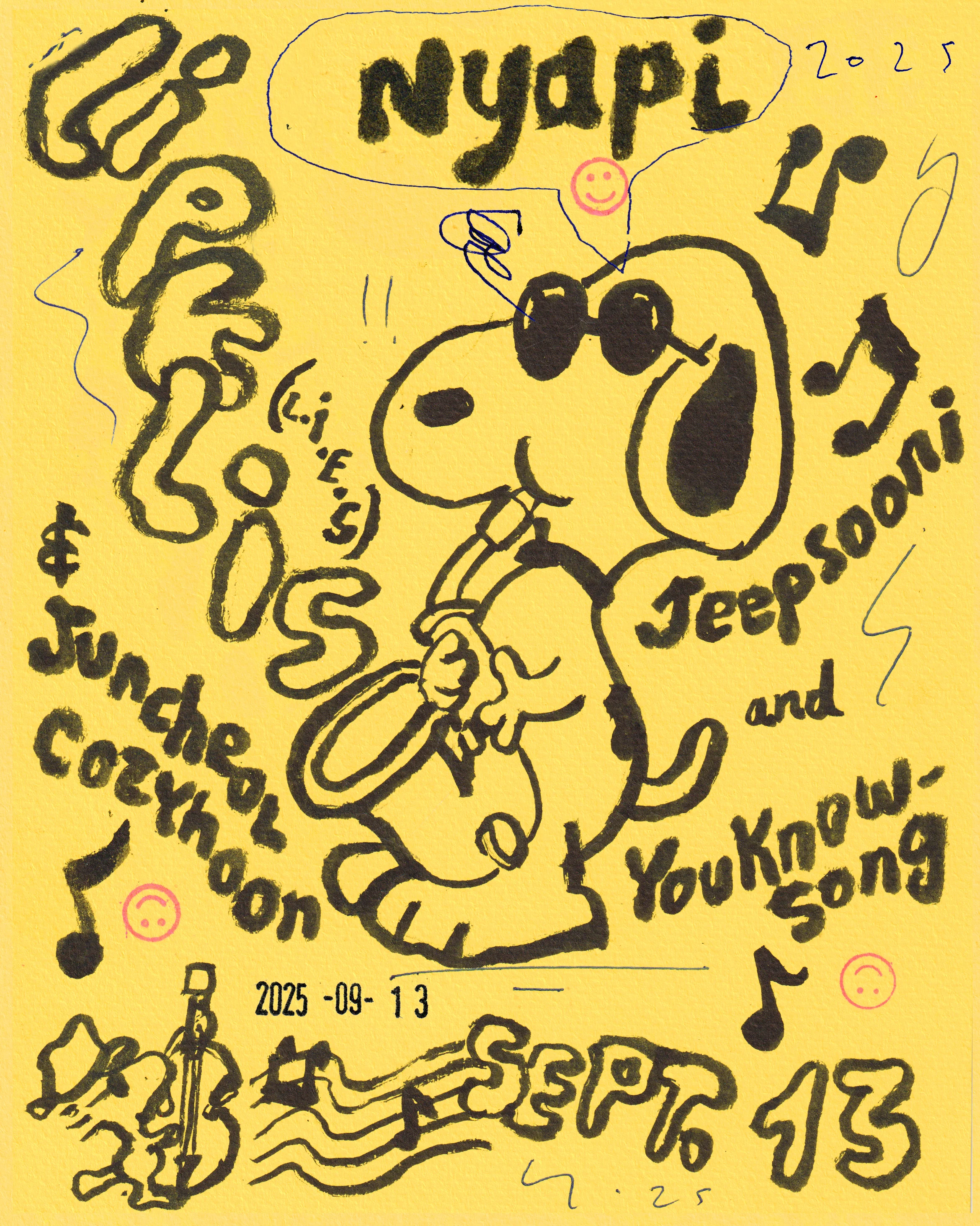
Scroll along Nyapi’s Instagram page and you’ll see Capablanca’s distinct style: a bricolage of imagery assembled together in a seemingly haphazard way. His improvisational style eschews the aesthetics that are typically associated with rave culture. Names of DJs are scrawled on or painted in a hurried manner, or they’re repeated using a typewriter. Look closer and you can sometimes see traces of the pencilled draft beneath the markers and pen.
There are characters drawn by hand in felt tip or paint; a drawing of Snoopy with a saxophone, for example, or a painting of Bugs Bunny. There’s a page that looks as though it was ripped from an interior design magazine with “John Talabot” layered over in thick, pink paint. It’s certainly not gritty, and nor does it lean into the kind of primordial imagery that’s come to shape many electronic labels and club nights as of late. Seoul is an emerging nightlife market, and Nyapi is a newer space than the storied clubs of Berlin. The atmosphere, Capablanca agrees, feels open-minded and curious.
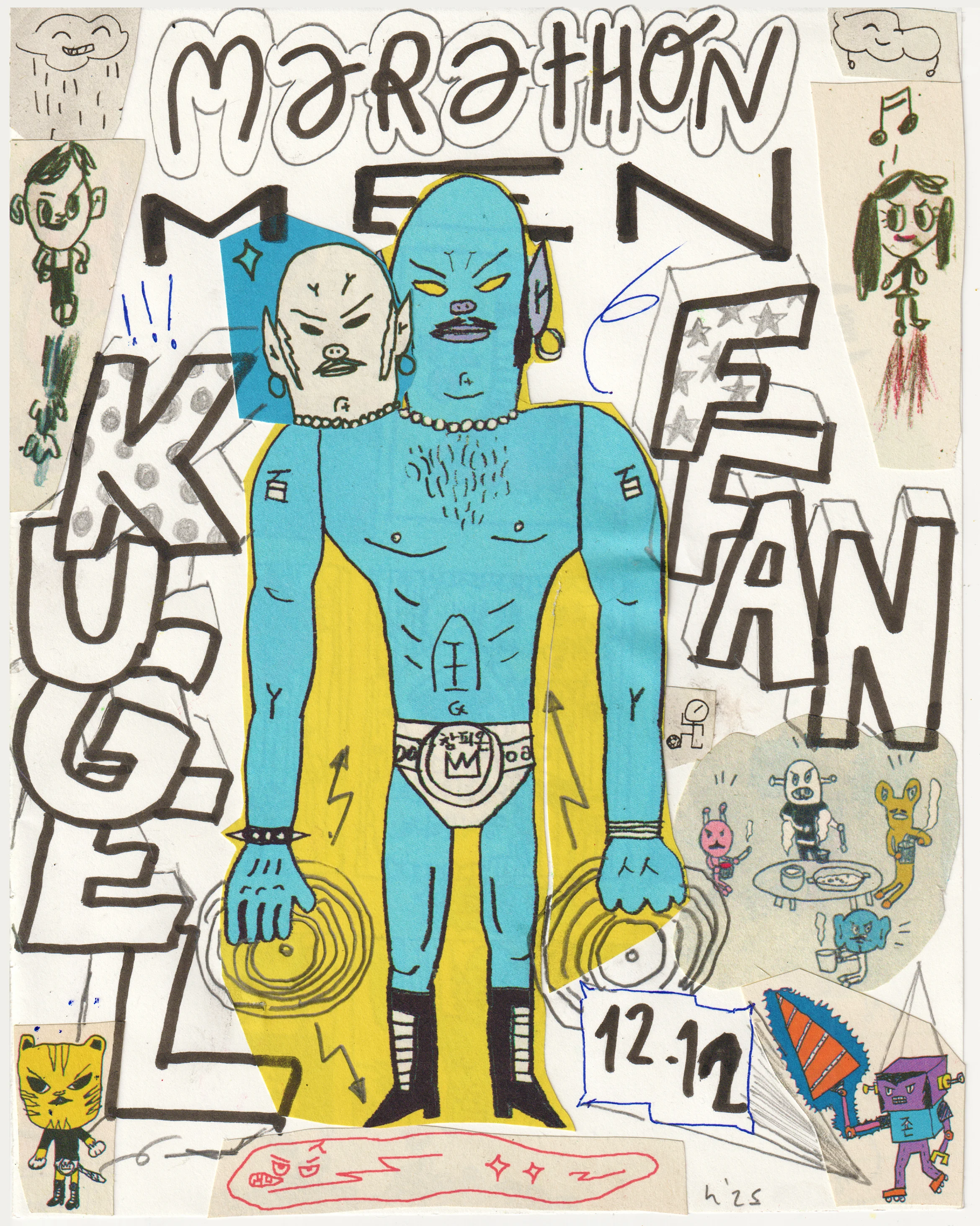
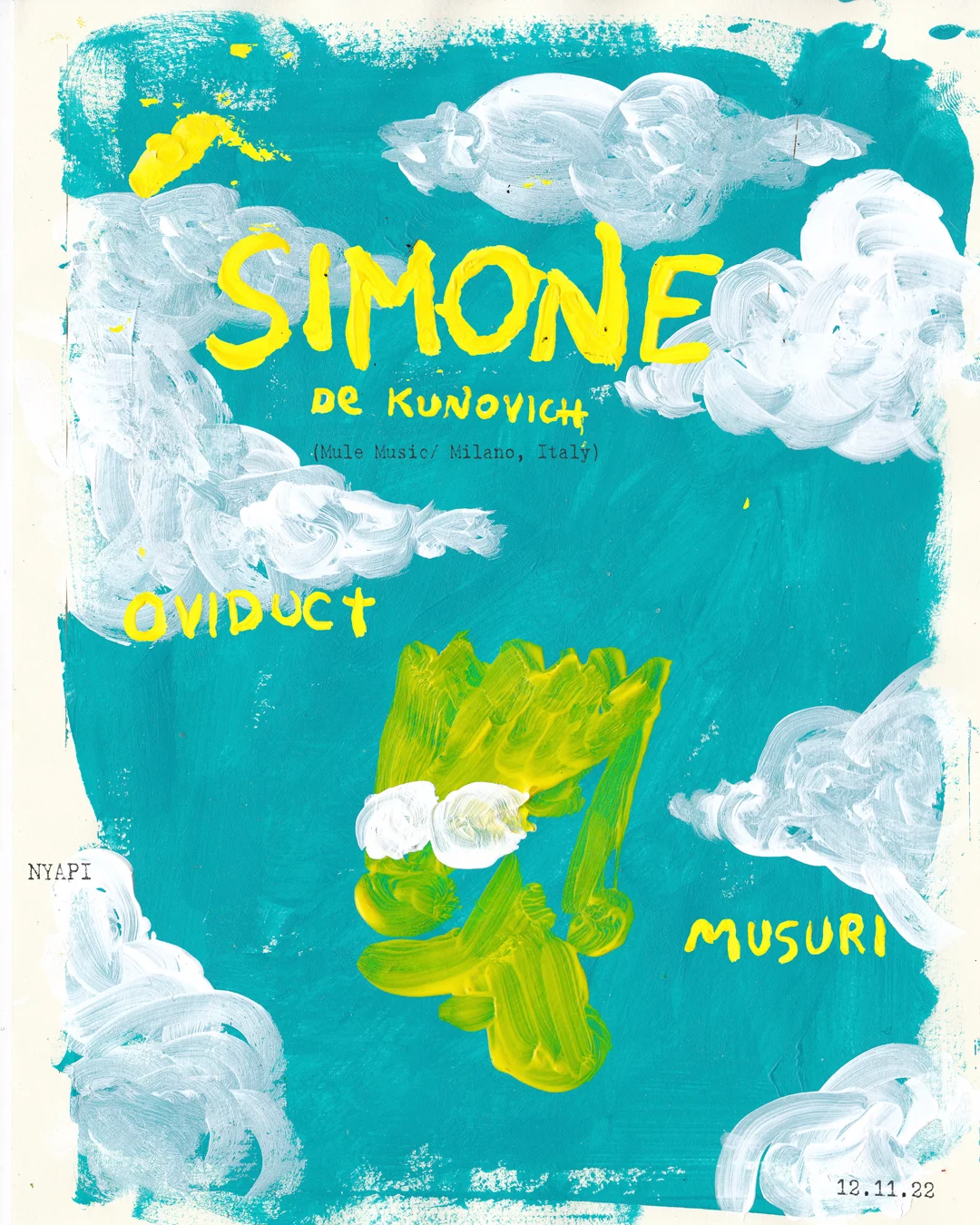
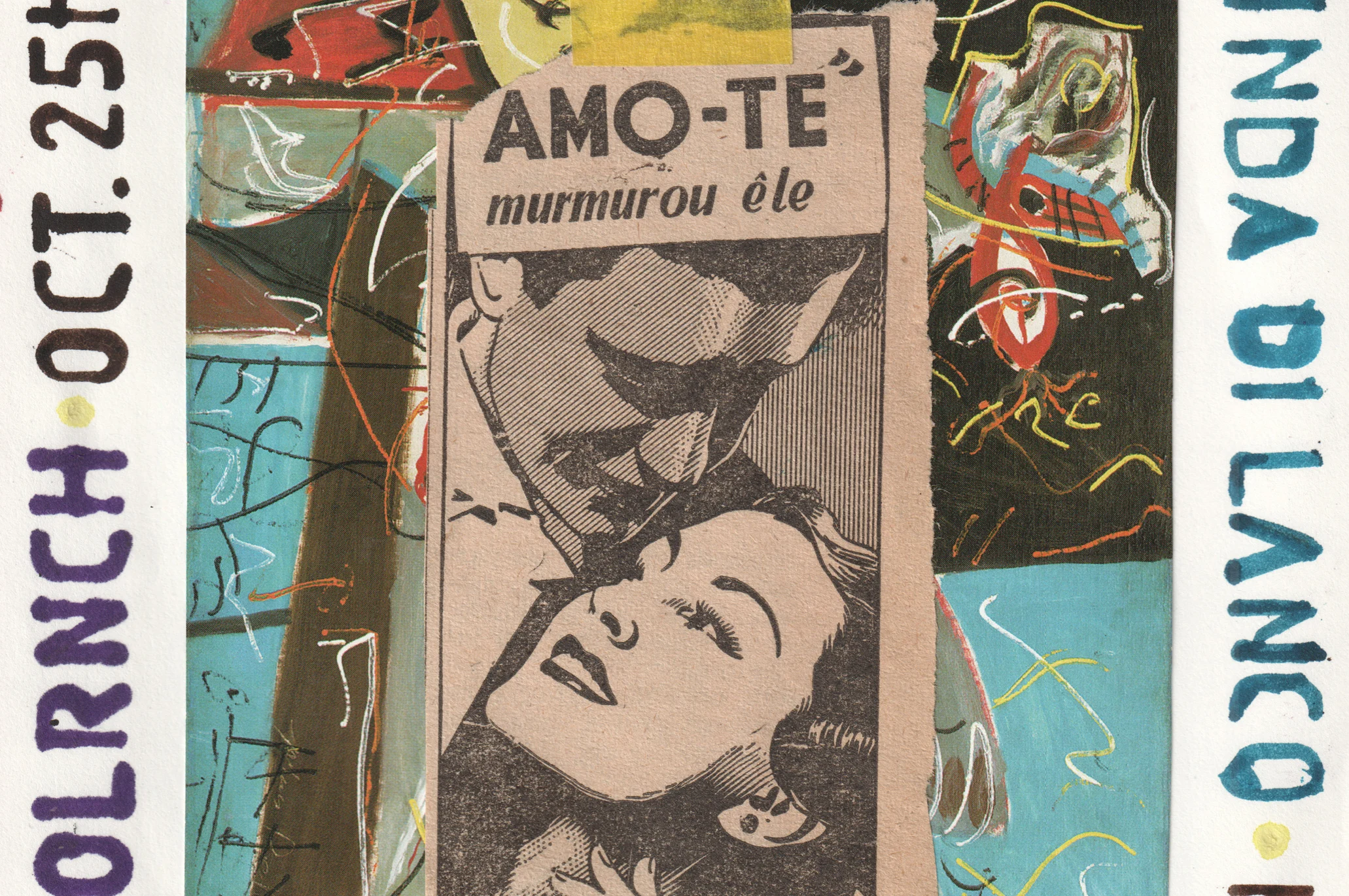
“I didn’t want to spend more time in front of my laptop, so I started playing around with purely physical formats and whatever materials I could get,” he explains, “like old books and magazines in flea markets. I did notice that most club visuals at the time leaned towards being extremely digital and very 3D. It’s never been my vibe to be this fully digital thing, and it felt more free and more playful to just get my hands dirty and start playing around with actual paper or a typewriter.”
He cites the Situationists and the Fluxus movement as two of his greatest influences. “The Situationist approach was basically to revolt against the commodified society and take back the city as a playground, and that means becoming a child again,” Capablanca elaborates. “This sort of spirit has always influenced everything I’ve done. They both tried to erase the distinctions between art and life, had a common disdain for rules about what can, can’t be done, and both movements also decidedly brought a certain childlike playfulness to the front.”
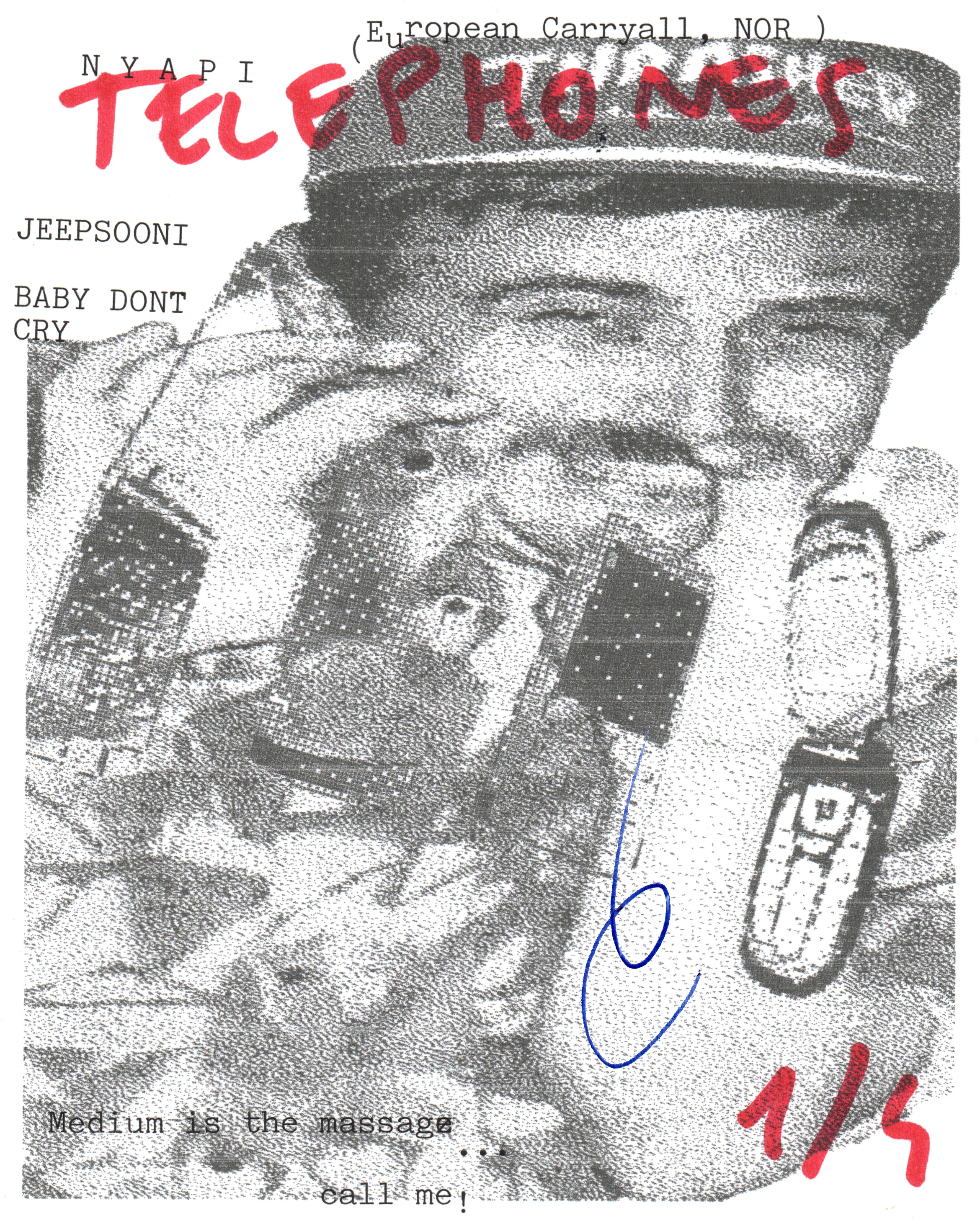
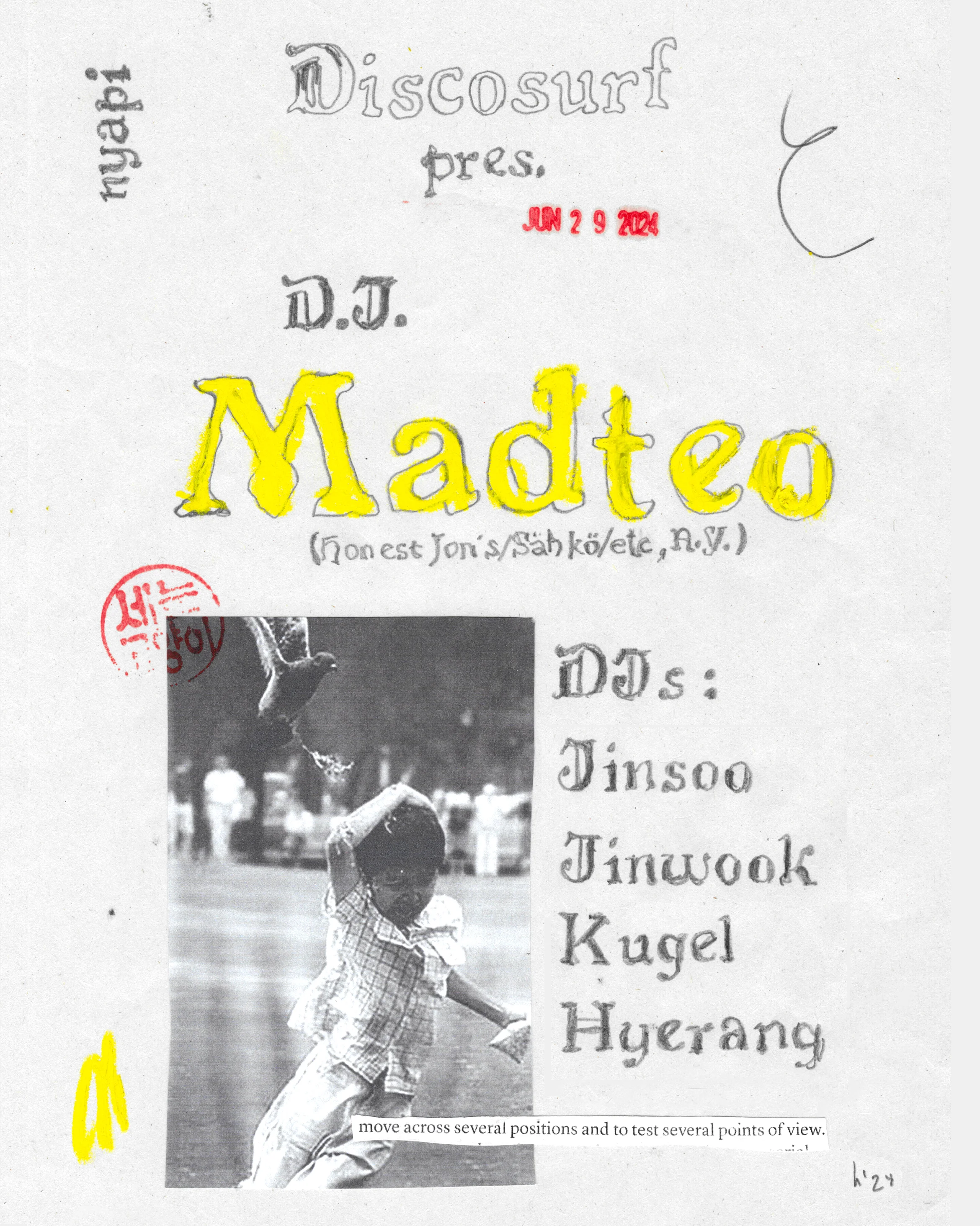
His work takes reference from a range of scenes and eras too: mail art from the 60s; tape art from the 80s DIY post-punk and electronic scene; fanzine aesthetics; the Polish Poster School. He travels often, picking up colored tape in Asia, stamps from Osaka or patches elsewhere in Japan. In Lisbon, he digs through old comics, foreign language learning manuals or old illustrations. The language barrier between himself and the store owner of a nearby stationery shop once led to him purchasing a set of plastic stencils. His neighborhood, Flores, is a direct influence on his use of dry transfer lettering. Though he’s overseeing the art direction for a club in Seoul, he resists the idea of making his work feel local, retro or pinned to an era.
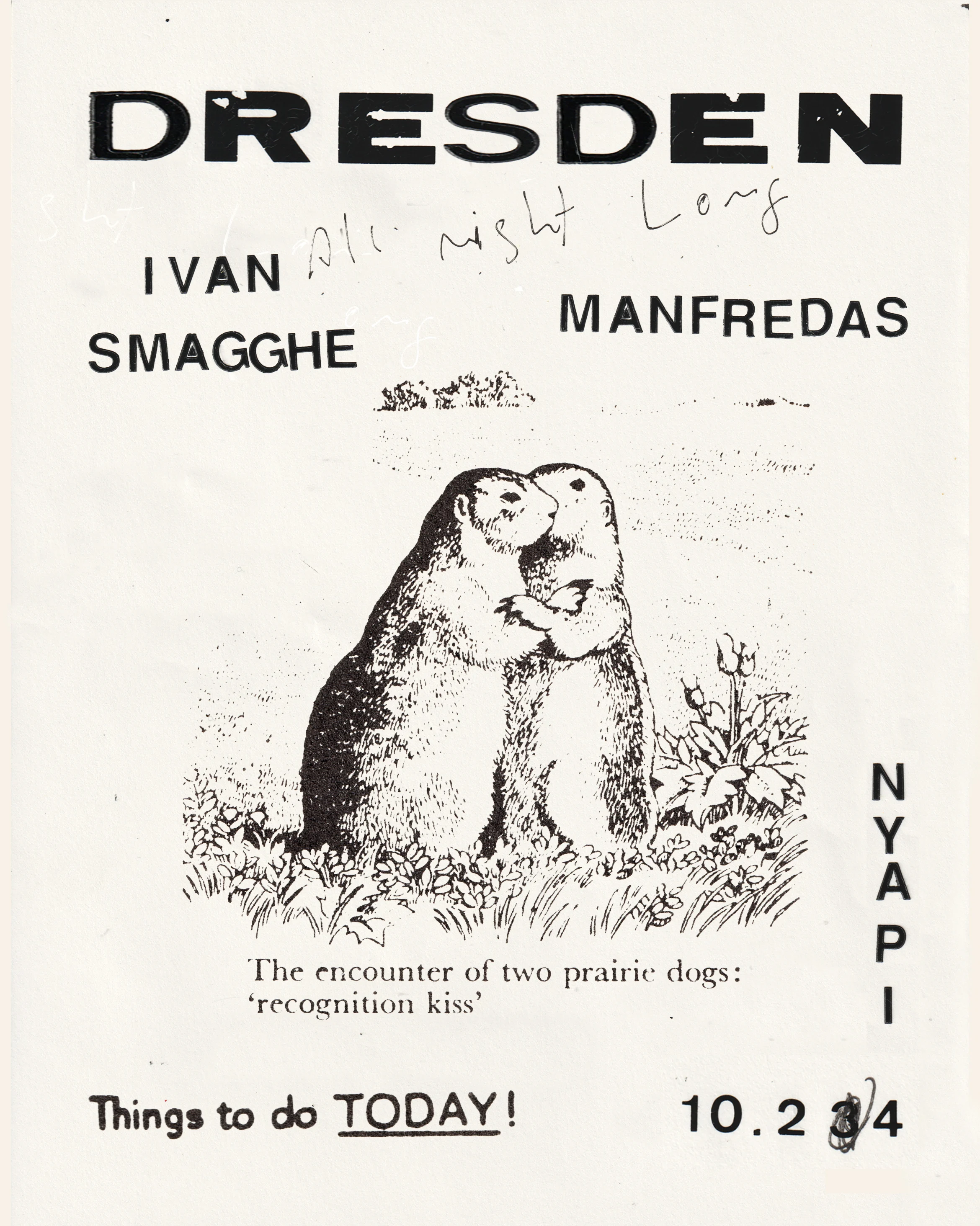
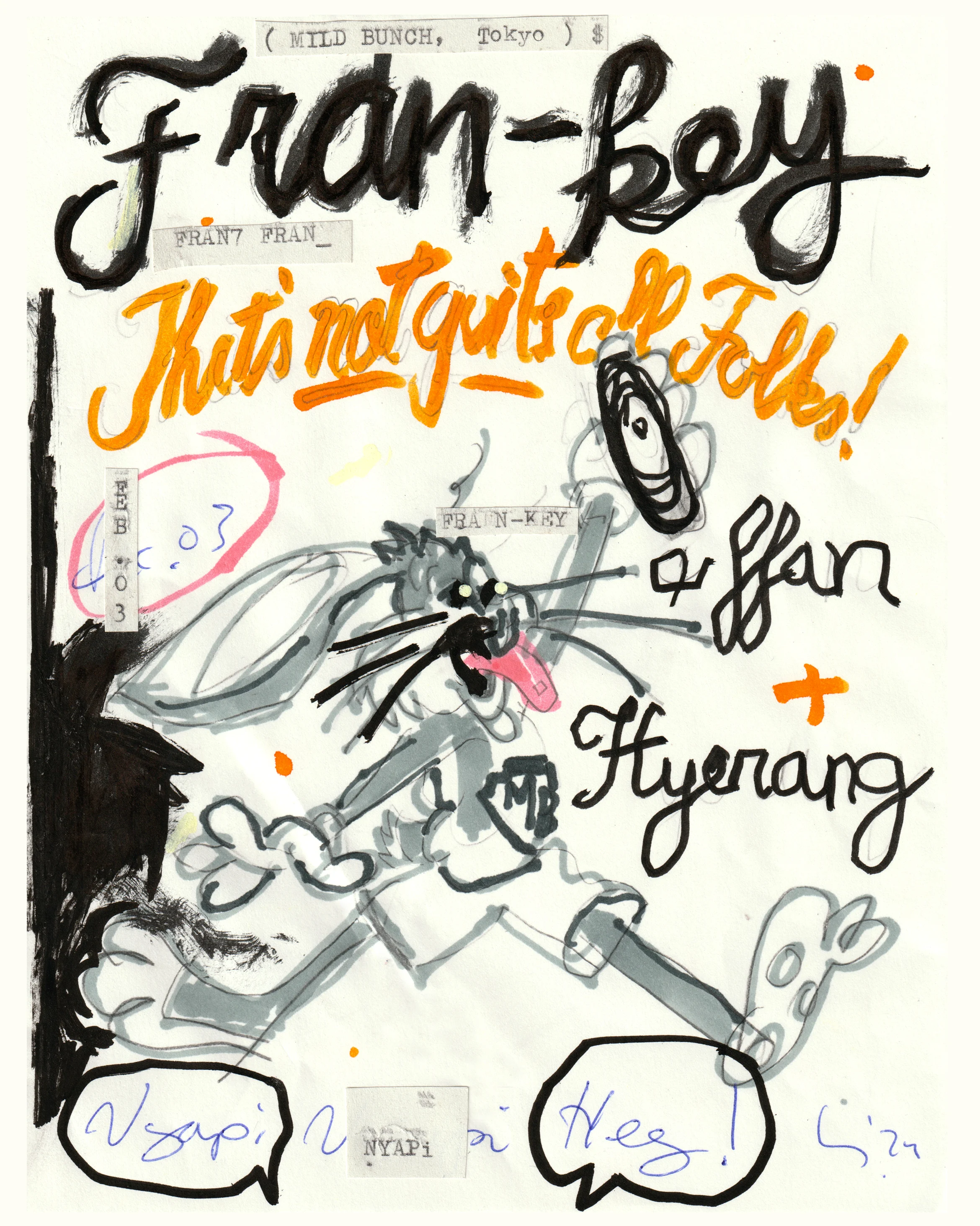
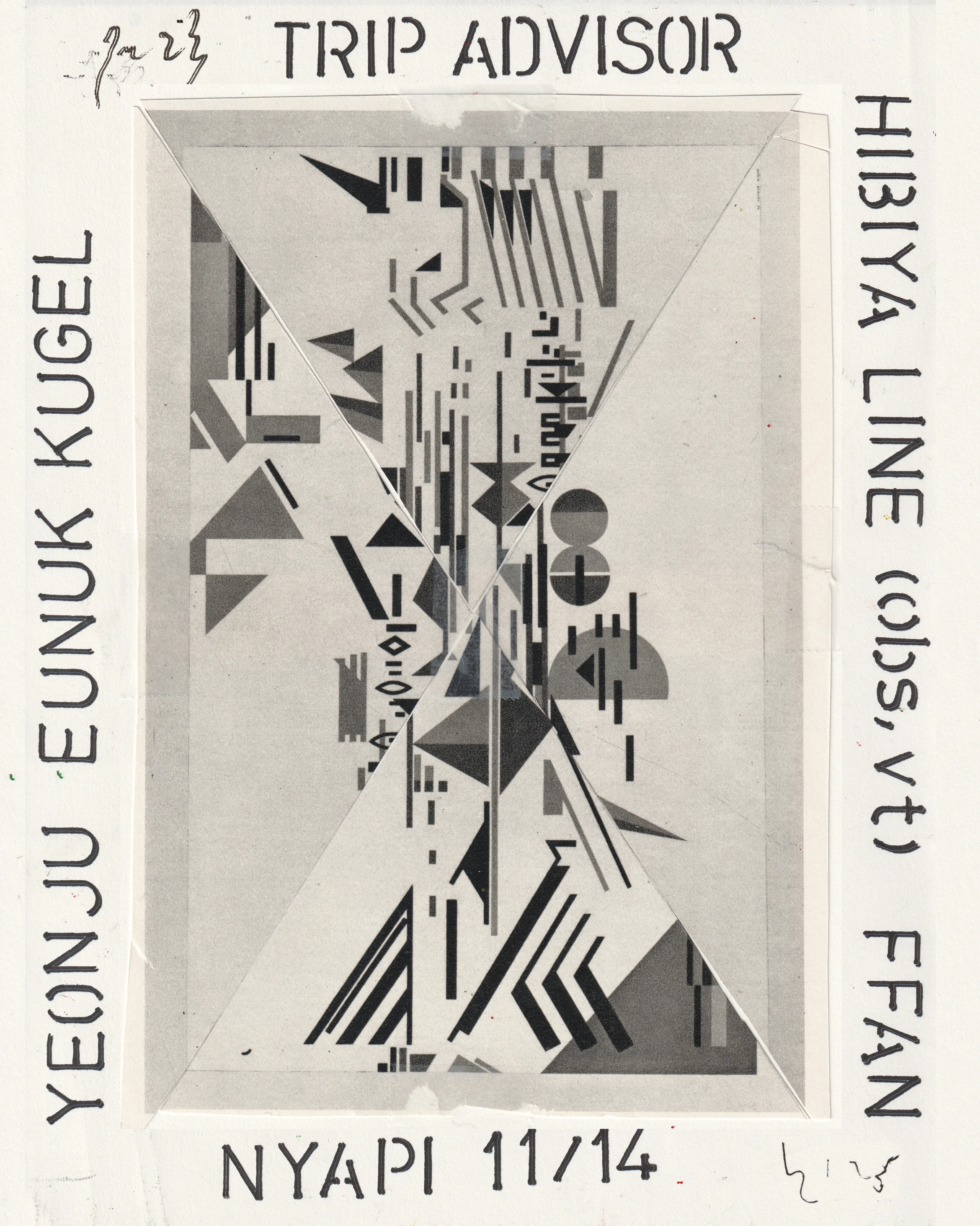
In contrast to the idea of living freely, Capablanca imposes restrictions on his practice–particularly time constraints. He sometimes begins designing close to the deadline, or in airports. “Sometimes the harder the limitations, the more creative the process becomes,” he affirms.
For example, one of Ffan’s favourite posters was created a few years ago when Capablanca was flying to Seoul. “I had to deliver the monthly poster for the day after,” he says, “and I knew I was going to be on the plane and I only had about three hours’ layover. I managed to get into an airport lounge. I grabbed whatever random magazines they had there, which were only about fashion and golf.” He often carries with him a ceramic cutter (“undetectable by the TSA”), a “really tiny ruler”, pencils, permanent markers and a glue stick. Knowing he thrives on limitations and pressure, sometimes he chooses to take less. Once, he created a poster in 15 minutes and hit send on a scanner at a 7-Eleven. The 24-hour supermarkets, and their scanners, have proved to be a “lifesaver” for the artist.
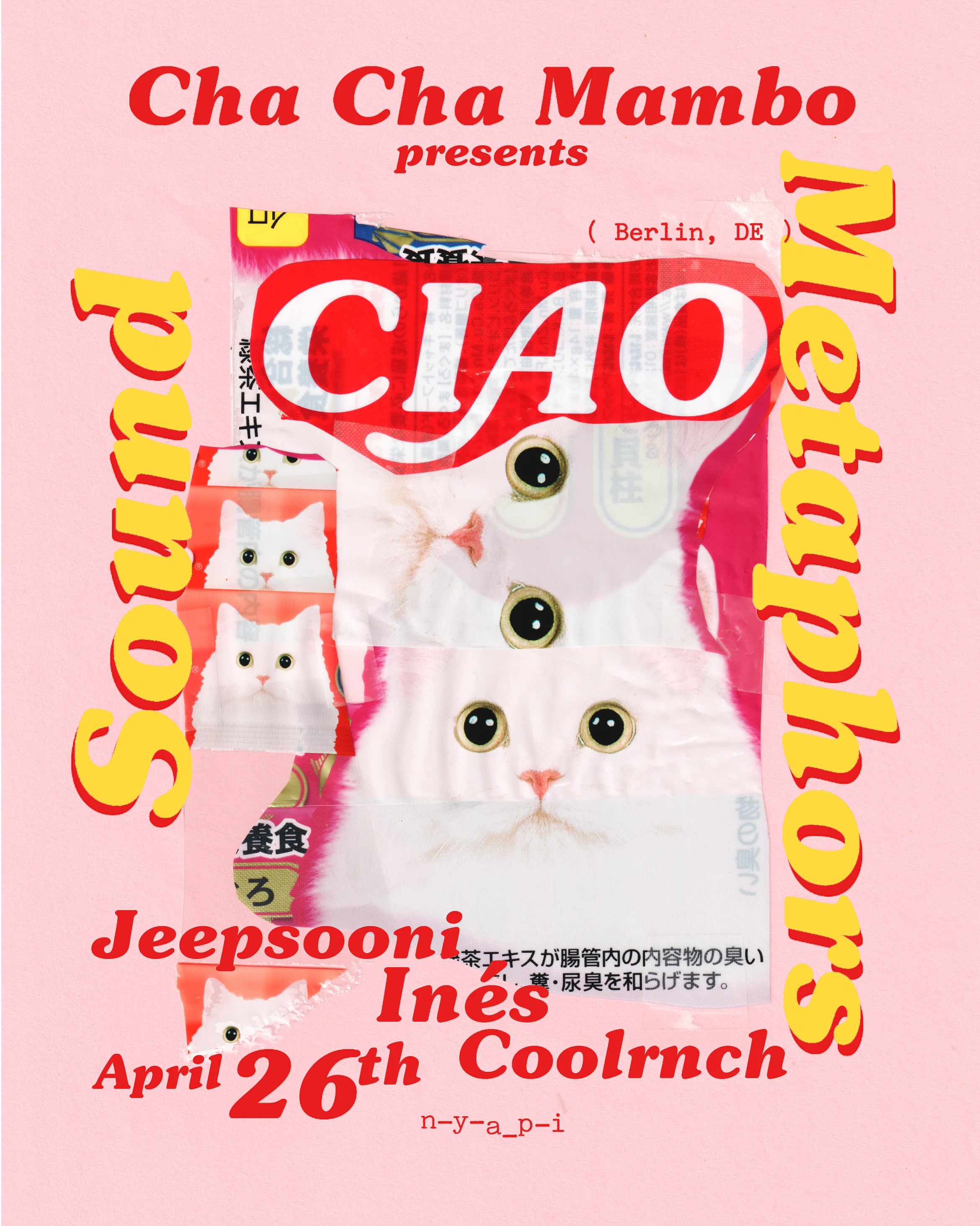
When he’s not designing in airport lounges, he’s in Lisbon making art in the mornings. Knowing that his brain doesn’t wake up until later, he takes this period of mental slumber as an opportunity to create with less consciousness. “I was reading a book about improvisation in live music and this one chapter,” he recalls, “it said something like, if you travel with your eyes and your ears open it’s different. You don’t wander around but you let yourself be driven by your instincts and what you’re seeing and hearing in the moment. That might lead you to very meaningful encounters.”