
Jamie-James Medina’s photobook captures the birth of grime
Between 2003 and 2006, photographer Jamie-James Medina documented the emergence of a new era of music born in London, one that would go on to become the defining sound of a generation: grime. From early raves with Wiley and Skepta to scaling tower blocks for now iconic death-defying shots, Medina was always present to capture music history as it happened. Produced in collaboration with WePresent, “Hate Is A Strong Word” brings all his photos together for the first time, while an exclusive digital download of the book also includes essays by Wiley, Slimzee, Lethal Bizzle and Crazy Titch, as told to Jaimie Hodgson. Here, writer and fellow grime historian Dan Hancox delves into about the book’s beginnings, and just how far grime has travelled since.
Like its creators, Jamie-James Medina found himself in the heart of London’s grime scene by accident. Riding around London in drug dealers’ cars as a journalist in the early 2000s, it wasn’t clear that the mutant, dark-side strain of UK garage that was booming through the fuzz of the FM radio was anything concrete, let alone something that would solidify into Britain’s last great musical subculture, and eventually, improbably, take over the mainstream. There is something magical—a feeling which is both uneasy but thrilling—about finding yourself on the open terrain of a new sound in its infancy. What do u call it? Agoraphobia?
Medina chased that feeling, and turned his lens from the drug dealers to the raw, ragged music that soundtracked their world—and the remarkable people creating it. “Hate Is a Strong Word” is a precious document of that time, collecting his photos from RWD, NME, VICE and the Observer of grime’s golden age, between 2003 and 2006, and it brims with the fearless bombast of youth, with the pride and passion of a generation of musicians who were told they deserved to have neither, and resolutely ignored their fate.
Grime flourished in housing estates that were designated “no-go zones” for outsiders by a tabloid media notorious for their zealous punching down.
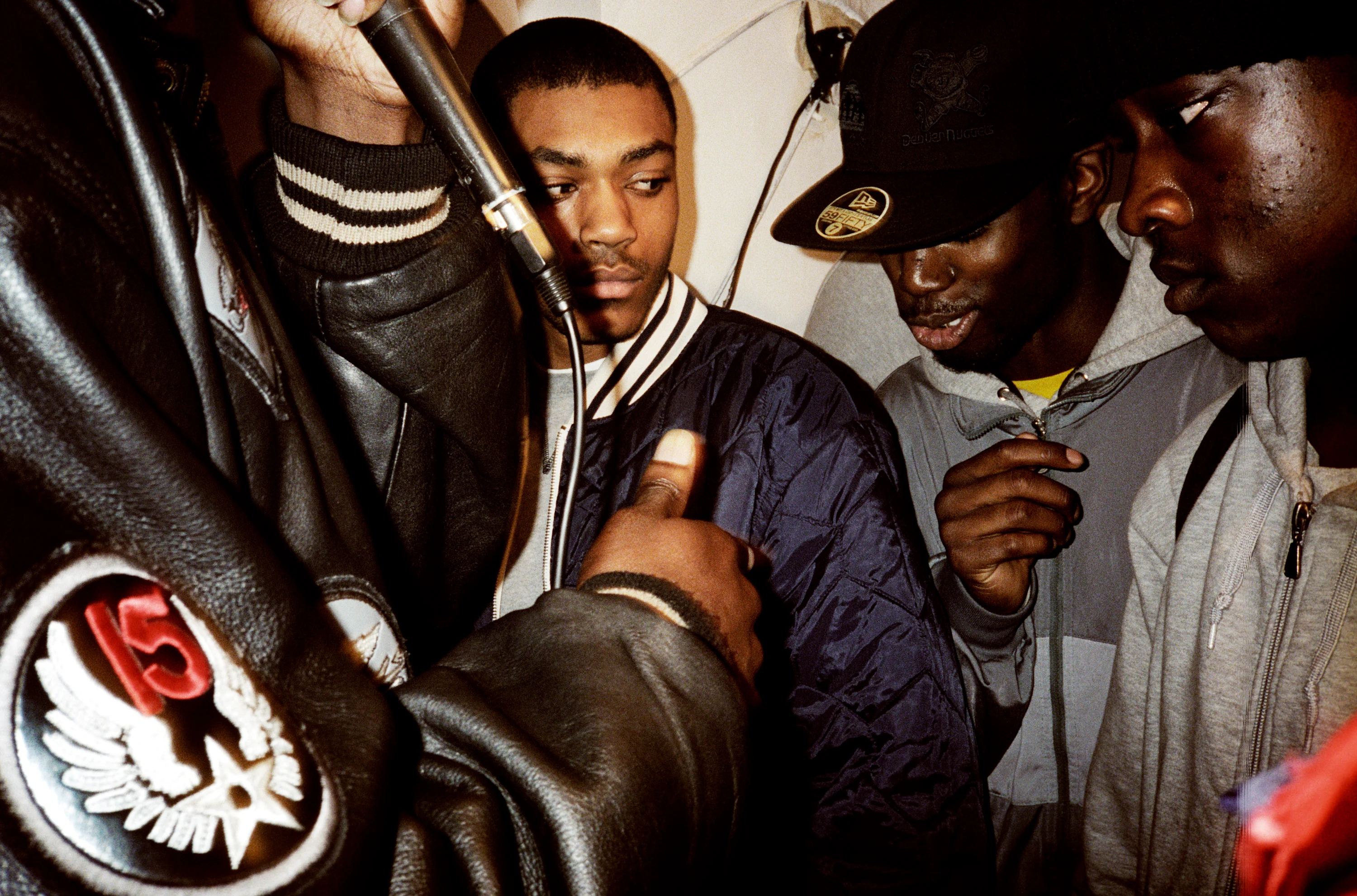
It may be 20 years and more, but it is staggering how different London and its fresh-faced musical legends look from this vantage point. There is vivid depth that comes from full immersion in a scene in the making, and the rough-edged city that formed it: a captivating ensemble of teenage would-be stars who still don’t know themselves just how emphatically they’re going to sweep the dust and detritus of the 20th century aside. Medina captures household names and future icons like Skepta, Wiley, JME, Dizzee Rascal and Kano when they were barely known outside their postcodes, or beyond the one-mile radius of the scratchy pirate radio signal. The backdrop is every bit as fitting, and uncanny—London on the precipice of something new and unfamiliar, but still unvarnished, and yet to fall off the cliff edge into the new millennium. Ripped carpet, mold on the walls, rusty playgrounds, Skepta taking the tube, packed pirate studios, dingy underpasses, uncladded towerblocks, millennial US hip-hop brands, New Eras and Akademiks.
When it was still glowing red with heat, when it had barely taken the name “grime,” this was not a genre that had a visual component. To begin with, music videos were rare, the mainstream media weren’t interested, cops kept shutting down the raves, and grime was largely a “sound,” in the literal sense—underground and out of sight, beats and bars vibrating out from the pirate radio. Medina shines light in those dark corners, corners littered with cheap weed, discarded rave flyers and Lucozade bottles, taking us inside the hidden places that incubated grime—places which were rendered invisible to the world outside, and yet loaded with fear and loathing by Blair’s Britain.
Grime flourished in housing estates that were designated “no-go zones” for outsiders by a tabloid media notorious for their zealous punching down—“sink estates” worthy only of demolition. The young pioneers forging this new golden thread in British music found their voices on the pirates, whose locations had to remain a secret by necessity, on fear of arrest, or plausible attack by a rival station. Forever on the run from both Ofcom and its precursor, the DTI—UK pirate radio’s very own police squad—Rinse FM co-founder and DJ-legend Slimzee ascended to ever-more dangerous towerblock rooftops to put up new aerials, and keep the sound alive, and Medina followed him as he dangled precariously, shimmied and climbed up into the dark East London night.
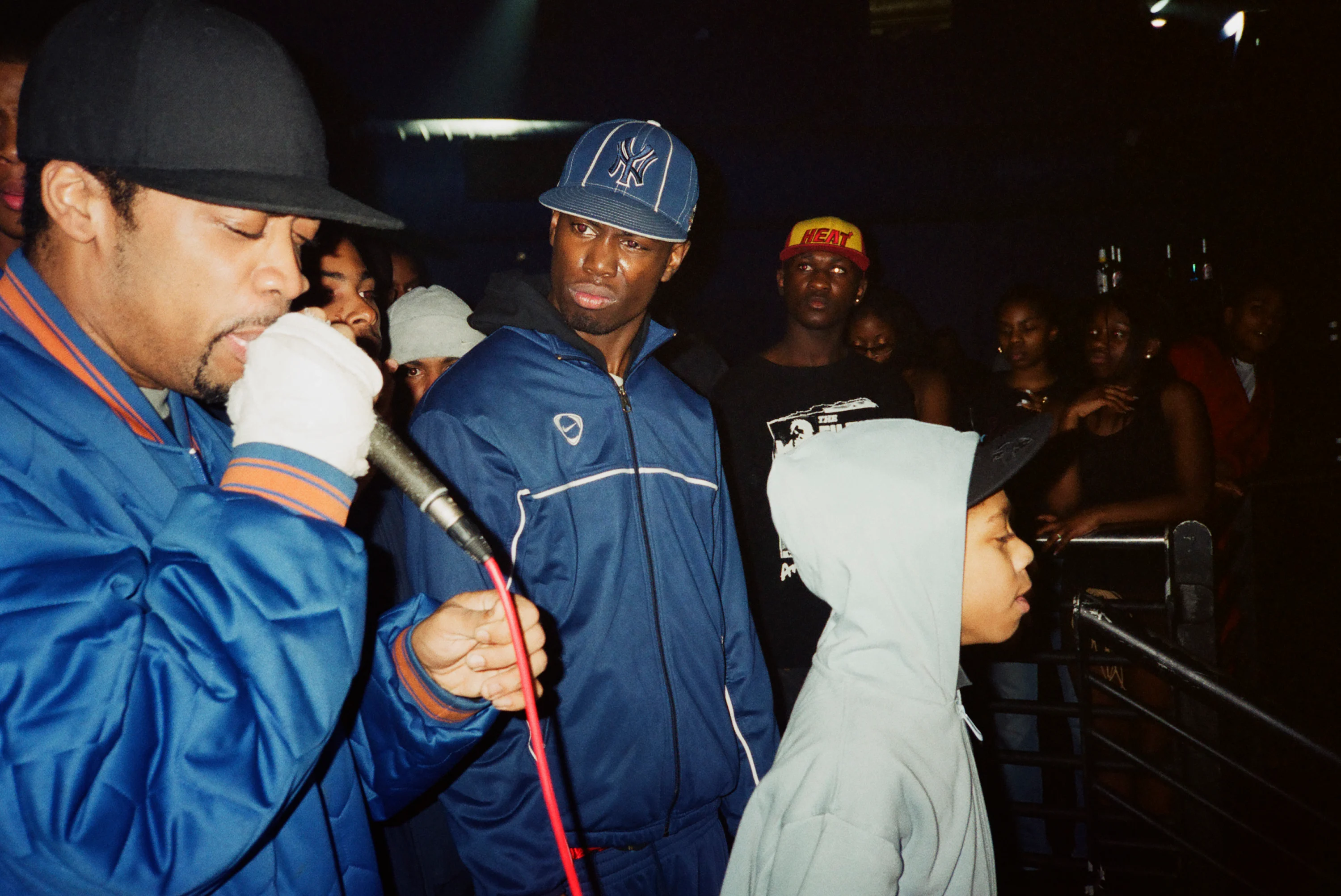
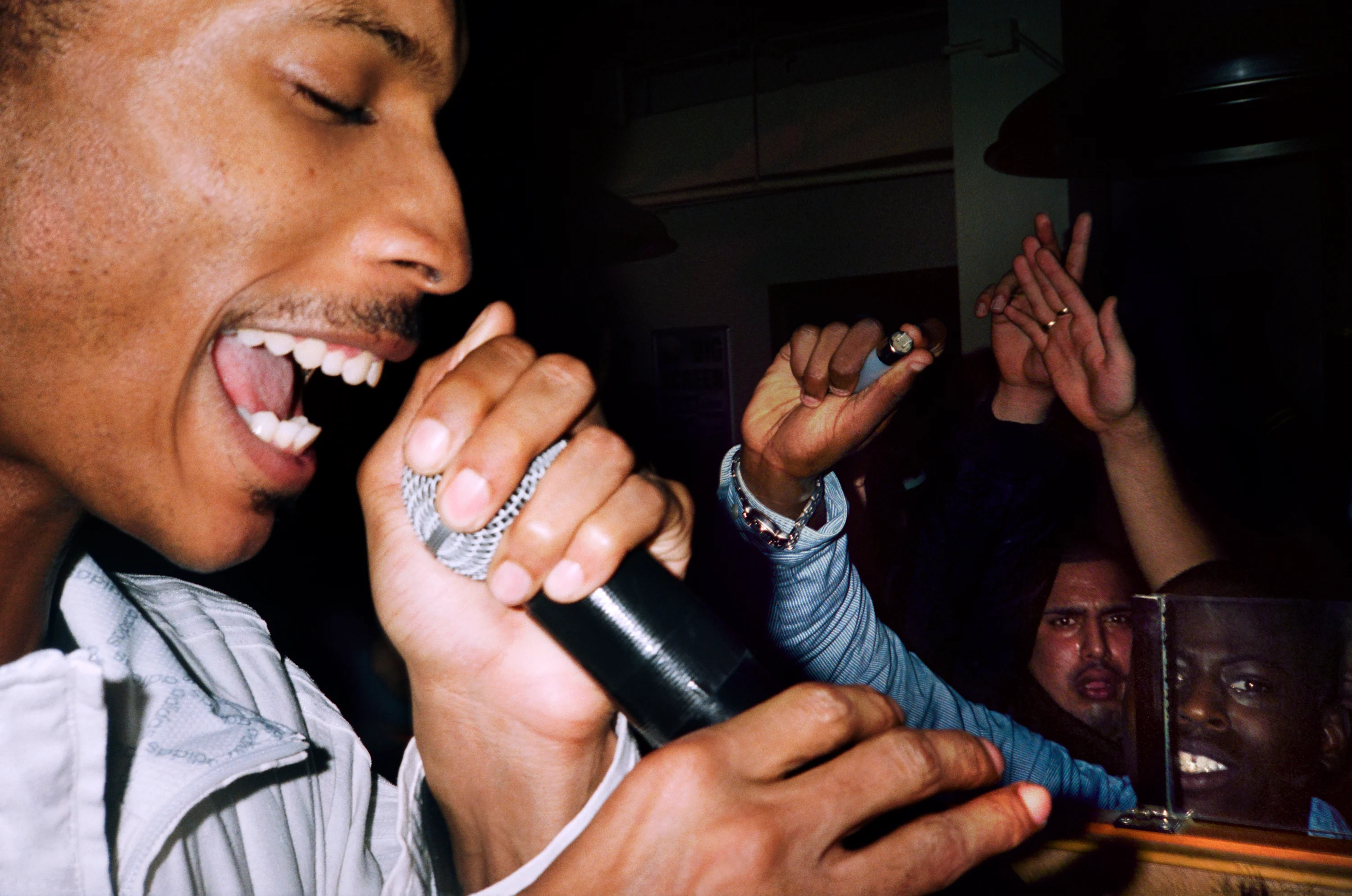
Even in proud and posed portraits, there is movement in Medina’s photos—the sound always moving forwards, the teen MCs screwing up faces at the ferocity of the beat, the crowd throwing up gunfingers in appreciation. Let me see the energy, grime’s MC-hypemen would often instruct ravers and radio listeners, and you really can. Grime was a restless sound fizzing with nervous tension, impelled into action.
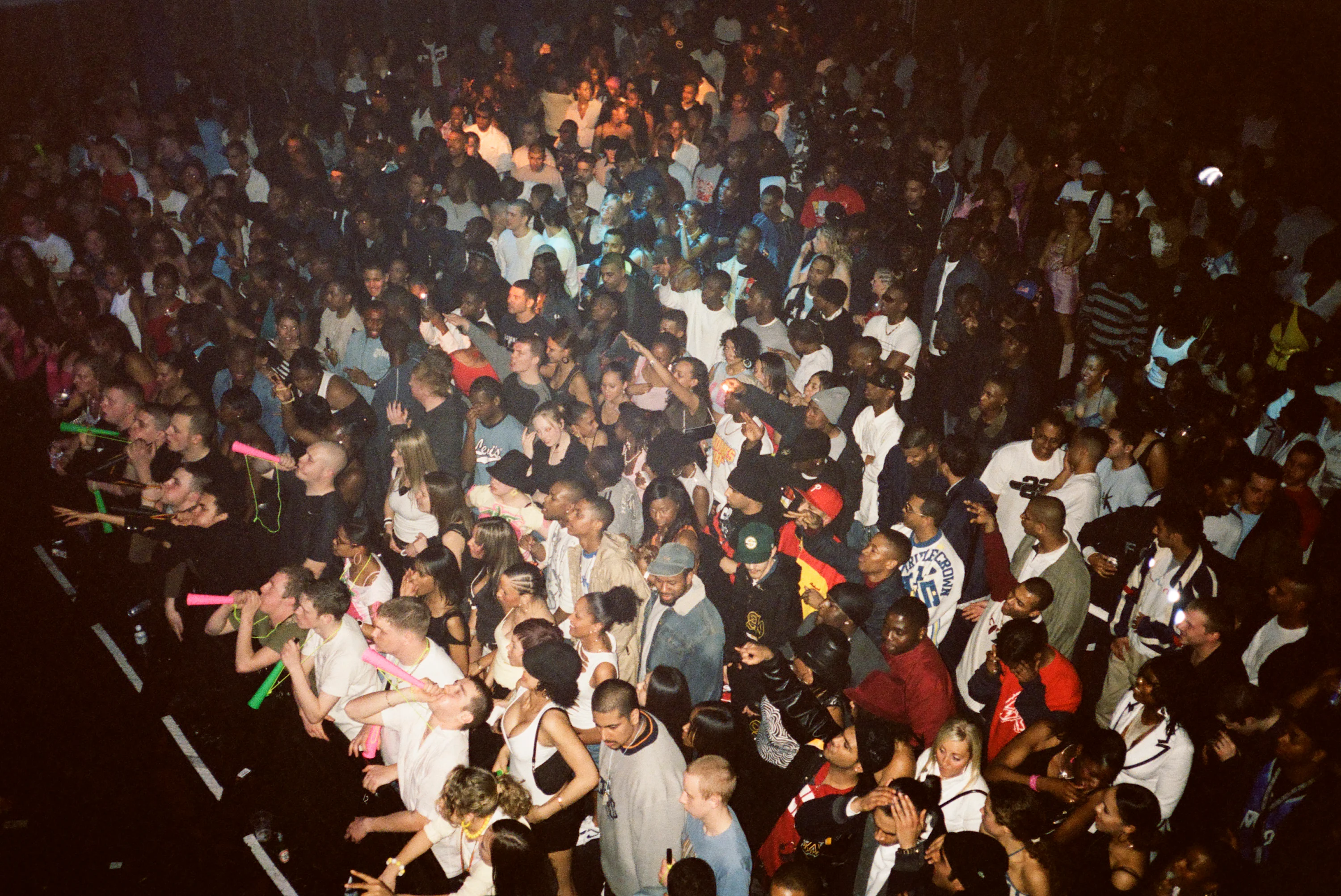
This is an invaluable record of working-class, inner city London on the very edge, on the cusp of an epochal change that may never be reversed. Medina is a rare witness to a period before everyone carried a camera in their pocket, before social media and YouTube made everyone an amateur documentarian, before gentrification was an everyday word or a scorched-earth reality, and before the music industry or media had the slightest interest in the grassroots, DIY culture beaming from the East London rooftops. Medina was usually the only journalist in legendary grime raves in raucous clubs like Stratford Rex, or the Palace Pavilion on Lower Clapton Road in Hackney, then known as the Murder Mile. The Metropolitan Police killed grime as a live music form before it could ever take off, and the clubs soon shut down, too. Without these rave photos, all we have is a few fuzzy tape-pack audio recordings.
Bluntly, we just don’t have much visual record at all of early 2000s life and culture, of people and the built environment, in working-class parts of London like Bow, Hackney, Croydon, Lewisham or Peckham. From the appearance of the pre-refurbishment, famous-infamous Crossways Estate (long since decanted of its grime kids and rebranded “Bow Cross”), to the fashion choices of young, mostly Black working-class Londoners years before Instagram or the mainstream media was there to document them, Medina’s photographs are an immersive treat, a testament to the fierce self-belief of youth, and a truly rare historical document.
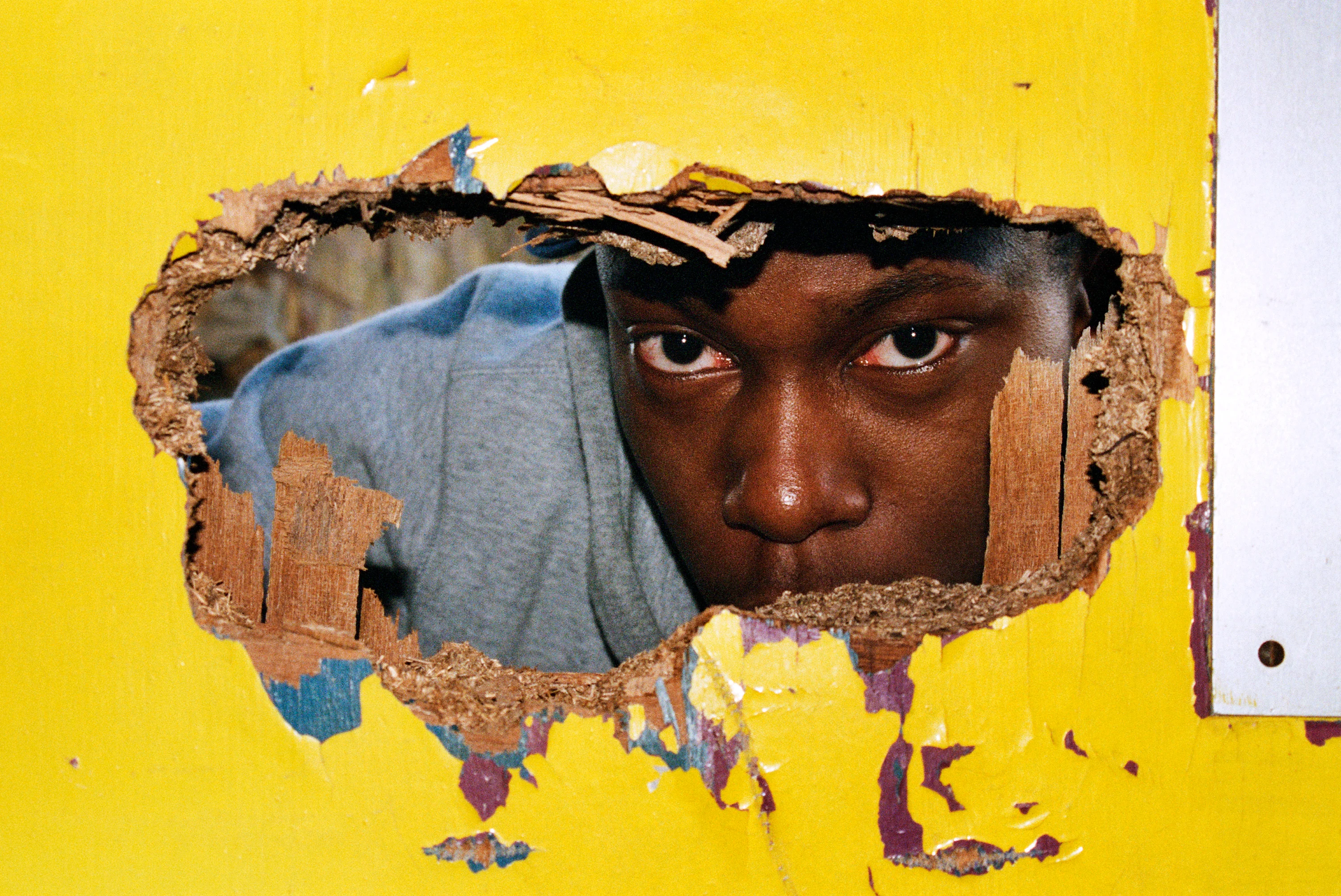
This is an invaluable record of working-class, inner city London on the very edge, on the cusp of an epochal change that may never be reversed.
Inner East London was the industrial hub and the site of slum housing for its entire existence, essentially—ever since the Romans settled down on the swamp land around the River Thames in AD 43, the east had been the capital’s factory: ferociously noisy, endlessly productive and constantly shrouded in soot and grime. Right up to this exact moment, 2003 to 2006, and no longer.
Medina reveals a London vernacular of signs and images erased by the collapse into 21st century Anytown nothingness, into a world where music genres, youth fashion, even the boujee coffee shop that now stands where Rhythm Division record shop once was, could be anywhere in the world. Nowhere else had a pirate radio culture like this, and nowhere else could have created grime.
The people that would become grime’s superstars are all present and correct here, posing with the magnetic charisma of true performers, but they weren’t lone rangers at the time. “Hate Is a Strong Word” also captures the crew-orientation of a truly collective scene, founded on hyperlocality and community. This also represented security: Mid-2000s London was so close and claustrophobic that travelling to a nearby postcode for a pirate radio guest appearance was a fearful and plausibly violent event. The only time we leave it is when Medina takes Wiley, Skepta and Jammer on a trip to perform at a VICE magazine launch party in Milan—a strange and rare occurrence, and Skepta’s first overseas appearance, more than a decade before he would appear at Paris Fashion Week, or headline festivals. And now? Now its tightly-bound geography and tightly-wound spirit has ricocheted out into the world at large. I recently saw a crew of Sri Lankan MCs visiting London to perform; grime has subcultural flares going up in Tokyo, in São Paulo, in Toronto.
Speaking as a historian for a moment, rather than a grime zealot and journalist, it’s an important truism that you should never project backwards onto historical moments things we now all accept as fact. Just because grime became huge, a canonized part of Britain’s rich musical heritage, a money-maker for the culture industries, the subject of endless grown-up exhibitions and documentaries, it doesn’t mean it was always going to end up that way, or that anyone believed it would do, apart from its creators.
Between 2003 and 2006, a pathetically conservative mainstream press and radio could barely register anything more than derision for grime—how could artists spitting lyrics this fast, slangy and violent, over beats this weird and angular, delivered direct to fans, rather than via a radio plugger, PR or record label, possibly get anywhere? This wasn’t serious music, and these weren’t serious musicians, was the near-unanimous verdict at the time; grime wasn’t anything like proper hip-hop, so how could it warrant taking the place of reliable, MTV-approved US rap and R&B? So grime stayed on the margins, barely a mile or two away from London’s West end, and shut out of sight. The original gated communities, but locked in from the outside. Only a tiny handful of people thought it was worth going in, and documenting what was happening: We should all be eternally grateful that Jamie-James Medina was among them, and had his camera with him.