
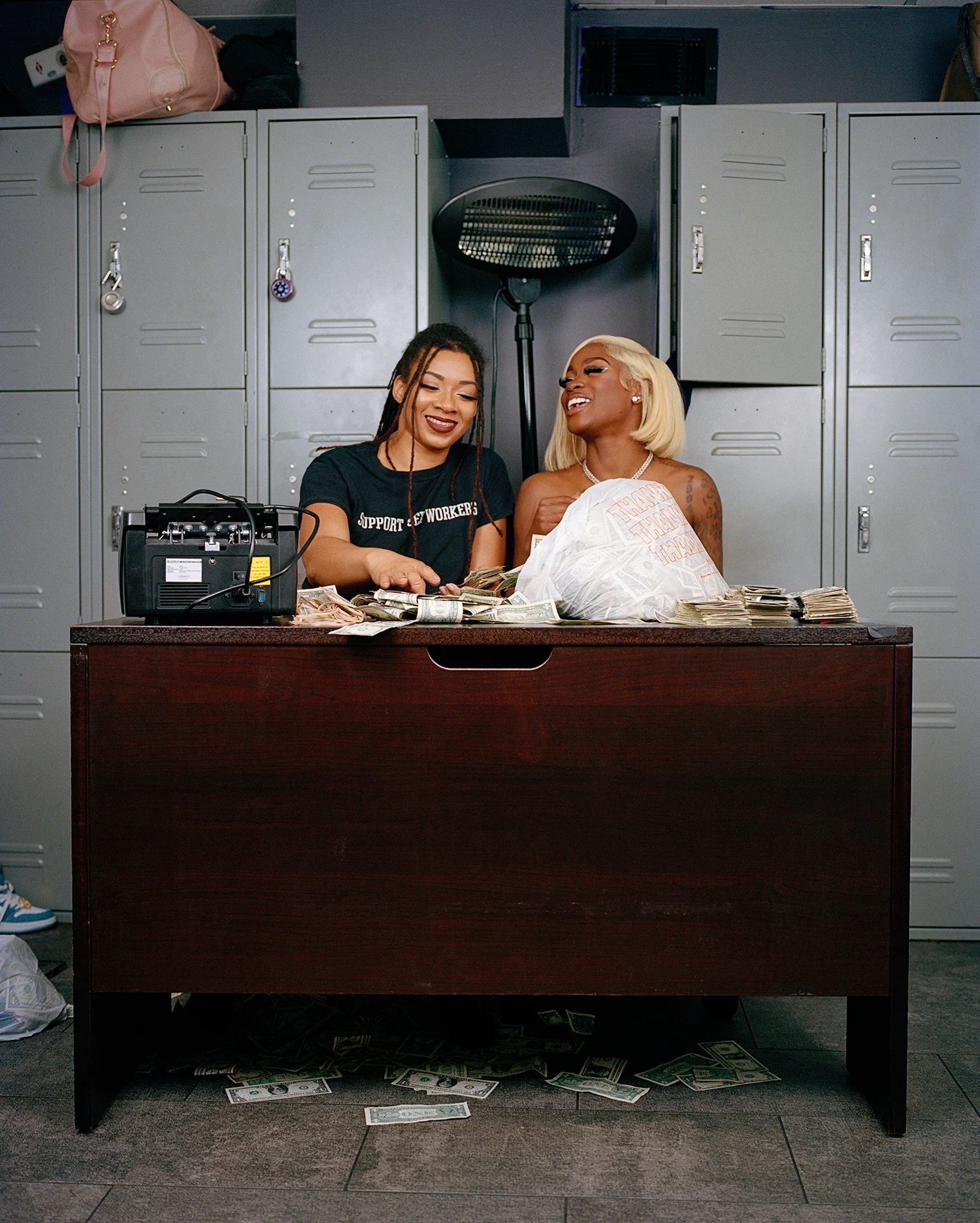
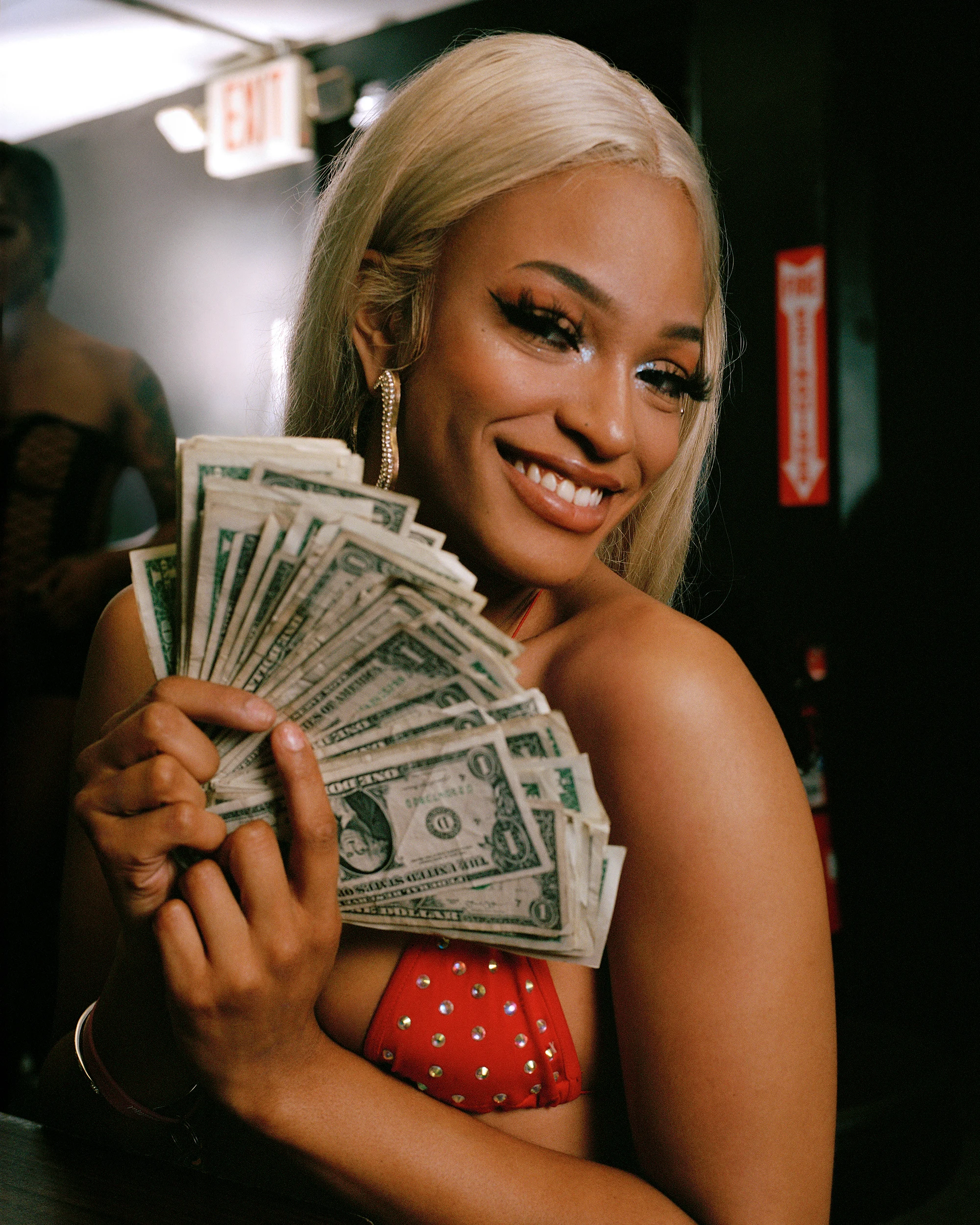
Money count after music video shoot at Magic City (2025)
Atlanta’s strip clubs are iconic institutions, but the women behind the performances are rarely seen beyond the stage. In “Atlanta Made Us Famous,” Moroccan-Dutch photographer Hajar Benjida turns her lens backstage. She tells Emily Steer how, at one of its most iconic venues, Magic City, she captured dancers as individuals—mothers, creatives, a network of women who care for and protect one another.
In 2021, Hajar Benjida was selected as one of 20 Foam Talents. “Atlanta Made Us Famous” is on show at Foam Amsterdam until 25 March 2026, bringing together all seven years of the ongoing project.
While photographing Atlanta’s booming hip-hop industry during her studies at HKU University of the Arts Utrecht, Moroccan-Dutch artist Hajar Benjida soon noticed how strip clubs play a crucial role in the local music culture, with business deals happening in the iconic spaces of Onyx Gentlemen’s Club, Magic City, and The Cheetah Lounge. “It’s like a meeting point, I’ve seen contracts being signed in the club,” Benjida says. “They specifically choose to go to the strip club, so the women are part of this scene.”
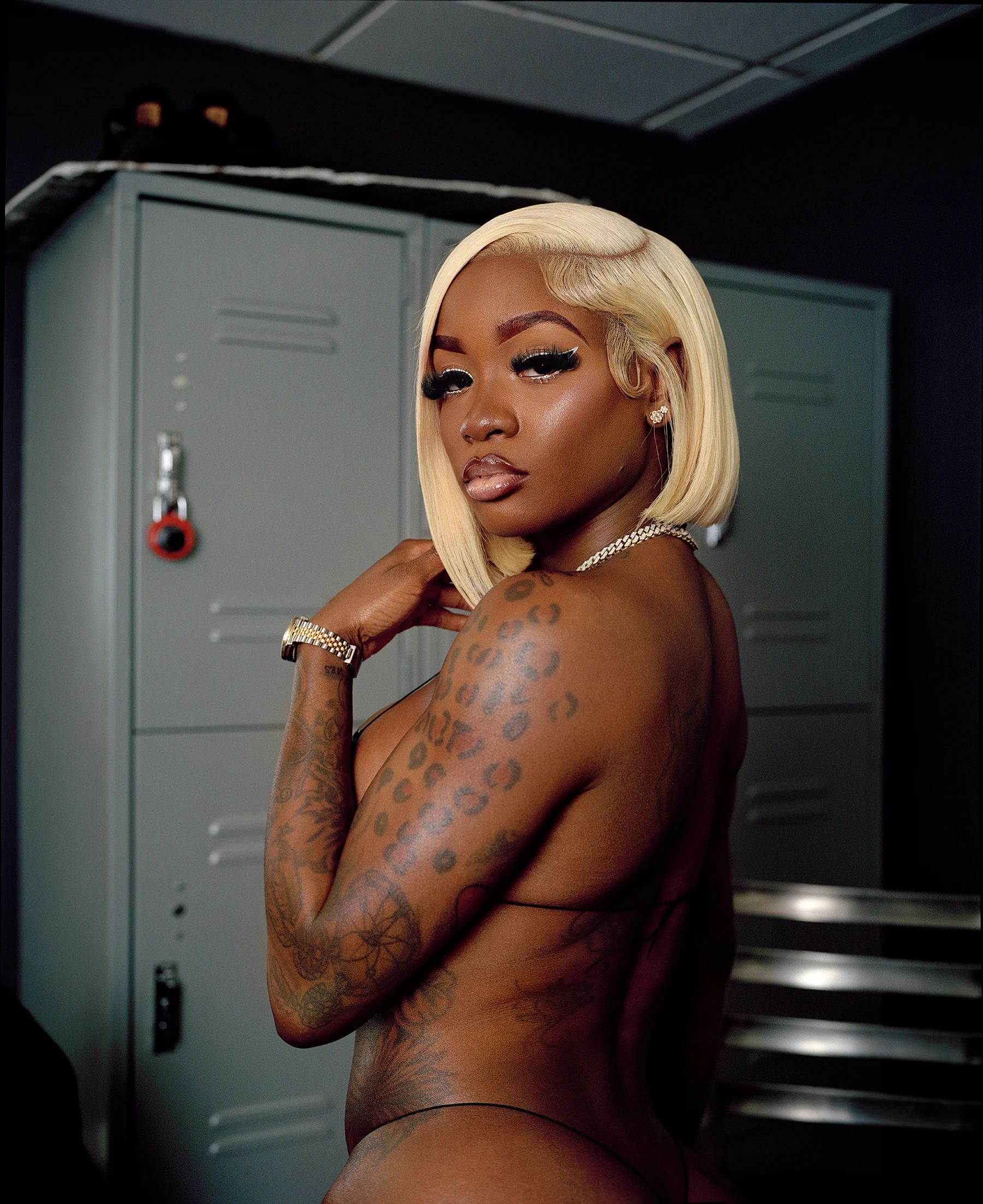
She notes how hip-hop videos for industry titans such as Nelly would cast directly from Magic City’s dancers. “These guys like to pretend they don’t need women and their lyrics sometimes talk down to women or portray them in a certain way,” she says, yet their cultural impact tells a different story. In 2018, she started photographing the dancers. She was introduced to the Magic City team by photographer Cam Kirk, who she was interning with at his studio across the road. “Magic City is used to having music videos shot there, maybe some press, interviews with artists,” she says, “but they had never had a long project in the locker rooms focused on the women.” Because Kirk was a respected photographer known to the club, Benjida says, “they let me do my thing.” Her first session was only a couple of hours long before she returned to Amsterdam, but it introduced her to some of the dancers who she would work with repeatedly over the years. “I almost didn’t do it, but I thought, OK let’s be brave and see what’s possible. Then when I came back in 2019, I went straight to the club and showed them my work.”
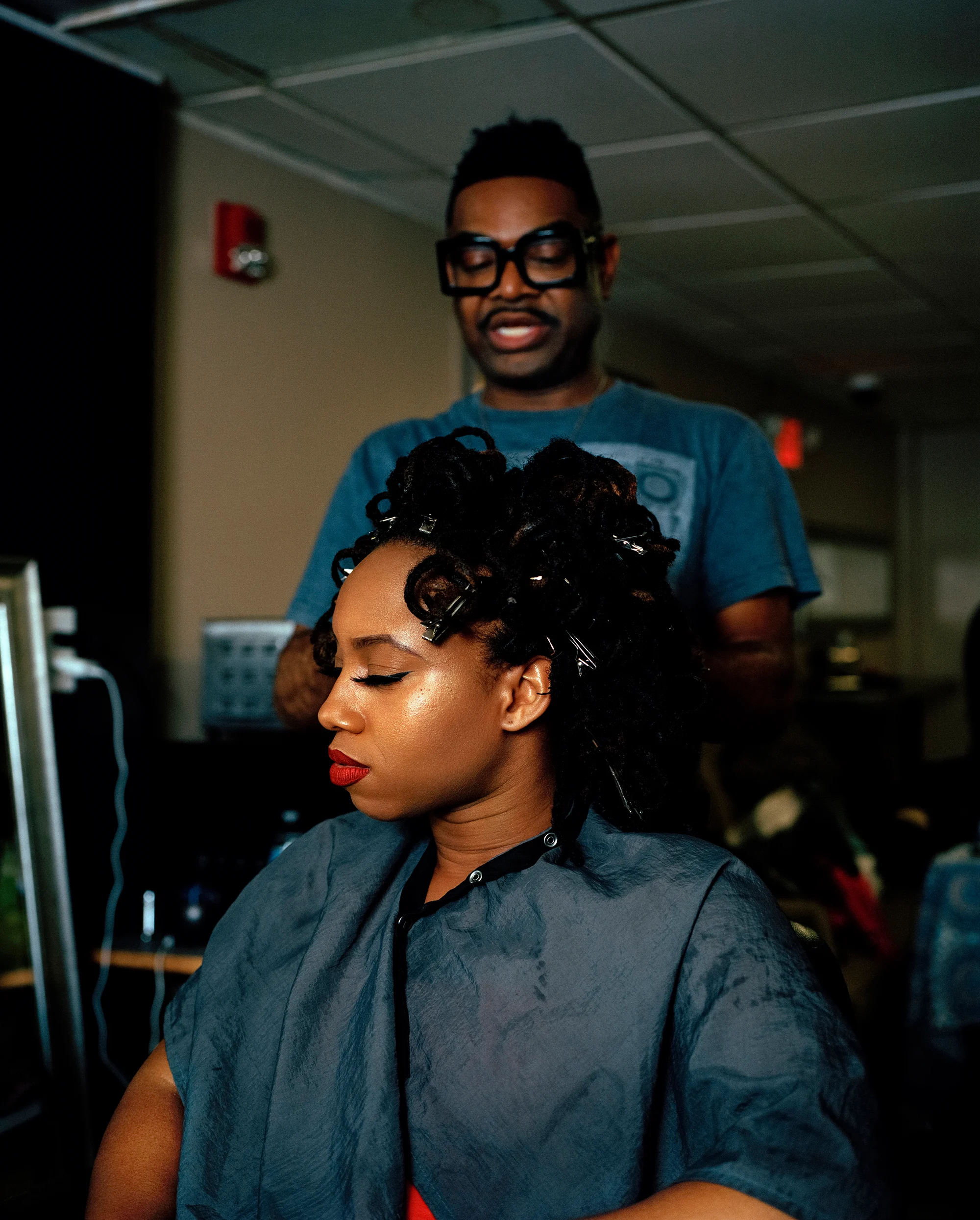
They kind of have to put a mask on before performing.
Benjida has now photographed many of the city’s dancers, some of whom are creatives themselves or dancing to fund their studies. They are shown as powerful and self-possessed, locking eyes with the viewer and commanding the frame. Her lens is simultaneously sensitive and luxurious. She titles her photographs with individual dancer’s names, building up narratives with the same women over several years. She eschews the typical male gaze through which these women are usually viewed; her aesthetic stands in stark contrast to Magic City’s own calendar, for example, which can be seen on the wall in the background of some of her photographs, with dancers’ bodies buffed and retouched.
Through 2019 she visited during day shifts when things were quieter, looking for moments of rest when dancers were sitting down or reclining by banks of metal lockers, and building rapport and consent with her subjects. “On the day shift it’s very chill,” she says. “You can get to know them. A lot of them go to the stage and then come back to the basement to have a break, eat and sit down. That’s when you can really talk.”
When she returned to the series in 2023, the staff and management of Magic City had changed, and she had a single day to take photos between 4pm and 4am, capturing dancers getting ready and piles of money being counted at the end of the night. During the night, dancers were more focused on getting to the stage. “They kind of have to put a mask on before performing,” she says, comparing the shooting style during this visit to backstage music photography. “I’m kind of an introvert,” she says of her approach, “but I think that my calmness helps with the chaos… It was interesting to see what happens with the money count after hours when the lights are on. I’d never seen the club like that.”
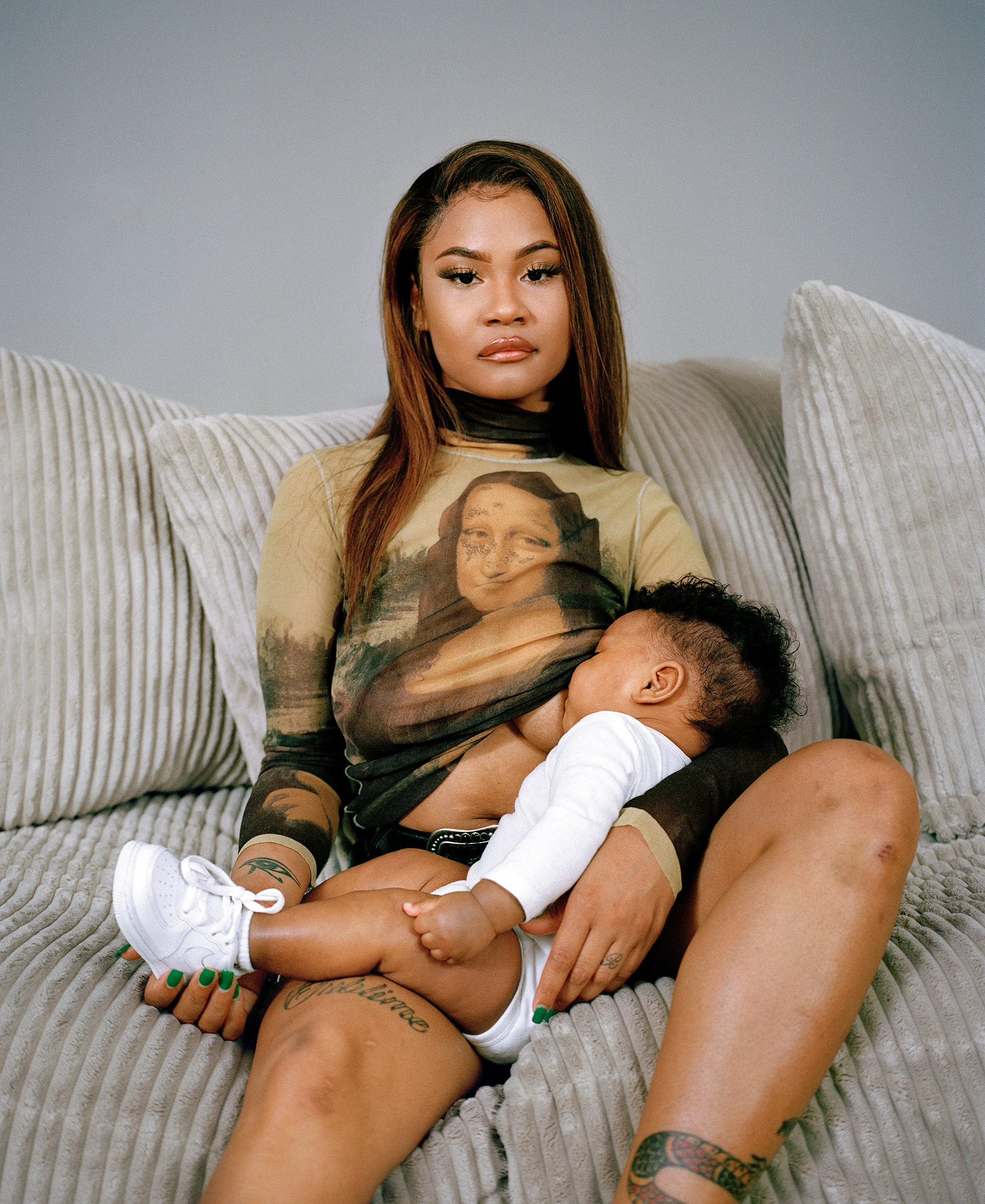
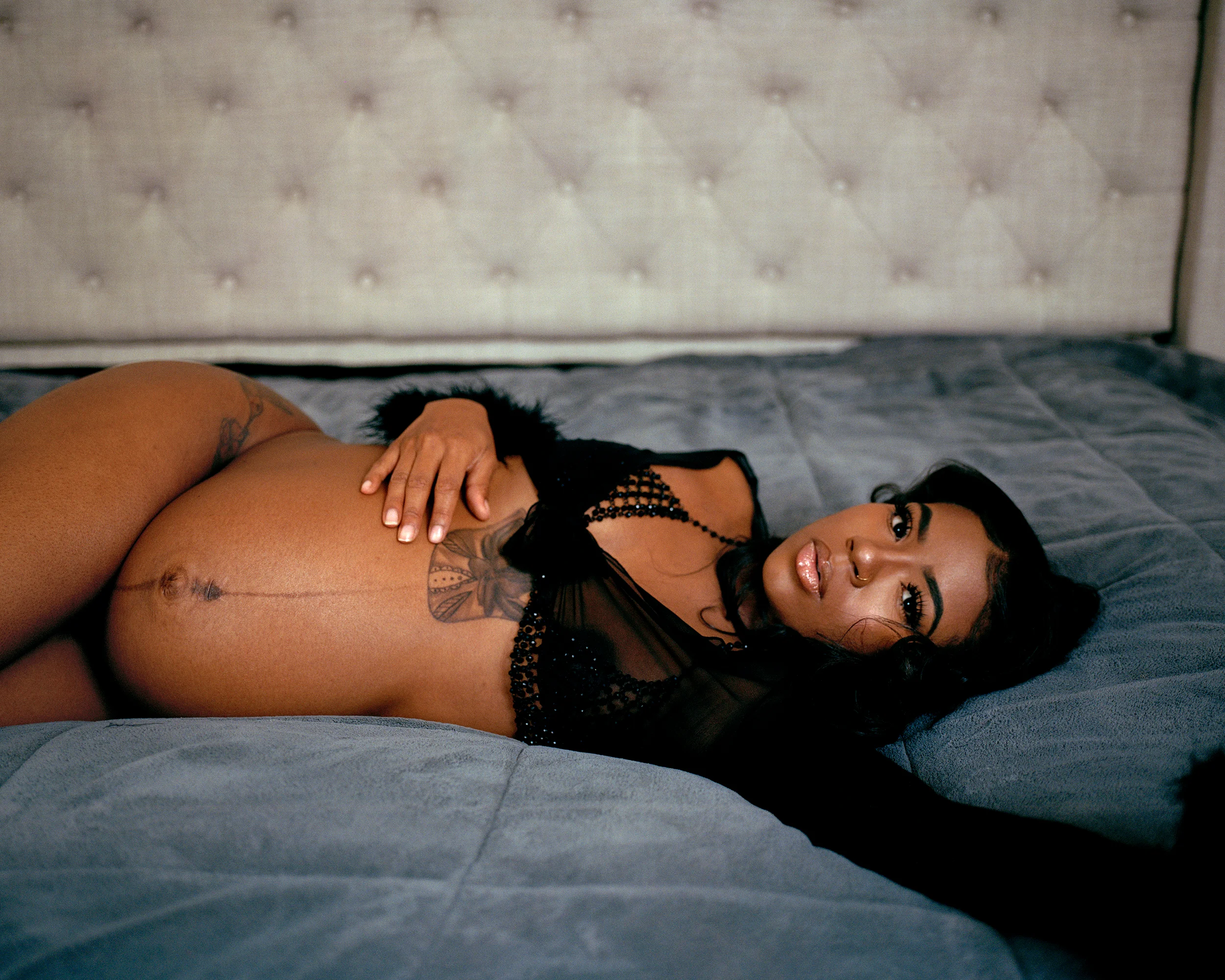
Benjida’s ongoing connections have had a major impact on the work. “I knew I would make connections, but not with everybody,” she says. “They don’t all care to be photographed.” She first shot her friend Cleo in 2019. She had been looking for a dancer who was also a mother, and their initial photoshoot happened while the dancer cared for her baby. “Cleo and Her Son Andy at Home” (2019) is now one of the most recognizable images from the whole series—snapped during a break in shooting and one of only two frames taken of the new mother breastfeeding. The image taps into an oppressive cultural split between motherhood and stripping, causing “a bit of an extreme reaction from my school,” says Benjida. “I think people sexualize that photo when they know that she’s a stripper.”

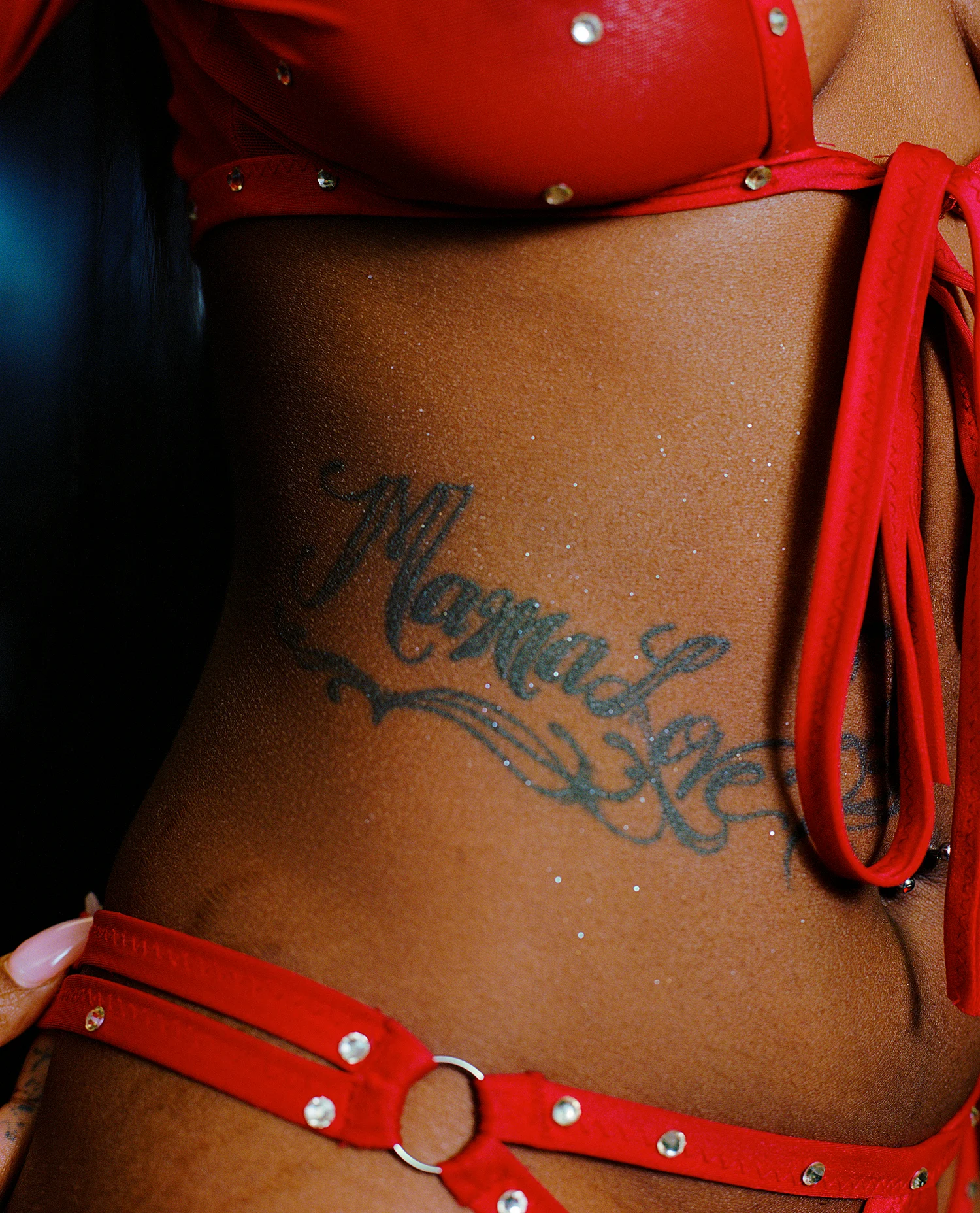
A lot of mothers work in the club to provide.
“Atlanta Made Us Famous” centers its subjects within a world that looks to side-line or categorize them. The creative and physical expression of strip clubs is often appropriated by mainstream music and fashion platforms without accreditation, from hair and beauty styles to hygiene tips. “This project is also about the trends that cyclically come out of the strip clubs,” she considers. “Not just the shoes but the hair, the long nails... When it’s not attached to stripping it’s respected. It’s just like the breastfeeding photo. When it’s associated with stripping, it becomes controversial.”
The series includes several other images of pregnant women and those with their children. During a visit to Atlanta in 2020 just before lockdown, Benjida focused on dancers in their homes and with their children. “I had a lot of backstage images and I wanted to get to know people better. [In the images outside the club] you see their environment, their families, you hear stories.” “Barbi Billionz” (2023) shows a dancer photographed through a shimmering curtain surrounded by money backstage. The same woman is featured with her twins Hailey and Bailey at home in a 2020 image. These works reveal the complexity of Benjida’s subjects, challenging the stigma that refuses to see motherhood as a natural part of their lives. “A lot of mothers work in the club to provide,” she says.


The series is filled with powerful maternal links that run through the works, from biological connections to house moms who provide guidance and protection for women within the clubs. This rich support and network between women is the backbone of the series, contrasting with enduring perceptions of the profession as individualistic and unfeeling.
The dancers take on caring roles in various ways. Benjida tells me that Barbi has a preference for working day shifts, which is more relaxed on performance. “I would see her sit down with her regular customers basically getting paid to have a drink and give a therapy session,” she says. “A big part of sex work is also therapy.” When Benjida photographed Barbi at home, she found out that previous images in the club had featured her sister Nunu. Another dancer that Benjida photographed in 2019, Havana, had been working in the club for ten years at the time, following her mum who worked at Magic City in the 1990s. Benjida is interested in building an ongoing connection with Havana in the series in the future. As she says, “You see generations working there.”