Hailun Ma spent much of her life feeling conflicted about her hometown of Ürümqi, Xinjiang. She felt it wasn’t mainstream, that nobody would associate it with fashion, youth culture or creativity. Her time studying in New York, a city where people openly embraced their roots, inspired her to redefine what her home could be. She tells Dalia Al-Dujaili about “Uruklyn,” a project that offers a future vision of Xinjiang, imagining it as a place in constant exchange with cultures.
The word “Uruklyn” is a fiction—a convergence of the places Ürümqi and Brooklyn. Growing up in the former, in Xinjiang, in China’s far west, Hailun Ma was shaped from an early age by Central Asian, Kazakh, Uyghur, Mongolian and Chinese influences. She later studied in New York, where she discovered an even greater “melting pot” environment—pockets of culture, heritage and styles merging in the city’s streets. The tension of belonging to many worlds, while never fully fitting into one, forms the emotional and conceptual backbone of her debut photobook, “Uruklyn.”
Influenced by various eras, geographies and traditions, Ma is dedicated to depicting the beauty in it all. In a sense, beauty here becomes, if not political, then at the very least, a quiet force in response to reality. For a long time, Ma felt conflicted about her hometown “because it wasn’t mainstream.” When she traveled elsewhere in China and told people she was from Xinjiang, their surprise reinforced stereotypes that deeply affected her.
Nobody associates Xinjiang with fashion, youth culture, or creativity. I wanted to change that.
As a girl who grew up in “such a small town in China, very far away, very remote,” Ma dreamed of studying photography in New York; a dream that was actualized when she was accepted to the School of Visual Arts, completing both undergraduate and postgraduate degrees in photography. The sense of distance she felt in Xinjiang followed her abroad. “When I went to New York, suddenly my identity became ‘Asian girl,’” she says. “It took me a long time to process that. I didn’t identify with that.”
Living in New York ultimately reshaped her relationship to Xinjiang. In a city where people openly embraced their roots, Ma began to reconsider her own. Through photography, she began reframing Xinjiang not as peripheral, but as historically international—a crossroads along the Silk Road, culturally connected to Central Asia, the Middle East, South Asia, and beyond.
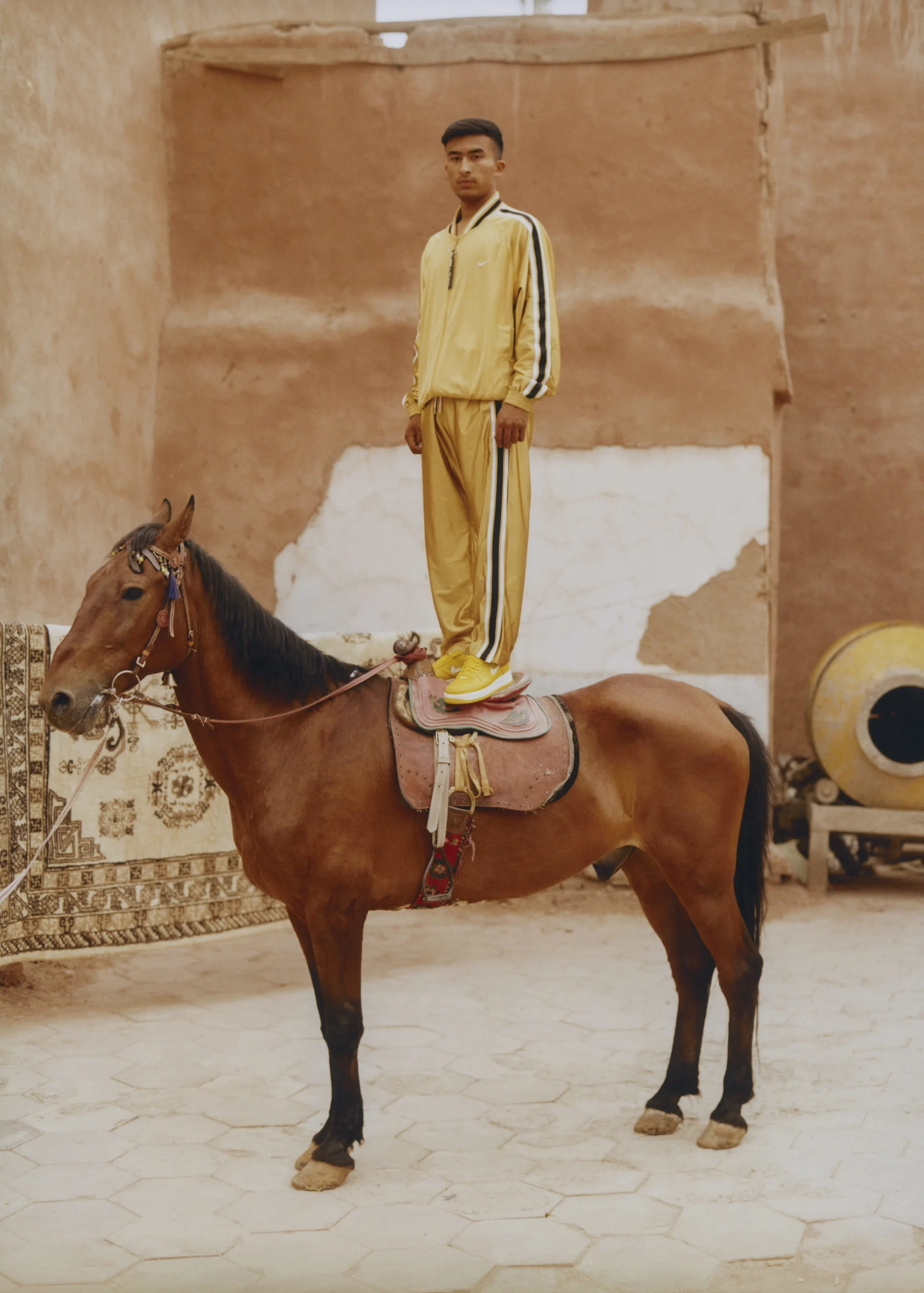
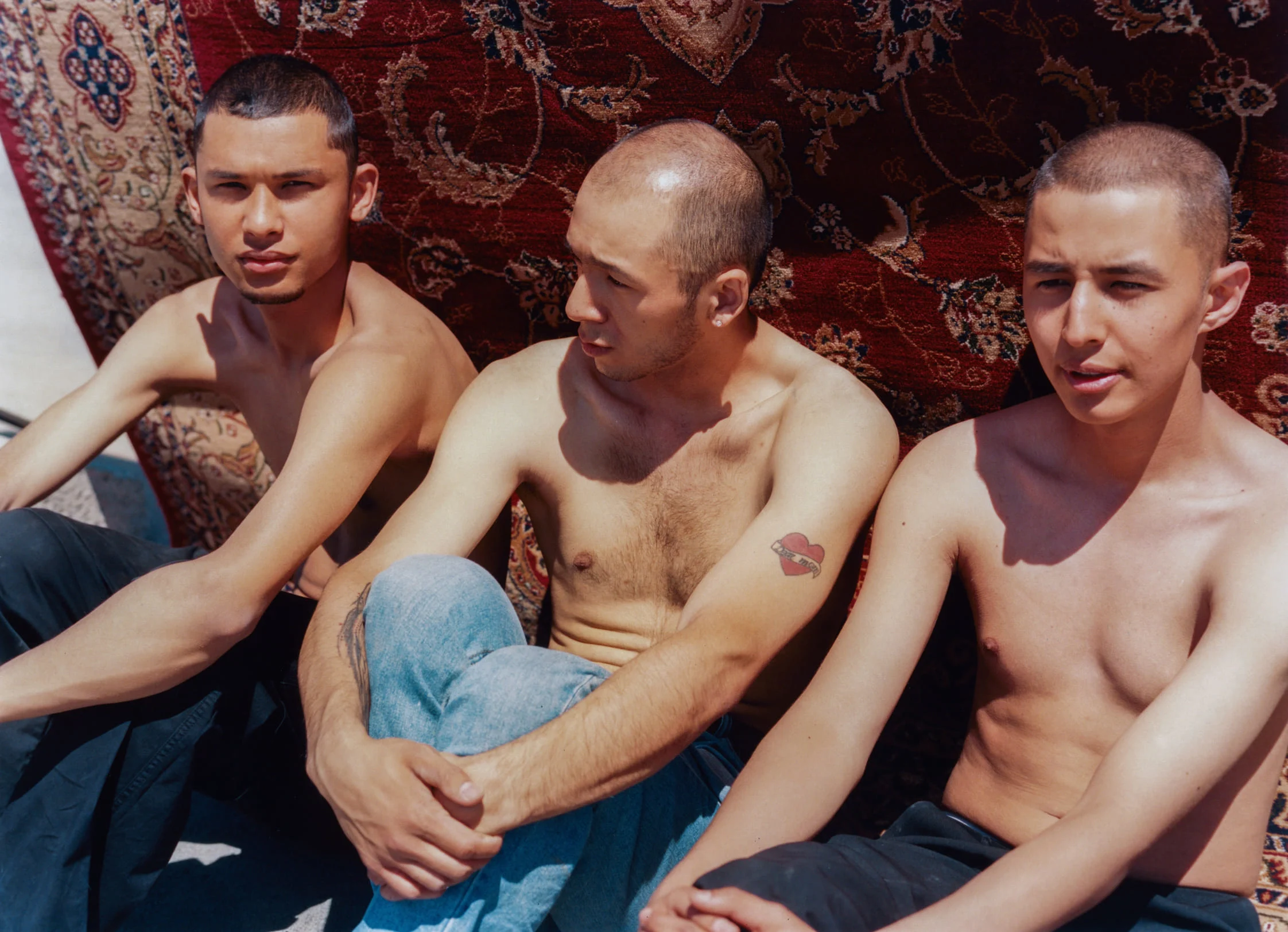
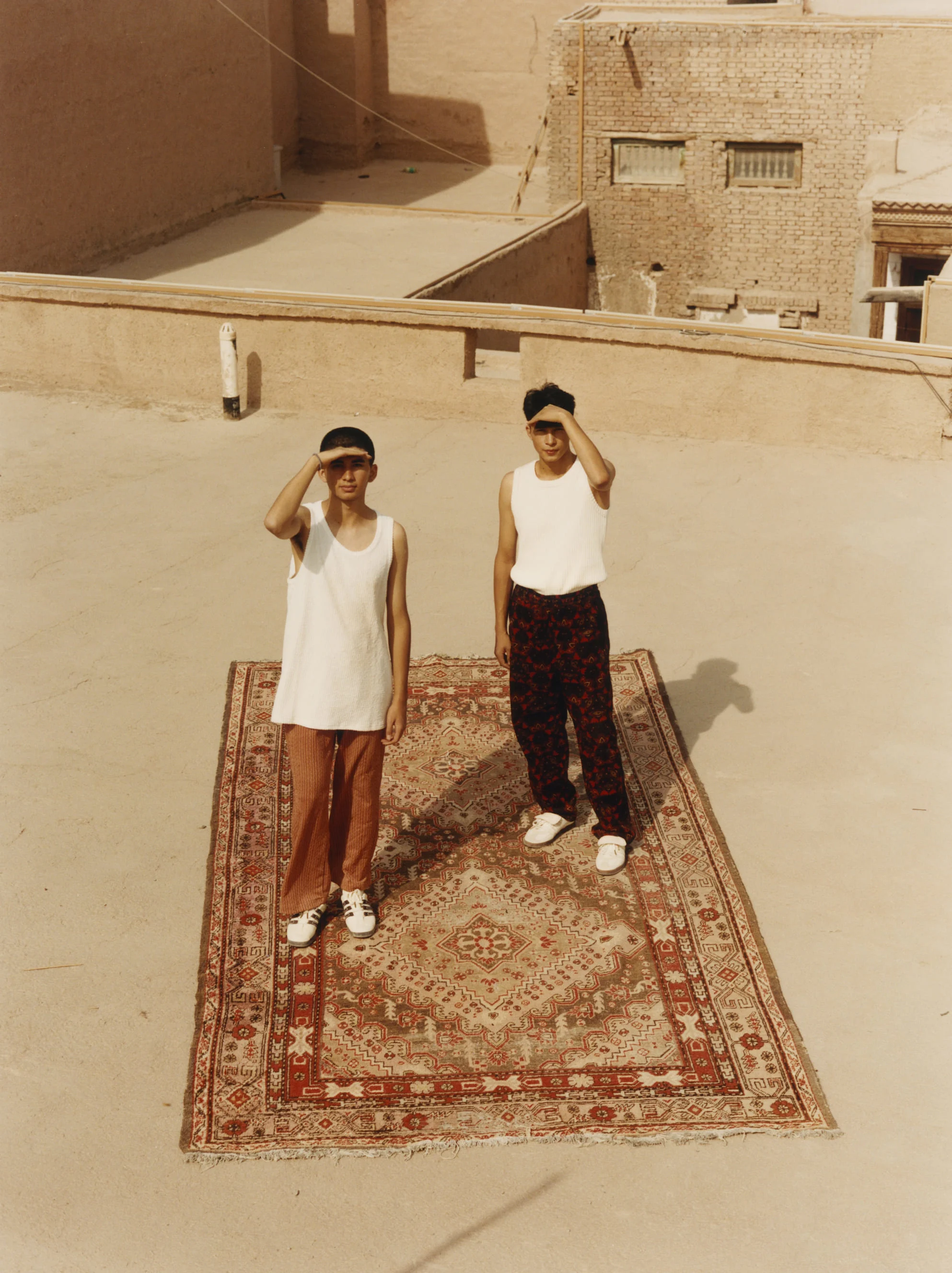
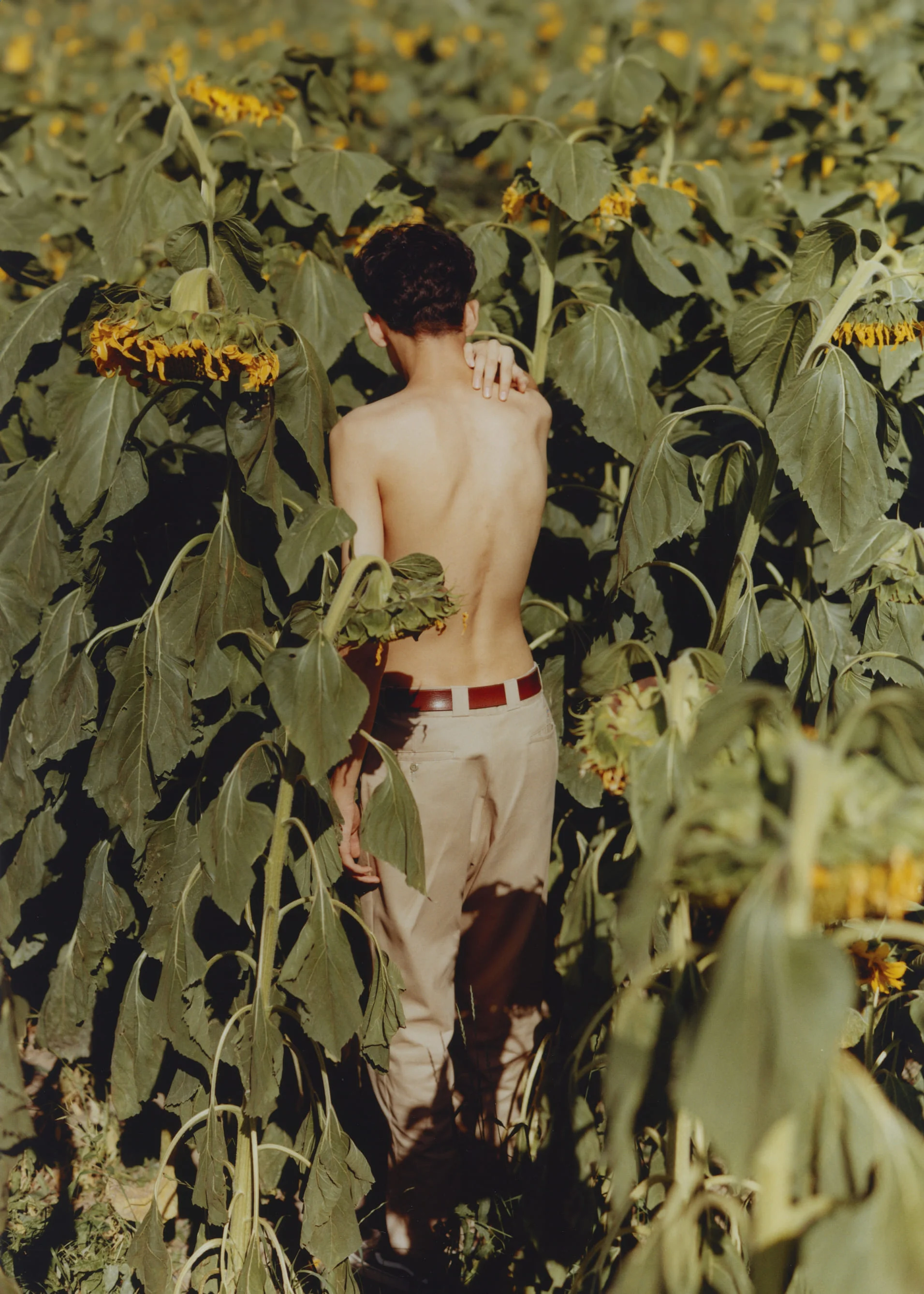
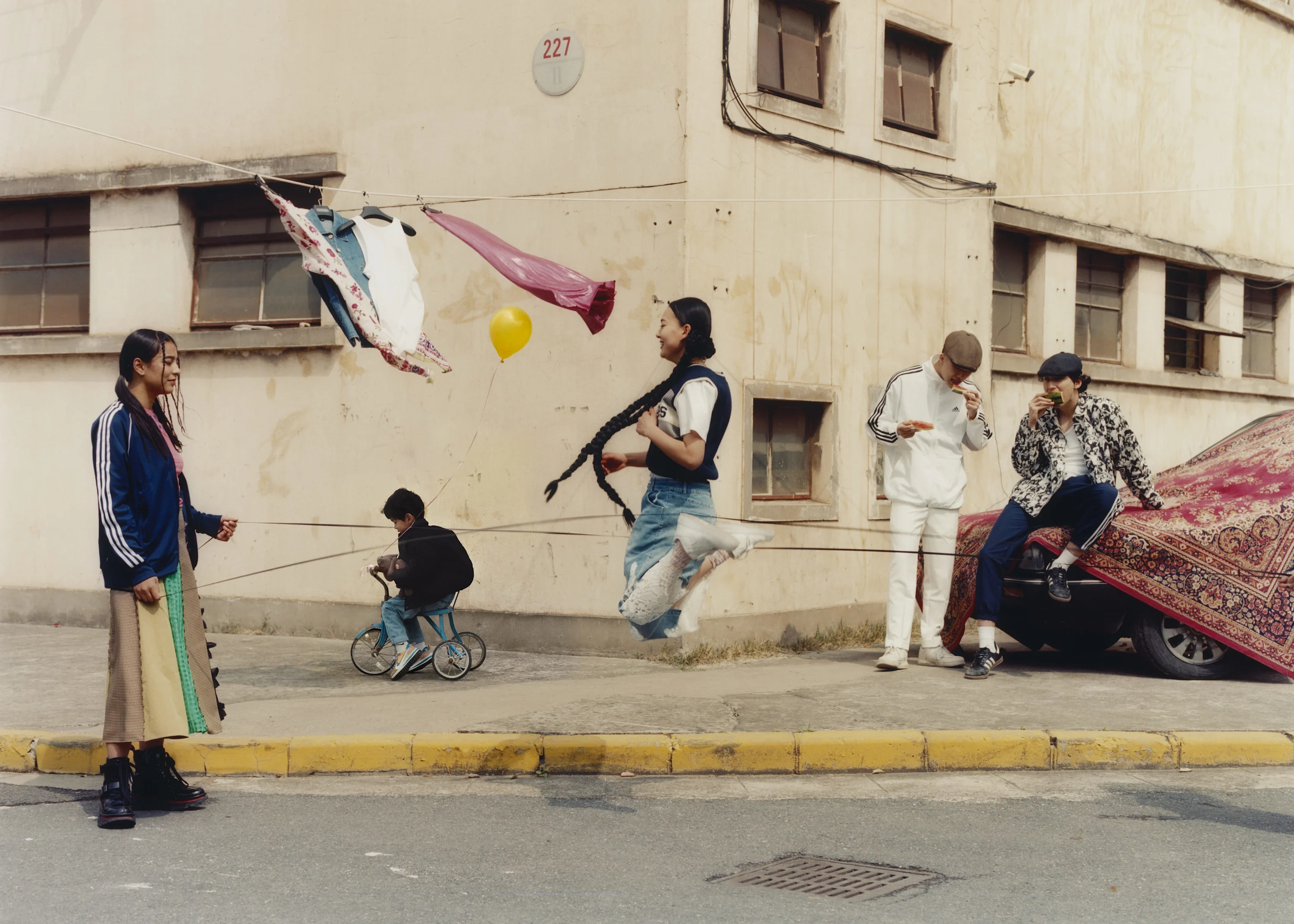
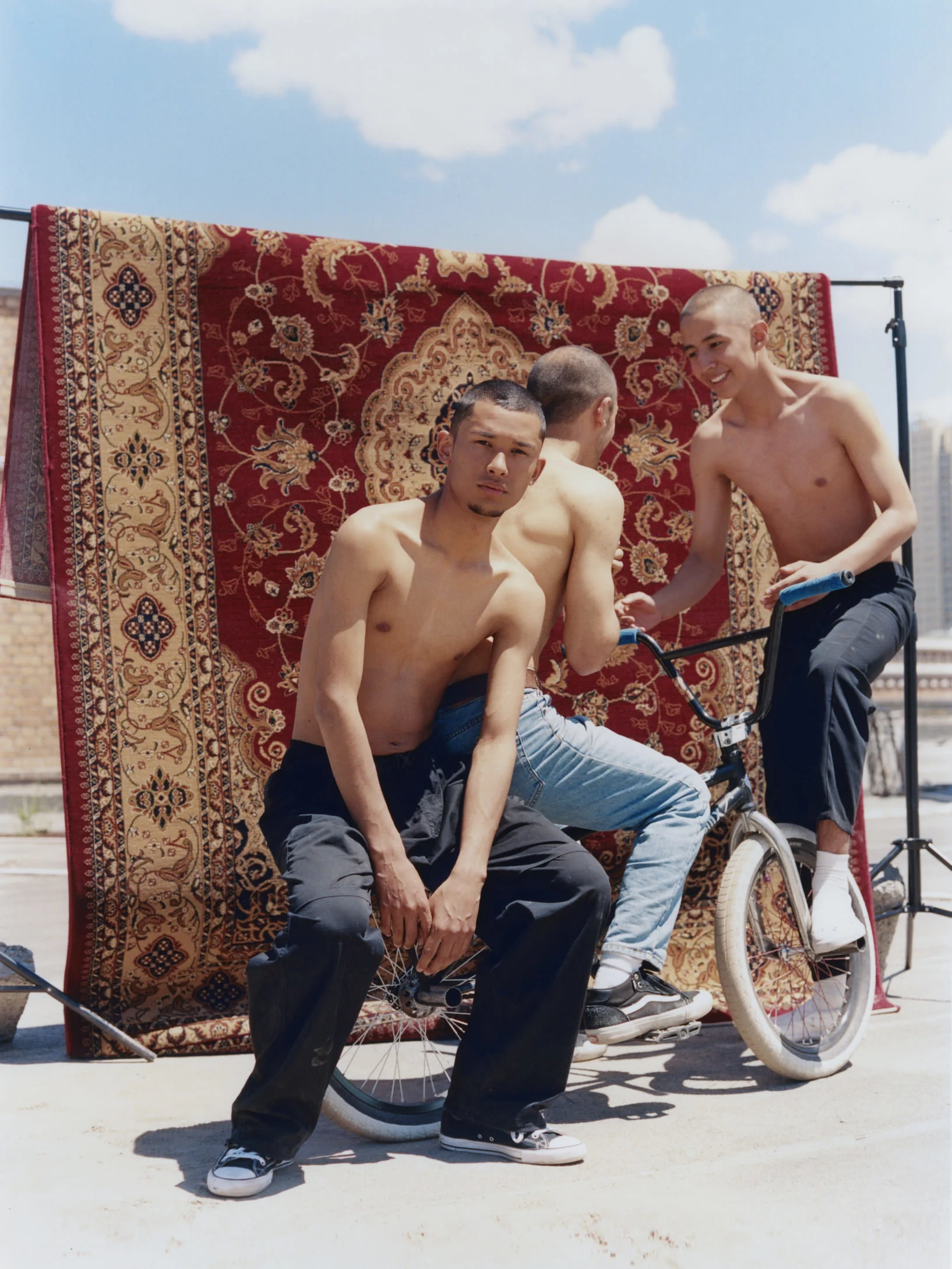
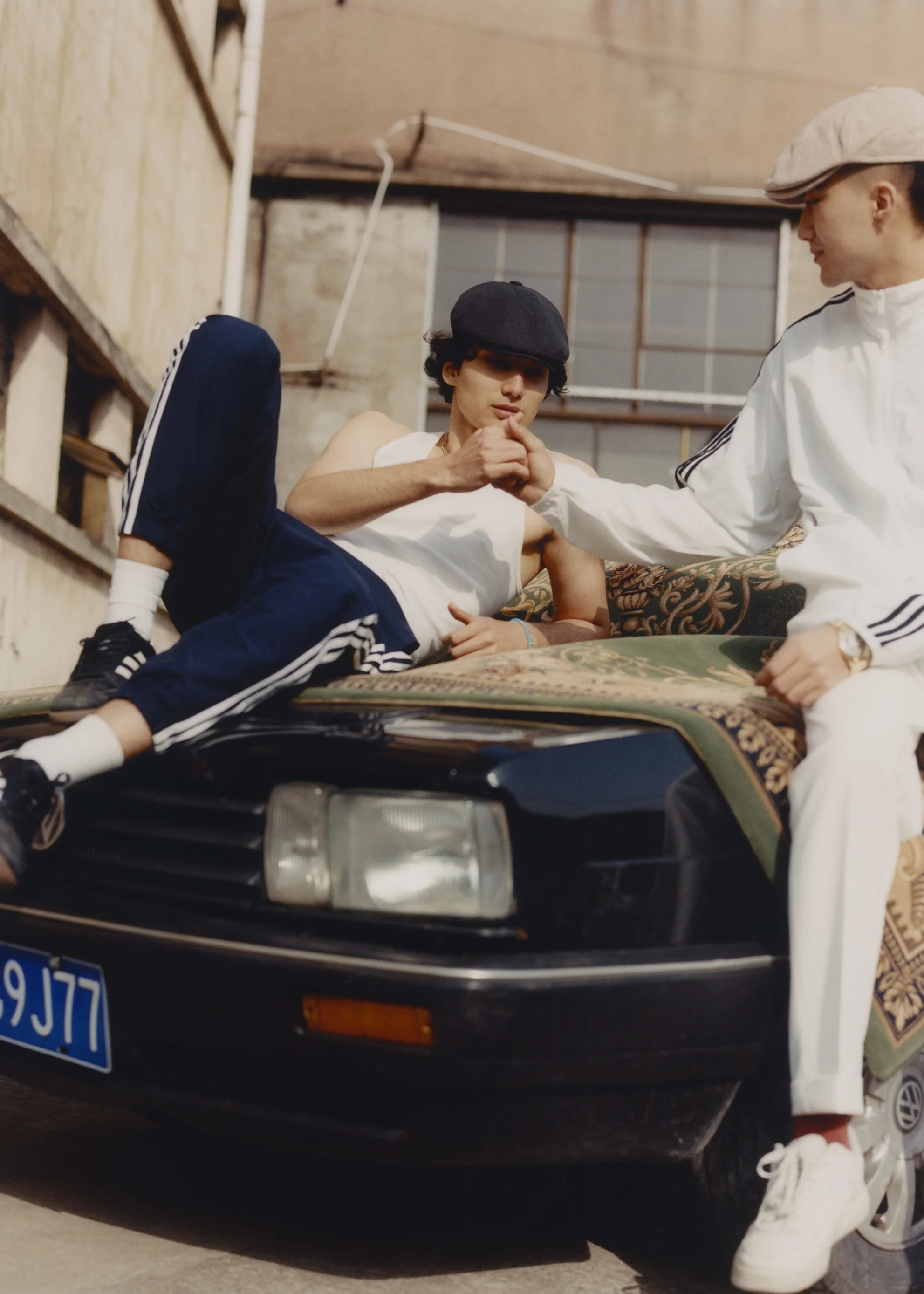
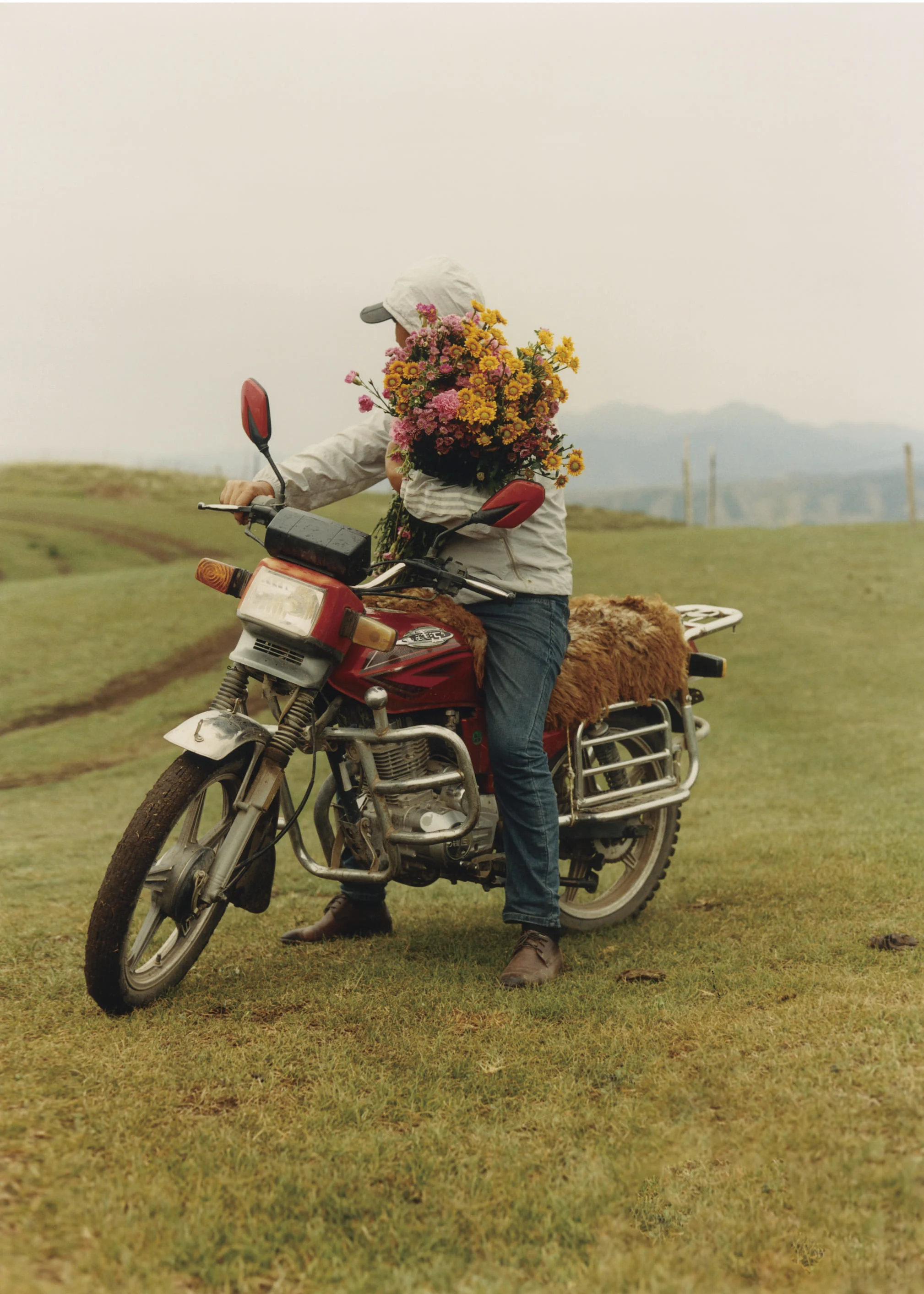
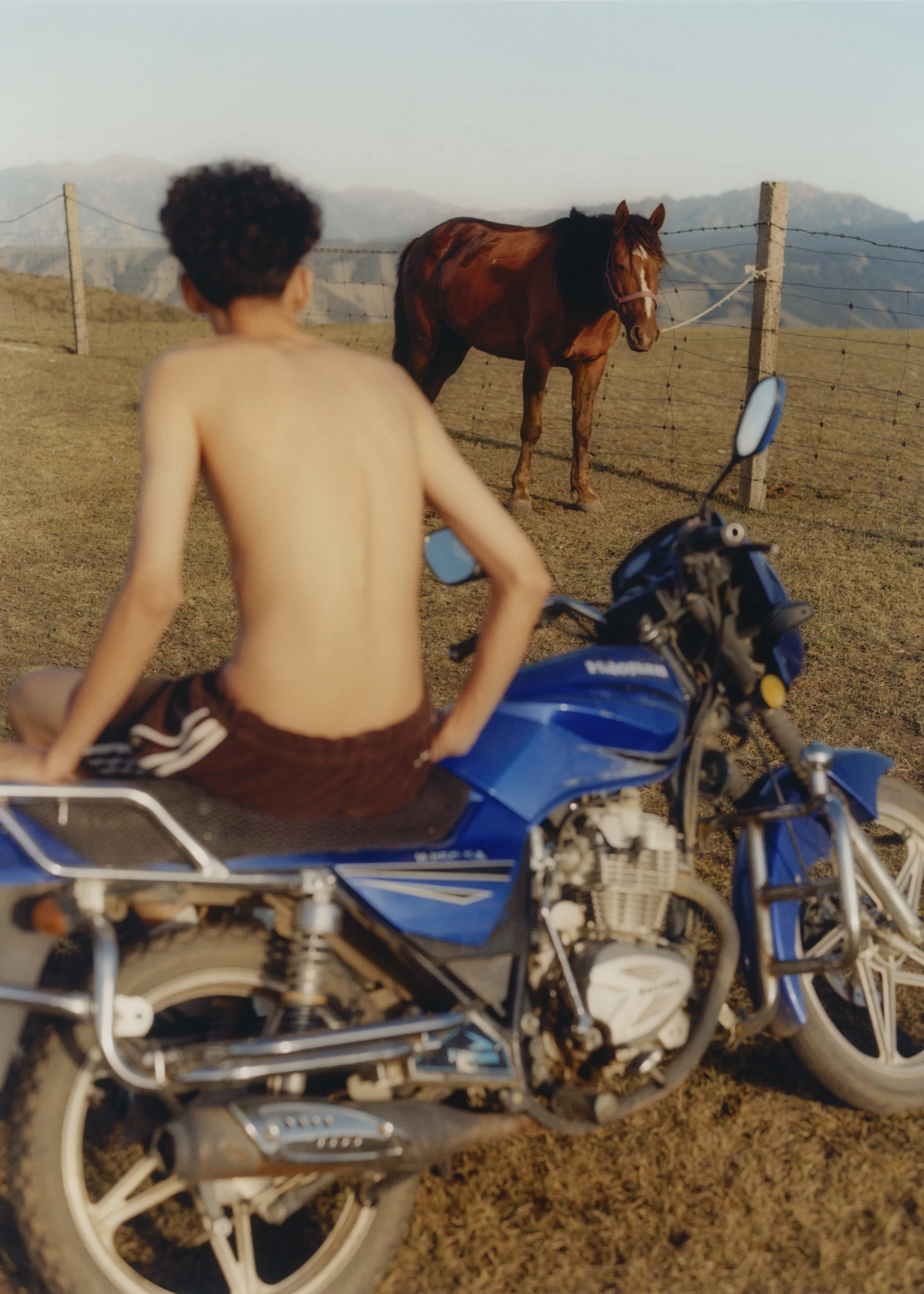
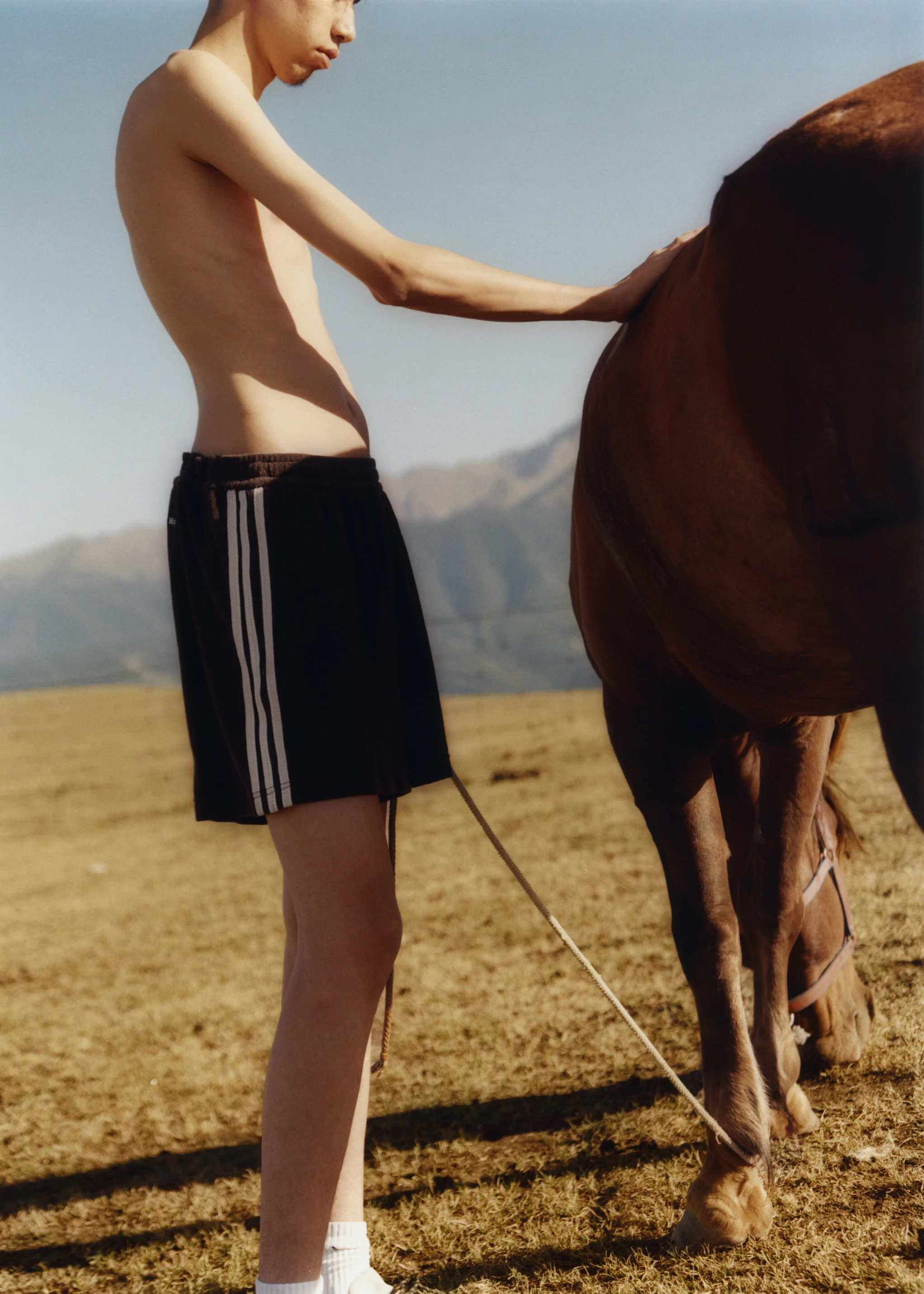
Ma focused on the lived aesthetics of her hometown. Women in Xinjiang, she explains, don’t grow up with brands or trends, but they wear the boldest colors and layers of accessories. “It’s loud. It’s colorful,” she says. “You can hear all the jewelry when someone walks past you.” In her photographs, boys in tracksuits appear alongside motorbikes and horses, foregrounded by rugs and textiles. These iconographic gestures move between old and new, East and West.
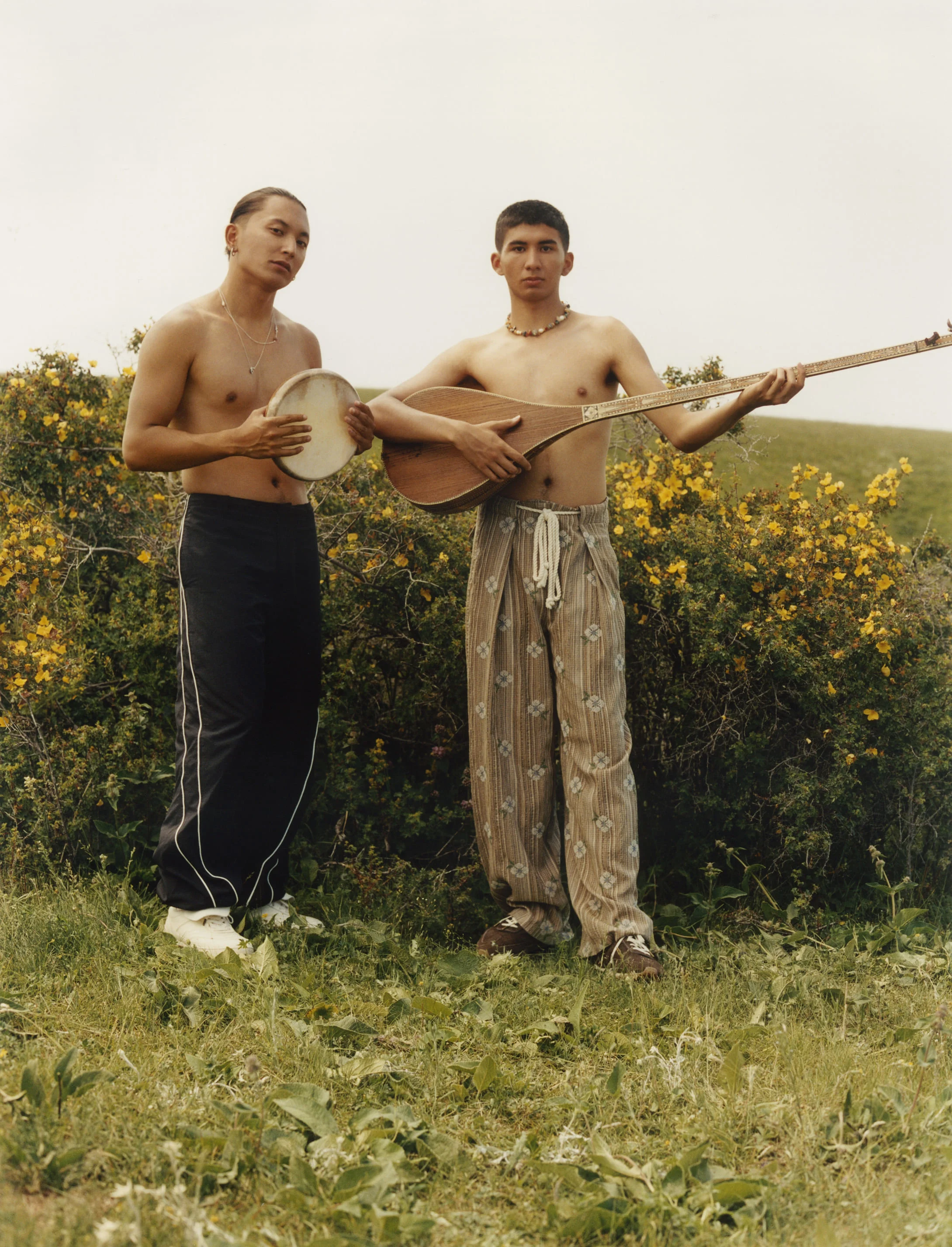
“I wanted to show that Xinjiang is cool,” she says. “Nobody associates Xinjiang with fashion, youth culture, or creativity. I wanted to change that.” One scene, for example, depicts a man on a motorbike amid the natural surroundings reminiscent of Ma’s upbringing, holding a bouquet of flowers—a visually stunning representation of motifs recurrent in the artist’s memories of Xinjiang. Elsewhere, girls skip ropes with sneakers and traditional braids swinging rhythmically in the town’s streets. Few of these photos feel real—Ma is intentionally stylistic in her approach. Young men standing on horses or playing traditional instruments in a field of flowers are not meant to document the mundane everyday, but quite the opposite. Ma intends to imagine possibilities not yet fully realised in her hometown, or at least the ones she never saw.
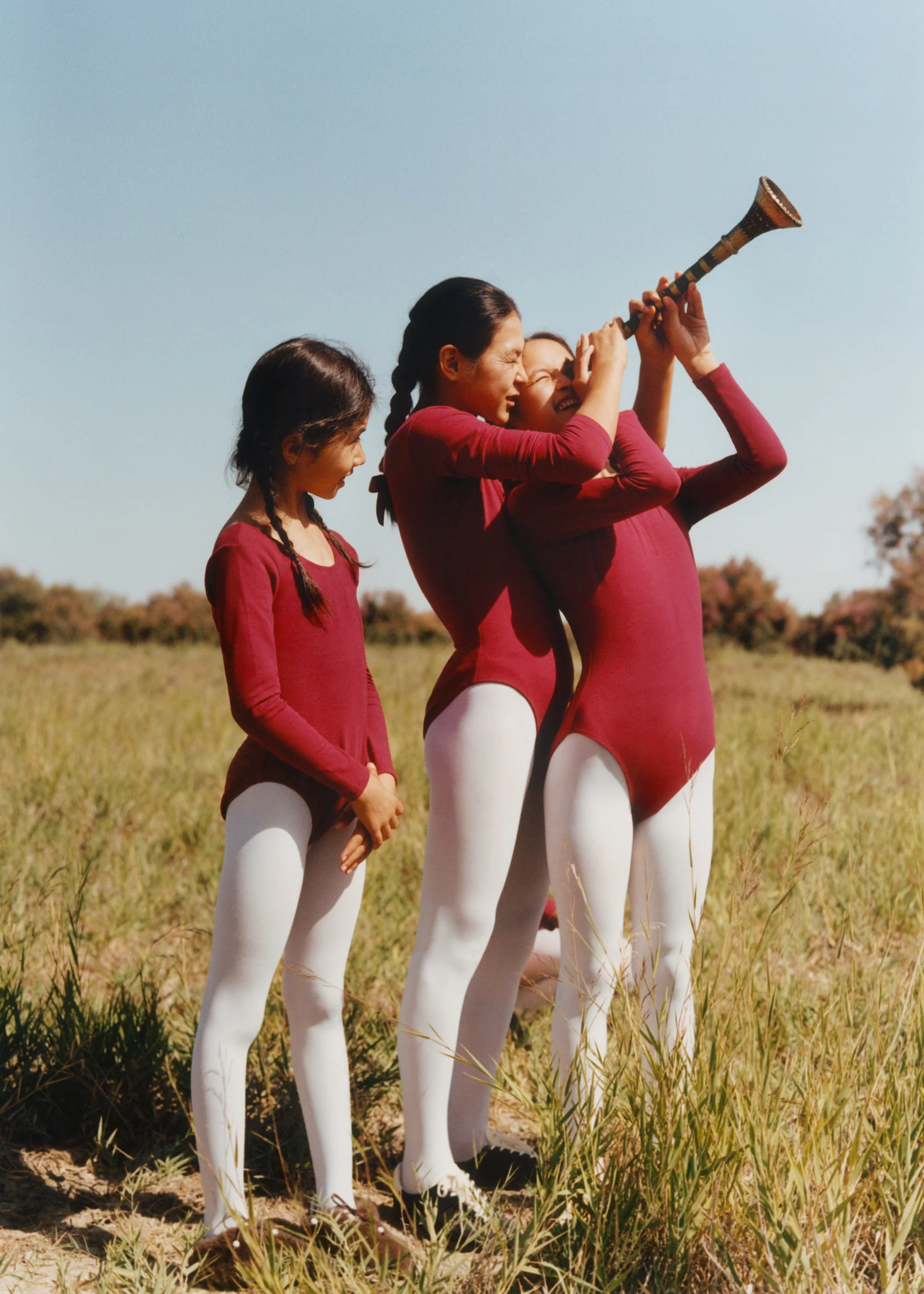
Reality is not enough for me. I want to show my people’s style, their potential.
“Uruklyn” emerged from this desire to reclaim narrative and possibility. “Reality is not enough for me. I want to show people from my hometown’s style, their potential. So I pre-prepare some elements in the photos, but I never exaggerate without purpose.” Ma’s practice is future-oriented: “I feel like I create images not for now, but for the future. Reality is sometimes too painful. Making work like this is how I cope.”
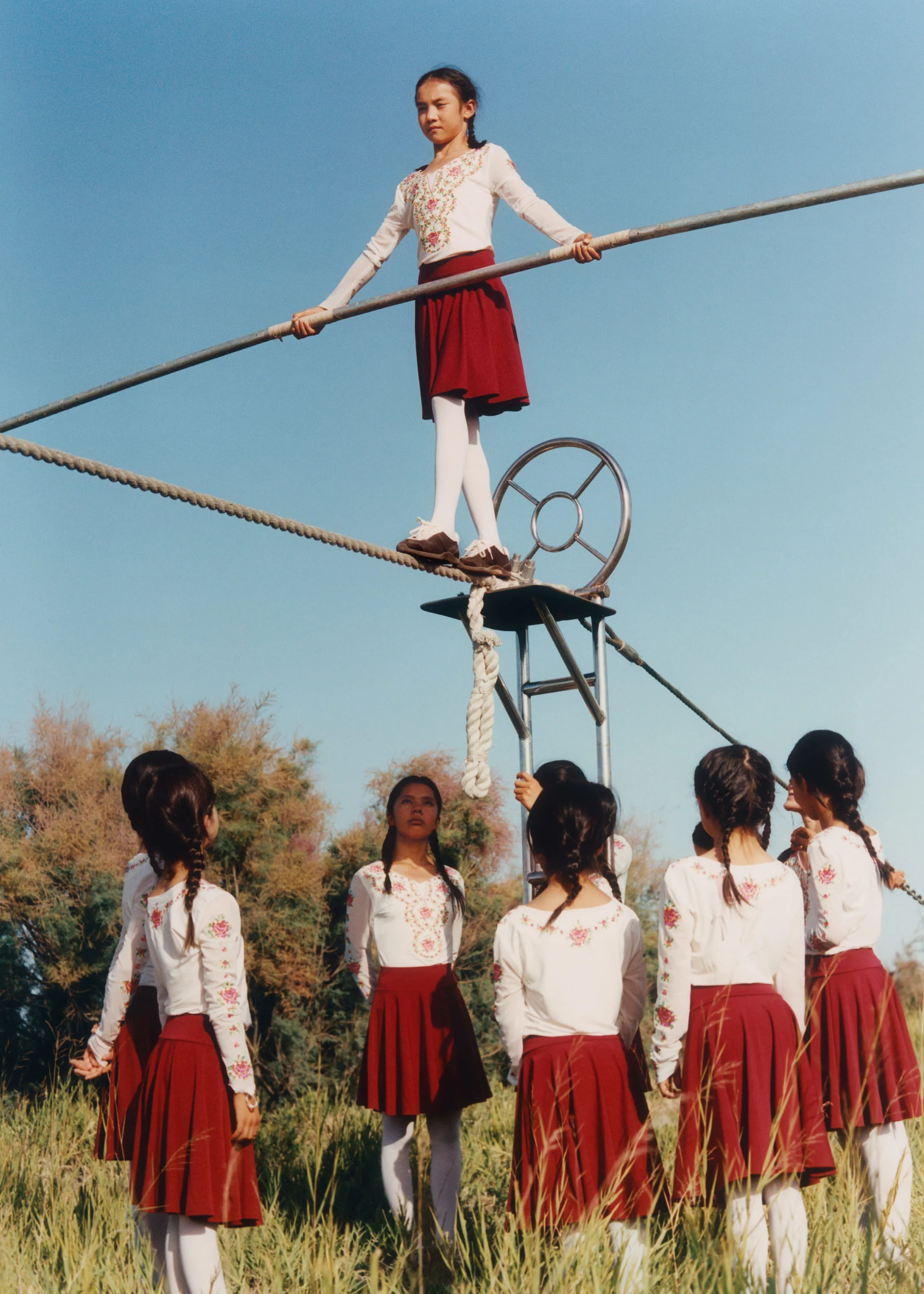
This tension between fear and possibility is echoed in one of the book’s most striking sequences: young girls practicing Dawaz, a 2,000-year-old Uyghur high-wire walking art in Xinjiang. They were between 12 and 16 years old. Ma tried it herself and was shaking. She asked one girl if she was afraid. The girl replied, “If I’m afraid, I’ll never make it work.” “That really stayed with me,” Ma says. “That’s also my relationship with photography. Every time I start a new project, there’s fear. But you have to do it anyway.” She was adamant those images belonged in the book. “I told my editor I needed those images in the book. I want to send the book to the girls. I want them to know they made an impact.”
The book’s cover and design further reinforce its themes of hybridity. It features Chinese, English, and Uyghur—written using Arabic script—a considered choice reflecting the region's
linguistic and cultural context in Xinjiang.) The color palette draws from the region’s landscape and traditional textiles like atlas fabric. “Xinjiang is on the Silk Road. The colors come from the landscape and traditional textiles like atlas fabric.”
Through “Uruklyn,” Ma constructs a space where identities overlap rather than compete, where fashion becomes future-building rather than a status symbol, and where youth culture resists flattening stereotypes. Ma asserts that hybridity is not confusion, but clarity and possibility, and that the margins hold their own centers.