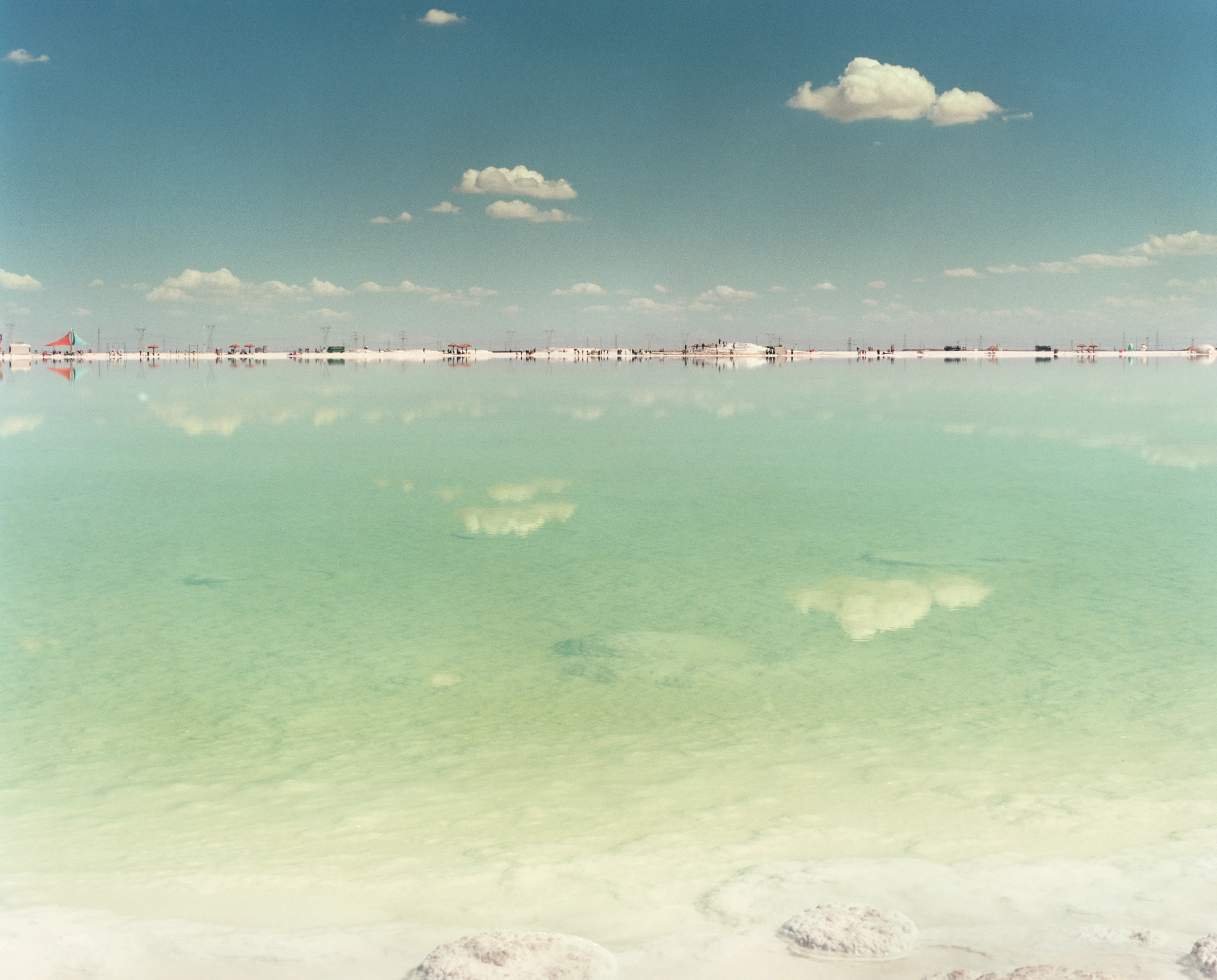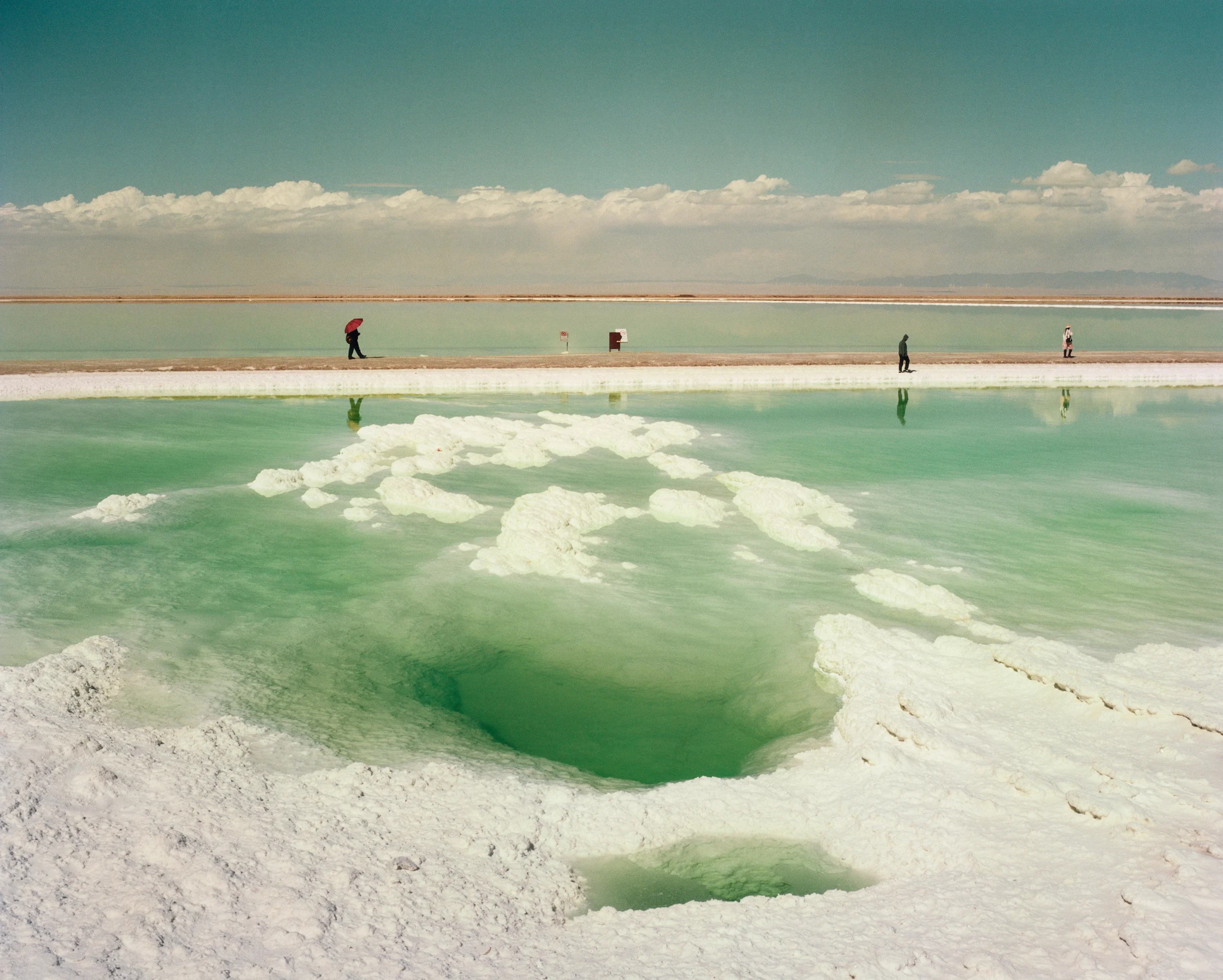

Under the striking, glass-like surface of China’s Qarhan Lake lies one of the world’s largest brine lithium deposits. While surrounding factories extract lithium for use in electric cars and smartphones, tourists flock to snap selfies by its emerald-green waters as China promotes its renewable energy surge. Photographer Catherine Hyland visited the lake to capture the surreal scenes taking place there, and here Hyland and writer Marigold Warner discuss how this supposedly greener energy alternative can still be harmful to the surrounding ecosystem, and explore the surreality of turning an extraction site into a tourist attraction.
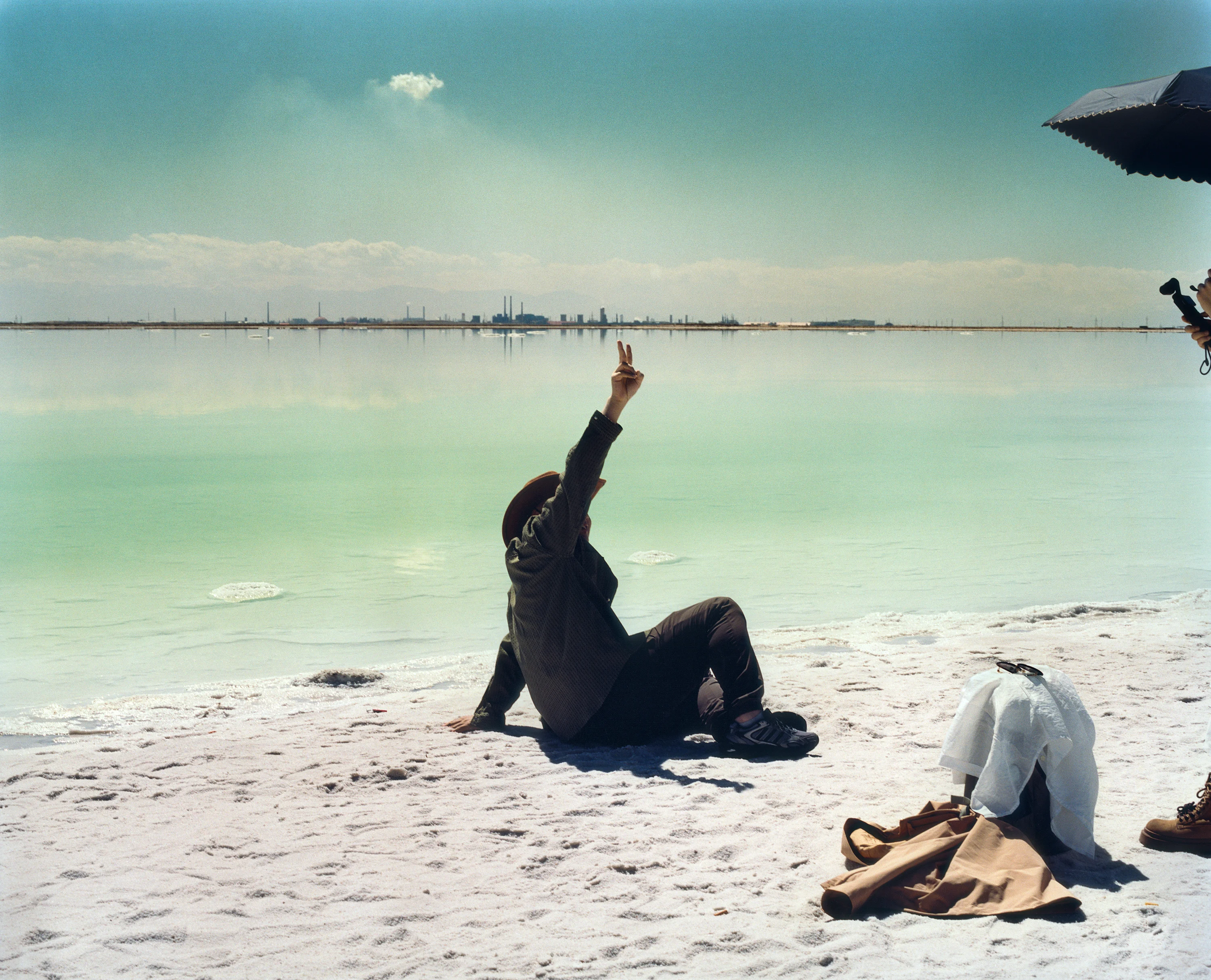
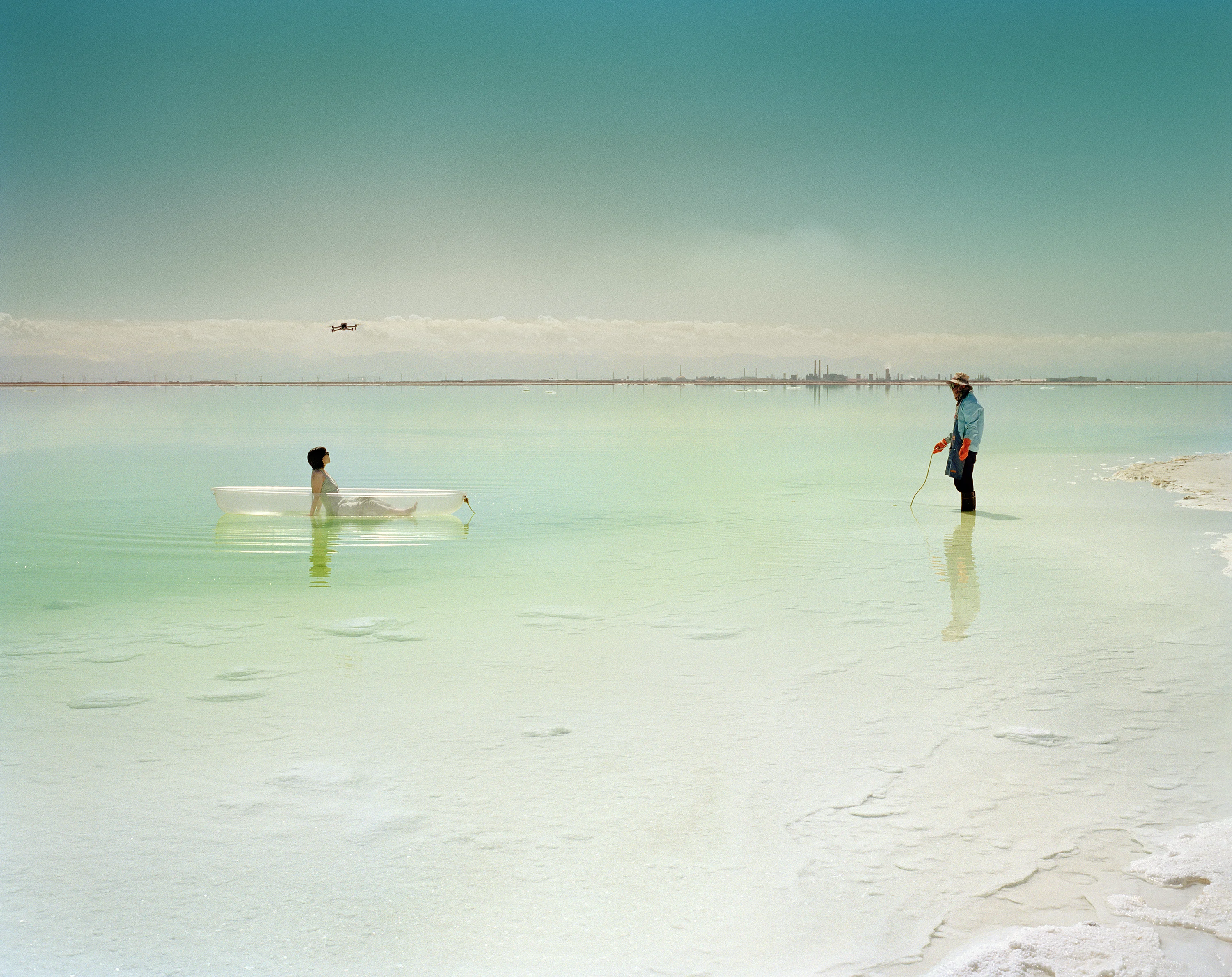
When Catherine Hyland pulled up at the salt-crusted shores of the Qarhan Lake, the first sight to catch her eye was a young woman floating on a glass canoe, posing for a professional photographer. Captivated, Hyland prepared to set up her own shot, yet she felt a tinge of concern for the woman’s safety. For this is no ordinary lake. Beneath its surface lies mineral-rich brine, and in the distance are silhouettes of factories extracting it to make potash for fertilizer and lithium for rechargeable batteries.
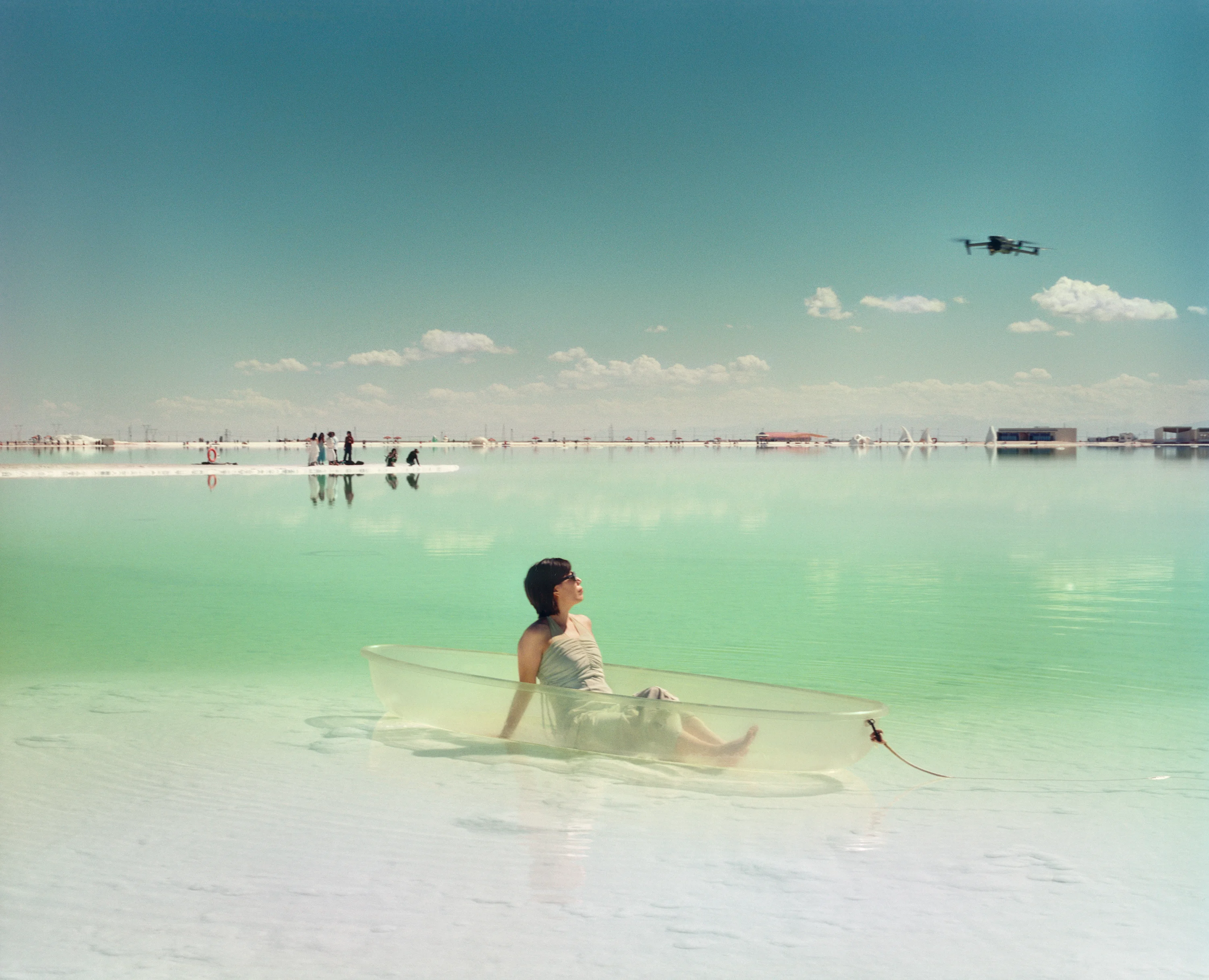
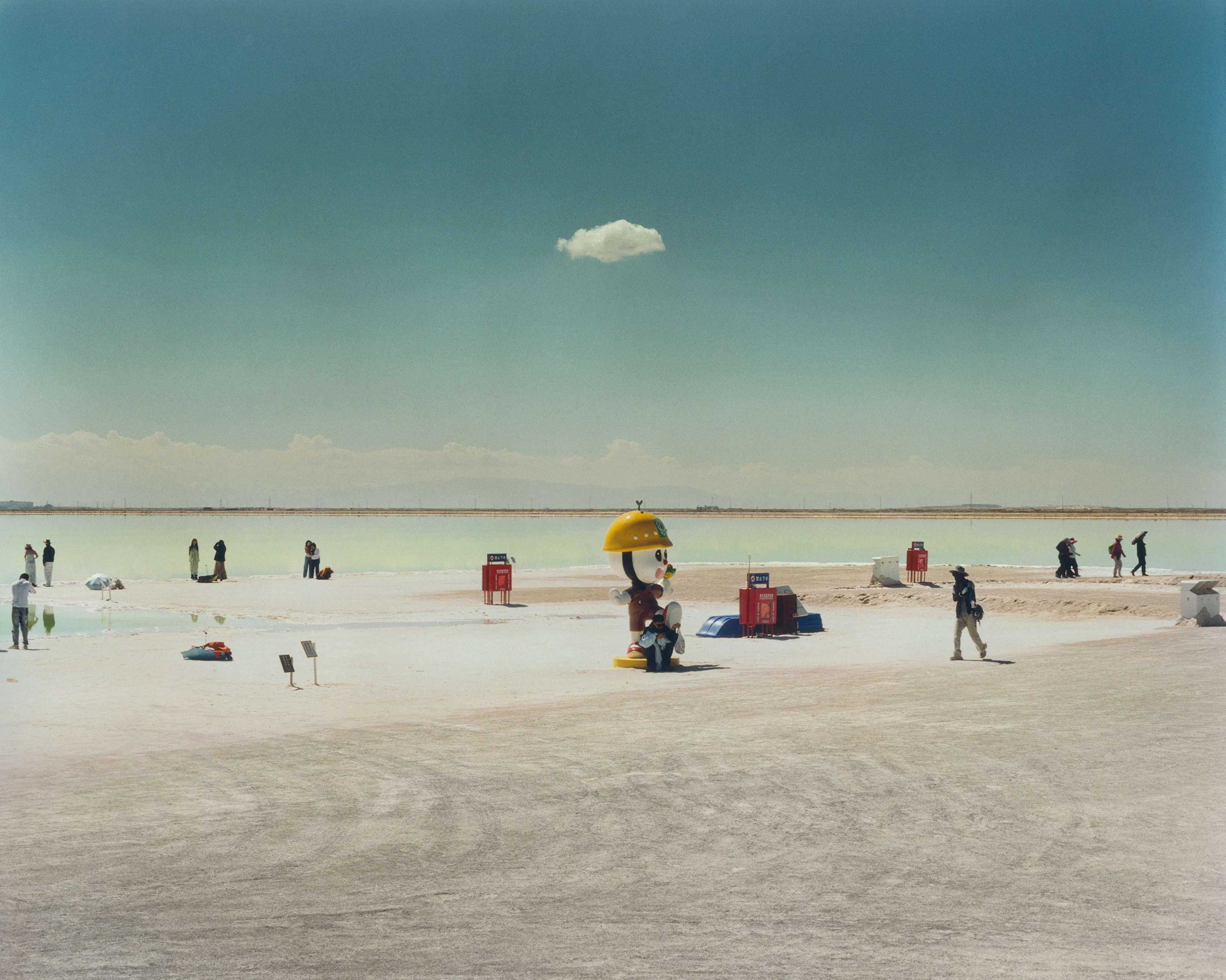
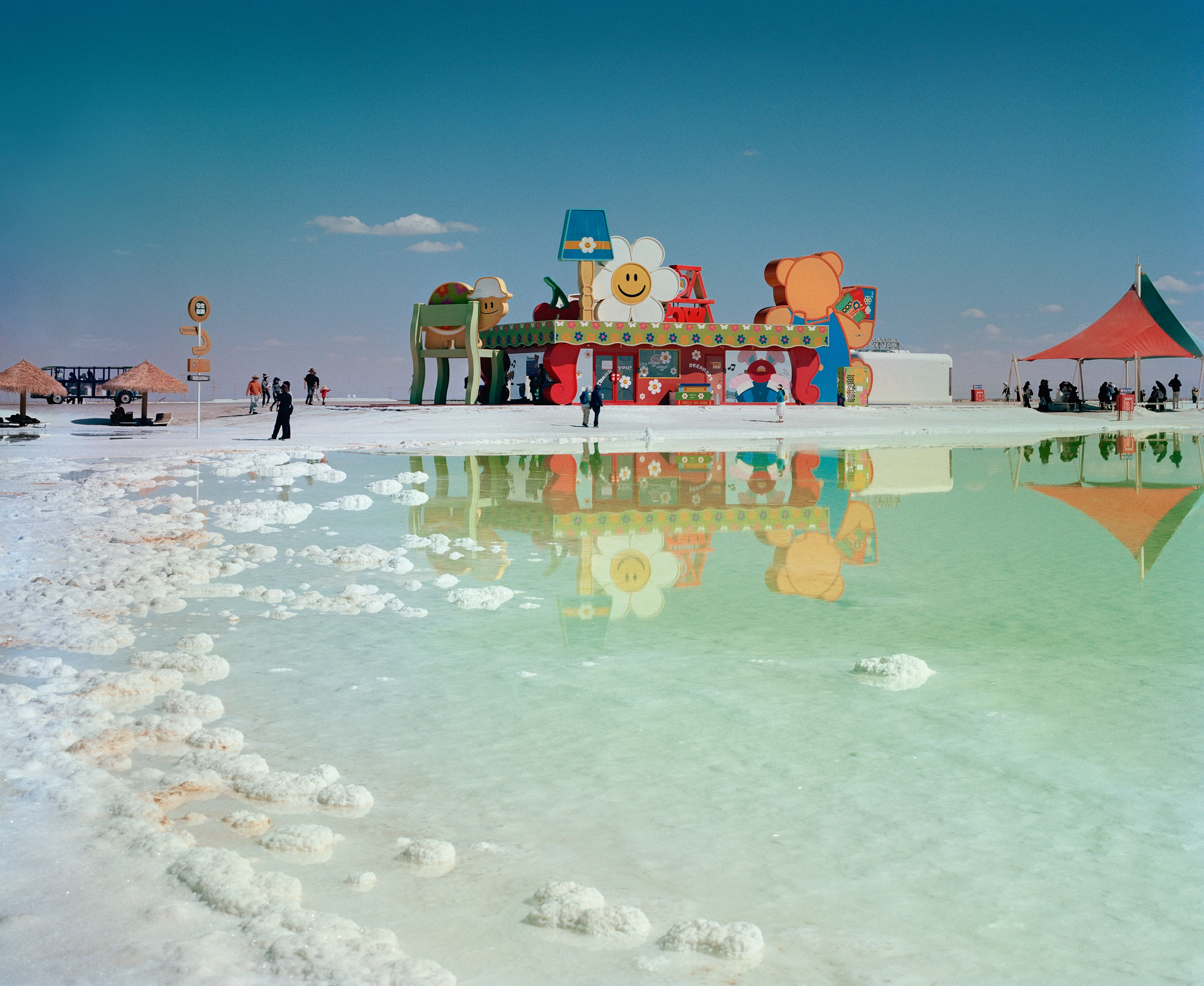
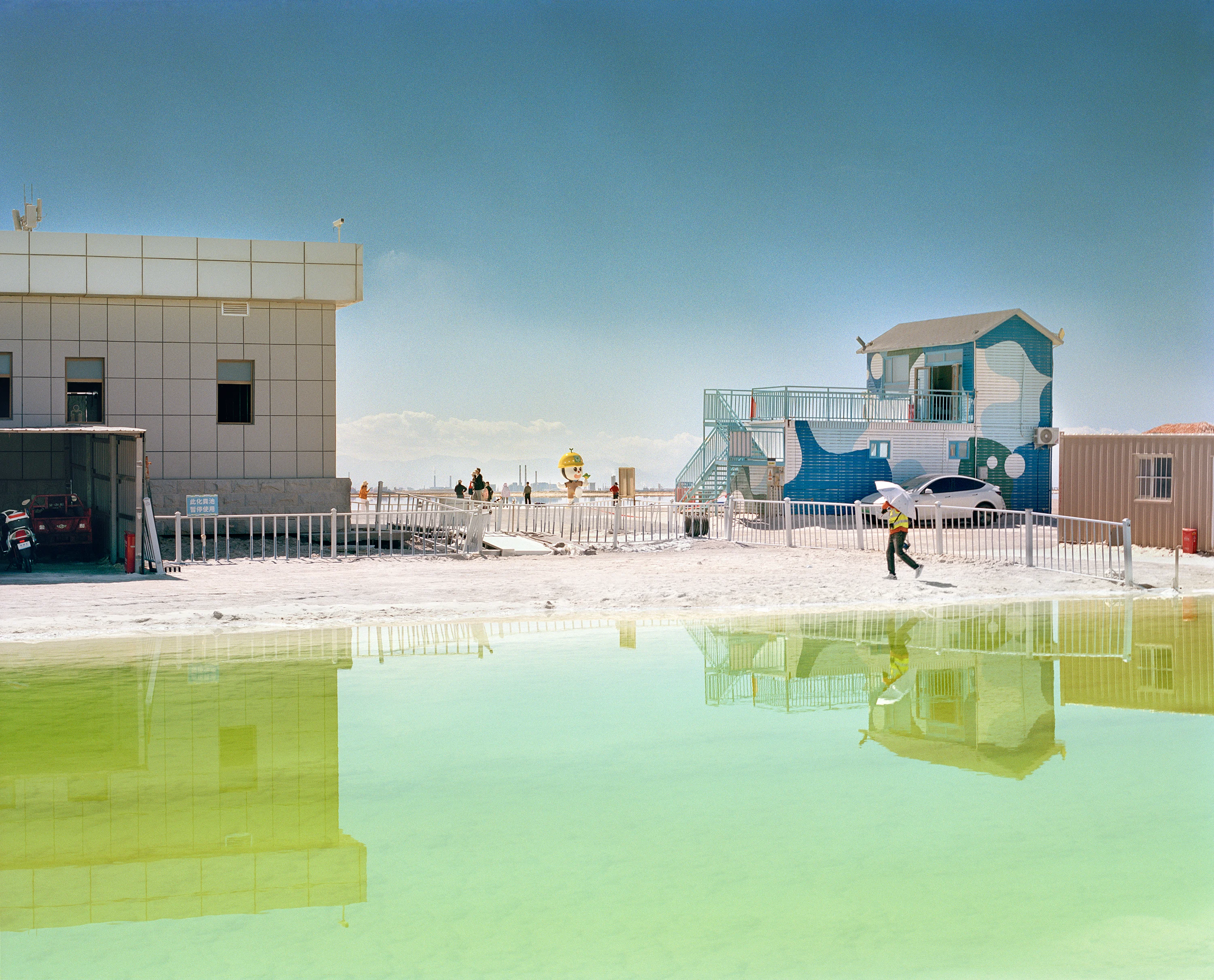
According to Hyland, the site is more concerned about people contaminating the brine, rather than the other way around. So on she went to explore the rest of the lakeside, where a growing number of tourist attractions are springing up on its brittle banks. Beneath the buzz of drones catching aerial footage are shops selling green-apple drinks (inspired by the lake’s emerald-green hues) along with deck chairs, lakeside swings and a giant ferris wheel.
Tourism is booming. Figures have almost tripled since 2023—from 500,000 to over 1.4 million in 2025—due to the Chinese state actively promoting its green energy initiatives. China is the undisputed world leader in renewables, with green energy making up about 60 percent of its total power capacity at the end of February 2026. The same figure for the United States is around 30 percent.
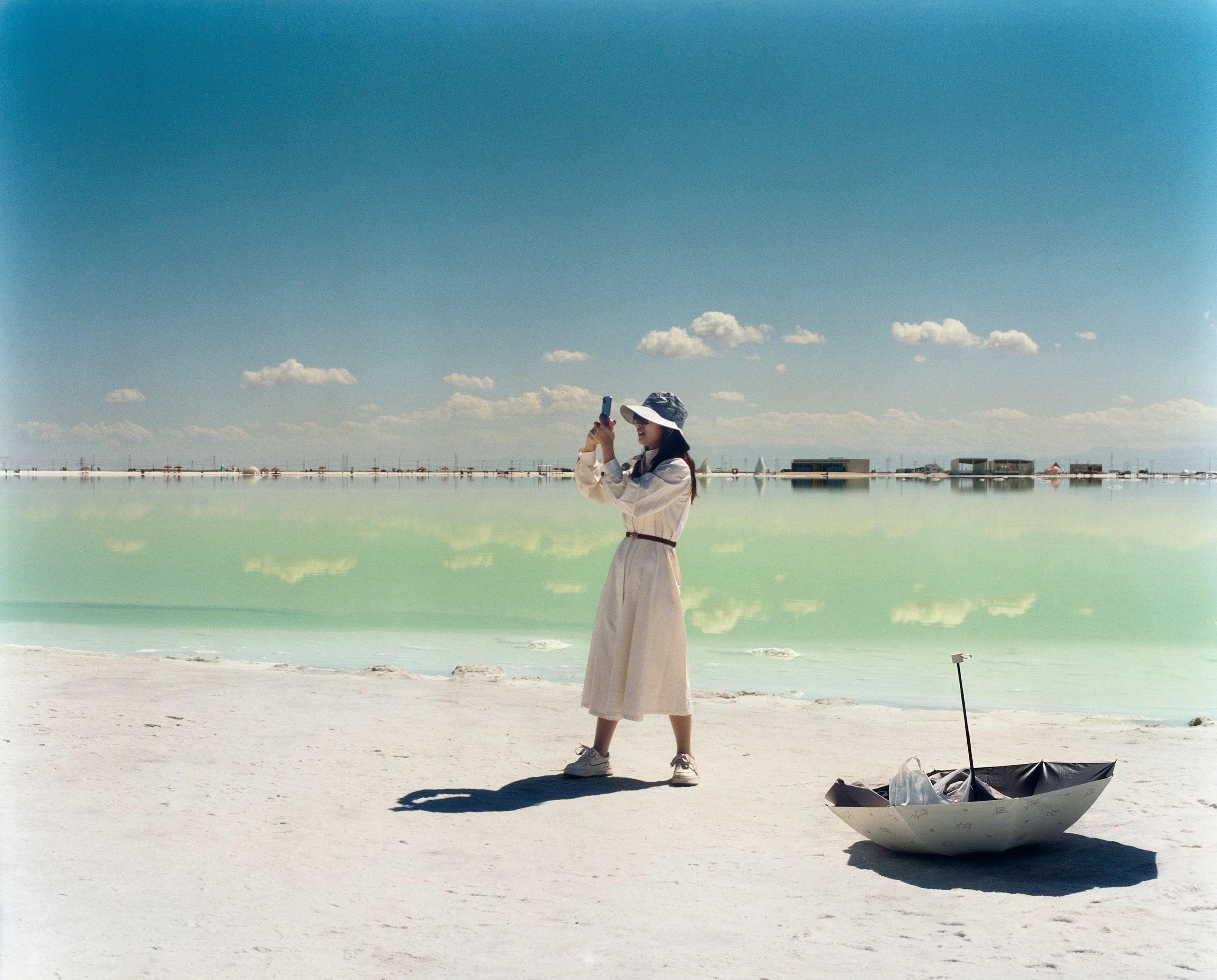
You’re going there to see the site, but actually, I’d say the bigger pull for the tourists is the photograph that you get to take home.
“The more I read about this location, the more I realized it’s got everything that I’m drawn to,” says the London-based landscape artist, who is primarily interested in humanity’s attempts to tame the environment. Hyland’s pursuit of this industrial sublime has taken her all over the world. From the Scottish Highlands to Italy, North Africa and, most prominently, China.
She first visited Beijing 22 years ago, as a 19-year-old student at Chelsea College of Fine Art. Since then, she has returned every other year to explore more of its diverse landscapes, photographing sprawling megacities, fertile farmlands and deserts full of solar panels–all against the context of a country transforming into a global superpower at remarkable speed.
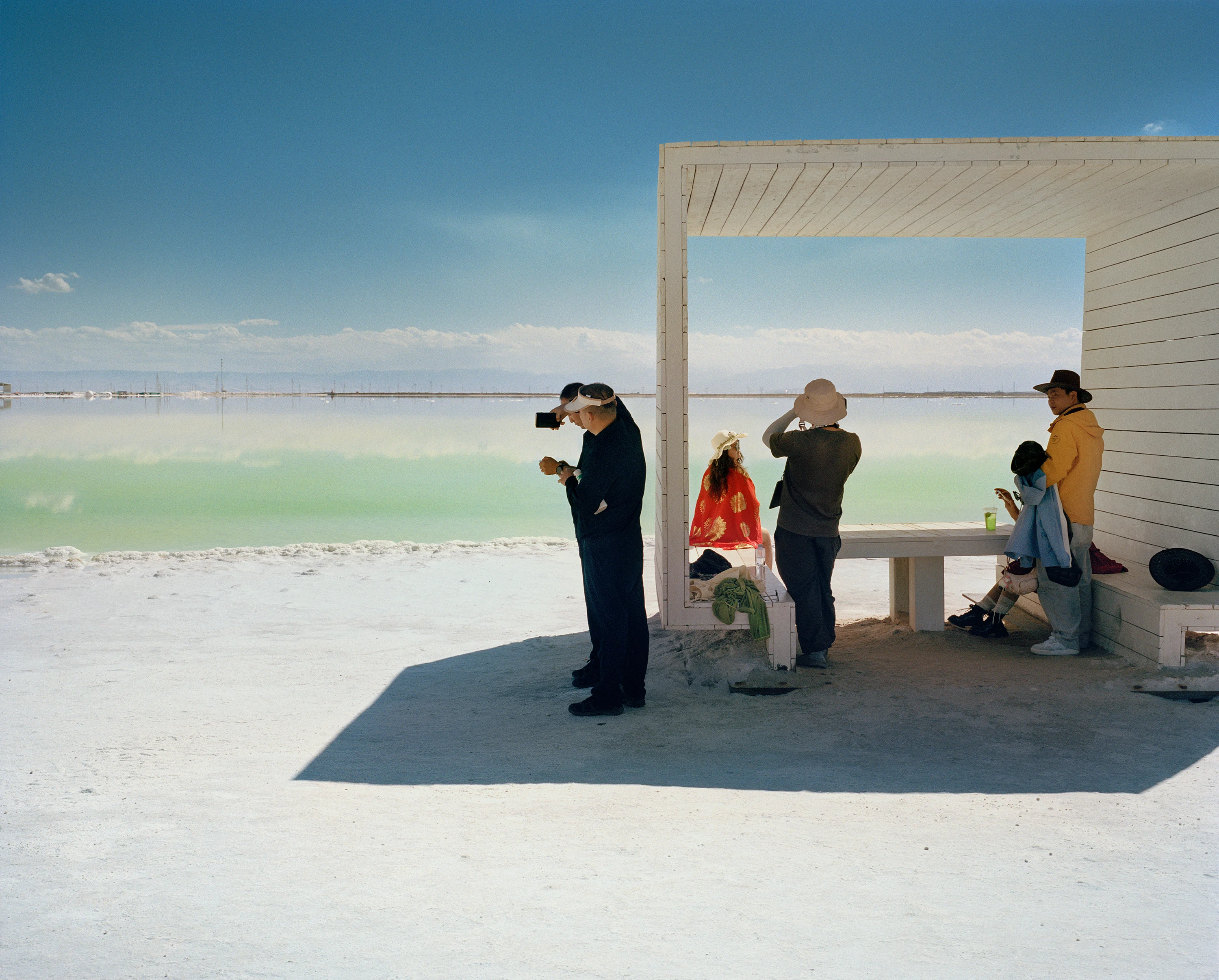
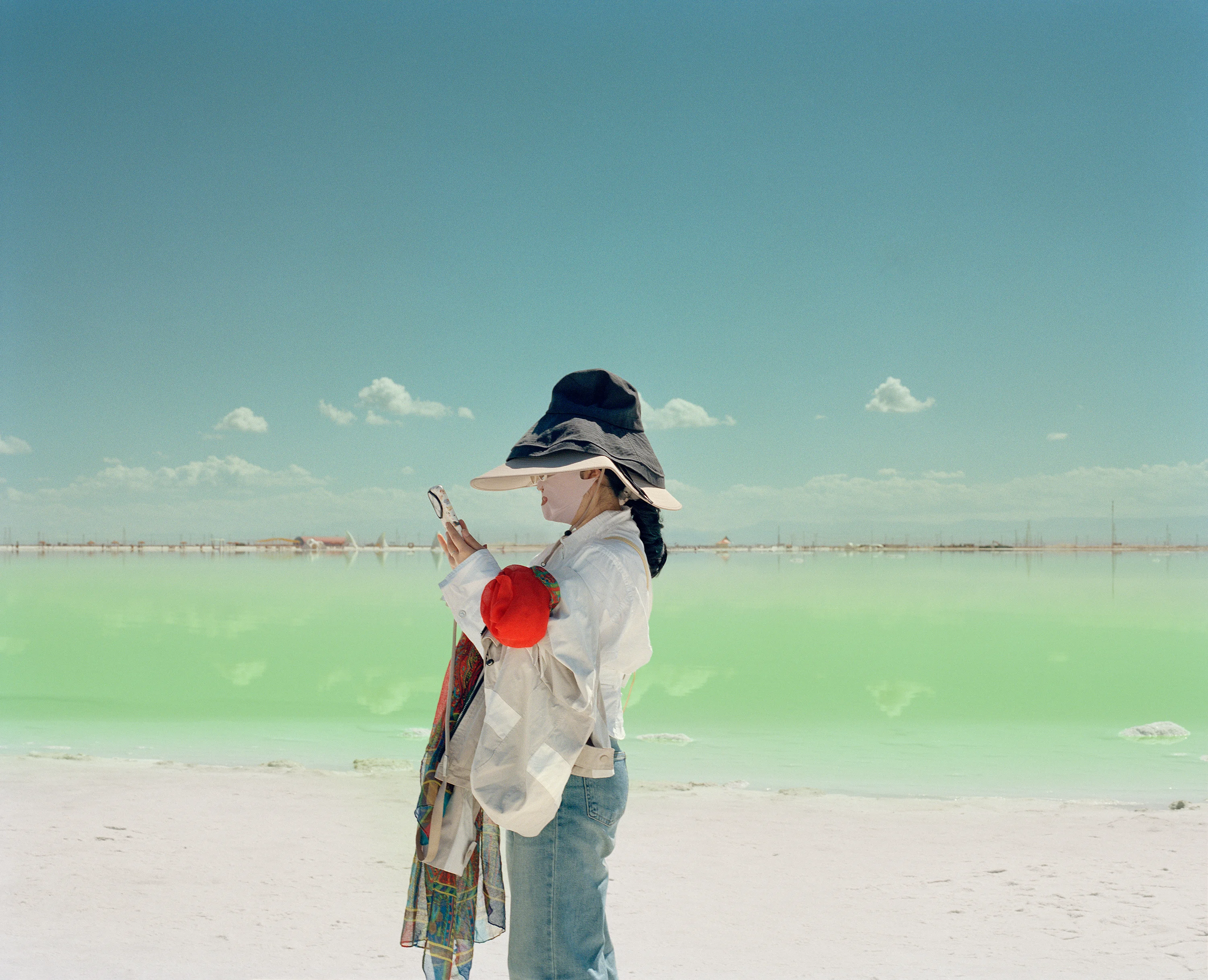
Today’s China is dramatically different from the place Hyland first visited. “This year is the first time I’ve been served by a robot,” she says. But her focus on tension within the landscape is much the same. Hyland’s first project in China was “Wonderland” (2011). It surveyed the farmland surrounding an abandoned theme park, just outside Beijing. “That was probably my first visual picture of these opposing themes going on,” she says. “That push and pull between capitalism and a more tranquil way of living.” At Qarhan Lake, Hyland was interested in how resource extraction, tourism and renewable energy share a single landscape. Crucially, it’s the friction that arises that interests her—the kind of questions that have no simple answers: Is it ethical to turn extraction sites into tourist attractions? Is lithium ultimately a green story? If not, who is paying the cost?
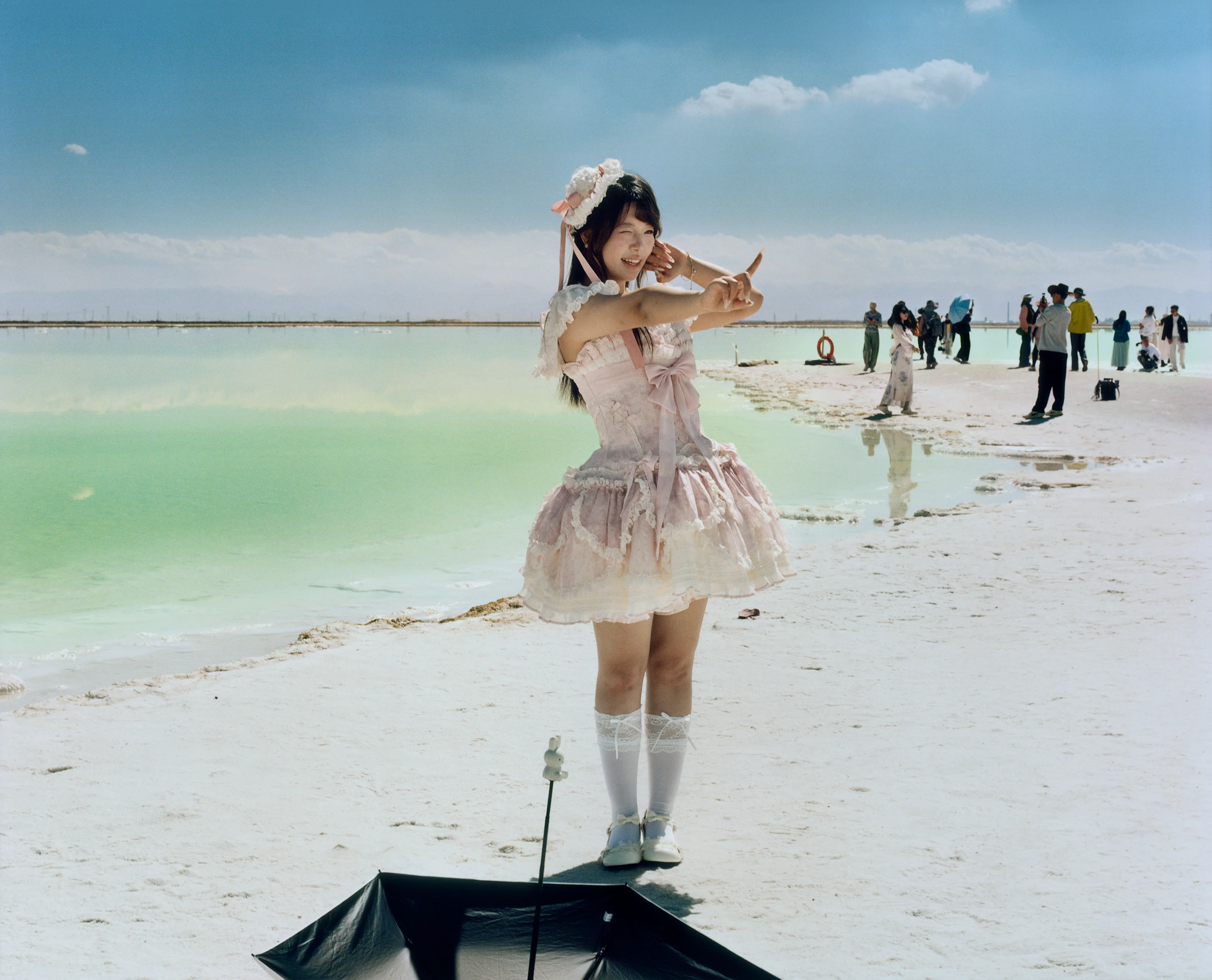
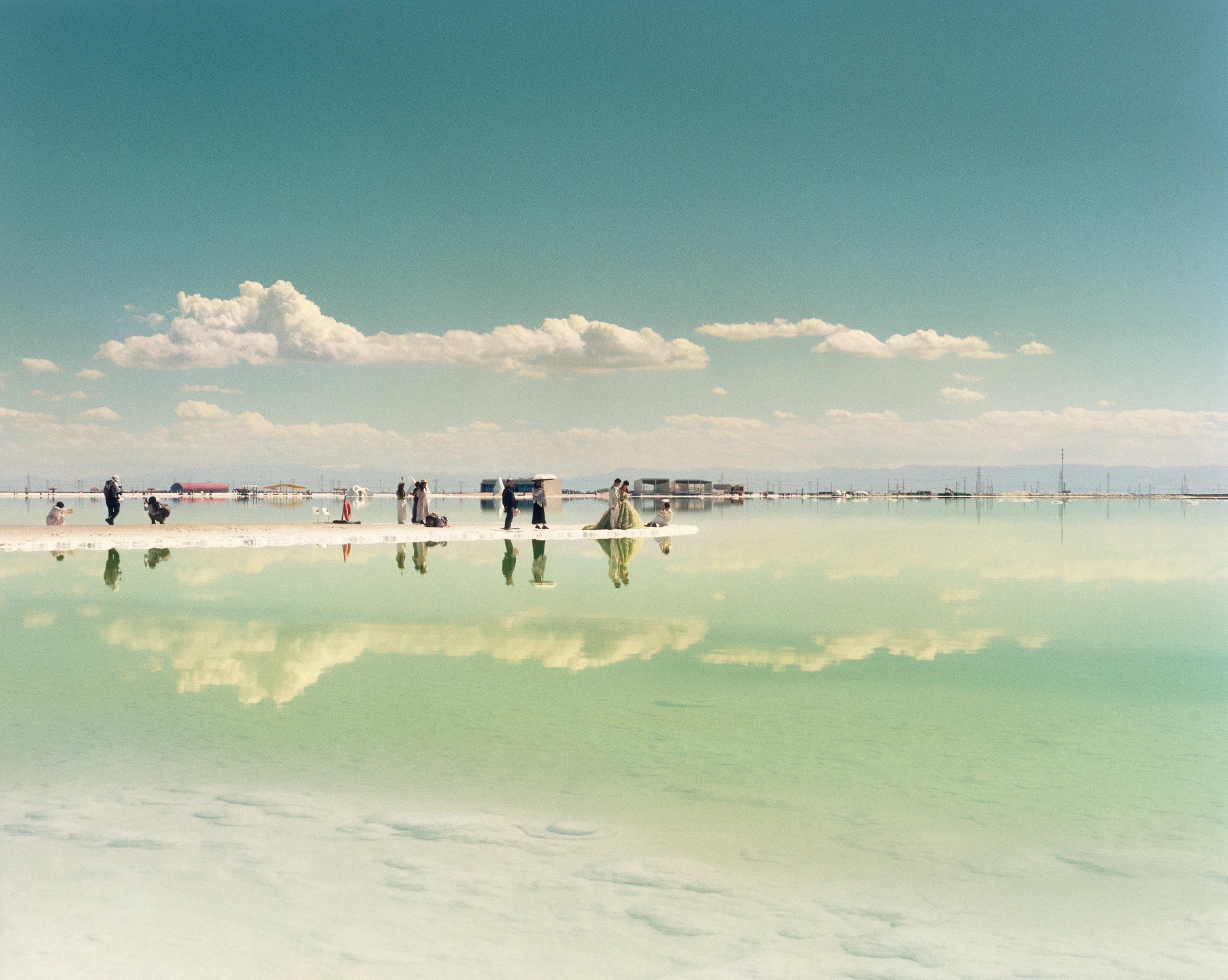
While lithium powers electric cars—a story usually of green success—extracting it drains the land it comes from. Hyland learned this in Chile’s Atacama Desert in 2018, where she photographed a process that depletes already scarce water in an arid place, affecting the small communities nearby. At Qarhan, a recent study suggests that decades of brine pumping is affecting the ecosystems around the lake. In Hyland’s work, this ethical tension is sharpened by the lake’s visual appeal. The high altitude, thin air and intense sun creates mixed shades of blues, greens and yellows on a glass-like surface. “That is actually what it looks like,” says Hyland, who did minimal color editing to the images.
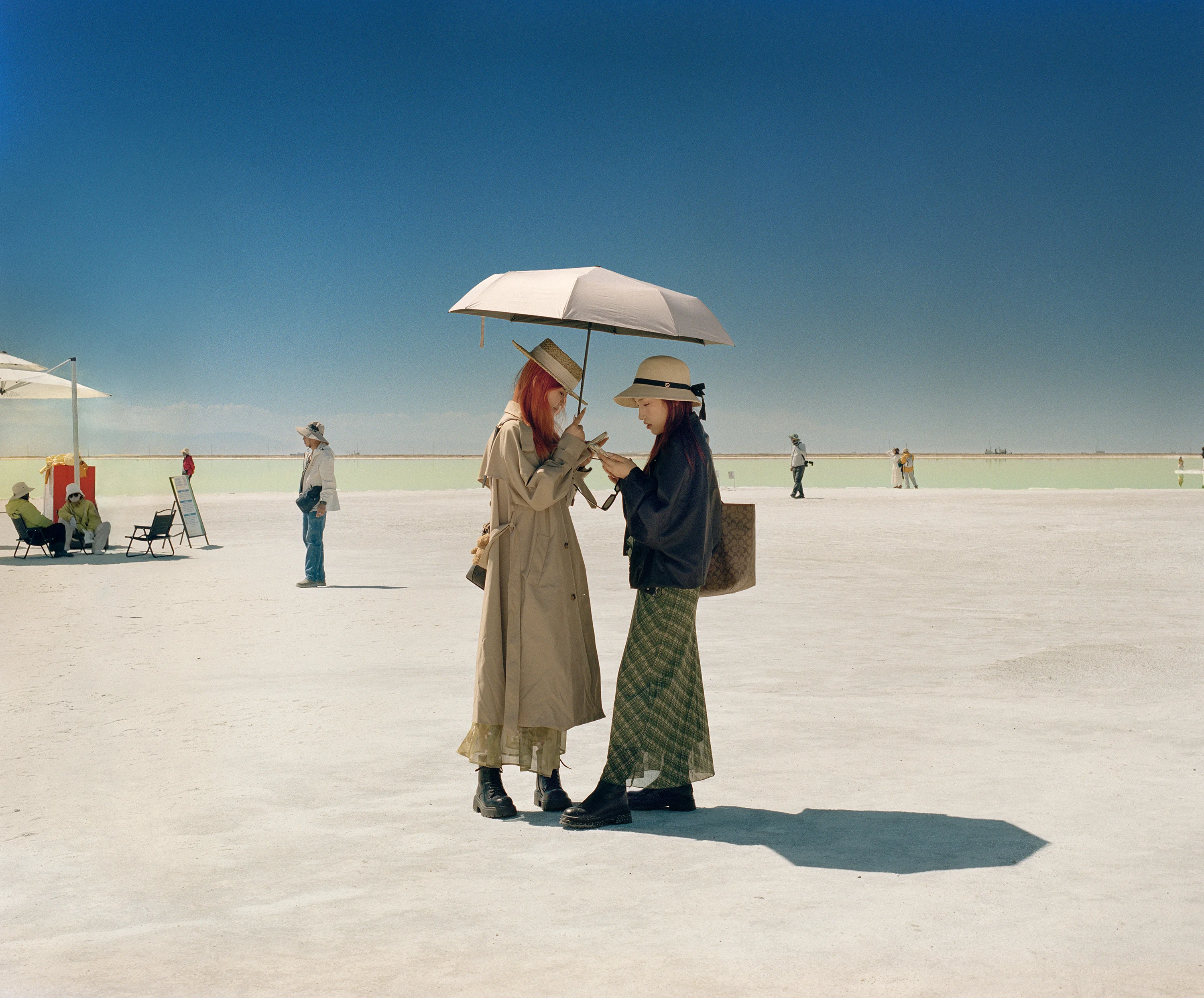
People are trying to connect with each other and fight off a certain level of loneliness.
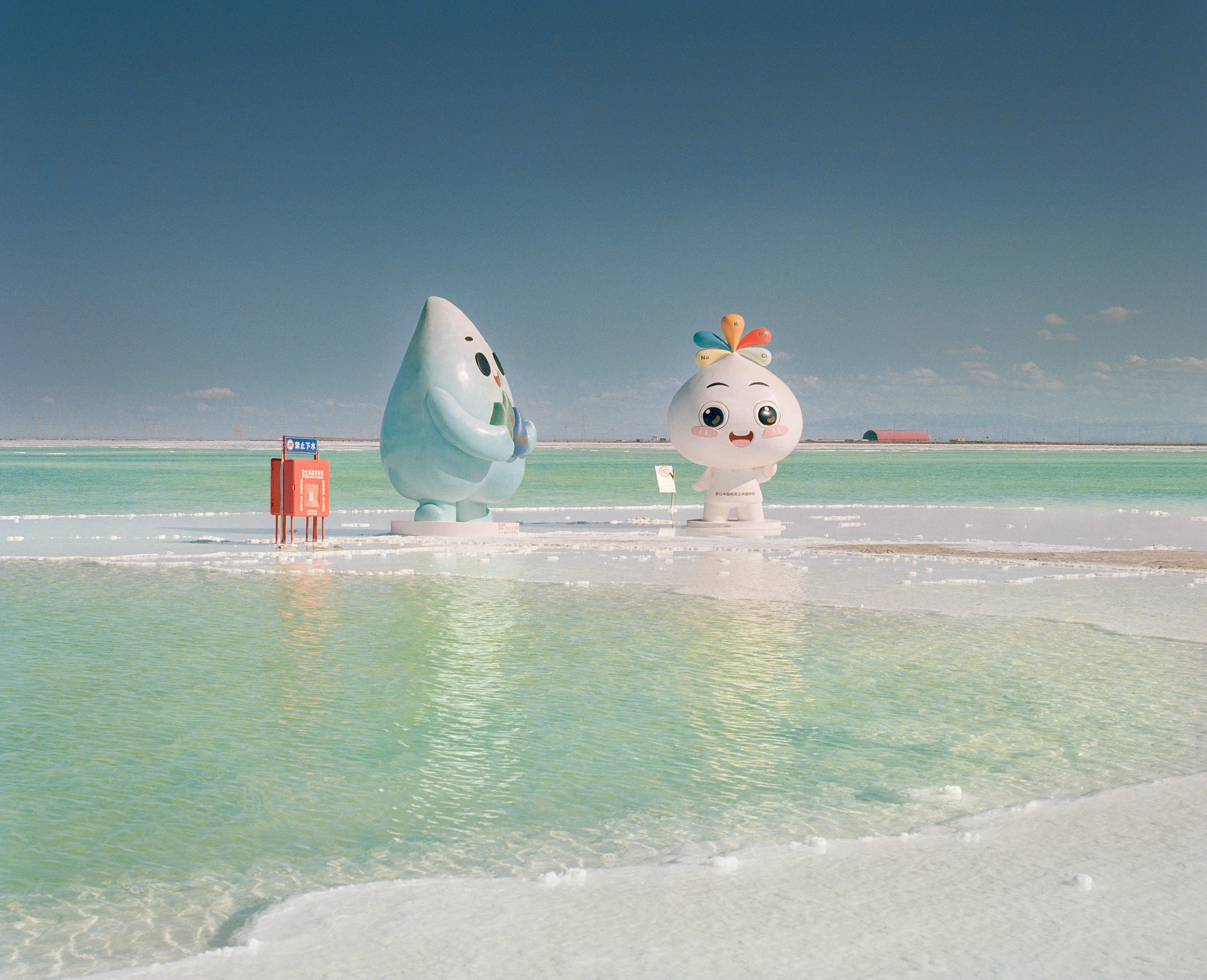
Hyland was cautious about leaning too much into the aesthetic, and sought out a balance between the landscape, industry and people. “This means that you do get quite a lot of moments that feel quite kooky and humorous in a way,” she says, referring to the giant statues of “kawaii” mascots, for example, or tourists dressed up in costumes for photos. “Part of what interests me in these tourist sites is how much photography is integrated into the dynamism of the sites,” she says. “You’re going there to see the site, but actually, I’d say the bigger pull for the tourists is the photograph that you get to take home.”
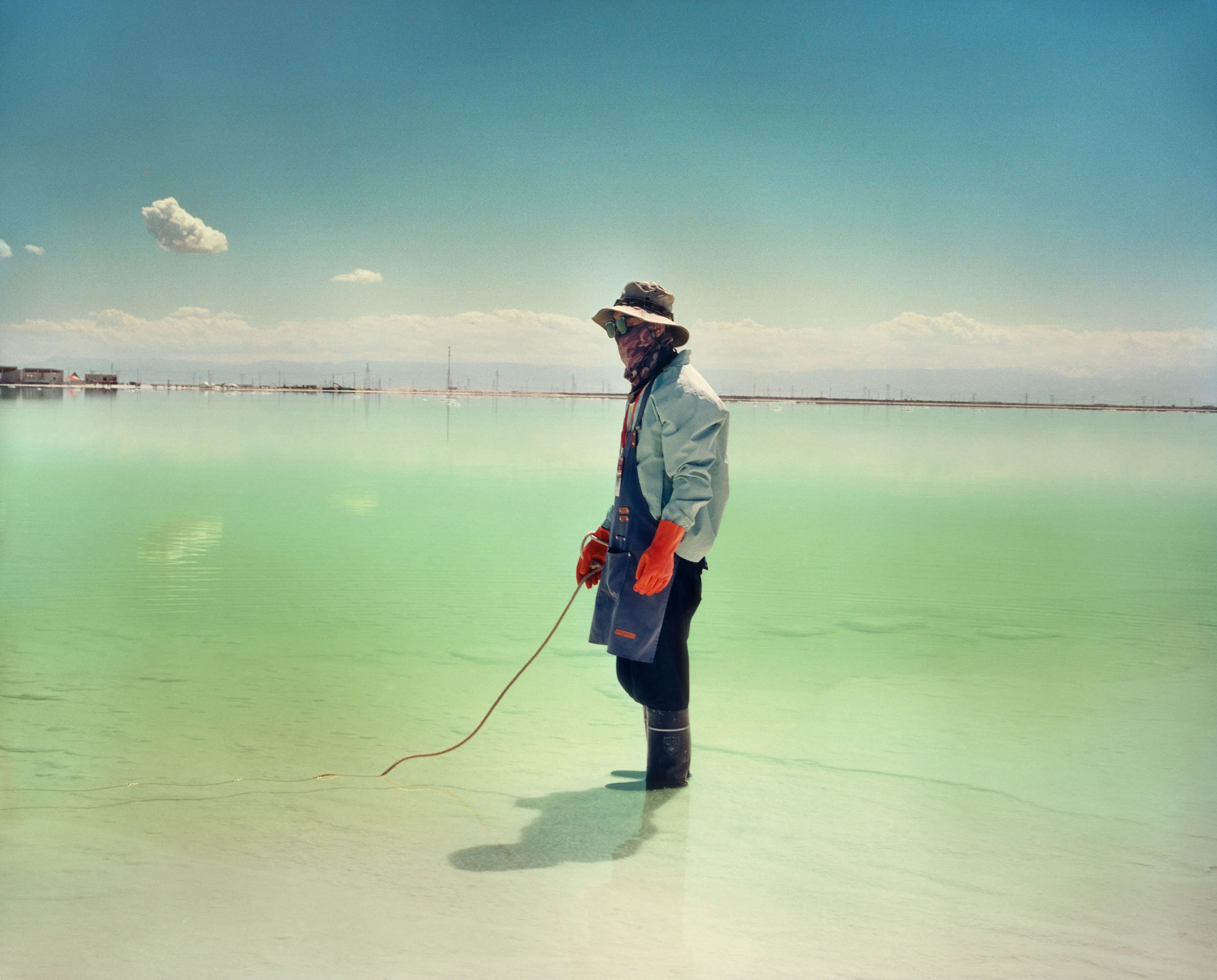
These scenes are universal and well-documented—a sea of phones, queues for a viewpoint, a cameraman charging by the shot. While her work makes a clear observation of how tourism sites are being shaped by the rise of smartphones and social media, Hyland insists that her work is never about criticising or judging. “I purposely try to select pictures where you absolutely are not laughing at anybody. That feels very important to me,” she says, suggesting that this growing disposition to photograph our every move is born out of a sense of alienation. “In a world that can feel quite isolating nowadays, especially because of technology,” she says, “people are trying to connect with each other and fight off a certain level of loneliness.”