
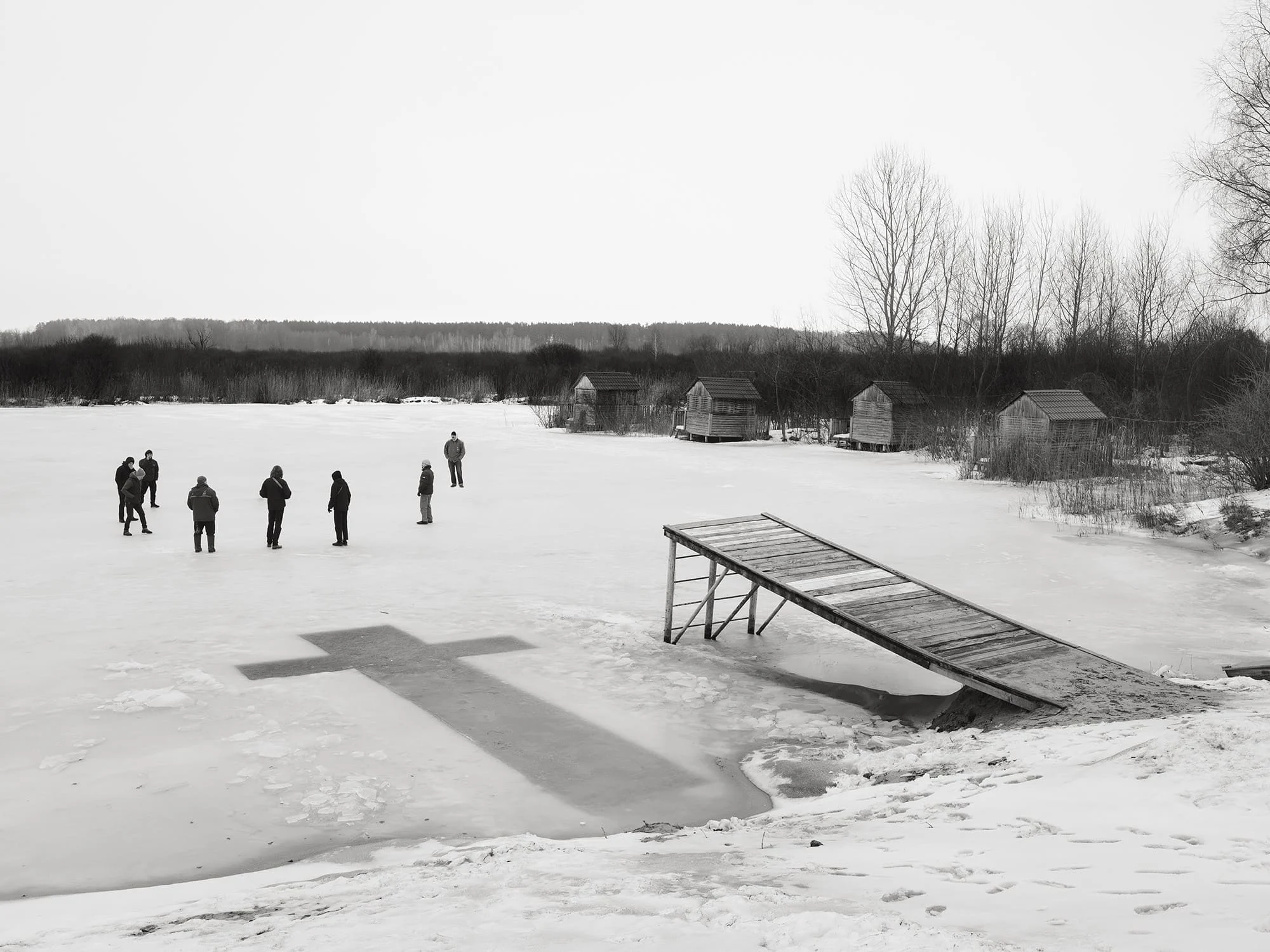
Aria Shahrokhshahi has been taking photos and volunteering on the ground in Ukraine since 2019. His new book “Wet Ground” captures a surreal portrait of the place, from the everyday to the unexpected, as life continues against a backdrop of constant conflict. He tells Megan Williams about his lyrical approach to the project, and why his slow, stark meditation on life in Ukraine transcends “war photography.”
“Wet Ground” is available to buy via Loose Joints.
Aria Shahrokhshahi takes a circuitous approach to documenting life gripped by war. In his photographs of Ukraine, wounds appear subtly and rarely. If there are weapons, they share the frame with perfectly regular objects: houseplants, children’s toys, phones. Rather than home in on the obvious markers of conflict, he turns his attention to how expressions of cultural identity—language, music, traditions, even calendar dates—become more pronounced as a form of a resistance, how ideas of masculinity shift from performed to behavioural, how bringing a child into the world takes on profound new meanings.
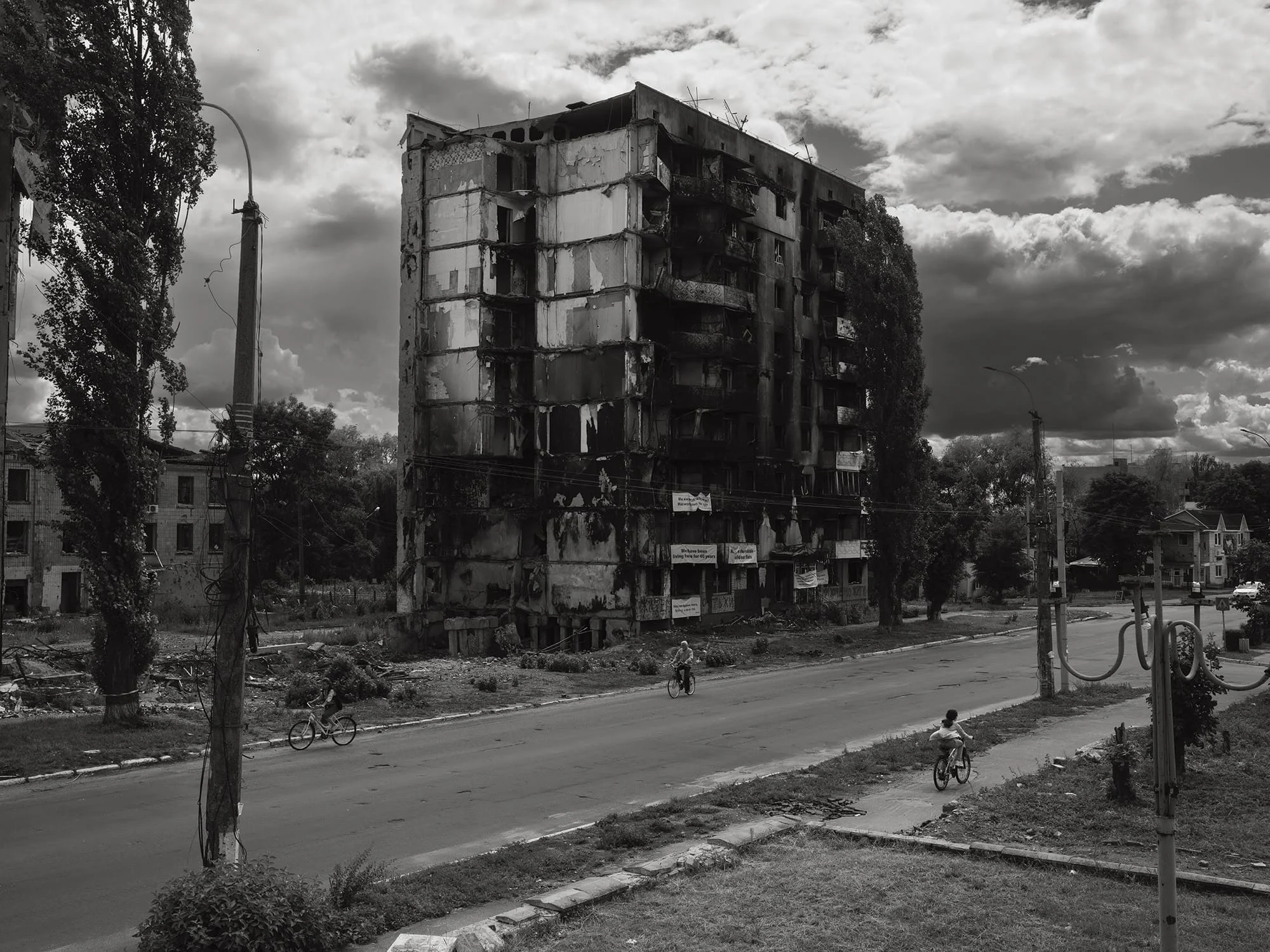
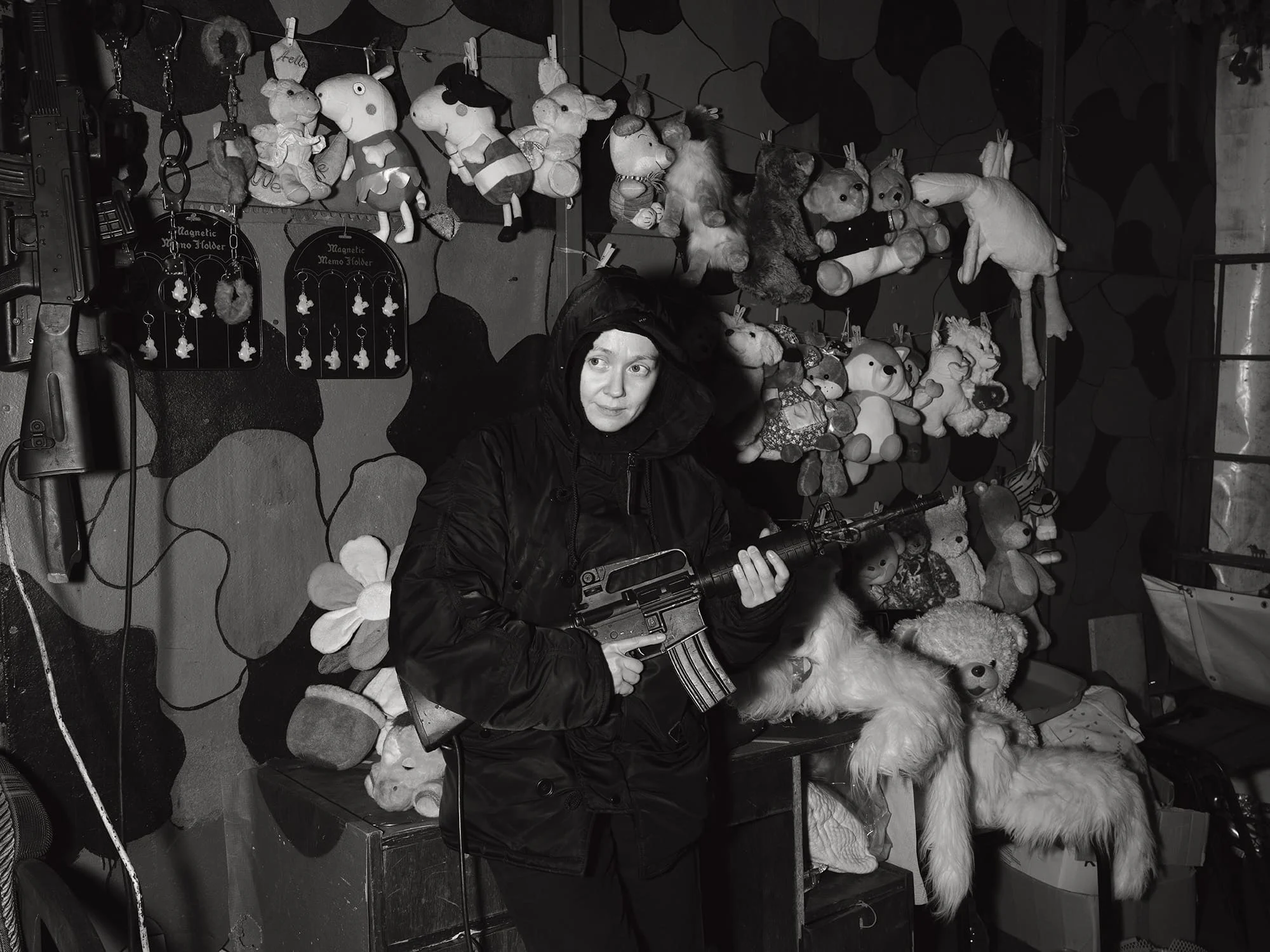
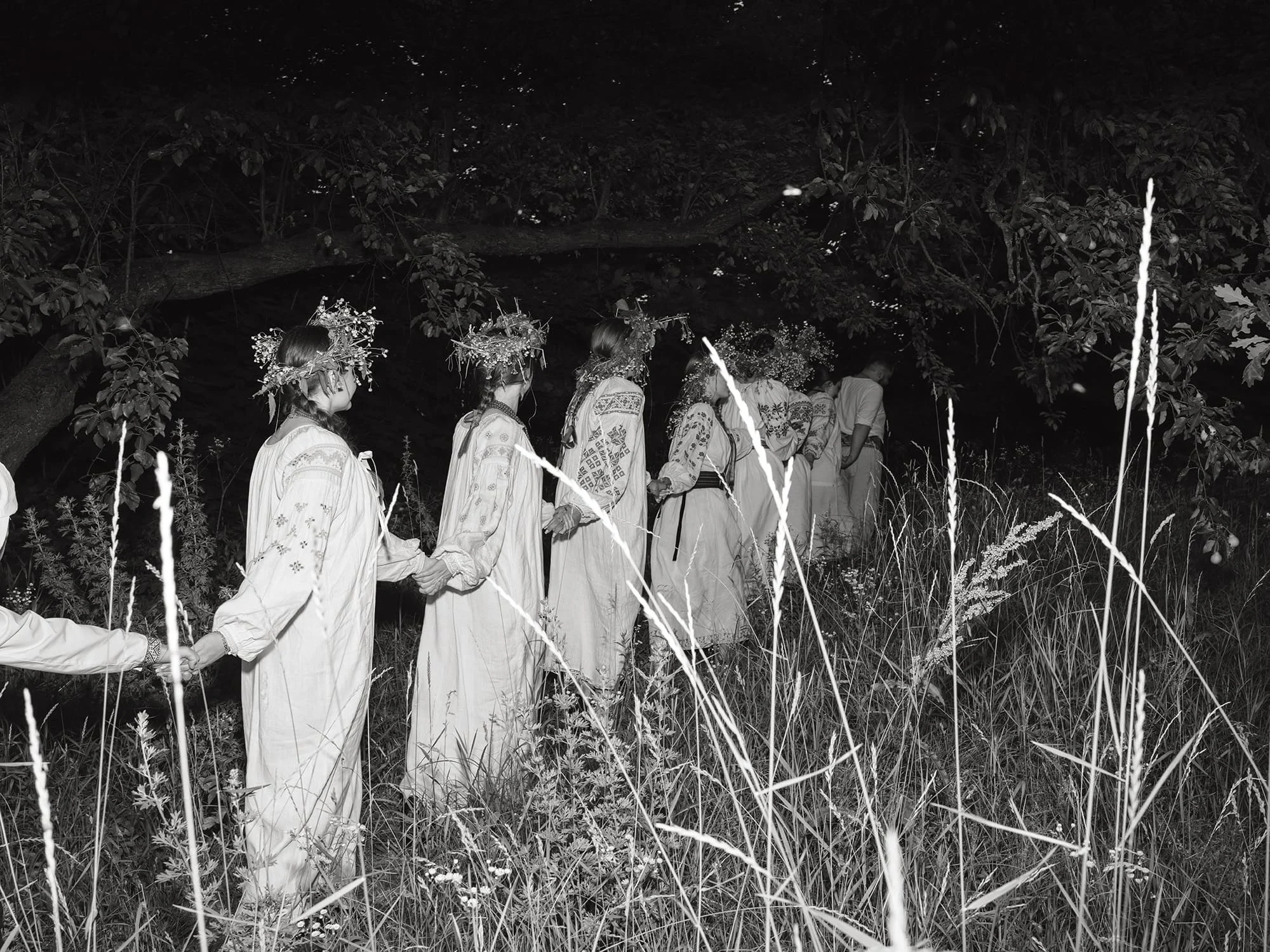
First drawn to Ukraine’s underground culture back in 2019, Shahrokhshahi, who also works in sculpture and filmmaking, has regularly returned to visit friends, volunteer and photograph life there ever since. Building on his fundraising zine series, his new photo book “Wet Ground” cuts across this substantial body of work to create a multifaceted, often surreal portrait of Ukraine rooted in his own perspective.
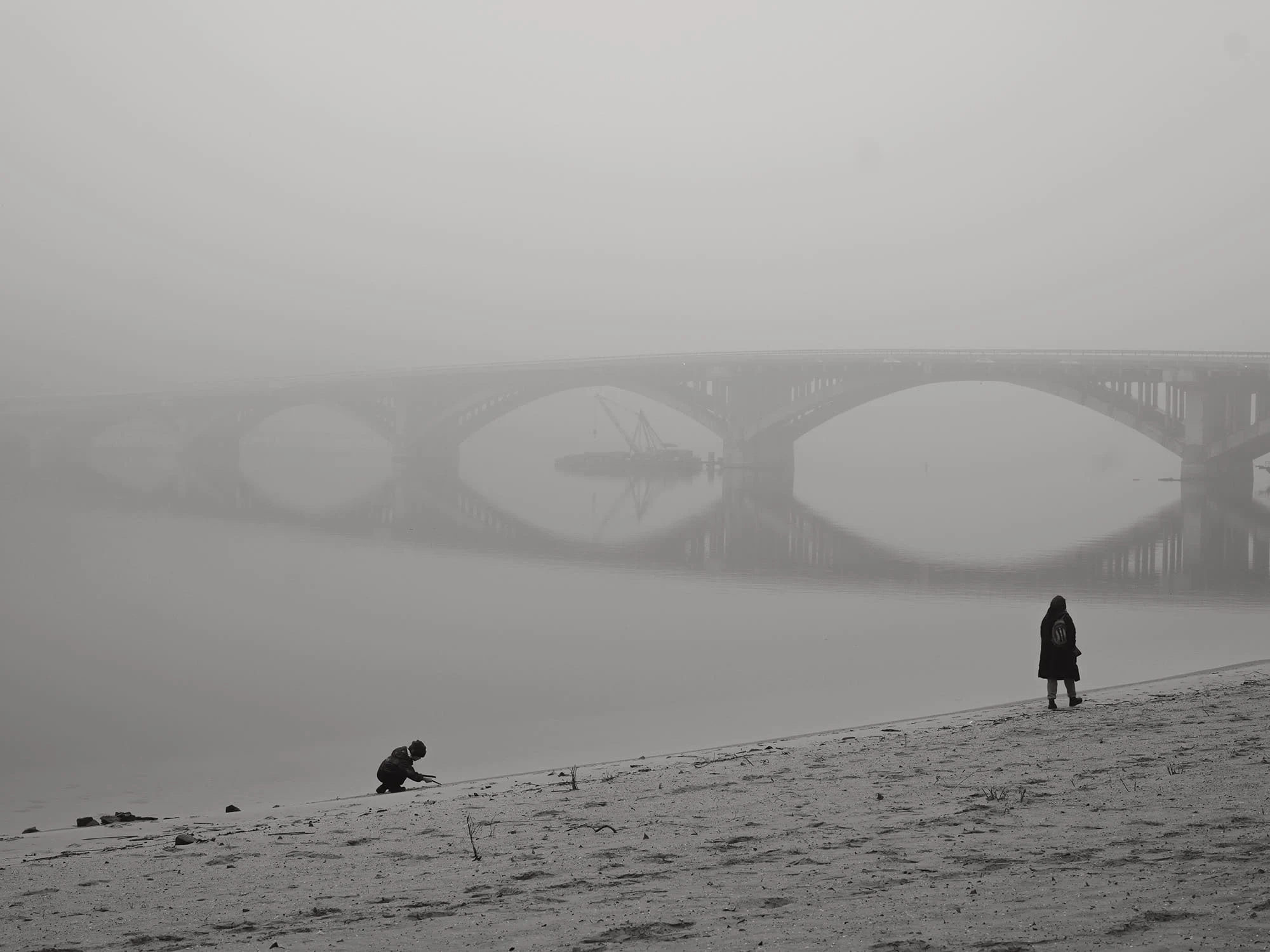
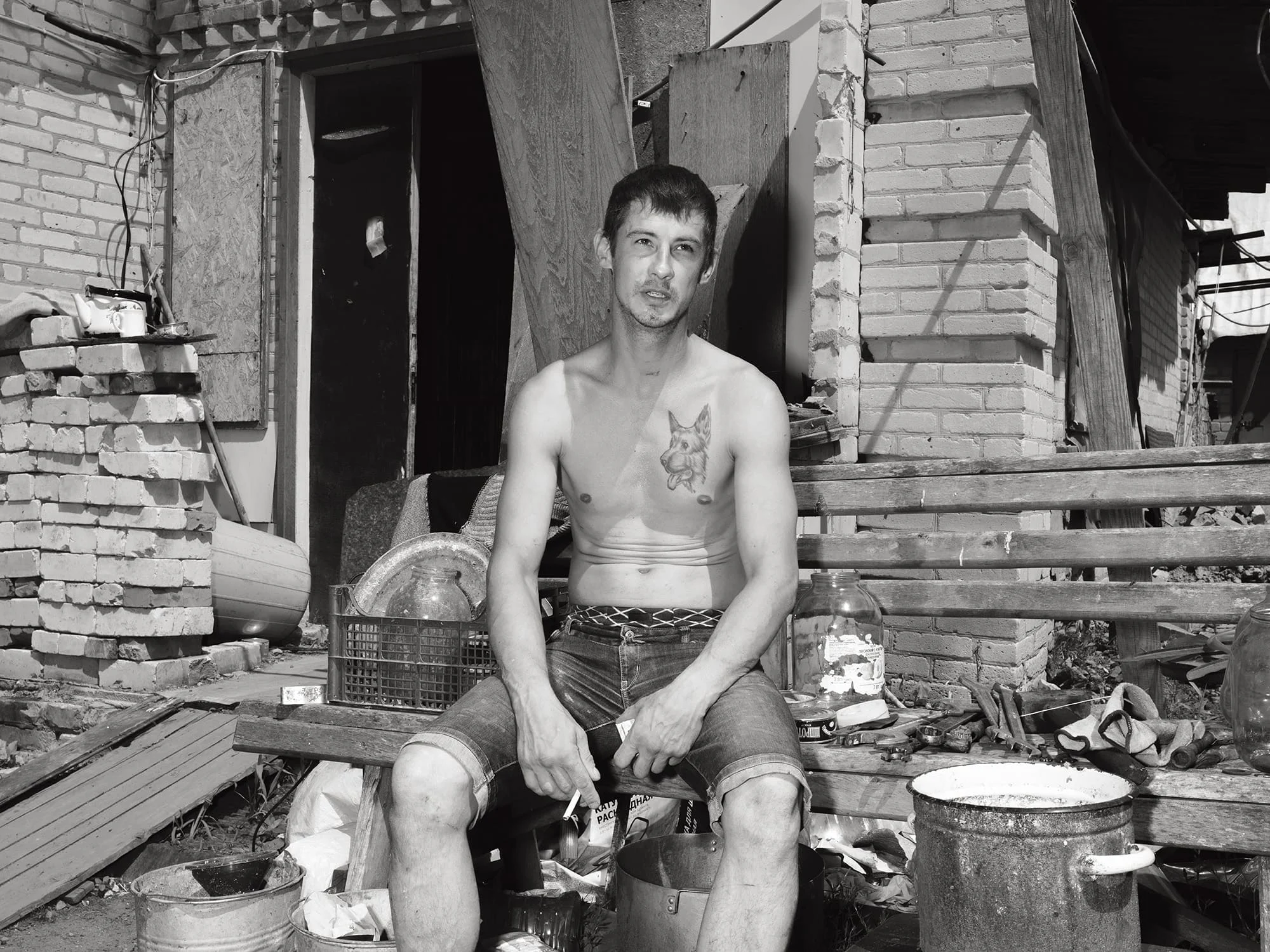
In “Wet Ground,” his black and white flashlit scenes create the sense of an endless night, cloaked in darkness except for the glare of the bulb. The few photographs that are visibly daylit resemble staged tableaux or film stills: haunting scenes veiled by smoke or mist; a collapsed bridge held in uncanny stasis; ominous buildings humming with silence. Everything feels slightly unreal, out of time, and yet these are genuine vignettes that the British-Iranian artist has encountered over the past seven years.
Can you relate to a guy holding an AK-47 with a big scar down his face? I can’t. But do you know what I can relate to? A first kiss.
Shahrokhshahi knows that some audiences will receive his work as war photography, but it’s a label that doesn’t sit comfortably. Partly because it misrepresents his practice—he has no intentions of going to another warzone—and because he’s not interested in the mystique surrounding the genre. He also recognizes how audiences perceive war photography. Images of conflict and humanitarian crises more broadly have produced tropes to such a degree that many people see but rarely look. “Because there is such a developed [visual] language around it, I believe that there’s also a developed thinking pattern around it,” Shahrokhshahi says from his London studio, several days after his most recent visit. Mention “war photography” and the blinkers go on.
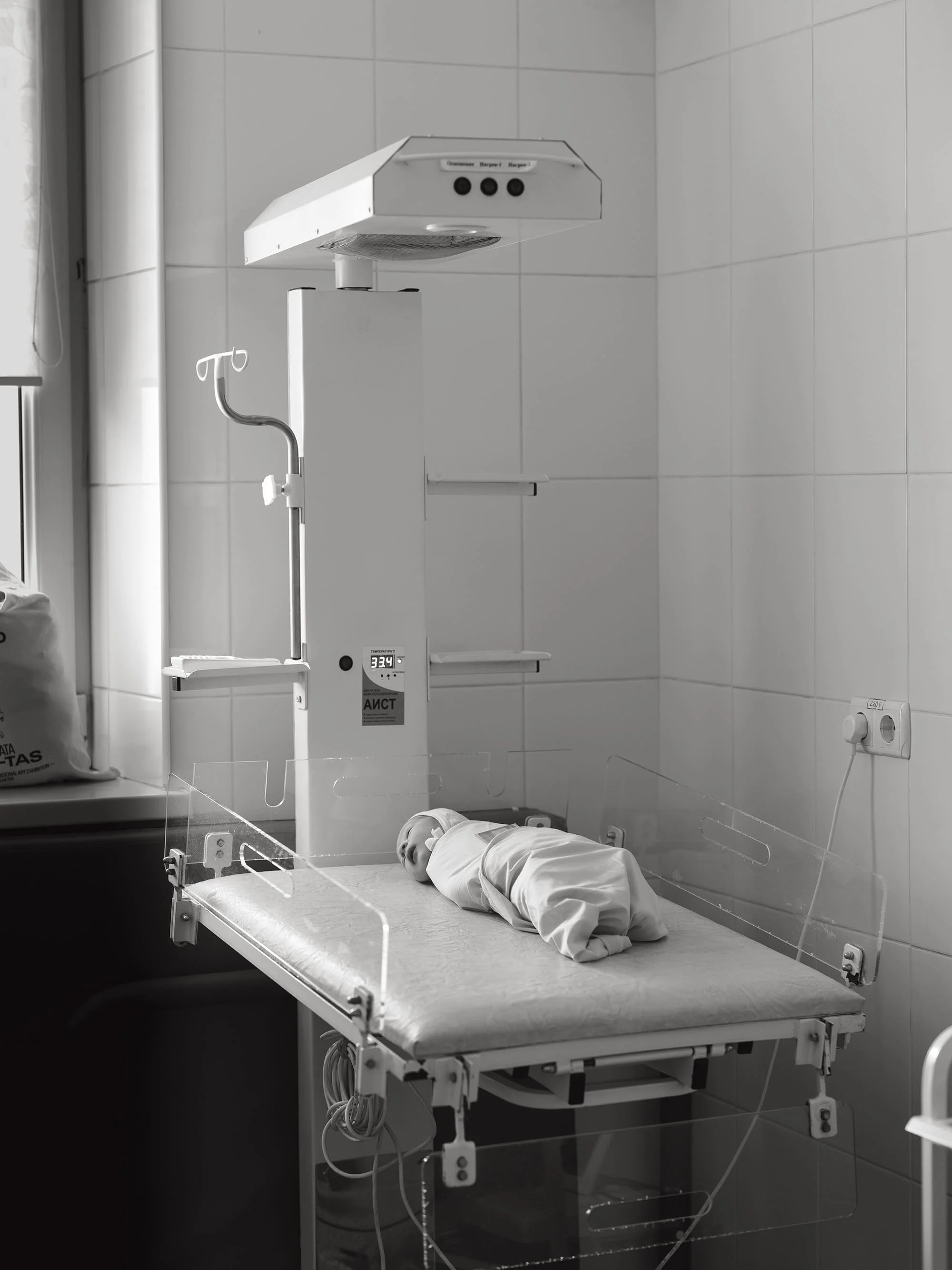
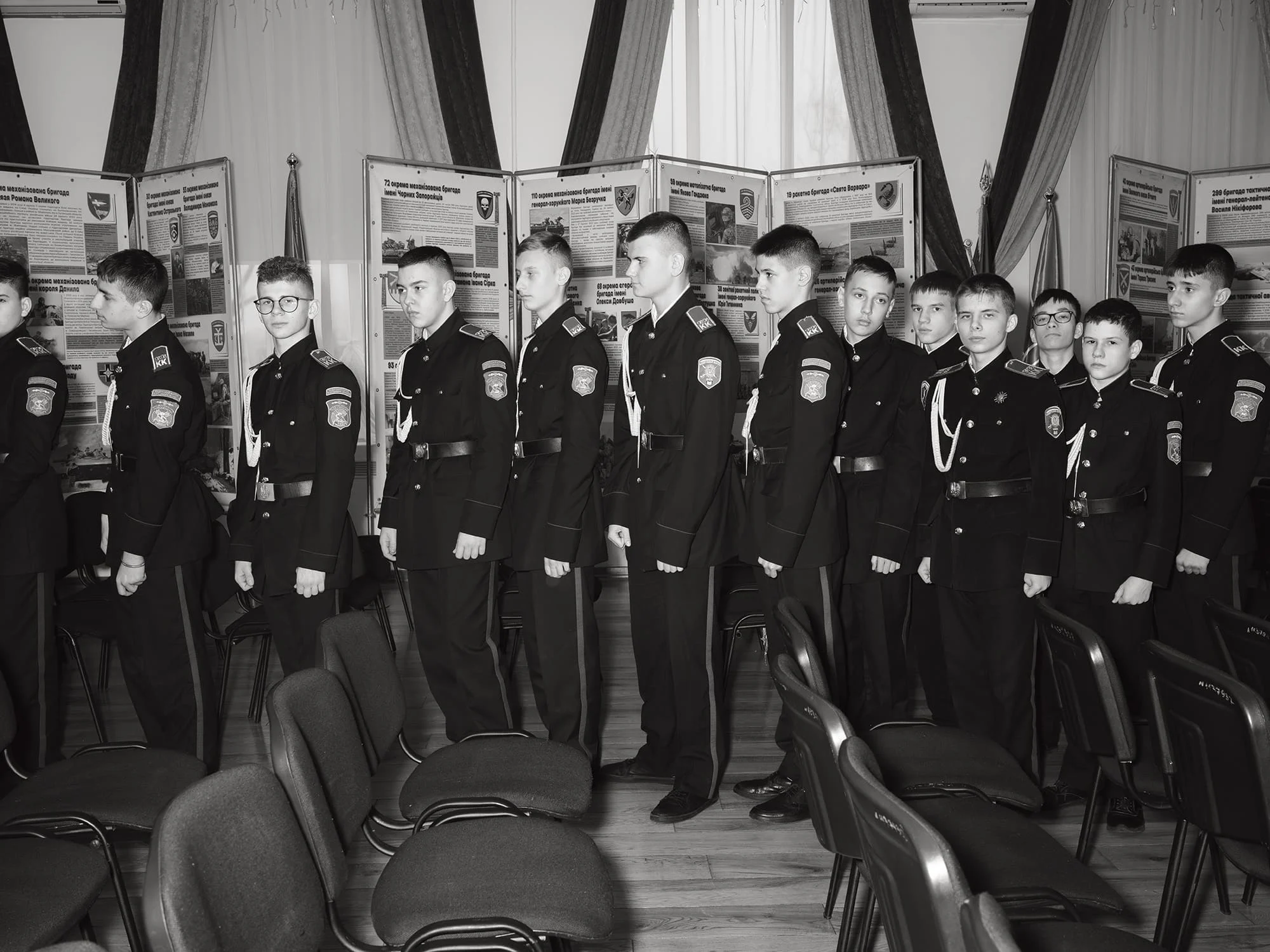
“What I’m trying to do with pictures is what people do in music and what they do in poems,” he explains. “I don’t want people to think that they know where it’s going, because it’s easy to get complacent.” Music and poetry naturally flow in a given direction, which can either meet expectations or open up surprising tributaries. How do you achieve the equivalent of an unexpected chord progression or poetic wordplay within the immediacy of a photograph? Often, through sequencing and subtext. New connections are unearthed by the context that exists both within and beyond the book.
A typically joyful scene of a newborn baby takes on an additional layer of gravity, even without the knowledge that rockets were falling around the hospital the very morning of his birth. In another image, a queue of boys awaits not just what’s at the end of the line but an all-too imminent future that they’ve forcibly inherited. Elsewhere, a bus stop is pierced by a bullet-shaped hole leaving a cobweb of glass around it. In reality, the damage was the result of everyday vandalism, but here, it’s assumed to be a battle scar.
I do find it beautiful that people remain steadfast in defying their conditions and still being able to have dignity in their life.
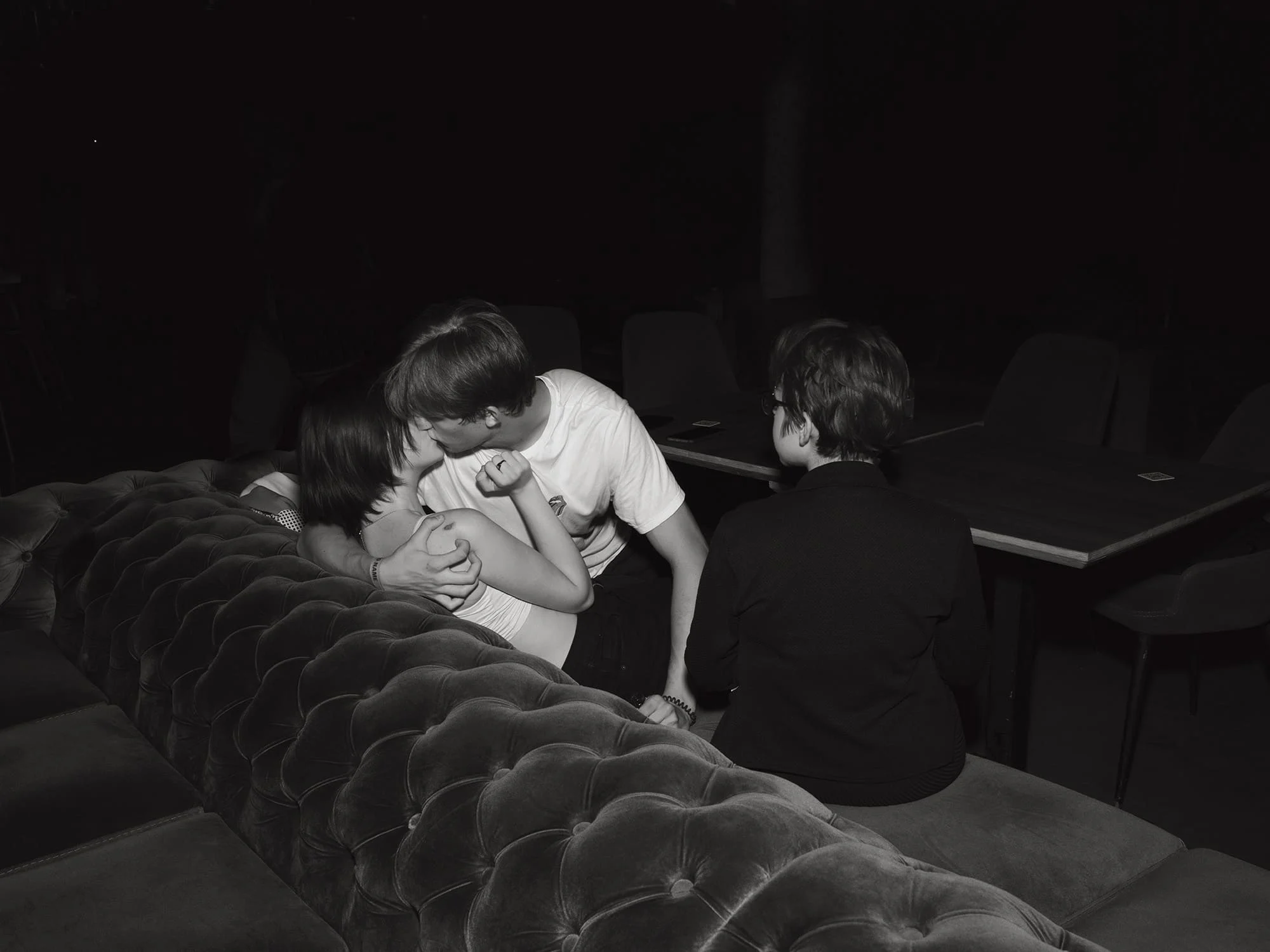
For every photograph with a grave reading, there’s a lighter one, too—often at the hands of young people. Shahrokhshahi captures ordinary coming-of-age instances of pleasure, pain, and pranks. He’s especially fond of one photograph showing two young people locked in an embrace while their friend is stuck third-wheeling. “It’s that awkwardness that’s so human, and that also means it’s something to relate to. Can you relate to a guy holding an AK-47 with a big scar down his face? I can’t. But do you know what I can relate to? A first kiss.”
Through photography, he digests the ways in which everyday life has transformed into a theater of the absurd. “You’ll be in a village somewhere and then a person in an inflatable teddy bear costume will come along and do a little dance,” he says. These incongruous moments, part of the fabric of reality, are littered throughout “Wet Ground,” prompting him and his publisher to coin a new catchphrase: “Ukraine, I guess.”
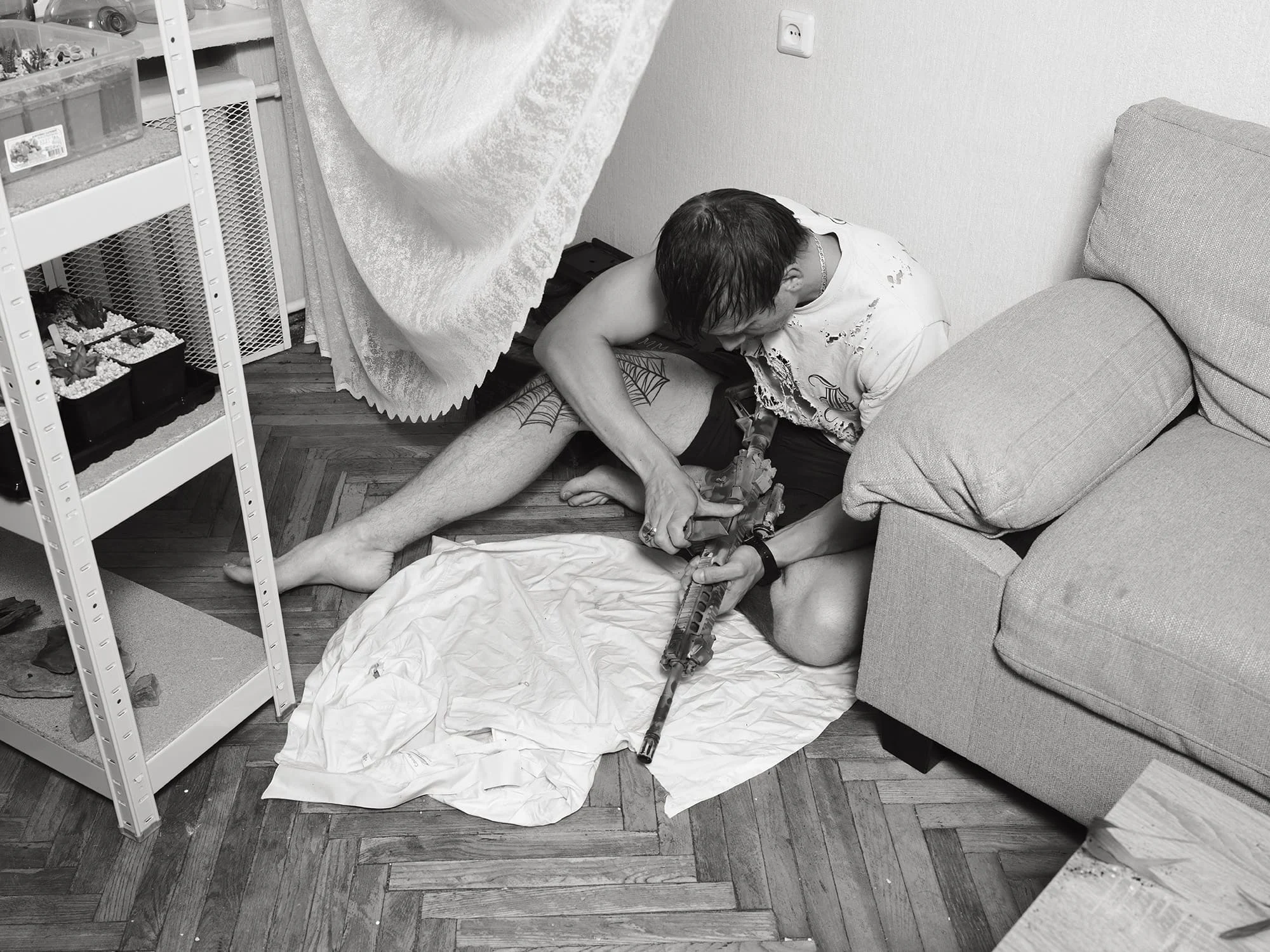
He’s visited Ukraine both as a photographer and as a volunteer, though he never mixes the two. The closest he comes to doing so is in the book’s title, named after the time he and his NGO group came under fire during an evacuation effort near the frontline. One rocket exploded meters in front of them, well within the lethal radius of a grad—but everyone survived. Heavy rainfall ultimately allowed the earth to absorb the rocket’s impact. The land represents many things: territory, cultural identity, economy. To him, it’s also a carrier of personal history. “Maybe that’s where you learn to ride a bike, in that field. Maybe [home] wasn’t a safe space for you, so you would go to this field and sit by this tree,” he says. “We were saved by this land, but the way I see it is I was saved by the memories of people.”
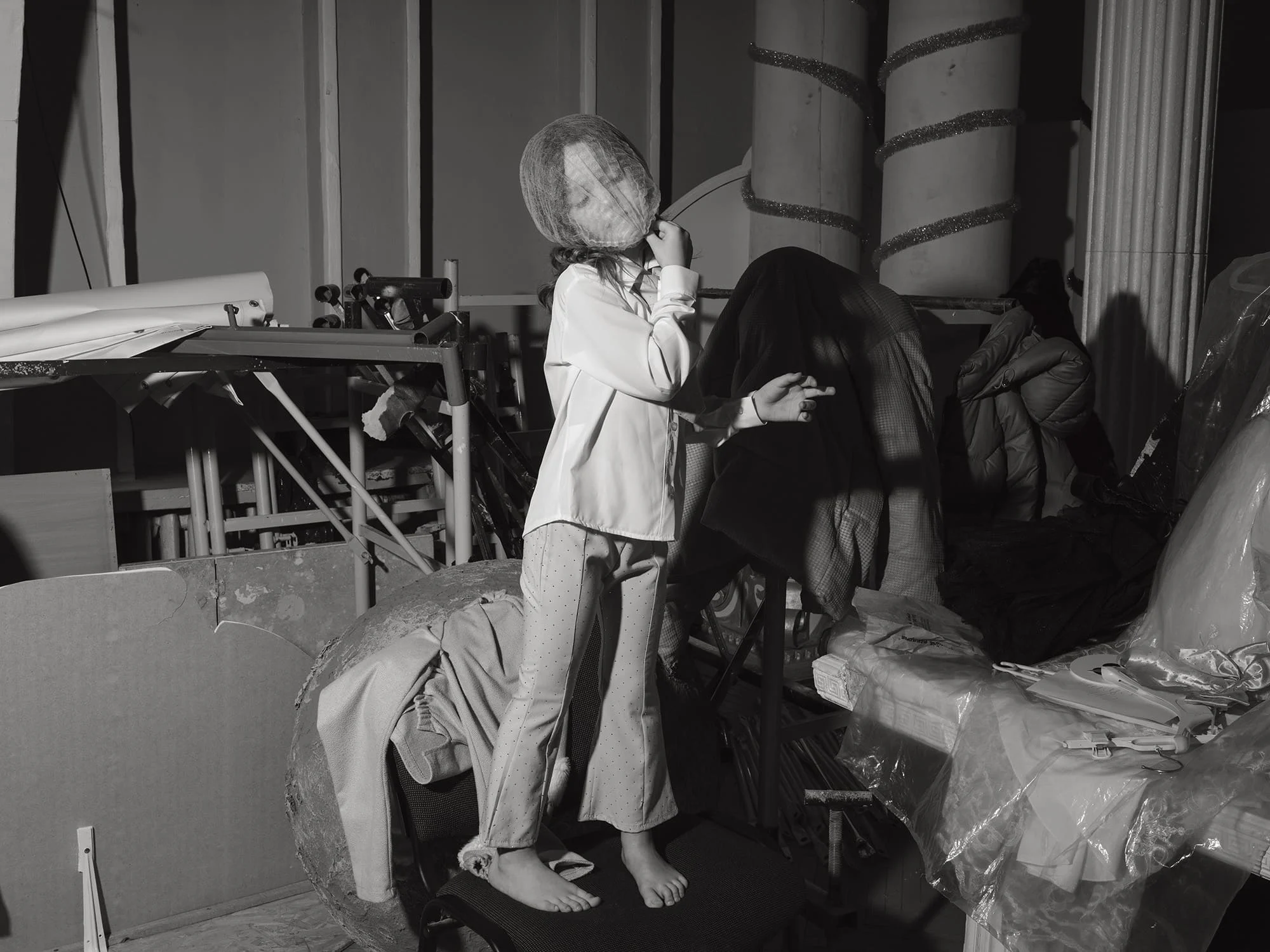
I think there’s so much beauty in normal life. You just need to look for it.
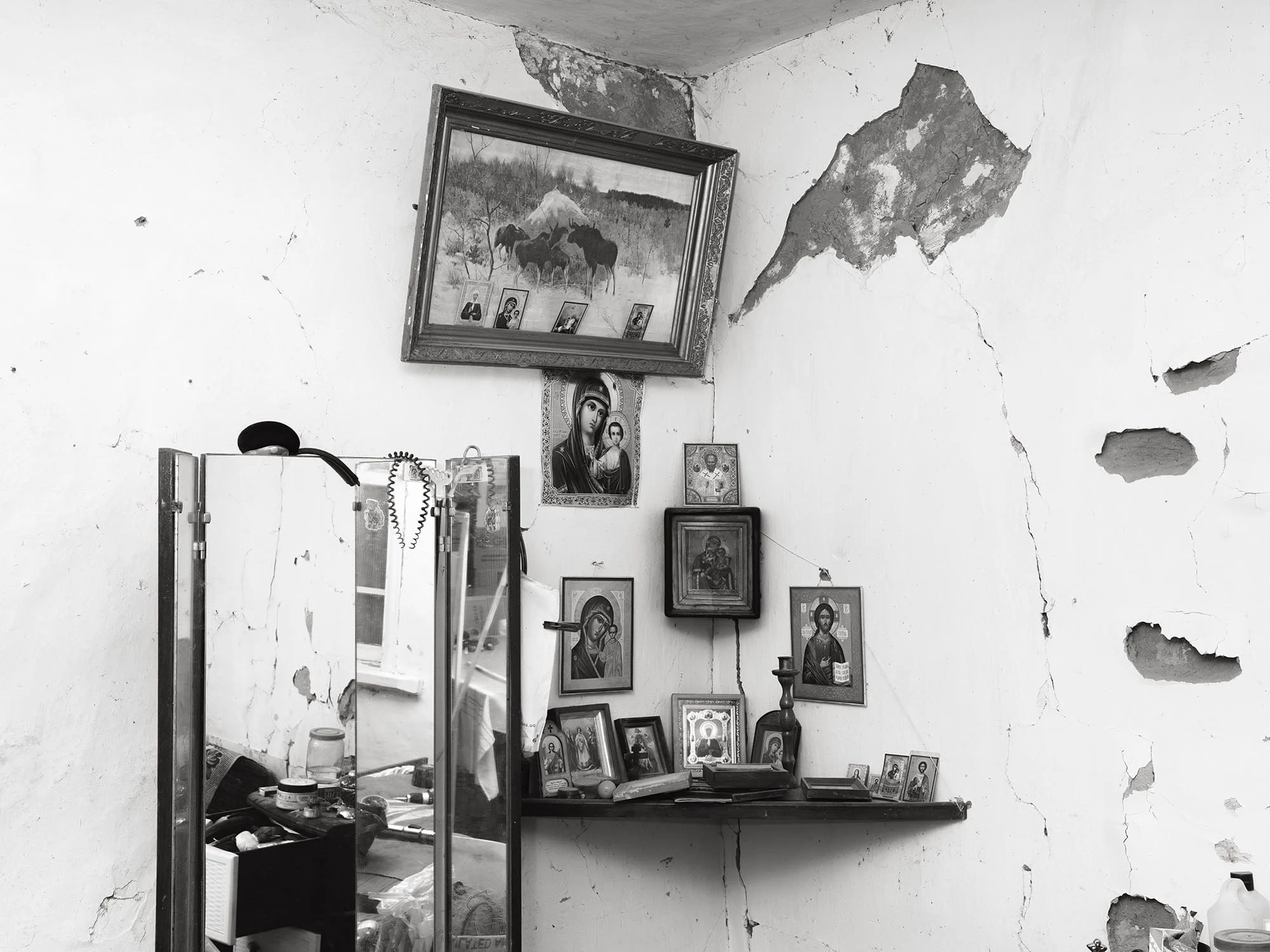
Shahrokhshahi is careful not to romanticize his experiences of Ukraine, which he has the power to leave at any time, or the suffering of its people (he feels words like “resilience” segue dangerously into complacency). “But I do find it beautiful that people remain steadfast in defying their conditions and still being able to have dignity in their life,” he says. On his most recent trip to Ukraine, in the grip of Moscow’s weaponization of winter, electricity, internet access and heating had become finite resources even as temperatures plummeted to -23°C. “It’s a really tough time, but then you still manage to have a bit of fun somewhere,” he says. Even in “the context of chaos,” there are slivers of peculiar majesty. “I don’t know if I identify really with the documentary thing, but the reason I’m not too fussed on staging, or writing scripts for moving image, is because I think there’s so much beauty in normal life. You just need to look for it.”