In Aaron Kilercioglu’s short film “Getaway,” protagonist Daniel, in the midst of heartbreak, accidentally finds himself on a swingers’ campsite retreat. Already feeling vulnerable and now surrounded by poly couples and sexual exploration, his desire and his shame collide, leading to an increasing feeling of unease. Kilercioğlu tells Megan Wallace how, despite greater sexual awareness and acceptance than ever, the idea of exploring our own sexuality still seems to go hand in hand with a sense of shame, and “Getaway” shows how we might free ourselves from it.
“I just wanted to go camping,” says Daniel (Michael Workéyè), the lead character in new short film “Getaway,” after he learns that he’s pitched his tent in a swingers’ retreat. He’s just been propositioned for a three-way in the middle of the night by young couple Willow (played by Blane Muise, aka Shygirl) and Fred (Muise’s IRL boyfriend, the actor George Smale). Simultaneously intrigued and aghast, Daniel’s internal conflict serves as a snapshot into many Gen Z men’s complicated feelings about sexuality.
The premise of the film, produced by Francesco Loy Bell and Harry Moore of Milk Machine, was inspired when its writer, the actor Harry Redding, ventured out into the English countryside after a breakup. “He found himself in this really strange campsite,” director Aaron Kilercioğlu explains. “People kept trying to connect with him in odd ways. The campsite was filled with quirky characters and he thought, ‘Oh god, have I gotten myself onto a swingers campsite?’” He hadn’t, it turned out, but he was so moved by the experience that he began working on what would ultimately become “Getaway.” For Kilercioğlu, there was an immediate, emotive draw to the material upon reading early drafts. “What struck me in the story was how the main character is trying to overcome an internal fear about his own desires,” he explains.
For Kilercioğlu, the concept for the film provided an interesting way into discussing the contradictions of Gen Z sexuality. Despite having grown up with access to online porn and education about non-monogamy and kink, the generation has gathered a reputation for being sexless—with various studies supporting the notion that Gen Z is having less sex than previous generations. Kilercioğlu wanted to explore how sexual awareness doesn’t always translate to sexual liberation. “Everything’s so much more permissible now and kink has become so much more mainstream as an idea, yet we’re living through a sex recession,” he says. “I thought there was something interesting about this, how we have this liberal attitude to other people’s hypothetical sex, but a kind of shame or disinterest in exploring our own sexuality.”
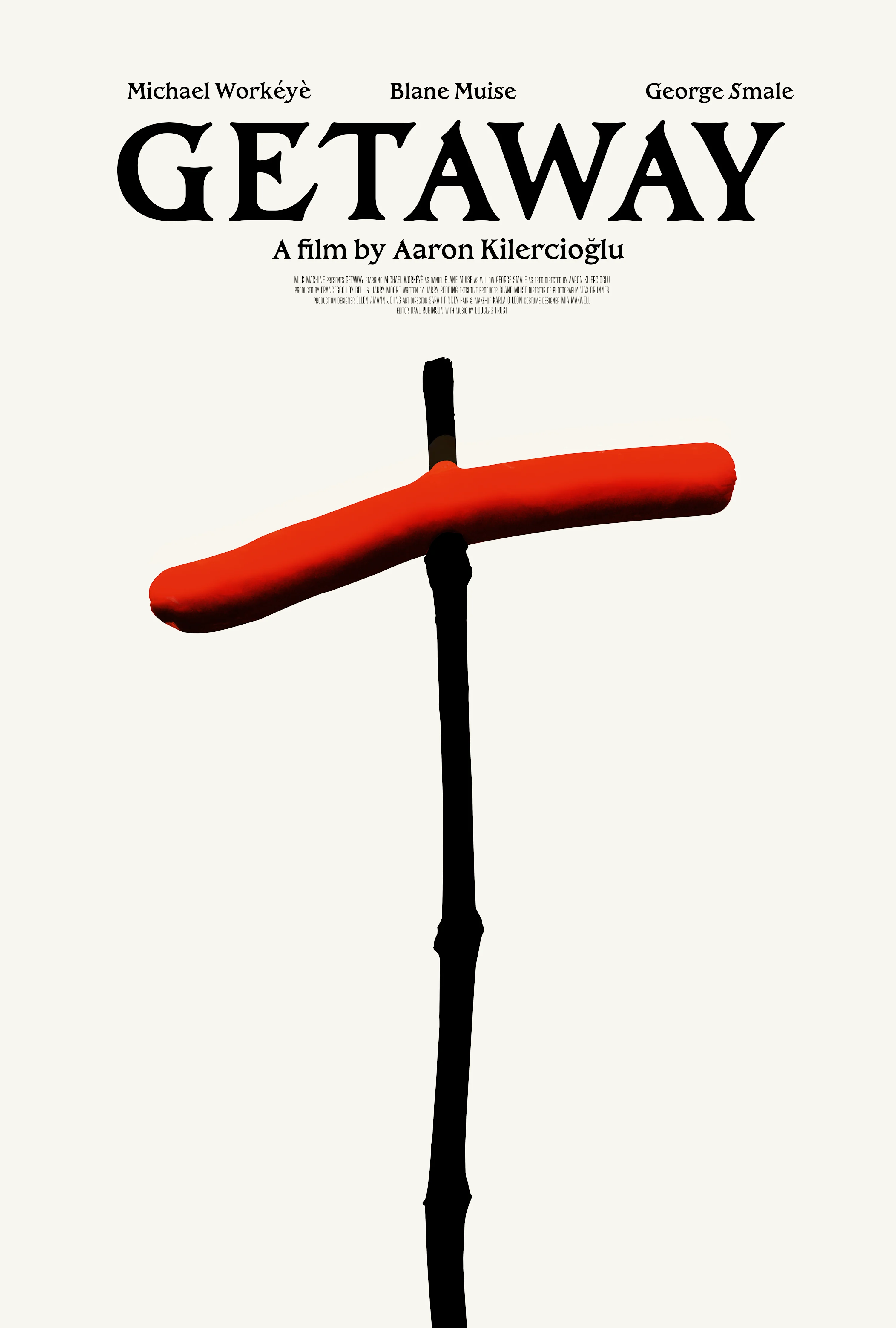
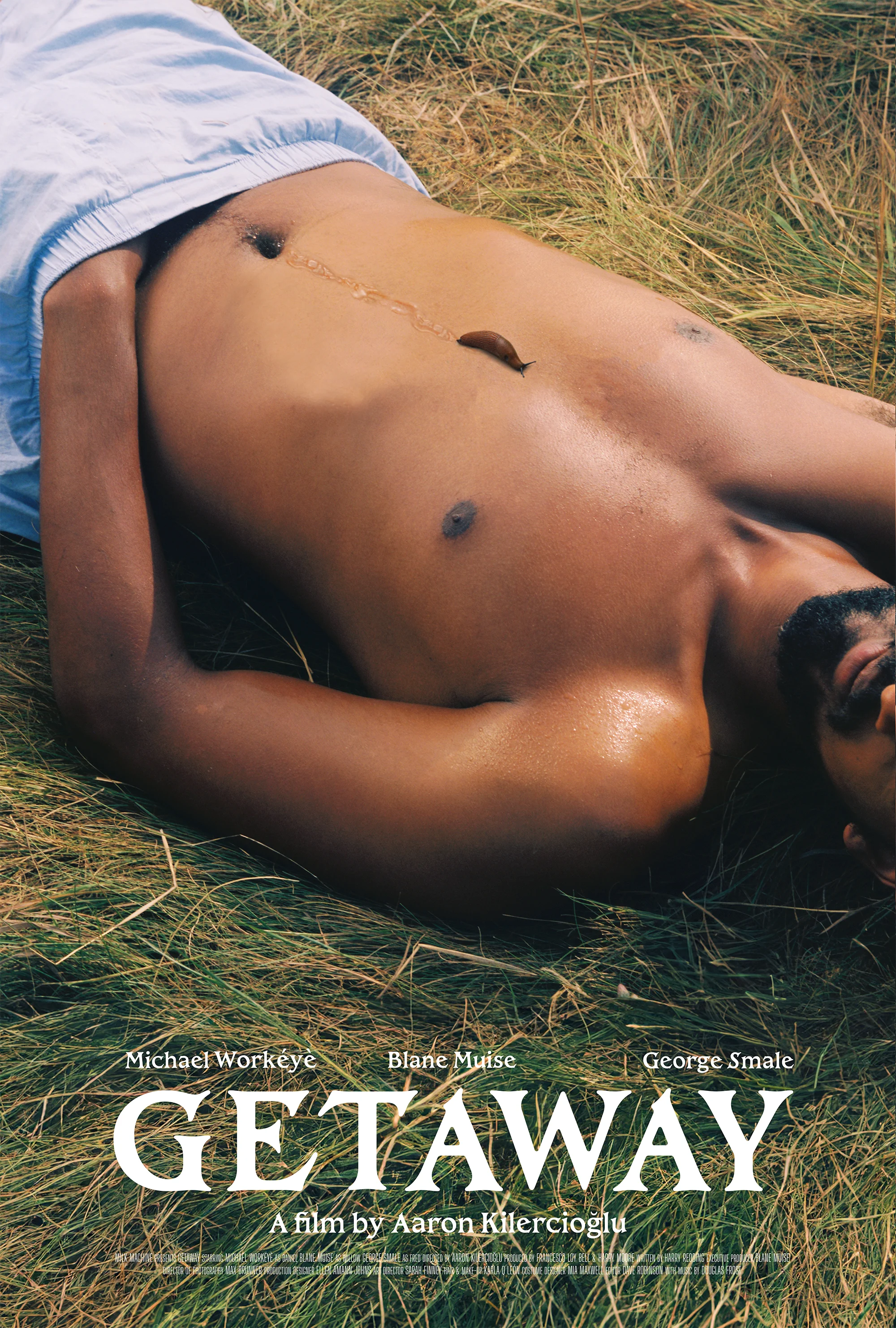
Throughout “Getaway,” Daniel’s internal struggles around sexuality are externalized onto his surroundings, with the style and tone of the short drawing on horror. References include pastorals like “The Wicker Man” and “Midsommar,” where the protagonists find themselves in an eerie, countryside location, unsure if their feelings of discomfort are paranoia or located in genuine danger. “When I’m making things, I like to think about what the emotional truth of a situation is rather than just the facts of the situation,” Kilercioğlu explains. “We see Daniel move from fear, discomfort and shame to something that’s more freeing and liberating.”
The part of Daniel was initially written by Redding for himself, but scheduling conflicts led to him being recast. While Redding is white British, Workéyè is British-Ethiopian, allowing for the film to explore the ways in which Black and ethnic minority individuals experience racialization and othering in rural areas. “At the beginning of ‘Getaway,’ there is a sense that the film might be discussing Black people’s lack of safety in the British countryside,” Kilercioğlu says. “Shy and I spoke about this a lot. We wanted most of the extras to be white, to get a sense that Michael’s character feels like something sinister might be going on, that he’s being watched.” We see this during a dream sequence where Daniel runs through the woods, a sense of panic permeating the screen. Only later do we realize that he isn’t necessarily fleeing from violence, but from a ragtag group of naked, white campers. His subconscious is grappling with the spectre of his sexuality, and both the fear and disgust this provokes within him.
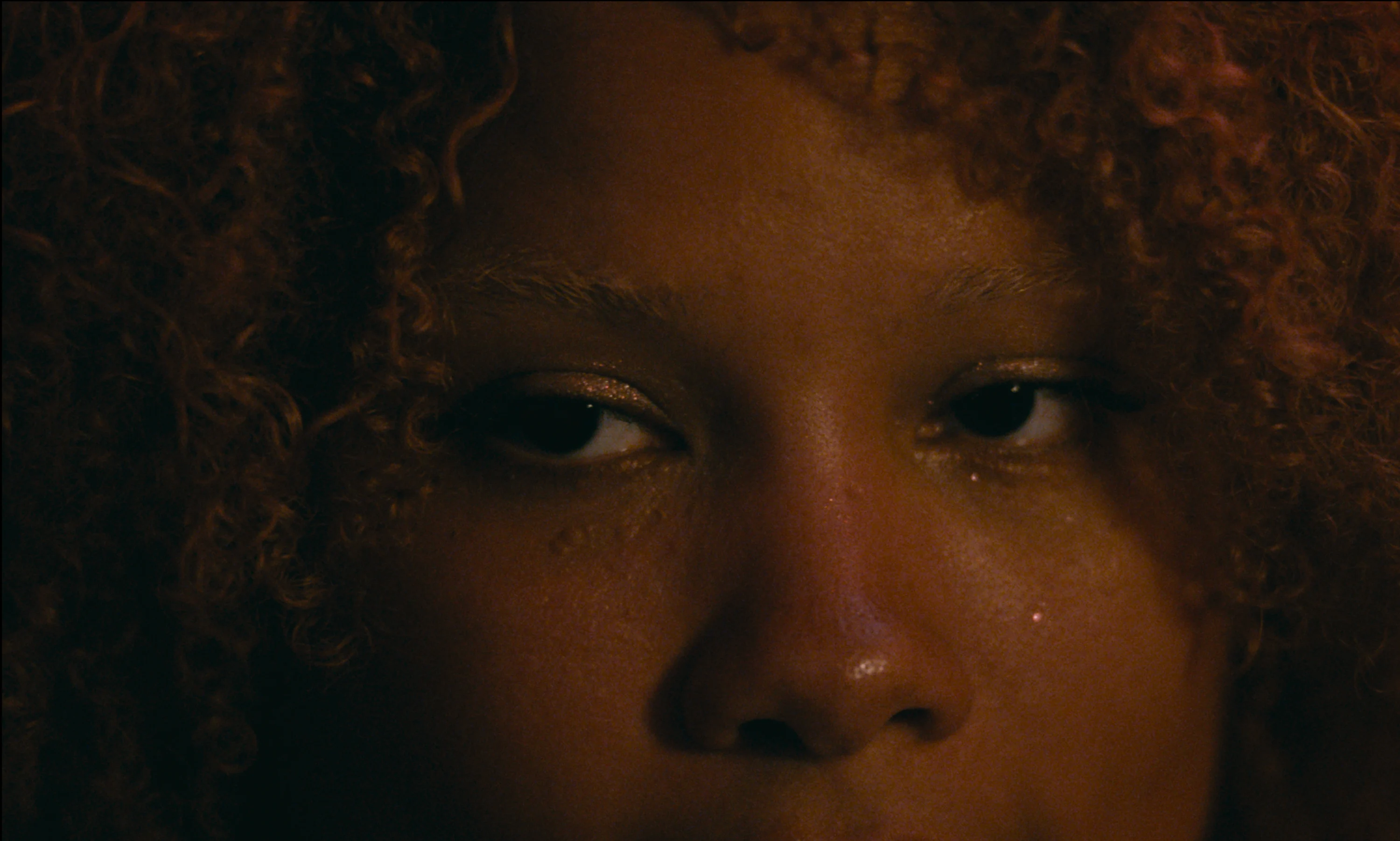
In her turn as Willow, Muise steps back from her pop persona, offering something confident, understated, and totally comfortable. As well as playing a main character, Muise also came on board as an executive producer; collaborating artistically with Kilercioğlu and the wider “Getaway” team. “Shy was really excited at the idea of acting for the first time, but doing it in a safe environment with people that she trusted,” Kilercioğlu explains. “When you’re at her level, you can do cameos in big projects but that was less interesting to her than getting her teeth stuck into a project which she can be a creative part of.”
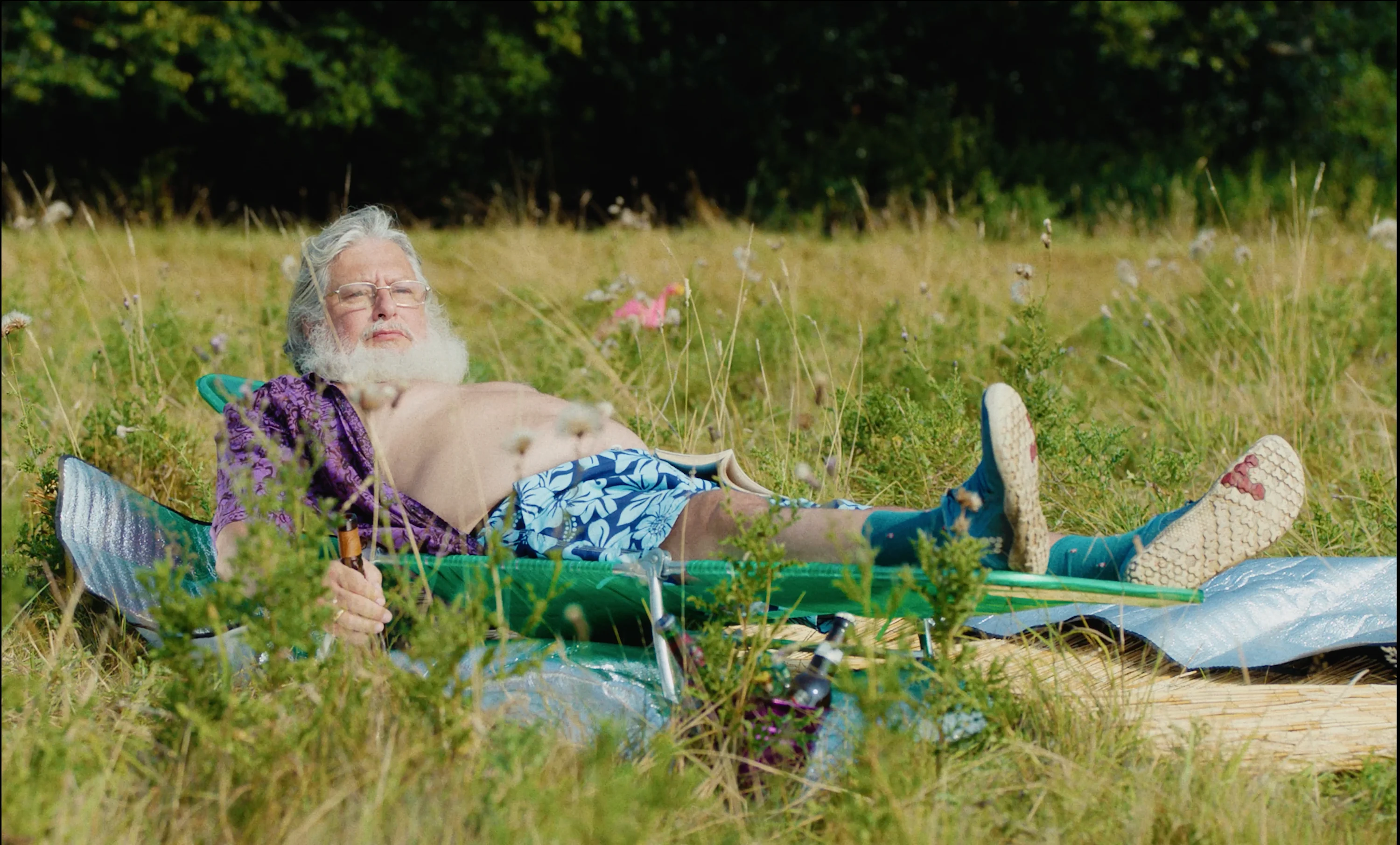
Aesthetically, the film feels bold and zeitgeisty: drawing on a number of disparate visual and cinematic references, but with a preference for the brash, raw and larger-than-life. The extras, for example, from their physicality to their wardrobes, were intended to evoke a hyper-real version of Britishness: a vision indebted to the saturated colours of the late, great photographer Martin Parr. “We discussed British festival looks, these bold colors meshed together which, on paper, might not look great together, but which really work when you see them,” says Kilercioğlu. “Mia Maxwell, who did the costumes, was really brilliant at bringing out all these different looks that felt quite central to the British countryside.”
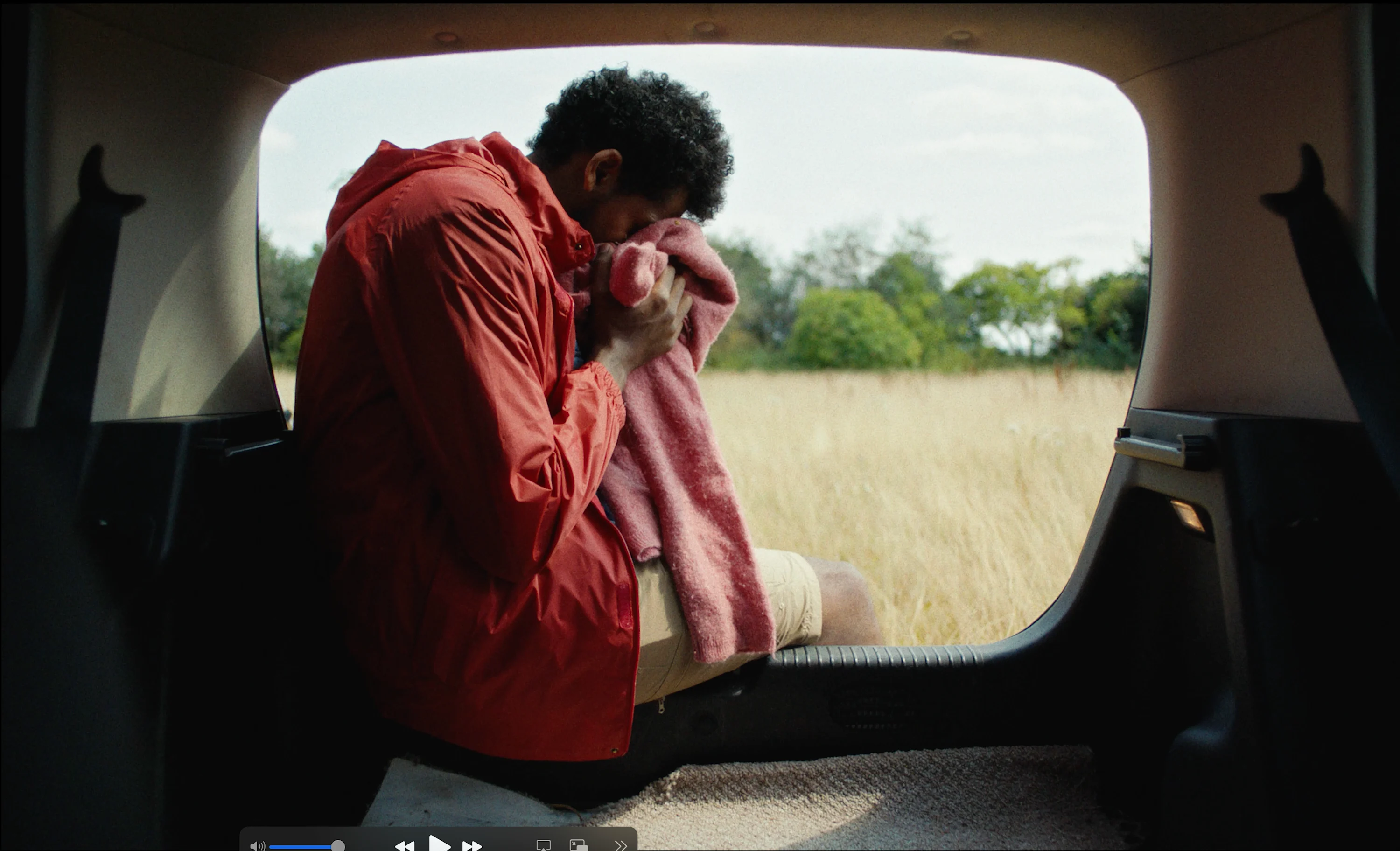
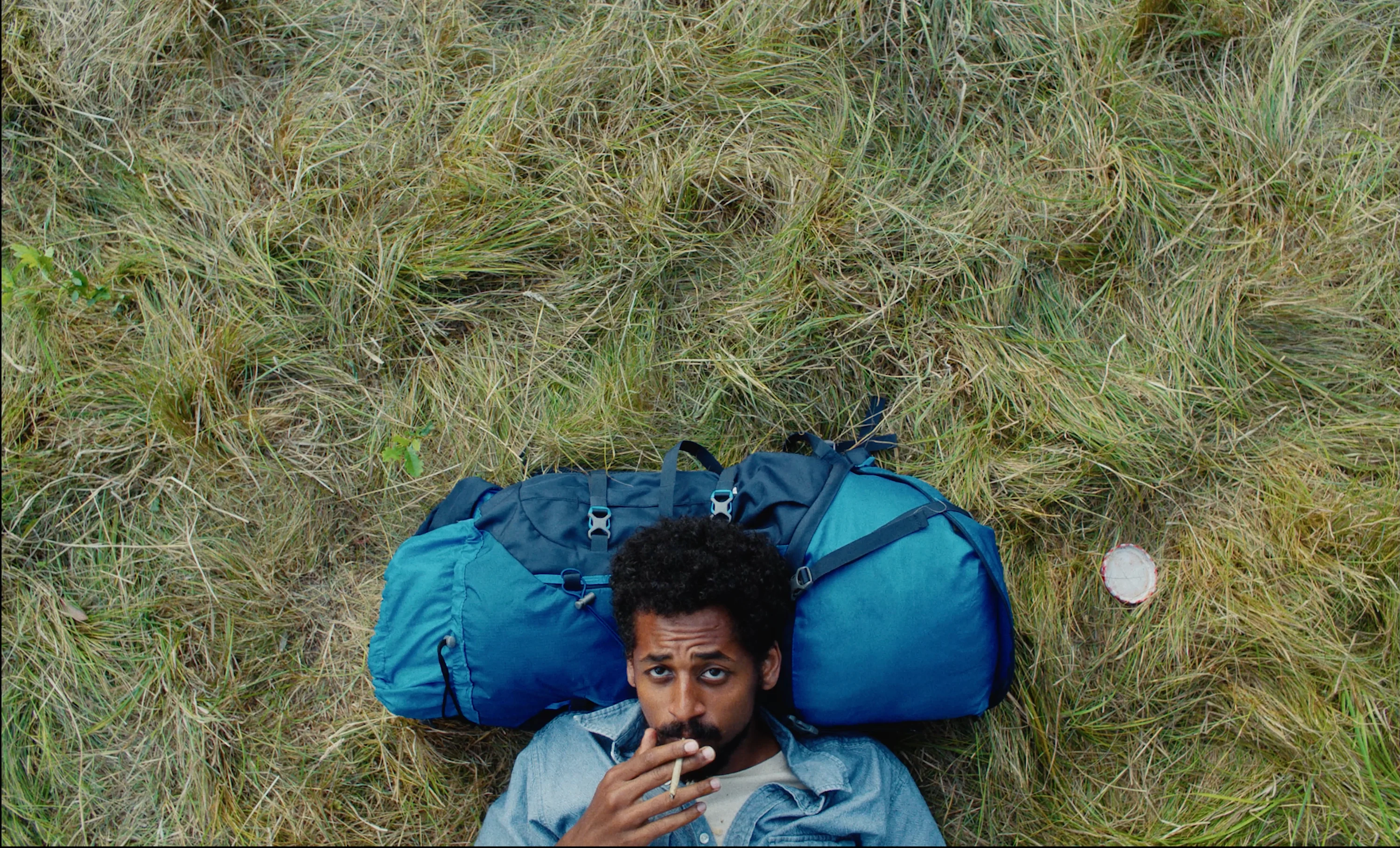
Elsewhere, female creatives like Maisie Cousins and Luna Carmoon were referents, largely due to their potent exploration of the undercurrents of disgust which can undercut desire. “Desire and disgust clashing, that was a big thing I said to our DOP Max Brunner,” Kilercioğlu elaborates. “I wanted the feelings of desire and disgust to sort of collapse in the film.” There’s a certain fleshy fullness to “Getaway,” an encounter with the grotesque of pollen, bodily fluids and skin. And as Michael is confronted with his own desires, his appetites are nodded to in a spectacle of food—in particular, the sticky sweetness of jam. “There’s something about desire being expressed in ways that are quite messy and tactile,” Kilercioğlu adds. “Daniel has this oral fixation with jam and that serves as both a sexual symbol and a way of expressing his repressed desire.”
At the end of the film, Daniel is able to let go of his anxieties, leaving his tent to bask in the morning sun alongside Willow and Fred. The busyness of the frames and closed angles of the film give way to open, languid shots and a stillness reflective of Daniel’s newfound calm and self-comfort. We don’t know if he finds himself embroiled in a tryst with his new companions, but we do know that internally something has shifted: he’s found peace with his own desire, and his wants are no longer a source of horror.