Louie Edison has always been drawn to items and images from a time before him. He feels little connection to the screens and technology of today, instead finding comfort in the past. His printmaking experiments breathe new life into old pieces of ephemera he’s collected, merging them with unconventional materials, from leather to metal. He tells Alix-Rose Cowie about his tactile processes, and the importance of saving and preserving these forgotten objects.
Growing up on a leafy fringe of London, artist Louie Edison inherited a family trait for collecting old things found at flea markets and car boot sales. “I like things that are well made or things that have a past life, that’ve been loved or used for some purpose and then forgotten,” he says. “I think I romanticize a time before me. All my friends are looking forwards, toward AI, and I’m sort of looking back. I find comfort in it.”
I like things that have a past life… that’ve been loved or used for some purpose and then forgotten.
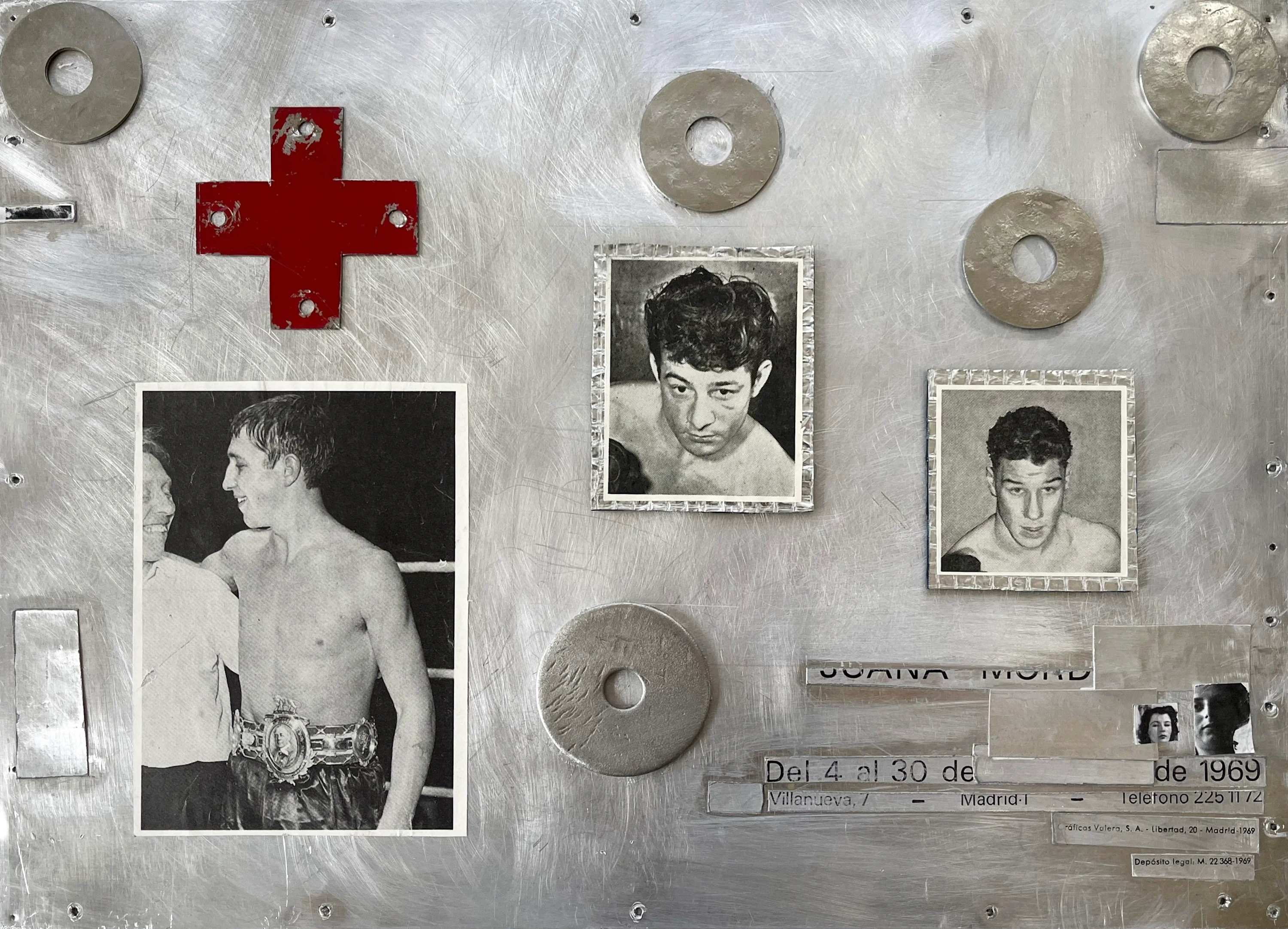
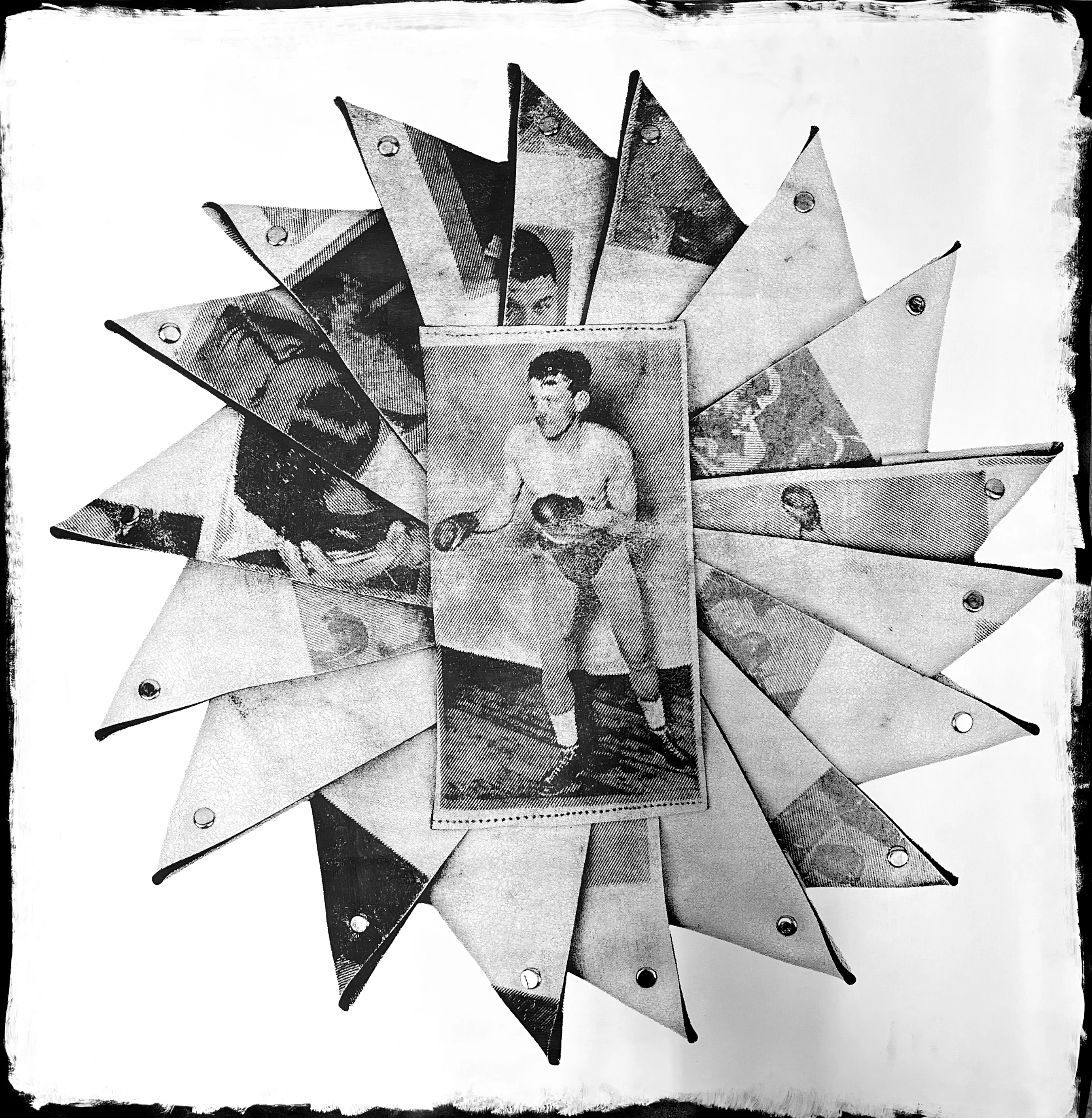
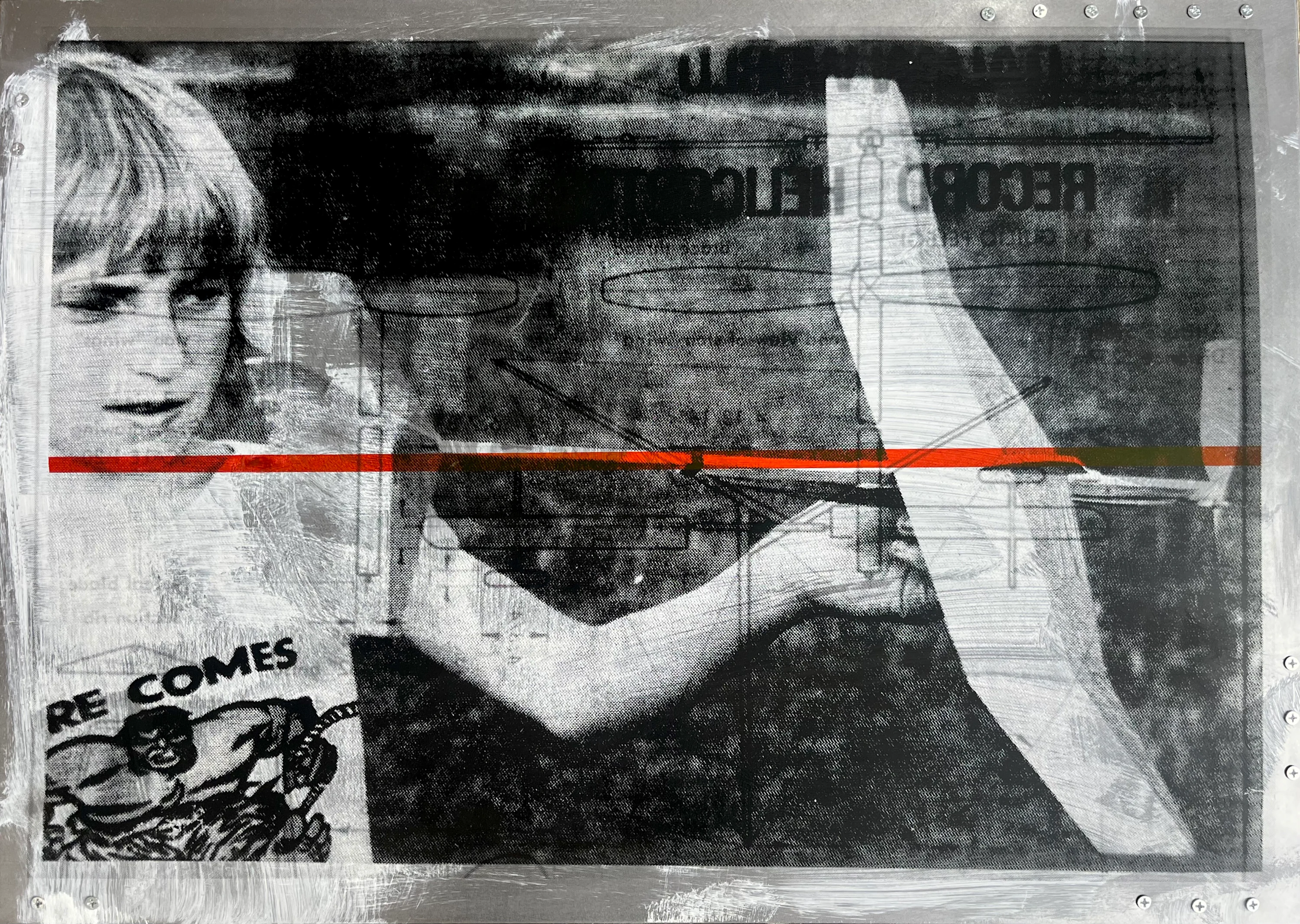
After high school, Edison studied illustration, but was more interested in making work off the page—working with sculptural forms and textiles. After his studies, he worked for a friend’s showroom collecting archival fashion as a rentable reference resource for designers, all the while making art from his garage, which became increasingly limiting as his experimentation grew. He enrolled in a printmaking course at the Royal College of Art to learn as much as he could in a year, with all the tools, space and feedback he was craving. For his recent graduate exhibition at RCA, he scanned and pieced together discarded photographs and scraps of ephemera he’s collected, then screenprinted the artworks onto unconventional materials—leather offcuts, sheet metal, or wood—to play with the possibilities of printmaking.
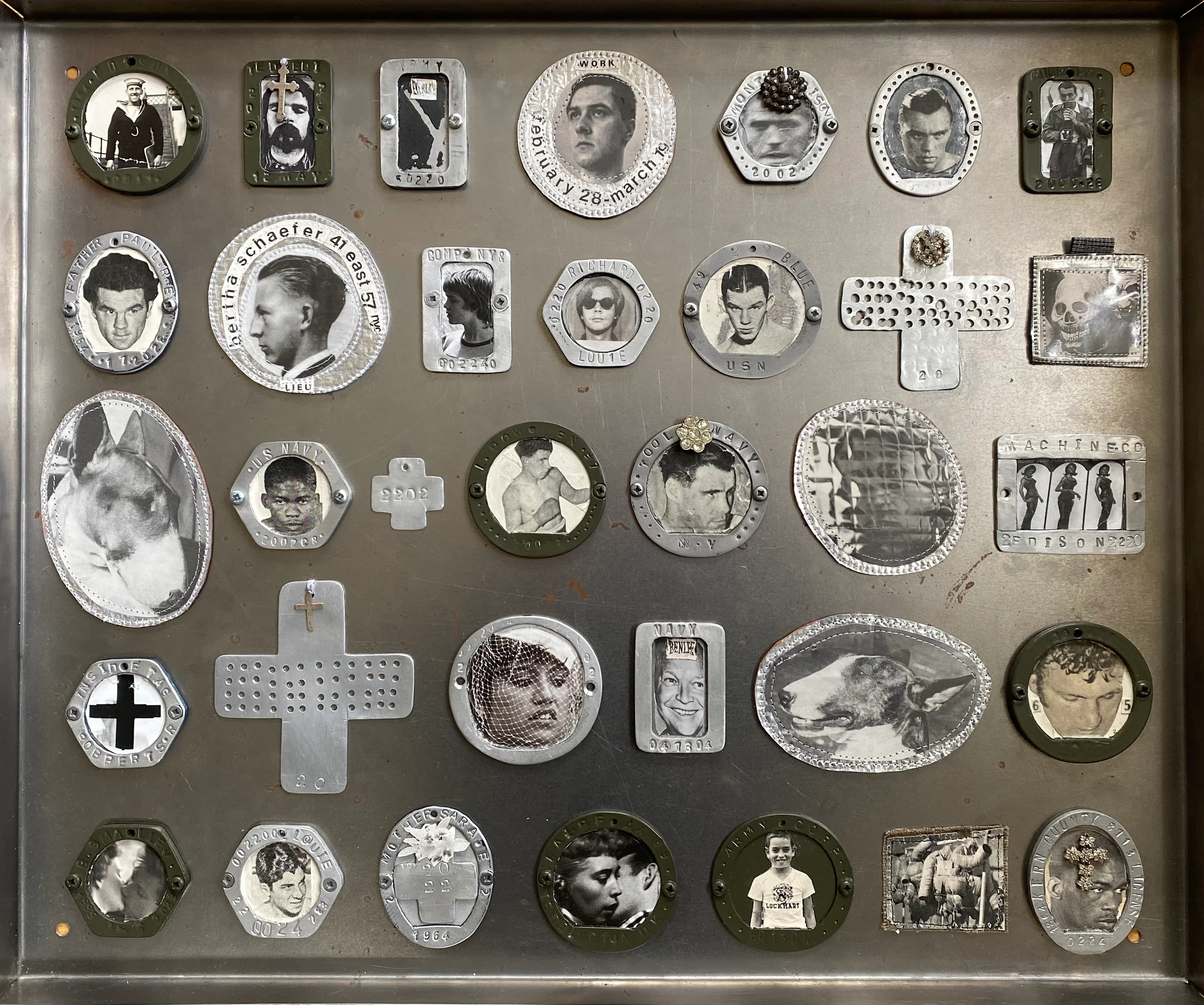
“I don’t really know where I stand in terms of being an artist,” Edison says. His collages of crests and buttons, snippets of text, inky, dip-penned letters and black and white photographs of sailors, lovers and boxers are begging to be read into. But he insists their meaning would only be viewers’ projections. The content in his works is a means to explore materials and processes, and to question whether a three dimensional object is still considered “printmaking” or if a two dimensional steel jacket could be “fashion.” “But I like that people read different things from it,” he says.
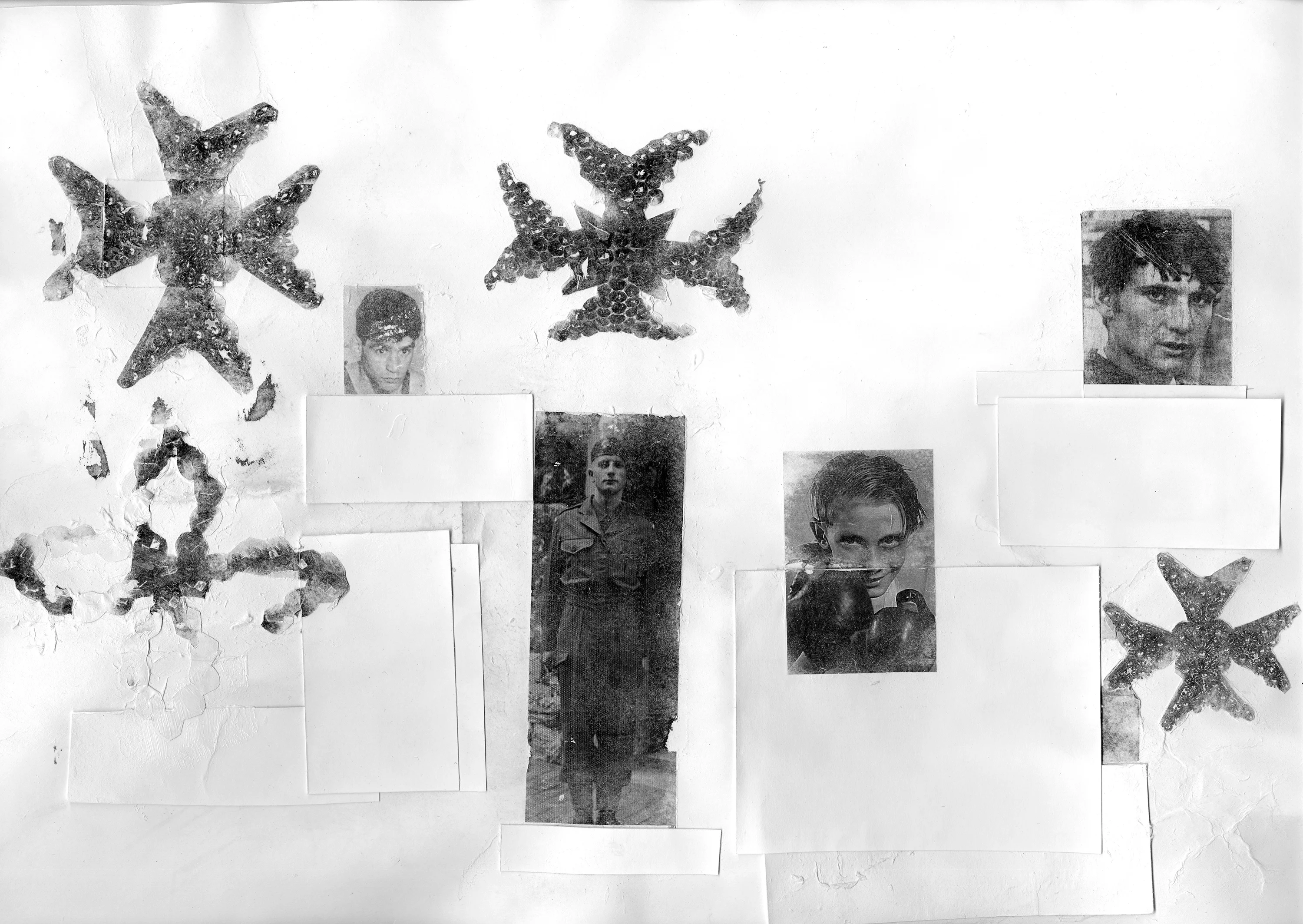
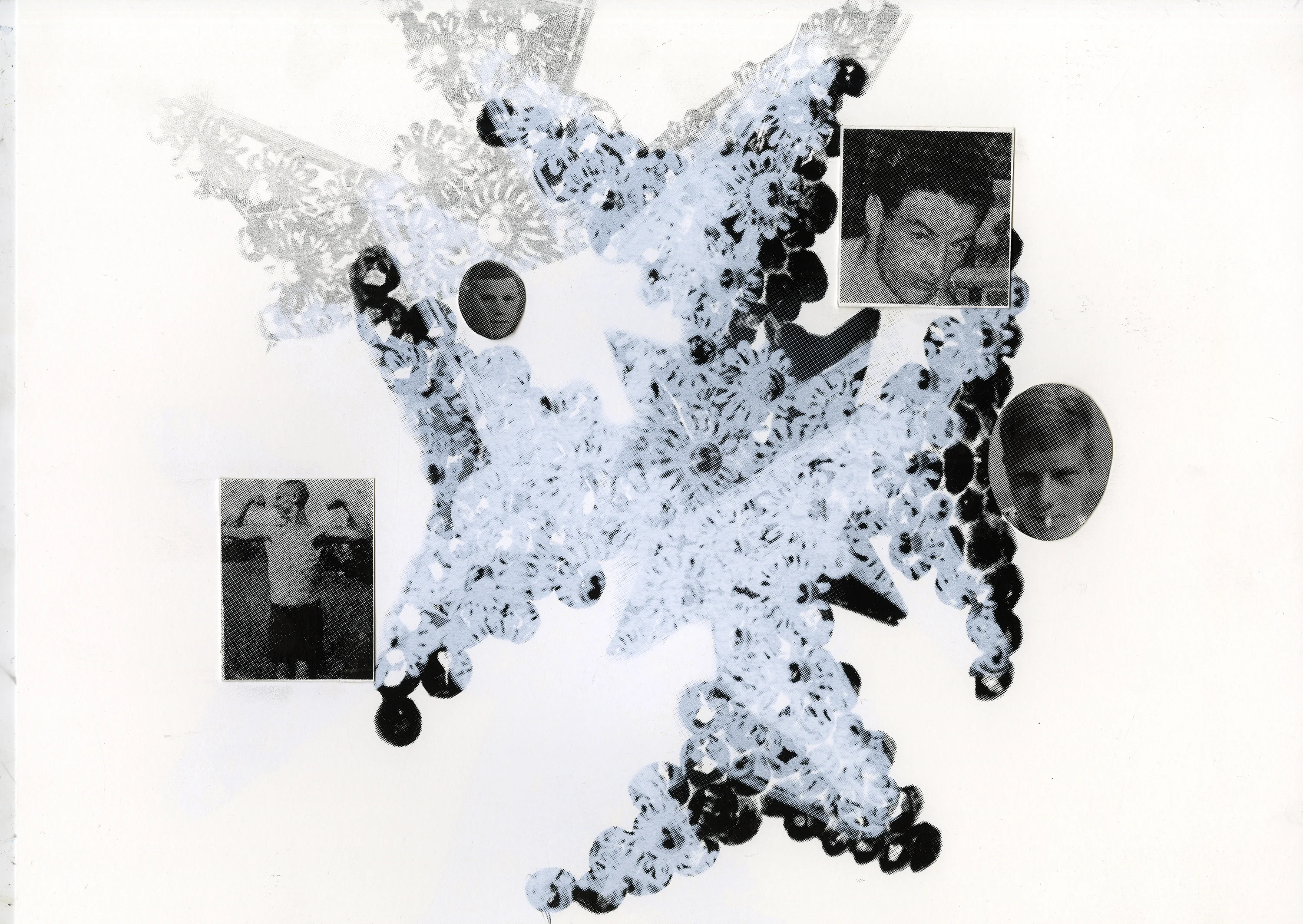
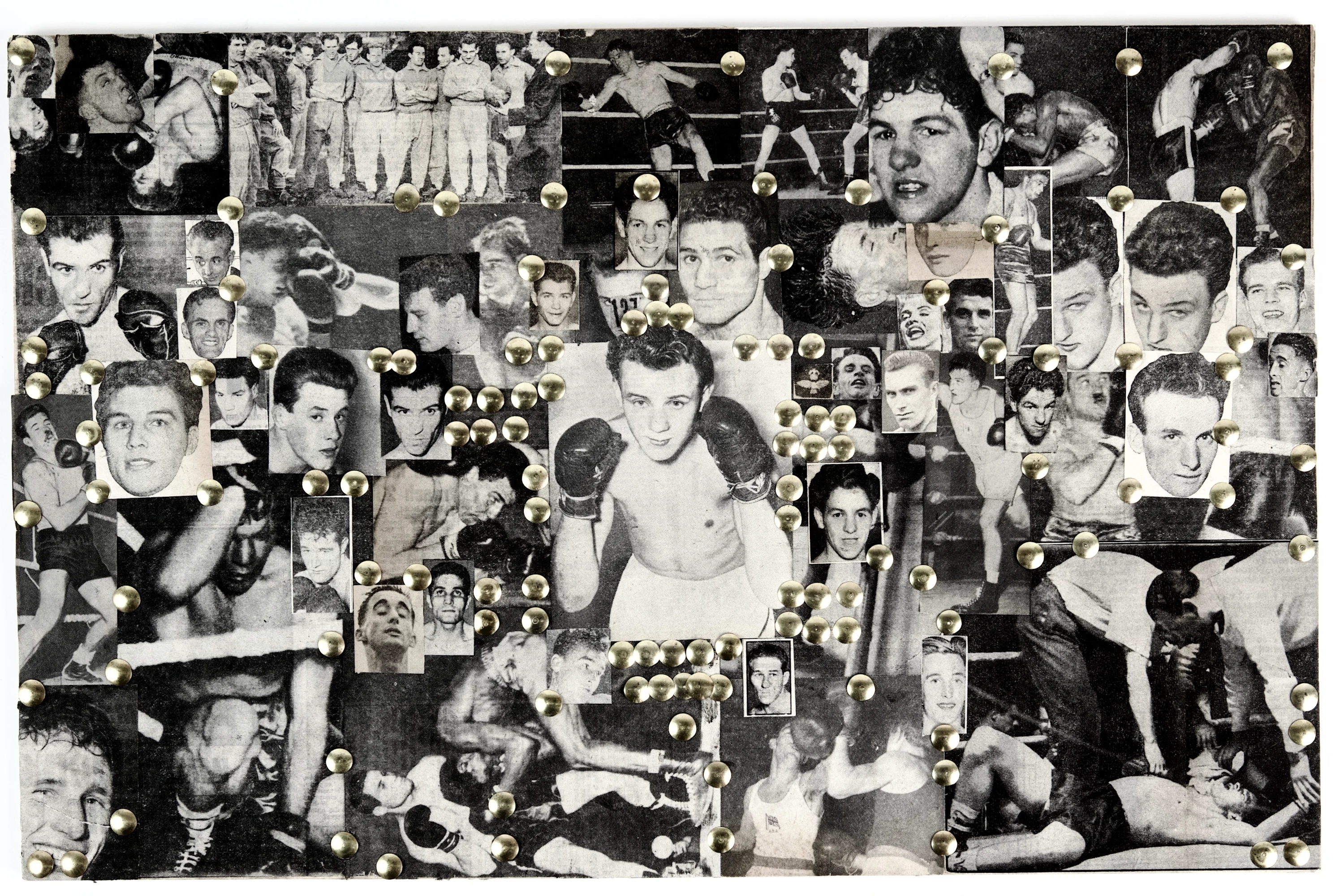
Edison’s visual language evolves from the meeting of market finds with niche internet deep-dives: the team vests worn by 1950s Speedway racers, the decorative cockade on Napoleon Bonaparte’s hat or the rivets on military airplanes. His studded constellation of brooches and buttons on soft goat leather in “Second Skin” is inspired by the placement of symmetrical Russian prison tattoos and the studs on vintage leather motorcycle jackets from the USA. “Champions” is a collage featuring photographs of boxers from the 1940s or 50s with broken faces and Brylcreem hair, dotted with drawing pins inspired by championship boxing belts, but also made to look like pins on a young fan’s corkboard. The images come from a homemade booklet he found on eBay that someone had made from news clippings about boxing champions of the time. “It was all completely disintegrated and falling apart,” he says. “So I just sort of saved it.”
I think I romanticize a time before me… I find comfort in it.
Currently he’s interested in personal photographs from the 1930s and 40s, when portable 35mm film cameras were just gaining popularity with amateur photographers for documenting their travels or getting family to pose in the garden; free from today’s pressures of instant viewing, scrutinising, trashing and retaking in real time. Sifting through these discarded keepsakes, which he gets from sellers working estate clearances, he selects the faces that he finds most interesting for one piece or another. “I like preserving that stuff in some way, even if it’s just one or two photos here and there,” he says.
Seeing Peter Blake’s 1961 painting “Self-Portrait with Badges,” in which the artist stands in a denim jacket adorned with patches and badges referencing various interests, affiliations or cultural movements, got Edison thinking about creating a deconstructed self portrait. From his collections of unwanted images, he chose pictures he could associate with people he’s close to—one for his mum, one his brother, a friend, and his dog—creating individual frames for them in a metal workshop. The intricate frames are inspired by vintage American employee identification badges which he added text to with a metal stamp.
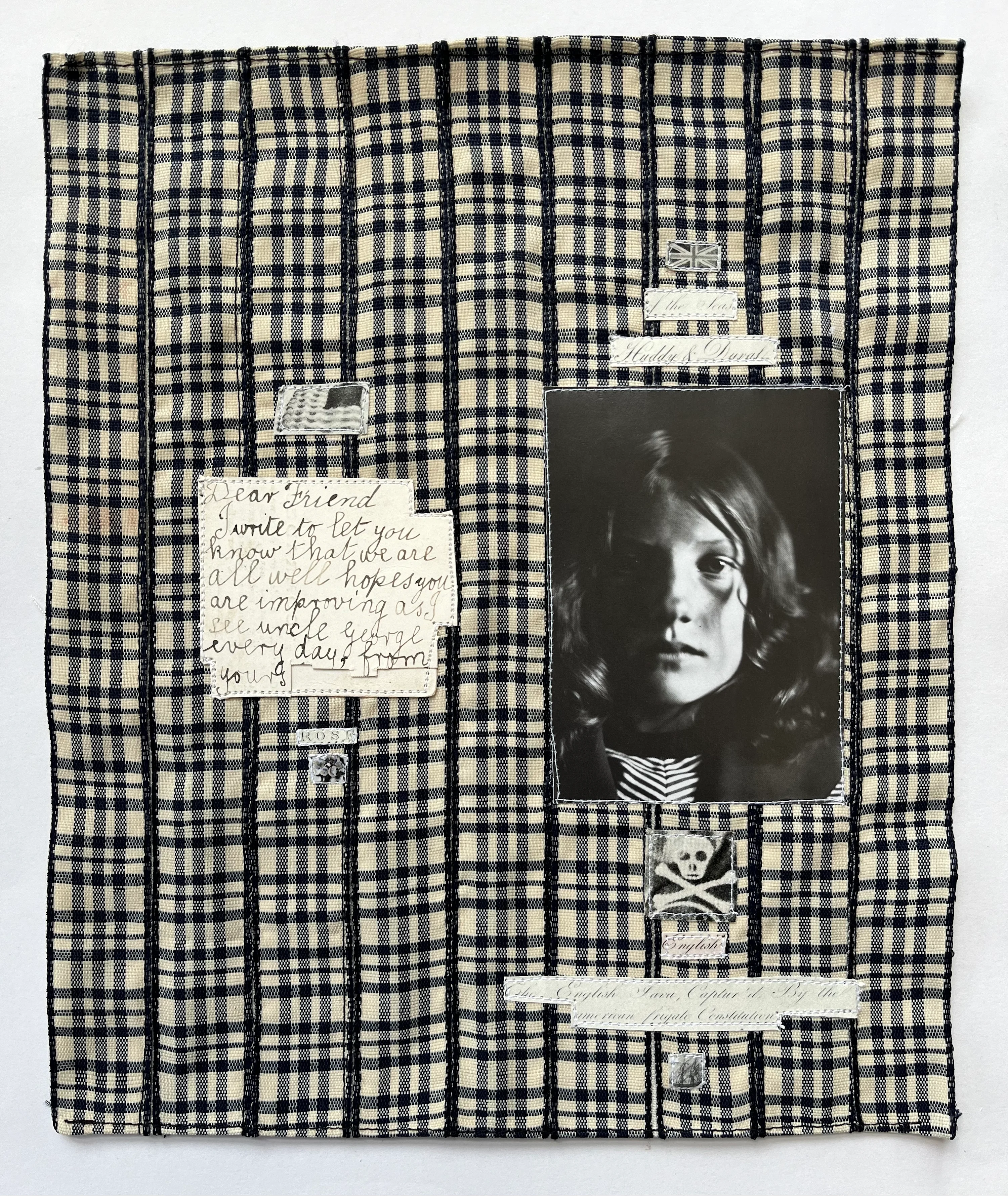
“[The photographs] are sort of worthless in a way because they’re just left in a box, so I’d pair this lost image with someone that has some meaning to me,” he says, giving them a new story and a place to belong. Some of the frames he powder-coated with green paint to add color, and others he added detailing by sewing stitches with the silver lining of bulk onion bags.
Repurposing, screenprinting, metal-stamping, leather-folding; Edison enjoys figuring things out by hand. “All these processes are quite tactile and physical and that’s what I find very enjoyable,” he says. “I don’t think I’m built for a screen or technology today.” He also quite enjoys that over time, for someone looking back to now, his steel artworks might’ve begun to rust. “It will slowly mark over time, which is quite nice because it’s not meant to be a perfect thing,” he says. “I think it’s meant to change and exist and live.”