
It was the eight years artist Holly Keogh spent working in a high-end vintage store—watching on as clients browsed, envisioning their dream homes—that inspired her to consider the ways we stage our lives, the performativity of the “ideal home.” Her paintings depict these pristine domestic spaces, but often include a ghostly, sometimes sinister presence, a nod to the cracks beginning to show. She tells Alix-Rose Cowie how she explores the ways glamour, opulence and performance are used to conceal the realities of life.
For eight years, artist Holly Keogh worked part-time in a high-end vintage furniture store in her hometown of Charlotte, North Carolina. The furniture and decor was arranged to create staged living spaces throughout the shop where mostly women would browse, envisioning their dream homes, and interior designers would select classic pieces for clients who were outsourcing their personal taste. On quieter days, Keogh paged through the coffee table books showcasing aspirational interior design, shot with artificial light and nothing out of place; no rumples, crumbs, pets, people. She became close with the owner and familiar with the clientele, and thinking back on her time spent amongst these compartmentalized vignettes of a house inspired her to dig into the bigger themes of constructing and performing identity and desirability in her paintings. “That’s where this idea started,” she says, “of the interior versus the exterior, and the way we stage things and for who.”

The interior versus the exterior, and the way we stage things and for who.
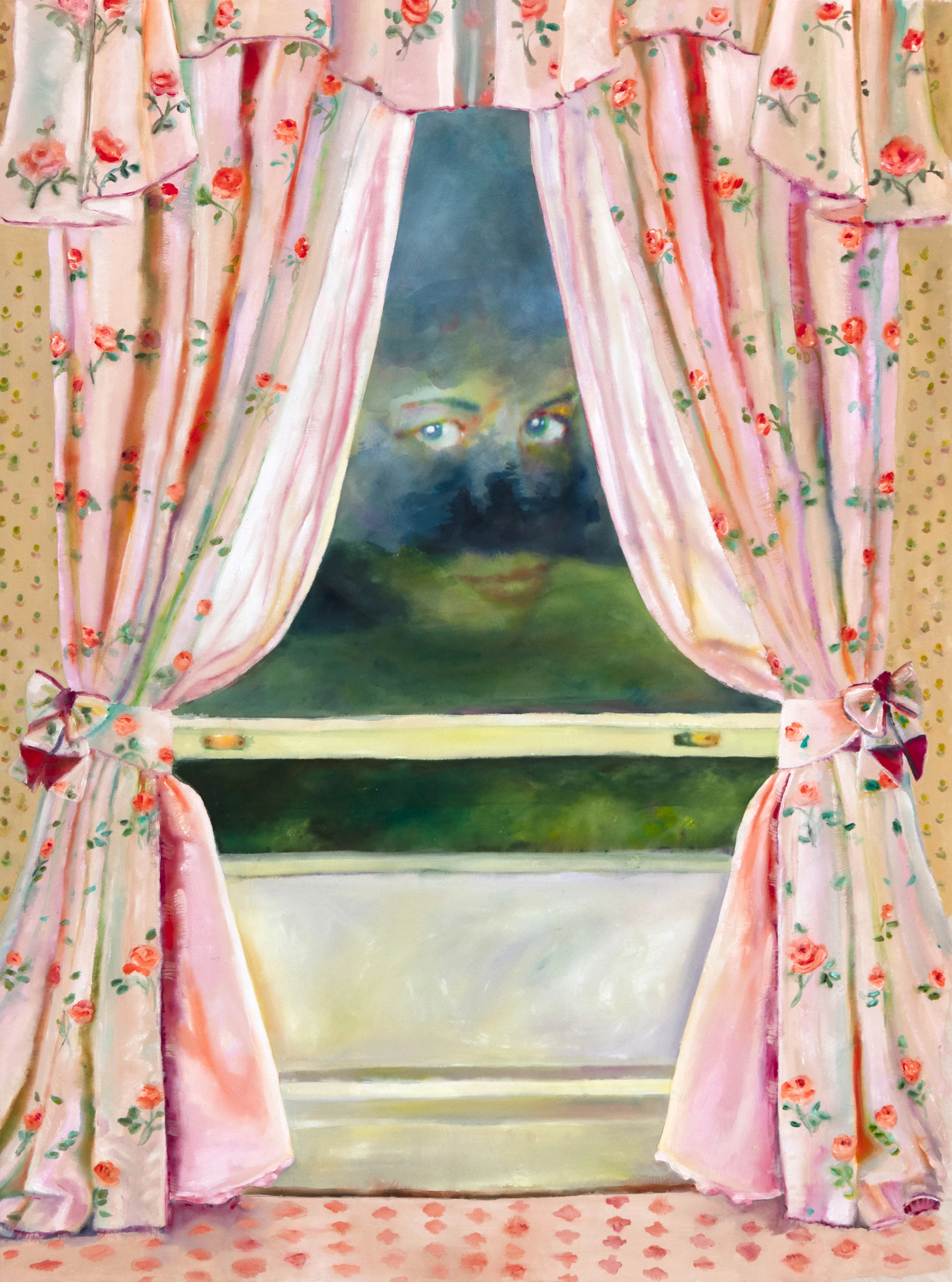
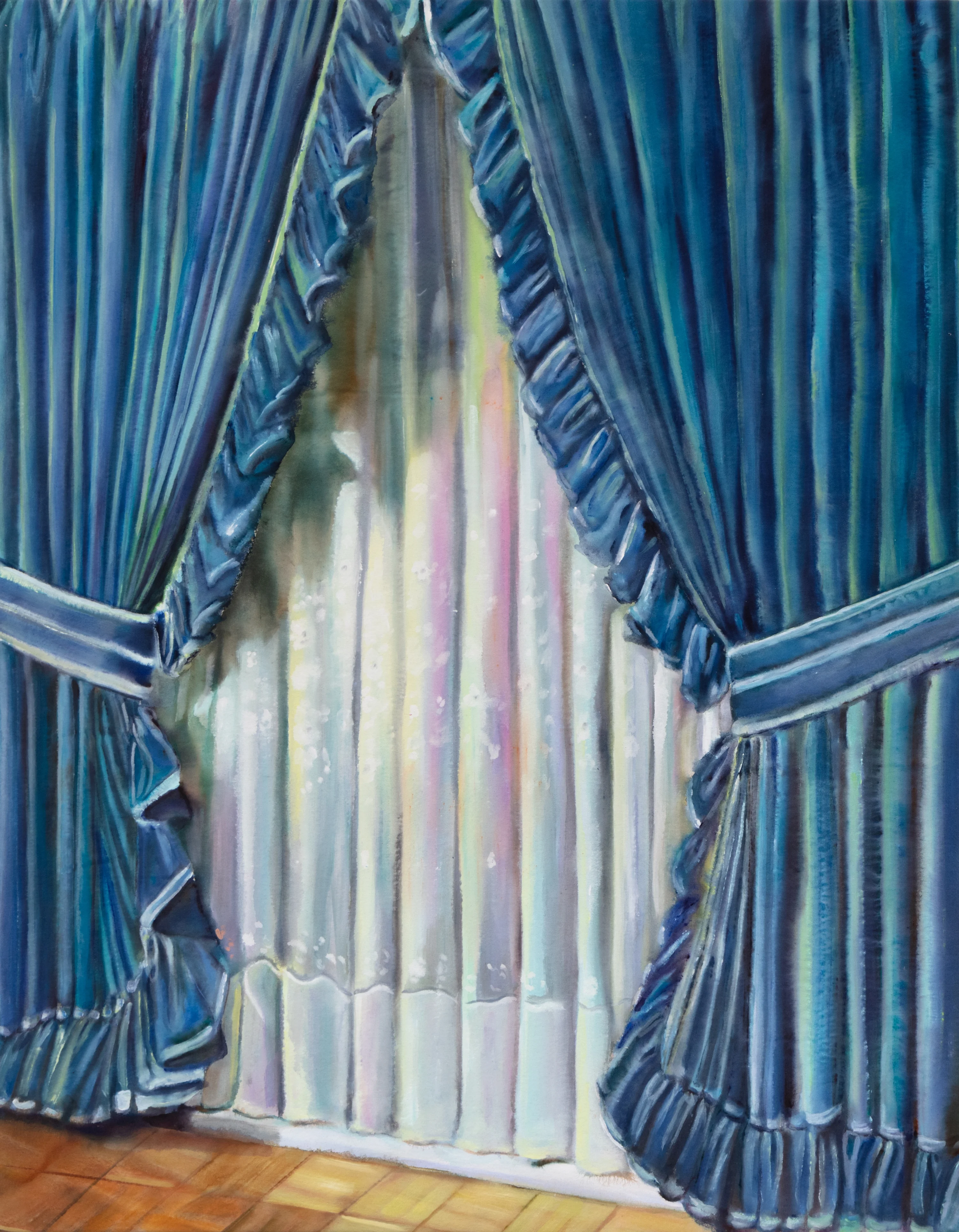
“Bang Bang Bang On The Door, Baby!” is a lyric from “Love Shack” by the B-52s, released in 1989, and the title of Keogh’s recent solo exhibition in London. The line is a kind of invitation into her show house of paintings. “I like that it operates in this weird space where it could be really happy and fun, like a party invitation, but it could also be something a little bit darker,” she says. A few of the artwork titles come from real estate writing, spinning every possible feature of a property into a selling point, and glossing over the shortcomings. “Serene Master Suite” is an angled crop of a double bed under a sour-green, satin quilted comforter you can almost feel a hang-nail getting caught on. In “Ideal for Quiet Reflection,” a window is curtained by cascading pink, rose-printed drapes pulled back with bows that frame a woman’s face eerily looming through the glass.


The setting for the artworks is 1970s-1990s opulent American suburbia, where being a successful homemaker, and therefore a valuable woman, is performed through an abundance of frills, pastel wallpaper, silverware and matching patio furniture. Growing up in the US is only something Keogh’s been able to properly reflect on from the distance gained relocating to the UK (the birthplace of her parents.) “You can’t be living in it to create a fantasy version of it,” she says.
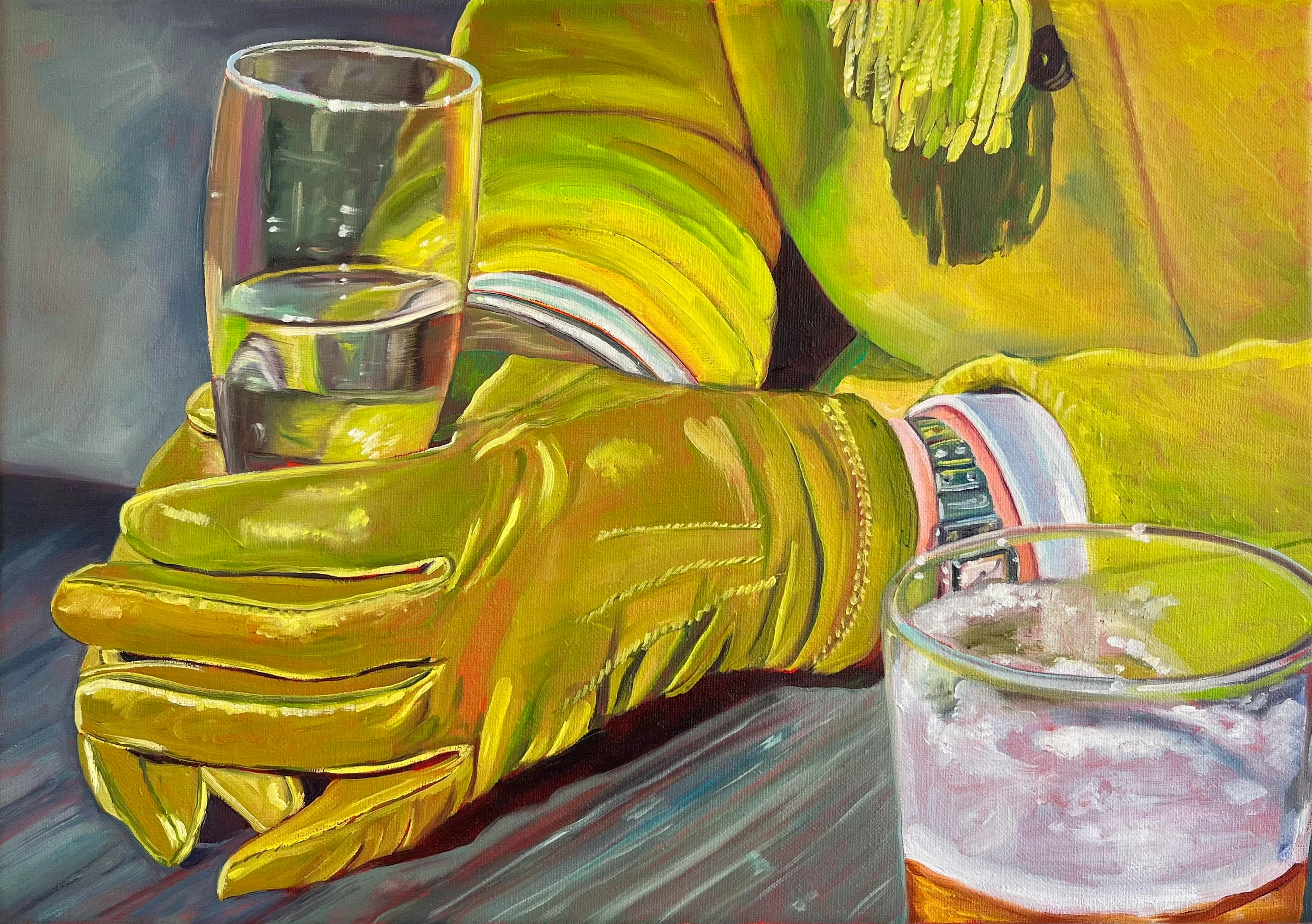
In her saturated, close-cropped home-scenes, the cracks are starting to show, and when viewing her work, she hopes other senses are spiked too; the uncomfortable temperature of room, or the clip-clopping of heeled shoes down the stairs. When painting “Pulling the Rug,” she was thinking about the smells trapped in the carpet lining an old staircase, describing the colors as “kind of gross and sweaty.” Working with color is her favourite part of the process, making choices that aren’t obvious, dialled-up but still realistic. “I think color can add sophistication to something that might already be a little bit camp,” she says.
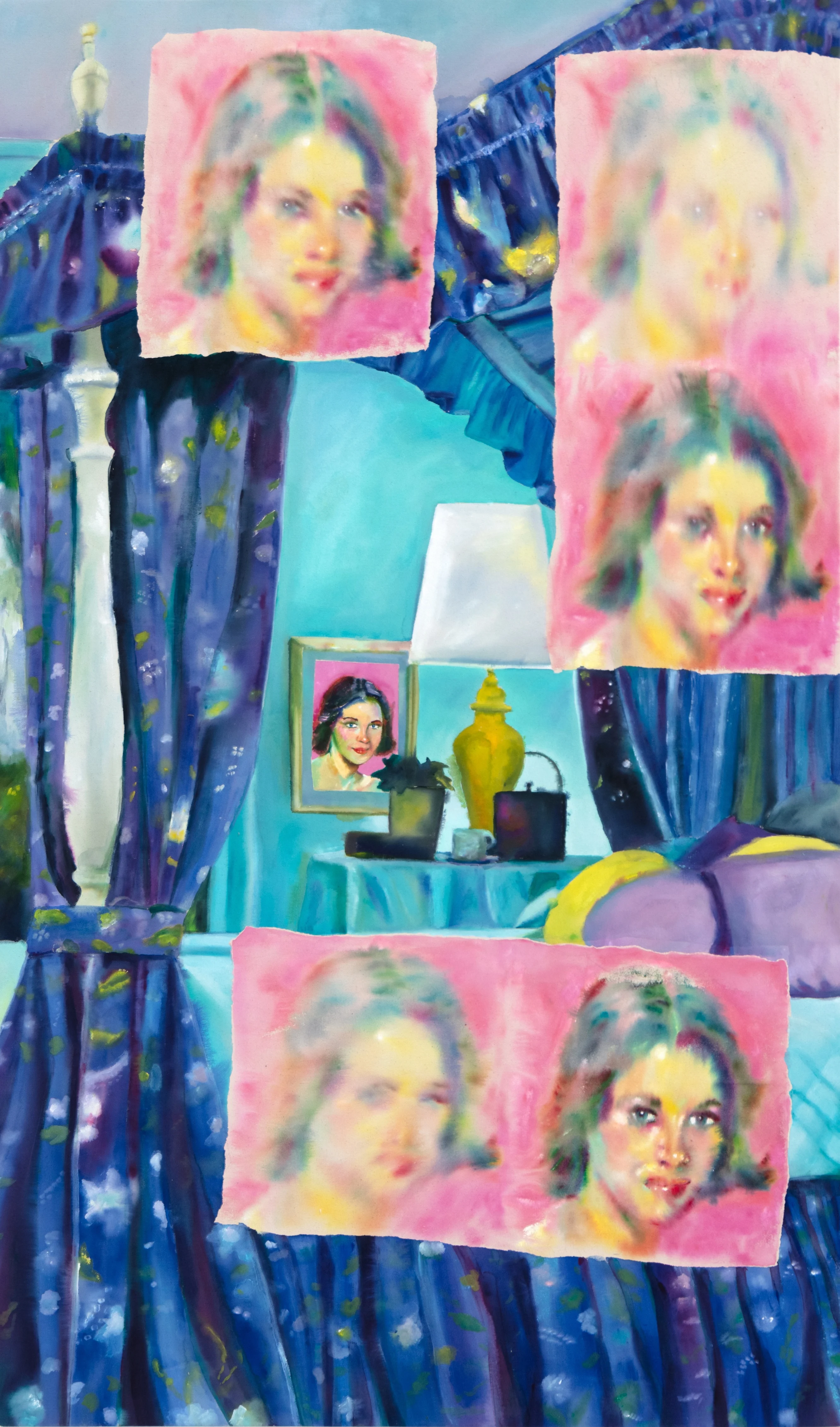

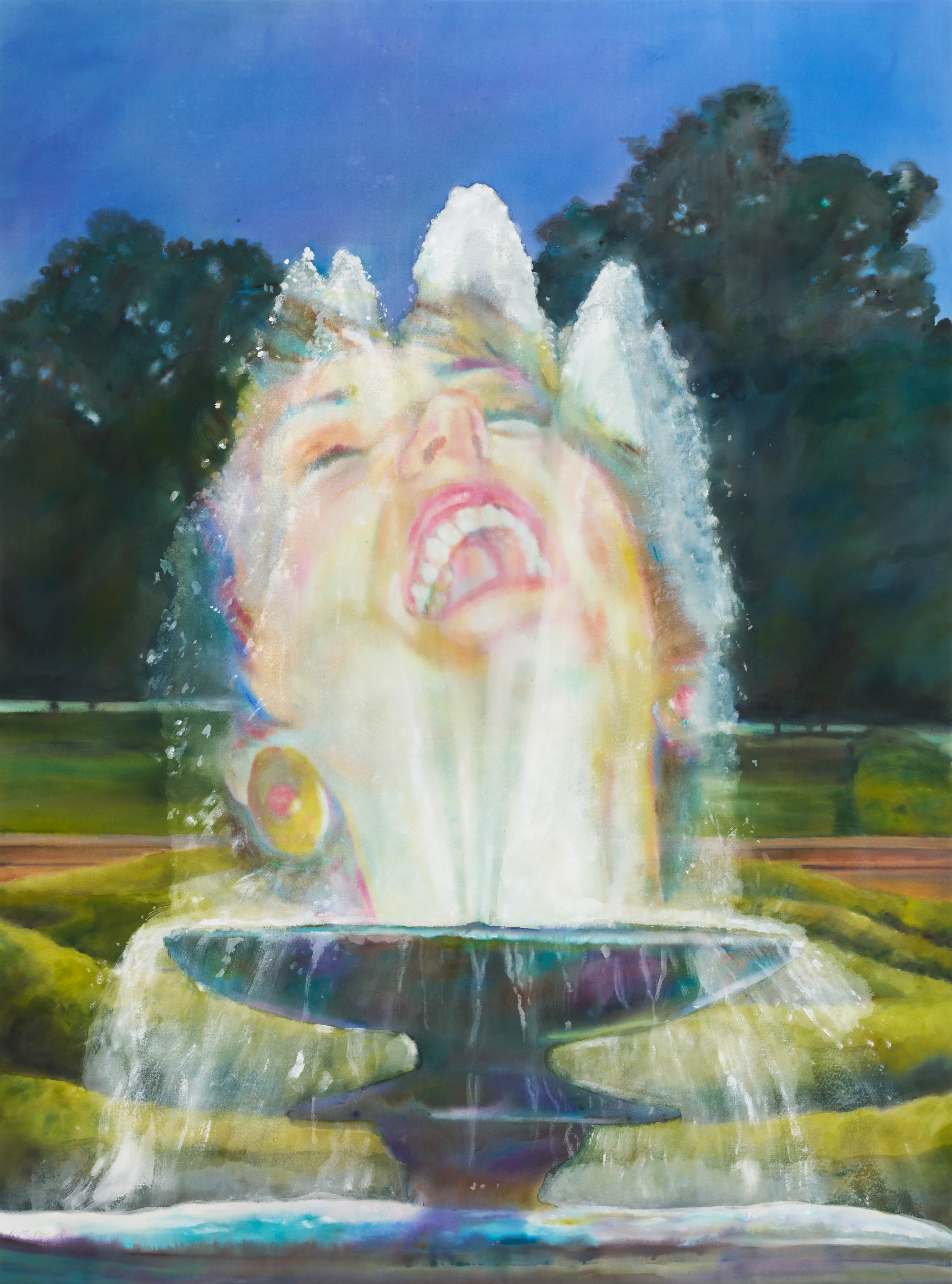
The people in Keogh’s home scenes appear as apparitions, overlaid onto the completed interior scenes through a printing process using upholstery foam as her plate. A woman’s made-up face—head thrown back in laughter, white teeth against hot pink lipstick—is printed oversized and floating onto the arching spurts of a fountain. Another woman at the open door to a balconette, blonde hair pulled up into a French twist, is printed so slightly so as to see right through her and her lingerie.
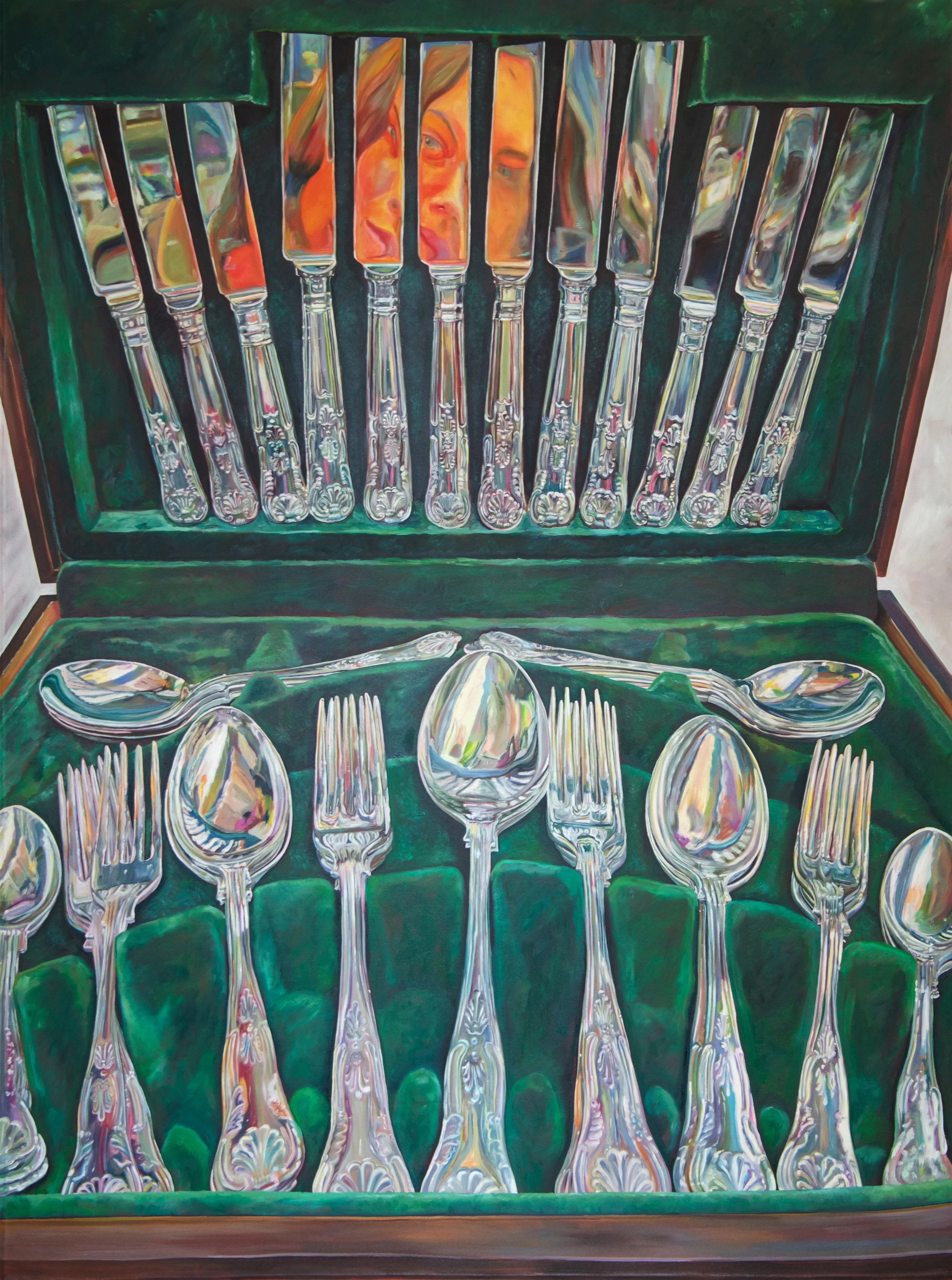
Using a material made for sofas and mattresses is conveniently conceptual—Keogh was looking for a large surface that was lightweight enough to maneuver. Essentially a sponge, it means she has to work quickly before the paint dries, making flash decisions. “I like that you can’t overthink it, and then printing the image, it will bleed or fade in ways that I can’t really control,” she says. The imperfect deposits complicate the images underneath. For certain works, she’ll continue pressing the painted foam across the surface, as the residual image gradually fades. She sees this as a way to suggest motion, as if she’s capturing the scene on a camera set to long exposure, where the room remains static but anything that moves is caught in a blur.
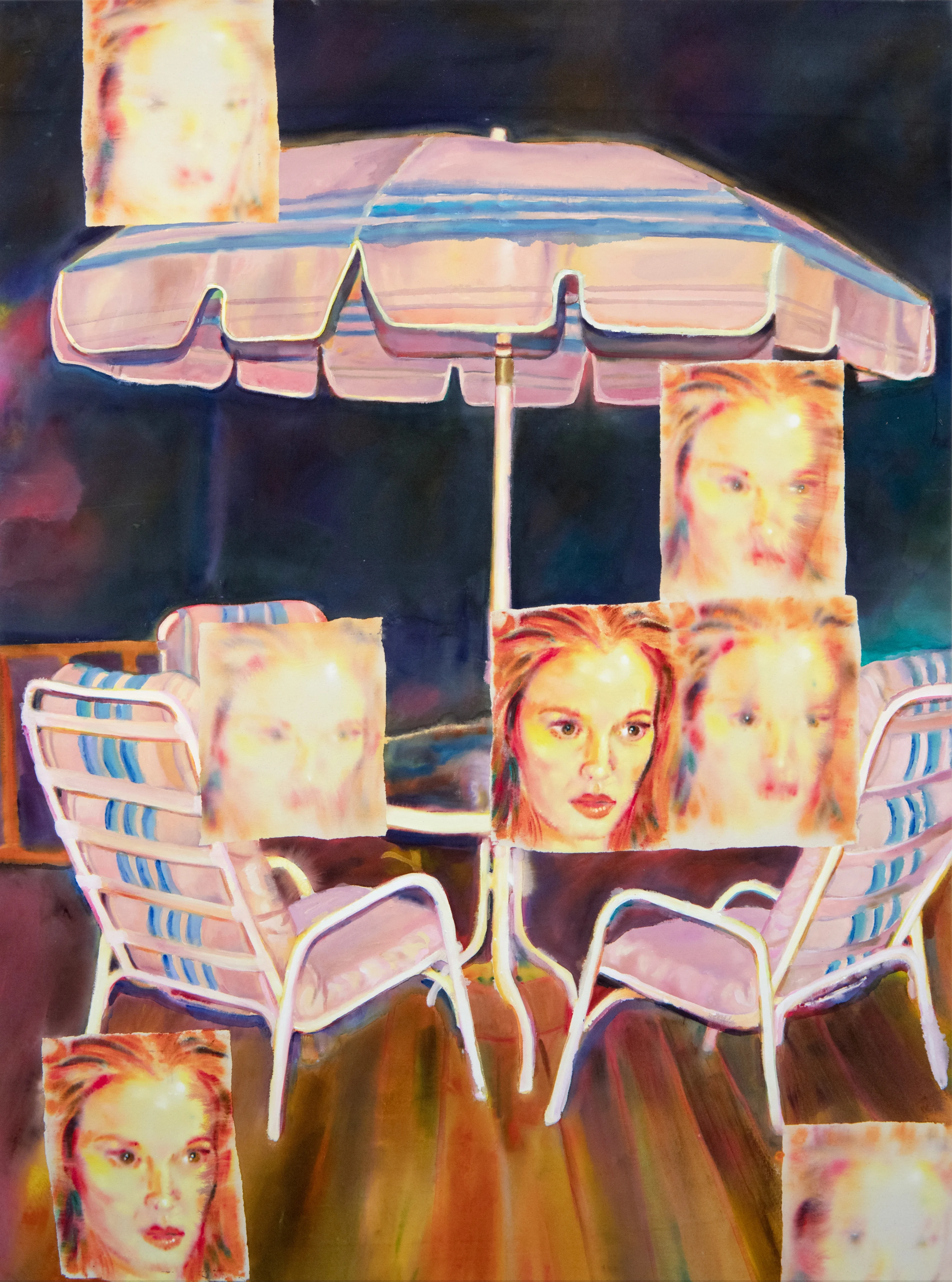
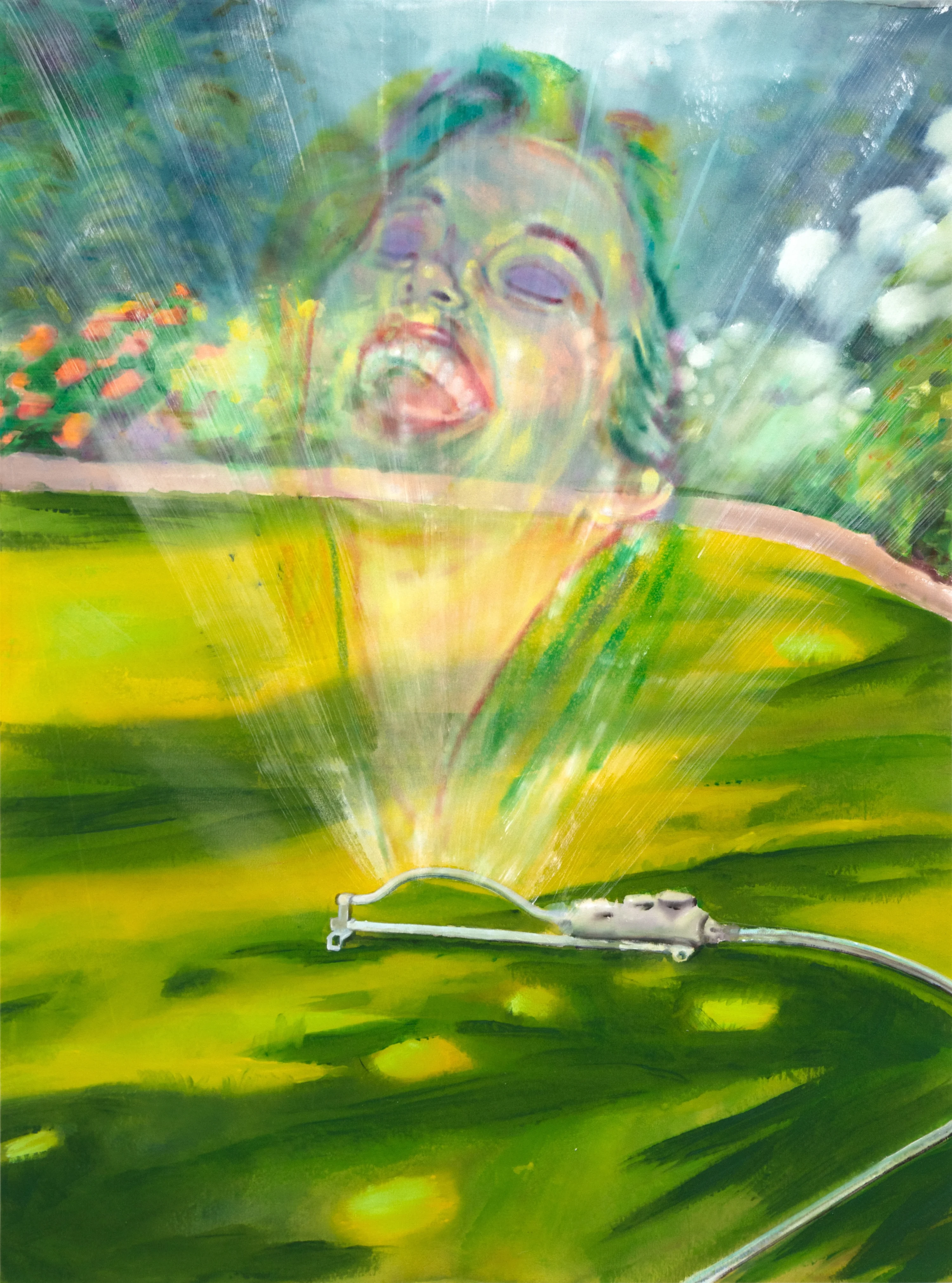
Keogh’s references for people are the anonymous models in outdated “How-To” books for women on home-making, crafts or knitting that she uncovers in thrift shops, and photos of real friends and family. While neither are movie stars, she finds it especially interesting that viewers have asked if one face or another is Marilyn Monroe—the prime example of the fiction and construction of glamour. “Through the painting process I can heighten glamorous aspects of anonymous people,” she says. “In this way the materiality of painting itself is quite interesting as a tool to construct or blur a persona. She hit the jackpot when she discovered a book from 1982 filled with women’s faces demonstrating what colors to wear to best suit one’s complexion. The trend, which categorizes women into seasons (winter, spring etc), has gained renewed popularity on social media, promising women fool-proof attractiveness by following the rules of which palette makes them look untired and acceptable.
Although Keogh’s faces and furnishings reference the past, the glamour from those eras endures, still effectively translating the persistent, societal pressure to keep up appearances. Only, in today’s context, our work is to keep up the online personas created to market our services, style and selves in order to afford our houses.