
In Glacier View, Alaska, the annual 4th July celebrations are a little different to what you’d expect—people gather to watch dozens of vehicles fly off a 300-foot cliff. Visitors cheer and chant as cars, trucks and the occasional boat soar through the air before crashing dramatically into the ground below. Captivated by this surreal spectacle, photographer Clark Hodgin knew he had to experience this unusual Alaskan tradition. He tells writer Gem Fletcher about the collective desire for release that he witnessed in its aftermath.
“I remember having this undeniable feeling that I was witnessing something greater than reality,” says photographer Clark Hodgin about the moment he discovered amateur videos of The Glacier View Car Launch online. “What interested me the most was the contradiction. The event ran counter to so much of my conventional thinking. There was something almost archaic about it and this sense of reckless abandon. A collective fuck it mentality happening against the backdrop of one of the most beautiful places in the world.”
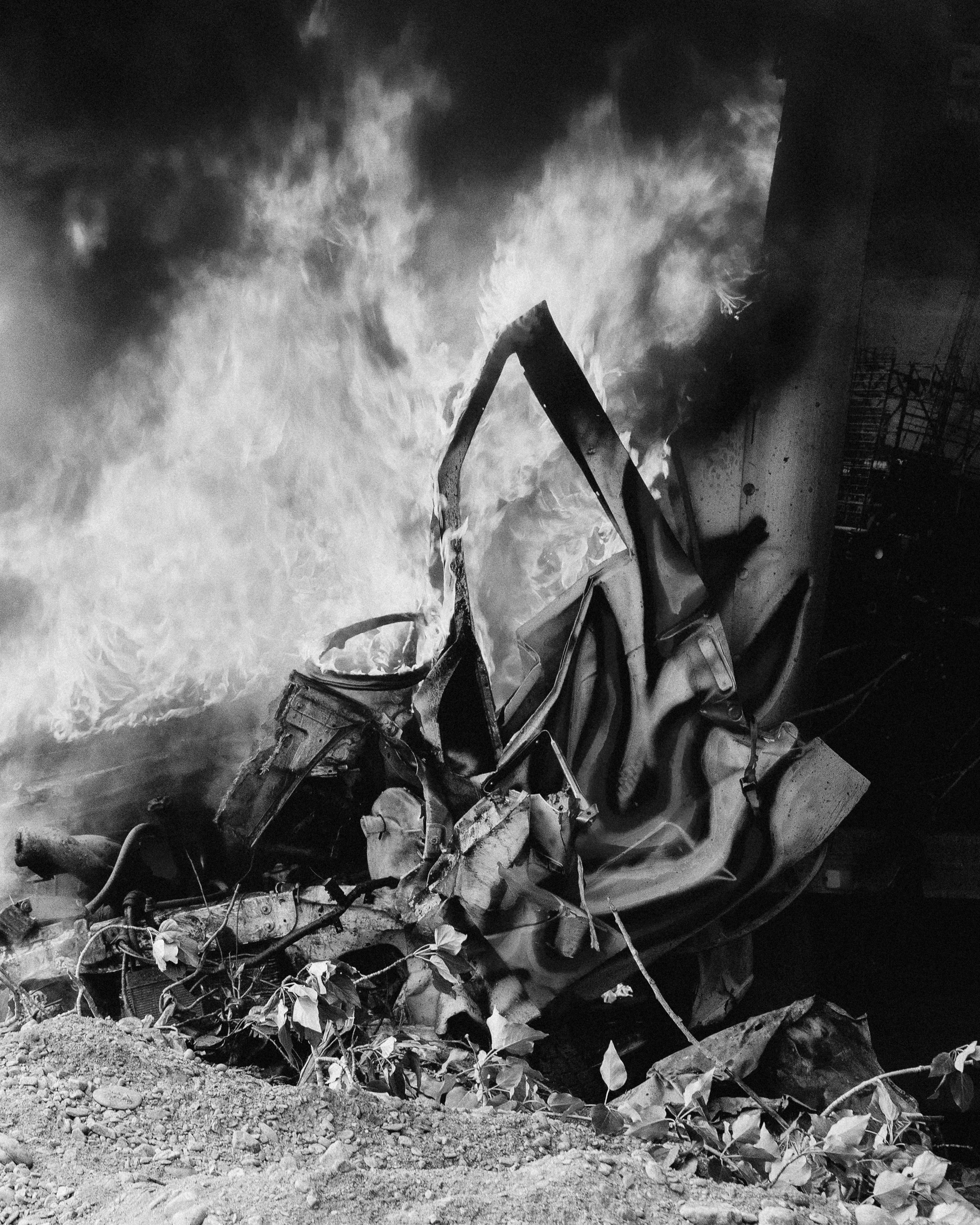
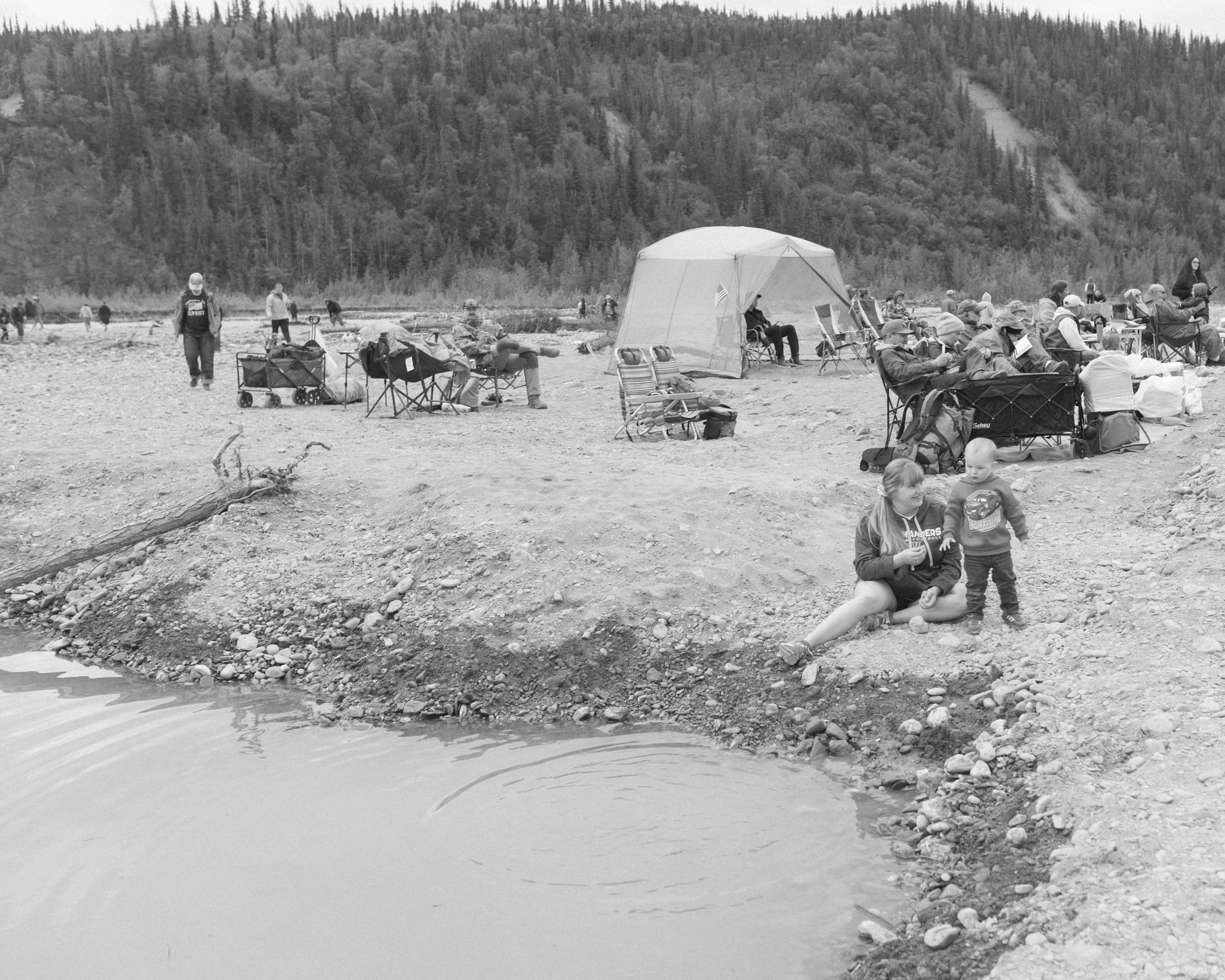
The Glacier View Car Launch is an annual Fourth of July tradition near Anchorage, Alaska, where dozens of donated and junk cars, trucks, buses and the occasional boat are sent flying off a 300-foot cliff. As the vehicles soar through the air, crowds of up to 10,000 people cheer and chant, watching on as the cars tumble down the cliff before finally making impact with the ground, sending plumes of dust and dirt into the air. Over the course of one afternoon, around 30 vehicles are launched; sometimes multiple are sent simultaneously, colliding with each other to dramatic effect.
Much local lore surrounds the origin story of the car launch. According to Hodgin, few people know exactly when and why the tradition began, and this lack of clarity only adds to the ritual's strange mystery. Some claim the event was born out of necessity. The perpetual twilight—an atmospheric and astronomical phenomenon in which the sun fails to drop far enough below the horizon for true night to occur—renders the landscape in a golden hour that never ends, where fireworks can’t be fully seen. “The day never really ends in perpetual twilight,” recalls Hodgin. “You don’t really know when to go to sleep, and that was very strange.”
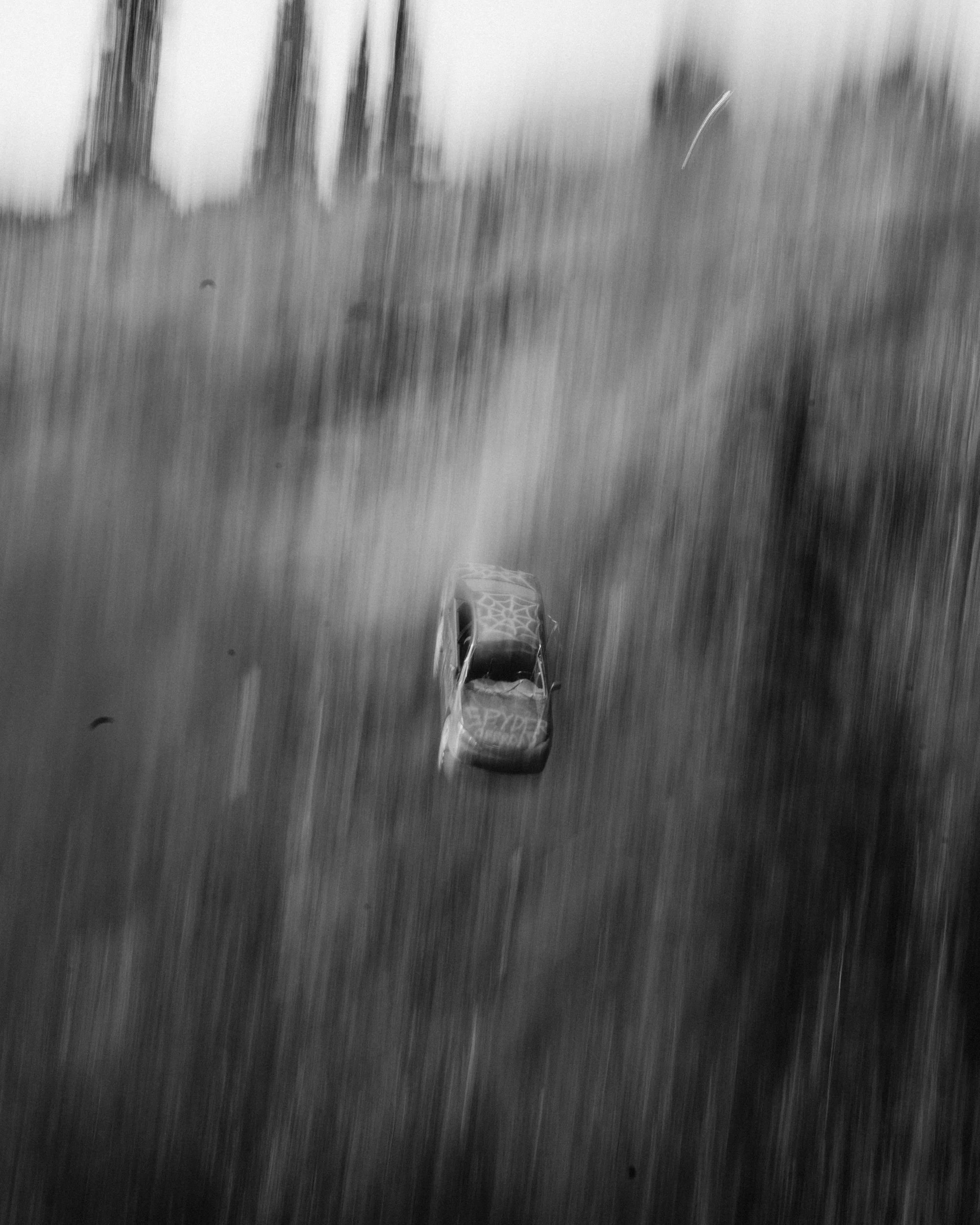
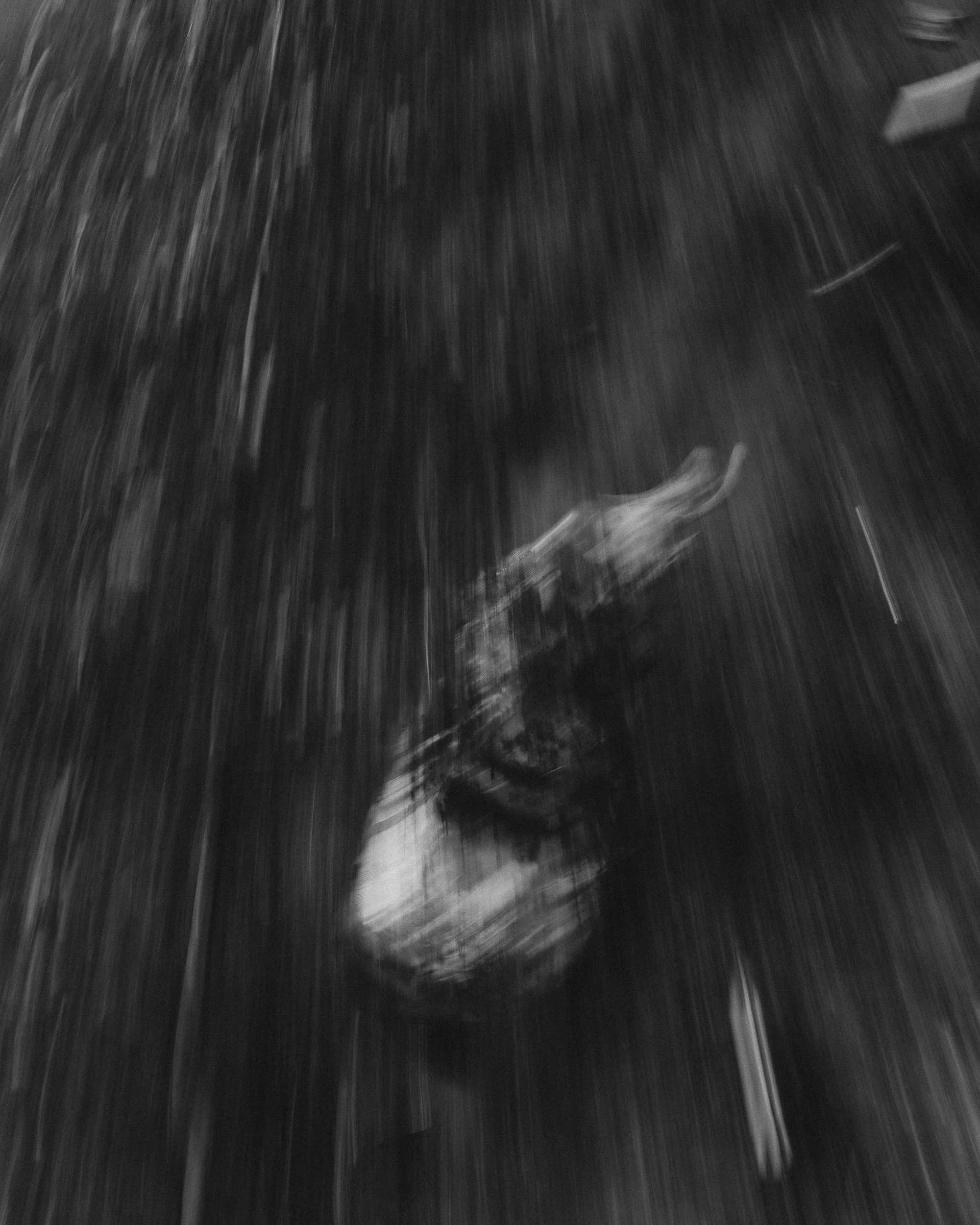
I remember having this undeniable feeling that I was witnessing something greater than reality
Hodgin, who typically focuses on portraiture, deliberately chose to avoid preparation ahead of making the project. Instead, he sought an intentional naivety: a desire to respond to what he encountered with an open mind, without any preconceptions. He booked a flight to Anchorage, found a campsite and let events unravel in real time. The spectacle did not disappoint, and he became enamoured by the light and the landscape that frames it. Glacier View sits within an epic, expansive landscape at the end of Matanuska Glacier, surrounded by mountains, lush forest and lakes; offering a sharp contrast to the abrasive gesture of the launch.
Before launch, every single car is tested and drained of gasoline so it can just run on fumes. As part of the pageantry, vehicles are also hand-painted, often in patriotic iconography, which adds to the audacious spectacle. Local and international visitors turn up early to make the one hour hike to the landing zone at the bottom of the cliff. Chairs, tents and blankets line the area. Food trucks roll in, and the anticipation builds until late afternoon when the launch finally begins. Every two minutes, a long horn signals the release of each vehicle and chaos ensues.
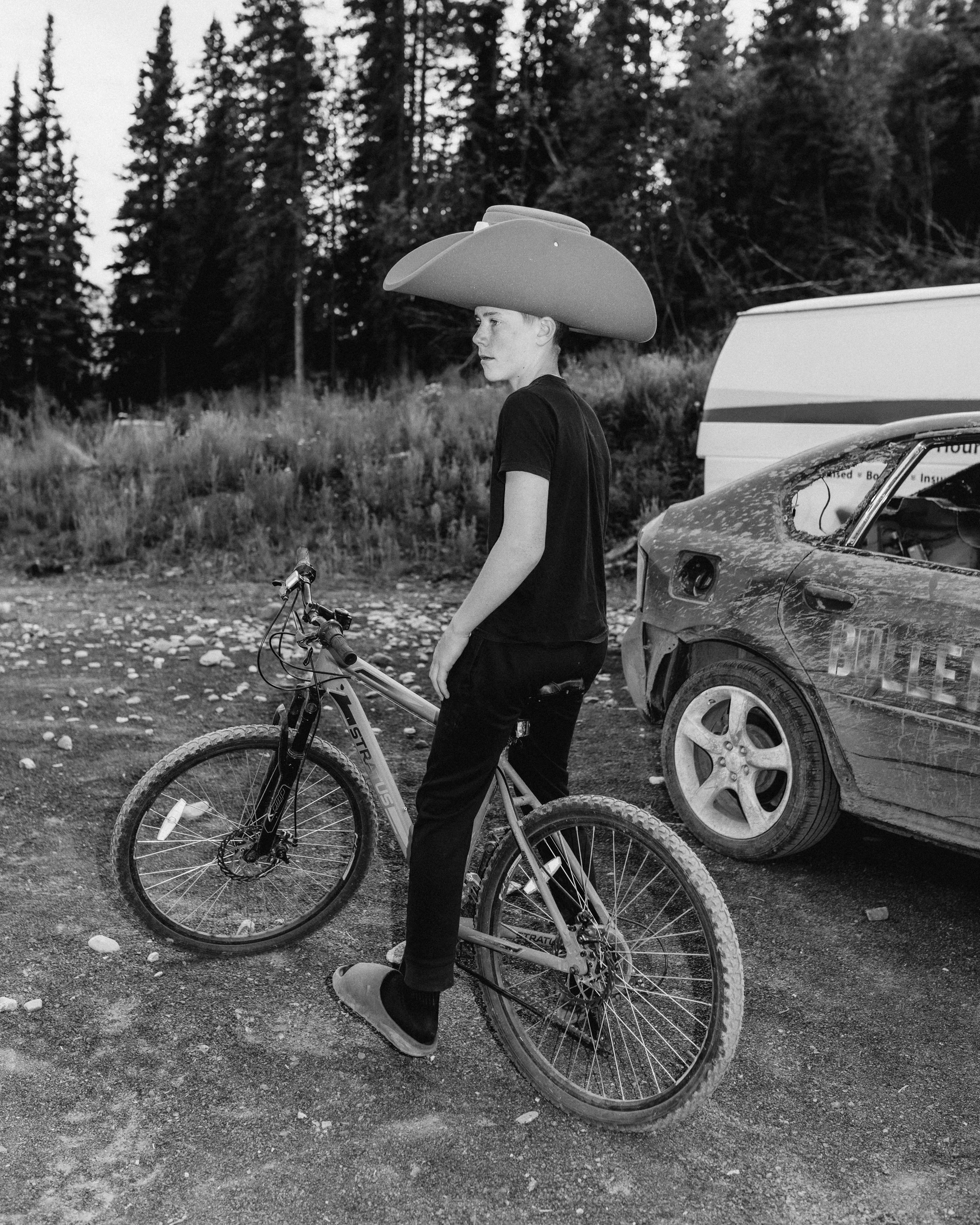
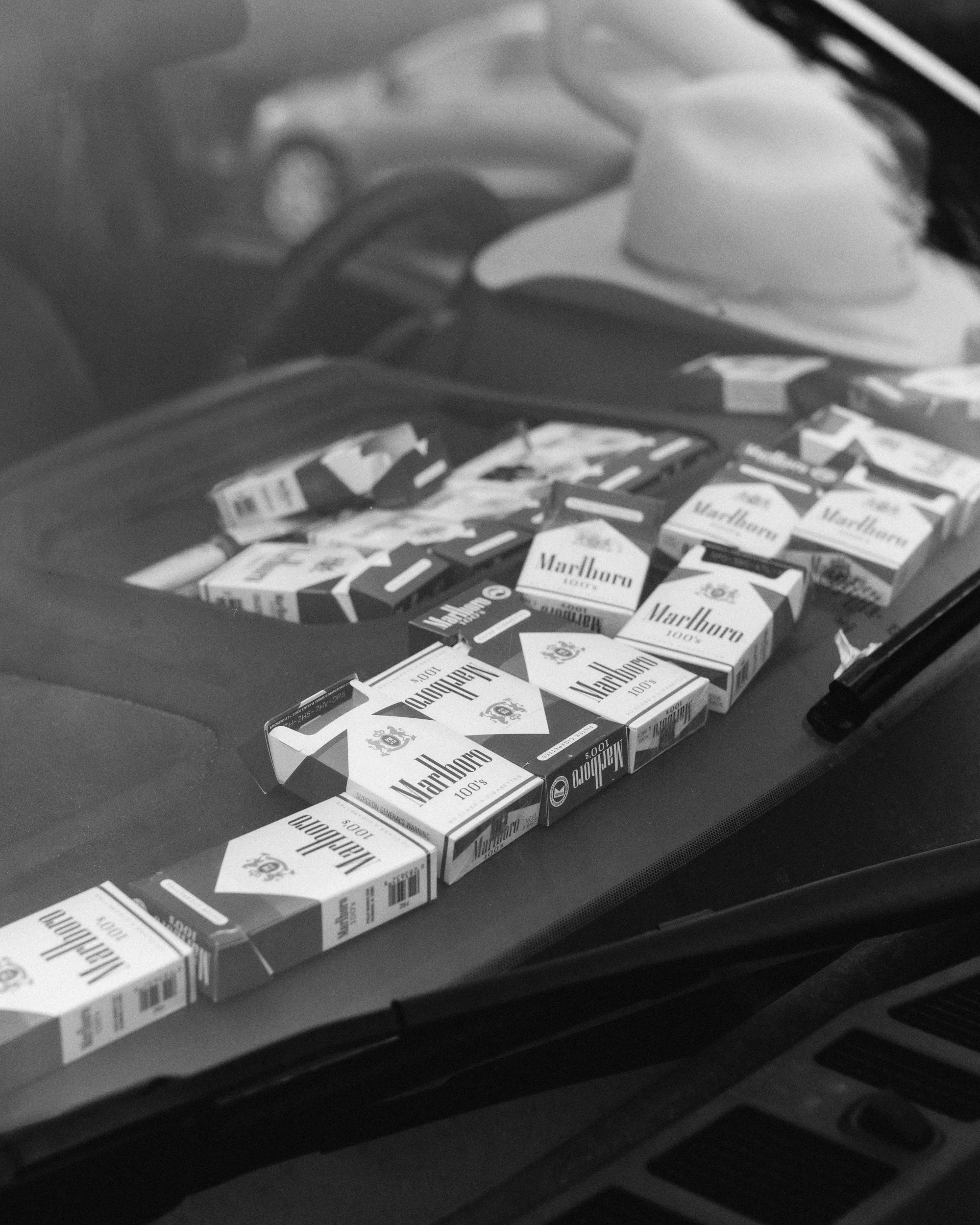
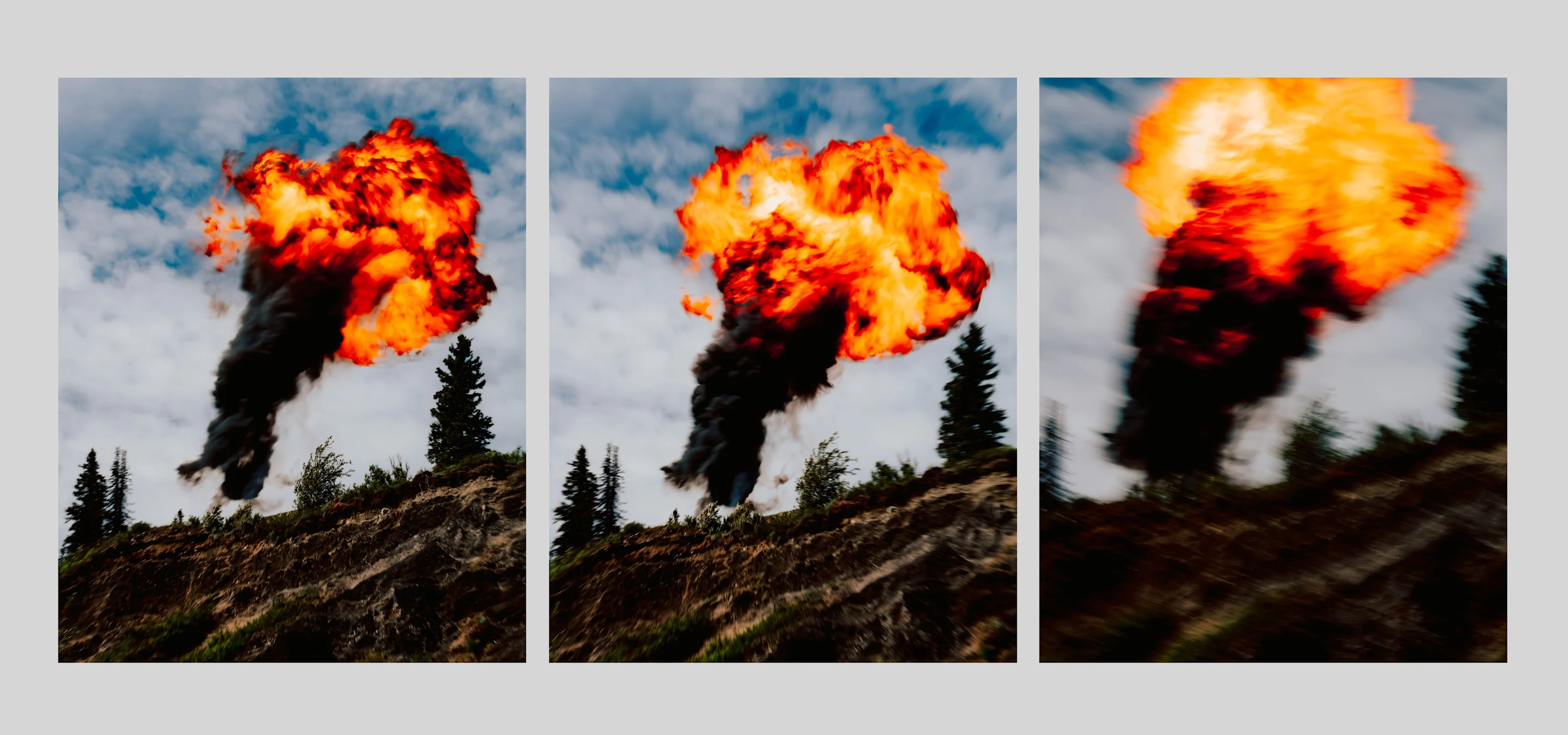
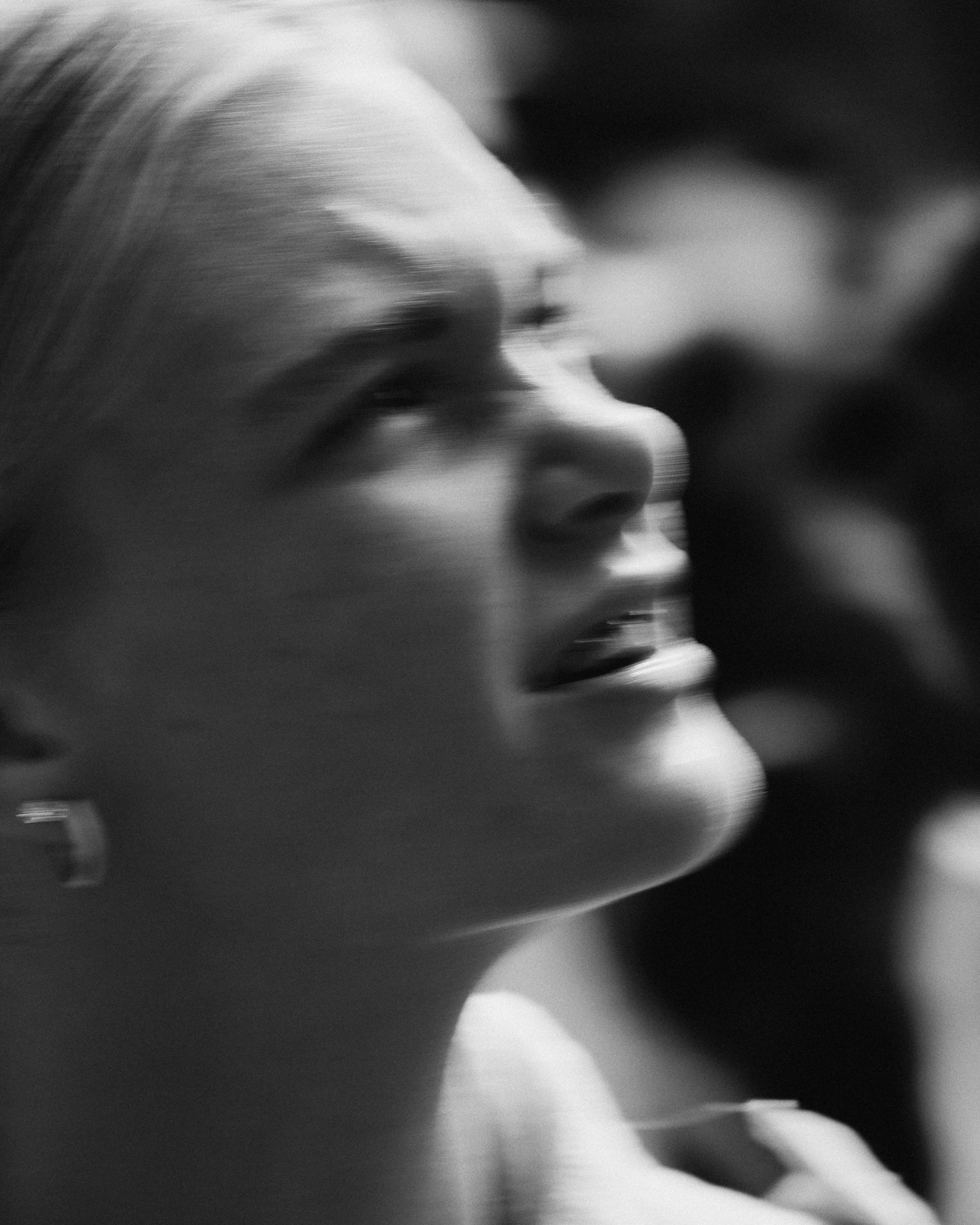
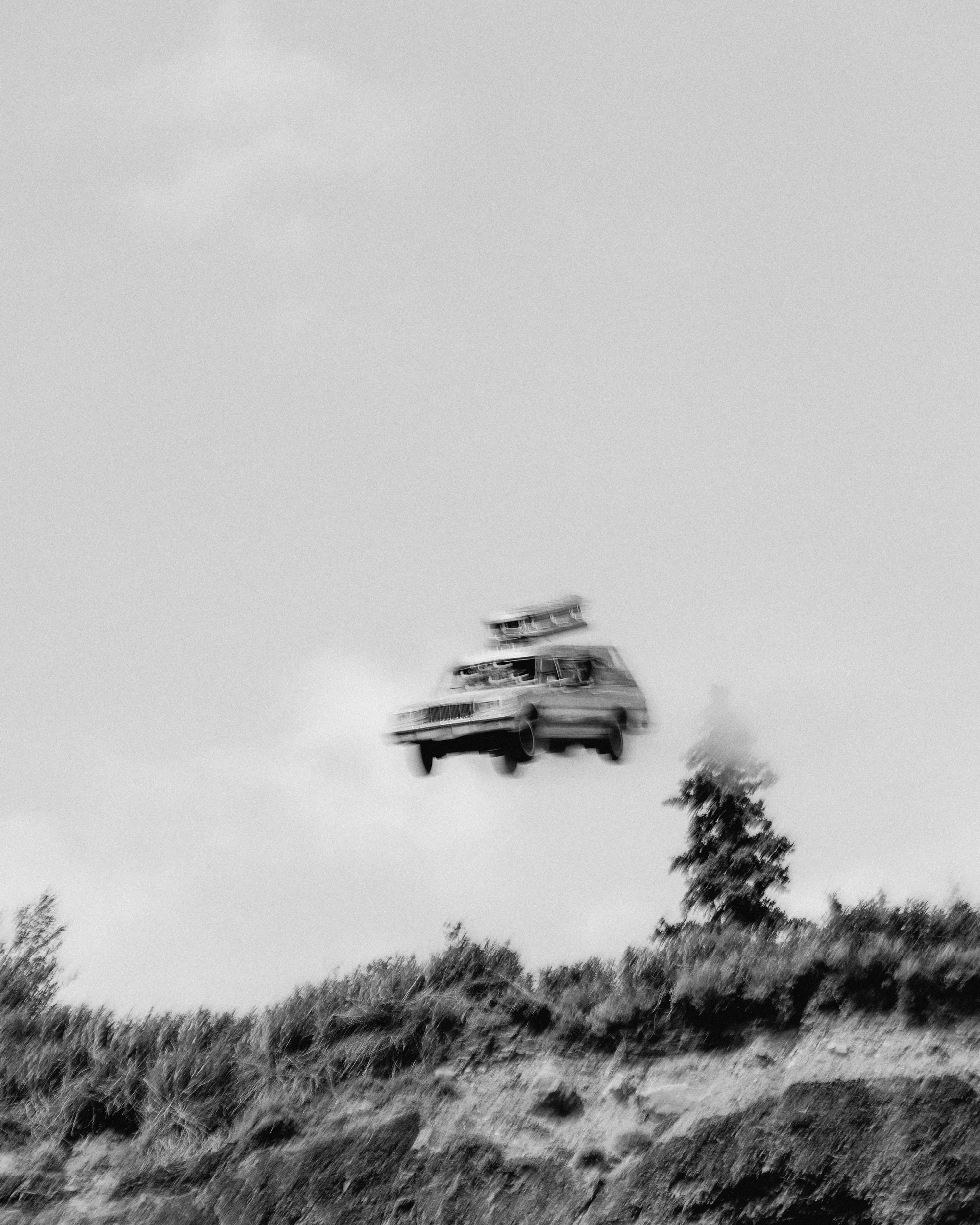
Logistics proved to be Hodgin’s biggest challenge, as he was forced to split his time between the launch pad and landing zone. ‘I was moving constantly, recalls Hodgin about the day. “I started out fairly close and then decided to try and pull back to get the wider landscape within the scene. From there I went to the front line of the launch where I could see dust flying over the crowd. It was non-stop. My aim was to make photographs that conveyed the feeling of being there rather than simply documenting the event. I wanted to strip back the pageantry and ‘event’ context and leave more room for the visceral experience.”
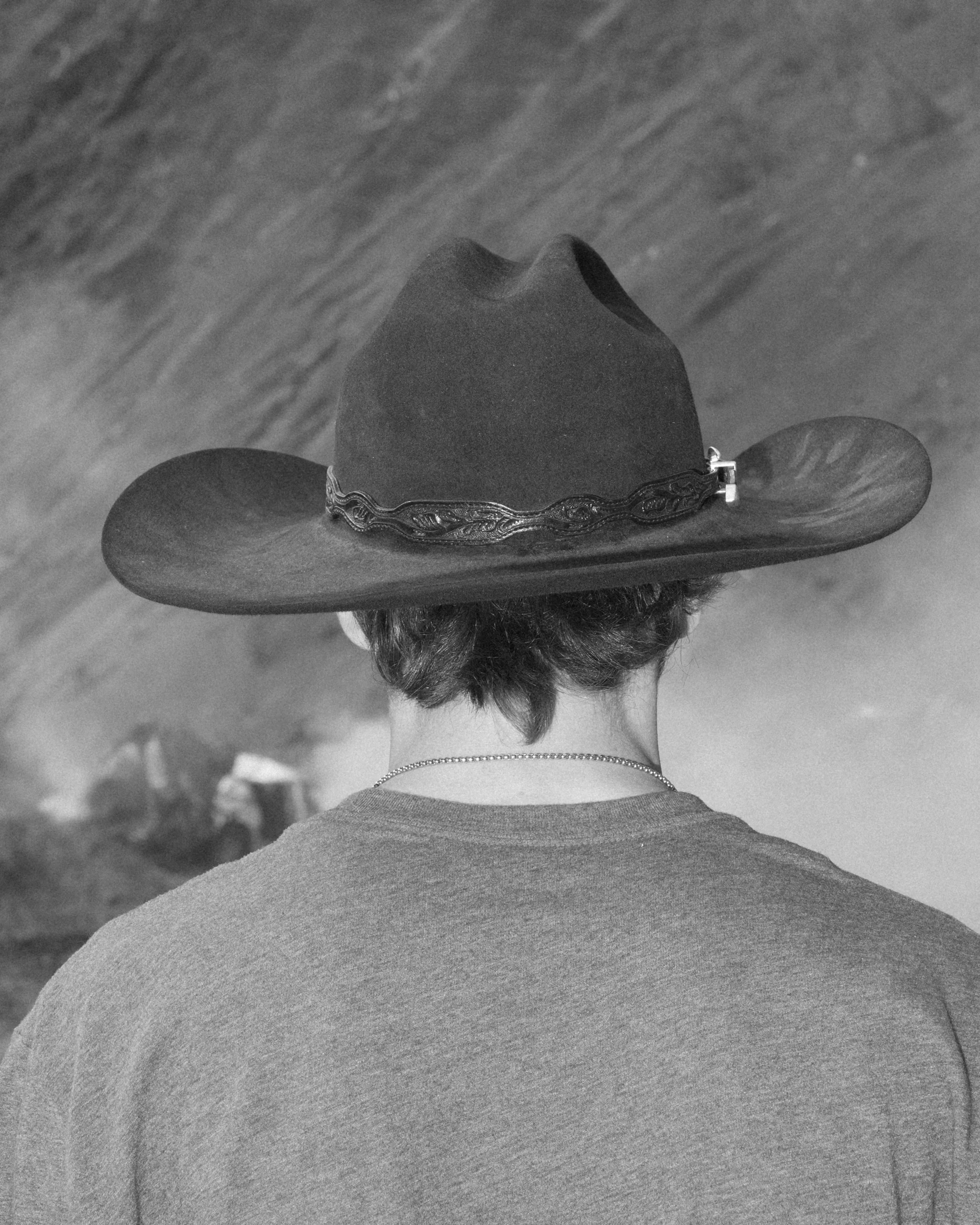
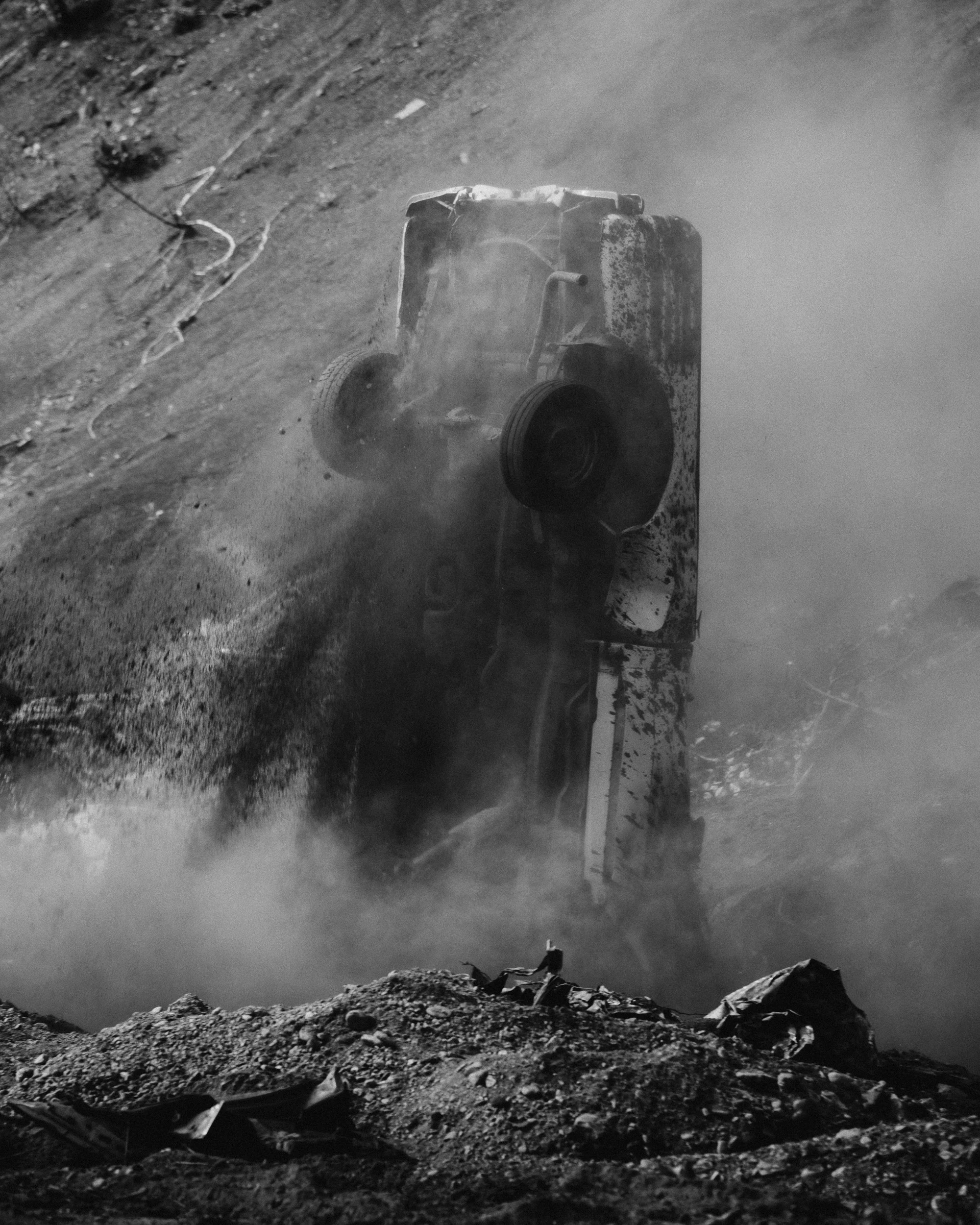
Somehow the event allowed people to let go of everything that had been going on in our lives throughout the year, and everything happening at this point in America’s history.
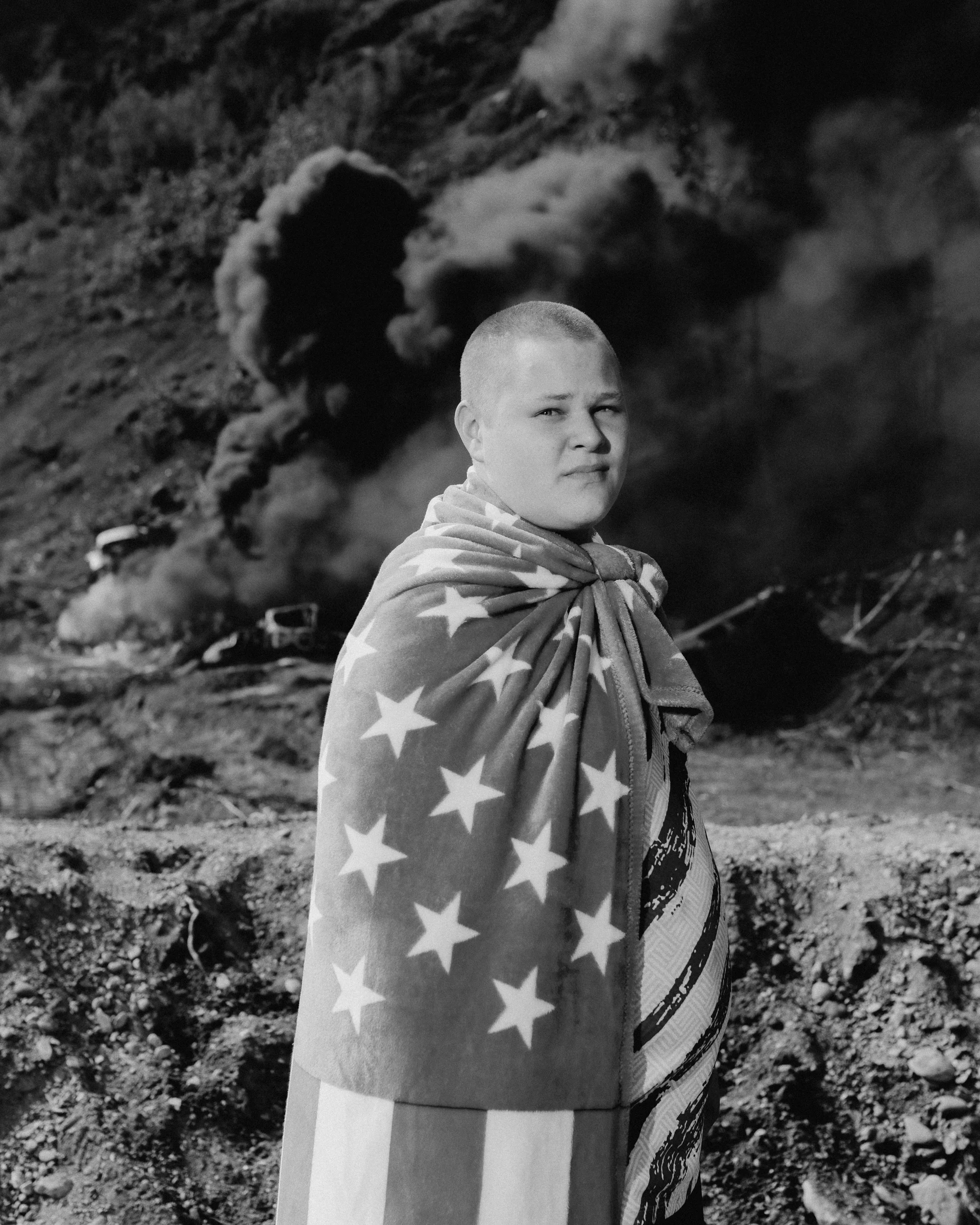
Tentatively, I asked Hodgin, does anything ever go wrong at this event? “After the fifth car was launched this year, one of the tires caught on fire and created this huge cloud of black smoke which lasted for about 90 minutes,” he tells me. “The launch was paused while the fire was smothered. It was pretty insane to watch.” After the event, things wrap up quickly, aside from a handful of people who stick around to scavenge the wreckage for keepsakes. The next morning, when he returned to the site, all the scattered debris had been cleaned up, and the cars were neatly piled up waiting to be taken to get scrapped, as if nothing out of the ordinary had taken place.
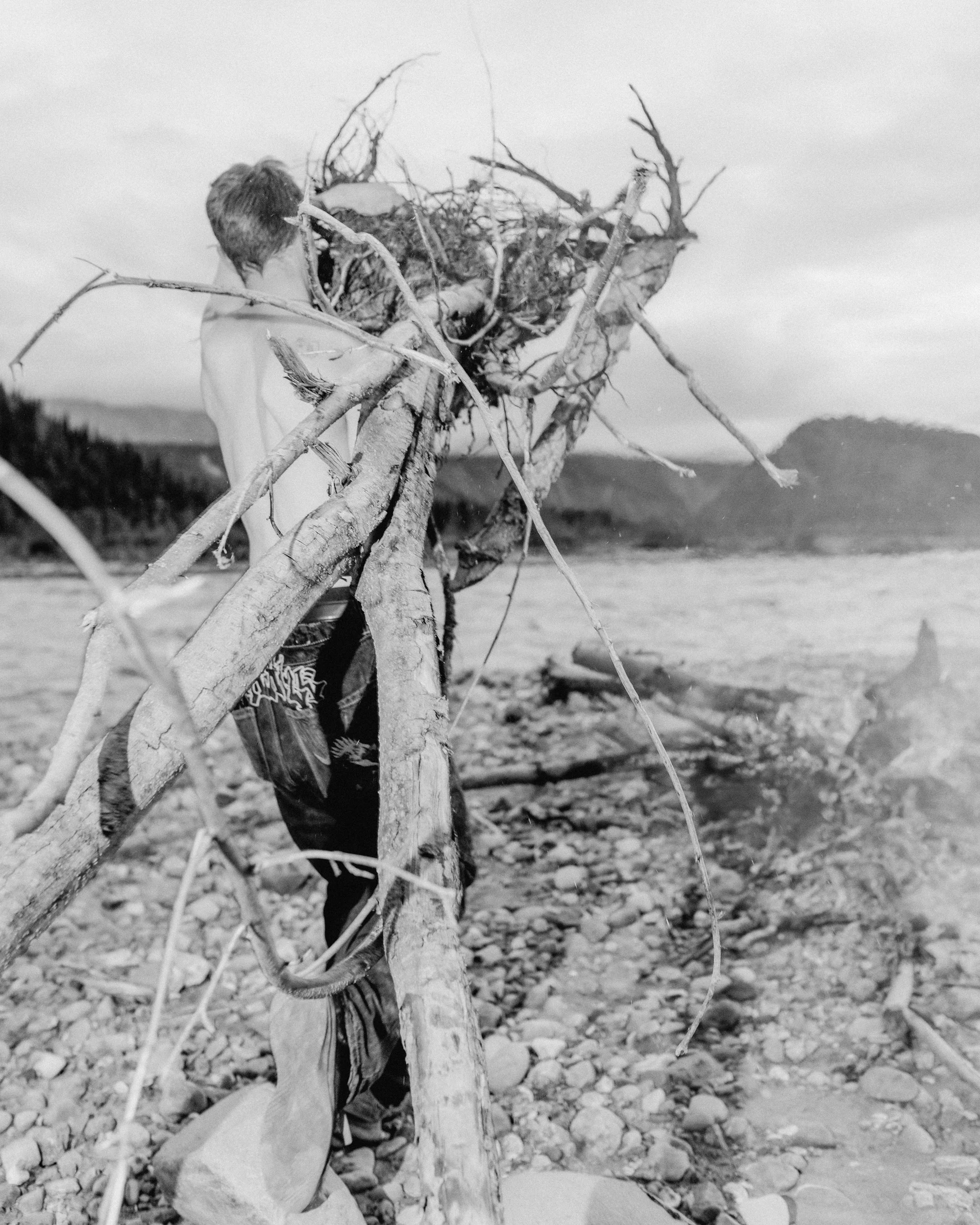

Hodgin’s photographs can be felt as much as they are seen. His distinct combination of motion blur, sensorial details and graphic compositions that slice up the frame speak to the dissonance of our contemporary moment. He is careful to avoid cliches and instead gestures towards the complexity of living that lingers in our subconscious without being overtly political. “It was like a moment of shared catharsis,” he tells me as he reflects on his experience. “Somehow the event allowed people to let go of everything that had been going on in our lives throughout the year, and everything happening at this point in America’s history. I left with this profound feeling of collective release.”