


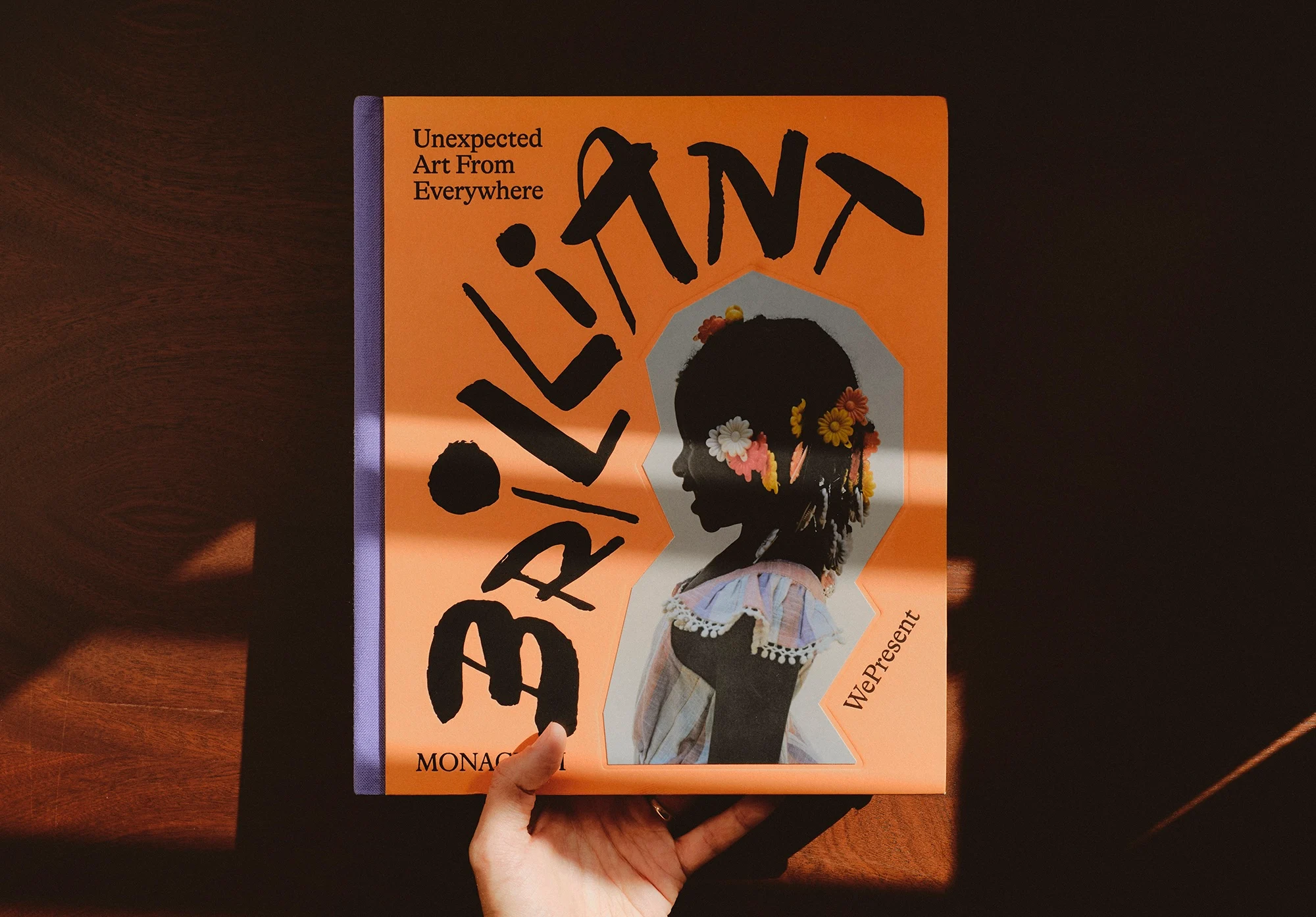
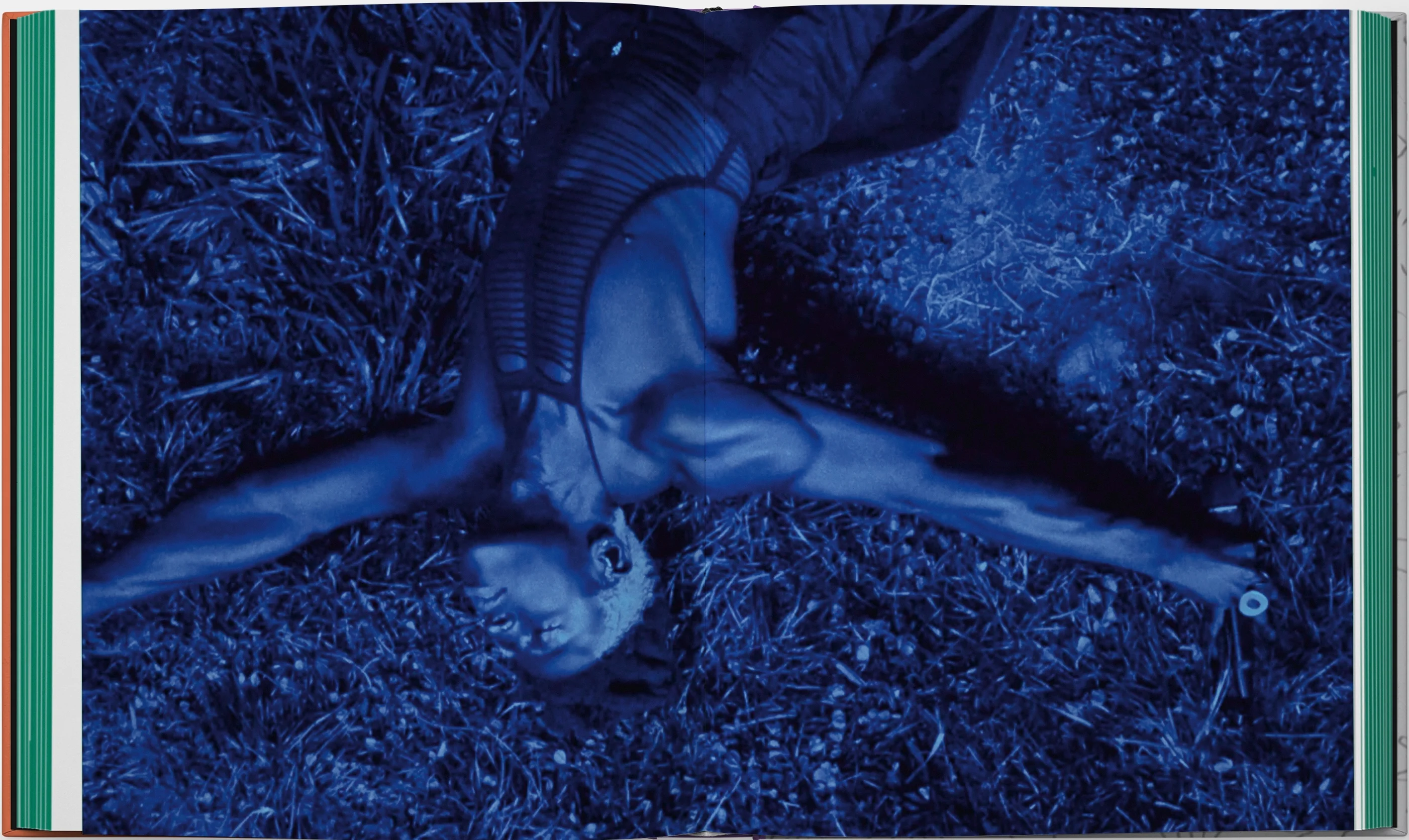
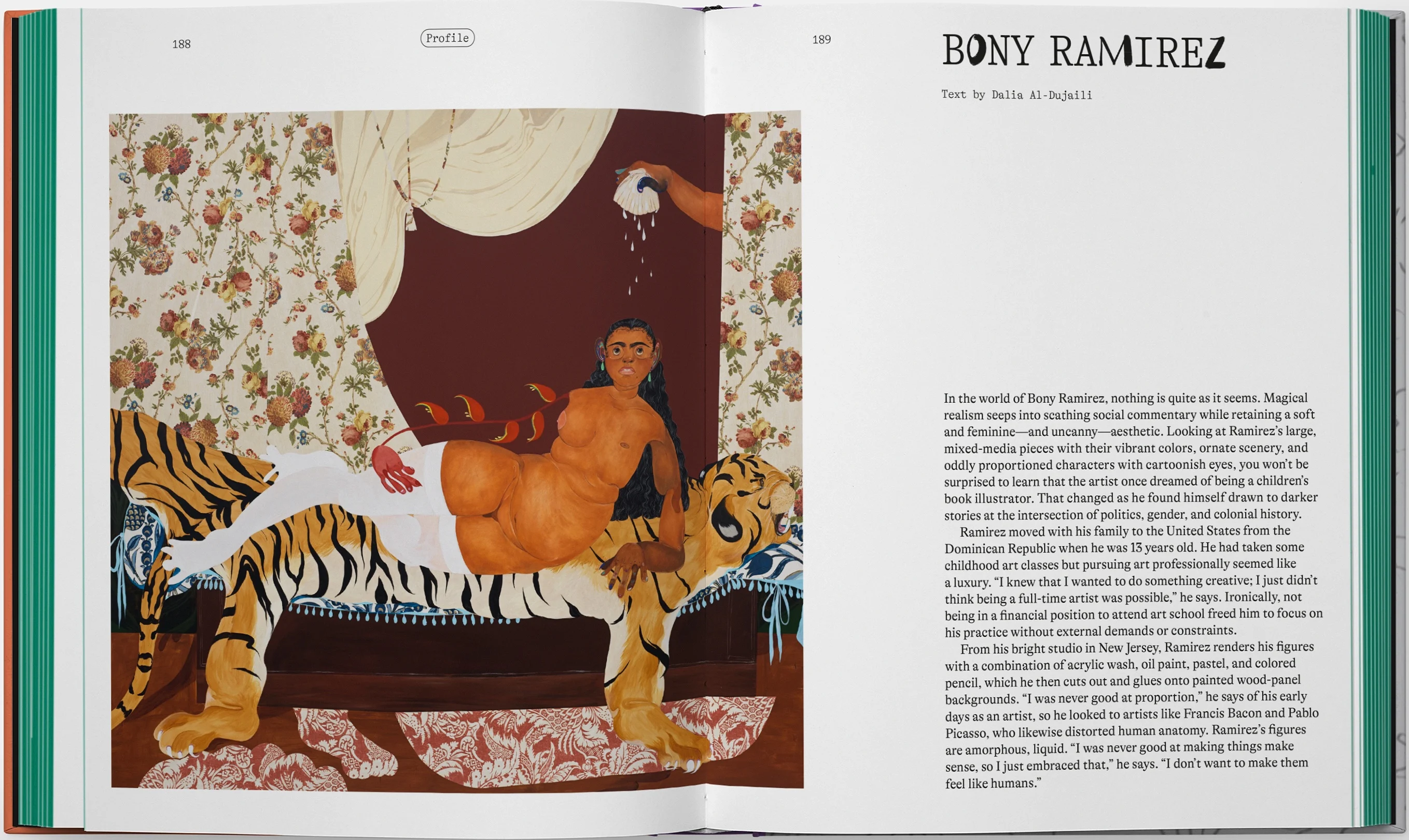
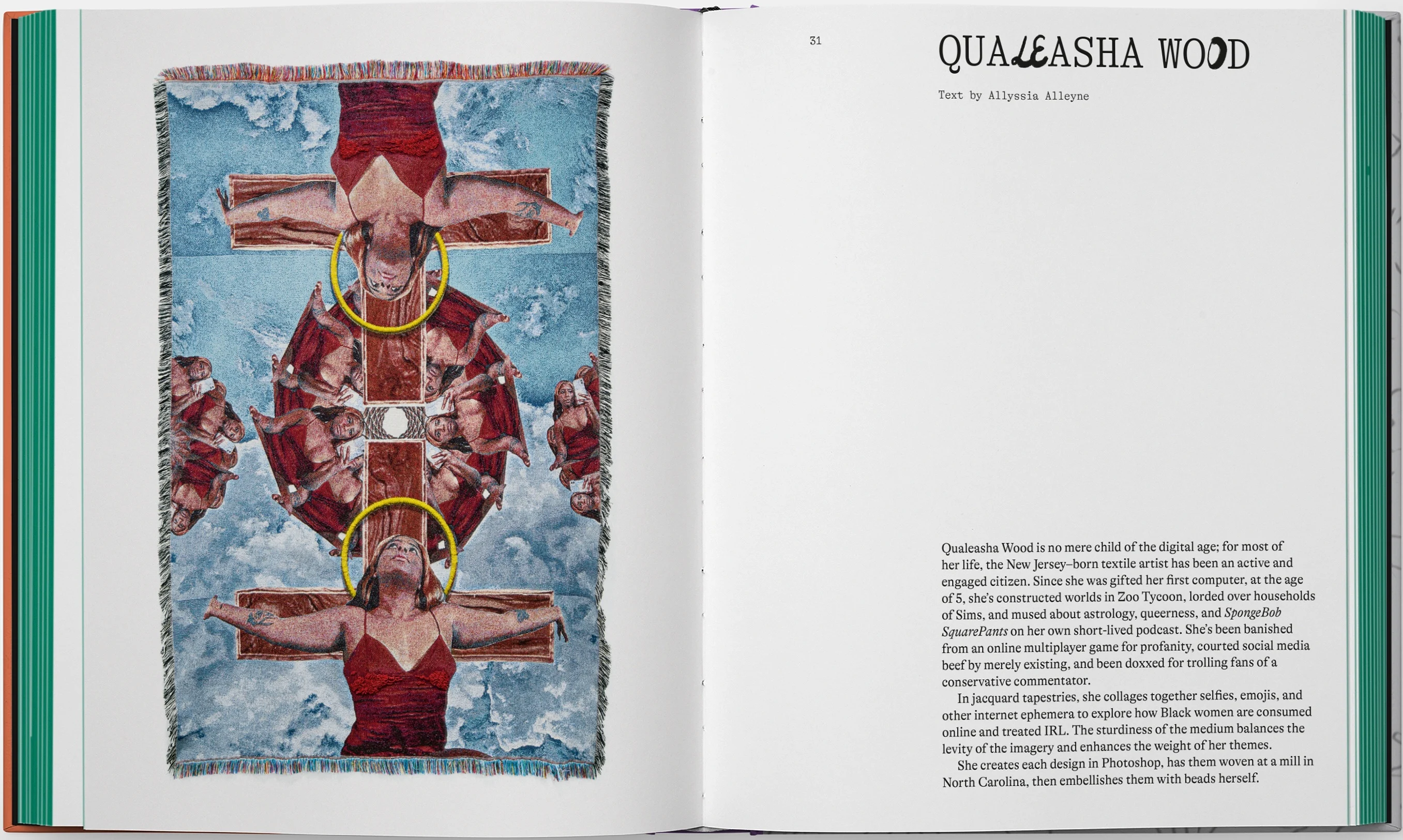
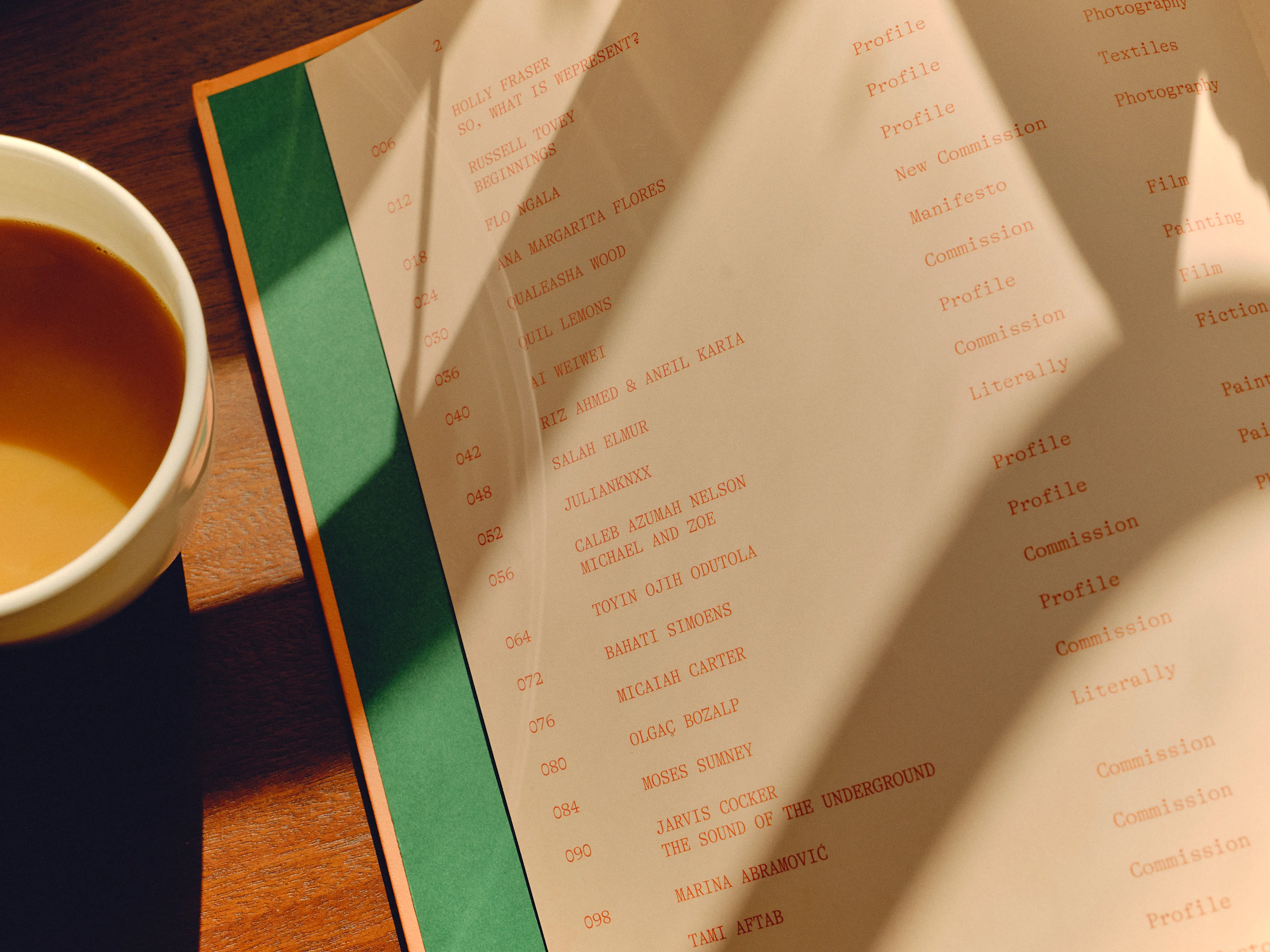
“Brilliant: Unexpected Art from Everywhere” is a bold, visually rich celebration of today’s most exciting contemporary artists, published by Phaidon and curated by WePresent. Heavily illustrated with nearly 300 stunning images, Brilliant includes a diverse array of works and artistic collaborations created in the last 10 years from some of the world’s most exceptional creative minds—many which have never before been published in print. Read Editor-in-Chief Holly Fraser’s introduction to the book below.
“Brilliant: Unexpected Art from Everywhere” is available to order here.
Arthur Miller once said, “When any creativity becomes useful, it is sucked into the vortex of commercialism, and when a thing becomes commercial, it becomes the enemy of man.” So, chances are, he probably wouldn’t have taken kindly to a tech brand starting an arts platform. And in fact, I’m sure many people probably shared his skepticism when WeTransfer, a digital file sharing company, decided to launch WePresent, back in 2018.
It’s true that art and commerce have never been natural bedfellows. For the artist, selling out is the antithesis to integrity, whereas for brands the pervasive reputation is often that of commodifying an artist’s vision for their own gain or performative allyship without any basis to back it up.
When WePresent was founded we wanted to be different, but then, I suppose, that’s what all brands say. Our mission was to “tell unexpected stories about creativity.” And the rationale seemed solid: WeTransfer is used predominantly by creative people to send their files, so perhaps they would be interested in reading stories about their peers while they wait for their files to download. And because WeTransfer is used all over the world, these stories should be representative of our global user base.
So that’s what we did. We started an arts platform that collaborated with creative minds from every corner of the world. To find these brilliant minds we held curation meetings that challenged us to look outside ourselves—reading the arts section of a local Lesotho newspaper one week, scouring galleries in Haiti the next. And we used the digital real estate that WeTransfer afforded us (you know those big backgrounds when you’re downloading a file? We call them wallpapers.) to advertise these stories to the almost 80 million people a month that use the service. Clicking on one of these wallpapers led readers to WePresent, an online rabbit warren of creativity.
Being trusted with an artist's vision is a responsibility that we have never taken lightly.
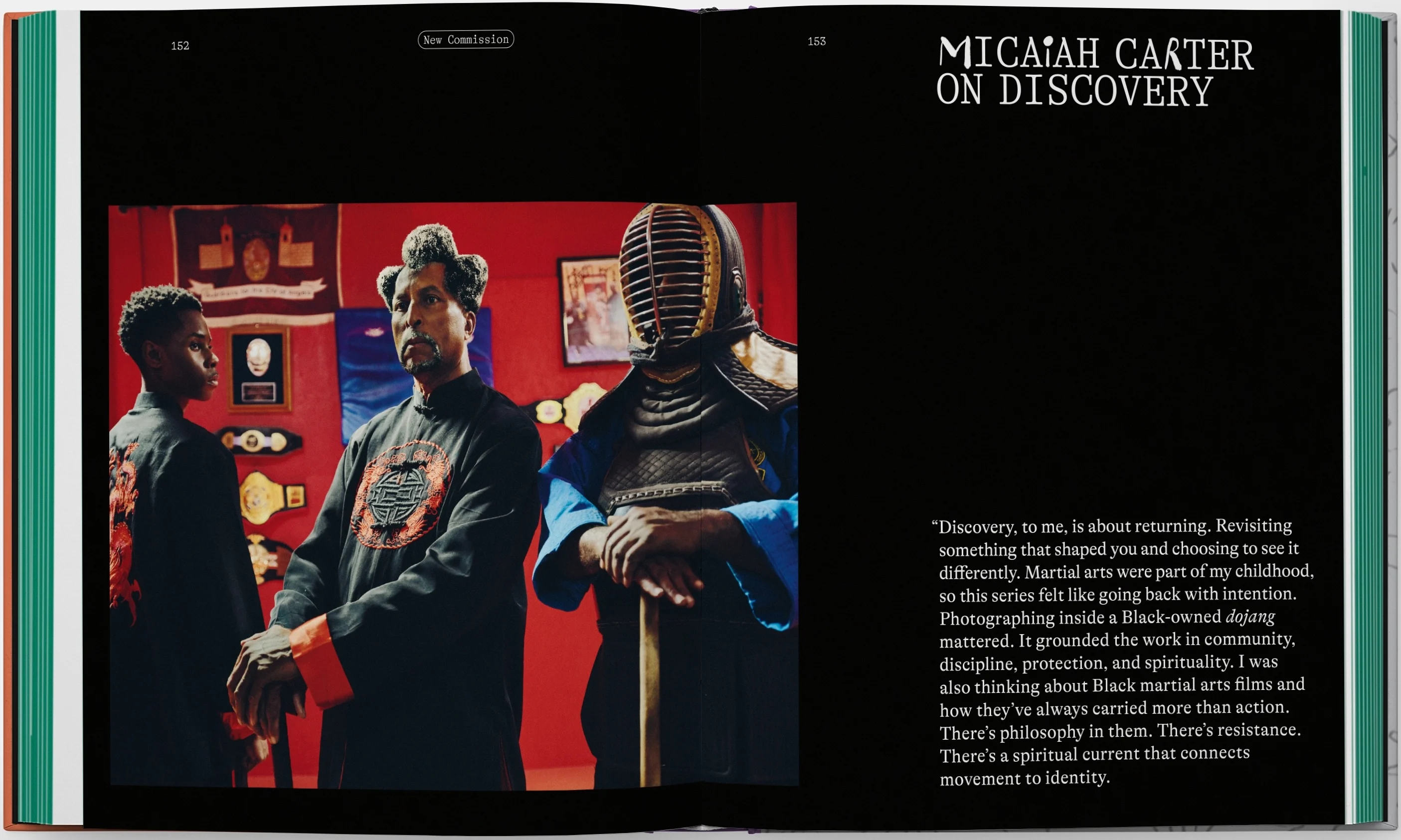
While doing this we also tried really, really hard to not fall into the traps of performative brand marketing. What began as a platform to tell interesting stories and spotlight artists has since grown into one that commissions new and original work from some of the world’s most highly regarded artists across multiple mediums—many of which you’ll find throughout these pages—whether that’s a digital time capsule by Marina Abramović, essays by David Sedaris and Leanne Shapton from our short story series Literally or even brand new photography commissions for this book by Renell Medrano, Quil Lemons and Micaiah Carter.
And while WePresent may have evolved from a platform that tells stories to one that now creates them, what has not changed is the belief in what we do and why we do it. Over the years that belief has led us to a community of tapestry artists in Rwanda using weaving as a therapy to heal trauma, a photographer capturing the rise of sumo wrestling in Mongolia, a painter inspired by the majesty of nature in the Amazon rainforest, a manifesto for life by Willie Nelson. It has led to curating exhibitions around the world, commissioning the film directors of tomorrow, creating printed magazines and books with our design heroes, and once to staging a theater show reimagining Derek Jarman’s BLUE. And occasionally it has led us to lofty things like awards—an Oscar, even, for The Long Goodbye, a short film by Riz Ahmed and Aneil Karia commissioned by WePresent that imagines a dystopian but all too possible reality in post-Brexit Britain.
None of this was necessarily by design. There has never really been a marketing strategy, or at least one that we’ve consistently stuck to. But, along with that belief, there has always been passion. And care. And an unwavering commitment to upholding the high standards that we hold ourselves to. We’ve paid artists fairly for their work. We don’t view these relationships as transactional, but as those that we’re privileged to have access to. Being trusted with an artist's vision is a responsibility that we have never taken lightly.
How do you quantify the emotional response to seeing yourself represented through art, and feeling less alone because of it?
Did this all begin as an exercise in brand building? Sure, I guess so. But for the small team who run WePresent there has always been something deeper at play (and not just because we’re all quite neurotic with Pisces placements across our astrological charts, though that probably helps). I think it’s because art feels like the ultimate expression of being human. It’s inexplicable, ancient, urgent. It can provide you with tools when words fail. “Art has always been the raft onto which we climb to save our sanity,” artist Dorothea Tanning famously said. That certainly rings true now.
Of course, over the years there have been battles with C-suite executives about the return on investment, success metrics, and the value of creativity. WeTransfer is a business after all, and these are fair questions. But should creativity be so easy to quantify? Isn’t the intangibility the magic? How do you quantify the impact of watching a film that flips your world view, rocks you to your core, and lives within you long after the credits roll—or the emotional response to seeing yourself represented through art, and feeling less alone because of it? Perhaps sometimes there doesn’t need to be a tidy metric. Perhaps existing is valuable enough.
We’ve been lucky at WePresent. While so many other art platforms have been gutted in recent years because the aforementioned questions don’t have easy answers, we’ve been able to continue. I have no idea what the next 10 years hold, but I do know that while we’ve been around we’ve been able to provide support to thousands of artists at a time when both earning a livelihood from your art, and expressing your ideas freely, is becoming increasingly challenging. Being able to say that feels pretty damn good.
When we were putting this book together, we had a lot of conversations about what it “is,” who it’s for, and what it is saying. There were concerns that people wouldn’t “get it,” that it’s too random, that there’s no clear throughline. But actually, I think that those concerns are what make this book the truest representation of what WePresent is. It is random. It is hard to categorize. It is reflective of the taste of a small team. Though we’ve worked with over 1,000 artists up to this point, the WePresent team has never been more than 11 core people at any given time. WePresent is a collection of artists that we love. Of work that we believe in, and of ideas that we think deserve to be amplified. To some it might seem random, to us it’s perfectly logical.
The truth is that we’re all just a bunch of art-lovers from different backgrounds–journalism, music, creative production–who found our way to WePresent with the shared goal of just wanting to make stuff that’s good. Stuff that moved us. Stuff that felt important. Stuff that we were proud of.
We decided to organize this book around the broad theme of discovery because, despite the changes we’ve been through in our almost 10 years as a team, it felt most honest to what WePresent has always stood for. Discovering is what we do as a team every day. In the next 300 or so pages there are some artists that you’ll be very familiar with, and some that you will have never heard of before. We invite you to discover them all, and hope that you find as much joy in that journey as we did.
“Brilliant: Unexpected Art from Everywhere” is available to order here.